
The Slovakian capital of Bratislava is only an hour by train from Vienna, Austria, which turned out to be convenient—because we were in Vienna. That’s homebase for my niece, a newly minted doctor, and her retired racing greyhound dog. My wife is 50 percent Slovak, and she’d never been there, so we decided to spend a few days traveling around the country, visiting her family’s old stomping grounds in Trenčín.
Bratislava was in high political season while we were there, with posters on every flat surface. The election was won, three weeks later, by Robert Fico, ostensibly a leftist but also a populist friend of Russia and an opponent of aid to Ukraine. His SMER-SSD party only got 23 percent of the vote, though, so in a parliamentary system it will have to form a coalition to actually govern.
A land of castles, Slovakia has one foot in the past and the other very much in the present. There are more than 100,000 Ukrainian refugees in this small country of 5.4 million. Ukraine and Slovakia share a border to Slovakia’s east. Slovakians know something about foreign oppression—the ruling Hungarians suppressed Slovak language and culture in a program of “Magyarization” that followed the Austrian-Hungarian Compromise of 1867. That period ended with the joining of Slovak and Czech into one nation circa 1918. (They separated again in 1993.)
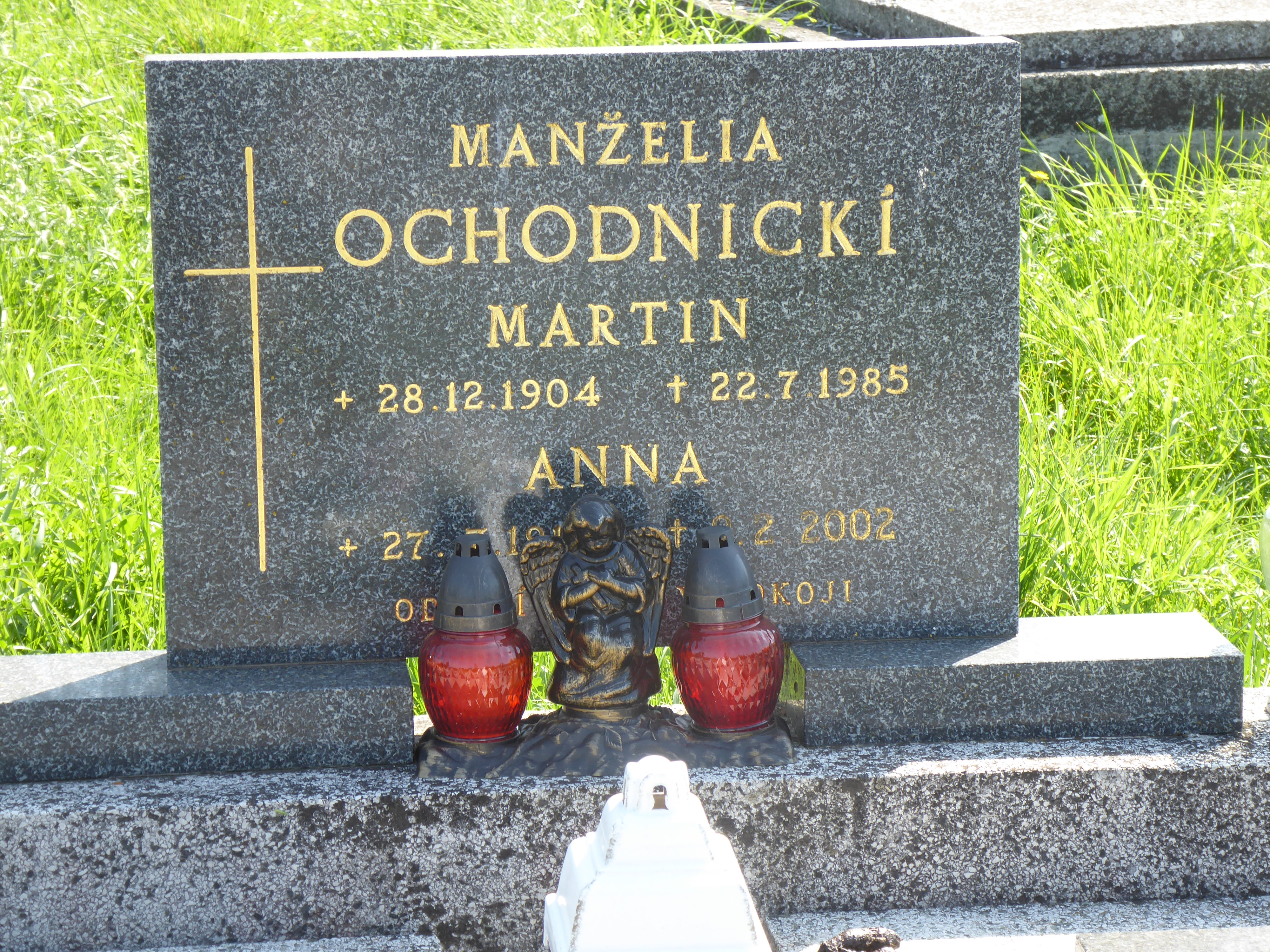
For the day, we hired Martin Talac of Slovakation, which promotes “active” tours, which means hiking in the High Tatra and Sulov mountains, plus other destinations such as Slovak Paradise National Park. We did a fair amount of walking, though probably not as much as is customary for Martin, and at one point briefly entered the Czech Republic on a mountain path with breathtaking views. We found the Protestant cemetery in the town of Krajne where my wife’s relatives are buried (see above), had lunch at a restaurant with a great selection of America oldies, and we even found the address that was printed on the fading envelopes from the old country. In a town as small as Trenčín, there are no street names—just numbers.
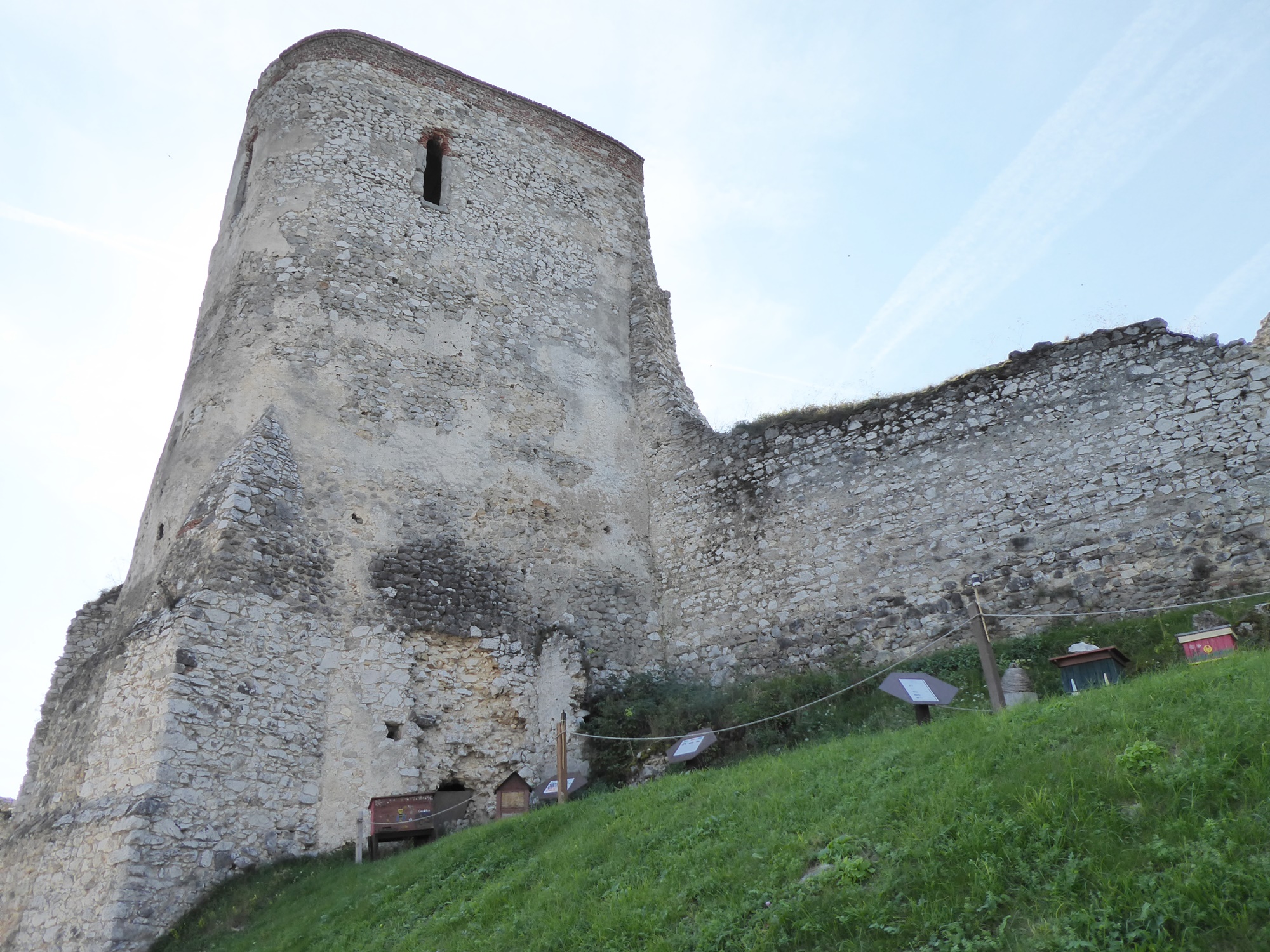
Castle Čachtice up close. (Jim Motavalli photo)
I mentioned castles, and in western Slovakia the ruins of Castle Čachtice, which looms over a town of the same name, was a highlight of our tour. The early Gothic pile was built in approximately 1260 by Casimir of the House Hunt-Poznan. By 1273 it was withstanding the onslaught of King Premysl Otakar II. Under the Orsags family (1436-1567) the castle was expanded with improved defenses and sumptuous residences.

The view from the castle walls. (Jim Motavalli photo)
But it’s the 17th century we’re concerned with here. Countess Elizabeth Báthory (1560-1614) inherited the castle after the death of her husband, the war-loving Count Ferenc Nádasdy, in 1604. No less an authority than National Geographic says that the count schooled his wife in sadism and torture. “For Báthory’s pleasure, Nádasdy had a girl restrained, lathered in honey, and ravaged by insects,” the magazine said. “He gifted the countess gloves spiked by claws, with which to thrash her servants for their mistakes.”

The countess in a likeness that’s likely a copy of the original painting.
In popular lore, Báthory believed that bathing in the blood of virgins preserved her own youth, and she was accused of killing more than 600 young girls for this purpose. Apparently, it was OK to abuse servants—that was common at the time—but when the countess started kidnapping and murdering the daughters of the nobility her crimes could no longer be ignored.
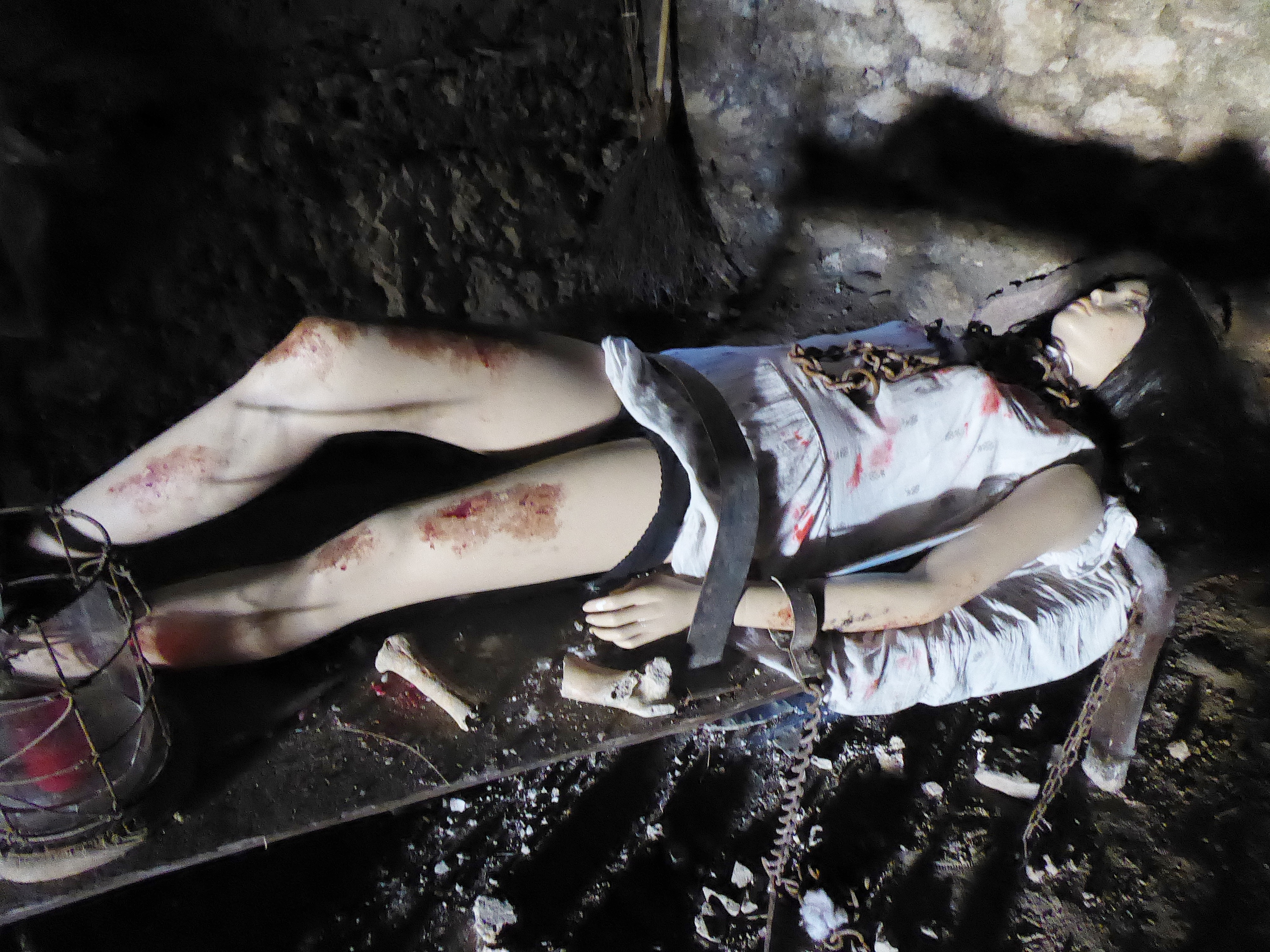
Is this the way it was? An evocative tableau inside the castle, with mannequin victim. (Jim Motavalli photo)
An investigation was launched by the King of Hungary, Matthias II, in 1610. Báthory was charged in the deaths of 80 young women, but despite the gathering of considerable testimony (which makes grim reading), was never convicted. She was instead imprisoned in her own castle, though four of her servants were hideously tortured to death. “The Blood Countess” lived in a tiny room, with meals slid into her, for four years until her death in 1614. She was 54.
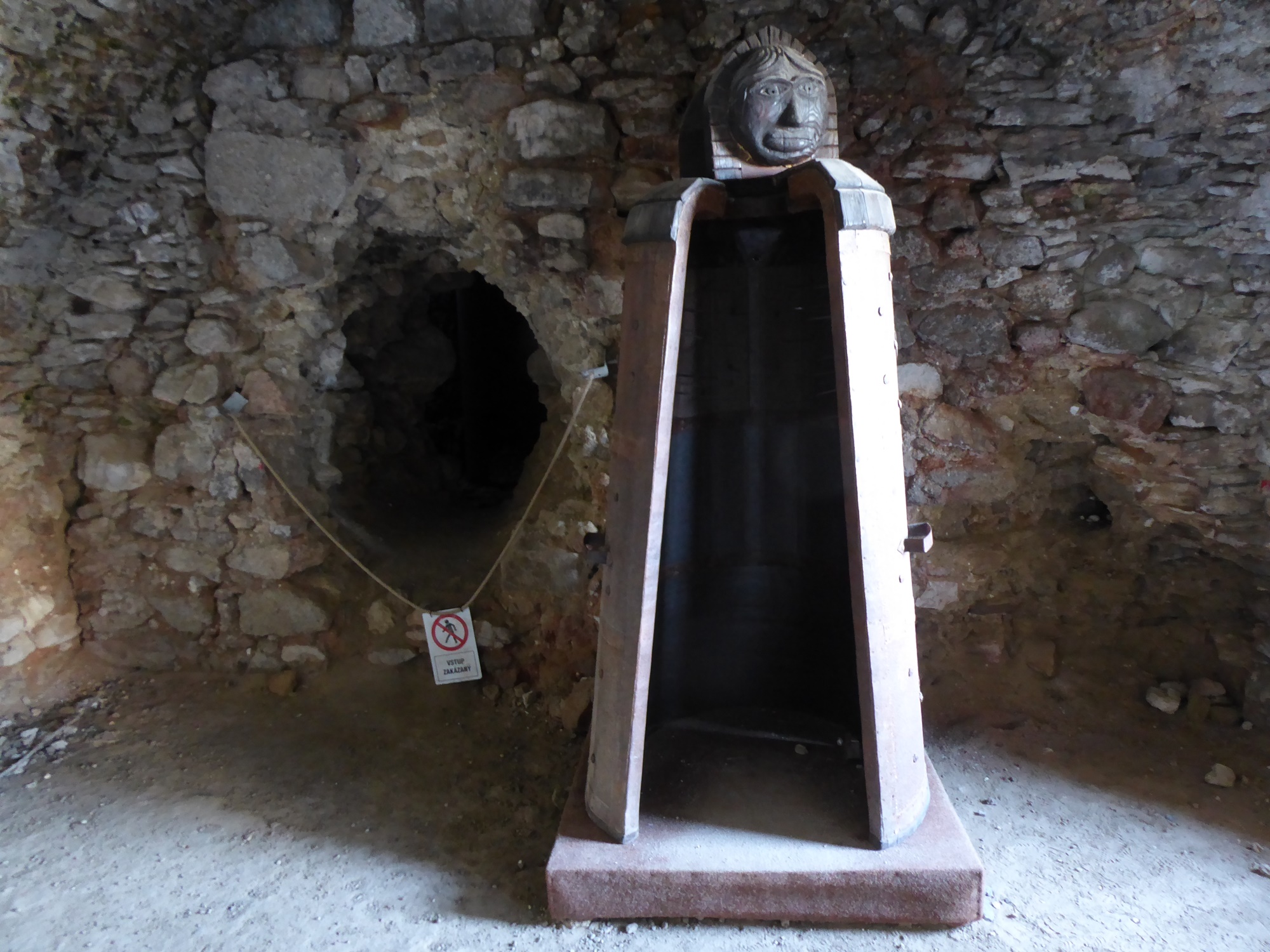
The iron maiden is likely not the original. (Jim Motavalli photo)
Today, many historians say that the countess was the victim of local politics, or of mass hysteria similar to the Salem witch trials. The crumbling castle isn’t saying.
Tourism is down in Slovakia, both because of COVID and disruptions related to the Russia-Ukraine war. But Castle Čachtice is doing its best. Báthory Wine is available in the gift shop, and there are some interesting tableaux among the battlements, including an iron maiden (the countess may have used something similar) and what appeared to be a department store mannequin tied down, bloodied and ready for more torture.

People flood the car-free cobbled streets of downtown Trenčín. (Jim Motavalli photo)
The cobbled streets of downtown Trenčín yield no less than three vegan restaurants that served lunch. It’s lovely, and another castle looks down. A delightful museum is devoted to pre-war Skoda cars. In Bratislava you can buy a card that’s good for all public transit and most museums—we went to four, including the castle (of course there’s a castle), clocks, natural history and transportation.
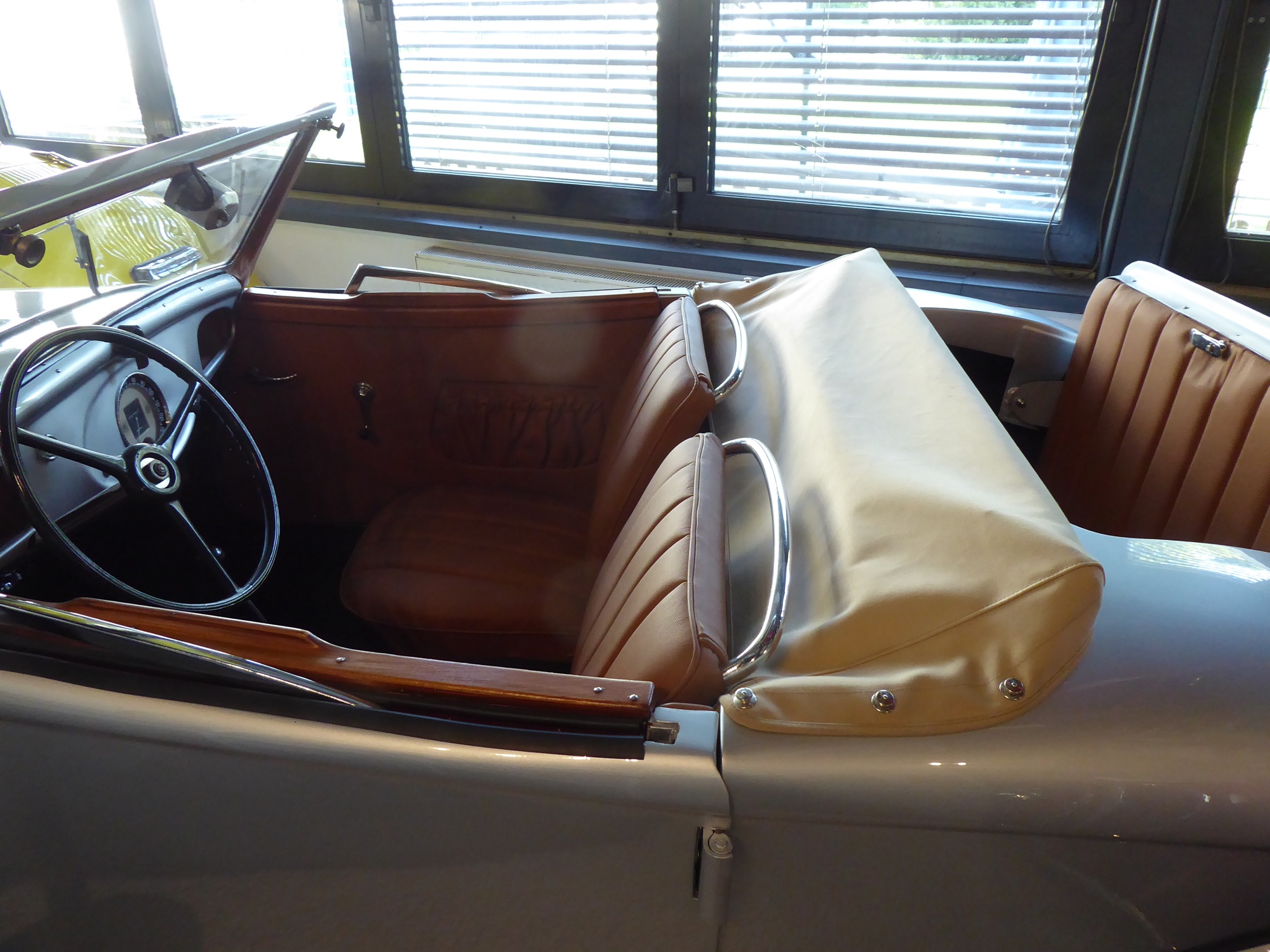
An open-topped car in the Skoda museum. (Jim Motavalli photo)
Even if you haven’t considered Slovakia—but you’re headed for Europe—by all means see if it can fit into your itinerary. The food is great, the lodging friendly and inexpensive, and the people—universally both very friendly and at least competent in English.
 Territorial Imperatives