This past weekend, a death in the family sent me 300 miles south, to Reston, Virginia. The luck of the test-car draw got us into a Volvo E30 Twin Motor Cross Country Ultra for that epic trip.
It’s a small Volvo EV with a relatively big price, $52,975 as tested, but to be fair this particular version is about as rich as it gets with the EX30. And on top of the trim there was $4,000 in extras, including the 18-inch all-terrain five-spoke wheels. And the bottom line is still within shooting distance of the average price Americans pay for a car.
Volvo is owned by China’s Geely, and the parts for this car were made in China, with assembly in Ghent, Belgium. For the record, with the exception of some minor trim pieces there’s nothing sub-standard about the build quality of these Volvos. The Scandinavian modern feel is intact, with very comfortable cloth seats. The latter was important because we traveled, three up, for five to six hours each way. The car is way fast, with 422 horsepower. “Whoa!” we said.
On paper the EX30 twin motor has 253 miles of range, and the single-motor version 261, but I’m guessing the gap would be greater in the real world. If you’re buying an EV, think really hard about whether you need the extra cost and reduced range of AWD. The single motor produces “only” 263 horsepower, so there is the performance difference to consider.
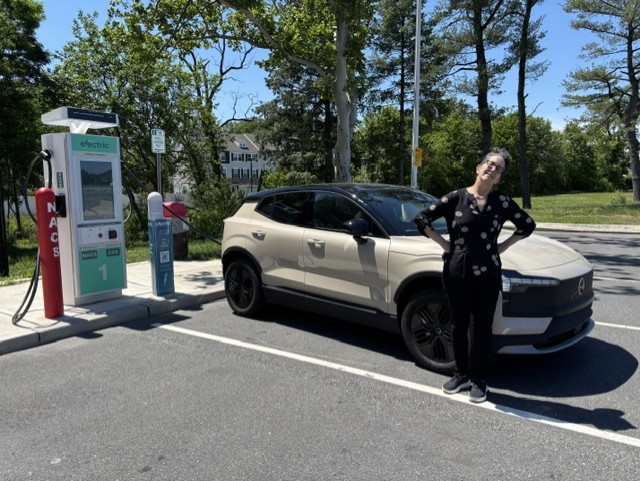
On a previous trip we had charging hassles on the New Jersey Turnpike, but that situation is cleared up now. AppleGreen’s chargers (see photo above) worked fine once we spent 10 minutes figuring out how they worked.
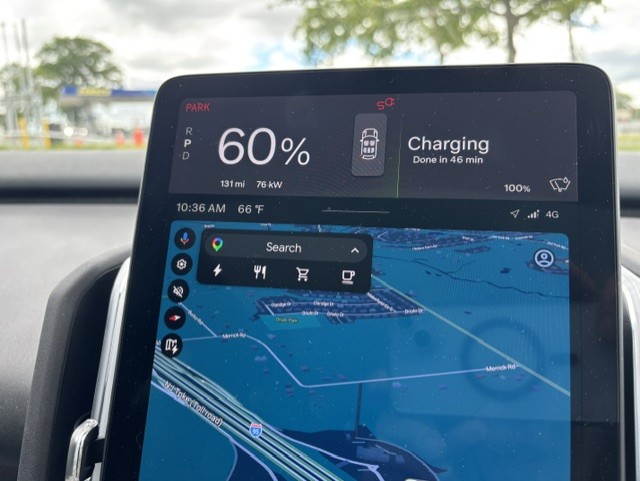
The rub is charge times. We opted to try and “top off,” the car relatively early. Bad strategy. With the car already two-thirds full the rate never got over 80 kilowatts on a fast charger (see below), and before we reached 75 percent it had dipped down between 35 and 40 kilowatts. This is the nature of the beast. If you want faster charges, wait until you’re below 50 percent. But in this case, reality meant a 50-minute wait, which was made more comfortable with coffee and scones from Starbucks.
We stopped once more on the way down, again with a fairly slow charge. And our hotel in Reston (Homewood Suites) had two EV chargers! One was out of order (actually never fully installed), but the other one was free. Now we were in the 240-volt Level Two world, which meant an eight-hour charge to full. I insisted we leave the nearly depleted Volvo where it was and turn my daughter’s Rogue into a clown car. I didn’t want to lose the space.
I felt vindicated when the car was fully charged in the morning, because we had a lot of work for it to do. It shuttled people back and forth all day, proving its very possible to live with an EV.
On the way back we were more charge-smart and only stopped once with the battery around 30 percent down. Now we saw some real fast charging, and were 100 percent full up before lunch was over. It was startling. We arrived home with about a 38 percent charge.
Around home I managed to cop a free charge at the local library—fortunate, since the single charger there is usually occupied. And I also tried out the 110-volt charger that comes with the car. Volvo’s cable (stored under the floor) is rather thick and awkward to use, and it doesn’t get you much—three to four miles per hour. I had a couple of false starts getting it to charge.
All in all, our long-distance trip, about 600 miles in total, worked out fairly well in the Volvo. Nobody was seriously inconvenienced, and the car was a pleasant—and quiet—place to be for a long haul. Connecting to Apple CarPlay proved a hit-and-miss affair, but we got by with the radio when we had to.
I often recommend Toyota vehicles to people who are just looking for transportation. In fact, I run an informal, unpaid shopping service for my friends that has resulted in my purchasing no less than four 2012 Toyota Prius V cars for people, including my twin brother. And they’re all happy.
Toyota is one of the few companies still gung-ho on sedans and hatchbacks, which is proving a smart strategy as the marketplace shifts back in that direction. Sky-high gas prices are a big reason, but there’s also SUV fatigue (I’m fatigued just driving these cookie-cutter vehicles for a week), a Gen Z need to stand out from the herd, and a huge price gap—the average sedan is $27,590, and the average compact SUV $37,514. The midsized SUVs that everyone loves? They’re at $50,380.
Sam Fiorani, vice president of global vehicle forecasting at AutoForecast Solutions, told Hagerty, “Shoppers, especially young buyers, are growing weary of new vehicle prices and want to return to the time when Ford would lose money on the Focus or Chevrolet would lose money on the Cruze.” He adds, though, that with automakers no longer subject to clean car regulations under Trump, “manufacturers do not have any reason to reintroduce [loss-leading sedans].”
That seems to be the domestic manufacturers’ thinking, because despite a sharp increase in online searches for sedans and small cars, Ford, Stellantis and GM hardly produce them and aren’t really gearing up to change that. So the Japanese companies are filling the gap. Here are some cool Toyotas I’ve tested recently that, well, aren’t SUVs:
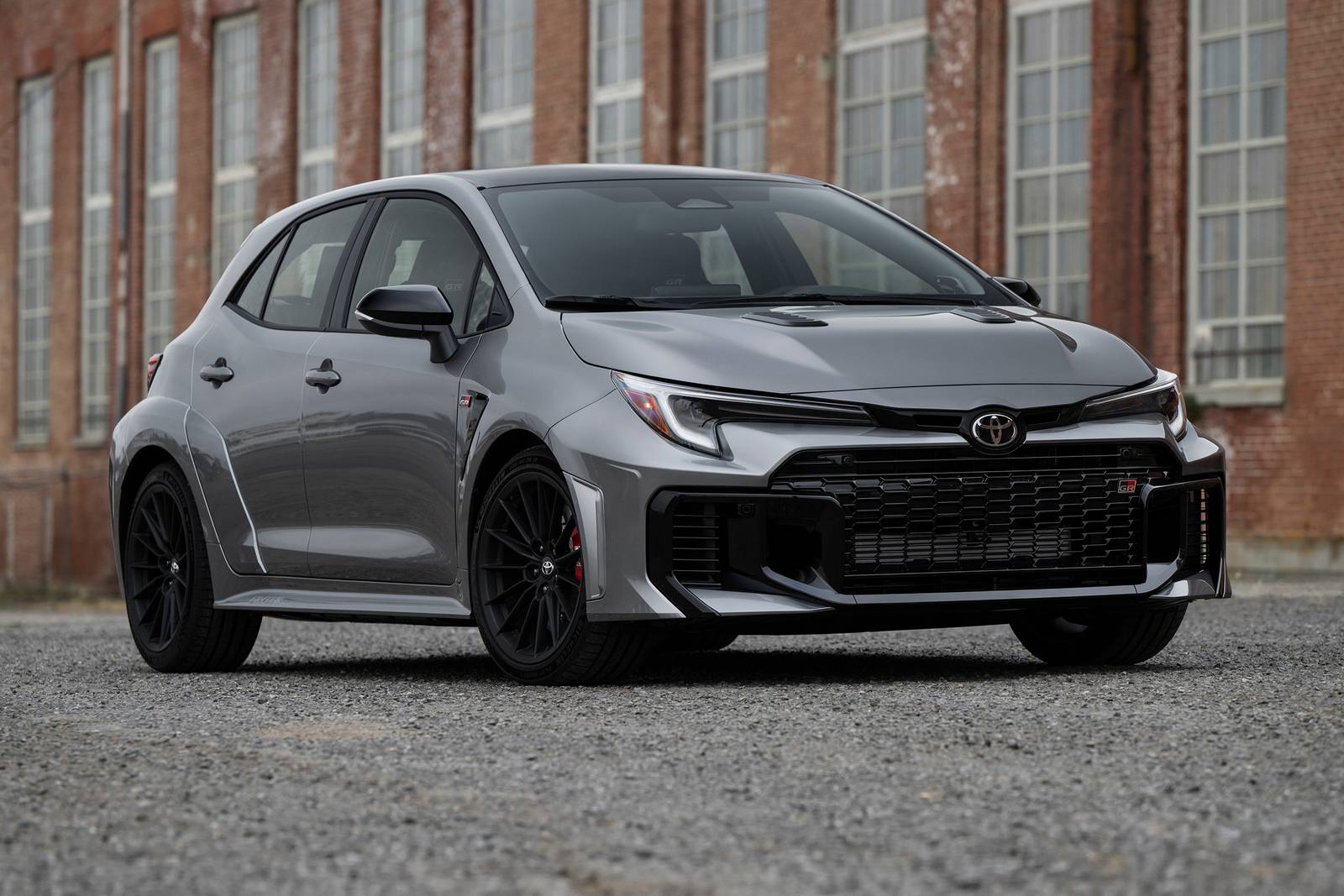
2026 Toyota Corolla GR Premium Plus. How out of fashion, a hot hatch! I love the format, and I loved driving this all-wheel drive, 300-horsepower pocket rocket. You can get it with a six-speed manual, though our Premium Plus ($47,515 base) makes available an eight-speed paddle-shifted automatic (for $2,000).
Under the hood is a 1.6-liter turbocharged three-cylinder (yes, three cylinders!) engine that won a 2024 Wards 10 Best Engines and Propulsion Systems award. Toyota engineers are wizards for getting 300 horsepower and 295 pound-feet of torque from three cylinders, with zero to 60 mph of 4.99 seconds.
During a visit to this car on a race track in Charlotte, North Carolina, Chief Engineer Naoyuki Sakamoto told me that careful placement of balance shafts keeps the three-cylinder car from what the British call “scuttle shake”—excessive noise and vibration. He also said the cylinder count reduces turbo lag (I didn’t experience any) and better exhaust gas management. Track versions of this car will be extensively raced. It’s a lot of fun, on the track or on the road, and five-seat, four-door hatchbacks are practical!
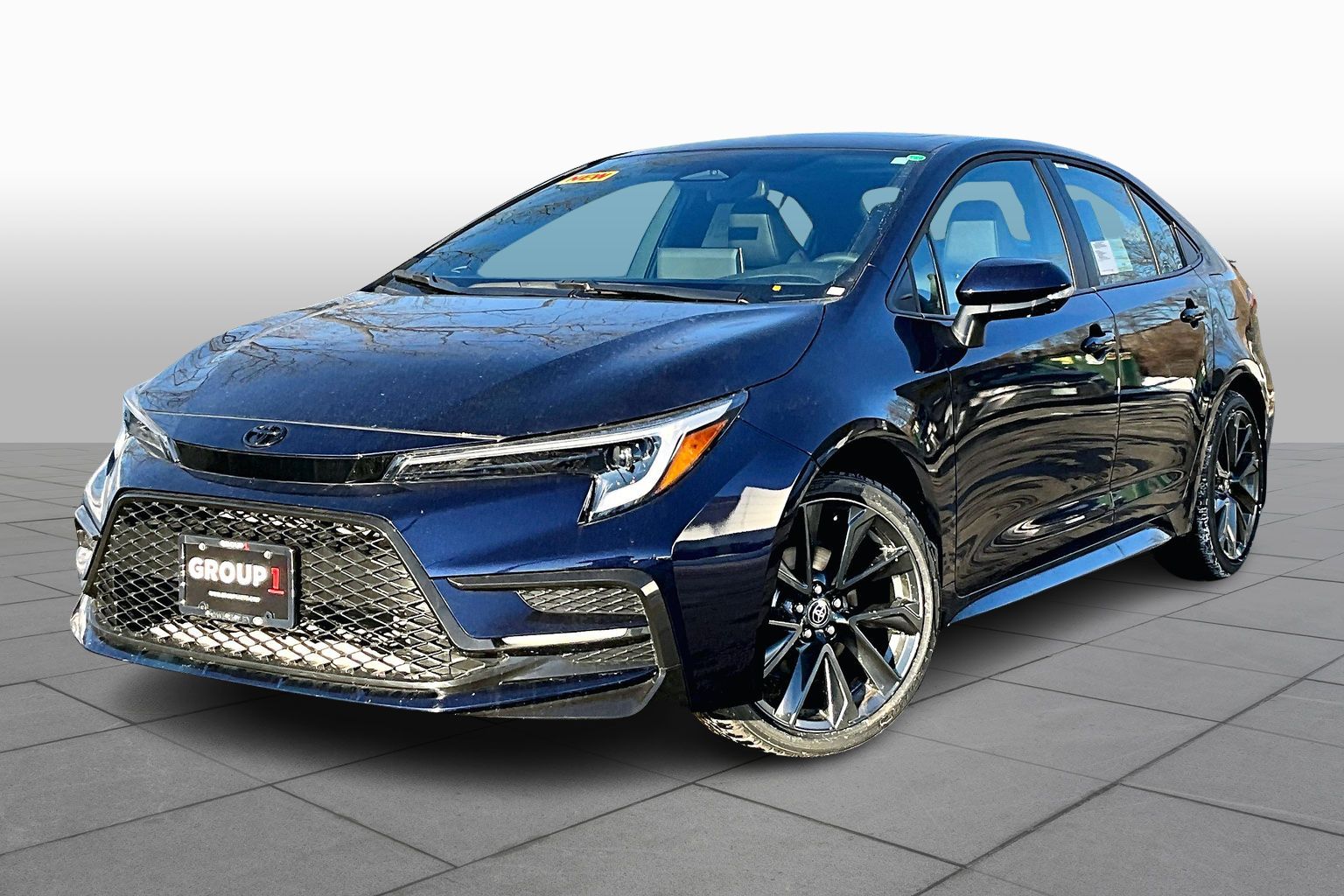
2026 Toyota Corolla XSE. Starting just under $30,000 ($29,635), the XSE is the top sporty trim before you get to the GR. Under the hood is a two-liter, 169-horsepower engine with 151 pound-feet of torque that’s adequate for most duty cycles. It was certainly OK for driving around town. I don’t do stoplight drag races.
For the price, you wouldn’t be able to buy a stripper compact SUV, but here you get a nice premium feel. Blind spot monitoring is standard, as is a 12.3-inch digital gauge cluster, and wireless charging. Other XSE features are a gloss-black mesh grille, model-specific side skirts, a color-keyed rear spoiler, and graphite colored 18-inch wheels. The interior gets heated front sport seats, and a leather-wrapped steering wheel.
The car was comfortable, the heated seats came in handy, and it was a pleasant cruise on the highway. Unless you plan to spent your weekends off road, it’s hard to see why most small families need more car than this. To go further would be to discuss the difference between “want” and “need.”
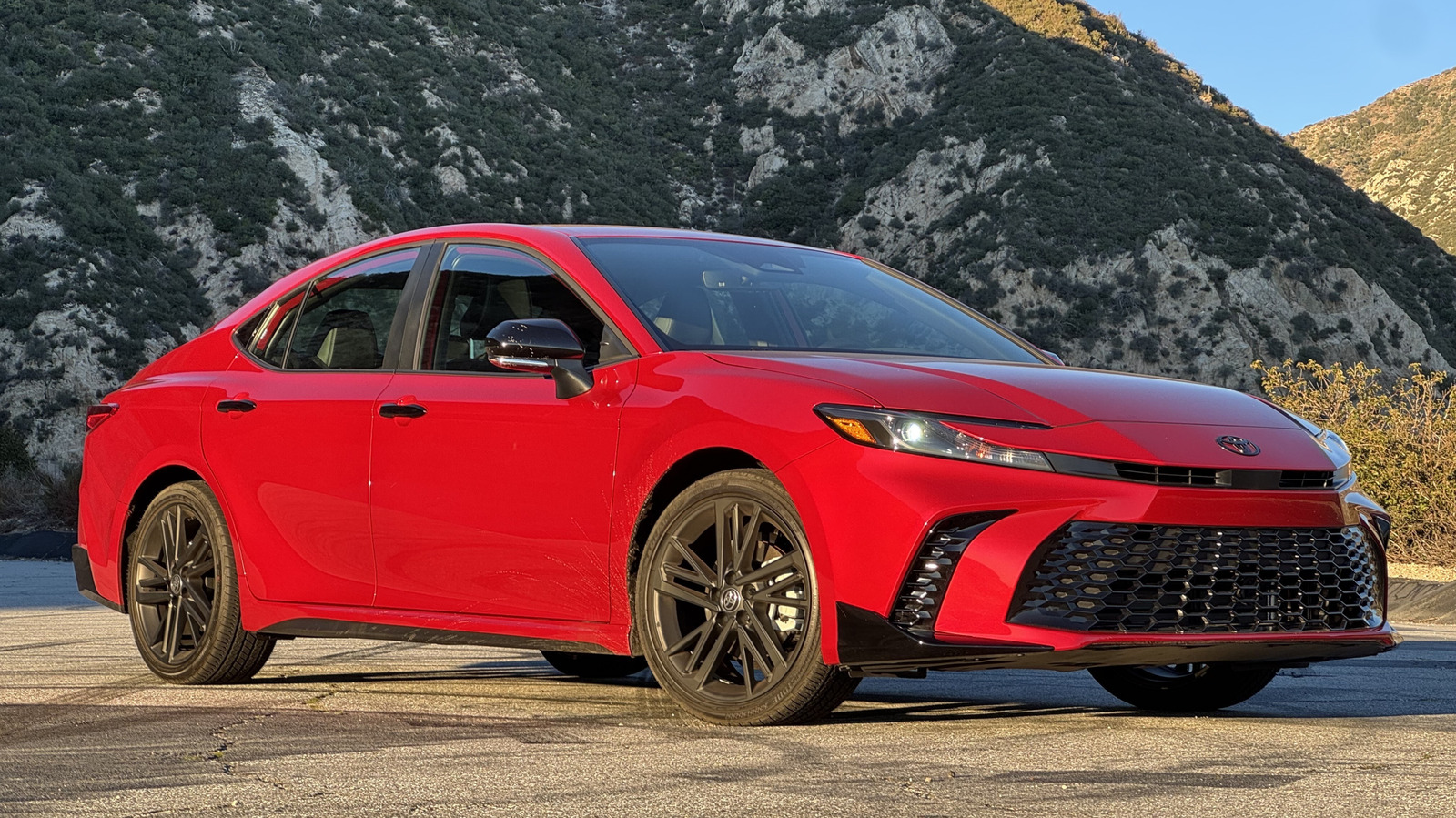
2026 Toyota Camry Nightshade Edition. This Camry (the result of a 2025 redesign) is an upmarket looks-cool edition, with gloss black exterior accents, matte/satin black wheels, and blacked-out badging. It’s basically an SE with something dark on its mind. Your call if you want to look sinister or not, but it’s hard to make a Camry even vaguely threatening. It’s a basically harmless piece of styling.
The Nightshade is a hybrid with a 2.5-liter drivetrain that produces an impressive 46 mpg combined. Not quite Prius territory, but close, and very useful in a mid-sized car with plenty of interior room. It’s not a big price leap from a Corolla, starting at $32,800 (another $1,525 buys AWD.) More than 80 percent of buyers don’t bother with AWD, and I sympathize.
The Nightshade package adds sport seats with white striping, aluminum pedals, and an eight-inch touchscreen (with a 12.3-inch unit optional).
These aren’t fast cars, but they were never intended to be. The FWD version sheds some weight, and the new model is almost 200 pounds down from the last XSE, with a minor power increase. Zero to 60 takes seven seconds. Do you think that’s a long time? Why, do you have somewhere you have to be in two seconds?
The Camry is one of the world’s most popular sedans, and despite their SUV obsession, Americans continue to love it. The Camry sedan is, in fact, the most popular passenger car in the U.S., selling an average of 300,000 to 400,000 annually here. Why? It’s incredible sensible, and consistently one of the most reliable cars on the road.
The spring of 2026 has turned the auto industry on its head. The electric automobile, pronounced dead on arrival, has miraculously seen a rebirth. EV owners, until very recently shocked at the low prices their cars were bringing at resale time, now might be wise to hold out for higher bidders. On platforms like Cars.com and Autotrader, online searches for new electric cars and hybrids rose more than 20 percent in March from the previous month. And used EV interest rose 54 percent in March, says Robb Report.
Even if you haven’t previously considered an EV, the fact of $4.50 a gallon gas might change your thinking. Here are some new cars I’ve driven recently, starting with the EVs:
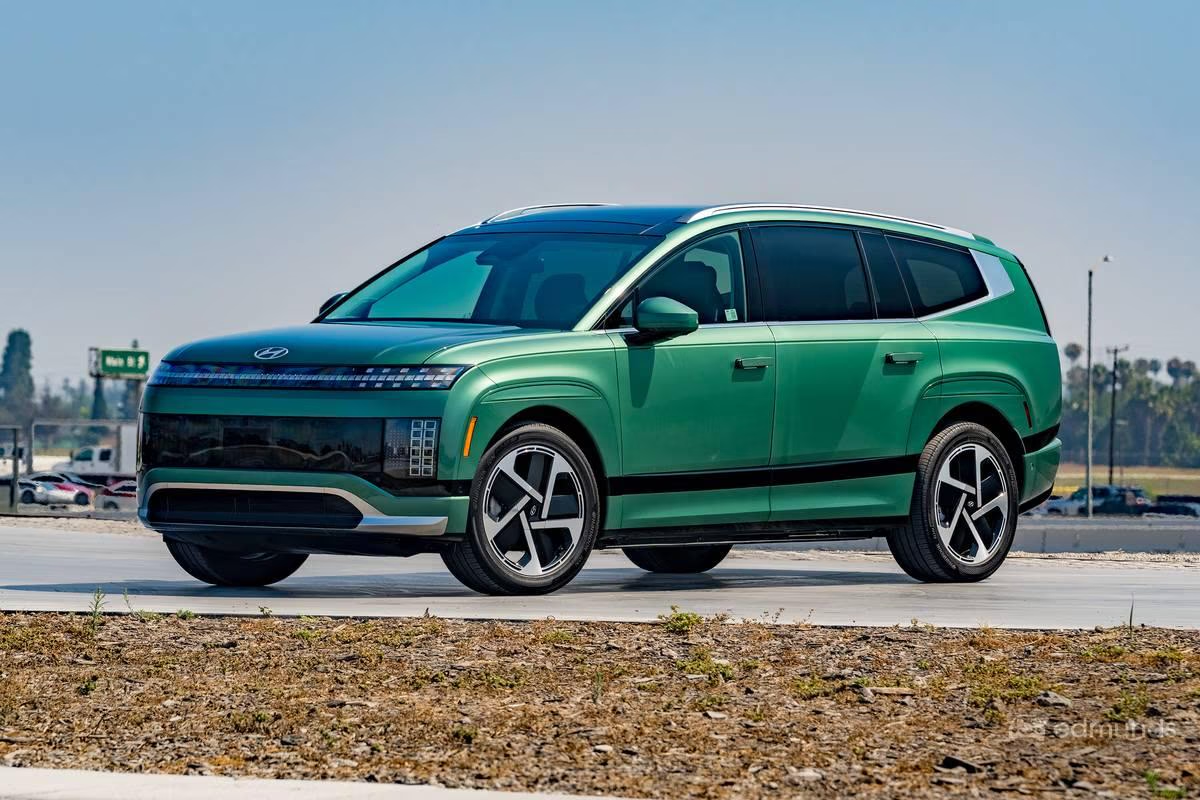
2026 Hyundai IONIQ 9 Limited. Three-row EVs are taking off, and we’d have some serious competition in this category if Chinese cars were sold in the U.S. The Zeekr 009, for instance, is simply awesome—three rows with reclining massage seats, plus 4.5-second zero to 60 times.
We still have pretty good choices, though. The Kia EV9, Lucid Gravity, Cadillac Vistiq and Escalade iQ, Tesla Model Y (the bestselling car in the world!), Rivian R1S, and more.
The IONIQ 9 is based on the Hyundai/Kia E-GMP platform and is built (along with the IONIQ 5) in the U.S. at the giant Metaplant near Savannah, Georgia. I saw both models being built recently. The 9, in six- or seven-passenger versions, is basically the same size as the Palisade SUV, but it won’t kill you at the gas pumps. There are multiple versions of this electric SUV, all of them with a 110.3-kWh battery pack. Two are all-wheel drive versions with 303 horsepower, and there’s one single-motor iteration with 215 horsepower and the most range—335 miles. There’s also a Performance AWD model that puts out an impressive 422 horsepower.
I like this very versatile vehicle a lot—it’s basically the best of both worlds, a hugely useful transporter for the whole family with zero emissions and great range.
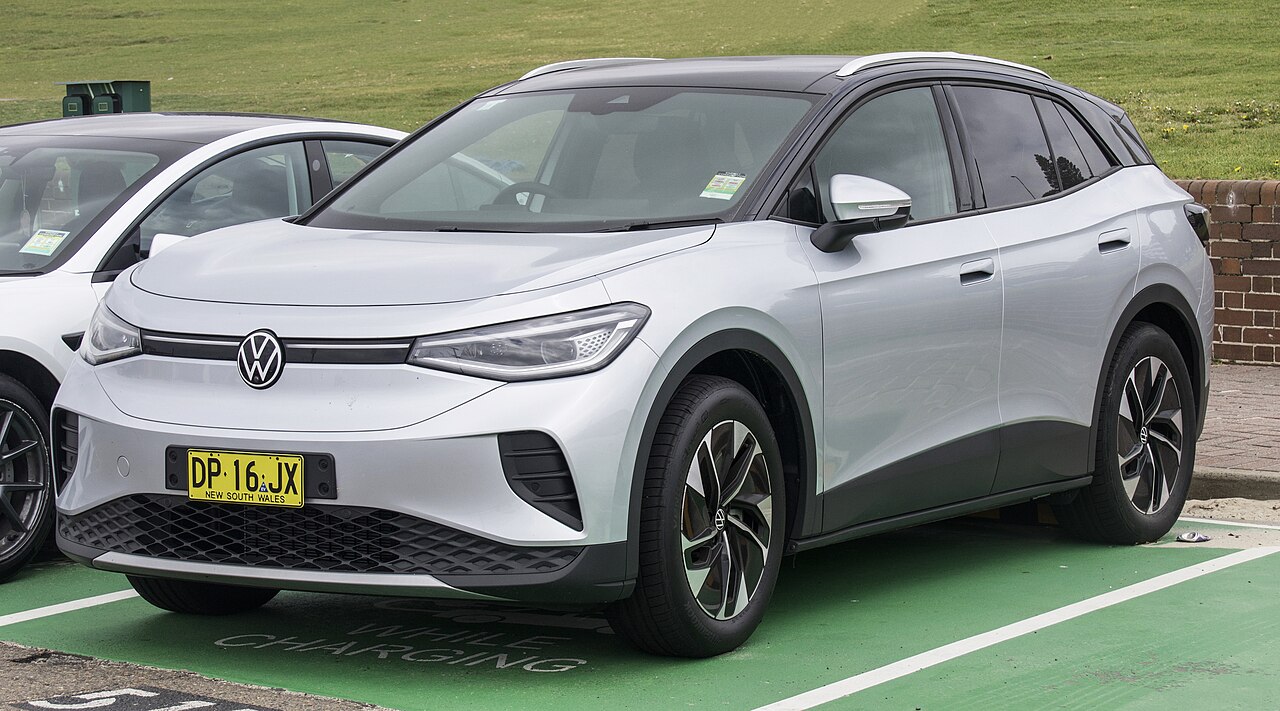
Volkswagen ID.4 AWD Pro. The ID.4 has been around for a while, at one time placing high on the EV sales charts. Today, in Pro AWD form it’s an electric SUV with two motors, an 82-kWh battery pack, and 291 miles of range. The MSRP starts at $45,095. A big plus is that the ID.4 comes with a two-year free pass to Electrify America’s large charging network.
I’ve talked to ID.4 owners who love their cars. The dual-motor configuration definitely gives the car some scoot—4.8 to 5.4 seconds to 60. The new ones have improved fast-charging abilities, 10 to 80 percent in 30 minutes. I found this an easy car to live with, and I’d settle for a base model. These are used-car bargains now. I’m seeing used 2023 examples for $21,000.
The combination of weak EV demand and the ID.4’s long time on the market (since 2021) hasn’t helped VW’s bottom line. Sales of the ID.4 were down 95.6 percent in the first quarter of 2026 versus the same period last year. The ID. Buzz, a unsuccessful EV retro version of the Microbus, is skipping the 2026 model year but may be back.
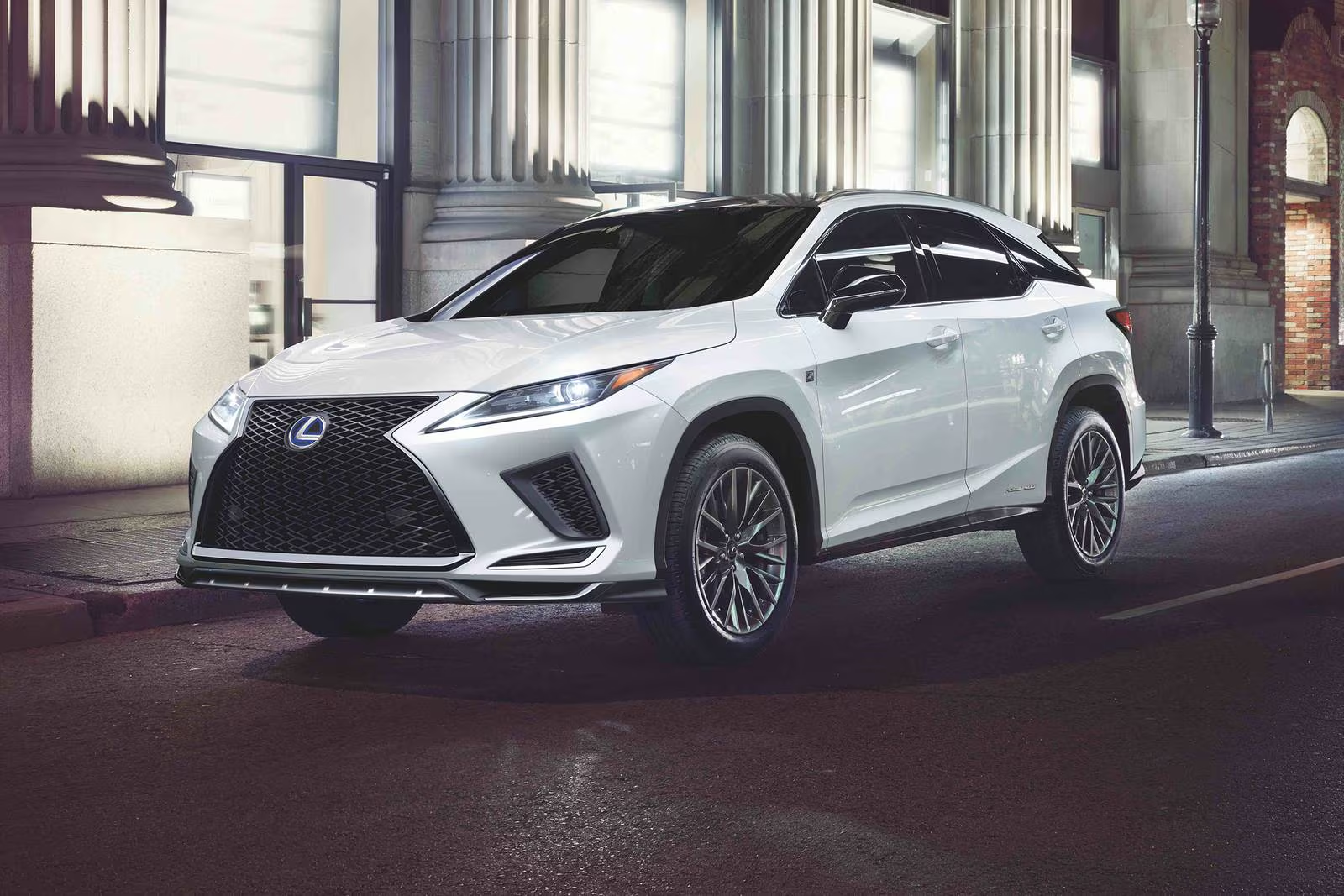
Lexus RX 450h+ Luxury. Buyers who wouldn’t consider a battery EV are taking a second look at plug-in hybrids (PHEVs) such as the 2026 Lexus NX 450h+. The combination here is a 2.5-liter four from the Toyota hybrid stable that pairs with electric motors and an 18.1-kWh battery for 304 horsepower, a 37-mile EV range and zero to 60 n six seconds. That translates to 84 MPGe combined, with no worries about having to find a charging station.
Some PHEV owners never get around to plugging their cars in, which is a shame, because entries like this one can mostly run electric—the average commuter only travels 35 miles per day, well within this car’s battery range. No need to find fast charging—on Level Two, the relatively small battery pack is full up in three hours.
The base Luxury model is around $61,740, with the F SPORT trim at $67,000. These cars are a bit large for my taste, but the interior is a nice place to be with quality materials throughout, a 14-inch touchscreen that hooked up to Apple CarPlay without a lot of fuss, and voice commands that actually seemed to work. The high price is probably deterring some would-be customers.
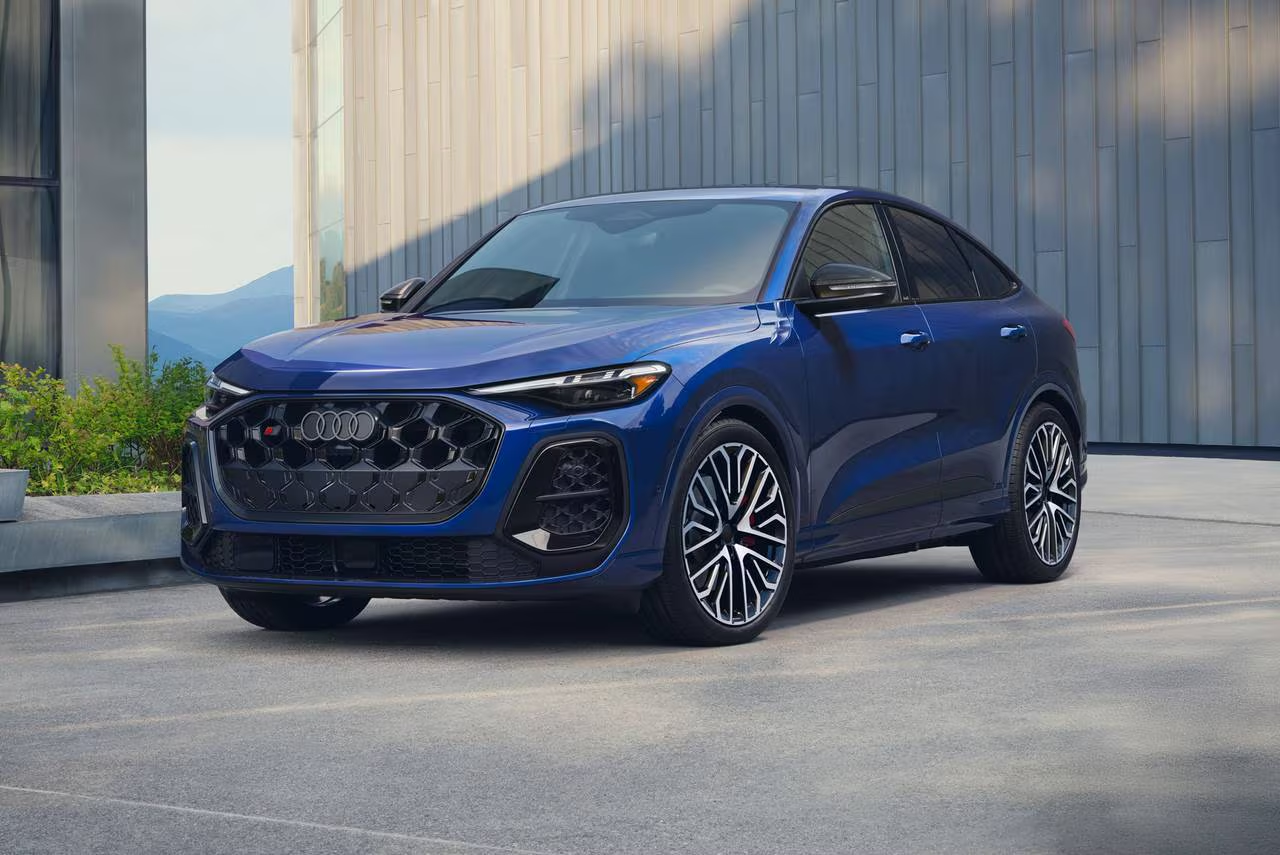
Audi SQ5 Prestige. This sporty SUV is available in either standard or Sportback form (as above), and as tested in the upmarket Prestige trim the price of entry is a heady $72,595. The emphasis is on the sporty, since power comes from a turbo three-liter V-6 that generates a mighty 362 horsepower and 406 pound-feet of torque. The older SQ5s had an eight-speed automatic, but that’s been replaced by a seven-speed dual-clutch iteration. With these cars, Quattro AWD is standard, as is adaptive air suspension.
People who want this kind of performance are probably better off in a sedan, but Audi tilts this one to trail seekers, with either Balanced or Offroad Plus drive modes. But driven on pavement it can reach 60 mph in just over four seconds. The interior of our test car was dominated by dark quilted leather, in the German manner. The car was amusing to drive, and the acceleration was truly impressive. Oddly, similar performance could be obtained by many lower-priced EVs. That kind of stands the “EVs are expensive” thing on its head, doesn’t it?
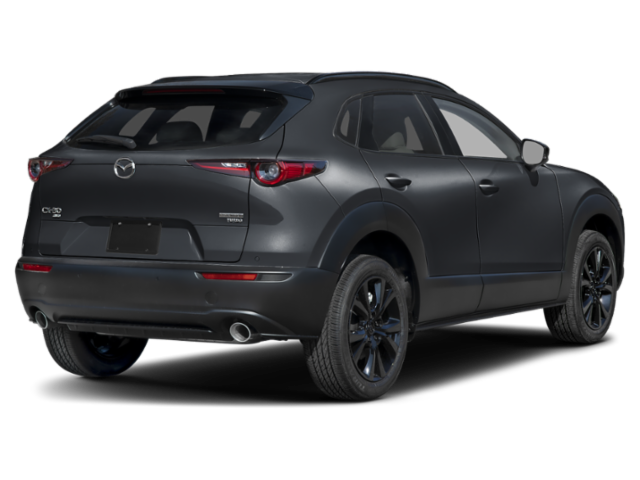
2026 Mazda CX-30 Turbo Aire Edition. The CX-30 is in a crowded SUV field (premium subcompact crossover), where it’s hard to stick out from the crowd. It’s powered by a SKYACTIV-G 2.5-liter, 250-horsepower turbo four, and the Turbo Aire version adds unique white leatherette seats with grey suede inserts, as well as a black signature wing and roof rails, plus 18-inch alloy wheels. The price is an affordable $34,410 to $37,240—it’s a fair amount of car for the money.
The CX-30 is docked for mediocre fuel economy—25 mpg combined, and for favor premium fuel (regular cuts the power to 227 horsepower). Given sticker shock at the pumps, fuel economy matters these days.
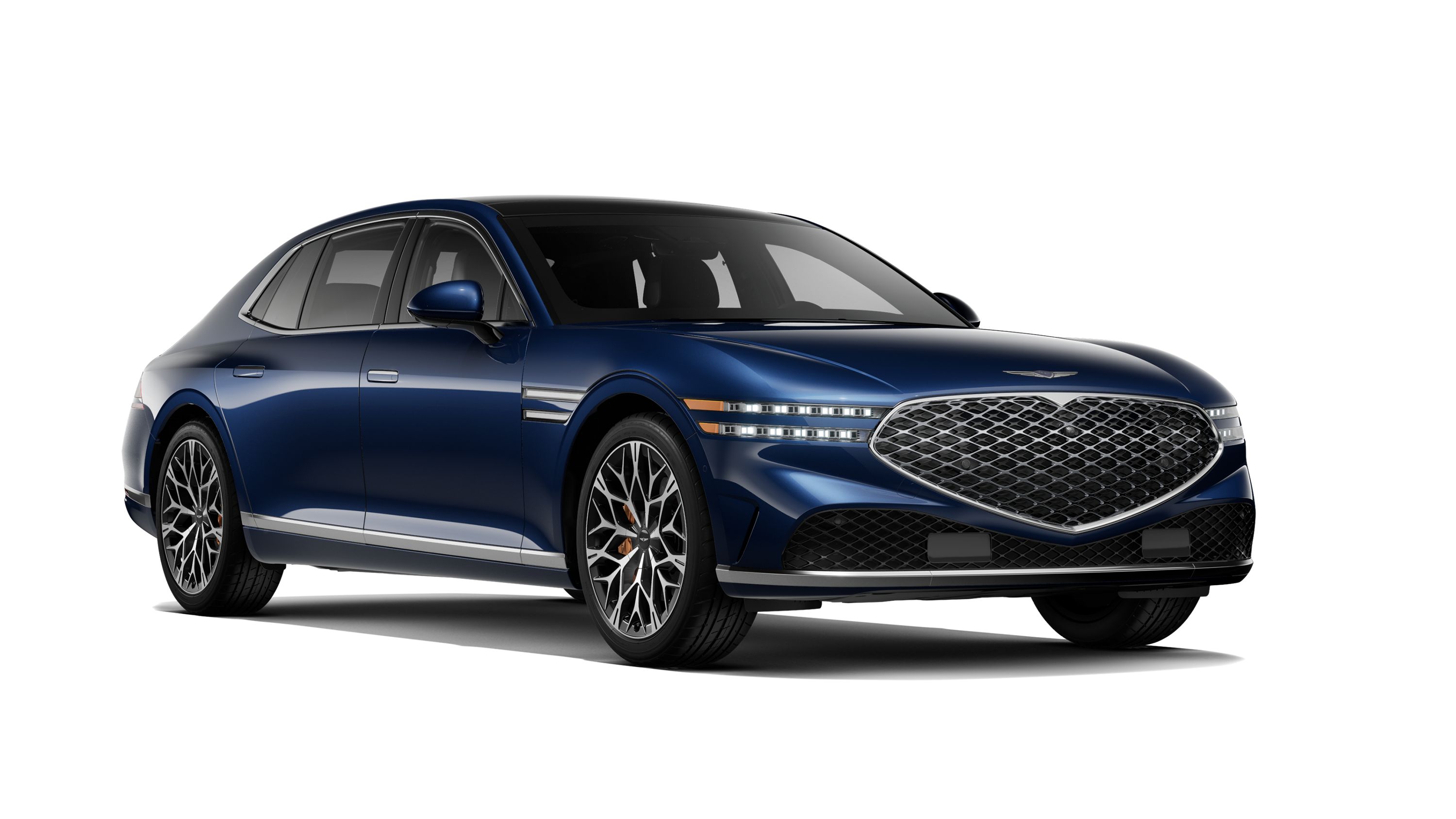
Genesis G90 3.5T AWD. I’m a big fan of Genesis’ offerings, which do luxury the right way. The G90 is the top of the heap. And note that it’s the only sedan in this listing! The flagship model comes with a standard twin-turbo V-6 producing 375 horsepower, but an intriguing 409-horsepower 3.5-liter E-Supercharger mild hybrid 48-volt version is available. Cosseting air suspension and AWD are standard. If you really want to trick it out, you’d opt for the Prestige Black trim, which adds 21-inch wheels, cosseting massage seats, and the deluxe Bang & Olufsen infotainment system. There’s a “mood curator” system that automatically adjusts lighting, seat massage, the sound system and the curtains to create interior atmospheres that either keep you awake or relaxes you. It can be customized via the infotainment screen.
Genesis tends to make luxury more affordable, but that’s relative and the G90 is never going to be confused with an economy car. It starts at $92,700 in base form, and goes all the way up to $105,750 with the E-Supercharger and Black trim.
Save a bit of money with the only slightly less luxurious 2026 Genesis GV80 3.5T Prestige AWD we also tested. It has an initial MSRP of $82,330, with much the same power on tap, 22-inch wheels and Nappa leather.
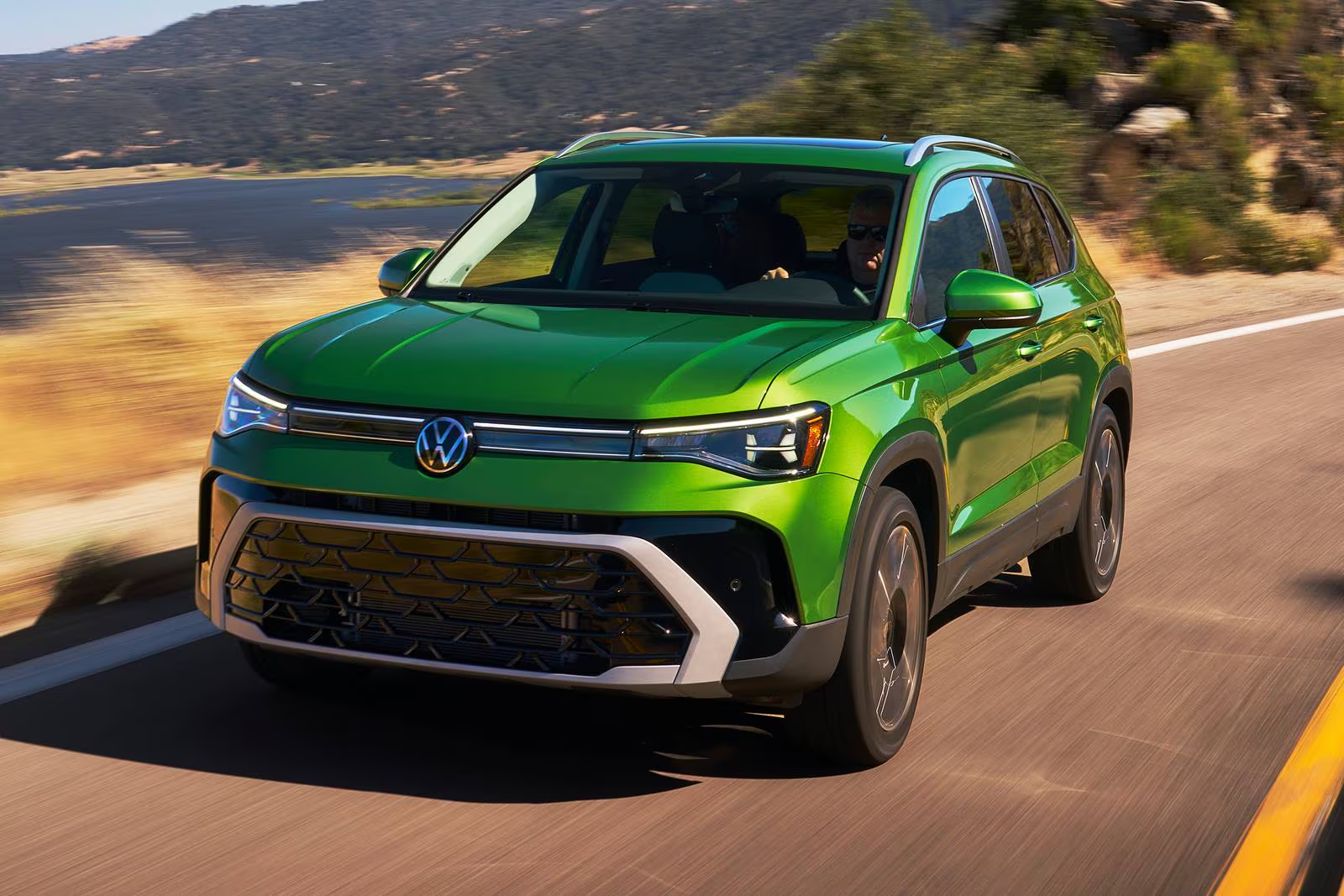
2026 Volkswagen Taos SEL 4MOTION. Speaking of top tier, this is the ultimate iteration of the VW Taos subcompact SUV, and in keeping with the brand’s image it still comes in as affordable (starting at $35,900).
The Taos has relatively modest power—a 174-horsepower 1.5-liter turbo engine with 174 horsepower (up from 158) and 184 pound-feet of torque, paired to an eight-speed automatic. The SEL 4MOTION AWD offers very upscale accommodations for the price, including 19-inch wheels, eight-inch touchscreen with BeatsAudio sound, and premium Vienna leather seats with heating and ventilation. But again, it’s in a very crowded field. The safety suite is impressive, as is the cargo area—up to 60.2 cubic feet with the second row folded.
Considering the restrained output, it would be nice if the Taos’ fuel economy was stellar, but its 28 mpg combined is not all that much better than the much more powerful Mazda CX-30 noted above. VW needs a killer model. Its first quarter 2026 sales dropped up to 20.5 percent from Q1 in 2025.
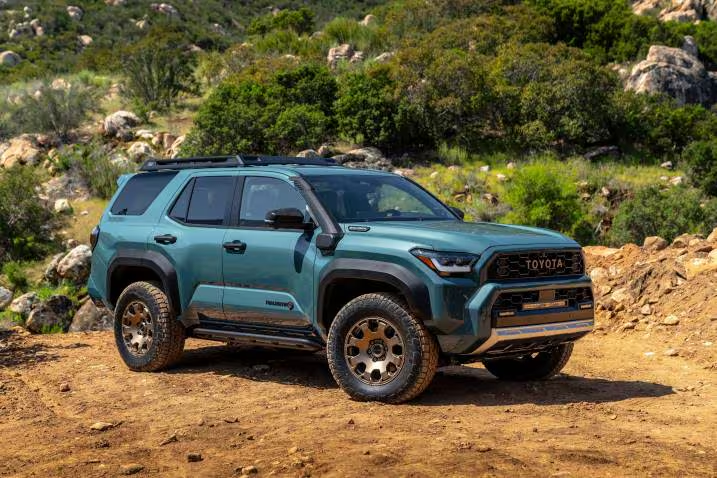
2025 Toyota 4Runner TrailHunter. When I saw the snorkel, I knew that this was a model for really serious trail hunters. Or river forders. I don’t count myself in that number—pavement was invented for a reason—so the charms of this model, cumbersome around town, were somewhat lost on me. Still, I can enumerate them here.
It’s truly impressive that the Japanese have been able to adapt to American tastes, including that weird desire to go “off road”—or at least have the potential to do so. They must shake their heads on the assembly line in Japan.
The TrailHunter comes with a 326 horsepower i-FORCE MAX 2.4-liter turbocharged hybrid drivetrain, generating 326 horsepower and a stump-pulling 465 pound-feet of torque. All those consumers with stumps to pull should take note, as well as those with 6,000 pounds to tow. The AWD is full time, with a locking rear differential. This is 5,500 pounds of SUV, so the 23 mpg combined is not surprising.
The equipment list includes recovery hooks, skid plates to protect the undercarriage, a high-clearance front bumper, the afore-mentioned snorkel that allows the engine to breathe when the car is half submerged, and rock rails. An air compressor is standard, and there are auxiliary switches for add-on accessories. Cargo capacity is impressive, at 42.6 cubic feet behind the second row.
The mid-sized crossover Telluride is a major producer for Kia, which sold 125,000 of them in the U.S. last year, up sharply from the 59,000 in the first year of 2019. The three-row Telluride helped push Kia’s midsized market share from 3.5 percent seven years ago to eight percent now. “The Telluride casts a halo over our entire SUV lineup and our entire brand,” said Russell Wager, vice president for marketing at Kia North America.
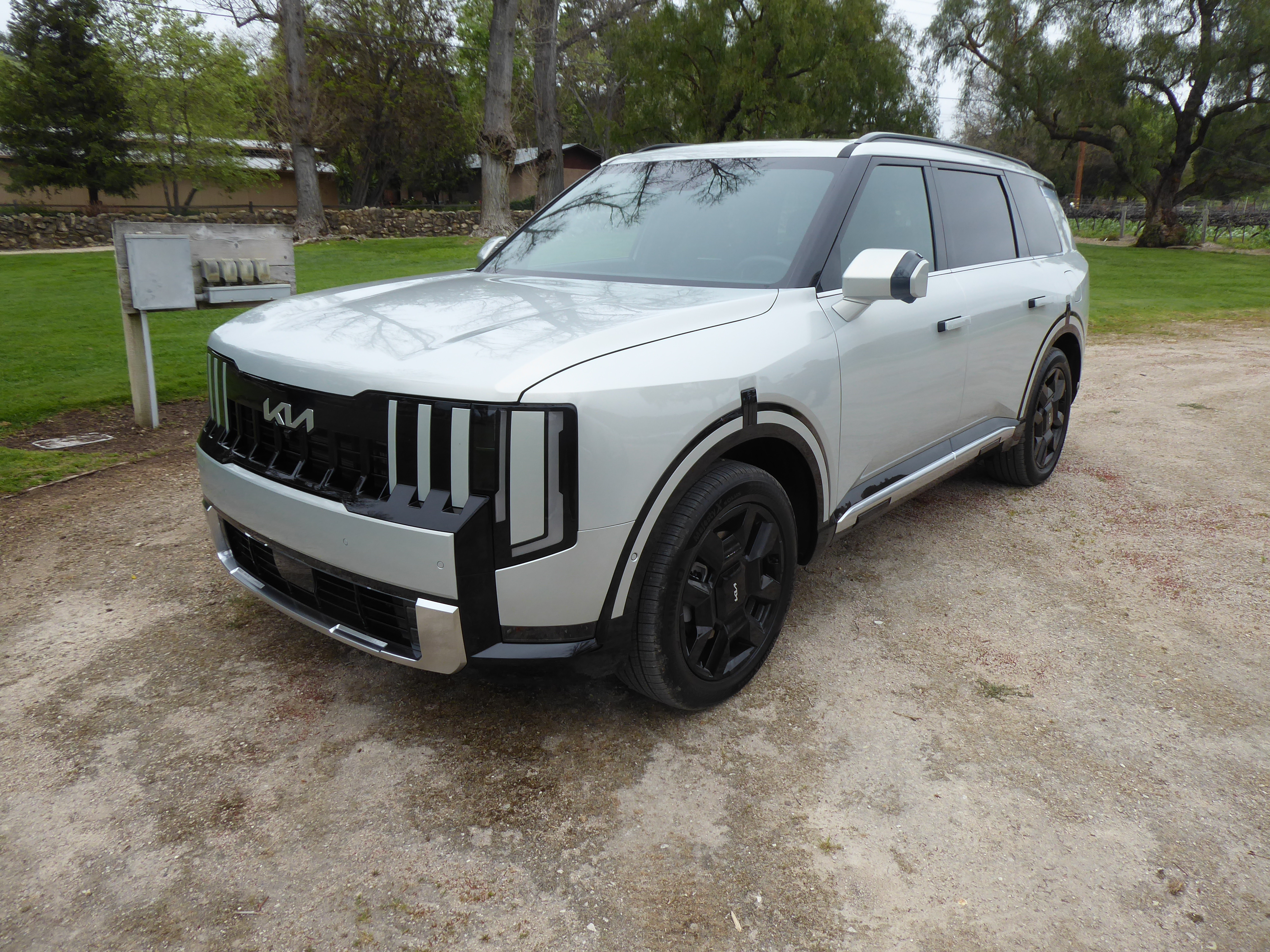
The new Kia Telluride in hybrid form. (Jim Motavalli photo)
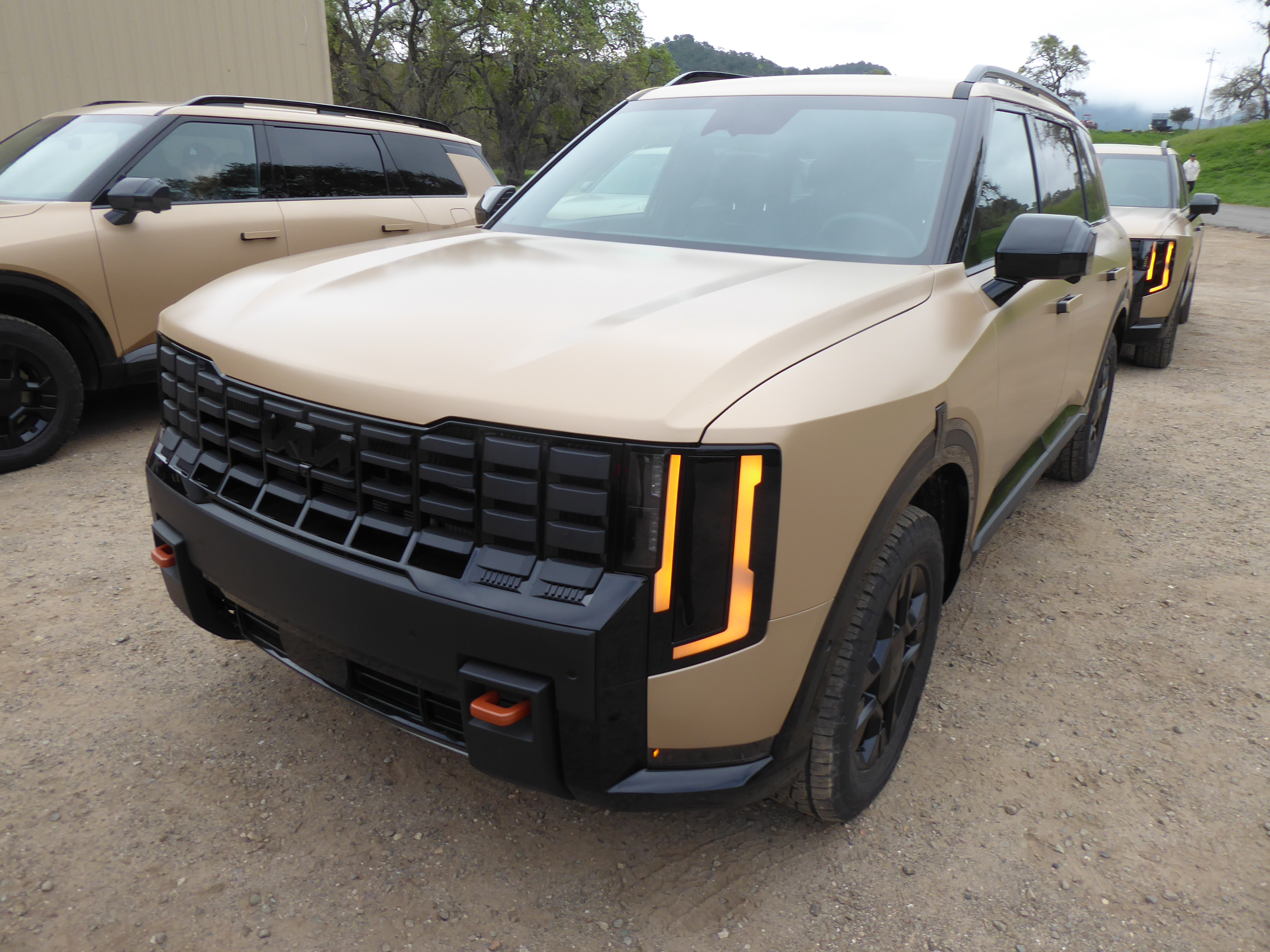
The Telluride was completely redesigned for the 2027 model year, and that model (available both as a turbo gas car and as a hybrid) is now in showrooms. The media got its first shot at the car in Santa Barbara, California March 10.
Kia had a big year in 2025, selling 852,155 cars in the U.S., up seven percent from 2024, said James Hope, national product communications manager at the brand. The “flagship” Telluride is produced out of the brand’s West Point, Georgia plant, which Hope said is in a good position to deliver gas, hybrid and electric models as the market demands.
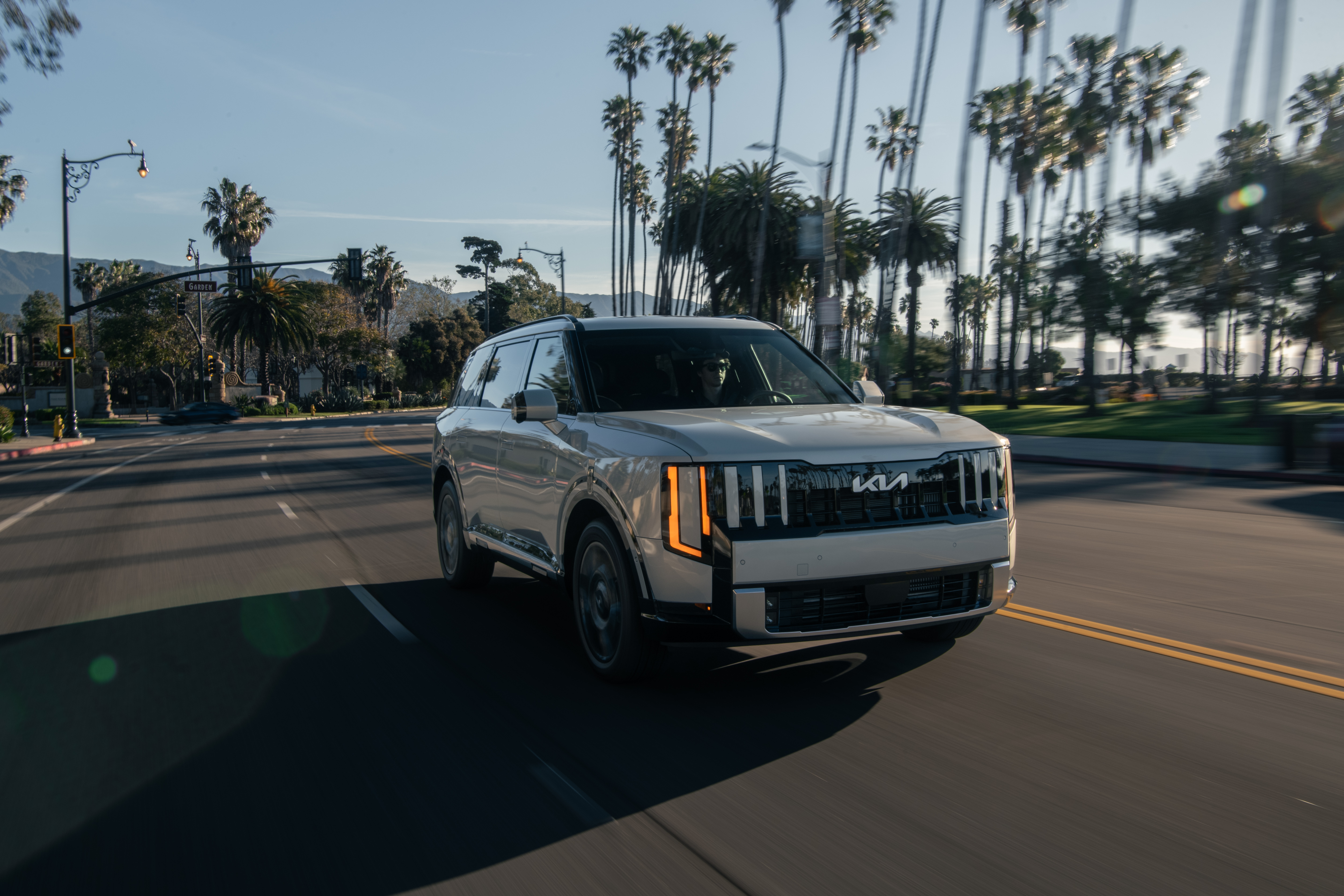
On the road in Calfornia. (Kia photo)
It’s interesting to point out that Kia actually outsold Hyundai for the first time back in January (60,794 for Hyundai, including Genesis, and 64,502 for Kia). I hadn’t realized that the two brands were actually in competition until, during the product demonstration, Kia showed a slide comparing the Hyundai Palisade unfavorably to the Telluride. The two cars are built on the same platform, but the Kia (the slide said) is more capable and comfortable, has more hybrid range, offers a real spare, tire, two wireless phone chargers, and a standard sunglass holder.
I asked about this unusual approach—which is like Chevrolet going after Buick—and was told that the Palisade is the number one cross-shopped vehicle with the Telluride. They’re going to buy one or the other, and Kia wants consumers to keep looking its way.
The Telluride offers up to 89.3 cubic feet of storage with the second and third row folded. (Jim Motavalli photo)
Sang Lee, group manager for product planning at Kia, said the “reimagined” Telluride was designed and is being built in the U.S., with American consumers in mind. It’s both 2.3 inches longer and more powerful, he said. Of course, SUVs were an American invention that no other country would likely have developed—though their appeal is global now.
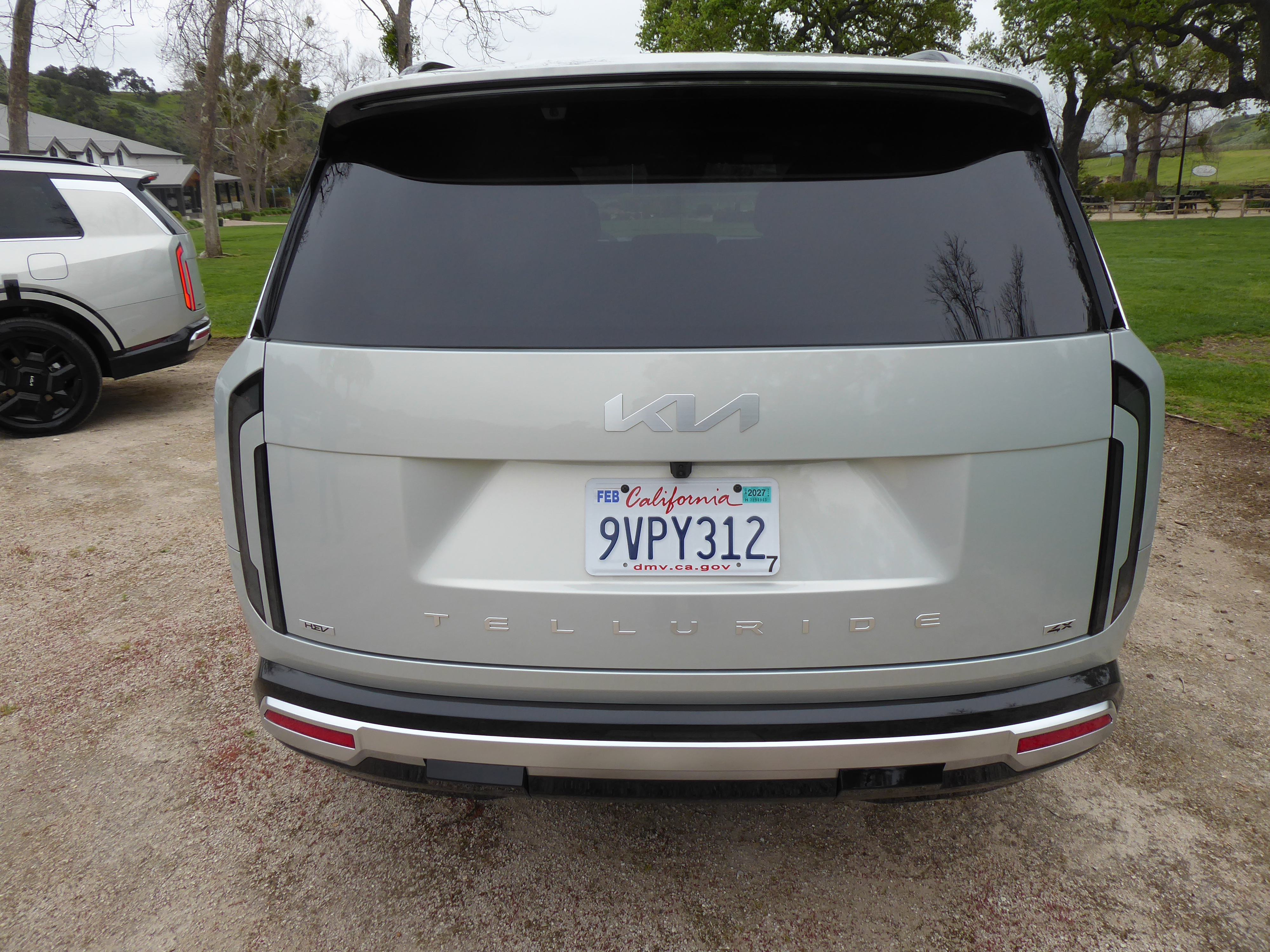
Cargo space is increased with that longer length, to 22.3 cubic feet behind the third row, and up to 89.3 cubic feet with the two rear rows folded. Legroom in the cabin is also up.
The exterior design is very recognizably in the Kia family, though it offers unusual touches such as the twin vertical tail lamps and the non-functional black rectangles at the top of the wheel wells that are there to visually “anchor” the trim. A cool feature is the new tailgate light that not only illuminates cargo, but can change color and be adjusted for color.
The Telluride in off-road X-Pro form. (Jim Motavalli photo)
The car we were given to drive up to the 7,000-acre Porter Family Ranch in southern San Luis Obispo County was the Turbo-Hybrid SX Prestige AWD version, starting at $56,590 (and $60,210 as equipped). The twin-electric-motor hybrid would seem to be the one to buy, because it’s not hugely more expensive than the gas car ($39,190 base versus $46,490), and it should pay for itself quickly in fuel savings because of its 35-mpg combined. The hybri offers 329 horsepower (20 percent more than the 2.5-liter turbo), and its range of up to 637 miles really trounces the standard model’s 418.
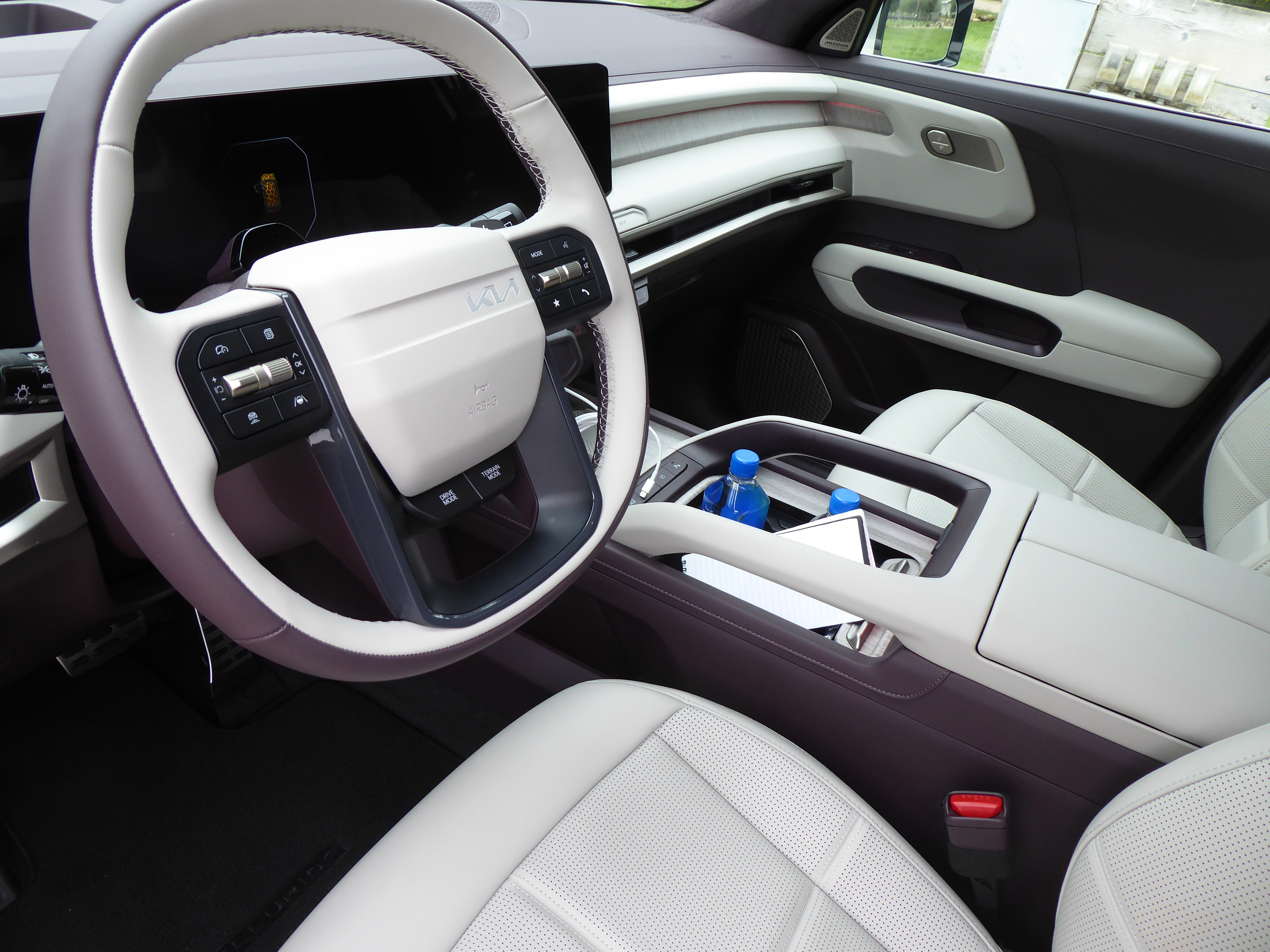
On the hills around Santa Barbara, the Telluride really showed off great acceleration (6.3 seconds to 60), exceptional handling for such a comparatively large vehicle. It’s also very quiet in operation, and the massage seat for the driver didn’t hurt either. In the hybrid, all three rows can get heated seats. There wasn’t much to dislike.
Inside the Telluride. (Jim Motavalli photo)
Later in the day, we took the rugged X-Pro model off road at the ranch. Though most owners will never ford streams or go nearly sideways (as we did) up hills, it’s nice to know it can be done. The car offers “mud mode,” which proved very useful, as did the forward-facing camera when it was impossible to see over the hood. Kia doesn’t break out X-Pro sales, but they’re probably significant. Even drivers who never go off the beaten path aspire to do so—or maybe they just like the image.
Living obstacles on the course were provided by herds of black cows, who are provided free range of the property. A California ranch is probably about as good as it gets for cows.
Kia is likely to sell scads of these new Tellurides, and is already doing so, to buyers whose average age is 46. I’m not sure it’s actually hugely better than the Hyundai Palisade, but the rivalry is probably keeping both Korean brands sharp and focused.
At a well-attended session for investors in lower Manhattan March 12, Lucid Motors did its best to paint a portrait of a company that—while it has not yet made money—is nonetheless on a trajectory to do so, with a range of compelling projects (including affordable ones), big autonomy plans, and a stringent “radical efficiency” ethos.
Lucid showed off Lunar, a robotaxi prototype that depends on Level 4, which the company says it will have in 2029. (Jim Motavalli photo)
Taoufig Boussaid, Lucid’s chief financial officer, said the company “is at the end of a cycle where we have been investing heavily, a period of cash burn. Now we’re in the cycle in which we’ll be harvesting the fruits of the investment.”
Erwin Raphael, senior vice president of global revenue at Lucid Motors, described the financial situation another way, saying Lucid, financed by Saudi Arabia’s Public Investment Fund to the tune of $9 billion so far, is “at the bottom of what we call the Trough of Disillusionment.”
Boussaid predicted the company would reach profitability, or what he called “positive free cash flow,” late in the decade. The elements that will make it happen include a new midsized model, the Cosmos, another to-be-revealed midsized model called Earth that shares a lot of parts, a third (unnamed) vehicle on the same platform, robotaxi deployment, new global markets added, and a high priority on reducing expenses. “We’re going after every dollar,” he said.
Lunar’s interior lacks pedals and a steering wheel. (Jim Motavalli photo)
Derek Jenkins, Lucid’s design and brand senior vice president, said the Cosmos is for “upscale nurturers,” and the presumably sportier Earth for “trendsetting achievers.”
Lucid cars have been fairly expensive (the Air starts at $72,400, and the Gravity SUV at $81,550). but the company will be competitive if it indeed brings the Cosmos (and then the Earth) in under $50,000.
The Gravity robotaxi is scheduled for Uber deployment by the end of the year. (Jim Motavalli photo)
The Cosmos was designed to cut costs to the bone, using a new drivetrain called Atlas that reduces total part content by 30 percent compared to previous models. It also has 40 percent greater power density, said Emad Diala, senior vice president of engineering and software autonomy. He really got into the weeds: The car will use steel stampings, aluminum casting and giga-casting in a secret sauce, and have 65 percent fewer joints than Gravity.
The Cosmos is also expected to get 4.5 miles out of a kilowatt-hour of electricity, and add 200 miles of range in 14 minutes. Zero to 60 will be achieved in 3.5 seconds. Lucid will produce Cosmos cars at its new under-construction plant in Saudi Arabia, and also at the home manufacturing base in Phoenix.
Interim CEO Marc Winterhoff said the Cosmos will have a lower bill of materials (BOM) than the coyly identified “Chinese competitor that everyone is talking about,” and will also beat out a “U.S. EV leader’s midsized CUV.” He promised “comparable cost [to those cars] with longer range [approximately 300 miles],” and said the forthcoming Earth will look very different from the Cosmos, despite being similar under the skin, and “will address different customer segments.”
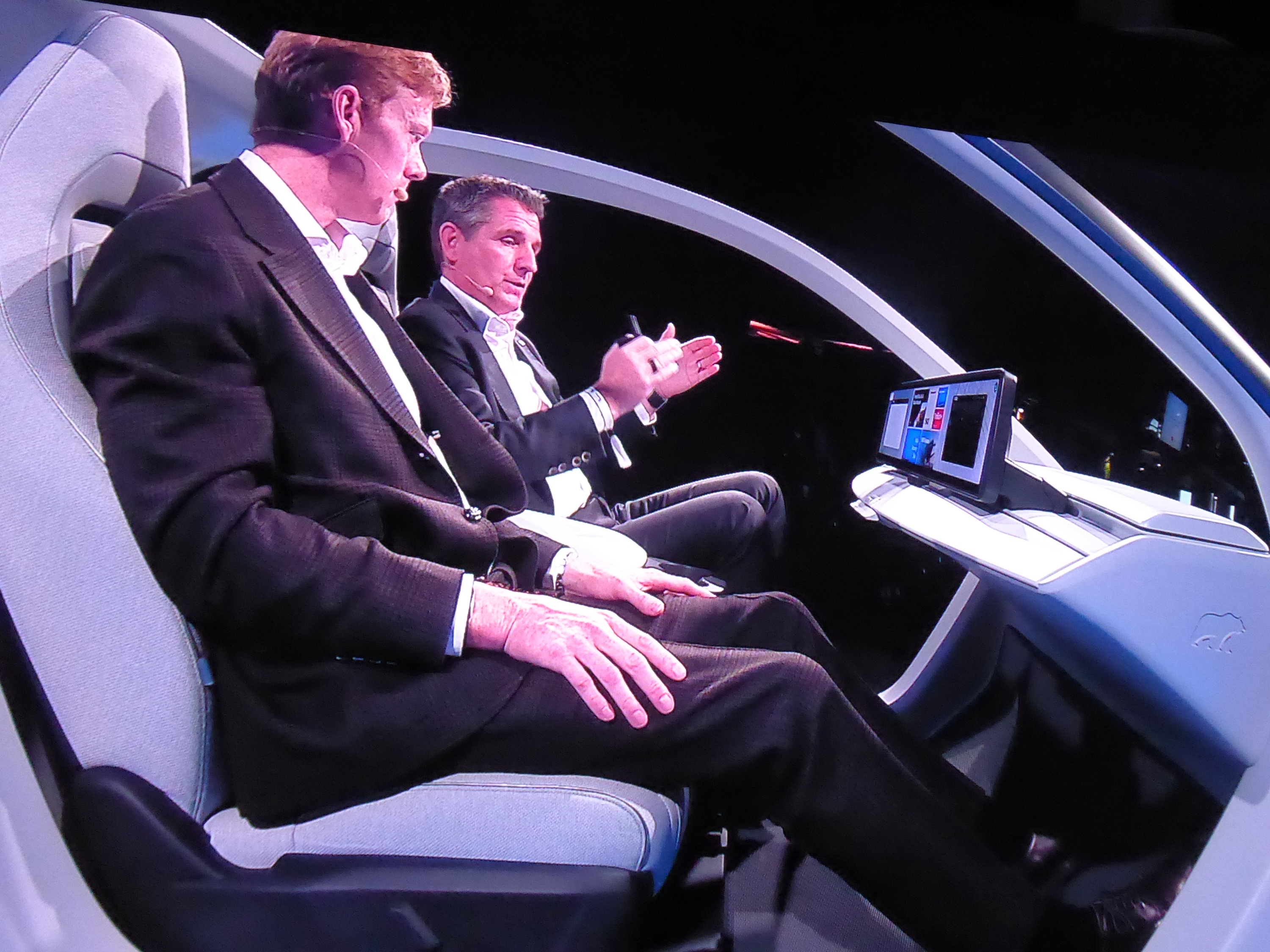
Uber’s Andrew MacDonald (left) in the Lunar with Marc Winterhoff, Lucid’s interim CEO. (Jim Motavalli photo)
Winterhoff showed off the robotaxi version of the Gravity, a partnership with Nuro and Uber, at CES in January. In Manhattan, Lucid brought in Uber President and Chief Operating Officer Andrew MacDonald to issue a progress report. Approximately 80 of the robotaxis have been delivered for Uber’s testing, and they should be taking paying customers by the end of 2026.
“Uber is the largest mobility platform in the world,” MacDonald said, “and with Lucid’s autonomous vehicles our trips will be much safer and help us realize true mobility as a service.” Lucid, he said, is “going about autonomy the right way, though there are still edge cases to be worked out.”
In New York, announced that it would be offering its DreamDrive Pro Level 2 plus autonomous software for $69 to $199 per month—another revenue source! Lucid also unveiled a smaller and more fanciful (no doors) robotaxi prototype. Lunar seats two abreast and lacks a steering wheel, pedals and other features associated with driver control. It sits on the Midsized platform, also, but any actual production version would be dependent of Lucid fully developing its Level 4 autonomy.
Speaking of that, Kai Stepper, vice president of autonomy and ADAS, showed a timetable that had Lucid developing point-to-point autonomy (L2++) this year, Level 3 in 2028 and Level 4 in 2029. Lucid has invested $500 million in autonomy, which it said is a bargain compared to the billions other companies have shelled out. It’s that radical efficiency they were talking about.
It was in that context that Lucid showed off the star of the event, Lunar, a prototype robotaxi that seats two and is designed for full autonomy, minus a steering wheel, pedals, or anything else you’d need to actually drive it old school. It’s not actually slated for production, but if Stepper’s timetable is accurate it could be viable in 2029. And it’s yet another Lucid built on the Midsized platform.
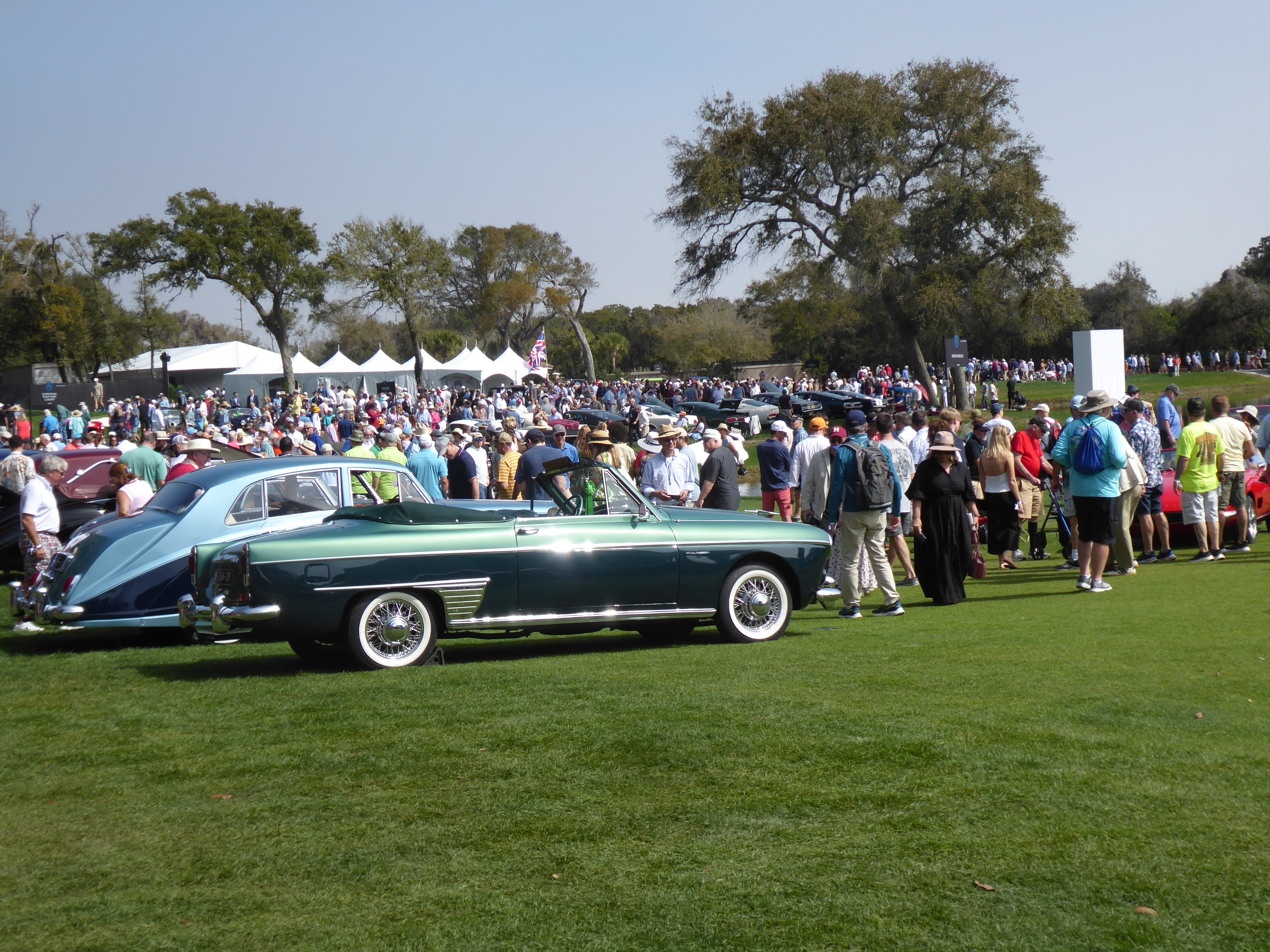
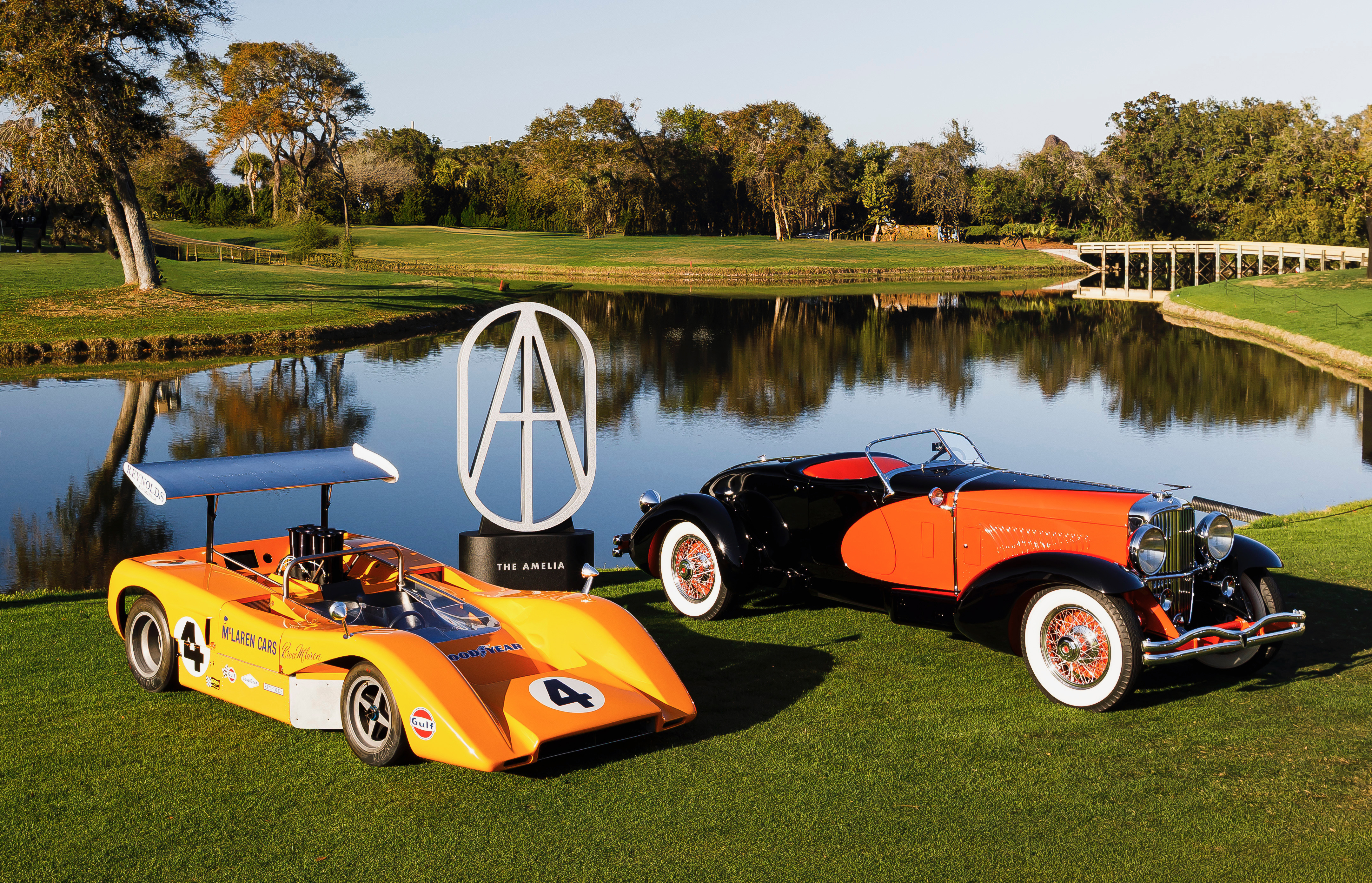
The weather can be iffy at the Amelia Island Concours d’Elegance in north Florida, but this year (the 31st)it was sunny—and hot. The sun reflected off all the shiny paint and chrome to make a feast for the eyes, and when the cars got started, ears, too.
There were an estimated 250 collector cars on the field. Best in show on the concours side was a boldly orange-and-black 1931 Duesenberg Model J “Tapertail” Speedster by Weymann, and on the sport side it was a race-winning 1969 McLaren M8B.
One of the features this year was a collection of one-off cars assembled by Barn Find Hunter Tom Cotter (who’s own 289 Cobra was on the field in bare metal, awaiting paint). The assembled cars included a plethora of models that were either the only one left, the only one made, or one of a tiny handful, so let’s skip over the more commonplace entries.
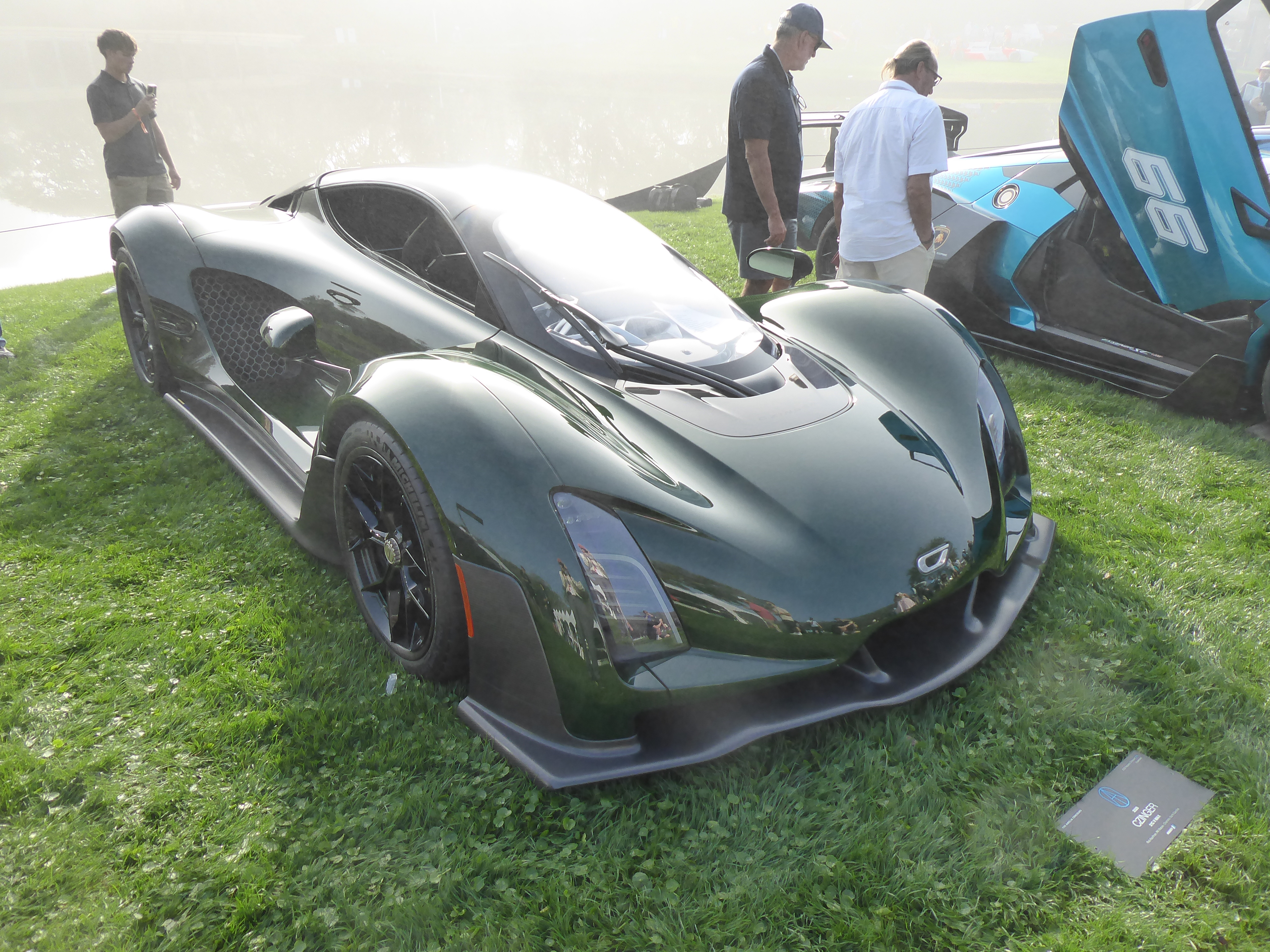
2025 Czinger 21C V MAX. Kevin Czinger started out making an electric car, the Coda, then graduated to revolutionizing manufacturing with 3D printing. And as an attention-getter, he also builds hypercars, such as this unusual tandem-seated, carbon-fiber-bodied space capsule with 1,250 horsepower from a hybrid drivetrain featuring a 2.88-liter twin-turbo V-8 and sequential-shifting seven-speed transmission. Just 80 are to be made, and sold for $2 million and up. Rev it to 11,000 rpm! The green carbon fiber was amazing to see.
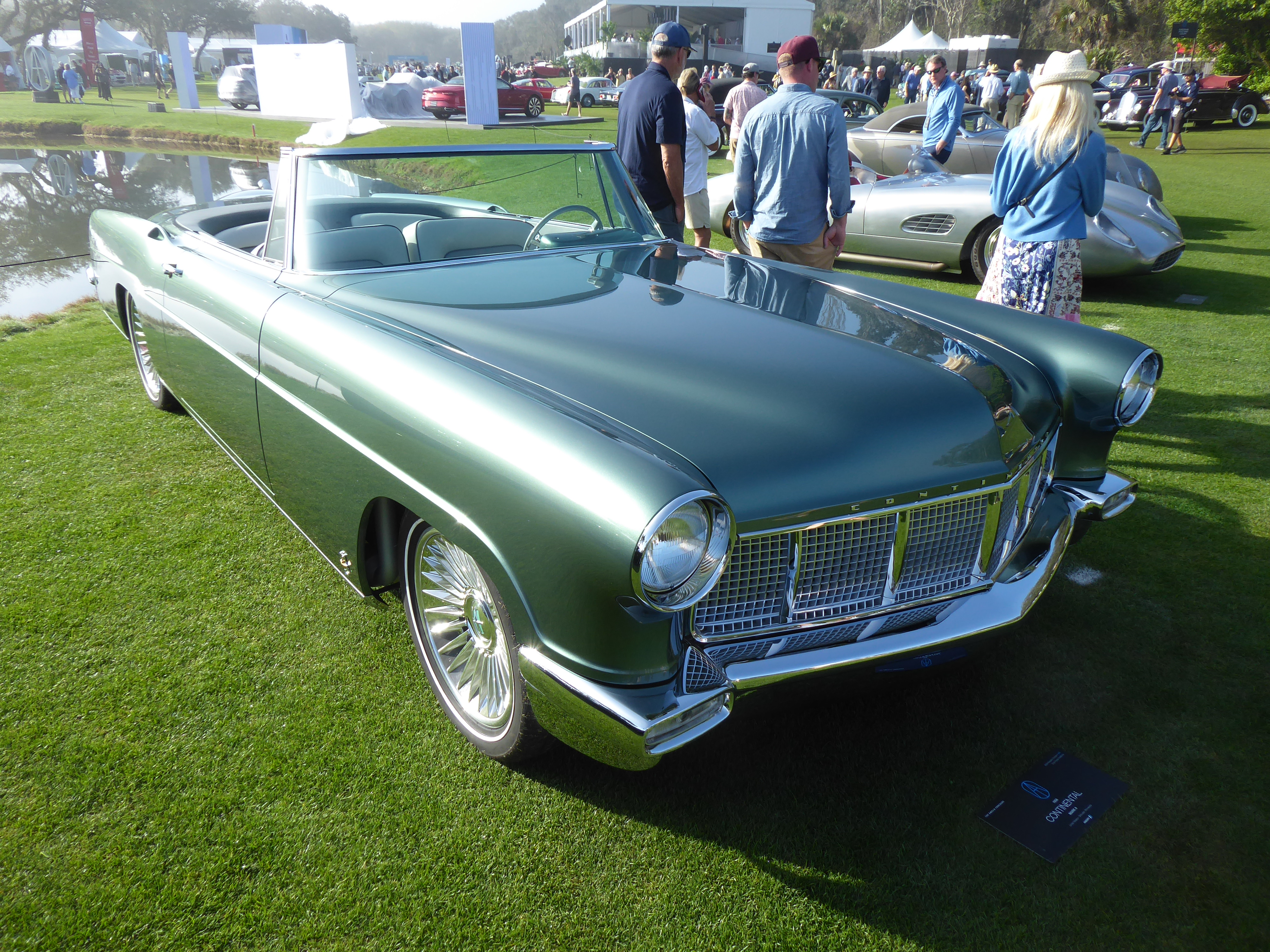
1956 Continental Mark II convertible by Chip Foose. If you didn’t know the history of the Mark II, this car would probably look totally normal. There never was a convertible, but creator Chip Foose made this one appear to be a factory original. Not having any provision for an actual top might be a problem for some, but let’s assume it’s for fair-weather fun.
Says Foose, “This Continental represents what I love most about automotive design, respecting heritage while exploring what’s possible. Every line, every surface and every component was reconsidered to create something that feels both familiar and completely new. With BluePrint’s LS-compatible crate engine under the hood, it also has the performance to match its presence.”
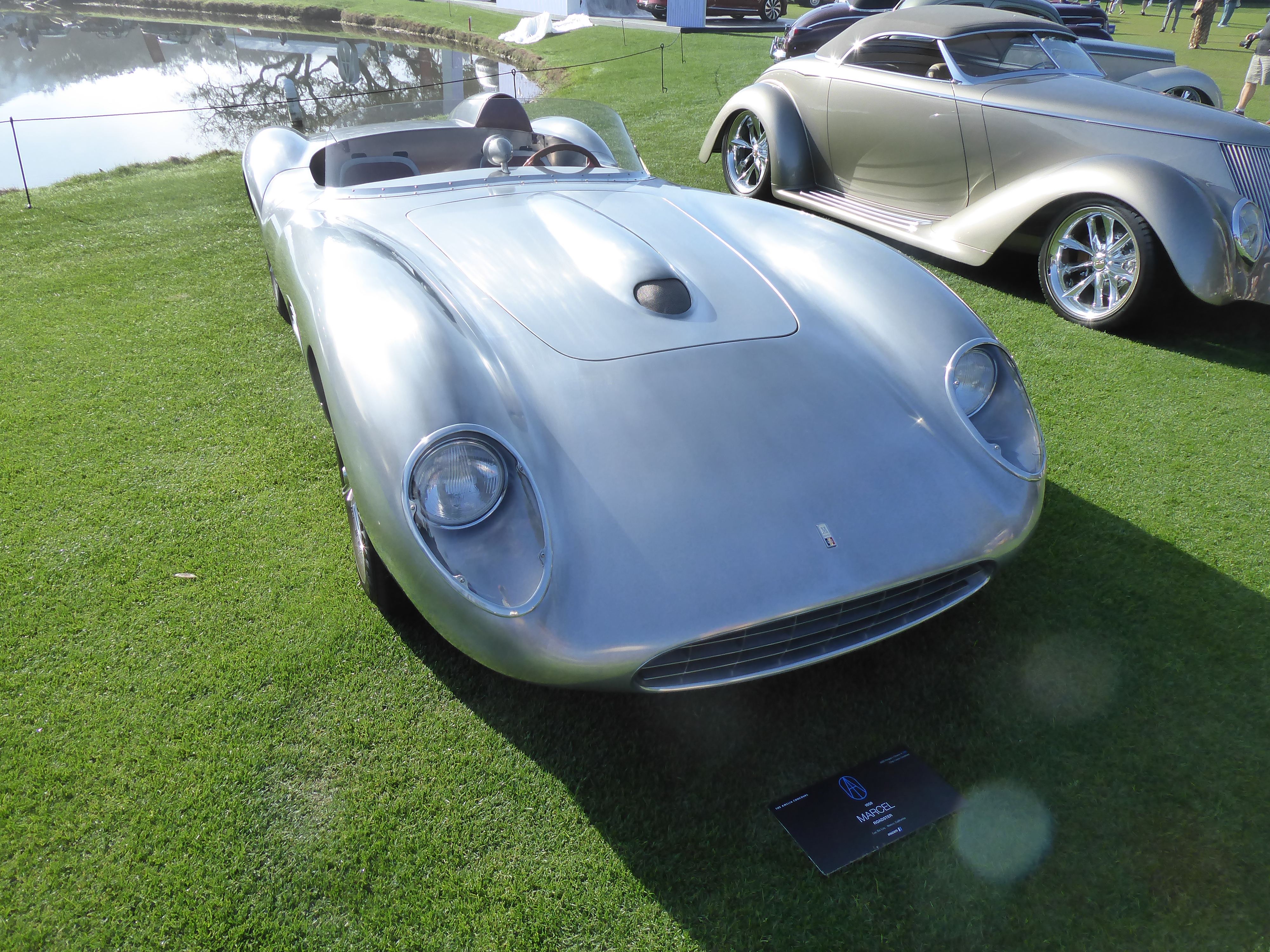
1959 Marcel Roadster. “A lot of one-offs here,” said a busy photographer. The car isn’t actually from 1959, though it looks the part. It was created by panel shaper Luc De Lay, son of Marcel De Lay of Marcel’s Custom Metal, with help from the ubiquitous Chip Foose. De Lay was inspired by late-50s Ferraris, Maseratis and Astons. Under the hood is a GM small-block LS3, mated to a Tremec six-speed manual. It should handle better than those legendary ‘50s cars, because it has modern four-wheel independent suspension, four-wheel discs, and cast-aluminum knock-off wheels. “It’s a driver,” De Lay says.
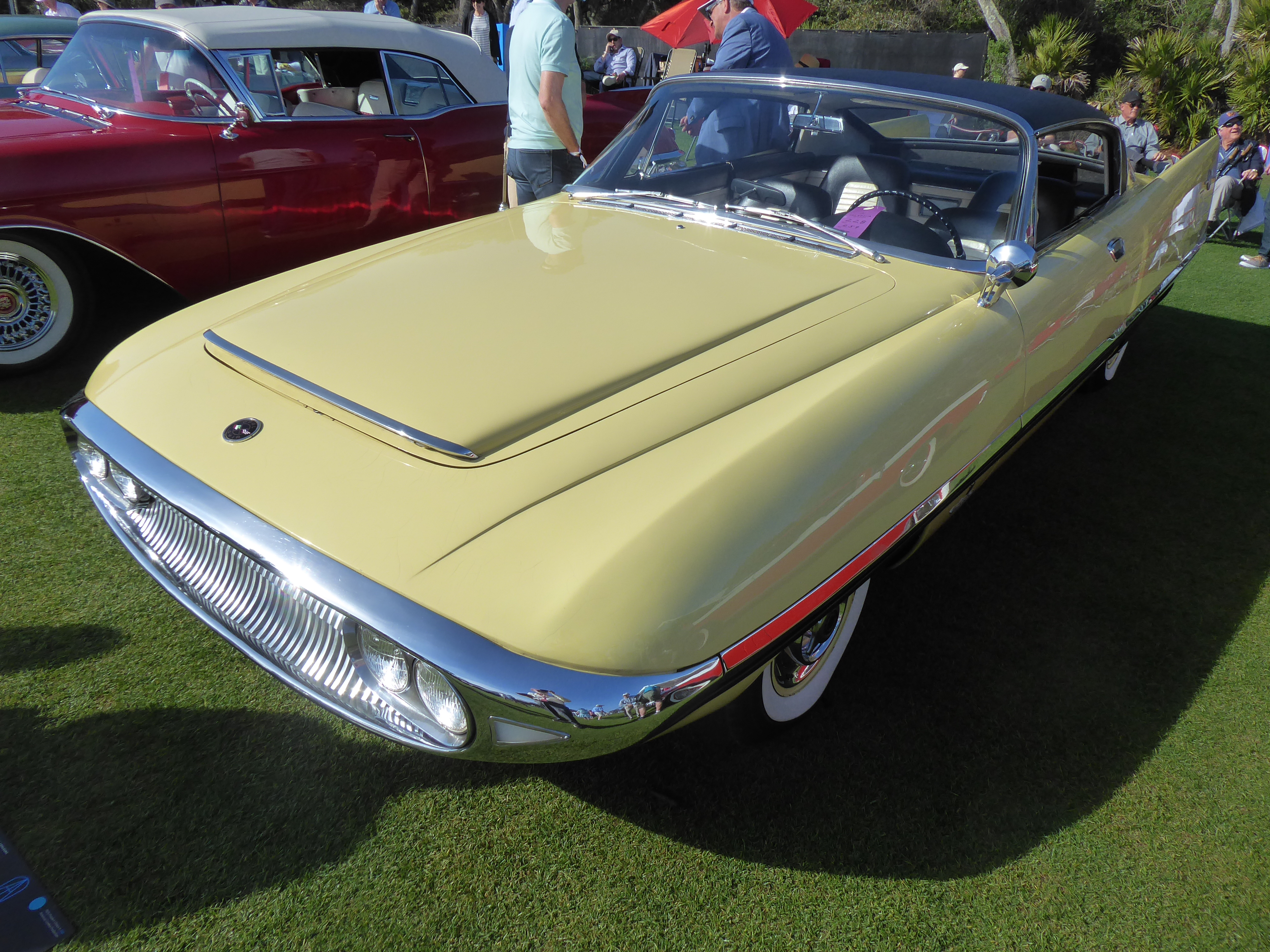
1957 Chrysler Superdart 400 (above) and 1952 Ghia Styling Special. These are both American cars with Italian Ghia design, the former inspiring the Rat Pack’s Dual Ghia. Indeed, Dual Motors bought the Superdart and displayed it in 1958 under its own name. Of the pair, I prefer the cleaner-styled 1952 car.
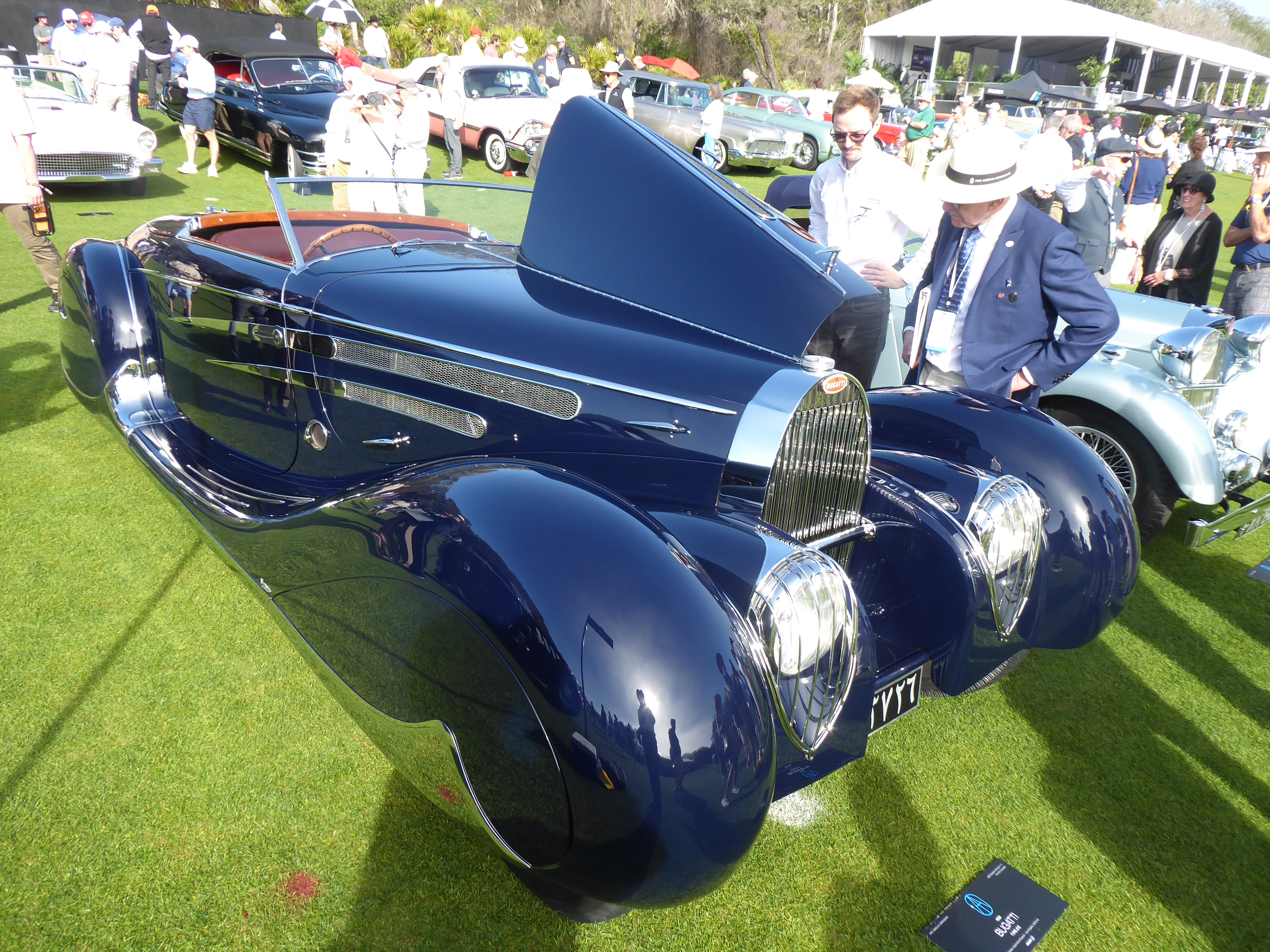
1939 Bugatti 57C. This was my nominee for best in show, with styling that borrows much from French coachbuilder Figoni and Falaschi (but is actually the work of fellow French firm Vanvooren). This car was a gift from France to the first Shah of Iran, Muhammed Reza Pahlavi upon his wedding, and kept in that country until 1959, when it sold, in derelict condition with an American V-8, for the remarkable sum of $275. It’s currently the property of the Petersen Museum in Los Angeles, and collections technician Casey Van Houten told me, “I’m just glad it made it here and is now safely on the field.”
The Bugatti was fully restored in the 1980s, and it’s holding up quite well. Among the car’s features are extreme Art Deco styling with four-wheel spats and lots of chrome plating, a supercharged 3.3-liter engine, a retractable windshield, and much more.
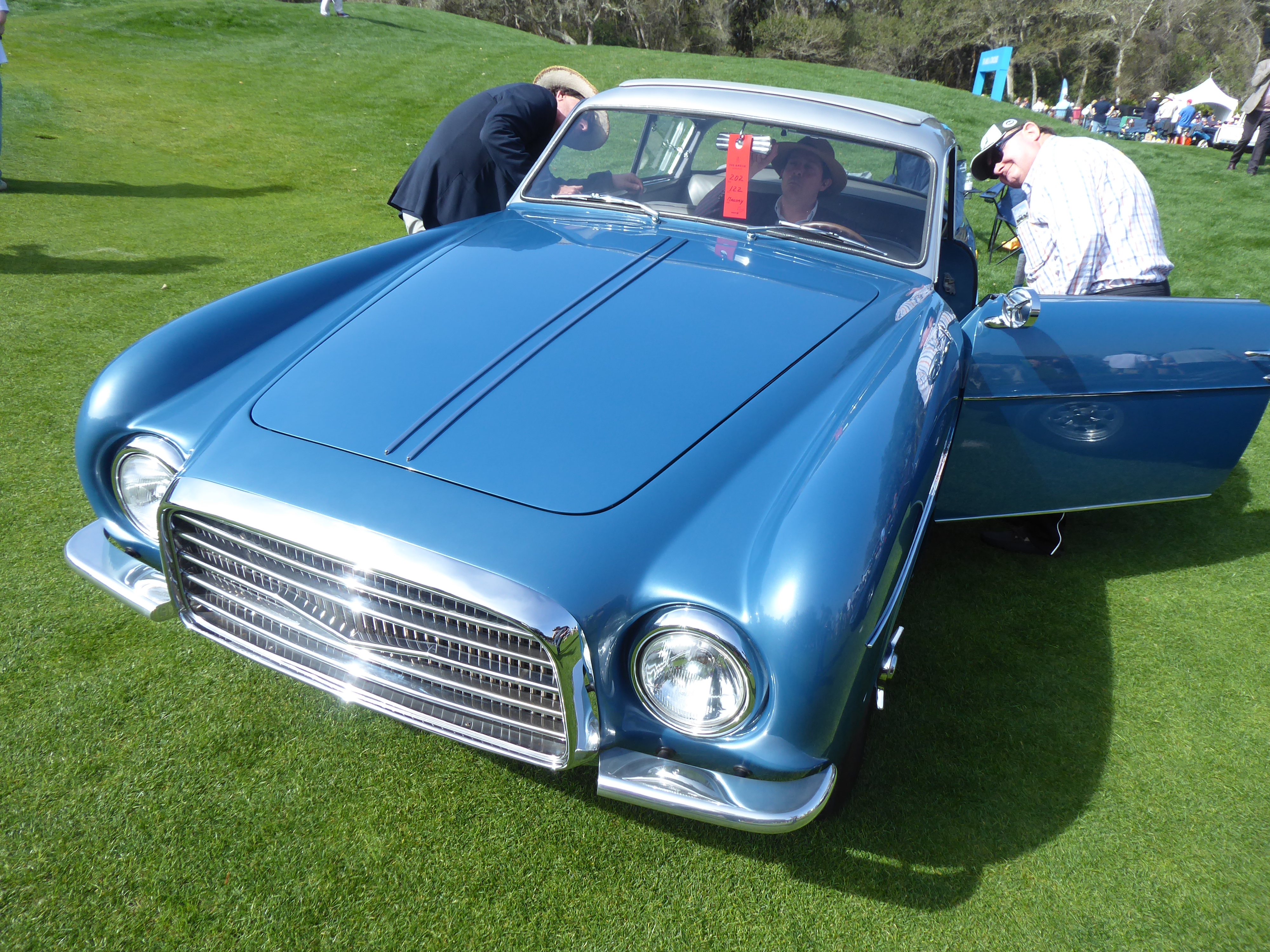
1957 Bill Frick Special GT Coupe (with sunroof). Under the skin of this Vignale design by Giovanni Michelotti (with early 50s Ferrari inspiration) is a “Studillac,” a Studebaker chassis with a contemporary Cadillac V-8. Frick built only two coupes and a cabriolet with this Ghia bodywork, and this is the only one sold to a customer—who specified the sunroof.
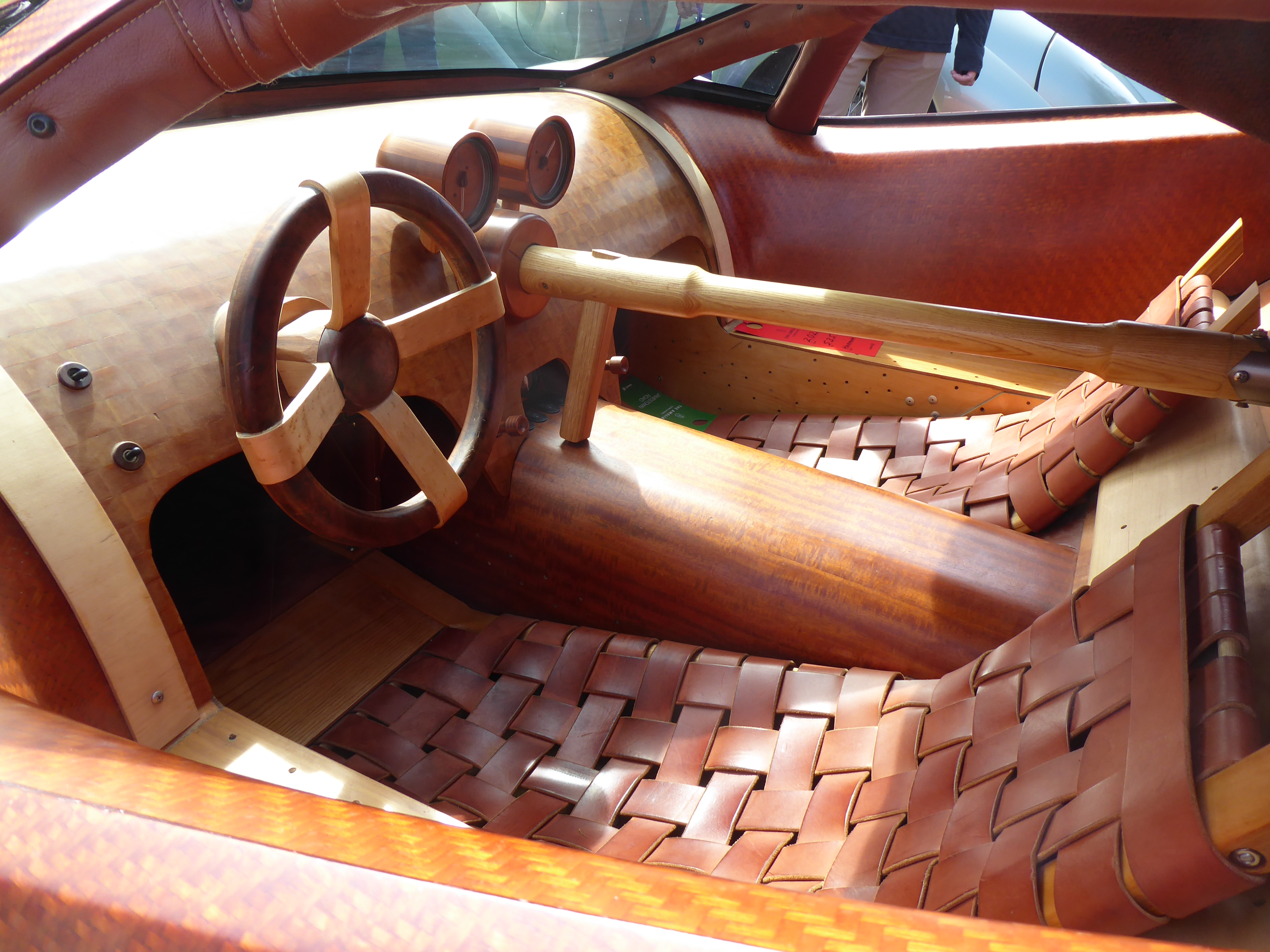
2008 Harmon Splinter. Never was so much effort expended on something so ghastly. The Splinter is, as the name implies, made of wood, including the wood veneer cloth body, the wheels, the instrument pods, the uncomfortable-looking seats. Joe Harmon was a 28-year-old graduate student at North Carolina State when he thought of building a wood supercar for his master’s thesis. “I wanted to show that wood isn’t an antiquated, low-technology material,” he said. Indeed, the worksmanship is first class throughout, but the whole car, well, termites would love it.
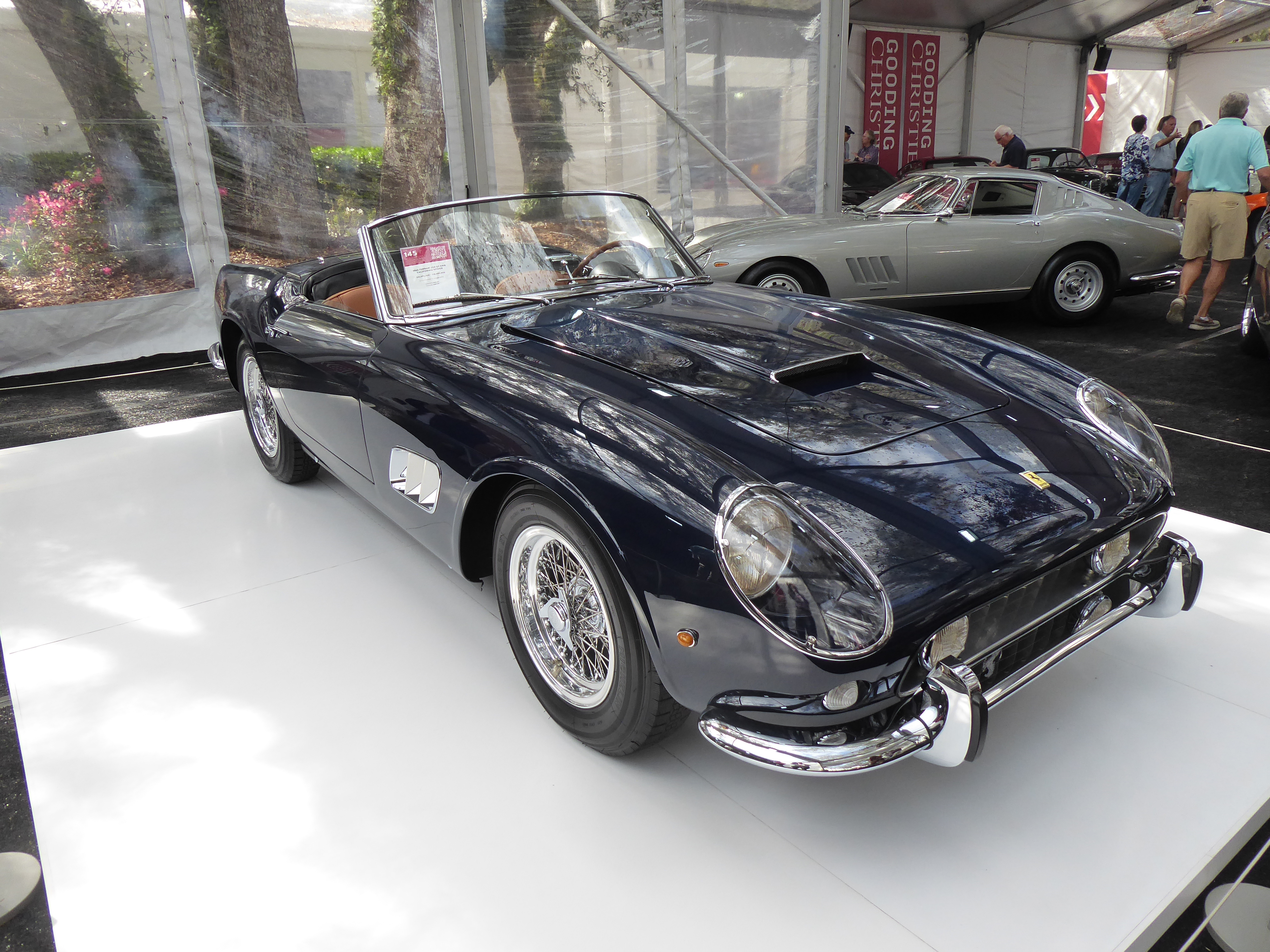
I looked over the inventories at both the Gooding Sotheby’s and Broad Arrow auctions. At the former, the star of the show, a 1960 Ferrari 250 GT SWB California Spyder, was estimated at $16 to $18 million, and actually sold for $16,505,000. Last year at Pebble Beach, a 1961 example of this model sold for a record-breaking $25,305,000. Are the higher-end Ferraris coming down in the world?
But I found myself looking for the barn-find 1951 Ferrari 342 America coupe long dormant in upstate New York. I finally found it in the just-sold, no-go purgatory tent, and took a photo through the plastic. It is the only such car bodied by Ghia, one of just seven of the model, and sported a sticker from the Watkins Glen Sports Car Grand Prix in 1967. Although this example needed just about everything, it certainly had patina in spades. It sold for $480,000, according to the guard on duty, which is a lot less than the $900,000 to $1.2 million estimate.
At Broad Arrow, the auction take was $107 million. A single-owner 2003 Ferrari Enzo brought $15,185,000 for the top sale, and a center-of-attention 1972 Lamborghini Miura P400 SV, in the same American hands for 50 years, made $6,605,000, far over it $3.5 to $4 million estimate.
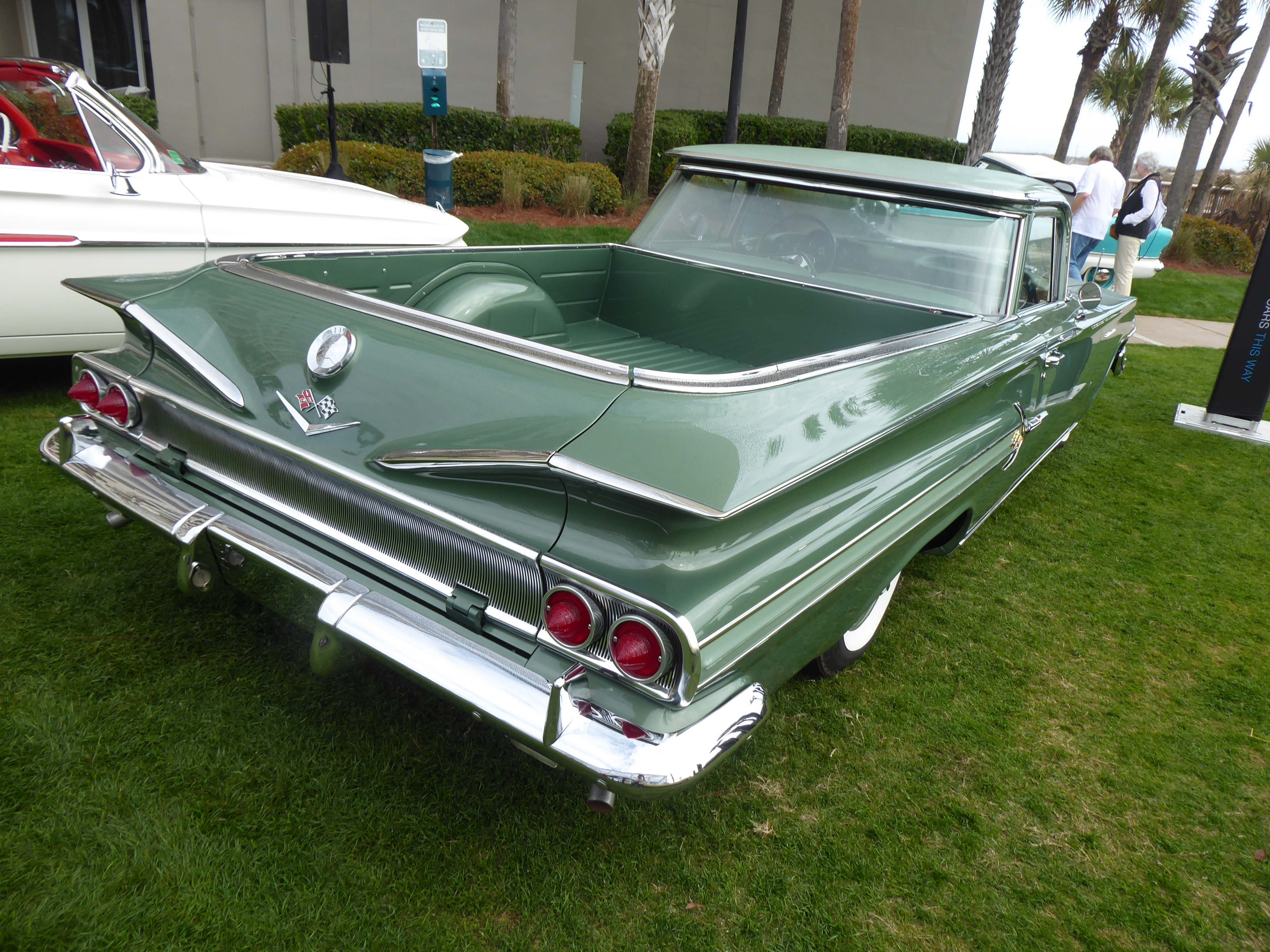
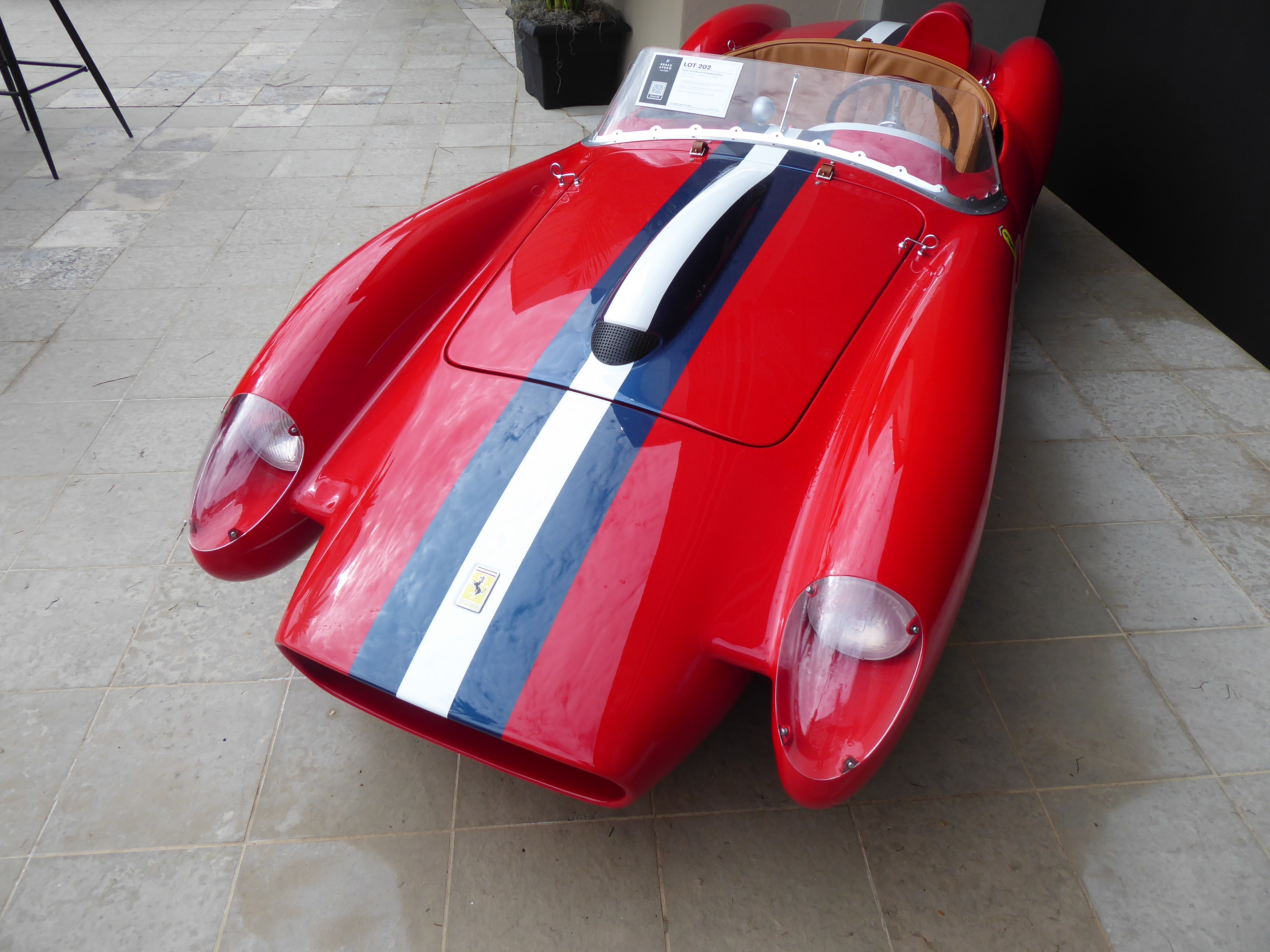
At the Broad Arrow preview, my attention was caught by a beautifully restored green 1960 Chevrolet El Camino, estimated at $90,000 to $140,000. “That thing’s older than we are,” a young(ish) couple said. And how about a tiny child-sized electric Ferrari Testarossa by Hedley Studios ($150,000 to $200,000 estimate)? The lucky kid would luxuriate in 50-mph capability, a leather interior and full instrumentation.
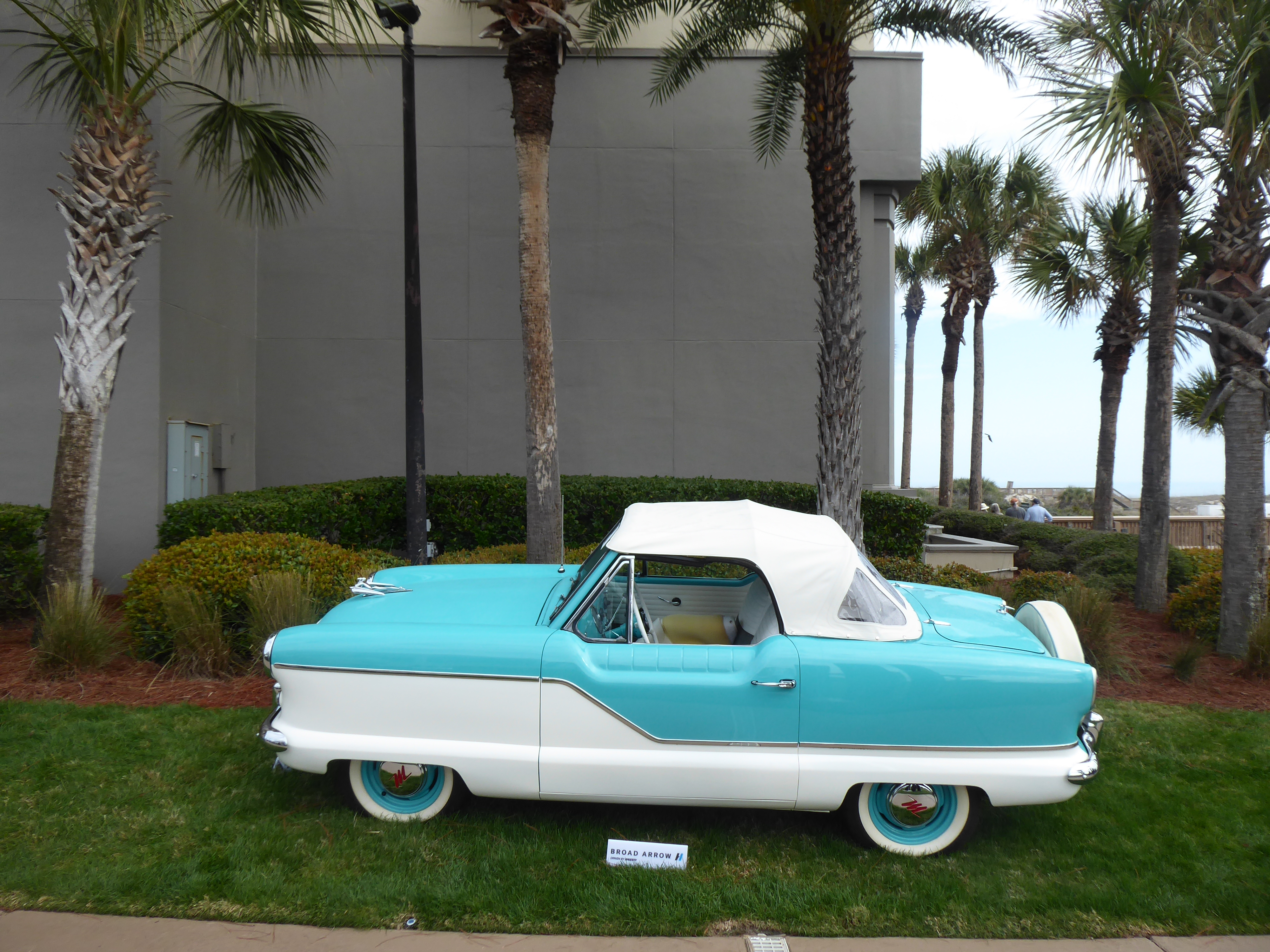
And a 1960 Nash Metropolitan made a nice photo against the wall of the Ritz-Carlton, with evocative palm trees to complete the picture.
As you know, I have the rare privilege of being able to test new cars for one-week periods, and there’s something unique and interesting about each of them. The boxy SUV shape doesn’t vary all that much, so don’t expect much on styling, but I’m still getting sedans in 2026. So here is the current crop, with a focus on special packages and what they do to the bottom line. I’m not making this up, there are five “Prestige” cars on my recent list. Since you pay for upper-trim models, is the extra outlay worth it? Think long and hard about this, because the average transaction price for a new car has climbed to near $50,000.
Let’s start with the sedans:
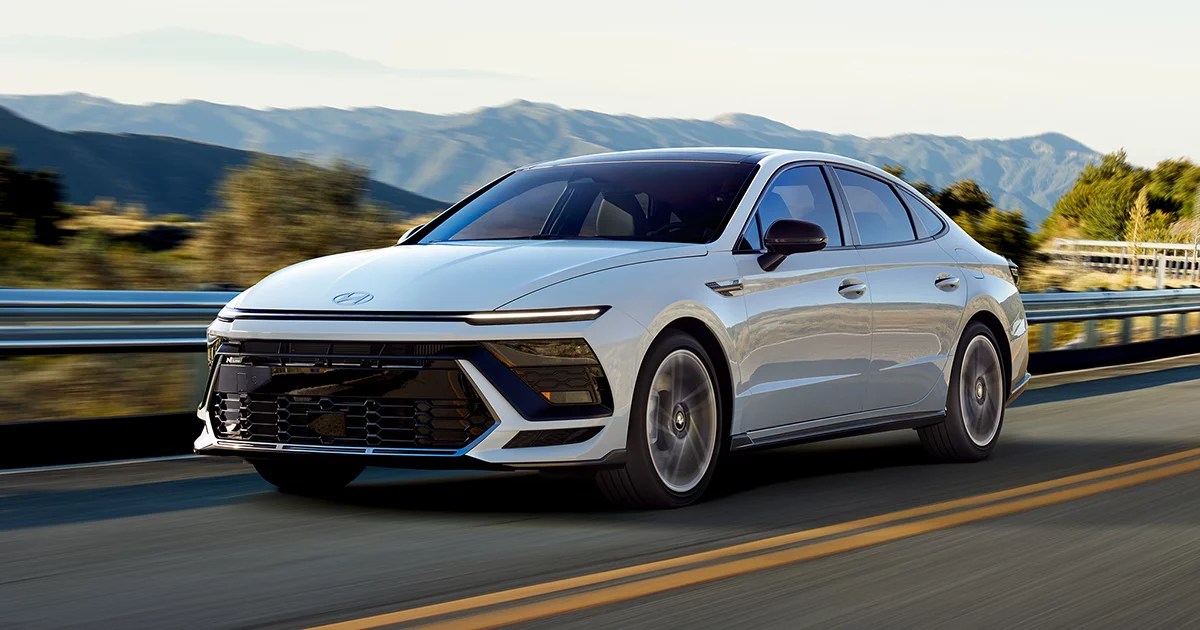
2025 Hyundai Sonata N Line. The more sober money would probably be on the hybrid version of the Sonata, which offers a Prius-like 50/54 miles per gallon city/highway. The N Line’s rating is much lower, 23/33. What it offers instead of saving money at the pump is a powerful 2.5-liter turbocharged inline four-cylinder engine generating 290 horsepower and 311 pound-feet of torque. Coupled to an eight-speed dual-clutch automatic transmission, a 5.3-second zero to 60 time is possible. Just spitballing here, but this should allow you to get to the local gas station/convenience store for a quart of milk five to 10 seconds quicker. Sure, I realize you will have a bit more fun, but my father told me, “A car is to get you from point A to point B.” The N Line, priced at $36,745, is also about $4,000 more than the hybrid.
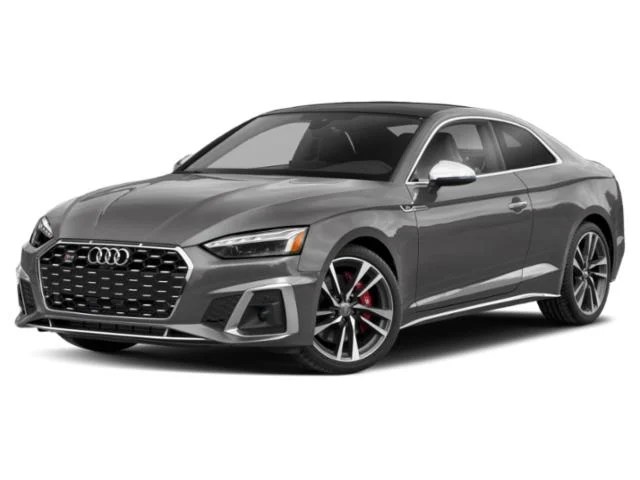
2025 Audi S5 Coupe Prestige. The A5 and S5 sister cars are true state-of-the-art German performance cars, with the latter offering a turbo three-liter V-6 that produces 362 horsepower and a seven-speed dual-clutch transmission with standard AWD. They don’t give away cars like this—the 2025 S5 starts at $63,995, and the Prestige package on the test car adds $7,750 but adds a huge number of features you’ll probably want, from adaptive cruise to B&O stereo and Nappa leather seats.
In America today, the number of people who can afford $70,000 cars is actually increasing dramatically (as is the number of billionaires), but their upper ranks are offset by the much larger number whose declining net worth wouldn’t pay for its spare tire. The have-not army is growing much faster than the elites at the top. Audi’s North American for 2025 sales were down 12.2 percent in North America. Audi’s strength—you may not have heard—is in no-longer-in-fashion EVs. Sales globally were up 36 percent to more than 223,000, fueled by cars like new A6 e-tron and Q6 e-tron. Electric vehicles sales globally continue to climb.
CES this year was focused on AI and more digital in-car assistance, and Audi just announced some enhancements for the 2026 A5 that include more functionality in the steering wheel, an optional integrated dashcam, “expanded driver assistance” and parking assist features, and upgraded voice control.
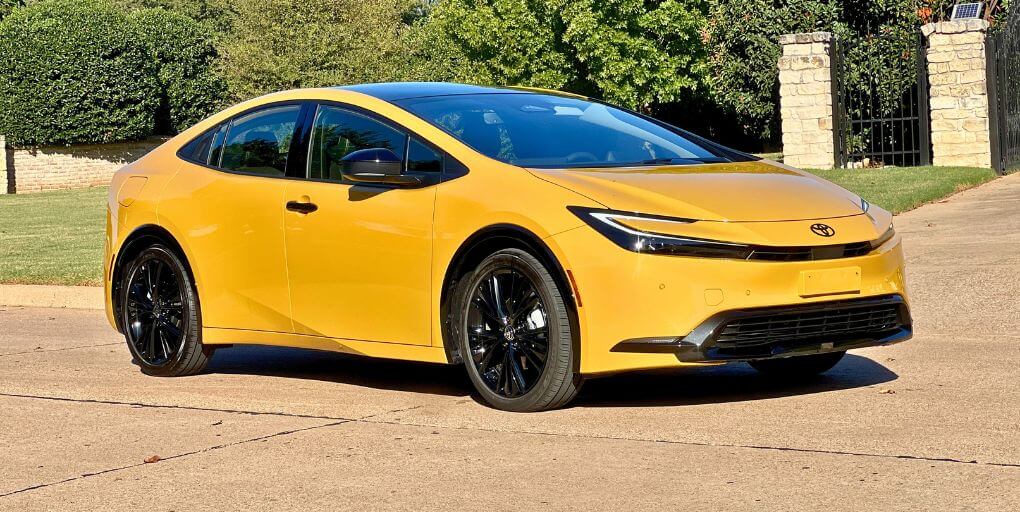
2026 Toyota Prius Nightshade Plug-In Hybrid. What’s a Nightshade, you ask? It’s a trim package adding blackout trim on wheels and badges, carbon fiber dash accents, special seats with gray stitching, and “exclusive” colors such as Karashi Yellow (see the car above), Wind Chill Pearl, and Midnight Black Metallic. The trim sits on top of the XSE version, and it’s one of the rare occasions in which the manufacturer is not gauging you to get the goodies. The Nightshade price is $38,990, adding only $770 on the XSE. There’s no way you “need” it, but at that price it won’t break the bank.
The Prius PHEV is now up to 40 miles of EV range, which is quite useful. Oddly enough, the lower trims can go 44 miles on a charge. Why? Different wheel sizes.
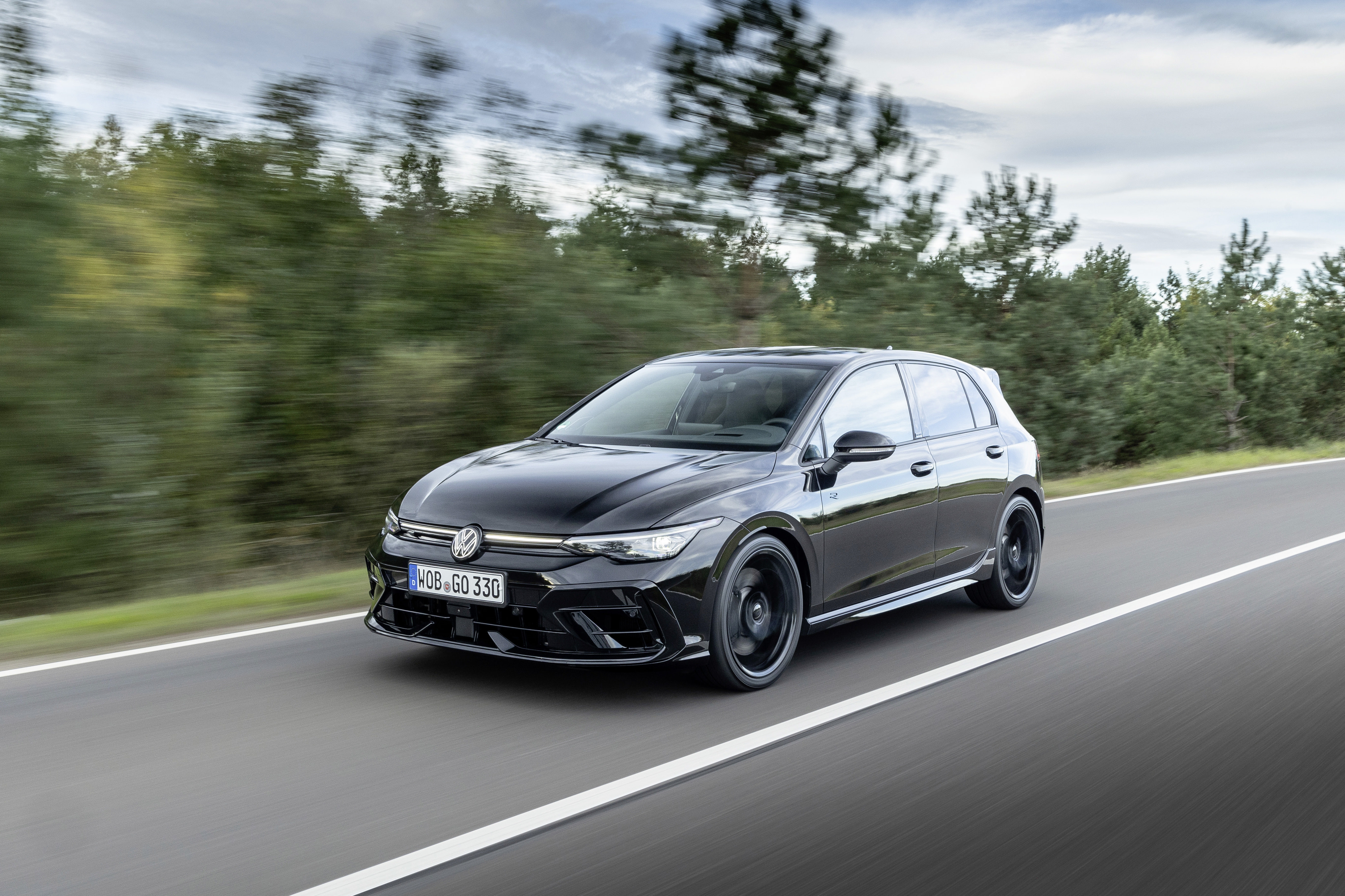
2025 Volkswagen Golf R Black Edition. The offering here is very similar to that of the Prius Nightshade, meaning that automakers can charge extra for blacking everything out. There’s no special performance advantage, by the way. The Golf R Black gets black trim, wheels, mirror caps and a front badge that lights up. Inside, there are the aforementioned “carbon fiber accents.” The package is pricier than on the Prius, adding up to $1,500 to the $48,325 of the base model R.
The Golf R is a pretty ferocious car, with performance torque vectoring and drift mode should you choose to indulge your inner Keiichi Tsuchiya or Tanner Foust. The R’s two-liter turbo punches above its weight and produces 328 horsepower, coupled to 4MOTION AWD. The Akrapovič exhaust is an option.
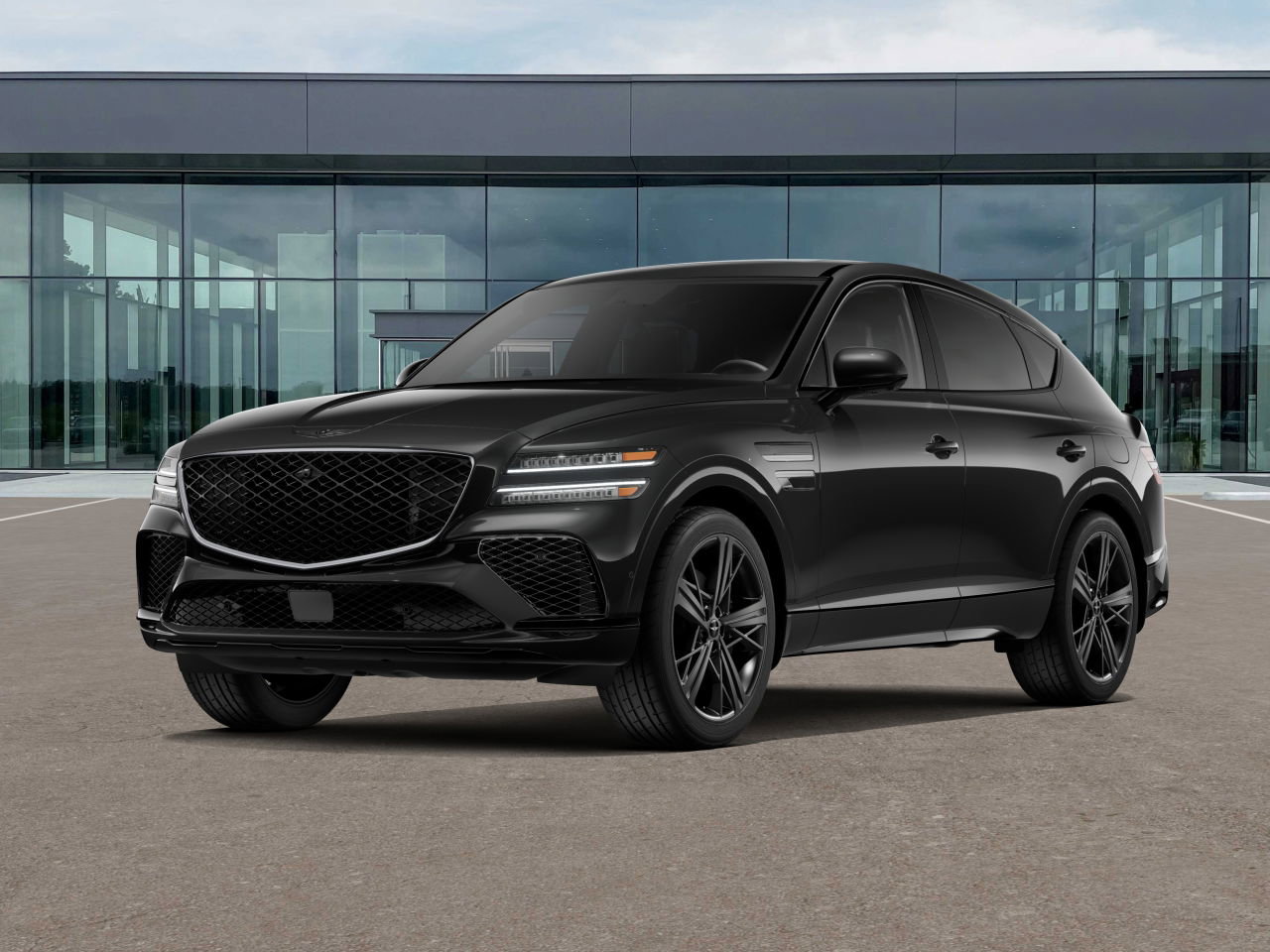
2026 Genesis GV80 Coupe 3.5T Prestige AWD. Yes, automakers like the word “prestige” almost as much as they like “black edition.” So, in the Prestige Black Genesis GV80 Coupe you get 22-inch black alloy wheels, dark chrome accents, blacked out grille and trim, spoilers and, oddly, no rear wiper. I like rear wipers! This car is really loaded to begin with, including Nappa leather, massage seats, B&O sound, a curved OLED display, and 409 horsepower from the twin-turbo V-6 if you go with the optional mild hybrid e-Supercharger. This is an SUV, of course, and “coupe” in this case is relative, referring to a slightly sporty roofline. Adding the Prestige Black Package means a $1,500 to $2,000 boost to a very hefty $91,545. The package doesn’t add much to the regular 3.5T, but if you can afford the base car you might want it. Additional consumer tip: The GV80 can tow 6,000 pounds.
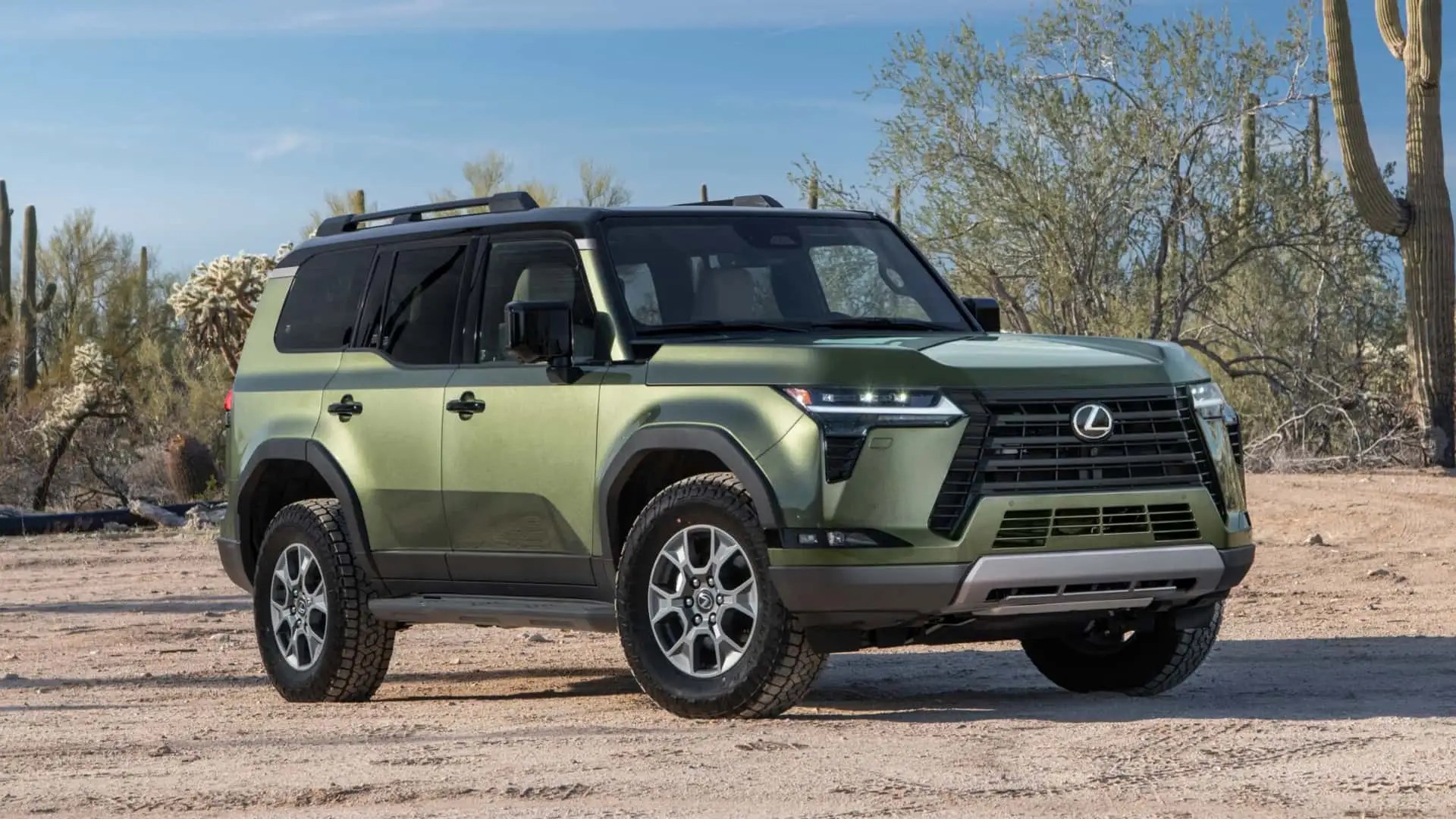
2025 Lexus GX 550 Overtrail. This thing looks like the direct descendant of the rugged Land Rovers that used to traverse the Khyber Pass in Afghanistan with jerry cans strapped to their front bumpers. It’s got mammoth 33-inch wheels, the biggest ever fitted to a Lexus, and in the Overtrail+ a one-inch lift to get over boulders. Back in the 60s, music was provided by the distant call of mountain yaks, but this is 2026 in America, so you can pay $1,140 for the 21-speaker Mark Levinson sound system. The GX Overtrail+ adds pre-wired aux switches and an emergency-ready onboard air compressor. The big GX was redesigned in 2024
Anyone who buys one of these beasts, on a truck platform and powered by a 3.4-liter V-6 turbo with 349 horsepower, and doesn’t take it off road is just being a poseur. It’s ridiculous for tooling around suburbia. Going to waste are its full-time AWD, Torsen limited-slip center differential and electronic locking rear diff. The pavement-bound owner will never use Multi-Terrain Select, Crawl Control and Downhill Assist Control. And they’ll probably never tow 9,000 pounds, either. But if you want to look like Indiana Jones at the local country club, by all means spring for the ball mount ($80), the rock rails ($990), the cat-back performance exhaust ($2,270) and the off-road roof rack ($1,580). The car itself starts at $67,900.
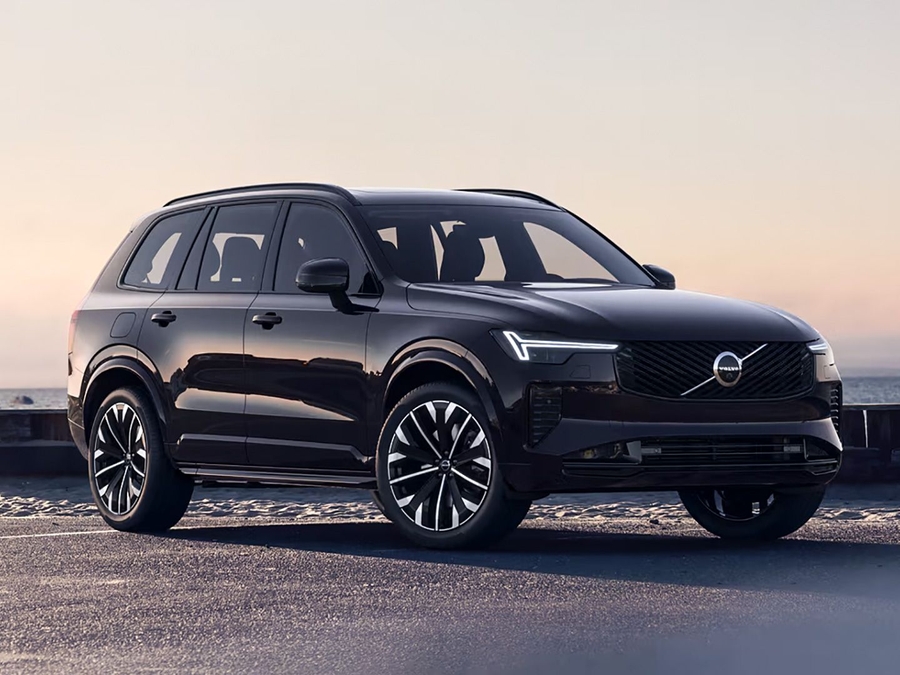
2026 Volvo XC90 B6 Prestige AWD. This particular Prestige is a mild-hybrid three-row SUV whose two-liter four gets electric assist from a 48-volt system to produce 295 horsepower and 310 pound-feet of torque. Of course it’s AWD.
This is another luxury SUV in a crowded field—you won’t miss the classy crystal shifter every time you shift gears, and the top-level sound system, available in the Ultra trim, is Bowers & Wilkins. Volvo’s new designations are Core, Plus and Ultra, with pricing that starts at $66,000. The Ultra starts at $71,045.
Go for the top trim and it includes a 27-inch OLED display with instruments and navigation in one screen, Nappa leather, open-pore wood trim, a suede headliner, and more. These wagons are popular supermarket cruisers in well-to-do suburbs such as Shaker Heights, Ohio, West Hartford, Connecticut and Watch Hill, Rhode Island, and I expect you will see a bunch of them around LA too. If you crash, you’re safe as houses.
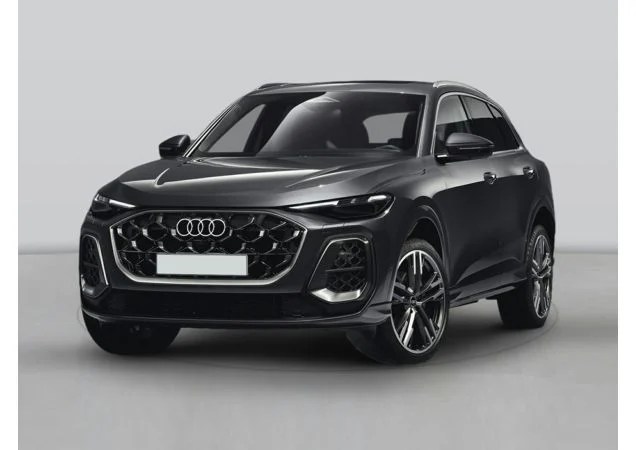
2025 Audi Q5 Prestige. The Q5 SUV is not the performance rocket—for that you want the SQ5, which has 350 horsepower. The Q5 puts out 268 horsepower, up just seven from the previous model. The power hits the road through a seven-speed dual-clutch automatic transmission. The smart money would likely stick with this version, which is just fine for commuting and going out around town.
Quattro AWD is standard. The Q5 base model, which may be just what the doctor ordered, starts at $53,495. But the prices climb quickly: The Q5 Prestige is $60,600; the SQ5 Prestige $71,200; and the Q5 Sportback (with a coupe roofline) Prestige $62,700.
Automakers have been at their trade for more than 120 years, and they’ve learned many and manifold ways of separating you from your hard-earned money. The lesson here is that prestige is nice, but not strictly necessary.
The Consumer Electronics Show (CES) can be a stressful whirlwind, and it’s hard to tear oneself away from the crowded show floor for outside activities, but an invitation to drive some Chinese cars at Las Vegas Motor Speedway could not be ignored.
And these were cars from Geely, a Chinese giant that has in its orbit Volvo, Polestar, Zeekr, Proton, the venerable English brand Lotus, the Geely brand itself and Lynk & Co. The auto journalists have already driven the Volvos and Polestars, sold in the U.S., but actual chances to drive models headed for the Chinese domestic market and a burgeoning international audience (Europe, Southeast Asia, Latin America, the Caribbean, Australia, the Middle East, Africa) are rare in the U.S., a/k/a, land of tariffs.
The media swarms the Geely cars. (Jim Motavalli photo)
There were nine Geely cars on the track, and I drove three of them, representative of the platform agnosticism (and EV favoritism) in China today: a battery EV, a plug-in hybrid, and a gas car. My Autoweek colleague Mark Vaughn said about the cars on the track, “They were all just fine. Panel gaps, fit and finish, materials, acceleration, steering, and braking were like just about any car sold here now.”
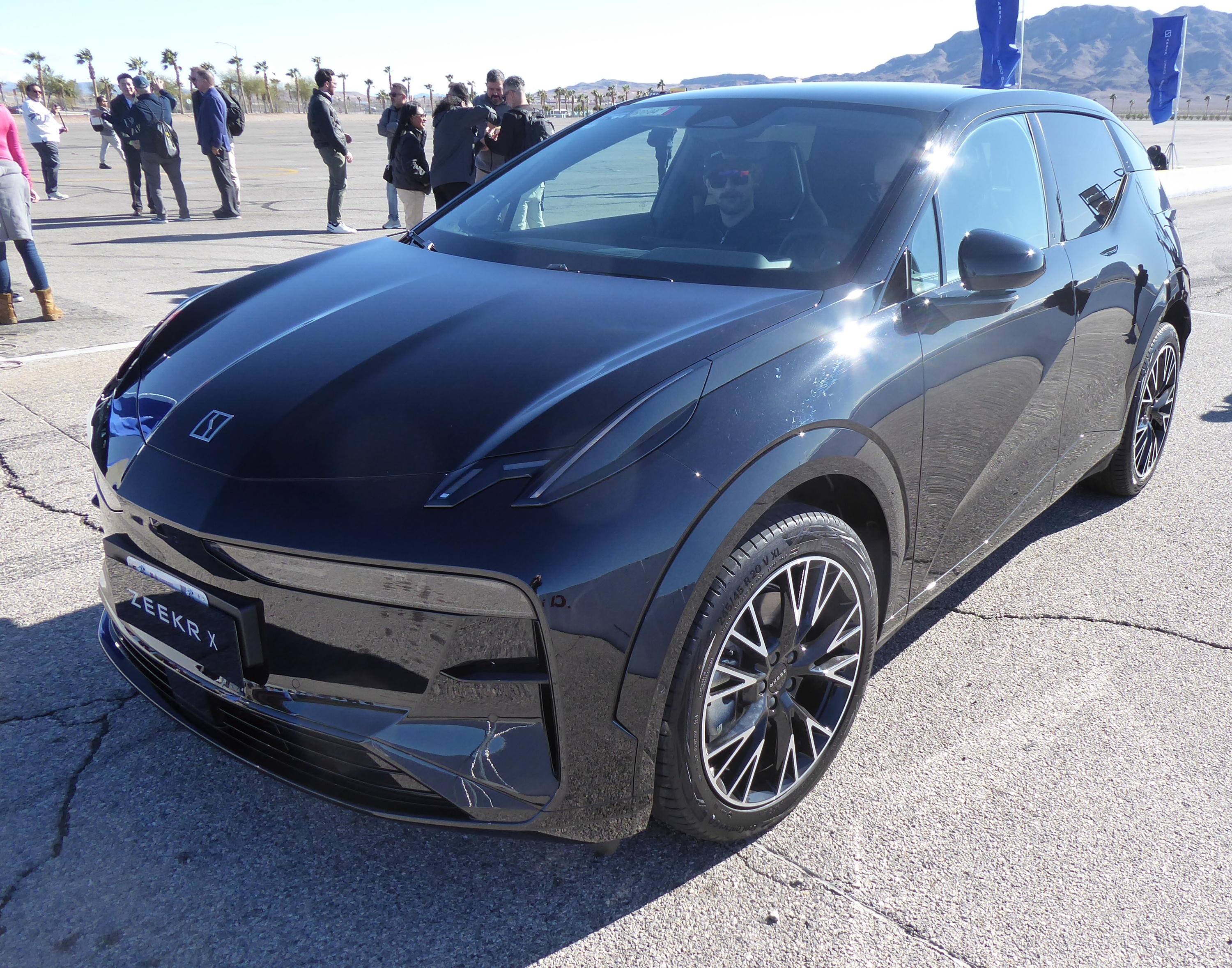
The Zeekr X punches out 428 horsepower with dual motors. (Jim Motavalli photo)
The battery car was a Zeekr X two-motor AWD. Zeekr was a standout at CES last year. This year, with few U.S. brands in evidence amid even more Chinese cars, Zeekr still stands out. The X in dual-motor form (Privilege) is a compact SUV with a punch: 428 horsepower, 400 pound-feet of torque, with a 66-kilowatt-hour CATL battery yielding 273 miles of range (a bit anemic). It can reach zero to 62 mph in 3.8 seconds, and there’s nothing anemic about that.
The Chinese have been betting heavily on auto driving, infotainment and on-board safety, and the X has a Qualcomm Snapdragon 8155 chip and, for ADAS, the G-Pilot system with LiDAR sensors. There’s an AR head-up display. In single motor form (ME) is has 272 horsepower and a 5.6-second zero-to-62 time. There is 150-kilowatt fast charging, which means a 10 to 80 percent charge in around 30 minutes.
The X came out in China circa 2023, and sales have been modest there: 8,692 last year, 13,316 in 2024 and 22,372 in 2023. The price is rather eye-opening: The Zeekr X starts around $21,000 after subsidies in China for an entry RWD version with a 49-kilowatt-hour battery. Even a top-trim car like the X I drove is only around $30,000. An export-to-North-America X would be a lot more without the Chinese subsidies, but we would still find it a bargain.
And believe me, the X is definitely a sign of a maturing auto industry in China. It felt like a mature EV, with excellent road manners (very quiet), fast acceleration and good handling, including in evasive maneuvers around the test track. The interior was nice enough, though Chinese automakers need to get the details right. I saw a supposed “brushed aluminum” console that looked like, and was, cheap plastic.
The Lynk & Co. 08 comes in many forms, and is on the road in Europe. (Jim Motavalli photo)
The Lynk & Co. 08, also from 2023, is a mid-sized crossover plug-in hybrid with a combined 345 horsepower and 258 pound-feet of torque from a 1.5-liter turbo engine and two electric motors. The 124-mile battery EV range was impressive, via a 39.6-kilowatt-hour battery. Lynk & Co. is a brand that Geely is trying to establish in Europe, and the company recently entered the Czech Republic, Austria and Switzerland, making 25 markets there. The 08 was launched in Europe last June.
The 08 was impressive on the road, with 4.6-second zero to 60 times, but marred by some hesitation in the drivetrain on rapid acceleration. Interior finish was very good. Drivers of this rig, despite the performance aspects, can expect 42.8 mpg on a U.S. scale.
It’s interesting the price differences on the 08. Europeans pay a hefty $57,000 for a loaded version of the car, but in the Chinese market it starts around $25,600. The European model undoubtedly starts off in a higher trim, but still. Even in twin-motor deluxe form the 08 is only around $36,000 in China.
Geely’s own Starray GF+ offers 218 horsepower and a seven-speed dual-clutch transmission. (Jim Motavalli photo)
And finally, I sampled a Geely-branded Starray GF+. This ICE car had a two-liter turbo four under the hood, with 218 horsepower and 240 pound-feet of torque. The seven-speed dual-clutch transmission was a modern touch. Colleague Mark noted slow two-second downshifts, and it was certainly no ball of fire. But definitely adequate as a fuel-sipping commuter car. There are two screens, a 10.25-inch digital cluster, and a 13.2-inch horizontal center screen.
But this is only one variant of the (popular in China) Starray—there are also diesel and PHEV variants, and a 1.5-liter turbo entry model. AWD is an option in some markets. For some reason, the Starray is called the Boyue L for export models. Overseas, there is no less than four variants of the Boyue.
Get this, the Starray in China starts at $14,000 to $16,000, with higher trims only $20,000.
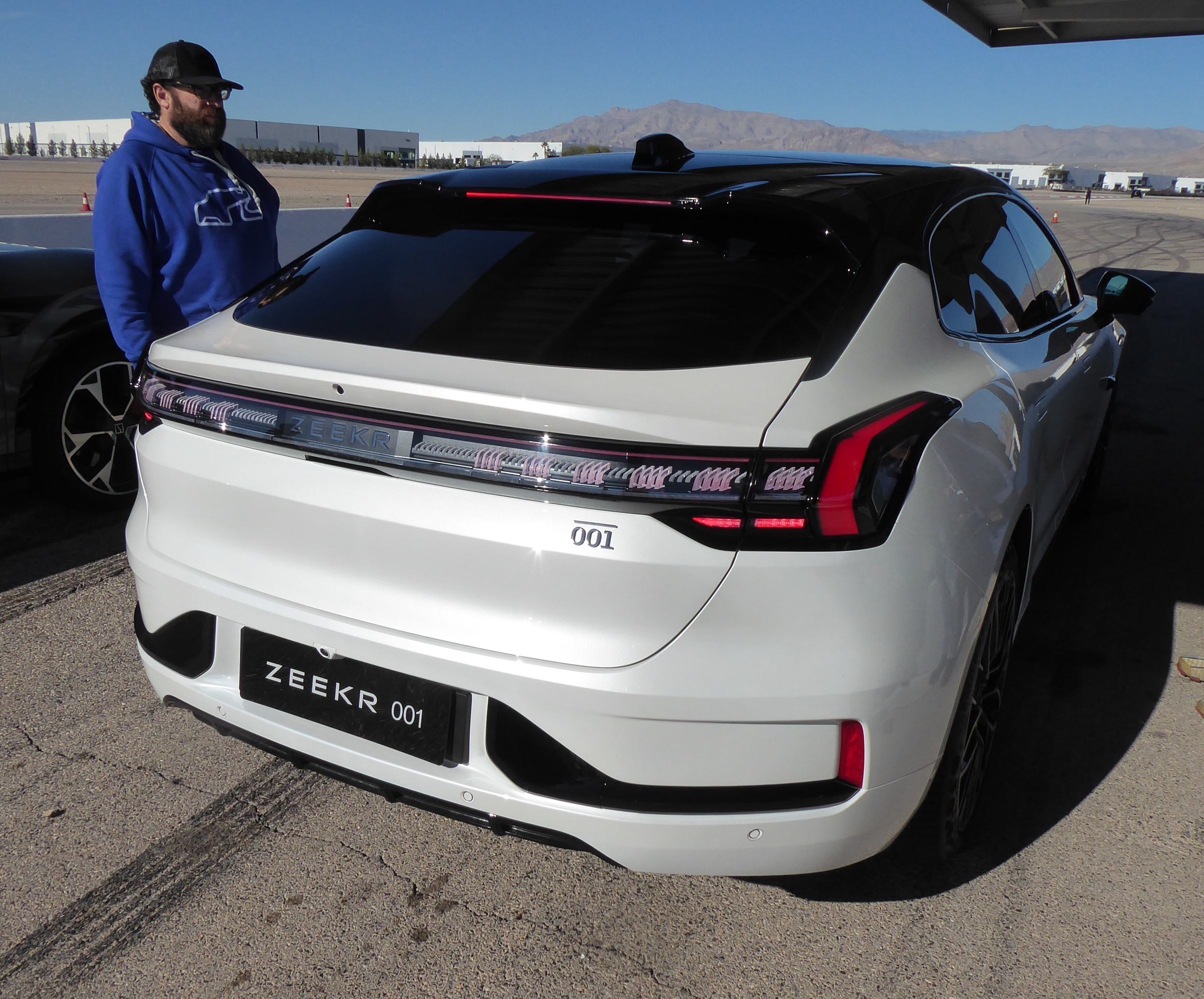
The Zeekr 001 is a road rocket. (Jim Motavalli photo)
I didn’t get to drive the vaunted Zeekr 001 EV because every other journalist was grabbing the keys, but colleague Vaughn said it was the best of the bunch, with up to 536 horsepower from twin electric motors. “Zero to 62 mph is listed at 3.8 seconds—very good for a vehicle that weighs 6,281 pounds. And it held on with minimal body roll in corners,” he said. Range is up to 384 miles by Chinese measurement, and the price of a base model AWD is an affordable $38,000. If you want even more, there’s the ultra-fast 001 FR, a cool $100,000 in China.
the 001 FR, that stickers for about $100,000 in China, so when you add a 100% tariff, the FR gets costly. But the AWD I drove had performance to burn and—let’s assume a $70,000 price tag?—would only cost somewhere near what a Hyundai Ioniq 9 costs and a lot less than a Lucid Gravity.
The bottom line is that Chinese cars are here (well, waiting at the border). They’re getting better, they’re remarkably affordable, and the only thing holding them back from a challenging position in the American market is Mr. Trump’s tariffs. Also, of course, they’re eating our lunch on EVs.
I’m firmly convinced that, despite rollbacks on the federal level and sluggish sales at the dealerships, the car industry is going electric, and I mean globally. In the first half of 2025, plug ins were between nine and 11.8 percent of U.S. new vehicle sales, depending on criteria. It’s a start, and those numbers are much higher in Europe and China (where they’re half of all new sales), and freakishly high in countries like Iceland and especially Norway (way over 90 percent of sales).
The timeline is going to be longer than initially believed, but the changeover is inevitable—dictated both by superior technology and climate imperatives. In the meantime, we are still seeing plenty of old-school internal-combustion cars and trucks hit the market, and here’s a sampling of vehicles I’ve recently sampled.
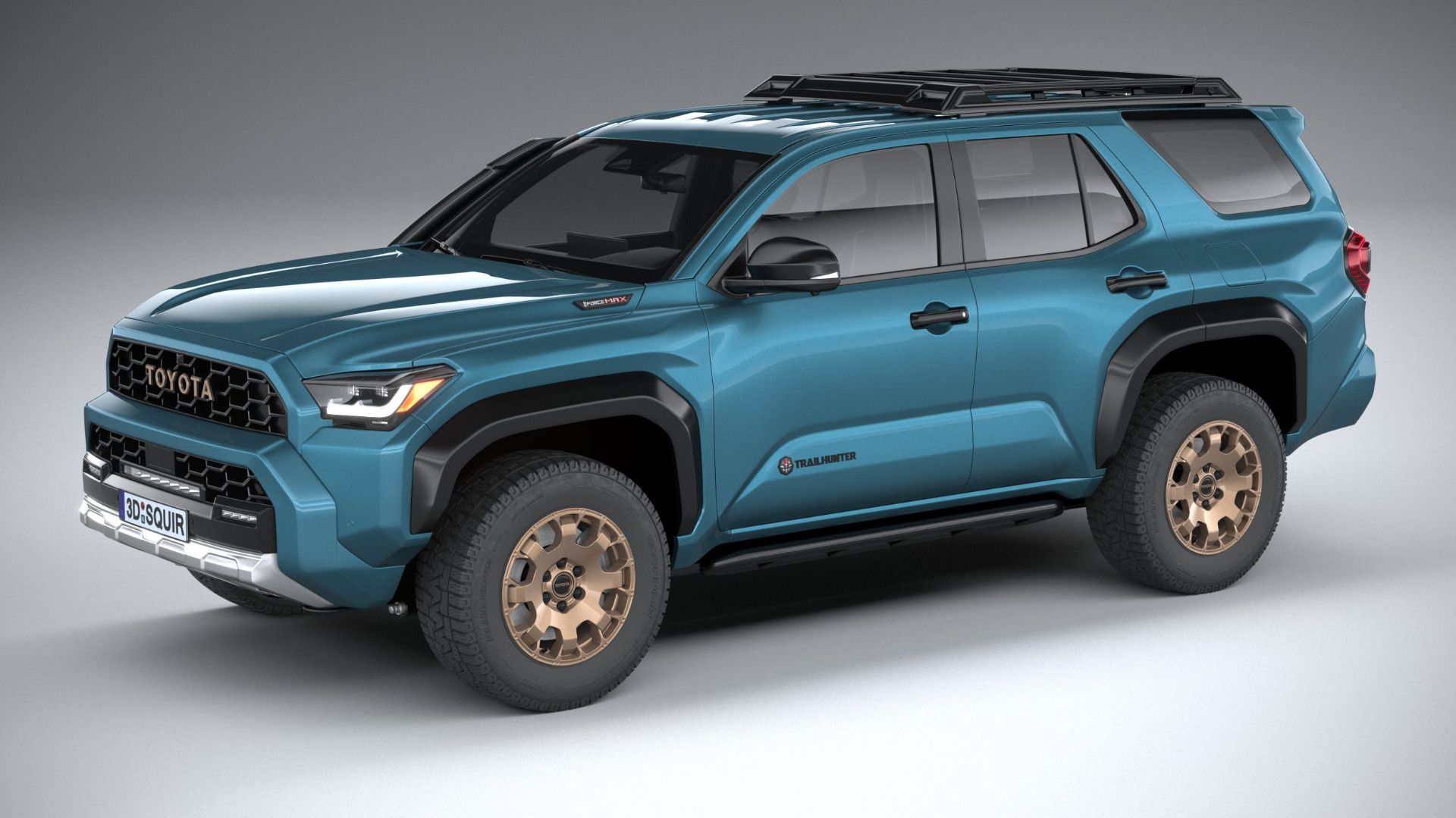
2025 Toyota 4Runner TrailHunter. Wow, going off road can get costly. My test 4Runner TrailHunter came in at $69,578 with such niceties as a digital key and a tow ball added to the $66,900 base price. And here’s the issue in a nutshell, via Car and Driver, “The 4Runner is tall and ungainly. It is inefficient in packaging and fuel economy, not quick, and expensive for its size. Toyota can’t build enough of them.”
I’ve driven both 2025 and 2026 versions of this vehicle, and it’s not the best ride around town. It’s bouncy and relatively rough riding, and you have to climb into it. The snorkel (excuse me, the High Mount Air Intake) might look cool, but c’mon—who’s fording streams? The bright side of this version of the 4Runner is the 2.4-liter turbo four-cylinder hybrid engine that gets a heavy, non-aerodynamic vehicle to 23 mpg city/24 highway. Still terrible, though, considering that Toyota also makes the Prius that gets up to 57 mpg in 2026 guise. The automaker has gussied up this off-roader with a comfortable interior, heated seats and wheel, but you’ll still be roughing it, whether you go off road or not. The same things that make it good on mountain treks are what makes it difficult on pavement—body on frame construction (expect squeaks down the road) a live rear axle, huge knobby tires on 18-inch wheels.
2025 Toyota Grand Highlander Hybrid Max Platinum. This Highlander (another ultra-popular platform from Toyota) is available with two entirely different hybrid engines, a base 245-horsepower unit and a 362-horsepower Hybrid Max in the Platinum trim you probably don’t need. In LE and XLE you get the base engine, but especially in XLE it’s very well equipped (heated front seats, 12.3-inch touchscreen, power tailgate, wireless charging pad)—and gets 36 mpg combined. With the big engine as tested you get a 5.6-second zero to 60 time (instead of 7.8 seconds) but, really, is that important to your daily life or self-esteem? The thing was snappy, but not exactly a sports car. More relevant is the fuel economy loss with Hybrid Max—from 36/32 to 26/27. The non-hybrid Grand Highlander actually did better in some tests, at 29 combined. Plus, the Platinum ($60,270) is hugely more expensive than the XLE ($46,875). I hope all this is convincing.
2025 Audi S5 Coupe Prestige. Prestige is definitely the word here, and you pay for it, in this case a bottom line of $73,345. That buys a very, very capable and sophisticated car, powered by a three-liter 362-horsepower turbocharged V-6 engine with a seven-speed dual-clutch automatic and quattro AWD.
This is more car than I actually need or could possibly justify buying, but that’s not to say I didn’t love my week in it. What’s not to like? It’s attractive, fast, comfortable and (amazingly enough after all the SUVs) a grand touring car! That means it’s set up for long hauls and smooths out the highway for you. At 60 mph and above it’s an effortless drive. The standard Sportback rear gives lots of luggage space under the hatch.
The central 14.5-inch infotainment screen is visually appealing. The Prestige line gets you the quite nice upgraded digital gauge cluster, a head-up display, a 360-degree camera, and also confusing and unnecessary on-screen climate controls. Philistine that I am I get excited when I see a Bang & Olufsen audio system, and I think I actually can tell they sound better than, say, a boombox from Walmart.
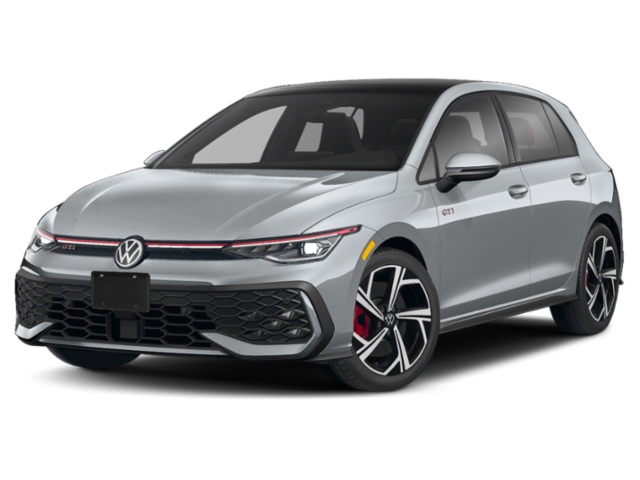
2025 Volkswagen Golf GTI 2.0T SE. The big news about the “pocket rocket” GTI is that VW has gotten rid of the manual transmission option, perhaps an inevitability as manuals are even disappearing at Porsche and Ferrari. Honestly, half the fun of owning these cars is shifting them, but VW is bowing the sheer inability of the driving public to drive stick.
This version is an update of the GTI, not a major model change. In place of the manual is a seven-speed dual-clutch automatic, with an “S” mode for faster shifts. You’re stirring a two-liter, four-cylinder turbo engine with 241 horsepower and 273 pound-feet of torque, held over from previous model years. Fuel economy at 27 mpg combined could be better, but a 5.6-second zero to 60 time is impressive. There are some new colors and badges and new 19-inch wheels. The GTI is still fun to drive but, for me, not quite as much fun. Prices range from $33 to $42,000. The SE tested is $38,645.
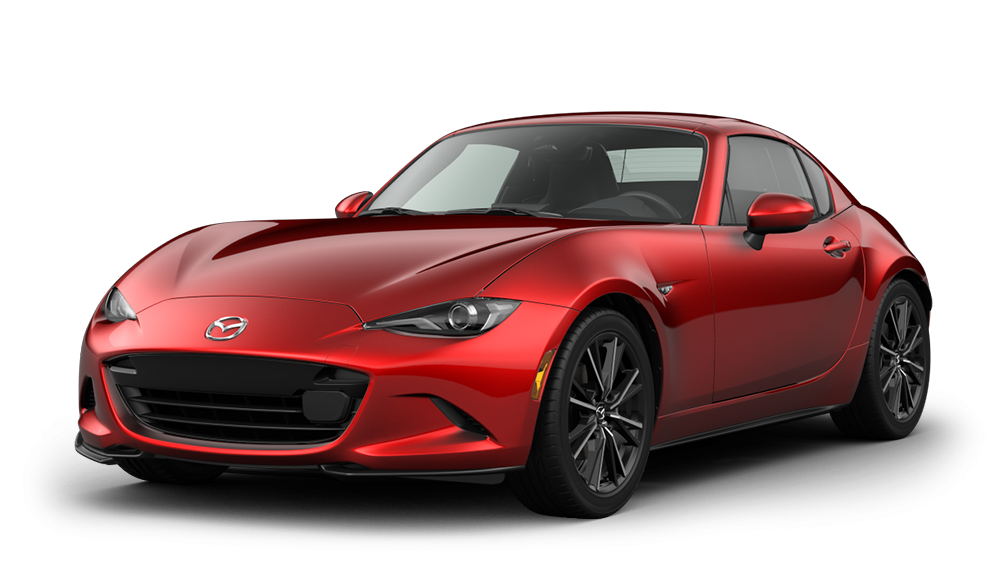
2025 Mazda MX-5 Miata RF Grand Touring. As a Miata owner myself, I (and many of my auto journalist colleagues) don’t have to be sold on the model’s virtues. It is, still, the only real choice for a fun to drive, inexpensive, easy to maintain two-seat convertible. But it’s gotten more sophisticated. Mine’s a 1999, and even that one has far more creature comforts than the NA first seen in 1989.
The RF has a power retractable top, that works very well in practice. That’s a Miata tradition. The early ones have a top that you just throw back, compared to the complicated, leaky Cub Scout tents seen on the British sports cars the Miata blew out of the water.
The Miata still starts around $30,000, and the engine in all Miata is still a modest four-cylinder than in two-liter four here produces 181 horsepower. Yes, you can still go manual with a six-speed box. These new ones are even more responsive and good handling than my ’99, thanks to very direct steering.
The well-appointed RF Grand Touring is near the top of the line, and costs $38,785. Fuel economy at 29 combined isn’t bad, but requiring premium gas is a negative. The Miata may not be the best car for 60-mile commutes—it’s a bit small for that—but as a weekend car it’s peerless. It’s too bad more people don’t think so. Mazda sold just 8,103 Miatas in the U.S. in 2024, a minor downward trend from 2023.
2025 Toyota Crown Nightshade Edition. I’d like to think that cars like the long-Japan-only Crown can find a place in the American market. Toyota loves hybrids, makes great ones, and in this case stuffs its 2.5-liter driveline (236 combined horsepower) into a well-equipped sedan that retails, in this case, for $48,765. Leave the options list alone—the test car had a $165 “side puddle lamp” you probably don’t need.
In some ways the Crown is like an entry-level Lexus, which may have you scratching your head about the need for it, but under either badge it’s a nice car. The eCVT transmission takes a little getting used to, but it’s a factor in the 41 mpg combined (42 city/41 highway) fuel economy.
I liked the 11-speaker JBL sound system, the leather-trimmed heated seats (front and rear), the matte black 21-inch wheels, and the panoramic glass roof. Really, it’s a good example of the state-of-the-art sedan in 2025. The trick is getting the public to care about sedans again.
It’s wonderful to be receiving more and more EVs as test cars, so let’s start with looking at a few of those that ended up being parked in my driveway. But EVs are still only about 10 percent of the U.S. market, so we’ll go on the internal-combustion pathways in the upcoming Part Two of this Territorial Imperatives posting.
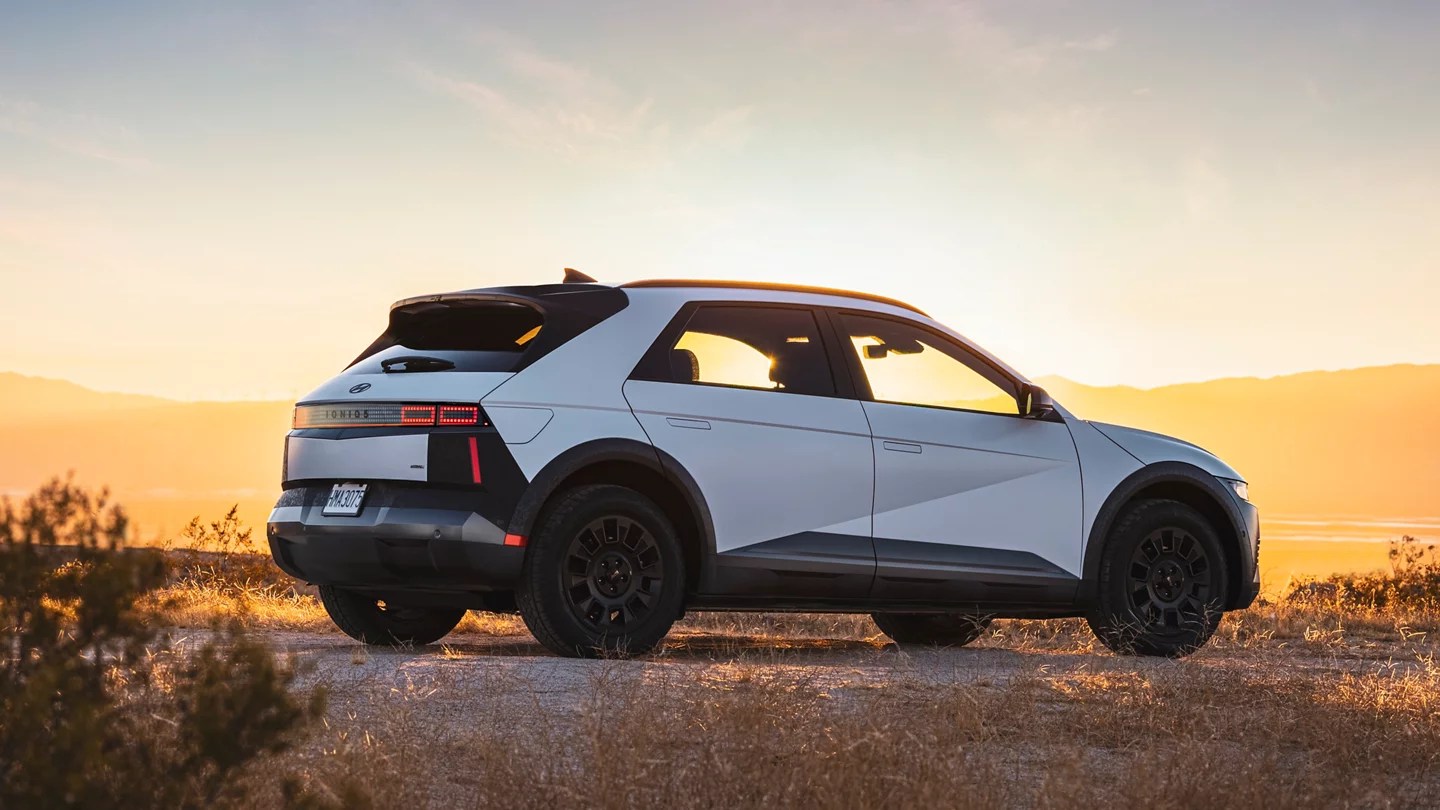
2025 Hyundai IONIQ 5 XRT. Americans eat a lot of junk food, make a bunch of bad financial decisions, go down conspiracy rabbit holes…and really, really like to think they will be heading off-road. That means even EVs have to at least put on a good show in that department, despite the fact that most of the cars never leave pavement.
The 5 is a truly great entry, and now well-established as one of the more popular non-Tesla EVs. In this trim it has a whopping 320 horsepower and AWD from two motors. The off-road is manifest in a slightly higher ground clearance and 18-inch all-terrain tires. The interior and the bumpers are ruggedized. The driver can choose from snow, mud or sand modes. All of this starts at $56,965. If you really go off the road, you may want to pay that hefty price, but for most of us there are better and cheaper iterations of this car, including with one motor. This version’s range is slightly down to 259 miles, compared to the more on-pavement SEL AWD with 266.
The more affordable 2025 5s start at $35,000 for the SE Standard Range model, increase to $37,500 for the SE RWD and continue with the SEL RWD at $39,800. Let me be clear, this is an excellent selection for actually selling EVs in America right now. Hyundai sold 19,092 Ioniq 5s in the U.S. in the first half of 2025. And it’s working. The Ioniq 5 is one of the five non-Tesla EV bestsellers in the U.S. right now.
The top seller is one of my favorites, the Chevy Equinox EV, which is affordable and long-range. More than 50,000 have been sold this year so far. Next is the Ford F-150 Lightning at 33,510, followed by the Ioniq 5, (another good one) the Mustang Mach-E with 21,785 sold, and the Chevy Blazer at 12,736.
2025 Volkswagen ID.Buzz Pro S Plus. $66,040. That was the price as-equipped for this long-awaited electric minivan. VW could have had a home run with the ID.Buzz if it a) released it about four years earlier (the design was done); and b) offered it with two rows and a much more modest price. Instead, the model was long-delayed and offered stateside as a three-row only. The thinking is plain—Americans do like three-row SUVs—but if there’s one thing this vehicle isn’t, it’s an SUV. Unlike most of our citizenry, I love minivans, and I really liked this car. But I found myself apologizing for it being both too big and too expensive. Ah well. VW can make it right by bringing over some of the models it already offers in Europe.
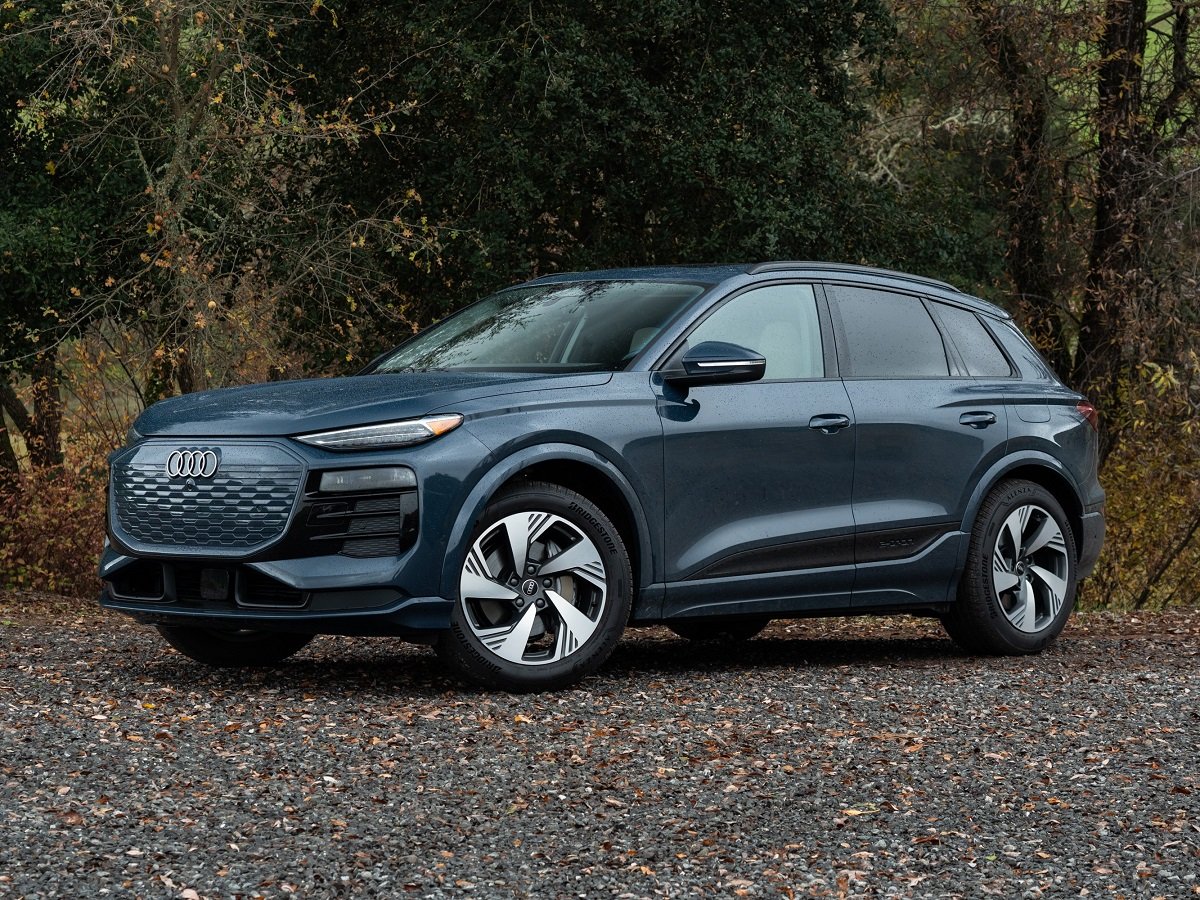
2025 Audi Q6 e-tron Prestige. The Q6 I drove in the northern California wine country is a fast and stylish electric EV, offering 322 horsepower and a 6.3-second zero to 60 time in just the base single-motor rear-drive form. Even that one is pricey at $63,800. If you want the Q6 e-tron quattro, the price goes up (not a huge amount) to $65,800. You get 456 peak horsepower, and zero to 60 in 4.9 seconds. Again, there’s a range penalty. The base version offers a best-ever from Audi of 321 miles, and the quattro runs out of juice after 307. Audi has the luxury EV base covered. It would be great if the company developed a capable EV they could sell in the low $40s. Right now, the cheapest Audi EV is the Q4 e-tron, starting at $49,800 and going up from there.
2025 Volvo EX30 Twin Motor Performance AWD Ultra and EX40 Twin Motor Ultra. Volvo and Polestar (both owned by Chinese automaker Geely) are all-in when it comes to EVs, and the cars tend to share platforms if not styling. Volvo’s EVs are stylish in a Scandinavian modern way, and also a bit pricey. The Ultra tested here has a 422-horsepower, 400-pound-foot dual motor setup, and it’s quite sprightly at 3.4 seconds to 60. There are a ton of nice features, including built-in Google infotainment, a killer Harmon Kardon infotainment system, sustainable materials used throughout (including flax and recycled plastics), and a very capable automated parking system. The range is up to 253 miles, and it can fast charge in 26.5 minutes. You can tow 2,000 pounds.
I could definitely live, every day, with this Volvo, but I don’t need that kind of acceleration or that much weight, and I want the maximum available range. The Twin Motor Performance starts at $46,195, despite plans for a cheaper single-motor version that was dropped for the American market. That EX30 would have been in the mid-$30s, and I’d have definitely considered buying one. Ah well.