Pricing Your New Car: Is “Prestige” Necessary?

As you know, I have the rare privilege of being able to test new cars for one-week periods, and there’s something unique and interesting about each of them. The boxy SUV shape doesn’t vary all that much, so don’t expect much on styling, but I’m still getting sedans in 2026. So here is the current crop, with a focus on special packages and what they do to the bottom line. I’m not making this up, there are five “Prestige” cars on my recent list. Since you pay for upper-trim models, is the extra outlay worth it? Think long and hard about this, because the average transaction price for a new car has climbed to near $50,000.

Let’s start with the sedans:
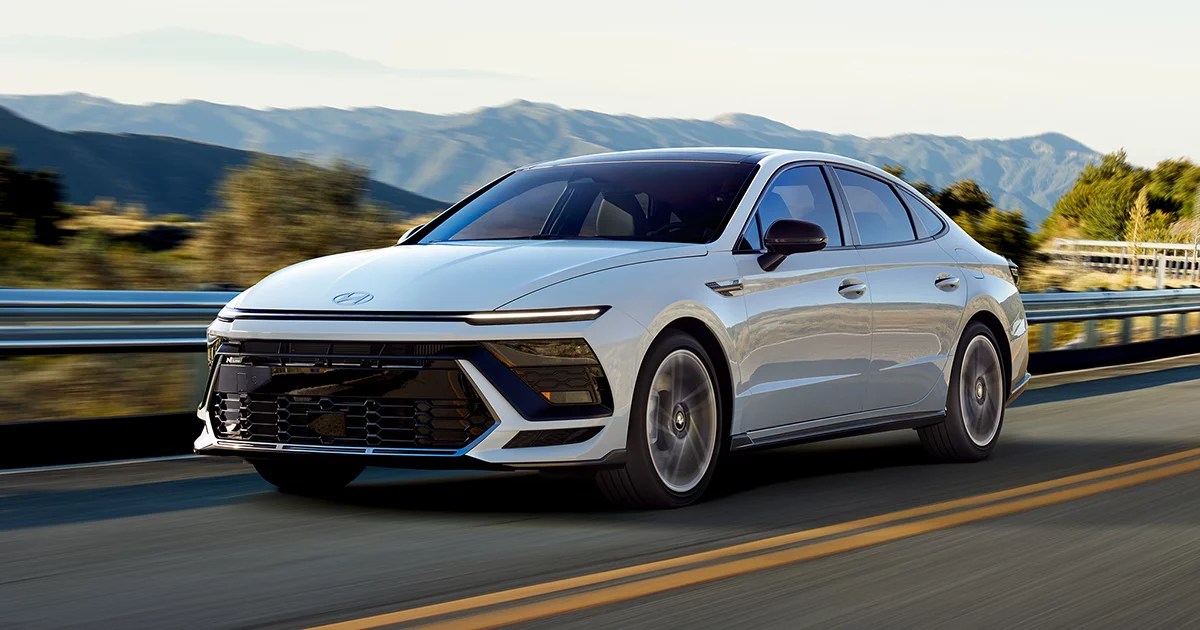
2025 Hyundai Sonata N Line. The more sober money would probably be on the hybrid version of the Sonata, which offers a Prius-like 50/54 miles per gallon city/highway. The N Line’s rating is much lower, 23/33. What it offers instead of saving money at the pump is a powerful 2.5-liter turbocharged inline four-cylinder engine generating 290 horsepower and 311 pound-feet of torque. Coupled to an eight-speed dual-clutch automatic transmission, a 5.3-second zero to 60 time is possible. Just spitballing here, but this should allow you to get to the local gas station/convenience store for a quart of milk five to 10 seconds quicker. Sure, I realize you will have a bit more fun, but my father told me, “A car is to get you from point A to point B.” The N Line, priced at $36,745, is also about $4,000 more than the hybrid.
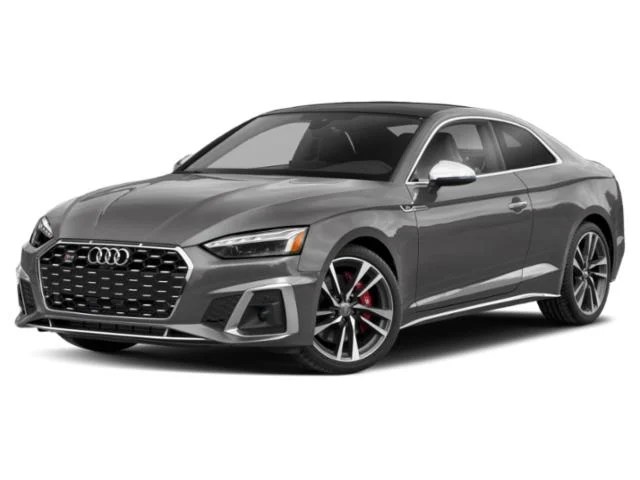
2025 Audi S5 Coupe Prestige. The A5 and S5 sister cars are true state-of-the-art German performance cars, with the latter offering a turbo three-liter V-6 that produces 362 horsepower and a seven-speed dual-clutch transmission with standard AWD. They don’t give away cars like this—the 2025 S5 starts at $63,995, and the Prestige package on the test car adds $7,750 but adds a huge number of features you’ll probably want, from adaptive cruise to B&O stereo and Nappa leather seats.

In America today, the number of people who can afford $70,000 cars is actually increasing dramatically (as is the number of billionaires), but their upper ranks are offset by the much larger number whose declining net worth wouldn’t pay for its spare tire. The have-not army is growing much faster than the elites at the top. Audi’s North American for 2025 sales were down 12.2 percent in North America. Audi’s strength—you may not have heard—is in no-longer-in-fashion EVs. Sales globally were up 36 percent to more than 223,000, fueled by cars like new A6 e-tron and Q6 e-tron. Electric vehicles sales globally continue to climb.

CES this year was focused on AI and more digital in-car assistance, and Audi just announced some enhancements for the 2026 A5 that include more functionality in the steering wheel, an optional integrated dashcam, “expanded driver assistance” and parking assist features, and upgraded voice control.
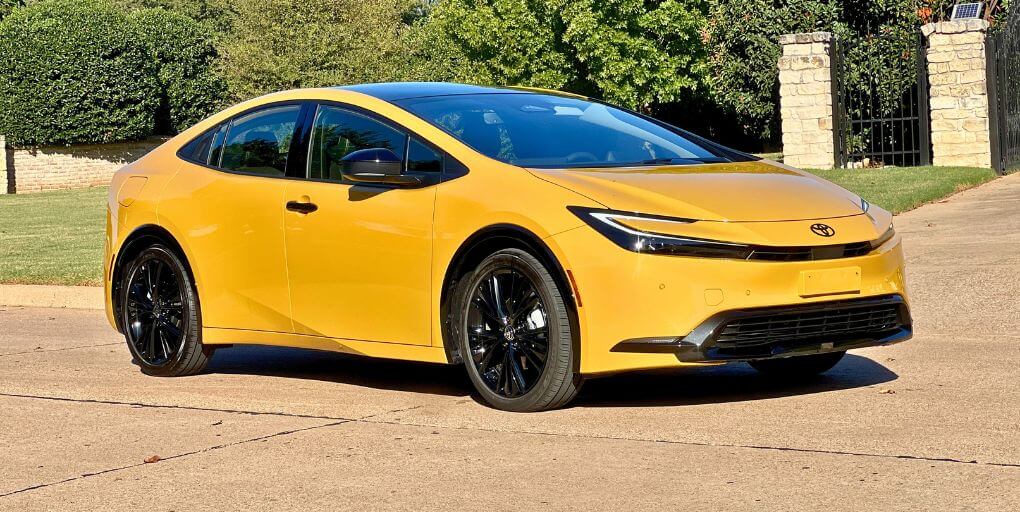
2026 Toyota Prius Nightshade Plug-In Hybrid. What’s a Nightshade, you ask? It’s a trim package adding blackout trim on wheels and badges, carbon fiber dash accents, special seats with gray stitching, and “exclusive” colors such as Karashi Yellow (see the car above), Wind Chill Pearl, and Midnight Black Metallic. The trim sits on top of the XSE version, and it’s one of the rare occasions in which the manufacturer is not gauging you to get the goodies. The Nightshade price is $38,990, adding only $770 on the XSE. There’s no way you “need” it, but at that price it won’t break the bank.

The Prius PHEV is now up to 40 miles of EV range, which is quite useful. Oddly enough, the lower trims can go 44 miles on a charge. Why? Different wheel sizes.
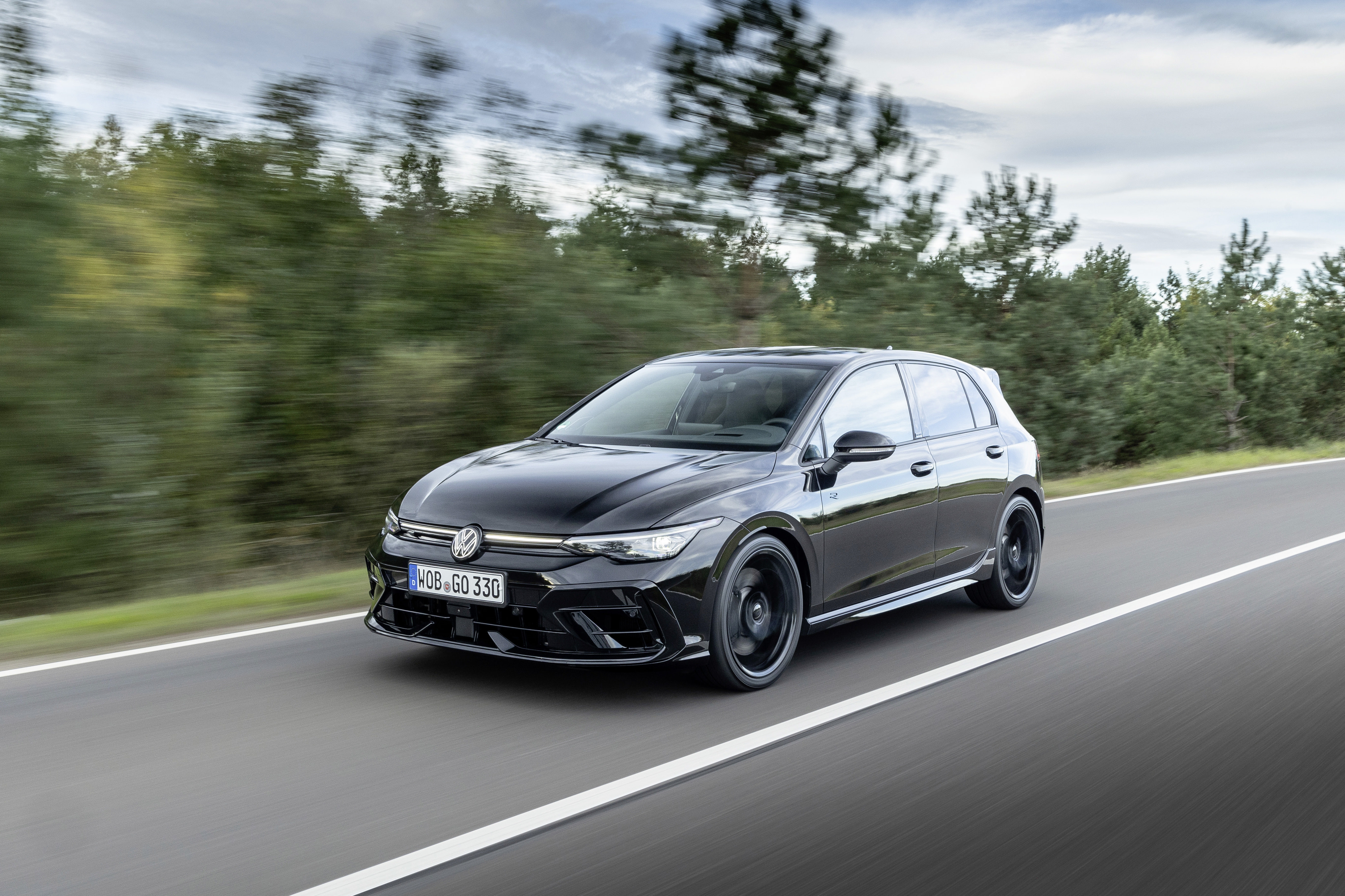
2025 Volkswagen Golf R Black Edition. The offering here is very similar to that of the Prius Nightshade, meaning that automakers can charge extra for blacking everything out. There’s no special performance advantage, by the way. The Golf R Black gets black trim, wheels, mirror caps and a front badge that lights up. Inside, there are the aforementioned “carbon fiber accents.” The package is pricier than on the Prius, adding up to $1,500 to the $48,325 of the base model R.

The Golf R is a pretty ferocious car, with performance torque vectoring and drift mode should you choose to indulge your inner Keiichi Tsuchiya or Tanner Foust. The R’s two-liter turbo punches above its weight and produces 328 horsepower, coupled to 4MOTION AWD. The Akrapovič exhaust is an option.
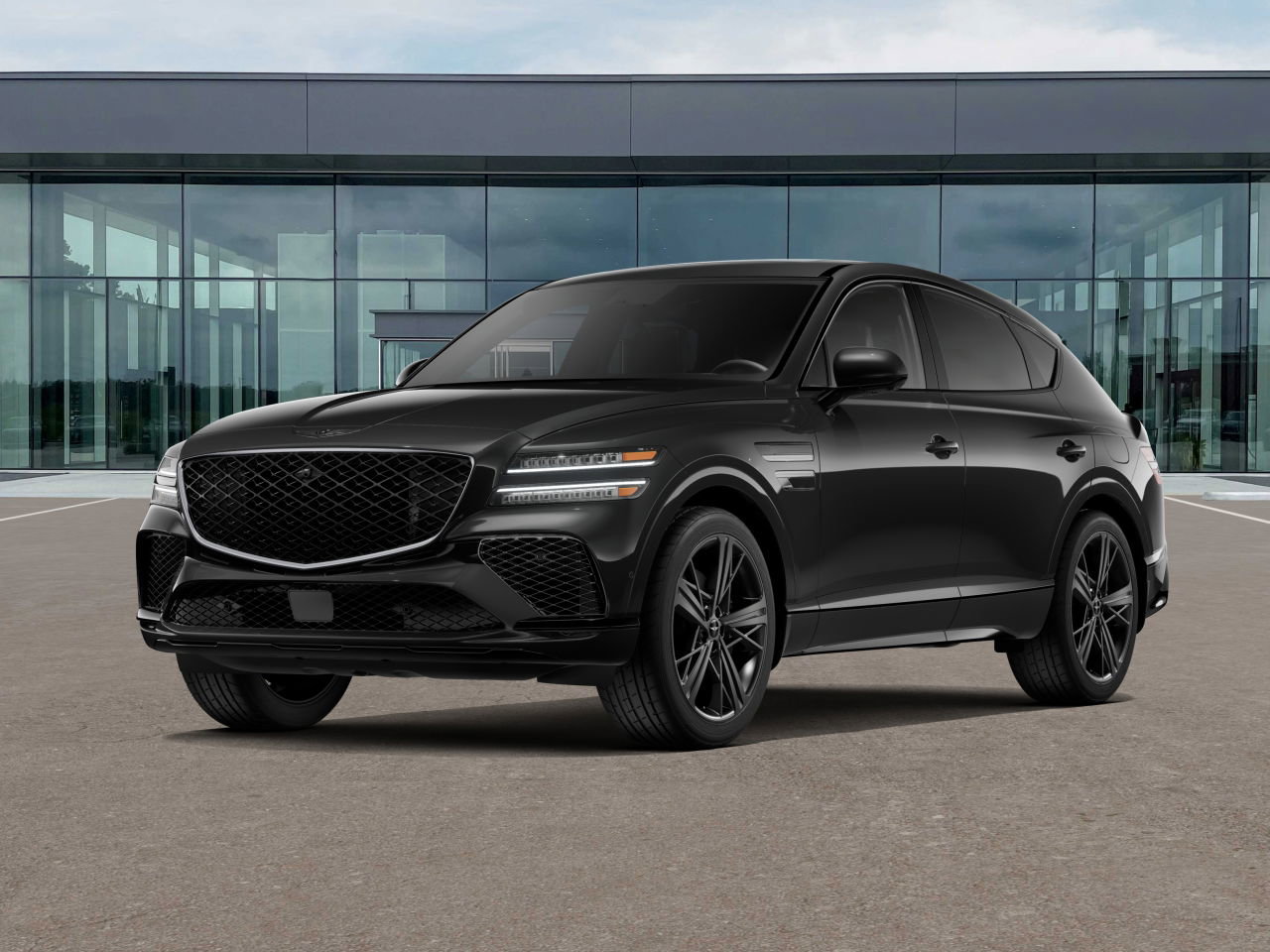
2026 Genesis GV80 Coupe 3.5T Prestige AWD. Yes, automakers like the word “prestige” almost as much as they like “black edition.” So, in the Prestige Black Genesis GV80 Coupe you get 22-inch black alloy wheels, dark chrome accents, blacked out grille and trim, spoilers and, oddly, no rear wiper. I like rear wipers! This car is really loaded to begin with, including Nappa leather, massage seats, B&O sound, a curved OLED display, and 409 horsepower from the twin-turbo V-6 if you go with the optional mild hybrid e-Supercharger. This is an SUV, of course, and “coupe” in this case is relative, referring to a slightly sporty roofline. Adding the Prestige Black Package means a $1,500 to $2,000 boost to a very hefty $91,545. The package doesn’t add much to the regular 3.5T, but if you can afford the base car you might want it. Additional consumer tip: The GV80 can tow 6,000 pounds.  
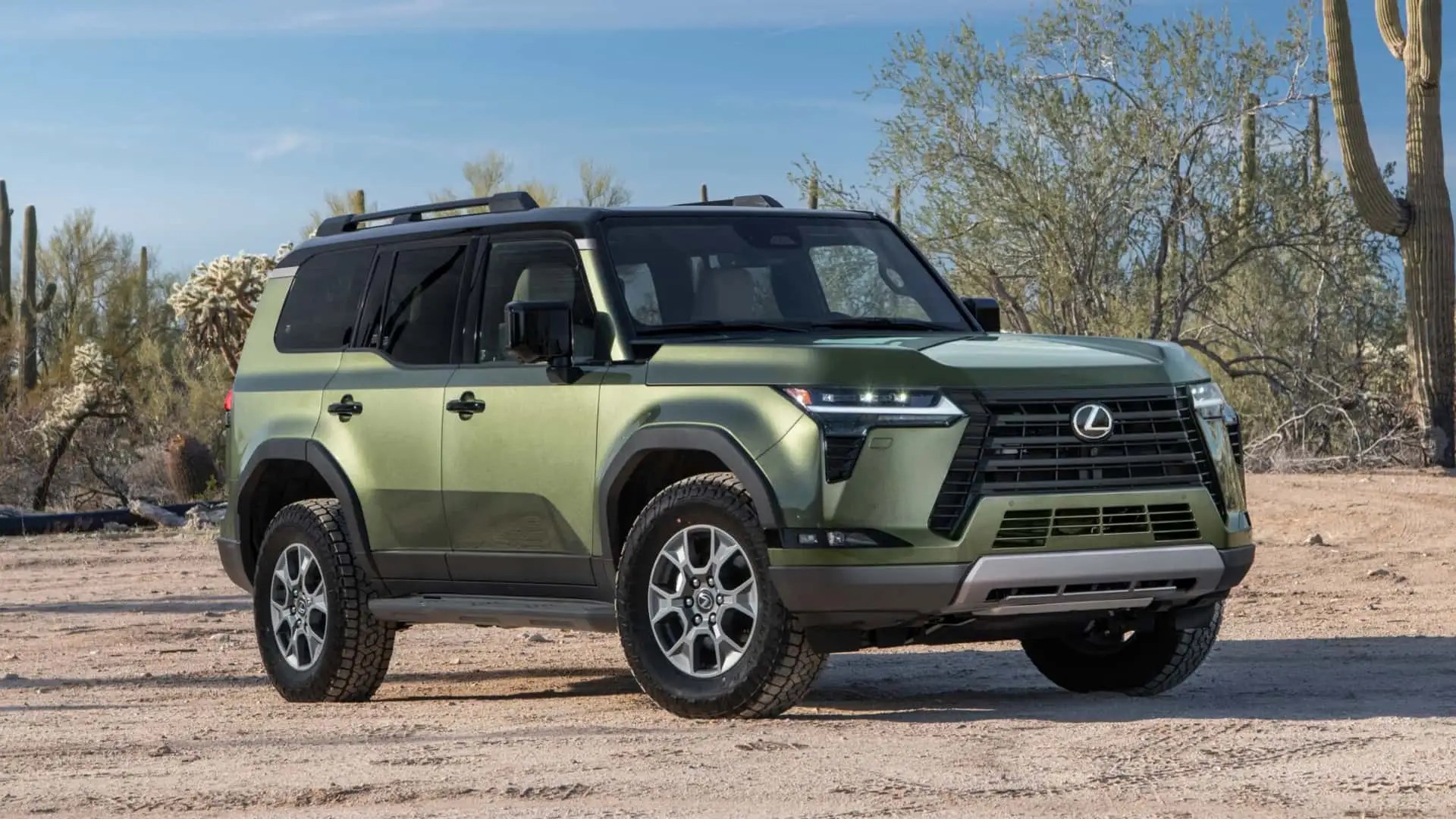
2025 Lexus GX 550 Overtrail. This thing looks like the direct descendant of the rugged Land Rovers that used to traverse the Khyber Pass in Afghanistan with jerry cans strapped to their front bumpers. It’s got mammoth 33-inch wheels, the biggest ever fitted to a Lexus, and in the Overtrail+ a one-inch lift to get over boulders. Back in the 60s, music was provided by the distant call of mountain yaks, but this is 2026 in America, so you can pay $1,140 for the 21-speaker Mark Levinson sound system. The GX Overtrail+ adds pre-wired aux switches and an emergency-ready onboard air compressor. The big GX was redesigned in 2024

Anyone who buys one of these beasts, on a truck platform and powered by a 3.4-liter V-6 turbo with 349 horsepower, and doesn’t take it off road is just being a poseur. It’s ridiculous for tooling around suburbia. Going to waste are its full-time AWD, Torsen limited-slip center differential and electronic locking rear diff. The pavement-bound owner will never use Multi-Terrain Select, Crawl Control and Downhill Assist Control. And they’ll probably never tow 9,000 pounds, either. But if you want to look like Indiana Jones at the local country club, by all means spring for the ball mount ($80), the rock rails ($990), the cat-back performance exhaust ($2,270) and the off-road roof rack ($1,580). The car itself starts at $67,900.
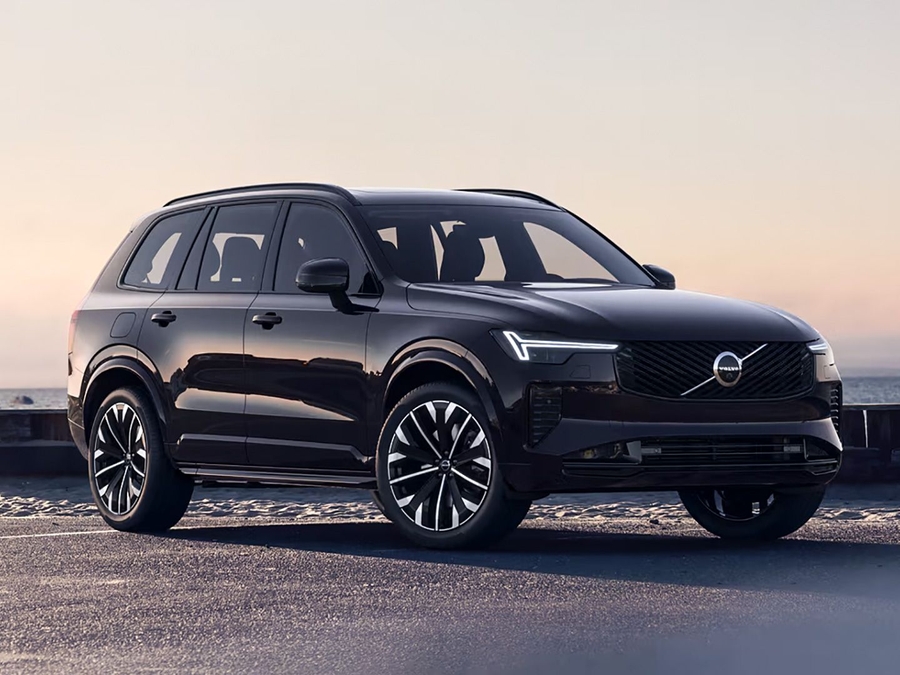
2026 Volvo XC90 B6 Prestige AWD. This particular Prestige is a mild-hybrid three-row SUV whose two-liter four gets electric assist from a 48-volt system to produce 295 horsepower and 310 pound-feet of torque. Of course it’s AWD.

This is another luxury SUV in a crowded field—you won’t miss the classy crystal shifter every time you shift gears, and the top-level sound system, available in the Ultra trim, is Bowers & Wilkins. Volvo’s new designations are Core, Plus and Ultra, with pricing that starts at $66,000. The Ultra starts at $71,045.

Go for the top trim and it includes a 27-inch OLED display with instruments and navigation in one screen, Nappa leather, open-pore wood trim, a suede headliner, and more. These wagons are popular supermarket cruisers in well-to-do suburbs such as Shaker Heights, Ohio, West Hartford, Connecticut and Watch Hill, Rhode Island, and I expect you will see a bunch of them around LA too. If you crash, you’re safe as houses.
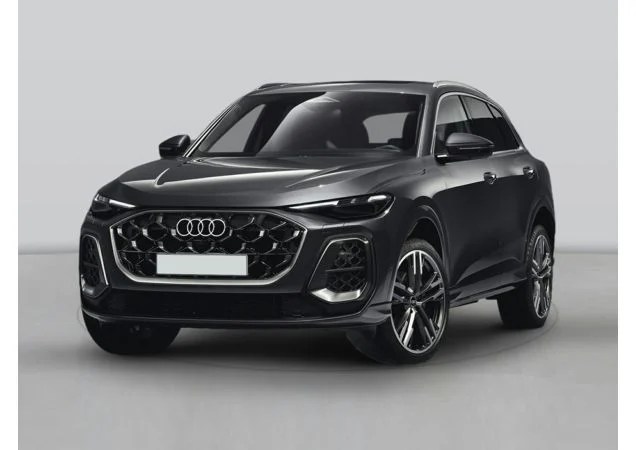
2025 Audi Q5 Prestige. The Q5 SUV is not the performance rocket—for that you want the SQ5, which has 350 horsepower. The Q5 puts out 268 horsepower, up just seven from the previous model. The power hits the road through a seven-speed dual-clutch automatic transmission. The smart money would likely stick with this version, which is just fine for commuting and going out around town.

Quattro AWD is standard. The Q5 base model, which may be just what the doctor ordered, starts at $53,495. But the prices climb quickly: The Q5 Prestige is $60,600; the SQ5 Prestige $71,200; and the Q5 Sportback (with a coupe roofline) Prestige $62,700.

Automakers have been at their trade for more than 120 years, and they’ve learned many and manifold ways of separating you from your hard-earned money. The lesson here is that prestige is nice, but not strictly necessary.

Chinese Cars: They’re Coming, and They’re Better Than You Think

The Consumer Electronics Show (CES) can be a stressful whirlwind, and it’s hard to tear oneself away from the crowded show floor for outside activities, but an invitation to drive some Chinese cars at Las Vegas Motor Speedway could not be ignored.

And these were cars from Geely, a Chinese giant that has in its orbit Volvo, Polestar, Zeekr, Proton, the venerable English brand Lotus, the Geely brand itself and Lynk & Co. The auto journalists have already driven the Volvos and Polestars, sold in the U.S., but actual chances to drive models headed for the Chinese domestic market and a burgeoning international audience (Europe, Southeast Asia, Latin America, the Caribbean, Australia, the Middle East, Africa) are rare in the U.S., a/k/a, land of tariffs.

The media swarms the Geely cars. (Jim Motavalli photo)

There were nine Geely cars on the track, and I drove three of them, representative of the platform agnosticism (and EV favoritism) in China today: a battery EV, a plug-in hybrid, and a gas car. My Autoweek colleague Mark Vaughn said about the cars on the track, “They were all just fine. Panel gaps, fit and finish, materials, acceleration, steering, and braking were like just about any car sold here now.”

The Zeekr X punches out 428 horsepower with dual motors. (Jim Motavalli photo)

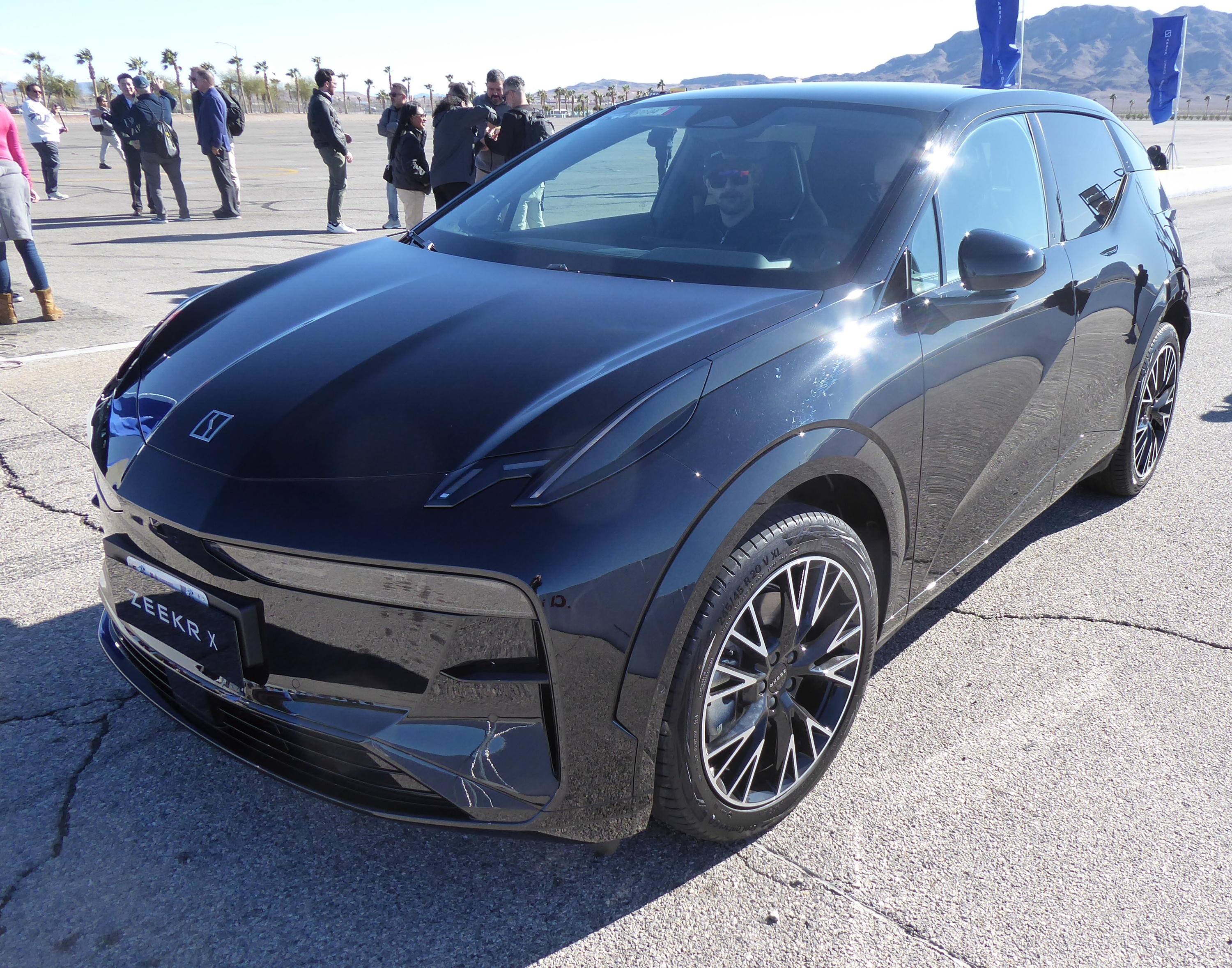
The battery car was a Zeekr X two-motor AWD. Zeekr was a standout at CES last year. This year, with few U.S. brands in evidence amid even more Chinese cars, Zeekr still stands out. The X in dual-motor form (Privilege) is a compact SUV with a punch: 428 horsepower, 400 pound-feet of torque, with a 66-kilowatt-hour CATL battery yielding 273 miles of range (a bit anemic). It can reach zero to 62 mph in 3.8 seconds, and there’s nothing anemic about that.

The Chinese have been betting heavily on auto driving, infotainment and on-board safety, and the X has a Qualcomm Snapdragon 8155 chip and, for ADAS, the G-Pilot system with LiDAR sensors. There’s an AR head-up display. In single motor form (ME) is has 272 horsepower and a 5.6-second zero-to-62 time. There is 150-kilowatt fast charging, which means a 10 to 80 percent charge in around 30 minutes.  

The X came out in China circa 2023, and sales have been modest there: 8,692 last year, 13,316 in 2024 and 22,372 in 2023.  The price is rather eye-opening: The Zeekr X starts around $21,000 after subsidies in China for an entry RWD version with a 49-kilowatt-hour battery. Even a top-trim car like the X I drove is only around $30,000. An export-to-North-America X would be a lot more without the Chinese subsidies, but we would still find it a bargain.

And believe me, the X is definitely a sign of a maturing auto industry in China. It felt like a mature EV, with excellent road manners (very quiet), fast acceleration and good handling, including in evasive maneuvers around the test track. The interior was nice enough, though Chinese automakers need to get the details right. I saw a supposed “brushed aluminum” console that looked like, and was, cheap plastic.

The Lynk & Co. 08 comes in many forms, and is on the road in Europe. (Jim Motavalli photo)

The Lynk & Co. 08, also from 2023, is a mid-sized crossover plug-in hybrid with a combined 345 horsepower and 258 pound-feet of torque from a 1.5-liter turbo engine and two electric motors. The 124-mile battery EV range was impressive, via a 39.6-kilowatt-hour battery. Lynk & Co. is a brand that Geely is trying to establish in Europe, and the company recently entered the Czech Republic, Austria and Switzerland, making 25 markets there. The 08 was launched in Europe last June.

The 08 was impressive on the road, with 4.6-second zero to 60 times, but marred by some hesitation in the drivetrain on rapid acceleration. Interior finish was very good. Drivers of this rig, despite the performance aspects, can expect 42.8 mpg on a U.S. scale.

It’s interesting the price differences on the 08. Europeans pay a hefty $57,000 for a loaded version of the car, but in the Chinese market it starts around $25,600. The European model undoubtedly starts off in a higher trim, but still. Even in twin-motor deluxe form the 08 is only around $36,000 in China.

Geely’s own Starray GF+ offers 218 horsepower and a seven-speed dual-clutch transmission. (Jim Motavalli photo)

And finally, I sampled a Geely-branded Starray GF+. This ICE car had a two-liter turbo four under the hood, with 218 horsepower and 240 pound-feet of torque. The seven-speed dual-clutch transmission was a modern touch. Colleague Mark noted slow two-second downshifts, and it was certainly no ball of fire. But definitely adequate as a fuel-sipping commuter car. There are two screens, a 10.25-inch digital cluster, and a 13.2-inch horizontal center screen.

But this is only one variant of the (popular in China) Starray—there are also diesel and PHEV variants, and a 1.5-liter turbo entry model. AWD is an option in some markets. For some reason, the Starray is called the Boyue L for export models. Overseas, there is no less than four variants of the Boyue.

Get this, the Starray in China starts at $14,000 to $16,000, with higher trims only $20,000.

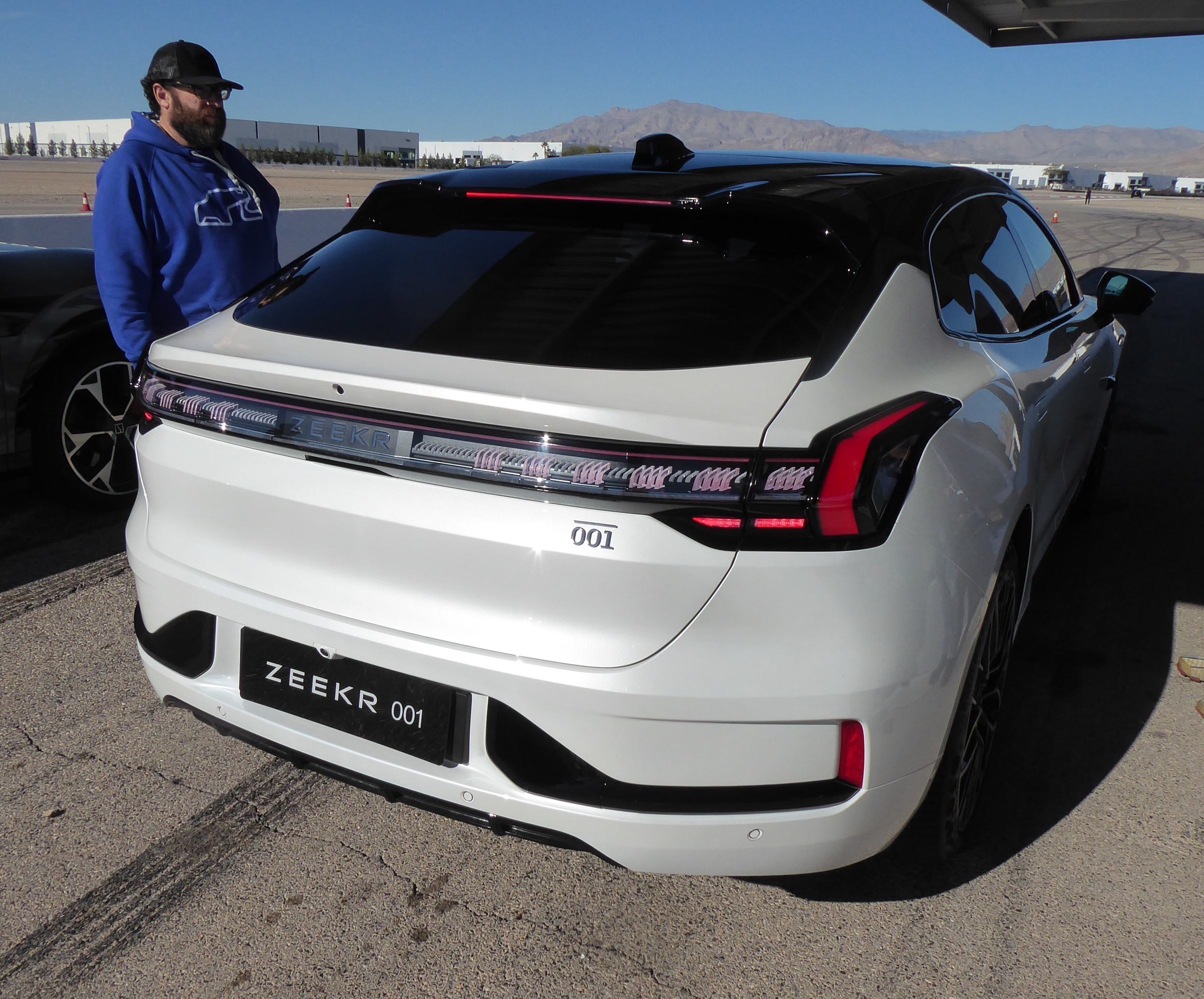
The Zeekr 001 is a road rocket. (Jim Motavalli photo)

I didn’t get to drive the vaunted Zeekr 001 EV because every other journalist was grabbing the keys, but colleague Vaughn said it was the best of the bunch, with up to 536 horsepower from twin electric motors. “Zero to 62 mph is listed at 3.8 seconds—very good for a vehicle that weighs 6,281 pounds. And it held on with minimal body roll in corners,” he said. Range is up to 384 miles by Chinese measurement, and the price of a base model AWD is an affordable $38,000. If you want even more, there’s the ultra-fast 001 FR, a cool $100,000 in China.

the 001 FR, that stickers for about $100,000 in China, so when you add a 100% tariff, the FR gets costly. But the AWD I drove had performance to burn and—let’s assume a $70,000 price tag?—would only cost somewhere near what a Hyundai Ioniq 9 costs and a lot less than a Lucid Gravity.

The bottom line is that Chinese cars are here (well, waiting at the border). They’re getting better, they’re remarkably affordable, and the only thing holding them back from a challenging position in the American market is Mr. Trump’s tariffs. Also, of course, they’re eating our lunch on EVs.

Six New Cars Show That Hybrids Rule

I’m firmly convinced that, despite rollbacks on the federal level and sluggish sales at the dealerships, the car industry is going electric, and I mean globally. In the first half of 2025, plug ins were between nine and 11.8 percent of U.S. new vehicle sales, depending on criteria. It’s a start, and those numbers are much higher in Europe and China (where they’re half of all new sales), and freakishly high in countries like Iceland and especially Norway (way over 90 percent of sales).

The timeline is going to be longer than initially believed, but the changeover is inevitable—dictated both by superior technology and climate imperatives. In the meantime, we are still seeing plenty of old-school internal-combustion cars and trucks hit the market, and here’s a sampling of vehicles I’ve recently sampled.

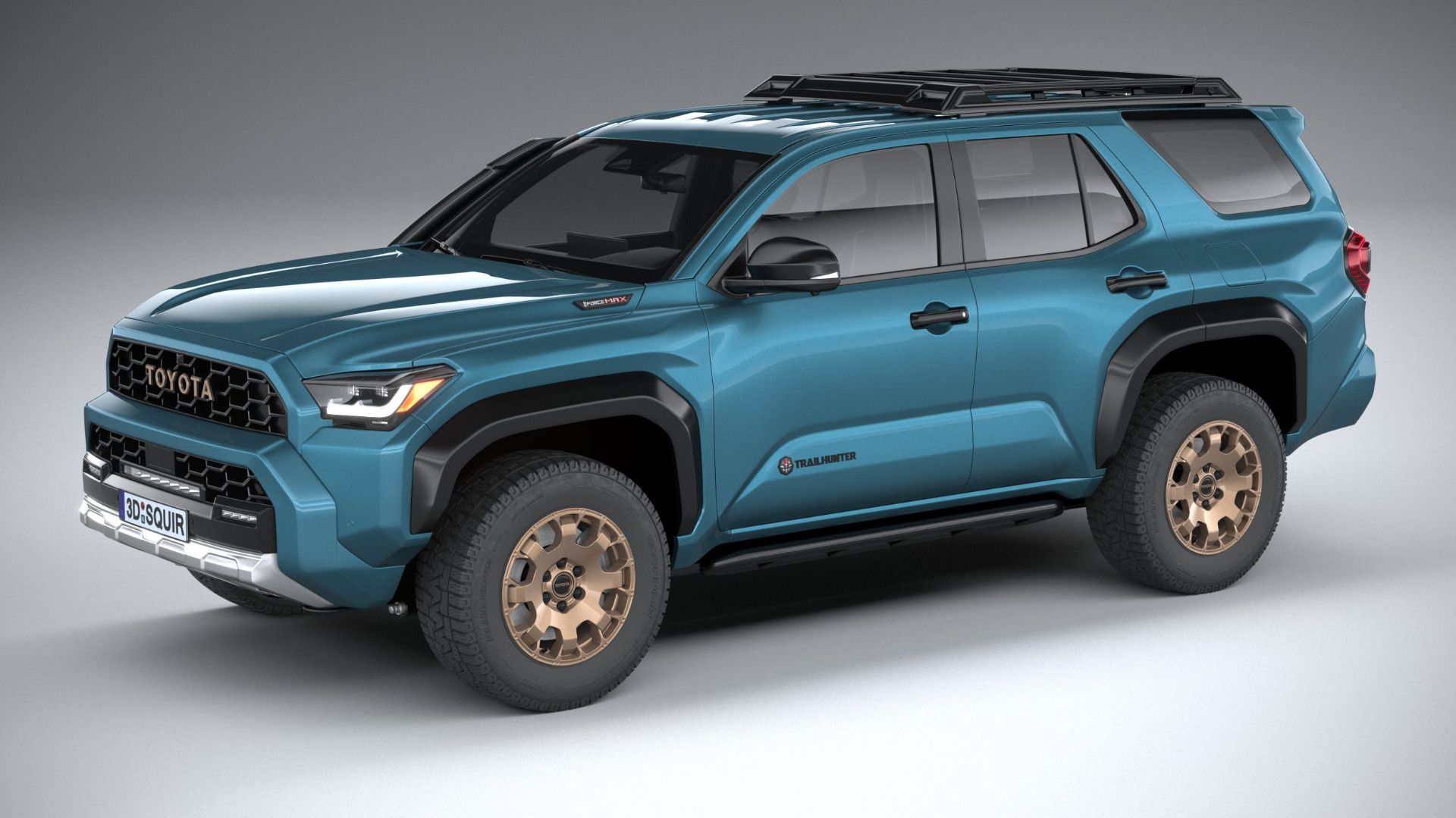
2025 Toyota 4Runner TrailHunter. Wow, going off road can get costly. My test 4Runner TrailHunter came in at $69,578 with such niceties as a digital key and a tow ball added to the $66,900 base price. And here’s the issue in a nutshell, via Car and Driver, “The 4Runner is tall and ungainly. It is inefficient in packaging and fuel economy, not quick, and expensive for its size. Toyota can’t build enough of them.”

I’ve driven both 2025 and 2026 versions of this vehicle, and it’s not the best ride around town. It’s bouncy and relatively rough riding, and you have to climb into it. The snorkel (excuse me, the High Mount Air Intake) might look cool, but c’mon—who’s fording streams? The bright side of this version of the 4Runner is the 2.4-liter turbo four-cylinder hybrid engine that gets a heavy, non-aerodynamic vehicle to 23 mpg city/24 highway. Still terrible, though, considering that Toyota also makes the Prius that gets up to 57 mpg in 2026 guise. The automaker has gussied up this off-roader with a comfortable interior, heated seats and wheel, but you’ll still be roughing it, whether you go off road or not. The same things that make it good on mountain treks are what makes it difficult on pavement—body on frame construction (expect squeaks down the road) a live rear axle, huge knobby tires on 18-inch wheels.

2025 Toyota Grand Highlander Hybrid Max Platinum. This Highlander (another ultra-popular platform from Toyota) is available with two entirely different hybrid engines, a base 245-horsepower unit and a 362-horsepower Hybrid Max in the Platinum trim you probably don’t need. In LE and XLE you get the base engine, but especially in XLE it’s very well equipped (heated front seats, 12.3-inch touchscreen, power tailgate, wireless charging pad)—and gets 36 mpg combined. With the big engine as tested you get a 5.6-second zero to 60 time (instead of 7.8 seconds) but, really, is that important to your daily life or self-esteem? The thing was snappy, but not exactly a sports car. More relevant is the fuel economy loss with Hybrid Max—from 36/32 to 26/27. The non-hybrid Grand Highlander actually did better in some tests, at 29 combined. Plus, the Platinum ($60,270) is hugely more expensive than the XLE ($46,875). I hope all this is convincing.

2025 Audi S5 Coupe Prestige. Prestige is definitely the word here, and you pay for it, in this case a bottom line of $73,345. That buys a very, very capable and sophisticated car, powered by a three-liter 362-horsepower turbocharged V-6 engine with a seven-speed dual-clutch automatic and quattro AWD.

This is more car than I actually need or could possibly justify buying, but that’s not to say I didn’t love my week in it. What’s not to like? It’s attractive, fast, comfortable and (amazingly enough after all the SUVs) a grand touring car! That means it’s set up for long hauls and smooths out the highway for you. At 60 mph and above it’s an effortless drive. The standard Sportback rear gives lots of luggage space under the hatch.

The central 14.5-inch infotainment screen is visually appealing. The Prestige line gets you the quite nice upgraded digital gauge cluster, a head-up display, a 360-degree camera, and also confusing and unnecessary on-screen climate controls. Philistine that I am I get excited when I see a Bang & Olufsen audio system, and I think I actually can tell they sound better than, say, a boombox from Walmart.

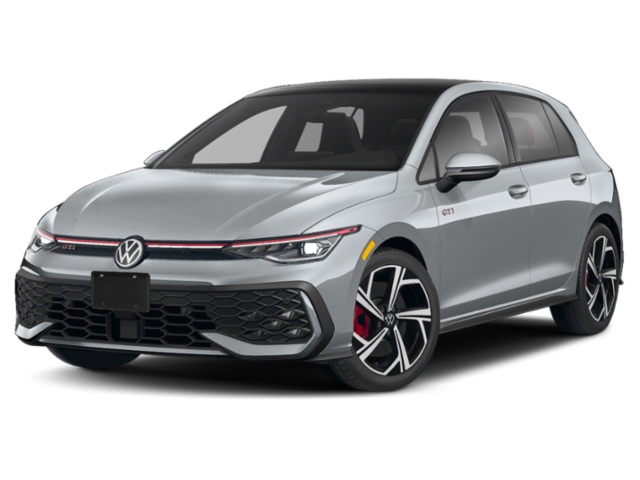
2025 Volkswagen Golf GTI 2.0T SE. The big news about the “pocket rocket” GTI is that VW has gotten rid of the manual transmission option, perhaps an inevitability as manuals are even disappearing at Porsche and Ferrari. Honestly, half the fun of owning these cars is shifting them, but VW is bowing the sheer inability of the driving public to drive stick.

This version is an update of the GTI, not a major model change. In place of the manual is a seven-speed dual-clutch automatic, with an “S” mode for faster shifts. You’re stirring a two-liter, four-cylinder turbo engine with 241 horsepower and 273 pound-feet of torque, held over from previous model years. Fuel economy at 27 mpg combined could be better, but a 5.6-second zero to 60 time is impressive. There are some new colors and badges and new 19-inch wheels. The GTI is still fun to drive but, for me, not quite as much fun. Prices range from $33 to $42,000. The SE tested is $38,645.

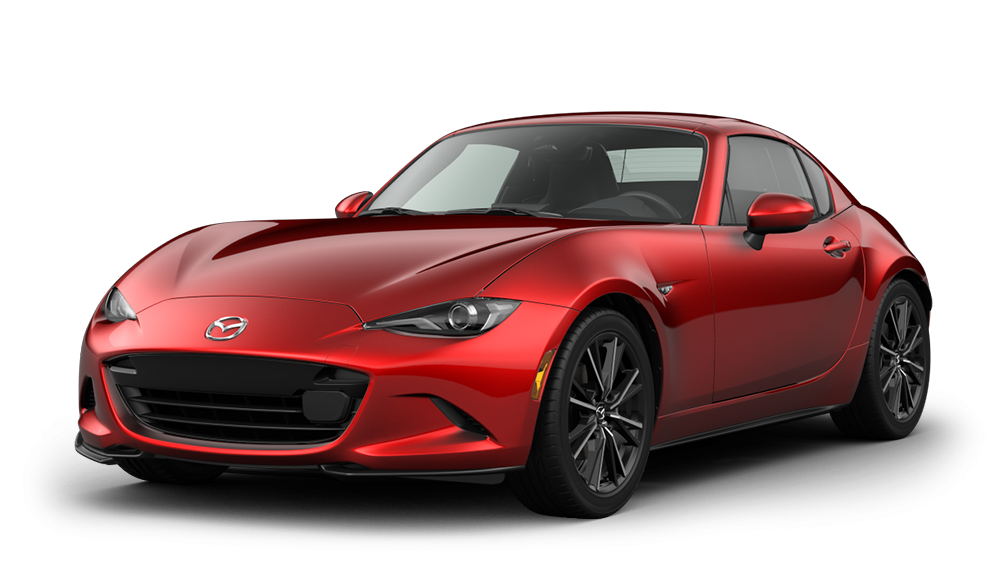
2025 Mazda MX-5 Miata RF Grand Touring. As a Miata owner myself, I (and many of my auto journalist colleagues) don’t have to be sold on the model’s virtues. It is, still, the only real choice for a fun to drive, inexpensive, easy to maintain two-seat convertible. But it’s gotten more sophisticated. Mine’s a 1999, and even that one has far more creature comforts than the NA first seen in 1989.

The RF has a power retractable top, that works very well in practice. That’s a Miata tradition. The early ones have a top that you just throw back, compared to the complicated, leaky Cub Scout tents seen on the British sports cars the Miata blew out of the water.

The Miata still starts around $30,000, and the engine in all Miata is still a modest four-cylinder than in two-liter four here produces 181 horsepower. Yes, you can still go manual with a six-speed box. These new ones are even more responsive and good handling than my ’99, thanks to very direct steering.

The well-appointed RF Grand Touring is near the top of the line, and costs $38,785. Fuel economy at 29 combined isn’t bad, but requiring premium gas is a negative. The Miata may not be the best car for 60-mile commutes—it’s a bit small for that—but as a weekend car it’s peerless. It’s too bad more people don’t think so. Mazda sold just 8,103 Miatas in the U.S. in 2024, a minor downward trend from 2023.

2025 Toyota Crown Nightshade Edition. I’d like to think that cars like the long-Japan-only Crown can find a place in the American market. Toyota loves hybrids, makes great ones, and in this case stuffs its 2.5-liter driveline (236 combined horsepower) into a well-equipped sedan that retails, in this case, for $48,765. Leave the options list alone—the test car had a $165 “side puddle lamp” you probably don’t need.

In some ways the Crown is like an entry-level Lexus, which may have you scratching your head about the need for it, but under either badge it’s a nice car. The eCVT transmission takes a little getting used to, but it’s a factor in the 41 mpg combined (42 city/41 highway) fuel economy.

I liked the 11-speaker JBL sound system, the leather-trimmed heated seats (front and rear), the matte black 21-inch wheels, and the panoramic glass roof. Really, it’s a good example of the state-of-the-art sedan in 2025. The trick is getting the public to care about sedans again.

The New EVs are Great, but we Need More Long-Range, Affordable Choices

It’s wonderful to be receiving more and more EVs as test cars, so let’s start with looking at a few of those that ended up being parked in my driveway. But EVs are still only about 10 percent of the U.S. market, so we’ll go on the internal-combustion pathways in the upcoming Part Two of this Territorial Imperatives posting.

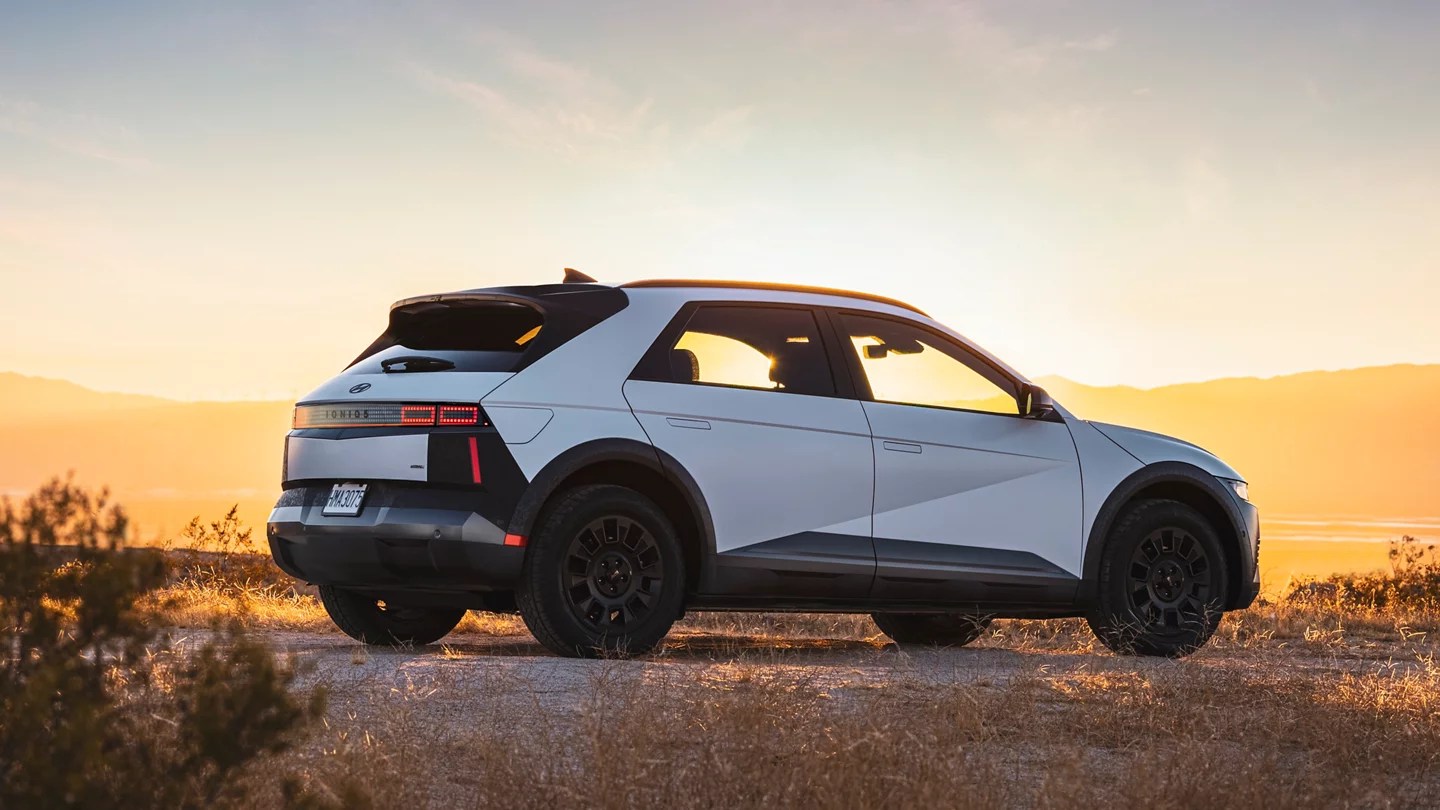
2025 Hyundai IONIQ 5 XRT. Americans eat a lot of junk food, make a bunch of bad financial decisions, go down conspiracy rabbit holes…and really, really like to think they will be heading off-road. That means even EVs have to at least put on a good show in that department, despite the fact that most of the cars never leave pavement.

The 5 is a truly great entry, and now well-established as one of the more popular non-Tesla EVs. In this trim it has a whopping 320 horsepower and AWD from two motors. The off-road is manifest in a slightly higher ground clearance and 18-inch all-terrain tires. The interior and the bumpers are ruggedized. The driver can choose from snow, mud or sand modes. All of this starts at $56,965. If you really go off the road, you may want to pay that hefty price, but for most of us there are better and cheaper iterations of this car, including with one motor. This version’s range is slightly down to 259 miles, compared to the more on-pavement SEL AWD with 266.

The more affordable 2025 5s start at $35,000 for the SE Standard Range model, increase to $37,500 for the SE RWD and continue with the SEL RWD at $39,800. Let me be clear, this is an excellent selection for actually selling EVs in America right now. Hyundai sold 19,092 Ioniq 5s in the U.S. in the first half of 2025. And it’s working. The Ioniq 5 is one of the five non-Tesla EV bestsellers in the U.S. right now.

The top seller is one of my favorites, the Chevy Equinox EV, which is affordable and long-range. More than 50,000 have been sold this year so far. Next is the Ford F-150 Lightning at 33,510, followed by the Ioniq 5, (another good one) the Mustang Mach-E with 21,785 sold, and the Chevy Blazer at 12,736.

2025 Volkswagen ID.Buzz Pro S Plus. $66,040. That was the price as-equipped for this long-awaited electric minivan. VW could have had a home run with the ID.Buzz if it a) released it about four years earlier (the design was done); and b) offered it with two rows and a much more modest price. Instead, the model was long-delayed and offered stateside as a three-row only. The thinking is plain—Americans do like three-row SUVs—but if there’s one thing this vehicle isn’t, it’s an SUV. Unlike most of our citizenry, I love minivans, and I really liked this car. But I found myself apologizing for it being both too big and too expensive. Ah well. VW can make it right by bringing over some of the models it already offers in Europe.

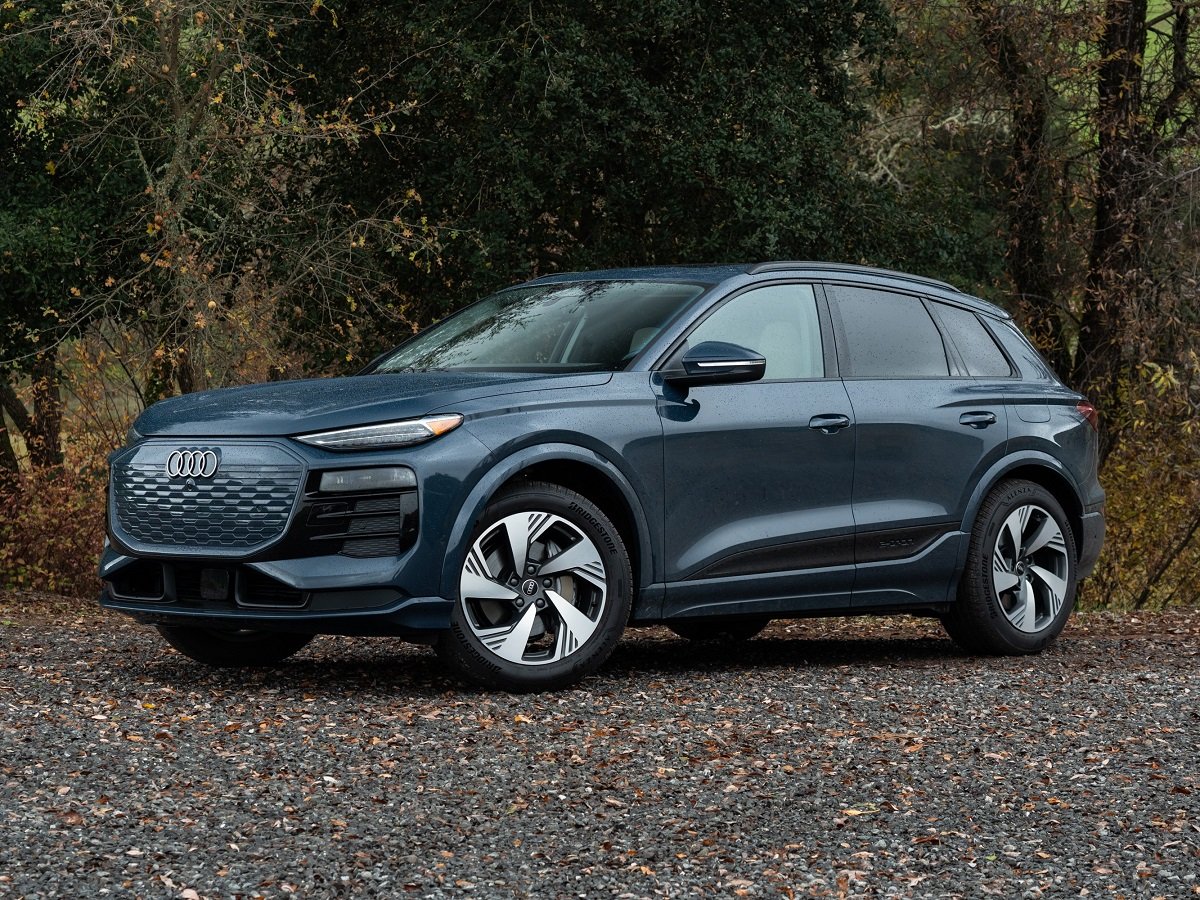
2025 Audi Q6 e-tron Prestige. The Q6 I drove in the northern California wine country is a fast and stylish electric EV, offering 322 horsepower and a 6.3-second zero to 60 time in just the base single-motor rear-drive form. Even that one is pricey at $63,800. If you want the Q6 e-tron quattro, the price goes up (not a huge amount) to $65,800. You get 456 peak horsepower, and zero to 60 in 4.9 seconds. Again, there’s a range penalty. The base version offers a best-ever from Audi of 321 miles, and the quattro runs out of juice after 307. Audi has the luxury EV base covered. It would be great if the company developed a capable EV they could sell in the low $40s. Right now, the cheapest Audi EV is the Q4 e-tron, starting at $49,800 and going up from there.

2025 Volvo EX30 Twin Motor Performance AWD Ultra and EX40 Twin Motor Ultra. Volvo and Polestar (both owned by Chinese automaker Geely) are all-in when it comes to EVs, and the cars tend to share platforms if not styling. Volvo’s EVs are stylish in a Scandinavian modern way, and also a bit pricey. The Ultra tested here has a 422-horsepower, 400-pound-foot dual motor setup, and it’s quite sprightly at 3.4 seconds to 60. There are a ton of nice features, including built-in Google infotainment, a killer Harmon Kardon infotainment system, sustainable materials used throughout (including flax and recycled plastics), and a very capable automated parking system. The range is up to 253 miles, and it can fast charge in 26.5 minutes. You can tow 2,000 pounds.

I could definitely live, every day, with this Volvo, but I don’t need that kind of acceleration or that much weight, and I want the maximum available range. The Twin Motor Performance starts at $46,195, despite plans for a cheaper single-motor version that was dropped for the American market. That EX30 would have been in the mid-$30s, and I’d have definitely considered buying one. Ah well.

The New Kia Telluride is Designed and Built in America, for Americans

Considering it has been around since 2019 (as a 2020) model, the Kia Telluride did remarkably well in 2024, selling 115,504 units in the U.S. Sure, Kia is a Korean brand, but the Telluride was conceived and designed for the U.S. market, and is built in Georgia, so it’s fitting that the second-generation model was styled in California, where Kia has its American design center. 

The Telluride has been a bestseller, and it’s betting big on the update. (Jim Motavalli photo)

On October 28, Kia brought journalists to the Irvine, California center for a closeup look at the evolution of the new model. “The first Telluride had the right combination of elements to turn it into a very in-demand SUV,” said Sean Yoon, president and CEO of Kia North America. Details of the powertrain, price and other rather important details won’t be divulged until the Los Angeles Auto Show November 20.

When automakers sell huge numbers of a boxy SUV, they don’t want to mess with the formula all that much. “How do you follow up on a vehicle that meant so much to so many people,” said Tom Kearns, senior chief designer and head of the center. “It was daunting.” The box is still there, but the new Telluride has some design elements you’ll notice.

The Telluride has a big presence. Note new design element on the top of the wheel wells! (Jim Motavalli photo)

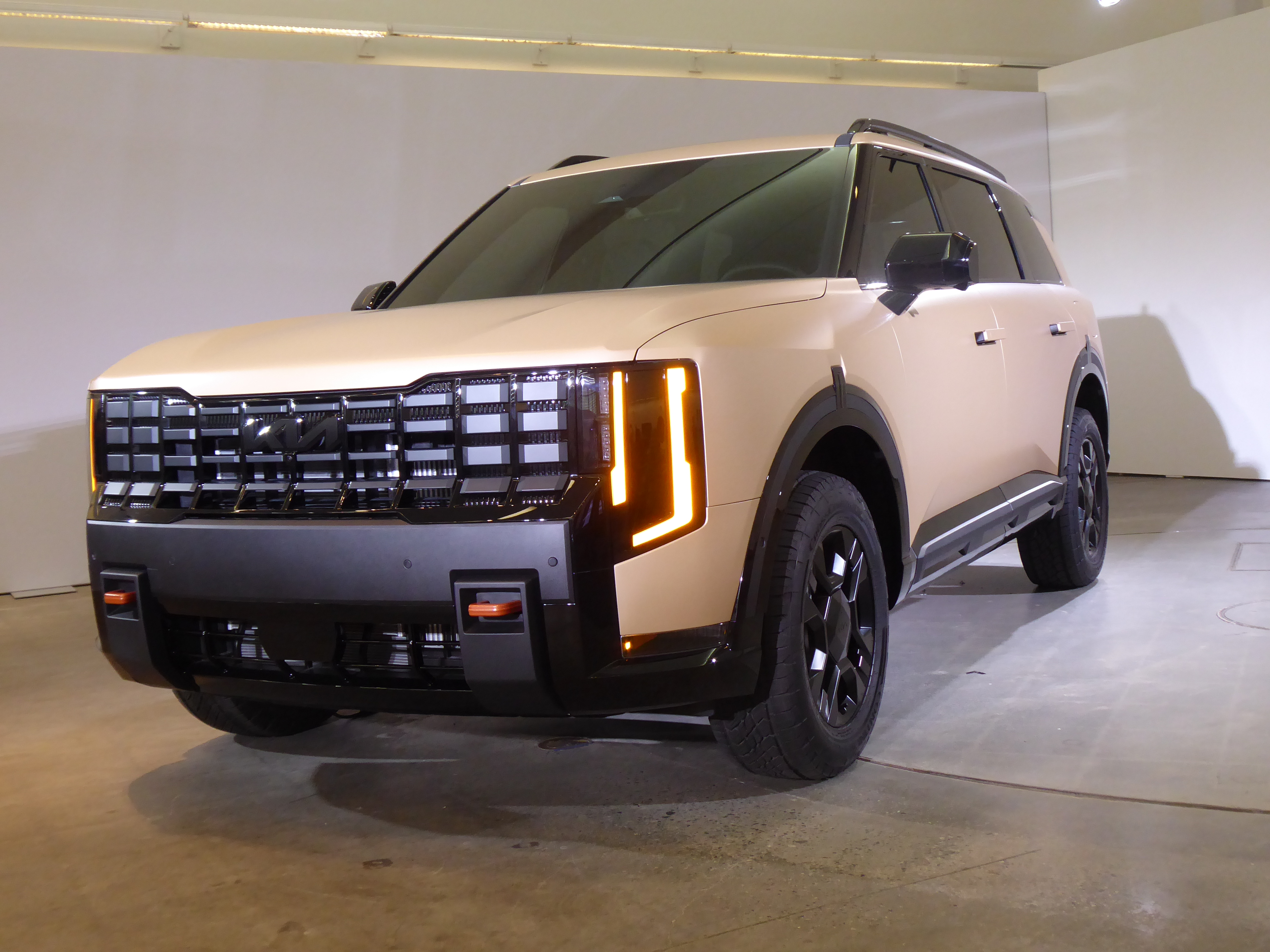
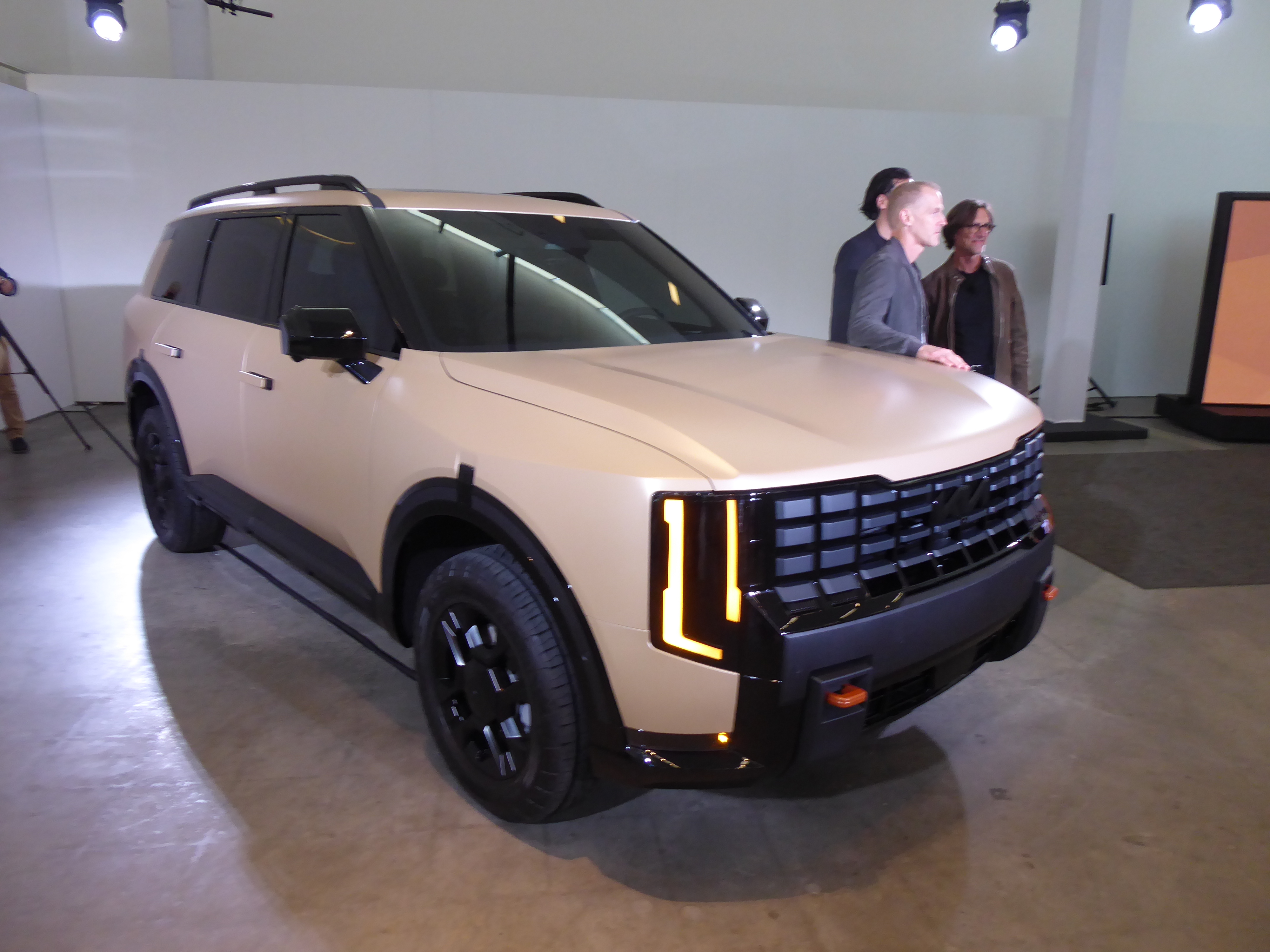
Kearns said one of the key elements was to “do something that makes you nervous.” Maybe on the Telluride that’s the bold, black, high-gloss grille with raised squares where you’d expect the headlights to be (they’re actually almost hidden at the sides), or the notches on top of each wheelarch that are intended to look like an attachment point (they’re not). And then there’s the wavy, non-wrap-around taillights with body color between the two elements. Flush door handles offer some aerodynamic benefit, but a lot of companies are doing those now.

Tom Kearns says a design inspiration was to “do something that makes you nervous.” (Jim Motavalli photo)

Kia showed the Telluride in top-of-the-line X-Pro form, with an aggressive off-road theme. There are four prominent tow hooks. The new Telluride is bigger, two inches so in length, and three in the wheelbase, with the aim of delivering a roomier three-row interior. The rear two rows seemed comfortable enough, with adequate head and legroom, though that was an impression from a static sit.

“The challenge was we had a very popular product we wanted to improve,” said Kurt Kahl, a chief designer on the Telluride. “We had a formula, but felt there were improvements to be made. And the result was a modern design that, particularly on the X-Pro, keeps the rugged attributes that our customers have loved.” He said California won the competition to deliver the new Telluride design, but Kia design studios around the world contributed to it. A guide, he said, was Kia’s “Opposites United” design philosophy,

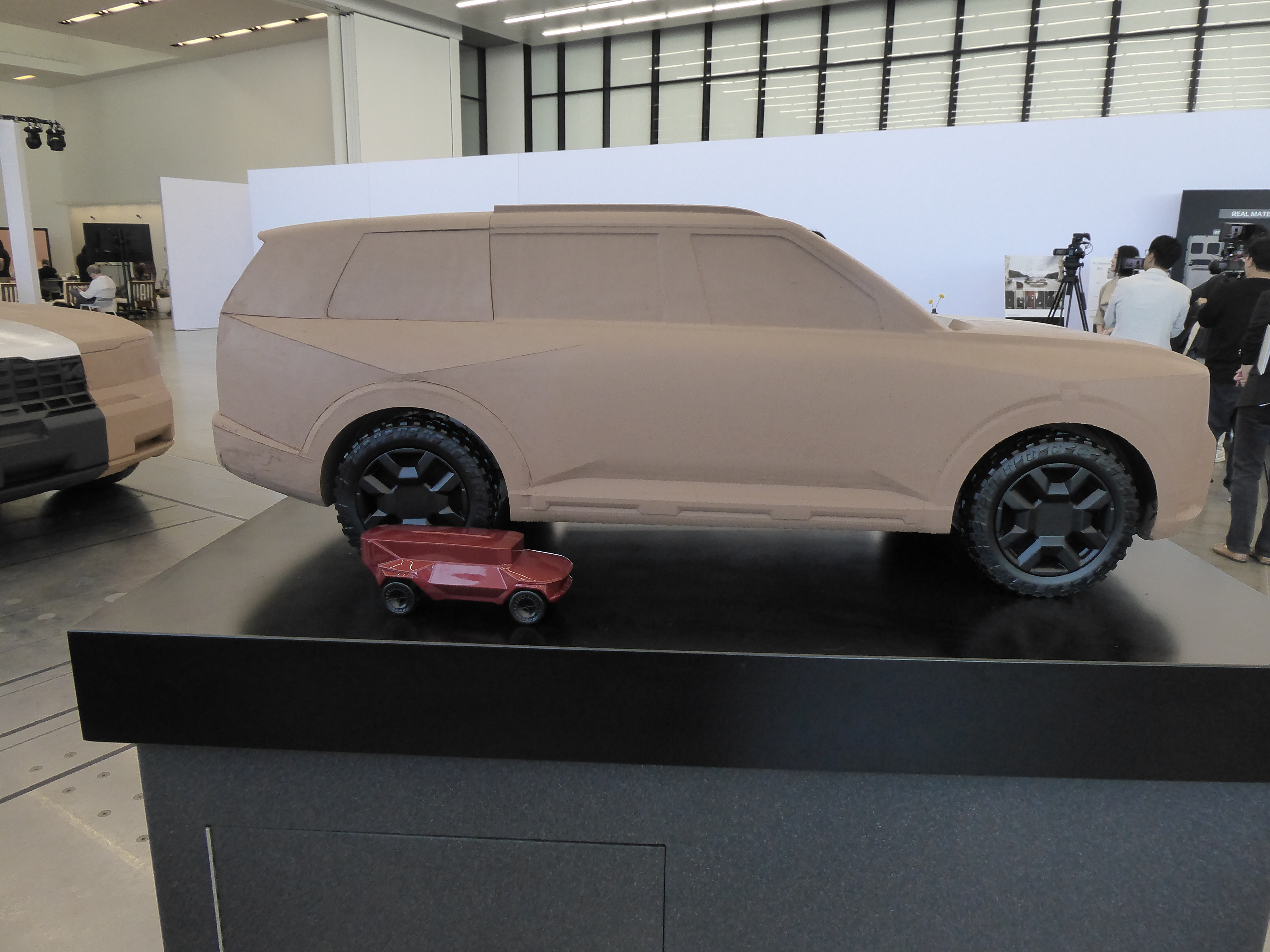
The Telluride as a clay model in the design center. (Jim Motavalli photo)

Kia is betting big on the new Telluride. James Bell, head of communications for Kia North America, said the original model’s sales “grew every year since the launch,” unusual as cars age. And, he added, Kia is increasing capacity at its Georgia plant to meet the demand that it’s sure will be there.

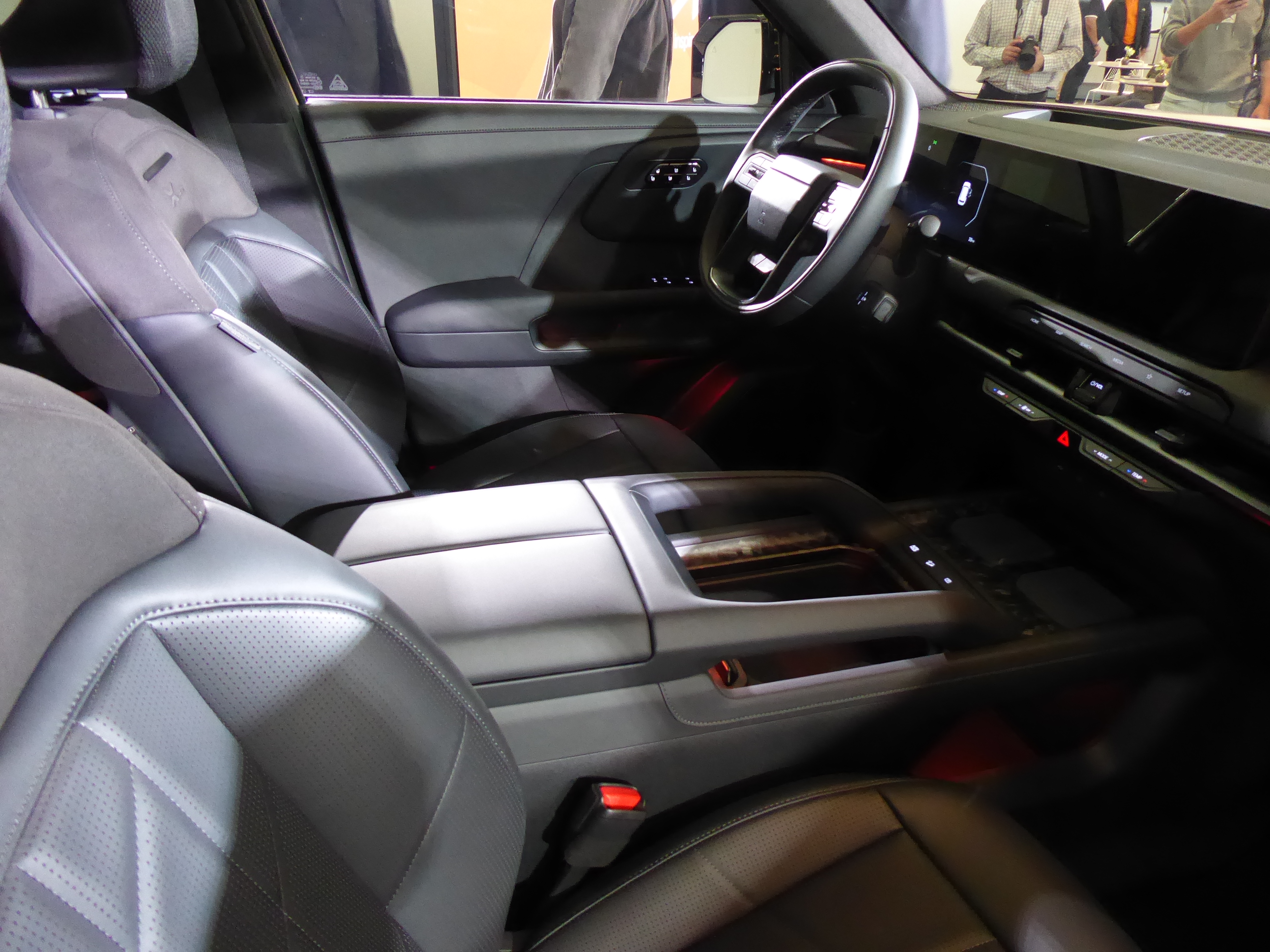
Inside the Telluride. (Jim Motavalli photo)

In the room with the new Telluride were some small-scale models and full-sized clays that showed the design evolving. And a reveal of color combinations that include Deep Navy with Tuscan Umber, Blackberry and Sand Beige, and Deep Khaki with Saddle Brown. Or you can just black everything out.

A Telluride test car, with a camouflage design showing past design sketches. (Jim Motavalli photo)

Also on display was a camouflaged test car that, on closer examination, bore a design created from older Kia design sketches. And there was also an electric PV5 that looked to have been inspired by the Tesla Cybertruck. This PV5 was a SEMA exhibit in camper form, but Kia is actually selling a PV5 in Europe as a passenger and cargo van. According to spokesman Jim Hope, Kia is contemplating possible PV5 sales in the U.S.

Book Review: Spent: A Comic Novel by Alison Bechdel

Alison Bechdel, Spent: A Comic Novel (Mariner Books)

This review is the first in a series being written to be read aloud on the Book Corner of my WPKN-FM radio show. Tune in at 89.5 FM or via the app on the website.

From 1980 to approximately 1994, I ran the Fairfield County Advocate, part of a Connecticut-Massachusetts chain that included the Valley edition for Northampton and Springfield. The Valley was the only edition hip enough to run “Dykes to Watch Out For,” the lesbian-themed comic strip written by Alison Bechdel. The Advocates also ran “Life in Hell,” written and drawn by a pre-fame Matt Groening of Simpsons fame. But that’s another story. I would seek out the Valley edition just to ready “Dykes” because it was so well done.

Bechdel probably made a pittance from “Dykes,” as Groening likely did from “Hell,” but they both hit it big, in the former’s case with Fun Home, a graphic memoir about her closeted father that became a bestselling book and then a successful play.

Spent is Bechdel’s fourth memoir (not including a “Dykes” compilation) and. as always, it’s autobiographical. But Bechdel’s moved beyond the nuclear clan to fictionalize her marriage and her friends in and around Burlington, Vermont. If Spent is accurate, Burlington is one of the crunchiest, most politically aware communities in America—rivaling Berkeley, California.

Bechdel’s circle, almost all women except for one skirt-wearing male, are entirely vegan, passionate about every cause, and dedicated to farming the land sustainably. Does Bechdel really run a pygmy goat rescue sanctuary? Probably not, and her work was not made into a TV show starring Aubrey Plaza and Benedict Cumberbach, nor does she likely have commune-dwelling friends named Lois, Stuart, Ginger and Sparrow. But my guess is that reality is pretty close to all of this.

The Spent version of Alison, while being driven nuts by Trump’s first term, is constantly trying to do the right thing ethically, while also keeping her wife and goats in the style to which they’ve become accustomed. Does this mean hooking up with rapacious corporate studios and publishers in bed with big capitalism? Is it OK that the TV show of her life is legally able to take wild liberties—such as her character giving up the vegan life and eating a Big Mac?

Alison’s editor says things to her like “I’d like to see you on at least five platforms, including TikTok, posting a couple times a week. Cat videos are great, but you’re already trending well with introverts. You should post about the goats.”

Meanwhile, Alison’s friends are trying to sell non-binary menstrual kits, Free Palestine, assemble hygiene kits to send to Ukraine, splash paint on a polar bear display at the natural history museum, and keep on working for Planned Parenthood in a post-Roe dystopia. And, front and center, embracing polyamory and non-gender identification at several generational layers.

The folks of this comfortable, woke enclave seem a bit in a self-satisfied bubble as they serve up the barbecued seitan with kombucha and attend talks with titles like “shifting age demographics and implications for civic power.” Did I mention there are a lot of cats?

The brilliant thing about Alison Bechdel, and especially her work on Spent, is how she can embrace non-mainstream characters and situations and turn them into popular entertainment. With brilliant artwork and always clever dialogue, she manages to treat serious business and potentially alienating lifestyles in a very entertaining, mainstream way.  

The Alison in the book wants to create an anti-capitalist TV show that—in the mode of the British group Gang of Four, perhaps—wraps the bitter pills in a sweet candy wrapping. And that’s exactly what she also did in her real-life latest work, Spent. By the way, the book’s TV show based on Fun Home gets canceled after its third season.

The obvious corollary to all this is Ben & Jerry selling their enlightened ice cream company to Unilever for $326 million, then, with all that money safely banked, grousing about the London-based corporation not being enthusiastic about making big political statements. Maybe Ben and Jerry should write a graphic novel.

Caravan of Thieves Go to Church

The ceiling of the Unitarian Church in Westport, Connecticut looks a bit like an inverted wooden ship. It is a landmark modernist design, by architect Victor A. Lundy, and completed in 1965. While listening to Caravan of Thieves perform at the church October 4, I occasionally glanced up and watched the music soaring into the rafters.

The Bridgeport, Connecticut-based Caravan has been led by “Fuzz” Sangiovanni on guitar and vocals, along with his former wife, Carrie Linsky (rhythm guitar and vocals) since 2008. There’s always a virtuosic fiddle player, originally Ben Dean but now the Britain-born Dan Foster. Dan Asher is on bass.  

The music crosses all kinds of borders. The basis, Fuzz explains, is gypsy jazz. He says he was taking a walk in a Bridgeport park and listening to gypsy guitarist Django Reinhardt when it occurred to him that the idea of combining that high, wild sound with the acoustic pop he’d been making as Fuzz and Carrie might make sense. And, of course, he’d need his very own Stephane Grappelli.

Caravan songs are far from ordinary. They combine the essence of European art song with Tin Pan Alley, “These Boots are Made for Walking” Nancy and Lee, and a touch of Dark Shadows. Fuzz told me he also likes the classical composers, including Mozart and Debussy, and that’s in there too.

In Westport, the Caravan music stopped on a dime, with rapid tempo changes, complex vocal arrangements and mad guitar/violin exchanges. Both Fuzz and Dan played jaw-dropping runs, which the other caught and twisted into knots.

Covers? Caravan included Queen’s “Bohemian Rhapsody,” Gloria Gaynor’s “I Will Survive” and Talking Heads’ “Psycho Killer.” They like the darker stuff. An original they did is called “Eat You”:

Cause you’re my chocolate-covered strawberry
Cause you’re my piping hot pastry
Dreaming about the moment that I own you
Love you to the bone

… Cause you’re my vicious but delicious cheat
A heart attack lip smacking sweet
I don’t deserve you either way I’ll serve you
Finally I got the nerve

… I go hungry every night
Not this time around

… I’m gonna eat you, you’re my desire
I’m gonna sharpen all my teeth and build a fire
I’m gonna eat you, cook and defeat you
I’m gonna breathe you in my lungs and make you mine

“Monster” mixes the agonies of love with the creation of Frankenstein in the good doctor’s lab. And “Raise the Dead” offers this:

Let’s all raise the dead
And ask them to come to feast
A big celebration of past consummations and grand conceits
Let’s all break some bread
And merry down the boulevard
Give medals of honor to all of the goners and deceased

Caravan fans are called, in a friendly way, “freaks.” The band still has a strong following, though it doesn’t play as often as it did 10 years ago. But seen live, the instrumentally spectacular, highly theatrical treat is totally intact.

Caravan of Thieves plays Trinity Stage’s Music on Main in Middletown, Connecticut October 24, and the Fairfield Theater Company Stage One December 20. They do a lot of holiday shows.

The Turtle Invitational 2025

At the fifth running of the Turtle Invitational September 21 in the back country of Bedford, New York, Nancy Tanner stood near her decidedly unconventional ride: An ultra-cute 1991 Nissan Figaro, a decidedly retro Japanese car powered by a one-liter turbo four. They were never sold in the U.S. (and just 20,073 were made), but now these oddballs can be imported as used cars that are more than 25 years old.

Nancy Tanner with her rare-in-America Nissan Figaro. (Jim Motavalli photo)

“My husband and I saw one outside London’s Claridge’s in 2004,” said Tanner, a resident of Tuxedo, New York. “We were very taken with the car. As soon as we could, we bought three and sold two.” The family owns six cars, which is probably not atypical for the people exhibiting at the Invitational, which is growing rapidly and now rivals (or exceeds) the nearby Greenwich Concours in size. 

The Invitational, the brainchild and labor of love of money manager Philip Richter (on whose horse-country property it resides), has room for all branches of the collector car hobby. “To make it unique, we’re just giving awards to cars with interesting and meaningful histories,” Richter said.

Chuck Schoendorf with his latest acquisition, a 1953 Chrysler New Yorker T&C. (Jim Motavalli photo)

Chuck Schoendorf, who owns no less than three original Cunningham cars (of the 27 made), brought his latest acquisition, a two-tone 1953 Chrysler New Yorker Town & Country station wagon.

“It’s powered by a Chrysler ‘Fireball’ Hemi, which is the link to the Cunninghams,” Schoendorf said. “An interesting feature is the reptile-pattern vinyl upholstery. By 1953 Chrysler was no longer using wood bodies for the T&C, but the wagons had wood paneling in the beds. Just 1,399 New Yorker T&C wagons were built in 1953.”

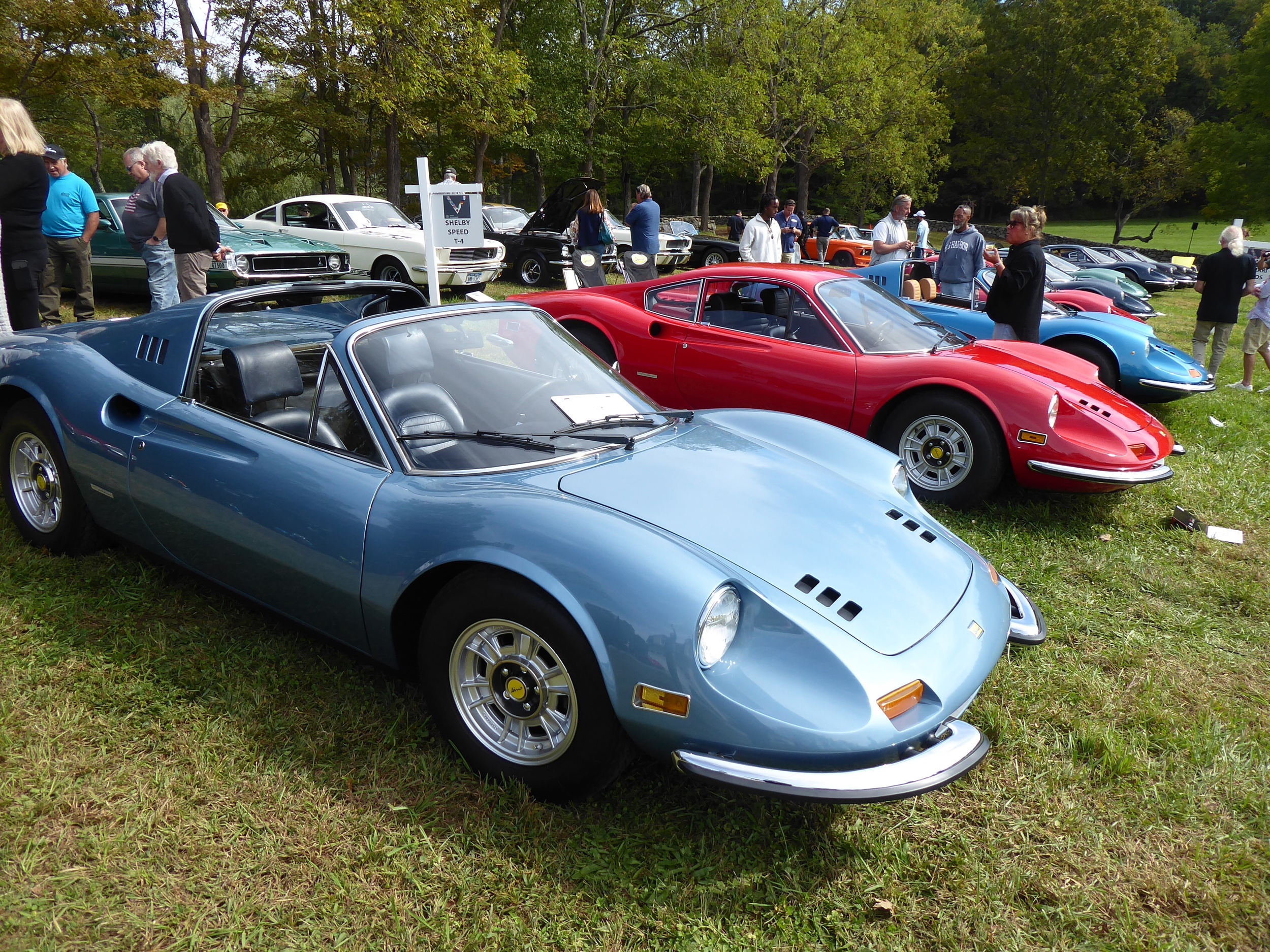
Yes, that’s nine Ferrari Dinos. (Jim Motavalli photo)

Good things came in multiples at the Turtle. There were nine Ferrari Dinos, and only 2,295 were built. “It’s a choose-your-color situation,” said one bemused observer.

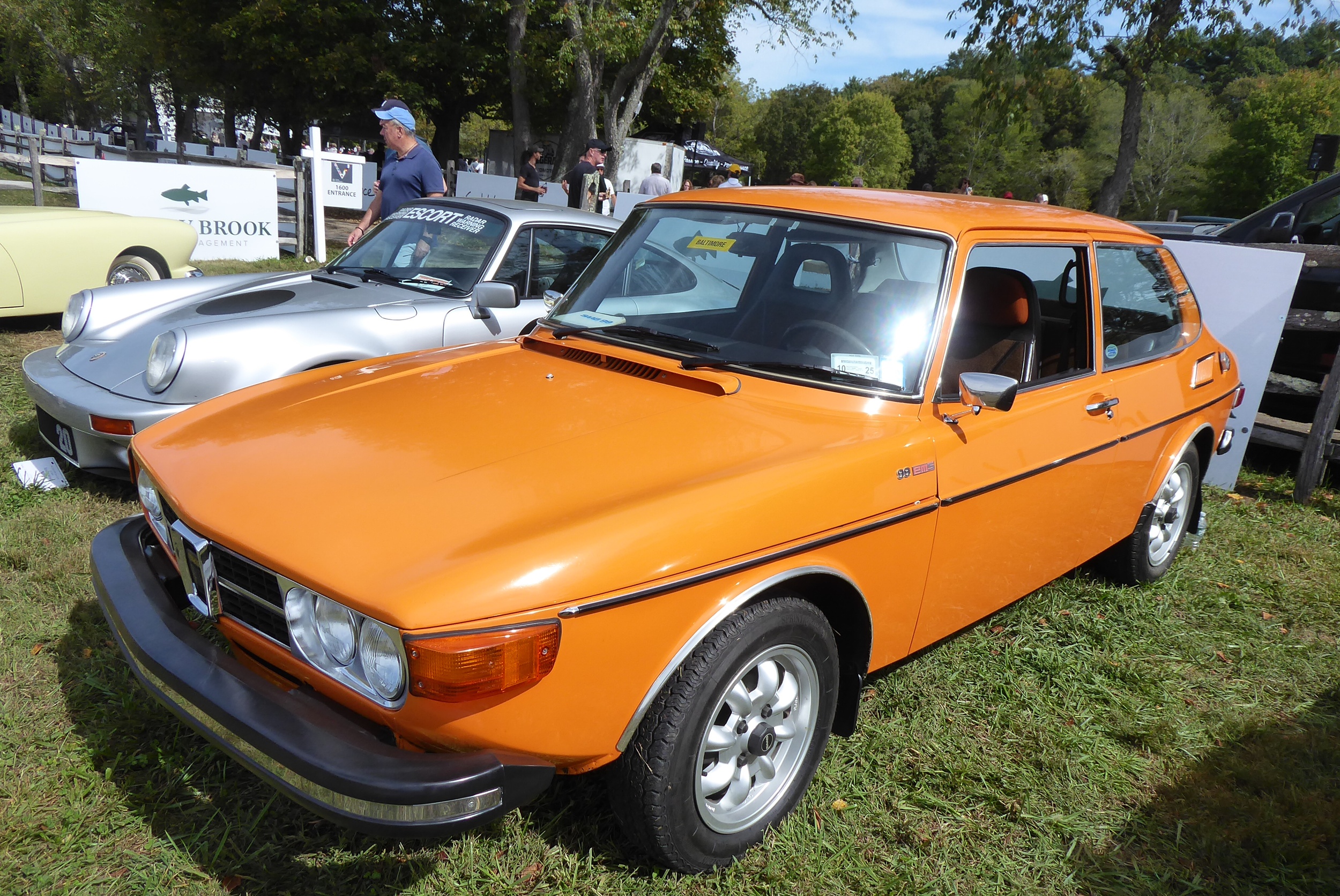
The only Saab was this very clean 1974 99 EMS. (Jim Motavalli photo)

How often do you see not one but two 1965 Ferrari 275 GTBs in yellow (one had gray leather, the other black)? Next to them was a similar Daytona. A father said to his two pre-pubescent sons, “What kind of car is this, boys? That’s right, a Daytona—they came with special Daytona seats.” Was that three Jaguar SS 100s, one of them quite beat-up with Australian New South Wales registration?

This Jaguar Mark VII is much traveled, Florida, Rhode Island and New York recently. (Jim Motavalli photo)

American cars were in a minority, though Parker Rouf’s 1955 Packard Caribbean convertible was spectacular. Of course, there were lots of stand-alones. A 1953 Jaguar Mark VII in muted gray with an engine upgrade to XK120 M spec is owned by Rick Doucette, but before that it was the property of former Audrain Auto Museum CEO Donald Osborne, who’d bought it for a bargain price at the Amelia Island auction in Florida.

The BMW 507, one of the most beautiful cars ever, owned since 1977. Why would he sell it? (Jim Motavalli photo)

BMW powered several cars with its early 1950s V-8, and two of them were on display—a gorgeous red 507 convertible (one of 252) owned by Jeff McAllister of nearby Ridgefield, Connecticut since 1977; and a more pedestrian (but still lovely) 503 coupe. Also from BMW were a row of 2002/1600 models, including a rare Cabriolet. The sole Saab was a 1974 99 EMS, orange with brown/orange cloth seats.

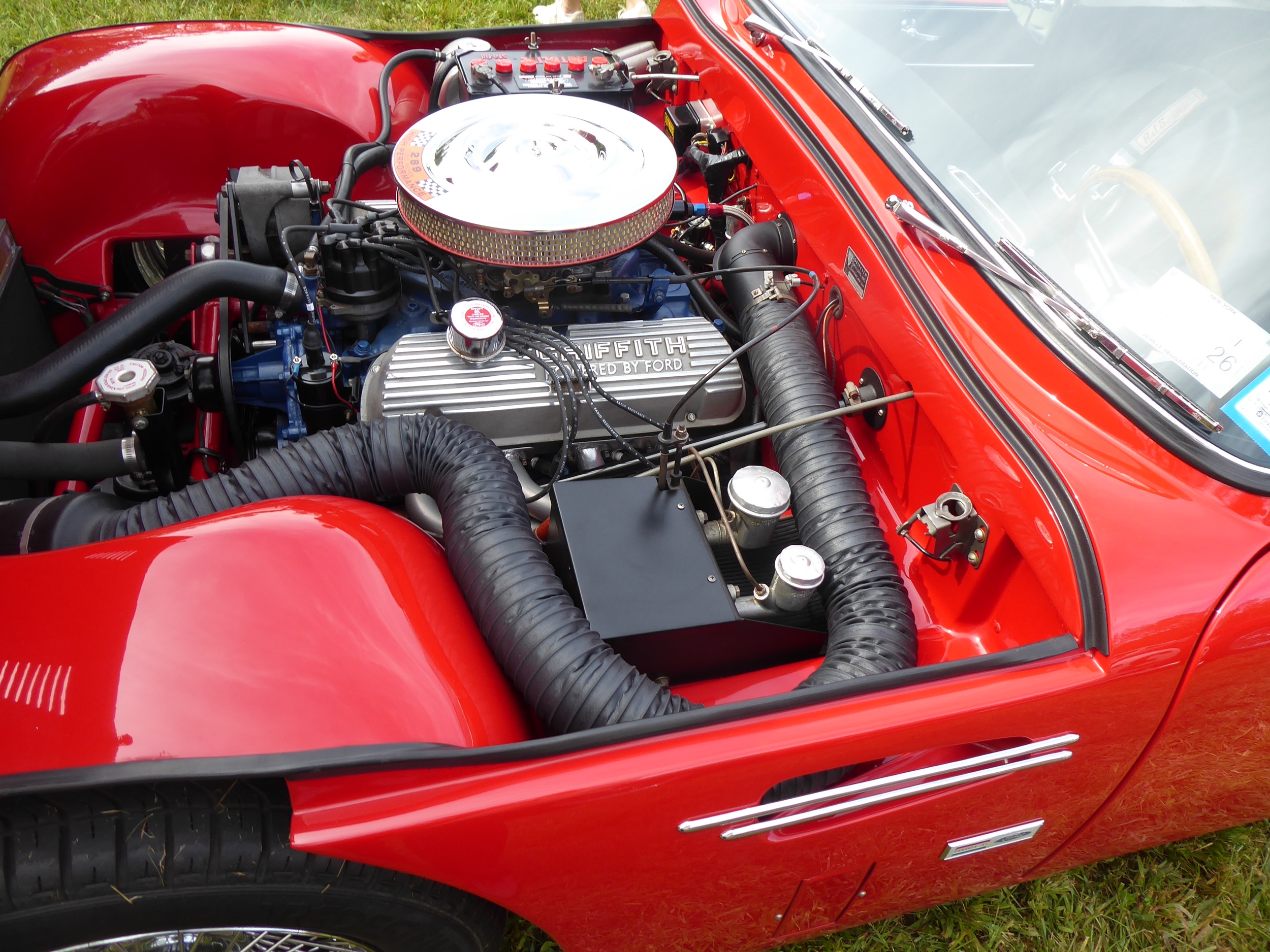
A Ford 289 V-8 squeezed into a tiny British TVR. The Cobra wasn’t alone. (Jim Motavalli photo)

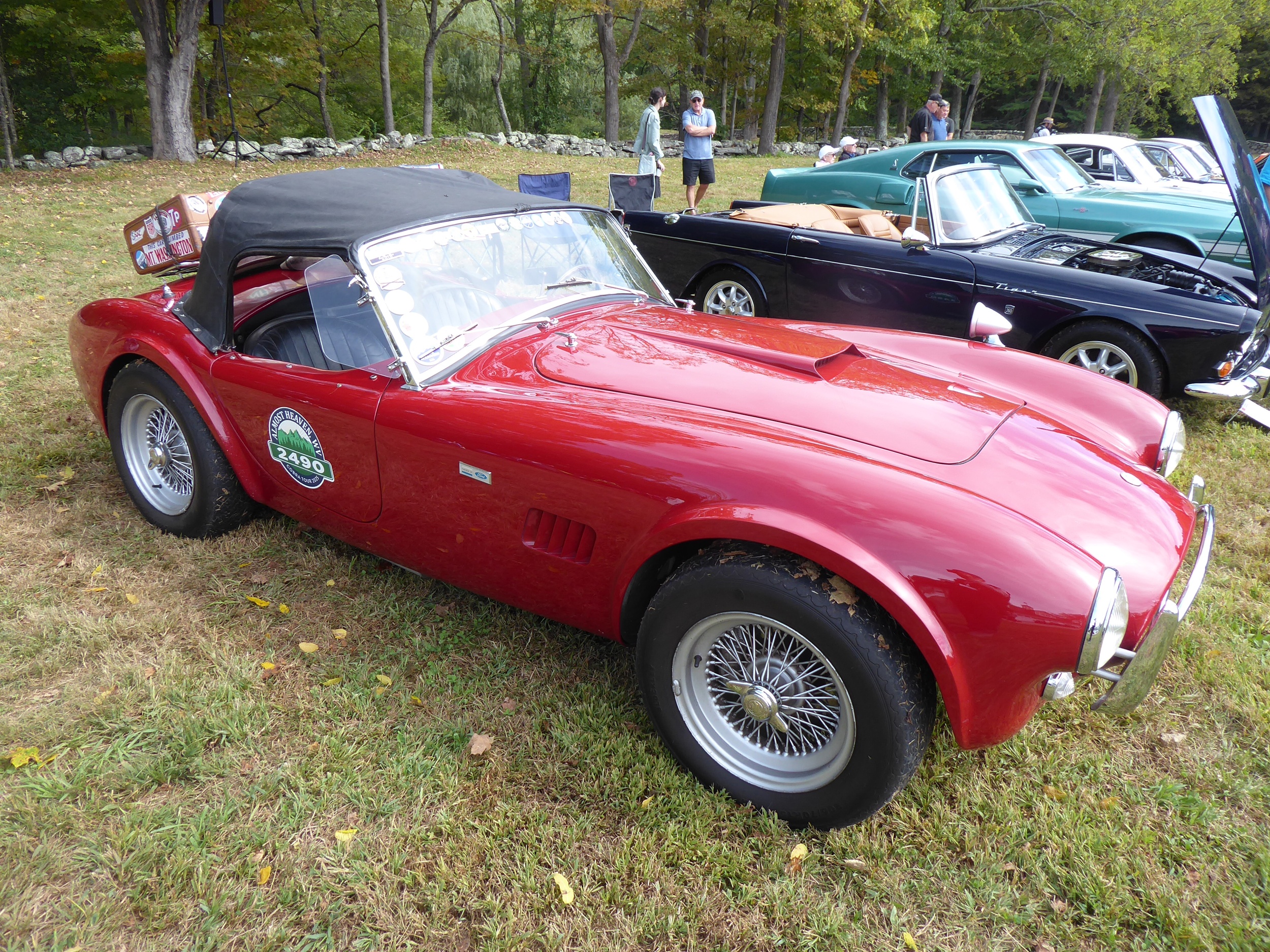
There was an orange McLaren F1—how many of those can there be?—and a potent 1966 Sunbeam Tiger, stolen and stripped in Denver, whose current owner said he’d “decked the head, twice.” Honored guest and TV barn finder Tom Connor brought his much-traveled Shelby Cobra CSX 490. It survived a bear attack at one point (according to its license plate frame).

Tom Connor’s long-owned Cobra is no garage queen. (Jim Motavalli photo)

Kin to these was a supposedly hard-to-handle 289-Ford-powered 1965 TVR Griffith, and a Chrysler-powered 1964 Bristol 408 with lots of British wood-and-leather ambience.

The very British Bristol 408 had Chrysler power. (Jim Motavalli photo)

Lucky Turtle attendees also enjoyed a free box lunch, free coffee and cider, tubs of apples and boxes of donuts. This was a nice touch to a low-key, friendly event.

New Products in the Territorial Garage

I am occasionally sent products for review, and some of them are really cool and innovative. I’m leaving out the units that turned out to be flimsy or not worthy of your time, but here are some I quite liked.

CoverSeal Car Cover. I now own three collector-class cars, with the purchase of a 2006 Saab 9-5 SportCombi station wagon with an ultra-rare stick shift. It replaces my Mercedes 300TE wagon, which was similarly forced to sit outside because my 1993 Saab 900 Turbo convertible and 1999 Mazda Miata (both also manuals) have pride of place in the two-car garage.

I bought a cover for the Benz, but it was always getting blown off by the hefty winds we have around my part of Connecticut. But now I’m using a CoverSeal ($305) that should defeat that problem. It has a 360-degree weighted bottom that allows it to stay in place even when the winds are at 40 mph. Forget about tying the cover down with bungee cords or trying to secure it with cinder blocks.

The cover is also designed to guard against rodent damage, which is something else I’ve experienced. My Saab 900 had its old dash wiring completely stripped away by the little rodents, despite several traps and alleged mouse-repelling products. The idea is that the mice “will travel around the cover, realize there is no entry point, and move on in search of a more convenient shelter.”

We’ll see long-term if these notably smart so-and-sos are deterred. The bottom edge of the cover sits on the ground, but that’s OK because the 10-mil tarp is waterproof and doesn’t mind communing with the earth. The covers are loose fitting, which allows them to be blown around by the wind, displacing pooling water. Because they’re loose, they don’t need the mirror pockets that can be annoying to fit. The only color is silver, because it reflects 90 percent of sunlight.

The cover, which comes with a carrying bag, is a bit pricey, starting at $305. But if it keeps out water and rodents—and doesn’t blow off—it should prove its worth. CoverSeal was designed by collector Ken Huening, who tried garlic oil, dryer sheets and peppermint spray to keep out the little beasts. Huening was nonetheless hit with rat damage twice, to the tune of $20,000—they didn’t care about my little bag of rat-repellent seeds, either.

Etenwolf Vortex S6 Tire Inflator/Air Compressor. I wouldn’t use it to paint a car, but the Vortex S6 (there’s also an S7 model) is very handy to have around. I just used it to inflate tires on two bicycles, an e-bike, a plethora of pool rafts and floats, and a Saab that’s been sitting around. The 15,600-milliamp-hour unit is easily adjustable between car, bike, inflatables. It can be used as a portable charger for electronics, though you may have smaller power banks for that.

The S6 is best if you prize portability. The S7 has more power, with a faster inflation time and a bigger battery. Got a truck with oversized tires? The S7 is best for that duty.

On the S6, the two included hoses (one detachable) covered all the use cases I needed. There’s a built-in 1,000-lumen LED light, and on-board storage for the tips you’d otherwise lose. The Etenwolf seems solidly constructed. There’s a 90-day guarantee.

This small, not heavy unit is much easier to use and more efficient than the portable compressor I bought at the hardware store. I see it for $89.99.

TOPDON TopScan OBD2 Scanner Bluetooth. Versions of this product have been around for a while, but now it is more capable, and marked down as low as $51.29 at Amazon. The unit does quite a lot, considering its tiny size (like a cigarette pack). Just plug it into the OBD2 port and, after easy 5.0 Bluetooth pairing, the car owner can send commands from his or her cellphone directly to the car’s ECU to track down pesky problems. It also provides guidance for fixing what ails the vehicle. For some of the premium features, you need a subscription, which is a bit pricey.

Obviously, the scanner can read fault codes that are otherwise mysterious, and it can clear them, too. It can also, a mind blower for me, access factory technical bulletins. And measure speed performance before it breaks into a sweat. There are multiple display modes for the data, including charts, dials and just the raw numbers. The software will get regular updates. The unit is compatible with Android and IOS.

Mothers California Gold Ceramic line. I’m not really the concours type—if you see a dusty classic driving past, it’s probably me. I like one-step processes. This set came in a big white bucket with three products in it: Ceramic Wash and Wax. Ceramic Paint Correction, and Ceramic Spray Wax, each $17.99. The sudsy wash & wax is very hydrophobic, which means that it results in a finish that beads water. It’s easy to use and good at getting a shine out of faded paint. The product simply sprays on and then gets carefully wiped out, leaving a long-lasting ceramic layer. I applied it to three cars: a 2014 Toyota Prius V, a 1999 Mazda Miata and a 1993 Saab 900 Turbo. The results were quite pleasing, with not a lot of elbow grease.

The paint correction product goes after small scratches and scrapes, water spots, swirling, and other minor flaws. I applied it by hand to the Prius V and KOed a lot of minor imperfections. Little pock marks that looked permanent whisked away. The spray wax is for aprés-wash. Again, it just sprays on and gets wiped off, leaving a shiny ceramic surface that beads water. The package also included yellow microfiber towels and a wash mitt that proved useful.

Fender x Teufel Rockster Air 2 Portable Bluetooth Speaker. Whoa, yes, this big Fender, offered in partnership with German company Teufel, is portable—it has three handles, doesn’t it? But the 31-pound unit is on the heavy side of what can be reasonably carried.

But all was forgiven when I hooked it up to both a CD player and the music on my phone. It’s got deep bass, crisp trebles and tons of volume. It runs on house current, 12-volt power supplies or for 58 hours on batteries.

The Fender x Teufel is incredibly versatile. You can attach a guitar through the instrument input and blow the neighbor’s minds. You can play phone music, or attach any old-school music-making component (CD player, turntable, cassette, eight-track player) through the quarter-inch aux stereo jack. Need a PA system? There’s a microphone input.

While the Fender x Teufel isn’t strictly a car product, it can run on your car’s 12-volt system and sit on the front seat with you. Or just use those long-life batteries. If you own a classic and don’t want to replace the tinny AM radio that came with it, this Fender can be used and leave no marks.

Terry Waldo and the Gotham City Band at Zinc Bar

I told a friend I was going to hear some ragtime, and he said, “What, banjos and straw hats? Why would you want to listen to that corny stuff?” I tried to explain that ragtime is in at the foundation of jazz, and you need to understand the musical roots. But I wasn’t getting through.

Terry Waldo and the Gotham City Band play ragtime and nothing but, and they’ve made it work in New York with regular gigs at Zinc Bar (where I saw them August 7, part of an ongoing first Wednesday gig) and quite frequently at Arthur’s Tavern, both downtown. It’s possible for the music to sound remote when heard on a scratchy recording from 1915, but live it’s an absolute delight.

Waldo, a protégé of the great Eubie Blake, is an historian as well as a ragtime pianist. He is the author of This is Ragtime, the definitive treatment, most recently republished in a 2009 Jazz at Lincoln Center Library Edition. In addition to making 70 albums of ragtime and traditional jazz, he hosted an NPR show that is now available in podcast form on Waldo’s website.

At Zinc, the band was Jim Fryer on trombone, Daniel Glass on drums, Dan Pearson on clarinet and alto sax, and Konstantin Gevondyan on trumpet. All of them are master ragtime players, and both Pearson and Govindan (as well as Waldo) did some singing. They work together a lot, and finished each other’s sentences.

I asked for—and got—an opening of “Maple Leaf Rag.” A cliched choice, I know, but I wanted to hear it. It opened with Terry solo, and he played it with a lot of flourishes that I don’t always hear in renditions of this classic Scott Joplin tune. Then the band kicked in, expanding the palette. I didn’t realize, until Terry told me, that Joplin taught banjo and that early versions of his rags were often heard that way. But no banjo on stage, and no bass either. Acoustic basses were tough to record with early sound equipment, so sometimes a tuba replaced it.

Ragtime, at least the way these guys perform it, has plenty of hot solos, but the other horns feel free to chime in as support. “Oh By Jingo” is from 1919 (Albert Von Tilzer and Lew Brown, featured in the show Linger Longer Letty, and was a big Tin Pan Alley hit. David Bowie was inspired by it, and Hugh Laurie did a version. Waldo sang the novelty song with some vigor. Here, on video, is a Jelly Roll Morton song they did, called “Froggy Moore Rag”:

Next was W.C. Handy’s “Memphis Blues” from 1910, with Fryer singing. It has a great line about the trombone player moaning like “a sinner on Revival Day.” Fryer recalls the great Jack Teagarden, but the latter was bluesier.  

Gevondyan was wonderful, chasing Louis Armstrong on trumpet and masterfully employing his cup mute. He sang “Sugar Blues” from 1919 (Clarence Williams/Lucy Fletcher) and didn’t sound anything like Louis, but still very nice. Glass should be cited, too, for his mastery of the snare.

Pearson sounded more in-period on his clarinet, but he was vastly entertaining on his more modern alto, too.

“Let’s Pray Against Somebody” is a Waldo original targeting religious hypocrisy, and reminiscent of the Fugs’ “Kill for Peace.” Or maybe Mark Twain’s “War Prayer,” which also points out the flip side of our heartfelt entreaties: “Help us to tear their soldiers to bloody shreds with our shells; help us to cover their smiling fields with the pale forms of their patriot dead.”

And so it went, through Jelly Roll Morton’s “Why?,” Kid Ory’s “Ory’s Creole Trombone,” a headlong “Shake it and Break It” via Kid Oliver, “My Melancholy Baby,” and more. They dredged up a crazy old song called “Minnie the Mermaid,” written by Bud DeSylvia in 1923. It wasn’t all that bad, containing the line, “Down among the corals, I lost my morals.”  

It was a great night out in New York City. Don’t judge a whole genre until you hear it live, I say.