EVs Enter an Uncertain Marketplace at the 2025 New York International Auto Show

The first New York Auto Show in 1900 drew 160 cars from 69 countries, and—just like today—electric cars were featured. Of course, they were also touting steam back then, and it was unclear which technology would win out. The Trump administration seems determined to turn the clock back to when internal-combustion was king, but an emerging consensus at the 2025 edition of the show (now with International in the title) was that electrification will still win out, albeit on a somewhat longer timeline.

The unusual design of the Kia EV4 somehow works.

The most exciting new car in a severely limited round of press conferences (barely half a day for the important ones) was the Kia EV4. The Korean automaker is having a banner year, with what Eric Watson, a vice president for customer relations, said was the company’s best-ever quarter. Sales of EVs were up 22 percent. Part of the surge can be attributed to consumers buying cars before the tariffs kick in.
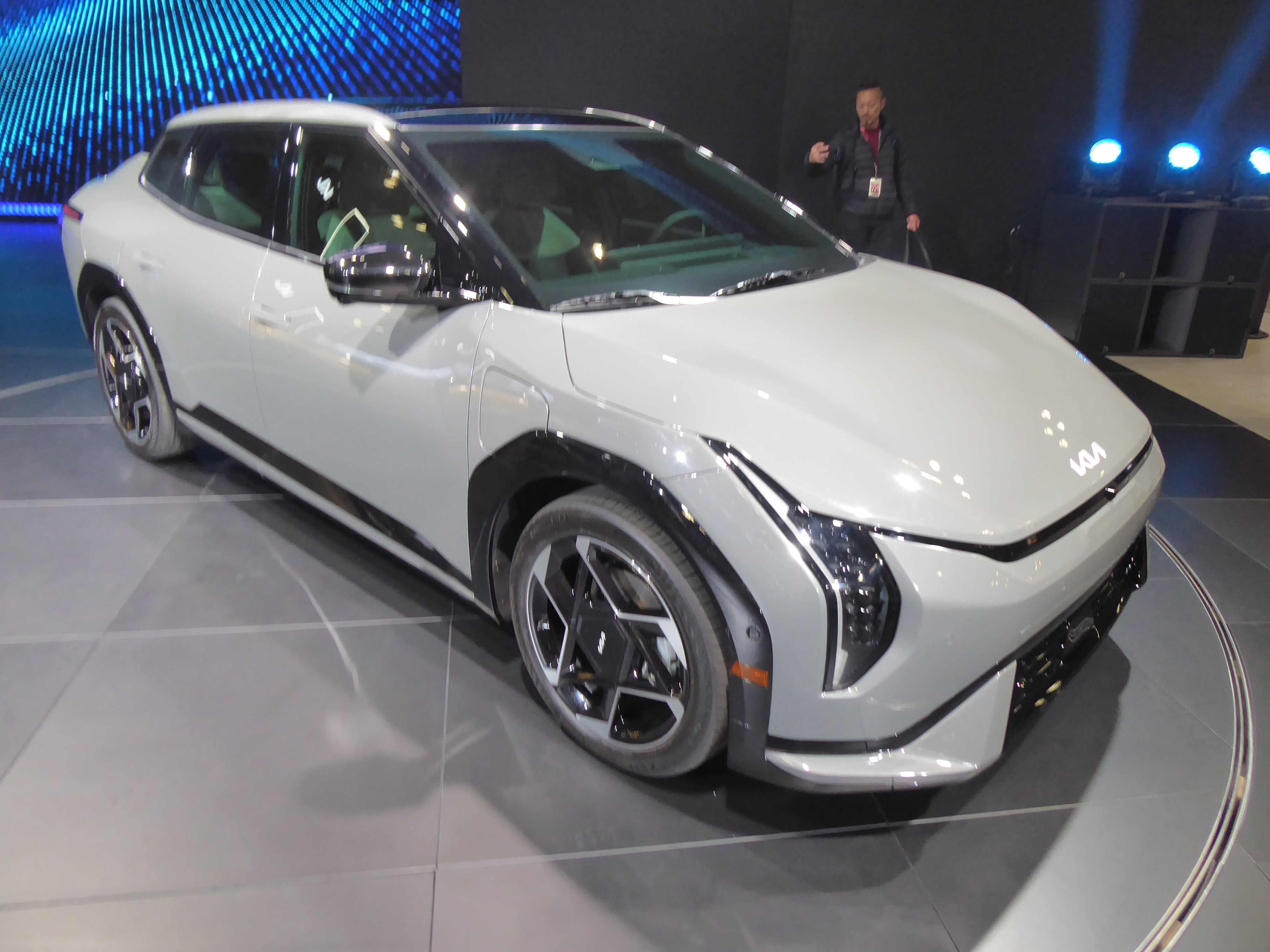
The EV4 will be built in South Korea.

According to Mike Stanton, president of the National Automobile Dealers Association (NADA) at the “Evaluating the Shifting EV Landscape” forum, “We have three million vehicles sitting on dealers’ lots that are tariff-free. Now is the time to buy,” he said, adding that it’s a particularly good time to buy an EV. Why? Because the federal $7,500 income tax credit may go away if Trump gets his way.

The Kia EV4 will be built at the Autoland Gwangmyeong EVO Plant in South Korea. Uh-oh, 25 percent tariffs. But the company is definitely looking into building it in the U.S. The Kia plant in West Point, Georgia already builds EVs—the EV6 and 9. No price was announced in New York, though the company repeatedly called it “affordable.” The current ballpark figure is a starting MSRP of $35,000 to $40,000 for the cheaper Light model. With the tax credit, could you snare one of these for $27,500? Don’t count on it.

NADA’s Mike Stanton says, “Buy now!”

The EV4 styling was interesting and distinctive, a sedan with a few SUV cues, a low nose and a tall tail. It didn’t look particularly aerodynamic, but (thanks in part to full underbody covers) it is—with a drag coefficient of 0.23. There will be two battery sizes, 58.3 and 81.4 kilowatt-hours (standard in the Wind and GT-Line versions), with the latter providing up to 330 miles of range. With the smaller battery in the Light car, expect 235 miles.

Other features include standard 17-inch wheels (19-inchers are available), a 30-inch combined display, heated seats and wheel and 64-color ambient cabin lighting. The iPedal 3.0 regenerative braking now works in reverse. The EV4 can go from a 10 to 80 percent charge in 29 minutes, and includes a Tesla-type NACS charger. It should be in showrooms early next year, but the price point will depend on what happens with the auto tariffs.

Kia’s EV3 won World Car of the Year at the show, so the company is flying high with a pretty comprehensive EV lineup. It’s big-gun EV9 will now be available in a Nightfall Edition that mostly adds blackout trim. The little K4 (starting at $21,990) is now available in a hatchback version with 22 cubic feet of rear storage (or 59.3 with the back seats down) that’s 11 inches shorter than the sedan. Americans have hated the useful hatch format for some reason, but is it coming back? The K4 is built at the company’s Pesquería plant in Nuevo León, Mexico.

Across the hall, Hyundai Motor President and CEO José Muñoz (in office 100 days) noted that his Inster also was an award winner earlier—World Electric Car of the Year. Range is up to 229 miles, but we can’t ink a contract on an Inster because it’s sold only in Korea, Japan and Europe. Hyundai’s group is number two in EV sales in the U.S., and the company has invested $12.6 billion in a Georgia auto plant. Muñoz promised 100,000 U.S. jobs by 2028 and 21 new EVs globally by 2030.

The Hyundai Palisade is bigger and snazzier.

The three-row Hyundai Palisade moved 110,000 units last year, and the new one unveiled in New York is bigger and somewhat flashier, with a longer wheelbase and distinctive stacked light bars (topped by the head- and taillights) front and rear. A neat design touch, as pointed out by design chief SangYup Lee, is the brushed-aluminum D-pillar extending into the luggage rack.

A neat feature is a built-in dashcam recorder so you can show the post-accident tape to your insurance adjustor.

A hybrid Palisade version delivering up to 34 mpg is welcome. It uses a 2.5-liter turbo with two electric motors to deliver 329 horsepower and 330 pound-feet of torque. Making its world premiere was an XRT PRO version of the Palisade with an inch of extra ground clearance and off-road cues.

Genesis’ concept anticipates cars unashamed to eschew grilles.

Genesis didn’t do a press conference, but the night before it had shown its new and pretty big X Gran Equator Concept. Not exactly lovely, the squared-off concept showed what might happen when automakers give up on trying to give EVs grilles. (I know, the Tesla Model 3 took that step, but that nose has never worked for me either). The interior showed more innovative design than the exterior.

Subaru, which was late to EVs, had so much to say it actually had two press conferences. At the first one, it showed a new version of Solterra, its first-ever EV. The 2026 model will have 285-mile range (up 25 percent) thanks to a 74.7-kilowatt-hour battery pack. With a NACS port, it can visit 15,000 Tesla Supercharger sites.

Thumbs up at Subaru over the new Solterra.

In AWD form the new Solterra puts out 338 horsepower, up from 215. It can reach 60 mph in less than five seconds. The styling is somewhat anonymous, but OK, and the on-board tech has been beefed up. There is 8.3 inches of ground clearance. Pricing might be affected by the inconvenient truth that the new Solterra is built at the same Japanese plant that produces the similar Toyota BZ4X EV.

The new 2026 Trailseeker, again with some similarities to the Toyota, has a high greenhouse and an orientation to going off the road. It’s also made in Japan, but this time at a Subaru factory. Range is more than 260 miles. I found it amusing when Subaru said from the stage that the Trailseeker’s cladding “sets it apart from everything else on the road.” Actually, it makes it resemble everything else on the road.

With the larger pack (74.7 kWh), the Trailseeker is good for 260 miles, 25 more than the Solterra. The XRT version has a larger 84 kWh battery and thus more range. There’s plenty of power in the Trailseeker with 375 horsepower, and zero to 60 takes only 4.3 seconds. The NACS port can charge at 150 kilowatts, and there’s towing of up to 3,500 pounds—though it will cut into range.
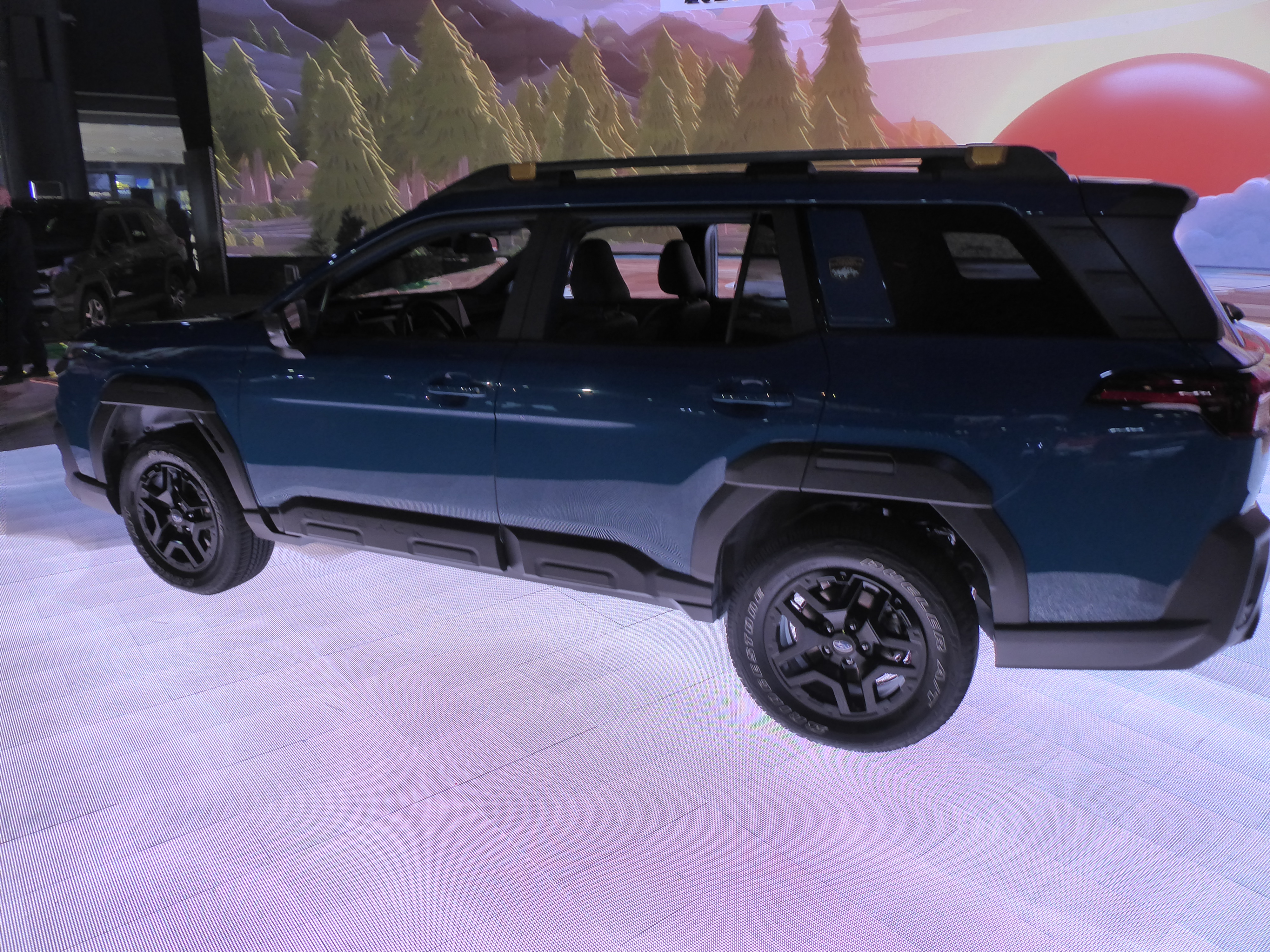
A surreal shot of the new Outback.

Later on, Subaru unveiled the new 2026 Outback, which has abandoned all reference to the Legacy station wagon that birthed it 30 years ago, and is now cladding-happy and boxy. It’s also two inches taller and one inch wider.

An incredible three million Outbacks have been sold in the U.S., more than any other of the company’s models. And 96 percent of the Outbacks sold here in the last 10 years are still on the road. That pattern should continue. Interior and cargo space are up in the new Outback, as is ground clearance (8.7 inches in the standard model, 9.5 in the more outdoor-friendly Wilderness version).
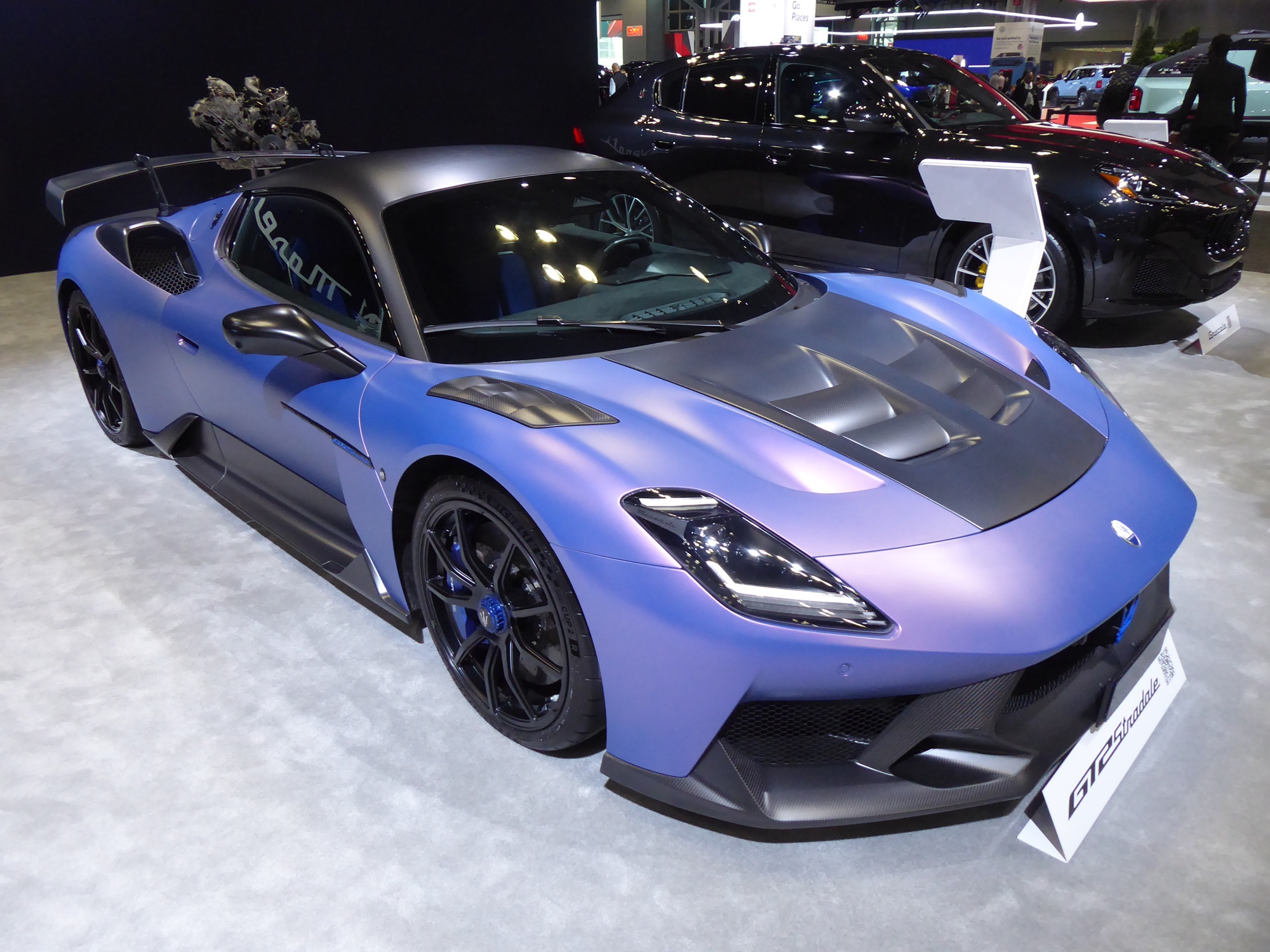
Maserati introduced the GT2 Stradale, a “barely legal” version of the MC20 with track aspirations.

Maserati was in New York with the limited-edition GT2 Stradale, a track-and-road-ready iteration of the MC20 that offers a 10-horsepower boost for its V-6 Nettuno power plant. So that equates to 631 horsepower, 201 mph and zero to 60 in 2.8 seconds. The car on display looked the business in matte blue.

Andrew Evans, the product specialist, called the new performance edition “barely legal,” meaning it’s only just registerable as a slightly civilized version of Maserati’s GT2 race cars that compete in European series. They’re built on the same assembly line. Only 914 of the GT2 Stradales will be built. The number is a homage to 1914, the year Maserati launched. But then why not make 1,914 of them? That may be more than the market can bear. The order book is open.

The Volkswagen ID.Buzz won World Design of the Year. The company’s press event at NYIAS revealed the 2026 Volkswagen Tiguan SEL R-Line Turbo.
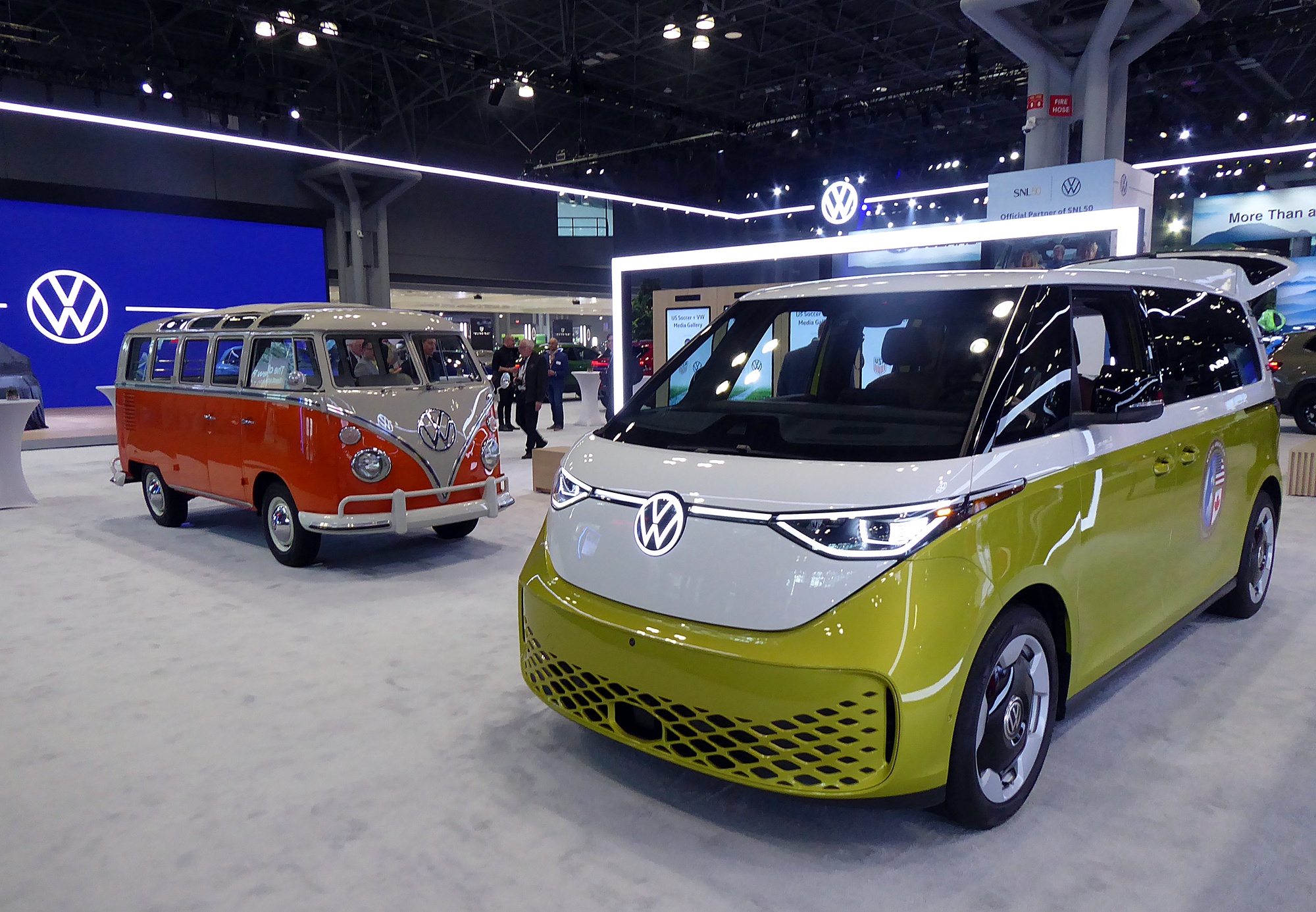
The VW ID.Buzz, with its Microbus ancestor behind, was an award winner at World Car.

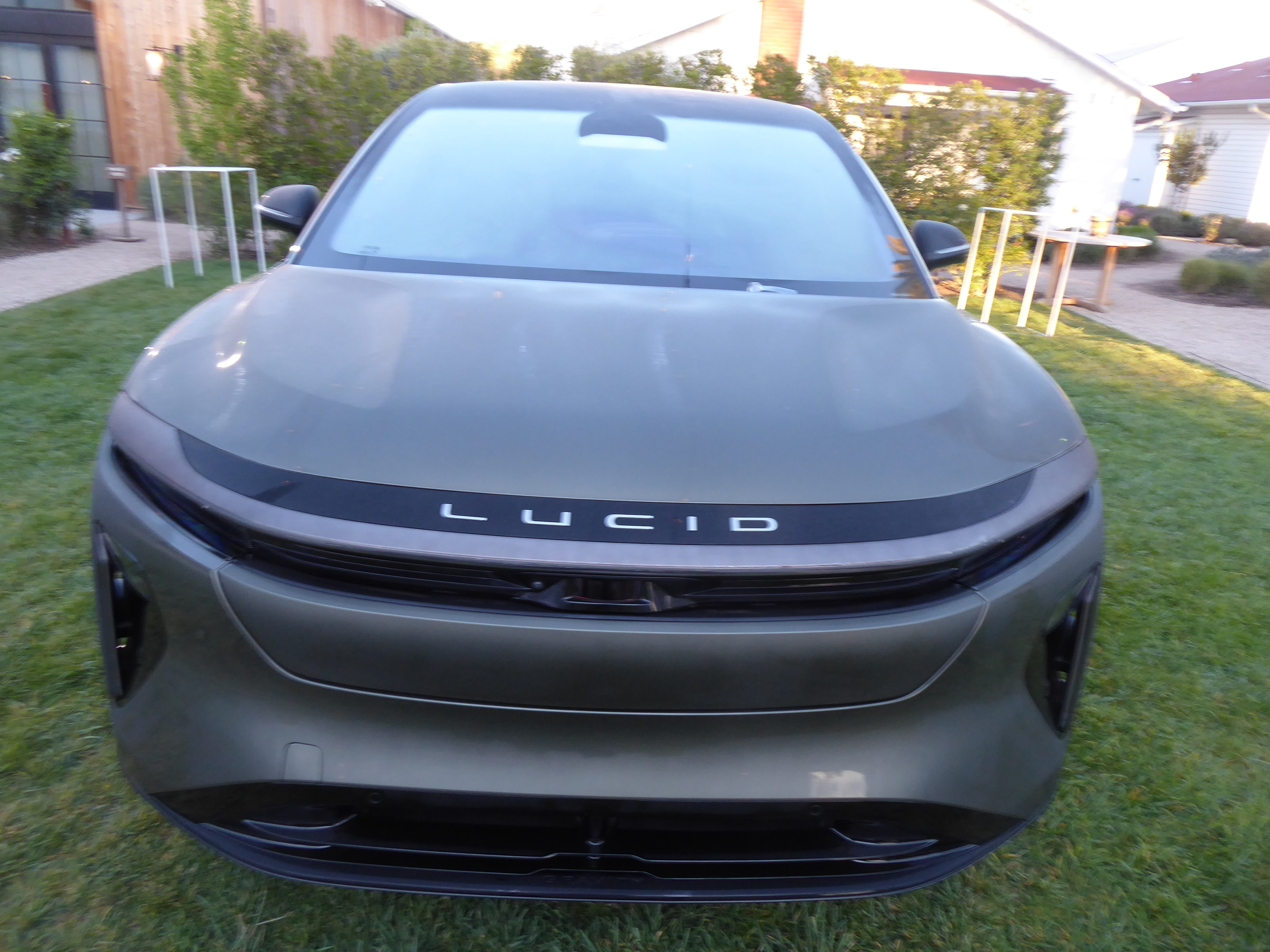
Although it wasn’t debuting there, Lucid seemed to be doing land-office business introducing consumers to its new Gravity SUV—an enhanced Air in every way.

Look at all that chrome on the 1958 Buick Limited, with 1955 Packard Caribbean (one of 276 convertibles) behind.

Out in the Crystal Palace, NYIAS paid homage to its history with a display of cars from each decade of its existence since 1900. I liked the earliest, a 1909 Cadillac 30, and the latest, a 2022 Porsche 911 GT3 RS. In between there were milestones such as a 1963 “split-window” Corvette and a 1956 Mercedes-Benz 300SL Gullwing. Collector Bob Kerekes brought a trio of top-end 1950s American convertibles—1958 Buick Limited, 1957 Cadillac Eldorado Biarritz and 1955 Packard Caribbean (one of 276).

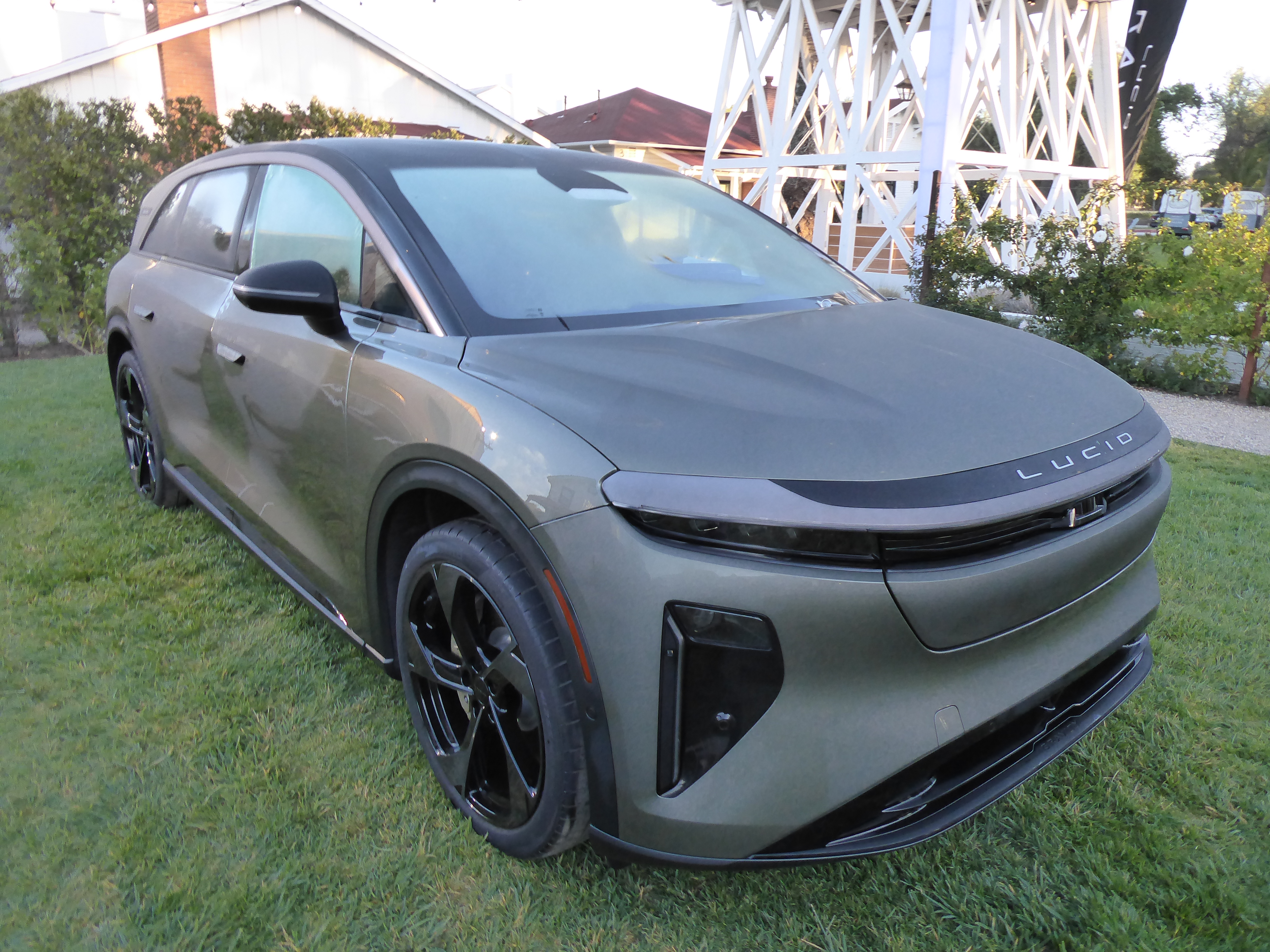
First Drive: Lucid’s Gravity EV is an SUV with Better Ideas

The Gravity three-row SUV, based on the platform of the company’s awe-inspiring Air (but with all new part numbers!) is Lucid’s best hope to become a serious competitor to Tesla and the majors in the fast-paced world of EVs. Tariff watchers: It’s made in America (Arizona) but with 15 percent of its parts from Mexico (and a few, including the cupholders, from Canada!)

Yes it looks a little like a minivan, but don’t use that word! (Jim Motavalli all photos)

Lucid could become a port in the storm for customers fleeing Tesla because of Elon Musk’s antics, and an executive told me they are seeing a lot of defectors from that brand. Certainly, Lucid builds cars that meet the expectations of Tesla buyers, and in many cases exceed them. Lucid’s biggest challenge is price. The Gravity tested was as loaded as possible (with seven special-equipment packages) and the bottom line after a $94,900 MSRP was $127,150.

It’s fair to say that the Trump administration is no help with EVs. Trump campaigned to eliminate the $7,500 federal tax credit, and U.S. Senator John Barrasso (R-Wyoming), along with 14 other GOP senators, introduced bills earlier this year to make that a reality, and even add a $1,000 tax on EVs as a substitute for the taxes on gasoline other motorists pay. Foreign-built EVs will face a 25 percent tariff. And Lucid will have a challenge selling its EVs in Canada, where there’s now a 25 percent tariff both ways. Some parts travel across the Canadian or Mexican borders several times as they become finished assemblies.

The three-row Gravity loses only a little range to the two-row (437 vs. 450 miles).

All this is happening as automakers build better and better EVs. Lucid started with the Air sedan, conceived at a time before total American SUV dominance. It’s making up for lost time with the Gravity, which David Lickfold, senior director of chassis and vehicle dynamics engineering, called a “seven-seat supercar” and Derek Jenkins, senior vice president of design and brand, called “tech forward and human centric.” The Gravity offers comfortable accommodations in all three rows, with better interior space (120 cubic feet for the two-row, 111 for the three) than the Mercedes EQS and BMW X7.

There’s a family resemblance to the Air sedan.

Range is 450 miles in the two-row version (437 in three-row) from a 123-kilowatt-hour battery pack (which sounds big but is smaller than the competition). It sits in a modified chassis with air suspension (standard on all Gravitys) and, available as part of a Dynamic Handling pack, three degrees of rear-wheel steering. The Gravity is quite efficient, able to deliver 3.6 miles of travel for each kilowatt-hour of battery. That compares to 2.82 miles for the Rivian R1S, 2.9 for the Mercedes EQS and 2.15 for the Cadillac Escalade IQ, said Eric Bach, a senior vice president for product and chief engineer.

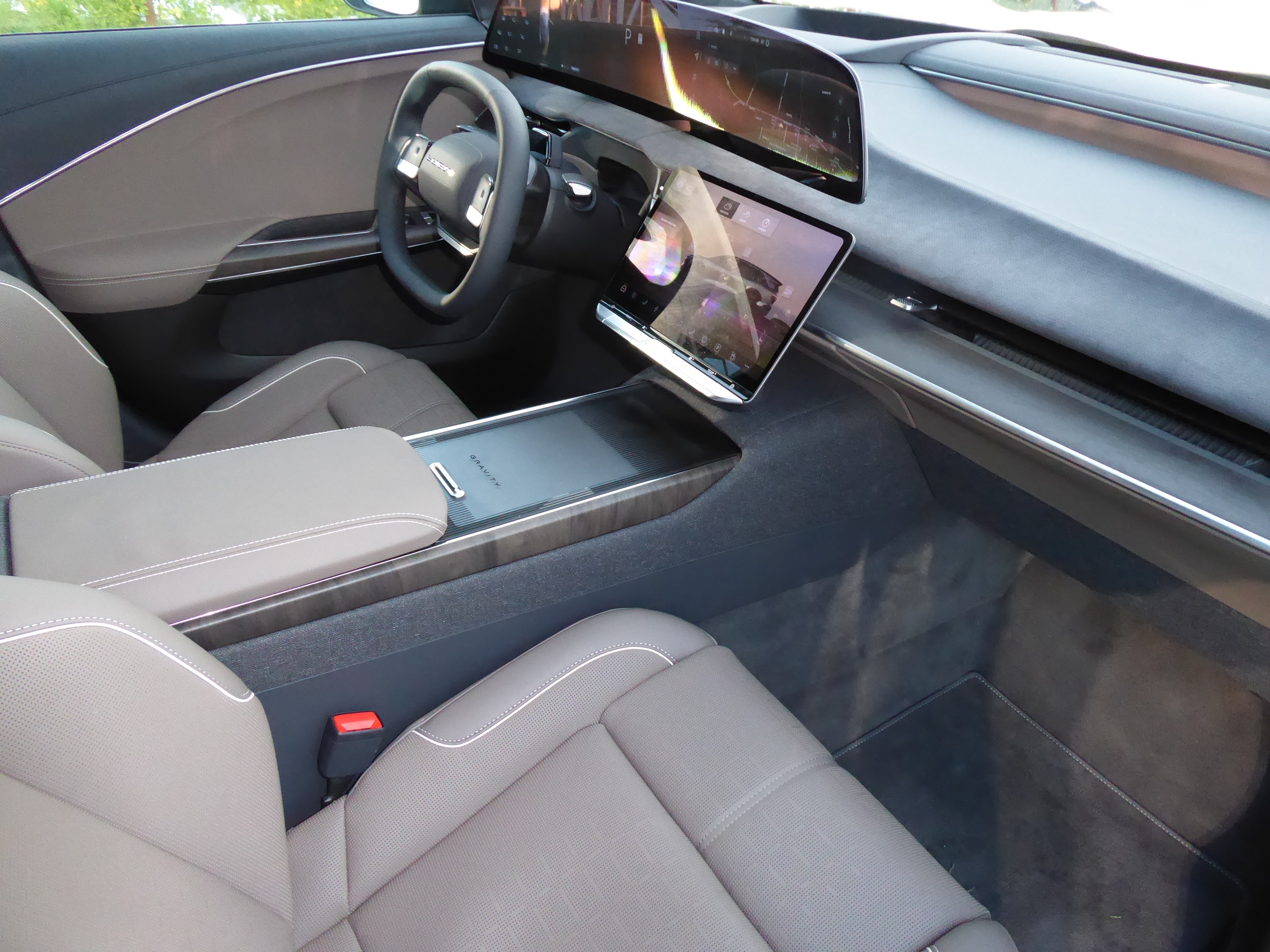
The interior uses reclaimed wood and carpets made from fishing net waste.

The Lucid can charge at 400 kilowatts with its 1,000-volt architecture, and add 200 miles in less than 11 seconds.  It has a built-in NACS port so can charge at Tesla Supercharger stations.

The Gravity will reach 60 mph in 3.4 seconds, and access 828 horsepower and 909 pound-feet of torque in the highest Sprint mode. In Smooth and Swift modes, it’s 650 horsepower.

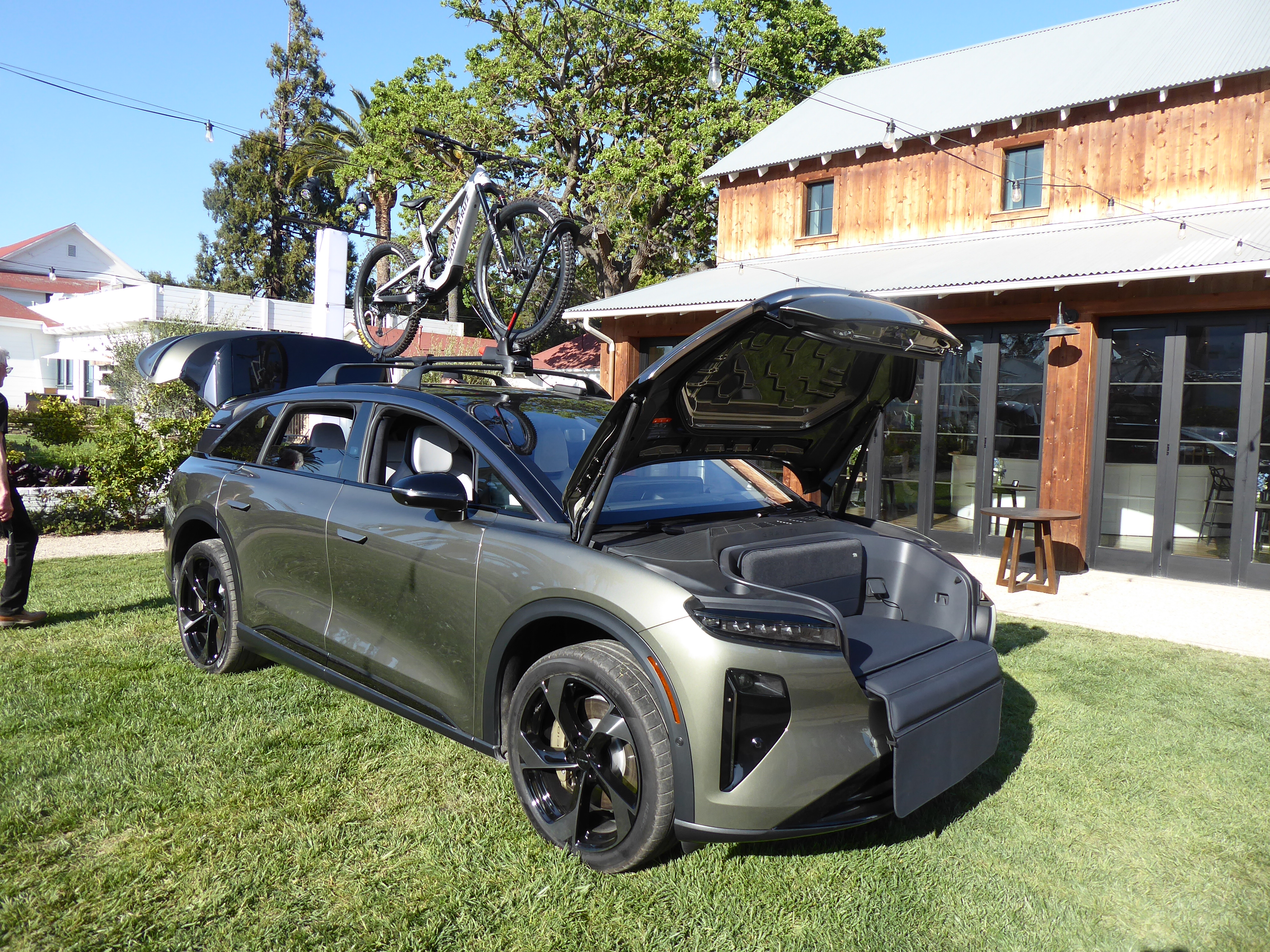
The commodious trunk is complemented by a “frunk” up front.

On the road, the modes proved their worth. Smooth offered a cushioning ride and a quiet cabin a la the Audi Q8. Swift is chasing the Porsche Cayenne and optimizes steering, braking and suspension without increasing power, and Sprint—shadowing the highest setting of the DBX 707 from Aston Martin, with which Lucid has a partnership—is best for short bursts of big power. The Gravity can be left in Sprint mode, but that will cut into range.

The Gravity drives more like a supercar than an SUV. The roads around home base in Los Olivos, California (near Santa Barbara) are not conducive to speeding but passing was effortless and stretches of open road and no traffic allowed thrilling acceleration. The Gravity is fairly big, but corners with only very slight body lean in Sprint mode.

Off-road use and the outdoor life are encouraged.

The trip included a visit to an off-road course, where we had great fun turning off the traction control and doing some controlled drifts on loose dirt. The car enables full traction, partial traction and traction totally off, which is where the entertainment comes in. But on the road, it is highly recommended to leave the traction on.

Our Gravity was in Aurora Green with a Tahoe leather interior (a $4,200 option). Inside, the midcentury modern space is in good taste, with a slightly subdued ambiance. The dark reclaimed wood is muted and doesn’t pop out as actually being timber. Other sustainable touches include carpets fashioned from fishing-net waste and textiles that started out as recycled water bottles.

The picnic tables are useful, and evoke British luxury of a bygone era.

The heated and ventilated seats were comfortable on a longer-than-intended drive—we got lost. A very nice touch is the folding “convenience tables” in the second row, usually seen only in high-end British cars (Jaguar, Rolls, Bentley) of a certain vintage. This is where the Grey Poupon goes; they’re also called “picnic tables.”

The controls are fairly intuitive, and the physical volume control and HVAC are appreciated, though opening the glovebox should be pulling on a latch, not pushing a virtual button on one of the two screens (a curved 34-inch OLED touchscreen that’s part of the “Clearview Cockpit,” meaning you can see the dash display; and a second 12.6-inch unit in the center console). There’s a “Hey, Lucid” voice assistant. Jean-Philippe Gauthier, Lucid’s interim digital VP, called the Gravity a “software-defined vehicle,” with a host of features and updates that can be downloaded after purchase. Our tester lacked Apple CarPlay, but it’s getting the tech.

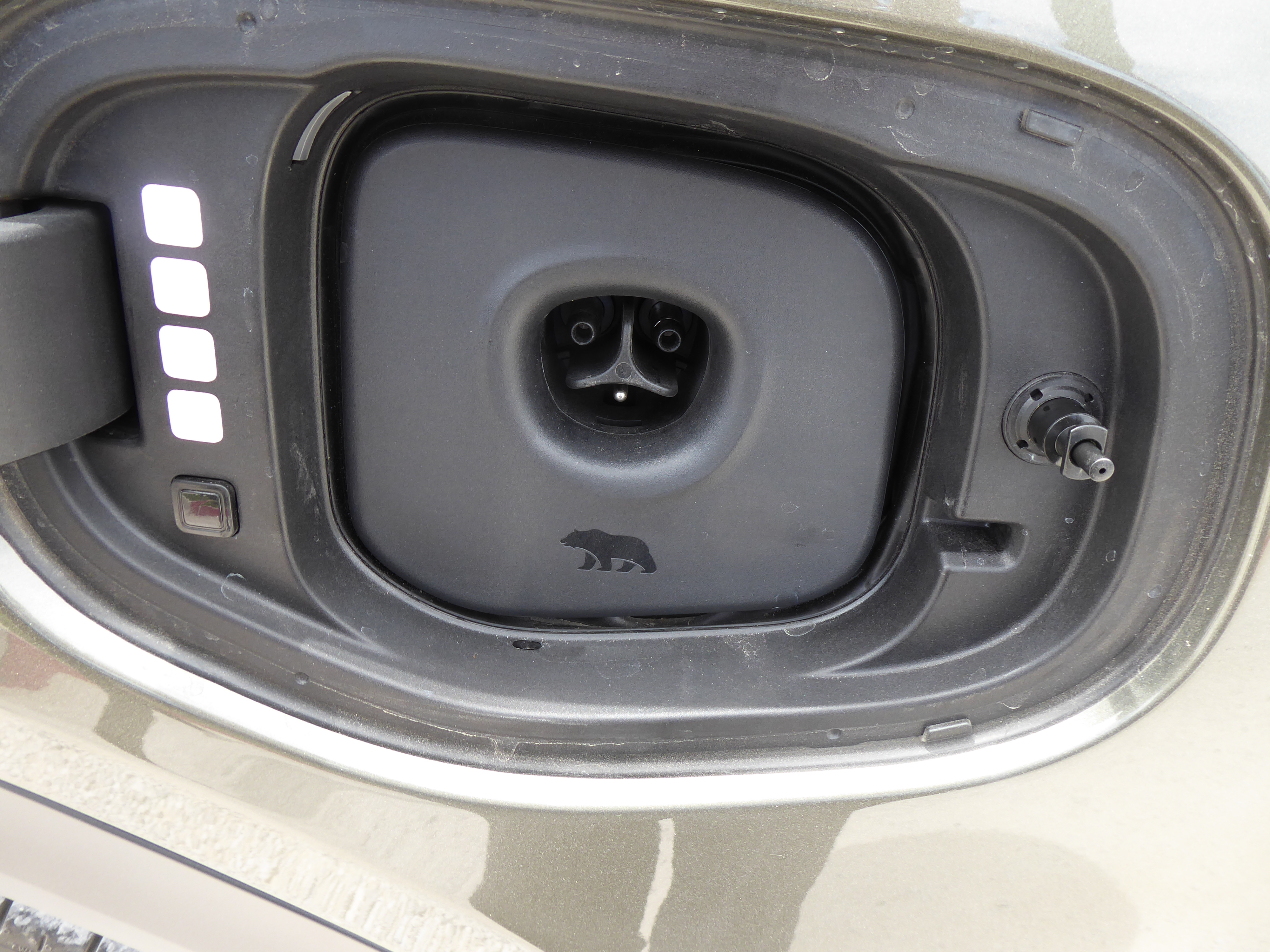
A NACS charging port enables the use of Tesla Superchargers. The bear symbol evokes California.

An interesting note is that the car is set up for eventual Level Three autonomy with the optional DreamDrive ADAS system, which includes a sensor suite, LiDAR, 12 external cameras and two external. On our test car, it was an included $6,750 option. You’d have to really be thinking ahead to order that. Lucid doesn’t do everything in-house: the brakes were co-developed with Brembo, the power steering Bosch, and the rear steering via ZF.

An innovation I like on the Gravity is so-called e-fuses, which do away with the physical stand-by that’s been with us since cars were new. No more putting a 20-amp fuse in a five-amp slot! Gauthier also said that e-fuses enable the shutting down of systems while they’re not in use, extending range.

On the drive we experienced some minor glitches with the built-in GPS and with hearing incoming phone calls, but these were pre-production prototypes.

The rear view will become familiar to owners of slower cars.

The Lucid Gravity is available for orders and deliveries are beginning now. Initially, only the higher $94,900 twin-motor Grand Touring trim is available. The $79,900 Lucid Gravity Touring will begin deliveries later this year.

Up next from Lucid is an as-yet unnamed midsized platform, on which three lower-priced variants are going to be built. Lickford told me that pricing will be around $50,000, and that availability will be mid-2026. Not much more is known, but an affordable Lucid would really help the company’s sales volume.

The Gravity is very likely to raise Lucid’s profile in the U.S., in Europe where it’s establishing a dealer network, and even in Saudi Arabia, where a factory is going up in a complex that also includes a Hyundai plant and CEER, the Saudi national car company. The Saudi Public Investment Fund (PIF) is Lucid’s principal backer. The Ayar Third Investment Company, an affiliate of the PIF, provided $1.5 billion to build the Gravity. Total investment in Lucid is $10 billion.

According to Reuters, Saudi Arabia has built an EV metals plant, and has a goal of producing 500,000 EVs per year by 2030. But as of last December, the country’s only auto plant (opened in 2023) had produced only 800 vehicles assembled from kits. Lucid will have to train a local workforce to get its Saudi plant up to full production. But a Middle East market is assured.

Considering the Tariff Factor: New Cars in Review

The Trump tariffs have thrown the auto industry into a complete turmoil. The future pricing of the cars on this list will be determined by whether or not they’re made in the U.S. of A. And some automakers—Jaguar Land Rover, Audi—are temporarily suspending deliveries to America while they plan their next move. So if I say glowing things about the 2025 Audi SQ7 Prestige I tested, will you even be able to find one on the lots?

A case in point, my brother wanted a 2025 Kia Kona Hybrid with 49.9 mpg. This vehicle is offered here, starting at $26,000, or $33,550 for the Limited model he wanted. He found one at a local dealer, but then it turned out to be not available. He had to scramble around to find another one—they’re rare, for some reason—and managed to get the keys just days ahead of the 25 percent tariffs. He paid around $32,000 all in. He was, in fact, lucky. It’s built at the Ulsan facility in South Korea, not here.

So, the numbers here are, to put it mildly, in flux.

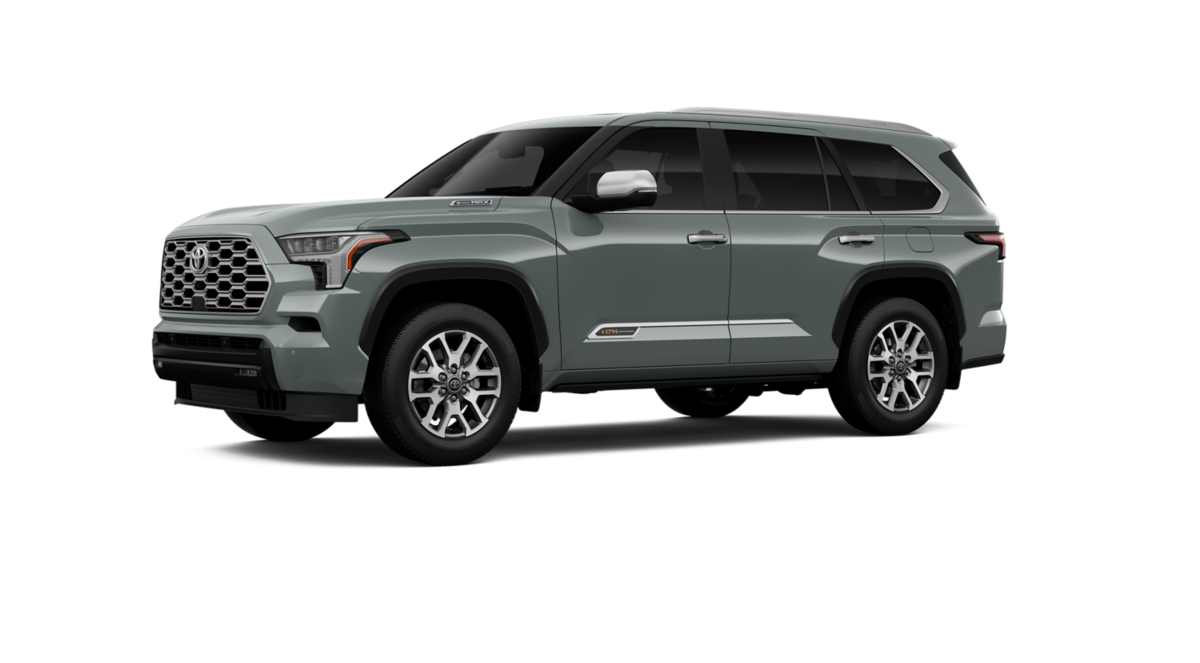
2025 Toyota Sequoia 1794 Hybrid. I prefer hybrids to be smaller, lighter and cheaper. The huge 1794 (above) starts at $82,330, and despite the “hybrid” badges it’s not fuel efficient. I mean it gets 22 mpg combined, for crying out loud. Yes, it’s a big, comfortable SUV with all the latest tech, and Toyota wrote the book on hybrid drive, but it’s also 6,179 pounds of vehicle. But you could do worse if you have eight people to move around. The price couldn’t go up much more, but luckily the Sequoia is built in America. Texas, to be specific.

2025 Toyota Crown Signia Limited. It dates me to remember the Crown as a luxury car for the JDM (Japanese domestic market). The new one (above) is still fairly well-appointed, with sedan styling that still gives off some SUV cues. Such attempts tend to come off as awkward, but OK. Prices start at $42,475, which is about what Americans typically spend on a car.

The good news here is that all Crowns are hybrids, beginning with a 236-horsepower powertrain, able to deliver 41 mpg combined. That’s pretty good for a car of its size. You can also gild the lily with the $56,125 Platinum trim, accessing 340 horsepower with reduced fuel economy. Don’t be in such a hurry! The Crown Signia is built at the Tsutsumi Plant in Aichi, Japan, and thus subject to tariffs that would threaten its competitiveness if they were fully passed on to consumers.

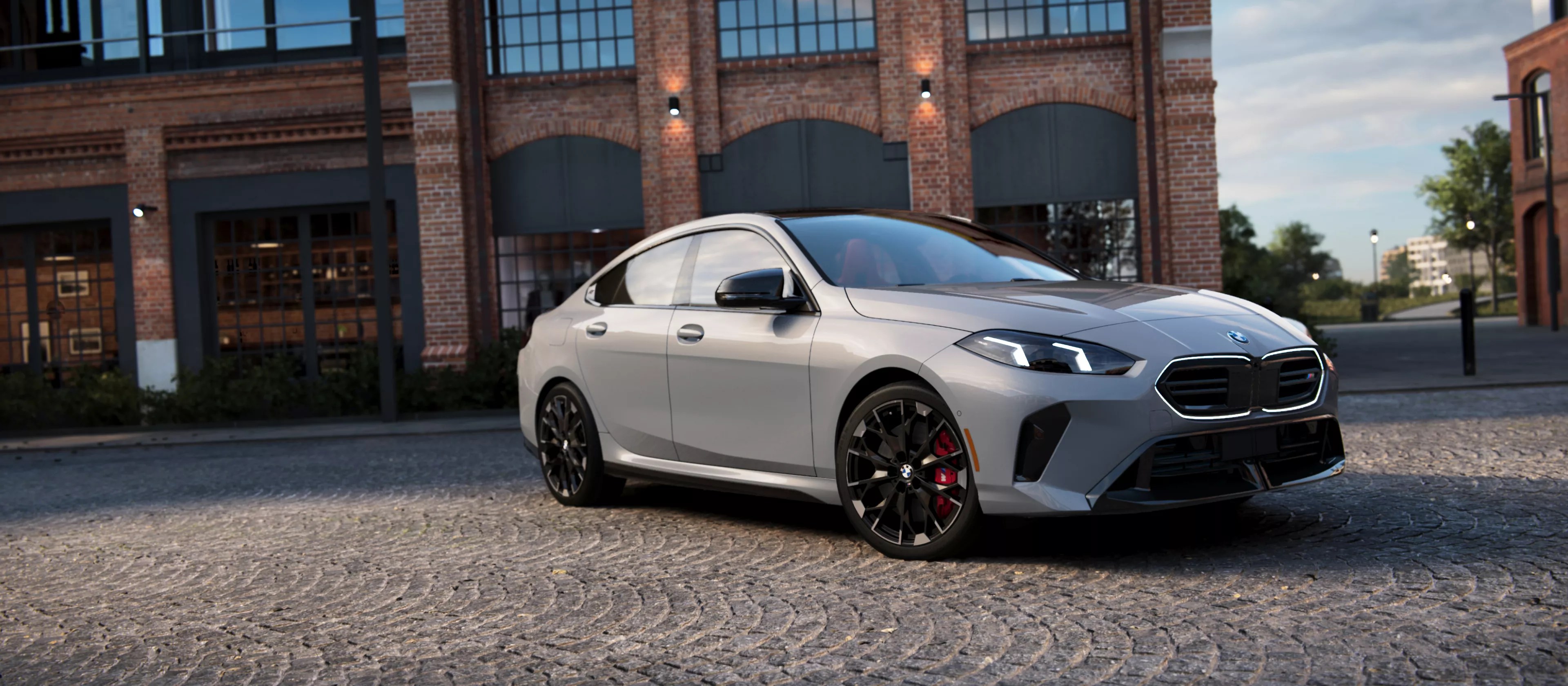
2025 BMW M235i xDrive Gran Coupe. Consider the BMW 2-Series as a way to escape the big-grille plague that I thought I’d be getting used to, but no such luck. This unassuming purple beast (above, though not purple) is a performance BMW with quite a bit of Mini Cooper DNA (same parents, after all). There’s no manual option, but the two-liter turbo four puts out 312 horsepower and 295 pound-feet of torque, shifting through a seven-speed dual-clutch automatic. The combination is good for a 4.7-second zero to 60 time. The interior feels classy, but the seats could use more padding, especially as this M delivers a relatively stiff ride. The M235i is a little car with a somewhat big price, starting at $50,675. There’s not much in common with the similarly named M240i coupe, but that one has a straight six-cylinder engine and more power—382 horsepower, with AWD available. The price is very close, $50,600, with xDrive adding $2,000. Production: a highly automated plant in Leipzig, the former East Germany.

2025 Mercedes-Benz S63 EV4. The European marques have fully embraced the plug-in hybrid (PHEV) format, and this example emphasizes performance. The challenge for Mercedes was to deliver zero to 60 in 3.2 seconds (and a 180-mph top speed) via a four-liter twin-turbo V-8 and e-motor, while also delivering fuel economy to justify that PHEV badge. The package delivers 791 horsepower and 1,055 pound-feet of torque.

The figures for cars like this are wild. It offers 49 mpg combined (46 in the city/53 on the highway) and an electric range of 16 miles (which could be higher). But if you run it only on gasoline, the result is only 18 mpg. Keep it charged up, is what I say. Driving range is quite good at 380 miles. The interior of the Mercedes is super-nice, with Benz’ really useful active bolsters to keep you in your seat. The price is an eye-watering $186,200, which is a shame because lots of posteriors would occupy that driver’s seat if they could afford it. Although Mercedes has an American plant, these cars are built in Germany, and thus the price (if passed on) could go up, up and away.

Is there room for more Benz cars in Alabama? The plant there is already producing the GLE, GLS, and GLE Coupé SUVs, and the Mercedes-Maybach GLS for international sales. EVs in Alabama are the EQS SUV, EQE SUV and Mercedes-Maybach EQ. The S63 EV4 is likely to be a low-volume model and will probably stay in Germany.

2025 Audi SQ7 Prestige and Q4 e-tron Prestige. I’m putting these two together because I’m curious what the German automaker will do with pricing for these fine driver’s offerings. Both are already expensive cars, and price is a big issue with EV customers—who think the electrics are too expensive even without the tariffs. Audi’s e-trons will now be a big jump from domestics like the Chevy Bolt and Equinox. The Prestige Q4 is $69,095, and my guess is that the automaker can’t really raise that too much without having them just sit on lots. The big, luxury-oriented SQ7 Prestige (above) is $98,195. Raising that heady amount by 25 percent would be prohibitive. That’s why a pause was necessary.

There definitely is U.S. production in Audi’s future. The company said in February it will expand production in North America, possibly in a joint venture with its Volkswagen Group siblings. According to Audi CEO Gernot Doellner, also a VW management board member, “We could go into existing Volkswagen Group plants or we could build up additional capacity. We are open to solutions and are evaluating the various options.”

2024 Toyota Corolla Cross Hybrid XSE and 2025 Toyota GR Corolla Premium. If you expect this car to look like a Corolla—i.e., a sedan—you haven’t been paying attention. This Corolla, made in the U.S. of A. (yeah!), has become an entry-level SUV, and a hybrid to boot. Pricing starts just below $30,000 (likely to stay there), and it can deliver 45 highway/38 city fuel economy via a two-liter four-cylinder engine and a trio of e-motors, for 196 horsepower. That makes it faster than the standard Corolla Cross, and definitely the one to buy. Don’t expect a performance car—it’s kind of like a Japanese appliance, but that pays off in terms of reliability and longevity.

I drove the GR Corolla (above) at Charlotte Motor Speedway in North Carolina last year, and here’s where you go for performance! These racy Corollas are kind of a labor of love for the company, which estimates it will sell less than 6,000 of them in the U.S. The all-wheel-drive GR hosts an innovative 1.6-liter turbo three-cylinder engine that punches above its weight and produces 300 horsepower (and 295 pound-feet of torque). Zero to 60 takes just 4.99 seconds. The model was introduced in 2022, but now includes an eight-speed paddle-shifted automatic as a $2,000 option. The GR also looks the business, with spoilers galore. Pricing is $38,860 for the Core entry model and tops off at $47,515 for Premium Plus. But the GR Corolla is built in Japan, in a dedicated facility within the Motomachi plant, and is this fully subject to the tariffs. Expect a price rise.

2025 Mazda CX-50 Hybrid Premium Plus and 2025 CX-50 Turbo Meridian Edition. Get the hybrid (above). It uses the same peppy drivetrain as the Toyota RAV4 Hybrid, with 219 horsepower from no less than three electric motors standard (for AWD) and a 2.5-liter four. This combination and a relatively light shell yields impressive 38 mpg combined fuel economy. You’ll want a regular CX-50 if you tow a lot, because it can handle 3,500 pounds (versus the hybrid’s 1,500). With the standard CX-50, you’re looking at 24 mpg in the city and 30 on the highway. The rating goes down to 23/29 (and the price goes up) if you opt for the 2.5 with twin-scroll supercharger. The hybrid, built in Huntsville, Alabama, starts at a reasonable $35,390. And the price is going to stay there, minus tariffs.

The Big Ears Trip

It was an ambitious road trip, 10 days from Connecticut’s home base with stopovers in Virginia, North Carolina, Kentucky and Pennsylvania. The idea was to bring a Radio Flyer cargo e-bike down to my daughter Maya in Louisville, after spending a blessed four days at Knoxville’s legendary Big Ears music festival—a celebration of everything eclectic.

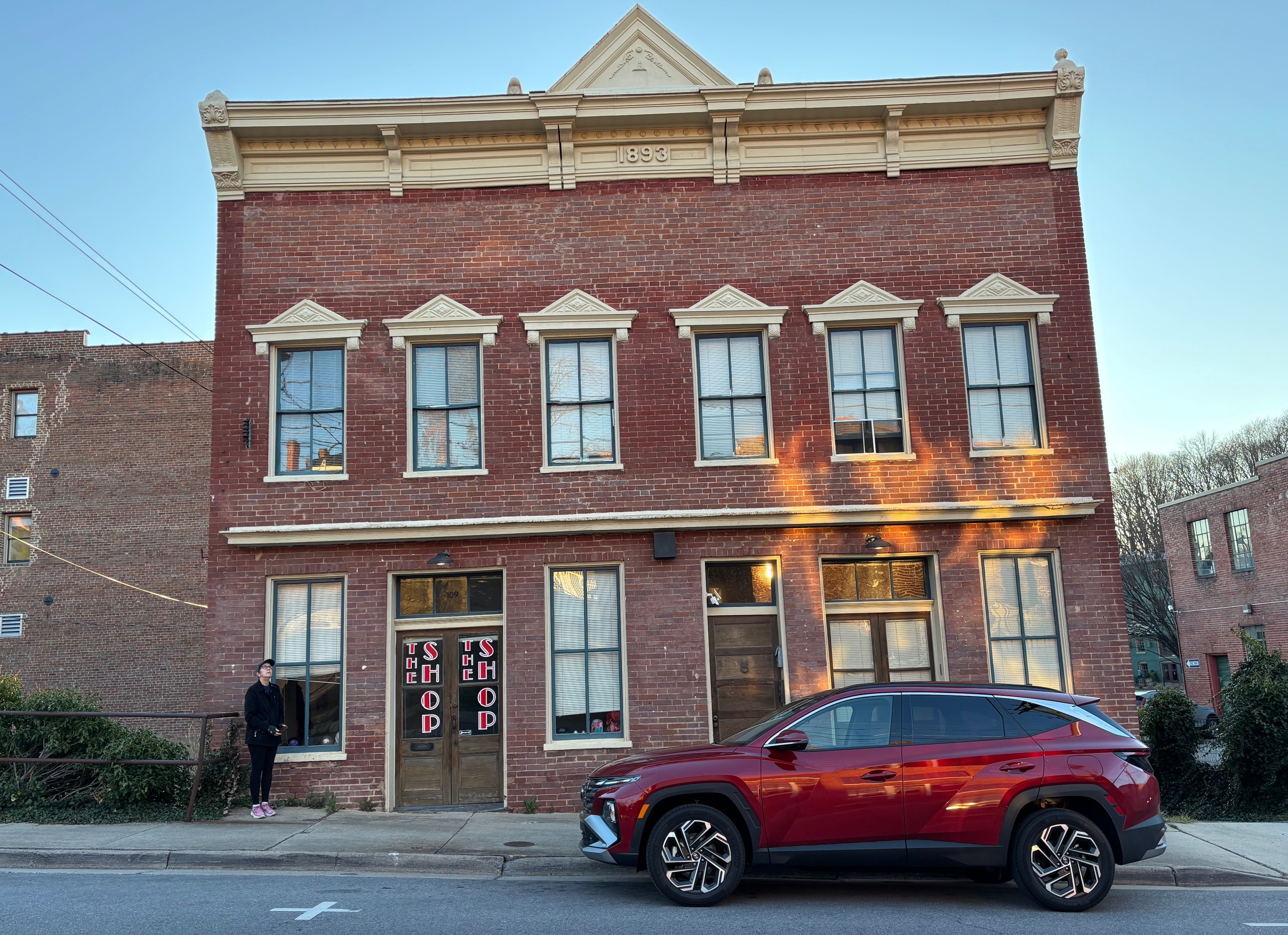
The Tucson at our Staunton, Virginia stop.

Our steed was a 2025 Hyundai Tucson Limited AWD, bottom-lining at $41,870 with the only extras being the Ultimate Red paint ($470) and carpeted floor mats ($210). It proved the perfect vehicle for the trip, because the Radio Flyer—which is extra long—just fit with the front wheel off. We put a $16 cover on it and hoped (prayed?) no one would steal it during a week on the road.

The Tucson came equipped with a 187-horsepower, 2.5-liter “Smartstream” four-cylinder engine that also delivers 178 pound-feet of torque through an eight-speed shift-by-wire auto. It was a smooth cruiser on the highway, but a bit lacking on passing power. The huge benefit, though, was the 30 mpg it offered on the long highway sections (26 combined). That’s pretty good for a compact SUV. Start/stop technology is helpful. Gas prices vary widely in the South, but we were able to access $2.75 a gallon at one point.

Hyundais come very well equipped, including with the most useful left and right cameras that display with the turn signals. The chromed shifter twists for drive and reverse, which took a bit of accommodation but is ultimately fine. The Tucson has excellent front legroom, and even with the seats extended it doesn’t cut into rear space too much. Heated/cooled seats and heated wheel are standard on this model.

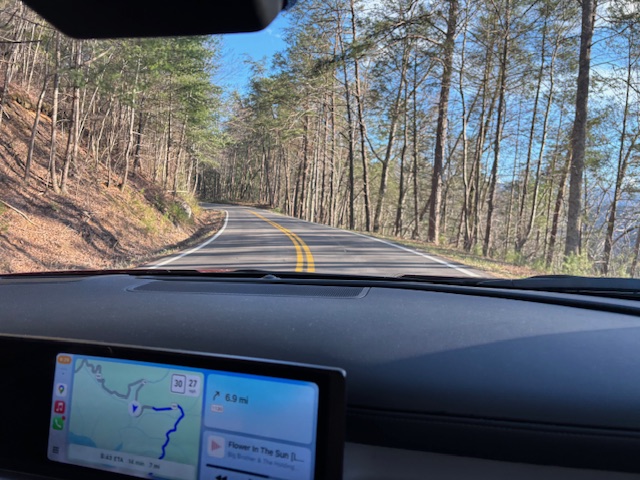
Three hour stretches behind the wheel were not all that fatiguing, making the whole crazy trip feasible. Our first stop, after an AirBNB overnight and Thai food in a downtown Staunton, Virginia Victorian mansion, was Tapoco, North Carolina, on the Tennessee border. Why there? It’s the home not only of the historic Tapoco Lodge, built in 1930 and renovated for modern times, and (right around the corner) the infamous “Tail of the Dragon,” an 11-mile stretch of winding mountain road that features 318 turns.

The hotel was built by the Tallassee Power Company with the original aim of providing a roof for workers at the Cheoah dams and other hydroelectric projects, and it later housed Alcoa workers. The City of Alcoa (what a name!) is up the road, and aluminum smelters tend to locate near cheap sources of power—it takes 10 kilowatts to produce a pound of aluminum. Now you know why Iceland, with its abundant hydro and geothermal, smelts a lot of the metal from bauxite ore.  

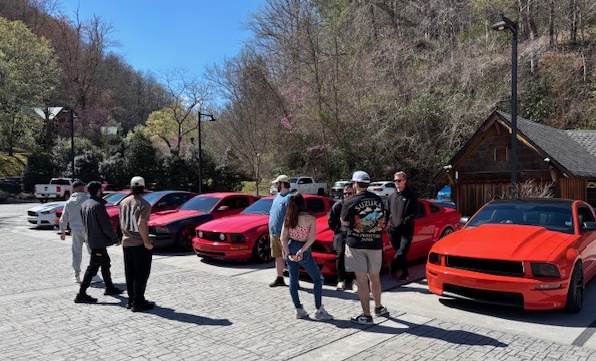
Today it’s a comfortable rustic lodge that offers hiking on multiple trails, white water rafting in season, yoga, and glasses of wine by the firepit. The parking lot was interesting. Despite the rural location, with the nearest town 15 miles away, a variety of Porsches nestled next to a veritable Ford dealership of Mustangs. And then there was every possible motorcycle variation.

The Mustang guys get ready for the Dragon.

The Mustang guys were braving the Dragon and socializing in conjunction with a meet in Dolly Parton’s Pigeon Forge (near as the crow flies, but long in mountain driving). One local owner said he does the Dragon once a week.

The Lodge: A river ran through it.

It is perhaps anticlimactic to white knuckle this legendary road in an SUV with a cargo bike sliding around, but it was fun anyway. Caution is not only warranted but necessary—there are sheer drop-offs, and lots of accidents. Check out the Dragon Death Map to sober up before heading down there.

A Lodge breakfast.

From Tapoco (with a stop in Robbinsville, which has a great thrift shop and a surprise Mexican food truck) it was on to Knoxville, about three and a half hours drive. The Big Ears festival (March 27-30 this year) is like no other. It seems simple enough—four days of music with no boundaries between jazz, folk, rock, world and experimental music of all kinds. But it’s exceedingly rare, especially done with the exquisite taste and broad knowledge that Ashley Capps (you may know him from the Bonnaroo extravaganza in nearby Manchester) brings to the table.

Tatiana Hargreaves (left) and Allison DeGroot.

So it was old-time folk with the Magic Tuber String Band and Hargreaves/DeGroot, plus jazz from Sun Ra’s Arkestra and Immanuel Wilkins, electronica from Immersion (featuring ex-Wire man Colin Newman and partner Malka Spigel), and the pioneer of German rock Michael Rother.

Immersion.

A somber note was on March 28, with one of the last performances ever by “freak folk” pioneer Michael Hurley, who died a few days later at home in Oregon. He didn’t look all that well at Big Ears, but he was in fine voice, performing a version of “Delia” I’d never heard him do. He was for 50 years “the purveyor of an eccentric genius and compassionate wit. He alone was Snock. There is no other.” He was 83.

A last image of Michael Hurley.

In four days, you see a lot of music, at venues scattered all over Knoxville’s very friendly and apparently prosperous downtown. While rents and home buying are sky high in town, it’s still possible to get four sides, corn bread and a draft beer for less than $20 at a barbecue joint on Gay Street.

 Robert Hurst, bassman with the Kris Davis Trio.

Then, the last formal stop was Louisville, Kentucky, home to my daughter Maya and husband Spencer. The Radio Flyer e-bike was still in the back, surviving a dozen lonely parking lots. I rode it up and down the street to make sure it still worked. These cargo bikes are versatile, transporting cargo and kids with a bunch of add-ons. Electric power makes them conquer hills easily. Radio Flyer, by the way, is the Chicago company that makes the little red wagons. Branching out makes sense!

After really tasty shrimp and grits at the in-laws it was back on the road for an epic drive. We stopped for lunch in very rural West Virginia, where poking out from a small roadside junkyard I saw a white Volvo 1800S. How did that get there? While we were at the local diner the proprietor got a call from a slick saleswoman. “She was calling from New York and just hung up on me when I said no!” An opinion about people from New York was cemented forever. 

The final overnight was in Chambersburg, Pennsylvania, home to fine thrift stores, one, New Life, run by the Mennonites. I found a beautiful “mid-century modern” 1959 Blaupunkt console radio/record player with a built-in bar on an earlier trip to Chambersburg. It had been used at an officer’s club in Germany. $75! I discovered later that German-market turntables rotate 12 percent slower on American 60-cycle current. But these old mono tube units are happy to run Bluetooth.

The whole trip took 10 days. We arrived home to a very needy cat. Everything worked out, including the Tucson, which delivered 30 mpg on the highway (and that was most of the driving). The experience left me willing to explore other long road journeys across this great country of ours.