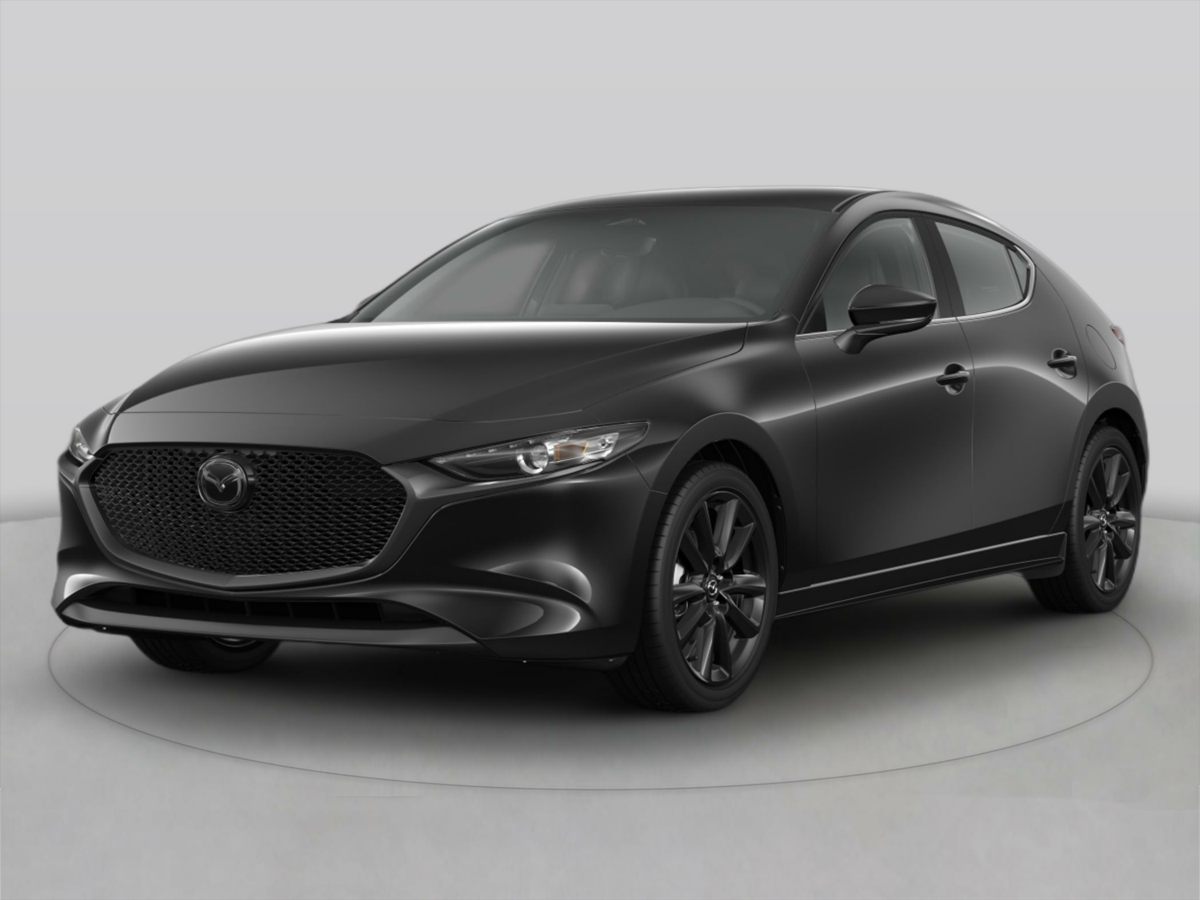
I wish there were more cars available like the simple and straightforward 2025 Mazda3 2.5S Carbon Edition AWD I tested this week. For a bottom line of $31,095 it’s possible to buy a relatively sporty all-wheel drive sedan that does just about everything you want a car to do.
At first, I was taken aback by the Mazda having a conventional gauge set complemented by a smallish center-mounted 8.8-inch non-touchscreen display. Navigating GPS, Apple CarPlay and other functions was via a rotating dial on the console. It seemed annoying, but was actually easy to use. If you owned it, getting around would soon be second nature.
The mid-pack Carbon Edition comes with AWD and a 191-horsepower (and 186 pound-feet) Skyactiv 2.5-liter four-cylinder engine. Buyers can opt for the Carbon Turbo trim, which sells for $33,595 and ups the ante to 250 horsepower. That might be a good upgrade, because with the standard engine the car is adequate but not terribly exciting to drive. But the standard’s 30 mpg combined (35 mpg on the highway) is nice.
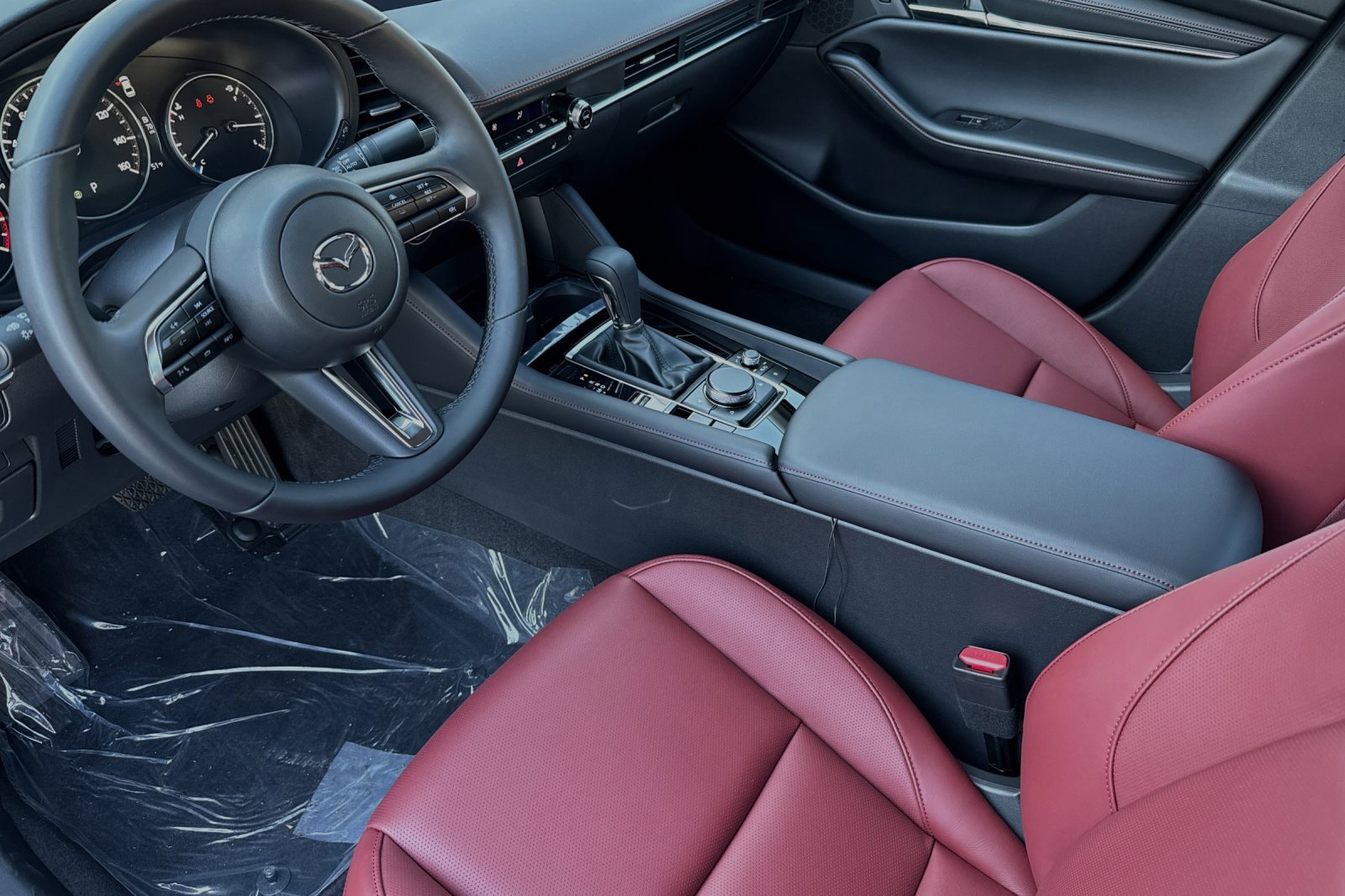
The interior of the Carbon featured very comfortable red leather seats (standard) and features high-quality materials, redolent of a more expensive vehicle. As Car and Driver put it, “The Mazda 3 is a mainstream compact sedan that punches above its weight. It can almost pass for a premium-class compact, as its top trim levels boast elegantly furnished interiors lined with materials that exude a sense of luxury that rivals like the Hyundai Elantra and Honda Civic just cannot equal.”
Everything about this Mazda3 was just uncomplicated and convenient. It’s actually a car I’d consider buying, and I never say that. It was easy to park, had good road manners and plenty of storage as well as legroom, looked reasonable enough, and was economical in use and likely to be reliable. There’s a hatchback available that gives it more of a crossover look, but the view to the rear isn’t great. In my opinion, the sedan is the one to have.
Please note that the Mazda3 is assembled at a plant in Salamanca, Mexico and has only 10 percent U.S. or Canadian content. Fifteen percent is via Japan. So, this lovely vehicle is a tariff target, but of course it’s complicated. The tariff would be 25 percent, but under Trump’s revised guidelines from March if the car meets specific U.S.-Mexico-Canada agreement requirements that’s likely to go down to 15 percent. Anyway, the pricing is subject to change.
The auto industry is heading through hairpin turns with no brakes, as the Trump auto tariffs seemingly change daily. We are now told that imports from England, which were in the worst possible position in terms of U.S. production, are now in the catbird seat because of a U.S.-U.K. trade deal. Now the first 100,000 imports per year (meaning, almost all of them from Great Britain) will have only a 10 percent tariff). Meanwhile, Chinese tariffs are paused for 90 days, but cars still face 25 percent duty. By the time you read this it could all be different. It makes it difficult, indeed, for automakers who just want stability. But the new cars keep coming out, and I keep reviewing them.
Lexus NX 350 F Sport AWD and Lexus UX 300h AWD. Lexus’ NX family includes two cars with gas engines, one hybrid drivetrain, and one plug-in hybrid. This relatively small crossover tested in sporty 350 F Sport guise (above) had the optional 2.4-liter turbocharged inline four-cylinder engine with 275 horsepower and 317 pound-feet of torque, connected to an eight-speed automatic. F Sport includes a more performance-oriented suspension tune, a 14-inch touchscreen and upgraded climate control, but you still have to pay extra for a big sunroof, heating in the rear seats, and the top-grade audio. The car was quite nice without an enormous wow factor, and the 28 miles per gallon on the highway was appreciated. Premium fuel is a “recommendation.”
The UX 300h AWD subcompact luxury crossover is more my speed, as it’s powered by the state-of-the-art Prius drivetrain, the Atkinson-Cycle two-liter four with two or three electric motors (the latter, as in the tester, if you want AWD). For 2025, there’s an extra 15 horsepower. With two motors expect 43 mpg combined, and with three a very minor loss at 42 mpg. Zero to 60 is less than eight seconds. The starting price: just under $40,000.
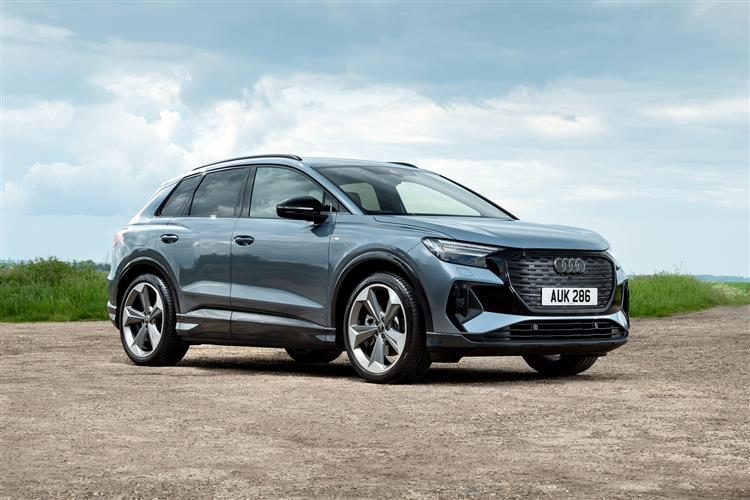
Audi Q4 e-tron Prestige. The Prestige (above) is near the top of the Q4’s model line, starting around $63,000. That buys a powerful electric crossover with 335 horsepower and a so-so range of 258 miles. These days, 300 miles is a safer number. As is often the case, this e-tron emphasizes performance over range, and it can reach 60 in five seconds. The car is quiet, and its cabin very tastefully appointed with quality materials. A more aggressively styled Sportback version is available.
Genesis GV60 Performance AWD. The trio of Hyundai, Kia and Genesis have been acing the EV market, and Genesis’ GV60 is a compelling SUV choice up against cars like the Audi Q4 above. Genesis offers the luxury approach to electric motoring, and up to 295 miles of range, as well as 483 horsepower (from Boost Mode) in this Performance trim. The cabin is utterly stylish, with twin 12-inch screens and a science fiction shifter that’s hugely cool and also very functional. But it’s a $71,000 car. Lesser trims might work just as well for your needs, though no versions are cheap—prices start at $53,800 for the Standard model (with a single motor and 225 horsepower).
Hyundai Elantra N and Santa Fe XRT 2.5T AWD. Sport sedans have been an endangered species, but they’re starting to come back. Hyundai’s Elantra N (above) has much to recommend it, including looking the business with its blackout trim, rear wing, diffuser, and contrasting color stripes. The N Line is a different car. The N is the real deal, with 286 horsepower, a stiff suspension and either a six-speed manual or an optional automatic. Other cars in this class include the Honda Civic Type R and the Toyota GR Corolla. There’s even a turbo Mazda 3 out there.
The current version of the Santa Fe is one of the most sharply styled SUVs on the market, and the performance matches the looks. You might want to investigate the hybrid version, but the tester had the2.5-liter turbo four, producing 277 horsepower and getting it to 60 mph, through an eight-speed dual-clutch transmission, in just over six seconds.
The redesign puts the Santa Fe into the third-row category, and both legroom and cargo area have grown. The interior refresh was done quite well, with a modernist designer feel. Both the second and third row fold flat. With all three rows engaged, the Santa Fe has 14.6 cubic feet of storage out back. The tested XRT AWD version isn’t the best for fuel economy—19 in the city and 26 on the highway. In just rear-wheel drive form it can get 29 on the highway. The XRT starts at $42,425, mid-pack in a lineup that starts with the SE at $35,775.
For a price in the same ballpark, you can buy the hybrid version of the Santa Fe, which uses a turbo 1.6-liter four and an e-motor to produce 232 horsepower. I’d get that one, because the fuel economy goes to 36 mpg city and 35 mpg highway without much of a performance sacrifice. The SEL version starts at $39,275.
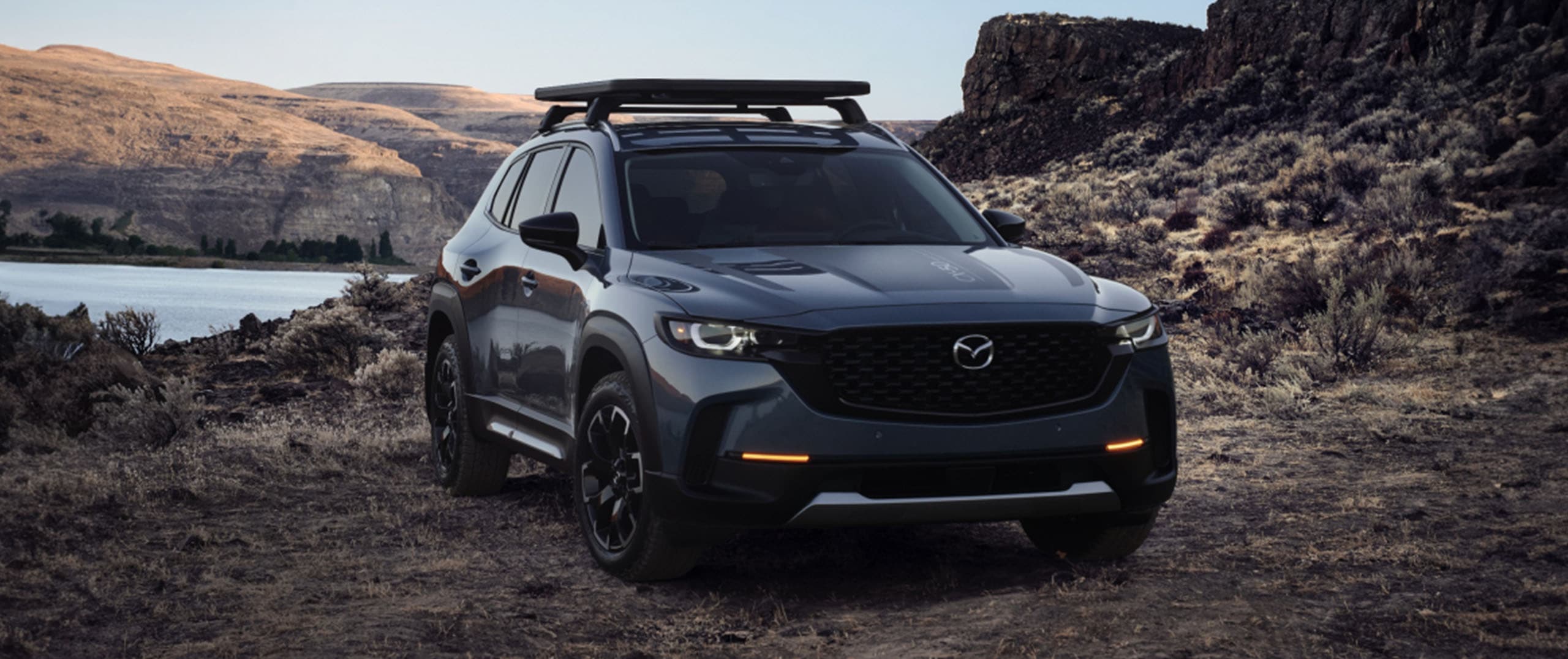
Mazda CX-50 Turbo Meridian Edition. As tested, $42,070, the CX-50 was a well-equipped and nice-handling crossover that in Meridian trim (above) comes with a sunroof and heated leather seats. All CX-50s are AWD. The base four puts out 187 horsepower, but that jumps to 256 in the turbo four that’s standard in the Meridian. This version also includes upgraded towing to 3,500 pounds. The tested car was impressively equipped for the money, and the only optional extra was $450 for gray metallic paint.
Mazda builds a hybrid version of the CX-50, using a powertrain that’s also in the Toyota RAV4. The 2.5-liter four uses three e-motors, producing a combined 219 horsepower. If you can live with 7.5 seconds to 60, it’s the better option, with 38 mpg combined and not much sacrifice in terms of drivability. Pricing starts at $35,840.
Volvo S60 Recharge eAWD Ultimate Dark and Volvo XC60 T8 AWD Polestar Engineered. The plug-in hybrid drivetrain is proving very popular with consumers—who are still cautious about going full electric. In the S60 Recharge, Volvo offers a comfortable sedan with a two-liter four-cylinder engine, an electric motor and a relatively big 18.8-kilowatt-hour battery that together generates 455 horsepower and 523 pound-feet of torque. The big battery enables 41 miles of travel on just electric power. That leads to a combined hybrid mode fuel economy of 31 mpg. And at least until Congress repeals the $7,500 federal income tax credit for EVs (which it seems intent on doing), this one is eligible.
Consumers won’t be dissatisfied with this very comfortable, safe, nicely appointed sedan, which in T8 form can reach 60 mph in an impressive 4.3 seconds. The big issue is the price, since the base Core version of the S60 Recharge is $53,295. And the T8 Ultra Black top trim is just shy of $60,000.
The XC60 T8 AWD Polestar Engineered (above) starts at a whopping $76,545. If you must have an SUV, this is a good plug-in hybrid alternative, with 35 miles of electric range. The XC60 and 90 carry a lot of safety tech and are relatively heavy cars, and this one perhaps needs its 455 horsepower to give good performance. This one won’t get the federal rebate, even if it’s available, but it could qualify for local incentives.
I had some stuff to move, and for that the 2024 Toyota Tacoma Trailhunter Double Cab came in handy. Trucks like this are proof that the Japanese can build work vehicles that give the impression they were born in Texas. I’ve never owned a truck, but I love to borrow them.
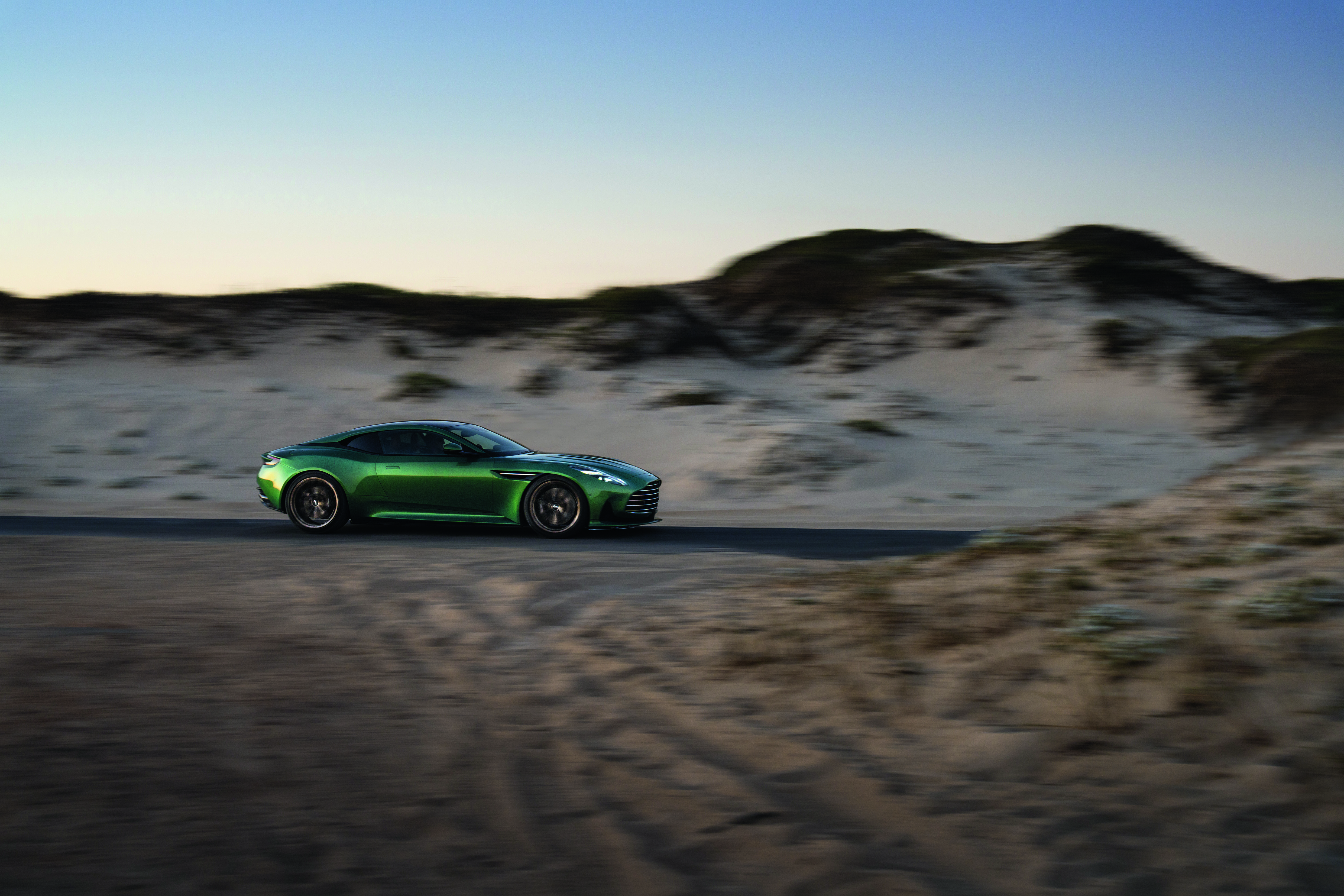
Cruising the neighborhood in the $324,000 DB12 coupe, a sinuous supercar.
By Jim Motavalli
A thick coating of helicopter seeds from a maple tree couldn’t hide the sinuous lines of the Liquid Crimson Aston Martin DB12, a successful and more aerodynamic updating of the basic Aston shape that’s been extant since the DB2 of 1950 to 1953. It modernizes the DB11 with touches of the DBS.
These cars start at $245,000, but the tester’s options bumped it to $324,700. The DB12 grand tourer debuted in May of 2023, and compared to the DB11 it has bigger grille in the distinctive Aston shape, LED headlights and wider track width. The redesigned interior sports Aston’s ownb infotainment system, which supports wireless Android Auto and Apple CarPlay.
The DB12’s four-liter twin-turbo V-8 engine produces a massive 671 horsepower with 590 pound-feet of torque and makes outrageous go-fast noise. The DB11 offered a mere 528 horsepower and 513 pound-feet from the same basic powerplant, with the increase attributable to modifying the camshaft profile, optimizing the compression ratio and deploying bigger turbochargers.
AM discontinued the 5.2-liter V-12 that was available on the DB11. There’s also a DB12 convertible called the Volante, released just after the coupe, and it can raise or lower its top in 16 seconds or less at speeds up to 31 mph. The DB12 reaches 60 miles per hour in 3.6 seconds, and the Volante in 3.7.
On the road, these figures will not be doubted. The DB12’s acceleration is fearsome and relentless. But driving the car in suburbia can be an exercise in frustration, since there are so few opportunities to really get it excited. Even on the highway the rest of the traffic isn’t moving fast enough. The 12 feels like a caged lion in school zones, and the ride—meant for flat-out cornering—is quite stiff in some modes.
The 12’s chassis is seven percent stiffer, the anti-roll bars have been hardened, and the shocks upgraded. But the driver can choose between GT, Sport, Sport+, Wet and Individual. The first one is the default and the most comfortable in everyday driving. Sport+, that’s for the track.
Boarding the DB12 requires dropping into it, dictated by the low stance. The driver and passenger sit cozily on hand-stitched quilted red leather (via a $15,200 option), with the bolstering needed to stay in place. There’s a back seat (the car is a “2+2”) but it’s for small kids and parcels.
The initial driving position was low, too, but corrected by raising the seat height. The driver looks at a clear digital dash display, which is complemented by a 10.3-inch center screen. The system worked well until it didn’t—the screen froze temporarily. But the $10,000 15-speaker Bowers & Wilkins audio sounded excellent, and AM is to be congratulated for providing physical controls (via knurled rollers).
The driver can let the eight-speed automatic transmission do the work, but AM provides a really good paddle-shifting system with near-instantaneous responses. The paddles turn with the wheel, which makes using them a bit awkward during cornering. The $14,400 carbon ceramic brakes, which shed 60 pounds over the standard issue, were massively reassuring.
Supercar fuel economy is usually worse—the DB12 gets 22 mpg on the highway, and 15 in town. But that doesn’t stop these cars from being driven. On a recent trip to Miami, I saw a group of British-registered Aston Martins going all the way back to the DB6 that were on the Mayfair to Miami trip, (see below) arriving at the latter in time for the recent F1 race.
This isn’t likely to be its owners’ only car, and some kind of big SUV will do the family’s heavy lifting. But despite its intent as an international grand tourer, the DB12 is fairly docile for a supercar and reacts predictably. It doesn’t require a driving school degree for a trip to the mall. It attracts attention like nobody’s business, though, so be careful of drivers not concentrating on the road.
Cars imported from Britain were subject to President Trump’s 25 percent import tariffs, but the just-concluded U.S.-U.K. trade deal offers some relief for luxury carmakers such as Jaguar Land Rover, Rolls-Royce and Aston Martin that don’t have U.S. production. According to the White House, under the new rules, the first 100,000 British vehicles into the U.S. in any year will pay 10 percent, and any after that are subject to 25 percent rates. The latter figure won’t be reached too often—in 2024, U.K. manufacturers sent 102,000 vehicles to America. The big numbers are in cars from Japan, Korea and Europe.
Electrification is still moving full speed ahead—in the truck sector. The pace of plugging in cars has slowed, but manufacturers are still seeing opportunity in offering new battery and fuel-cell trucks, and that’s what ACT Expo (held in Anaheim, California March April 28 to May 1) is all about.
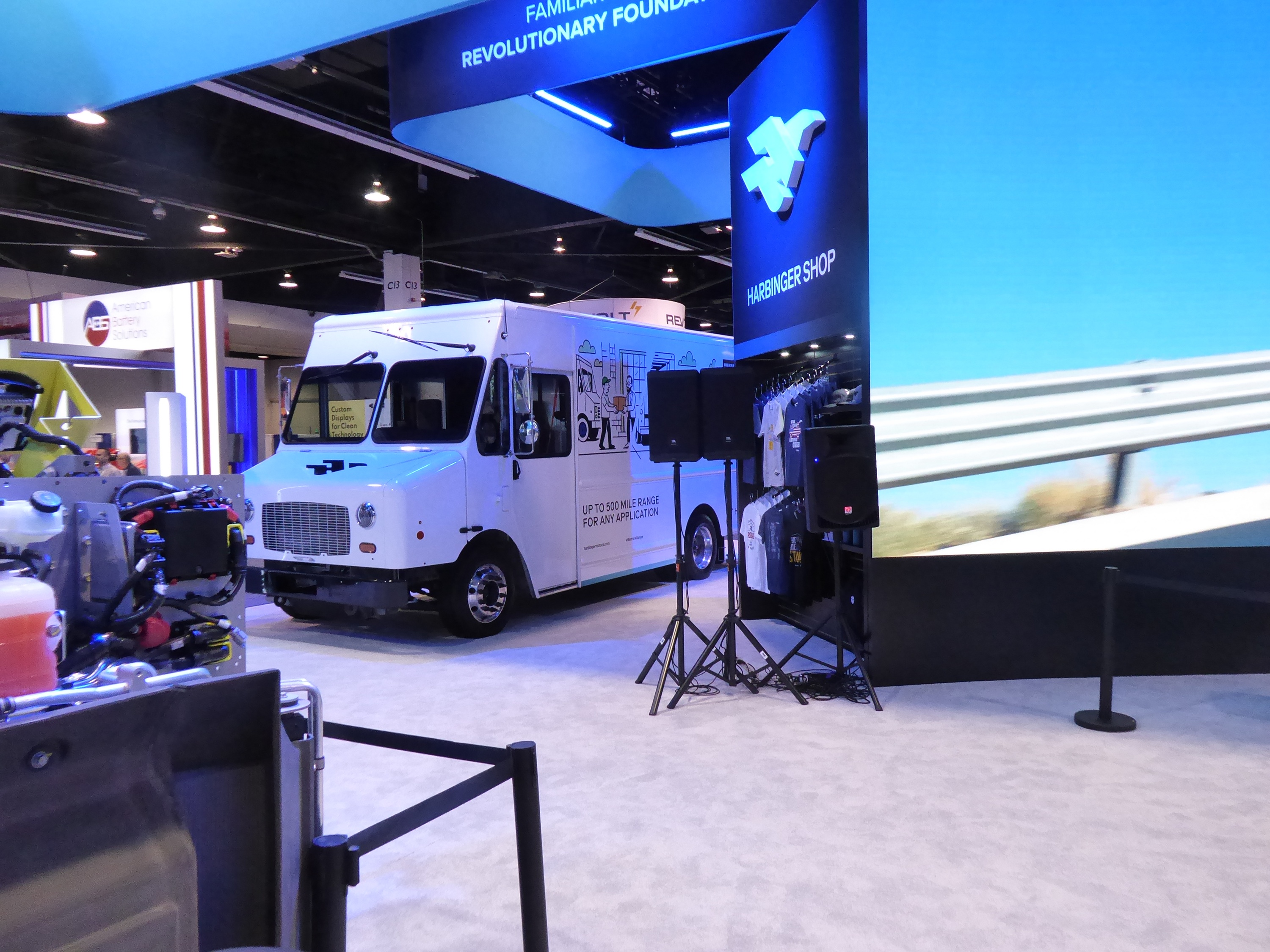
The Harbinger stand, with a delivery truck on its new $100,000 made-in-USA chassis. (Jim Motavalli photo)
The case is strongest in the smaller trucks that work locally and handle the “last mile,” but ACT also included some new tractors to pull the big trailers. Range is limited, though, and electric power is challenging in any kind of long-haul situation. That’s why the trucks are often put into service at ports moving cargo relatively short distances.
Joe Adams, chief engineer at Kenworth, showed the T680E and T880E cabs. “You’re looking at five years of development and 325,000 test miles with 46 units in Europe and North America,” he said.
Kenworth has been operating zero-emission Class 8 trucks at the Port of Los Angeles since 2021, but those have hydrogen power developed in conjunction with Toyota North America. Shell provided the fueling stations.
The T680E delivers 375 to 470 horsepower continuous and up to 605 horsepower peak, with 1,850 pound-feet of torque. The LFP battery packs are variable with the largest a 500-kilowatt-hour (kWh) pack offering 200-plus miles on a charge and up to 82,000 pounds of payload. It can charge to 90 percent in two hours, using a 350-kilowatt charger. It’s now available for orders in North America, with delivers to begin later this year.
The T880E, a Class 8 cab, can carry up to 675 kWh of batteries and travel up to 250 miles on a charge. It also has 350-kilowatt charging, and both trucks offer regenerative braking, a new EV-friendly 15-inch digital dash configuration, and LED lighting. Adams described a 168 percent fuel-economy improvement over diesel, but it’s a bit apples and oranges.
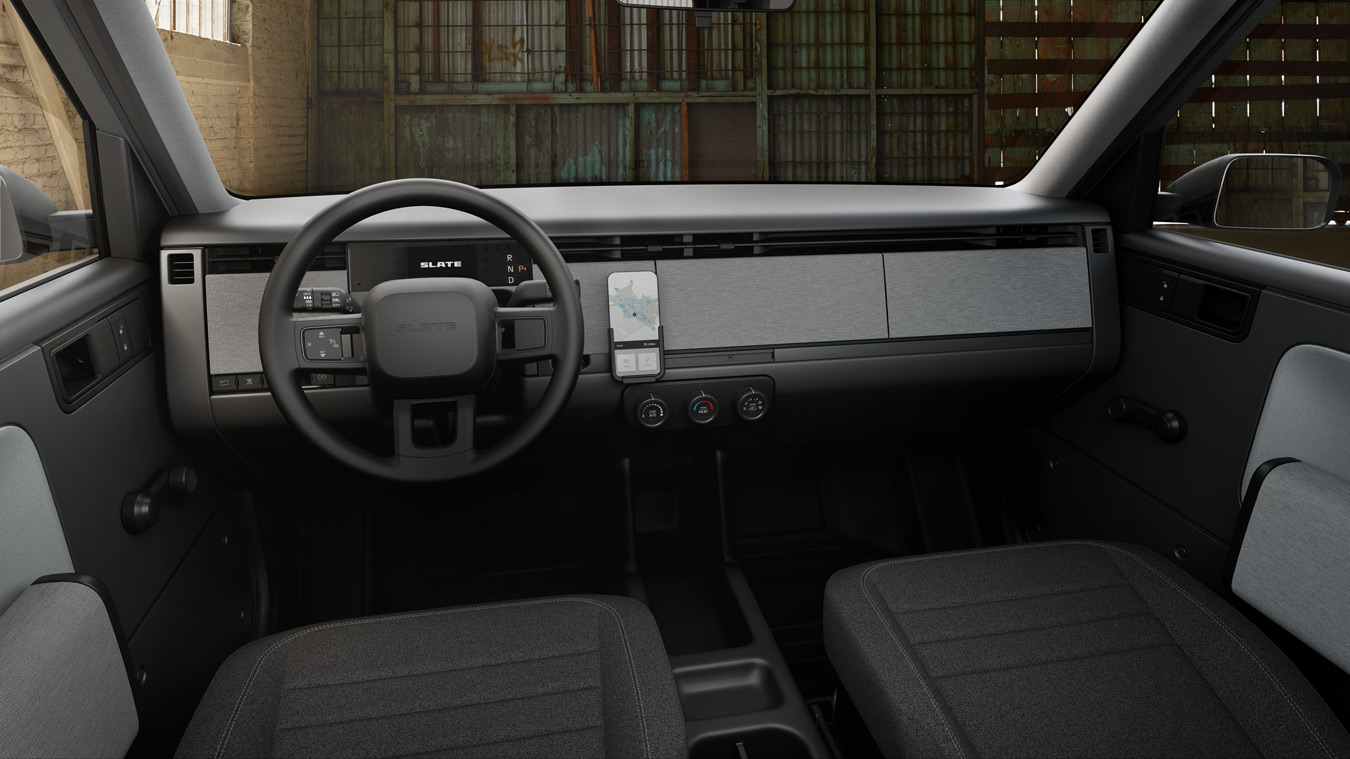
The Slate truck puts efficiency at the forefront. (Slate Auto photo)
There were a couple of important start-ups at ACT Expo. Slate Auto showed its bare-bones $25,000 electric pickup, with 150-mile range from the basic battery and no frills—roll-up windows, no radio (use your phone for music via USB). Jeff Bezos of Amazon is a backer. The truck is no looker, but its low cost and readily apparent utility (carrying capacity is 1,400 pounds) will give it charm.
The Slate truck converts to an SUV. (Slate photo)
Costs were kept down by using basic parts (like taillight lenses and door handles the same right and left); combining the motor, inverter and reduction gearbox into one assembly); and avoiding the paint booth. The polypropylene composite panels are all a uniform gray. This is the way Henry Ford made Model Ts—which got progressively cheaper, not more expensive.
The Slate truck is a two-seat electric pickup, but a kit is available that turns it into a five-seat SUV. It can become a cargo van, too. The basic battery pack is 52.7 kWh but the optional 84.3-kWh pack takes the range to 250 miles. At Level 2, the Slate charges to 100 percent in under five hours; at Level 3 DC fast charging 20 to 80 percent is achieved in under 30 minutes.
The Slate is just what the market needs, but there was another affordable solution there from Harbinger, a fast-moving medium-duty electric chassis provider whose home base was 20 minutes from the Anaheim Convention Center.
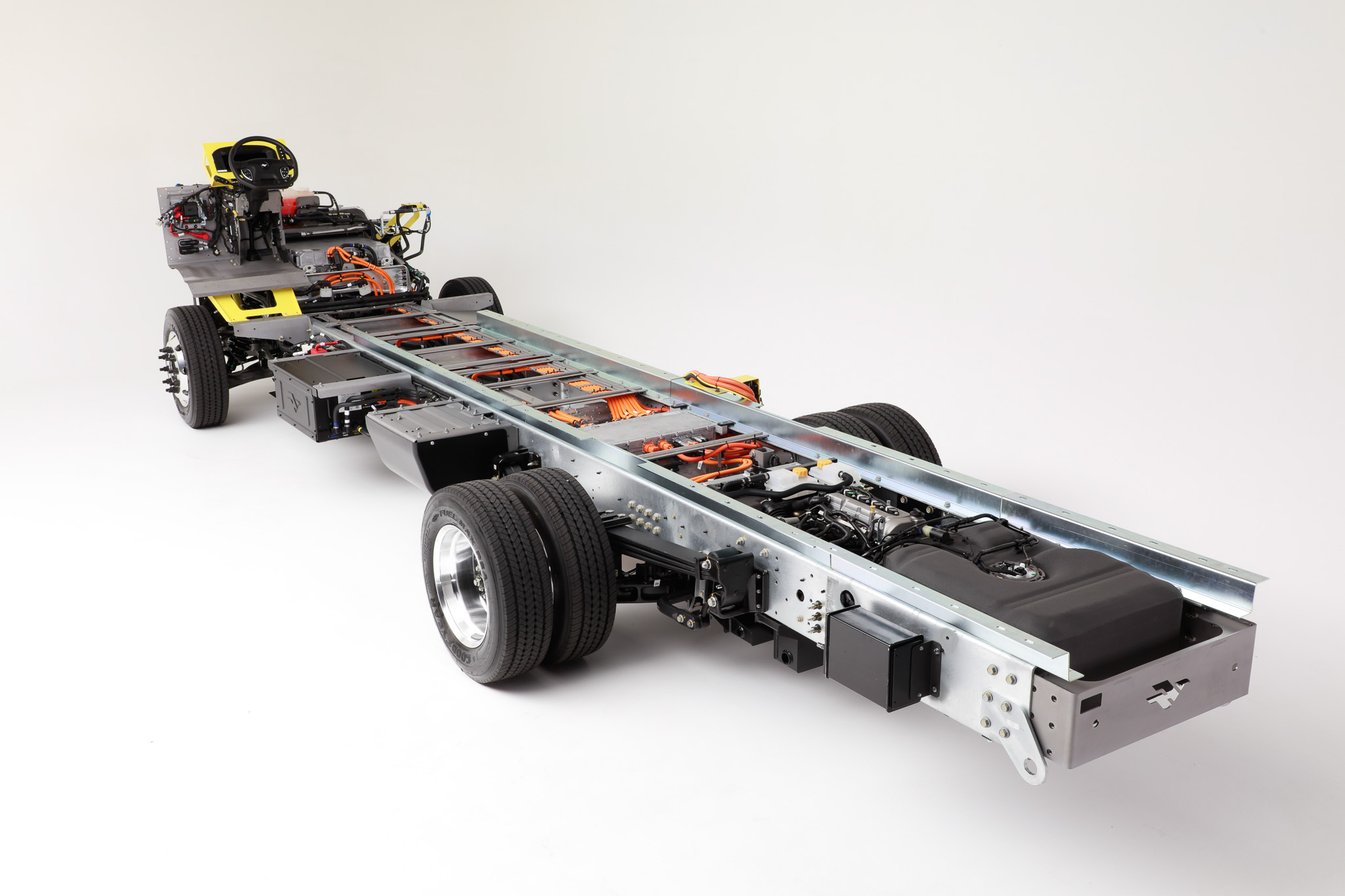
CEO John Harris said his company is vertically integrated and produces most of the truck’s components in-house. That means it barely registers on the tariff scale. The chassis costs approximately $100,000, and Harris claims to have 5,000 orders for it—worth an estimated $500 million. “We started fresh and designed something altogether new and made in the U.S.,” Harris said.
Harbinger’s EV chassis for medium-duty trucks uses batteries in modules that add 40 miles of range each. (Harbinger photo)
Panasonic Energy is the cell provider, supplying from a plant in Kansas. Before that plant opens, however, the batteries will be shipped from Japan. They’ll be mounted using a modular design in 35-kWh packs, with each one the customer orders adding 40 miles of range.
The company is agnostic as to who builds the bodies, but think simple panel vans and box trucks for last-mile deliver. Some 100 have been built so far. Harbinger’s plant can build 2,000 truck chassis annually. “We will build capacity as we need it,” Harbinger said.
Harbinger has an advantage in the marketplace—as long as the tariffs from the mercurial Mr. Trump stay in place. Customers are Bimbo Bakeries, THOR Industries (an RV maker), ETHERO Truck + Energy, and Bruckner’s Truck.
Canada-based Cellcentric is working with Volvo and Daimler Truck on fuel-cell trucks in a 50-50 joint venture. According to Nicholas Loughlan, the chief technical officer, the company can produce trucks with 650-mile range that can compete with 13-liter diesels on a total cost of ownership basis.
The Cellcentric NextGen system produces 350 kilowatts and more than 500 horsepower while weighing around 1,100 pounds.
“If we want to decarbonize, we need to get bigger,” Loughlan said. “The current green electric industry won’t cut it. We need hydrogen.” He showed diagrams of truck stop parking lots, and opined that if they were all using battery power the power draw would be “equivalent to half of Disneyland” [just down the road from the convention center].
Cellcentric builds fuel cells in a joint operation with Daimler Truck and Volvo. (Cellcentric photo)
Hydrogen power hasn’t worked out well for passenger cars, largely because there’s little fueling available outside California. But as a replacement to diesel trucks it can work with a network of refueling along major highways/truck routes. Loughlan noted that commercial trucking “is very diverse, and there are many applications where fuel cells work. There’s no payload issues, and we offer torque until you die.”
The big priority, Loughlan said, is to reduce the cost of hydrogen produced in the U.S. He noted the potential for making renewable hydrogen from abundant solar resources. Cellcentric says its system will work and achieve the stated range with both liquid and gaseous hydrogen, though the latter will have a more elaborate storage system. The issue with liquid is keeping it cold enough—hydrogen liquefies at -423 Fahrenheit.
There are big hurdles to be sure, but battery and fuel-cell trucks are moving much closer to cost parity with diesel than they ever have been before.











 Territorial Imperatives