
It’s wonderful to be receiving more and more EVs as test cars, so let’s start with looking at a few of those that ended up being parked in my driveway. But EVs are still only about 10 percent of the U.S. market, so we’ll go on the internal-combustion pathways in the upcoming Part Two of this Territorial Imperatives posting.
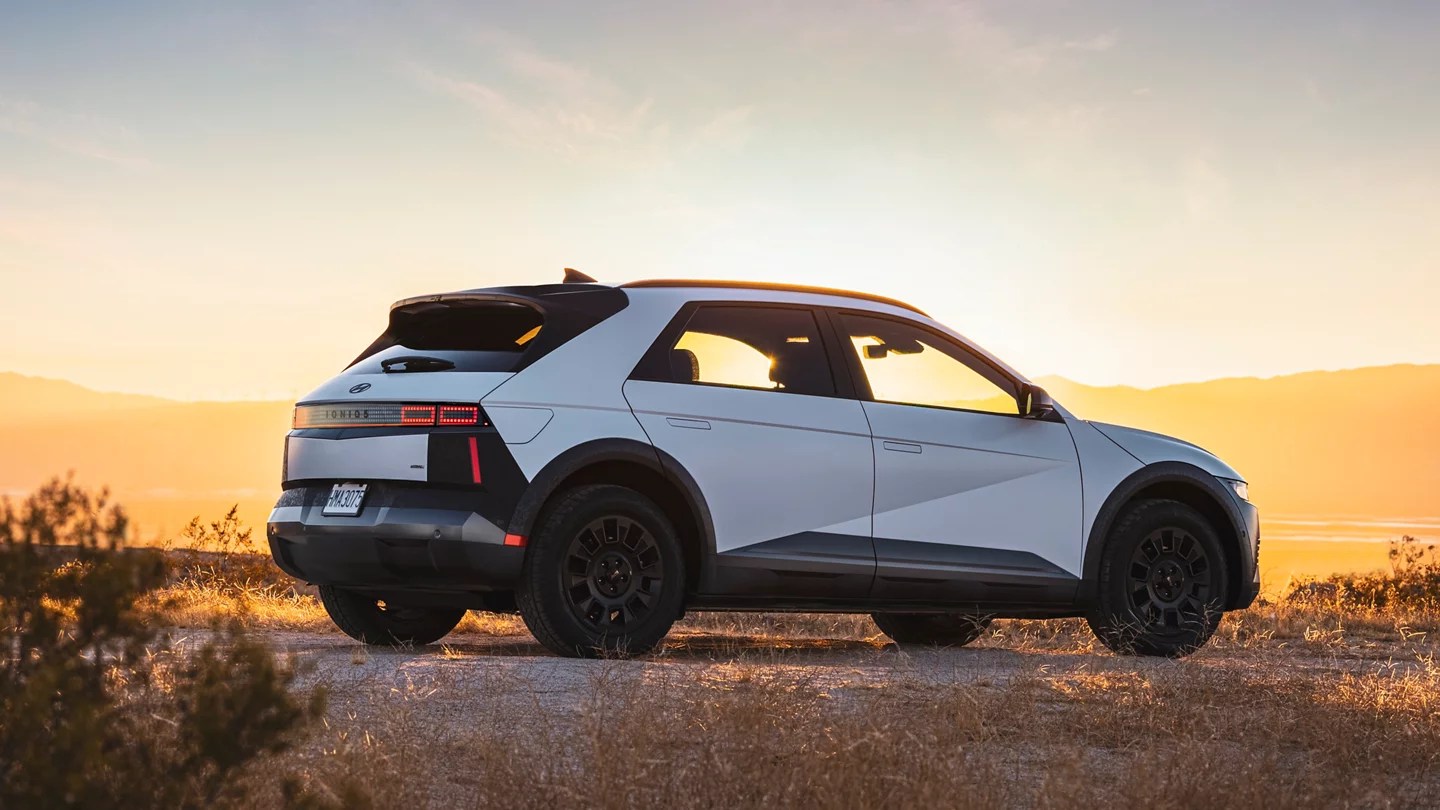
2025 Hyundai IONIQ 5 XRT. Americans eat a lot of junk food, make a bunch of bad financial decisions, go down conspiracy rabbit holes…and really, really like to think they will be heading off-road. That means even EVs have to at least put on a good show in that department, despite the fact that most of the cars never leave pavement.
The 5 is a truly great entry, and now well-established as one of the more popular non-Tesla EVs. In this trim it has a whopping 320 horsepower and AWD from two motors. The off-road is manifest in a slightly higher ground clearance and 18-inch all-terrain tires. The interior and the bumpers are ruggedized. The driver can choose from snow, mud or sand modes. All of this starts at $56,965. If you really go off the road, you may want to pay that hefty price, but for most of us there are better and cheaper iterations of this car, including with one motor. This version’s range is slightly down to 259 miles, compared to the more on-pavement SEL AWD with 266.
The more affordable 2025 5s start at $35,000 for the SE Standard Range model, increase to $37,500 for the SE RWD and continue with the SEL RWD at $39,800. Let me be clear, this is an excellent selection for actually selling EVs in America right now. Hyundai sold 19,092 Ioniq 5s in the U.S. in the first half of 2025. And it’s working. The Ioniq 5 is one of the five non-Tesla EV bestsellers in the U.S. right now.
The top seller is one of my favorites, the Chevy Equinox EV, which is affordable and long-range. More than 50,000 have been sold this year so far. Next is the Ford F-150 Lightning at 33,510, followed by the Ioniq 5, (another good one) the Mustang Mach-E with 21,785 sold, and the Chevy Blazer at 12,736.

2025 Volkswagen ID.Buzz Pro S Plus. $66,040. That was the price as-equipped for this long-awaited electric minivan. VW could have had a home run with the ID.Buzz if it a) released it about four years earlier (the design was done); and b) offered it with two rows and a much more modest price. Instead, the model was long-delayed and offered stateside as a three-row only. The thinking is plain—Americans do like three-row SUVs—but if there’s one thing this vehicle isn’t, it’s an SUV. Unlike most of our citizenry, I love minivans, and I really liked this car. But I found myself apologizing for it being both too big and too expensive. Ah well. VW can make it right by bringing over some of the models it already offers in Europe.
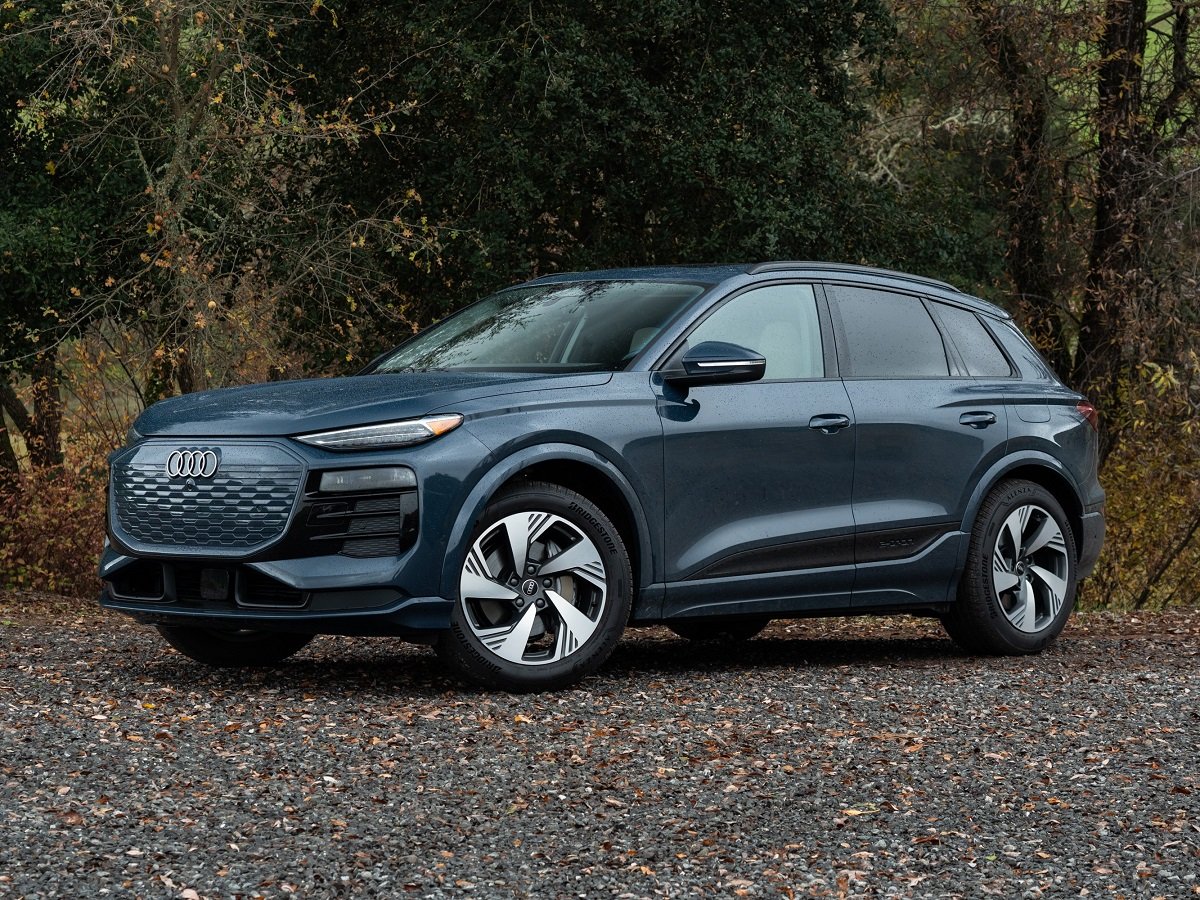
2025 Audi Q6 e-tron Prestige. The Q6 I drove in the northern California wine country is a fast and stylish electric EV, offering 322 horsepower and a 6.3-second zero to 60 time in just the base single-motor rear-drive form. Even that one is pricey at $63,800. If you want the Q6 e-tron quattro, the price goes up (not a huge amount) to $65,800. You get 456 peak horsepower, and zero to 60 in 4.9 seconds. Again, there’s a range penalty. The base version offers a best-ever from Audi of 321 miles, and the quattro runs out of juice after 307. Audi has the luxury EV base covered. It would be great if the company developed a capable EV they could sell in the low $40s. Right now, the cheapest Audi EV is the Q4 e-tron, starting at $49,800 and going up from there.

2025 Volvo EX30 Twin Motor Performance AWD Ultra and EX40 Twin Motor Ultra. Volvo and Polestar (both owned by Chinese automaker Geely) are all-in when it comes to EVs, and the cars tend to share platforms if not styling. Volvo’s EVs are stylish in a Scandinavian modern way, and also a bit pricey. The Ultra tested here has a 422-horsepower, 400-pound-foot dual motor setup, and it’s quite sprightly at 3.4 seconds to 60. There are a ton of nice features, including built-in Google infotainment, a killer Harmon Kardon infotainment system, sustainable materials used throughout (including flax and recycled plastics), and a very capable automated parking system. The range is up to 253 miles, and it can fast charge in 26.5 minutes. You can tow 2,000 pounds.
I could definitely live, every day, with this Volvo, but I don’t need that kind of acceleration or that much weight, and I want the maximum available range. The Twin Motor Performance starts at $46,195, despite plans for a cheaper single-motor version that was dropped for the American market. That EX30 would have been in the mid-$30s, and I’d have definitely considered buying one. Ah well.
 Territorial Imperatives