Kia’s All-New Telluride Showcases a Powerful Hybrid

The mid-sized crossover Telluride is a major producer for Kia, which sold 125,000 of them in the U.S. last year, up sharply from the 59,000 in the first year of 2019.  The three-row Telluride helped push Kia’s midsized market share from 3.5 percent seven years ago to eight percent now. “The Telluride casts a halo over our entire SUV lineup and our entire brand,” said Russell Wager, vice president for marketing at Kia North America.
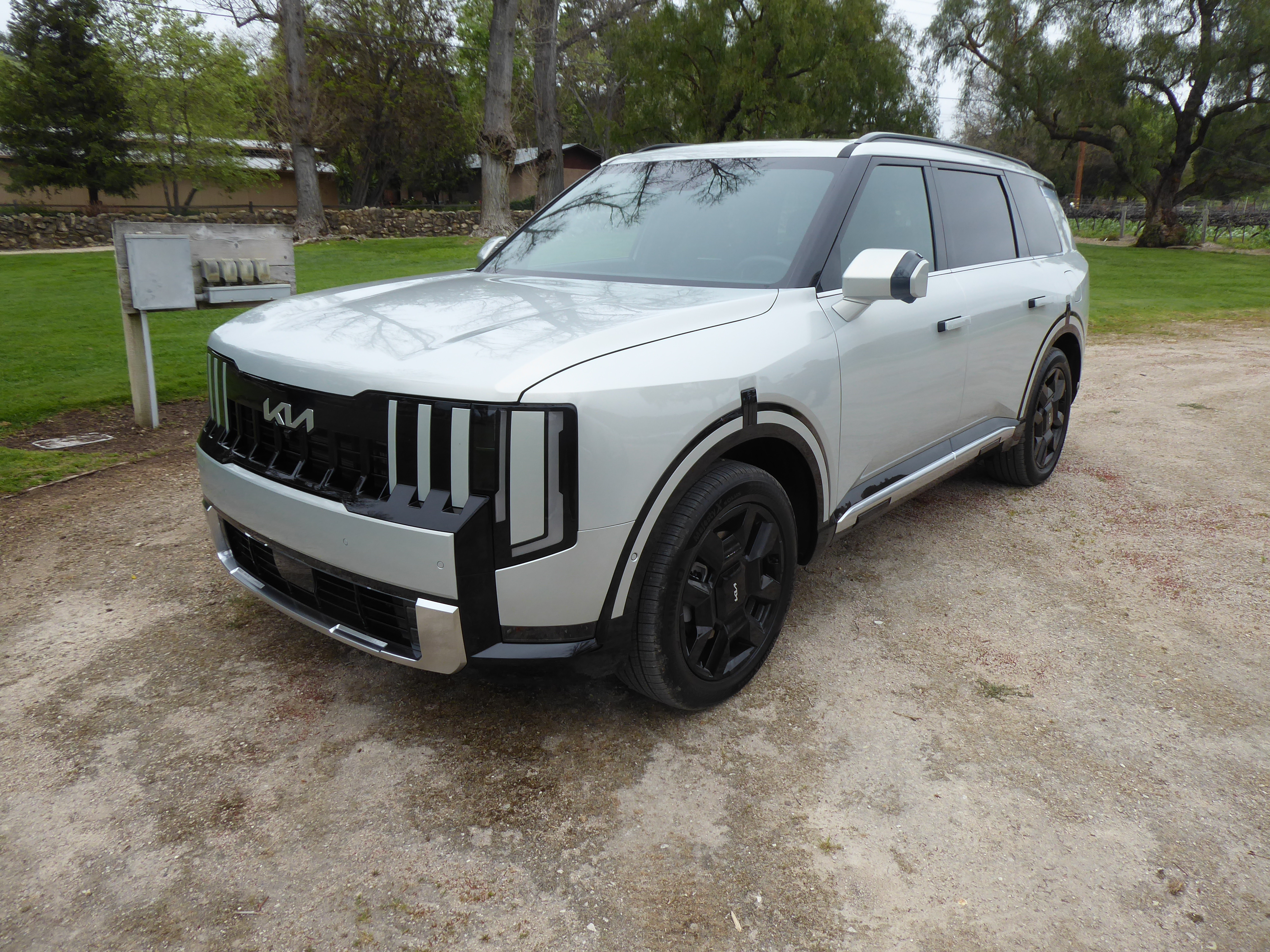
The new Kia Telluride in hybrid form. (Jim Motavalli photo)

The Telluride was completely redesigned for the 2027 model year, and that model (available both as a turbo gas car and as a hybrid) is now in showrooms. The media got its first shot at the car in Santa Barbara, California March 10.

Kia had a big year in 2025, selling 852,155 cars in the U.S., up seven percent from 2024, said James Hope, national product communications manager at the brand. The “flagship” Telluride is produced out of the brand’s West Point, Georgia plant, which Hope said is in a good position to deliver gas, hybrid and electric models as the market demands.
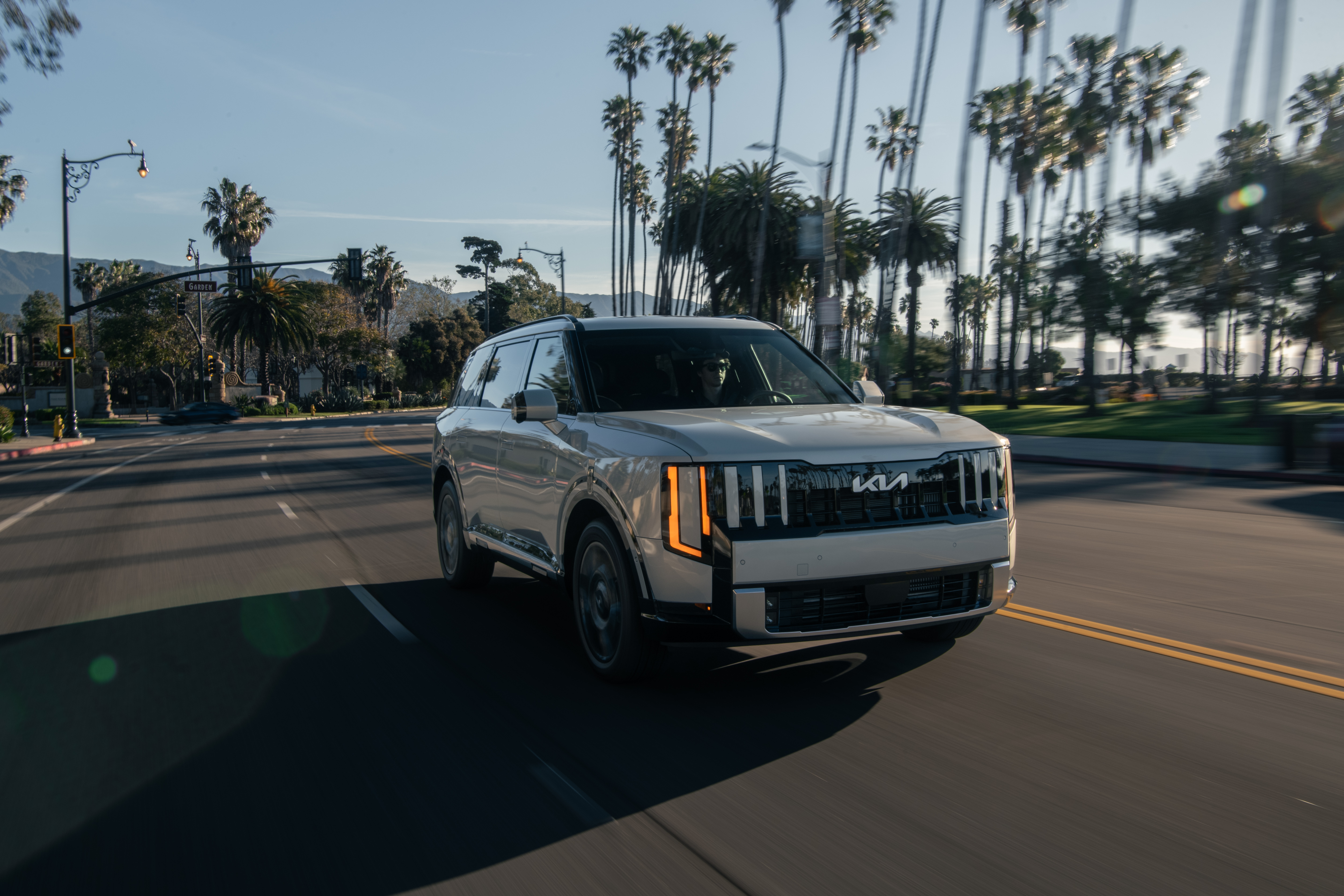
On the road in Calfornia. (Kia photo)

It’s interesting to point out that Kia actually outsold Hyundai for the first time back in January (60,794 for Hyundai, including Genesis, and 64,502 for Kia). I hadn’t realized that the two brands were actually in competition until, during the product demonstration, Kia showed a slide comparing the Hyundai Palisade unfavorably to the Telluride. The two cars are built on the same platform, but the Kia (the slide said) is more capable and comfortable, has more hybrid range, offers a real spare, tire, two wireless phone chargers, and a standard sunglass holder.

I asked about this unusual approach—which is like Chevrolet going after Buick—and was told that the Palisade is the number one cross-shopped vehicle with the Telluride. They’re going to buy one or the other, and Kia wants consumers to keep looking its way.
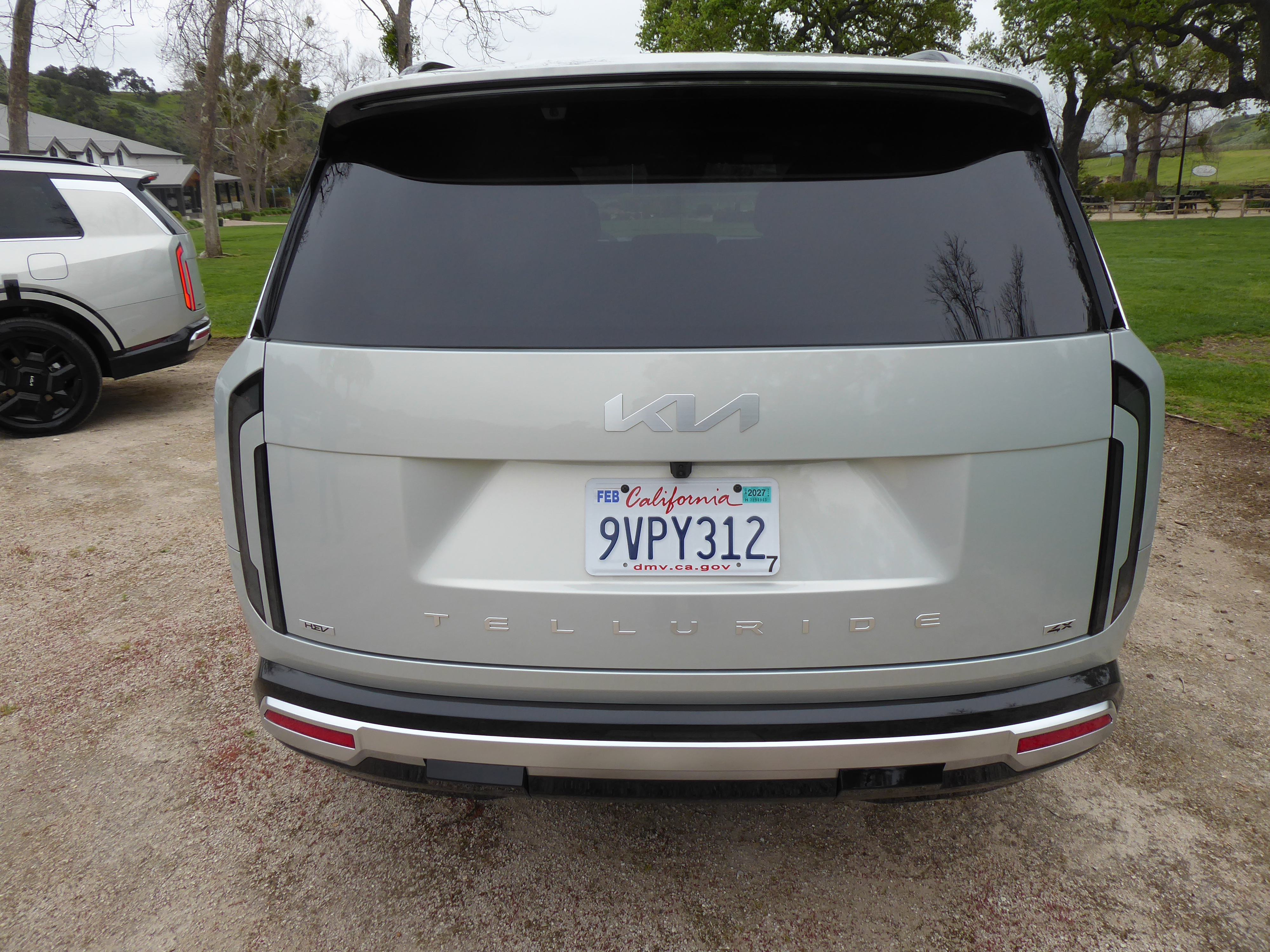
The Telluride offers up to 89.3 cubic feet of storage with the second and third row folded. (Jim Motavalli photo)

Sang Lee, group manager for product planning at Kia, said the “reimagined” Telluride was designed and is being built in the U.S., with American consumers in mind. It’s both 2.3 inches longer and more powerful, he said. Of course, SUVs were an American invention that no other country would likely have developed—though their appeal is global now.

Cargo space is increased with that longer length, to 22.3 cubic feet behind the third row, and up to 89.3 cubic feet with the two rear rows folded. Legroom in the cabin is also up.

The exterior design is very recognizably in the Kia family, though it offers unusual touches such as the twin vertical tail lamps and the non-functional black rectangles at the top of the wheel wells that are there to visually “anchor” the trim. A cool feature is the new tailgate light that not only illuminates cargo, but can change color and be adjusted for color.
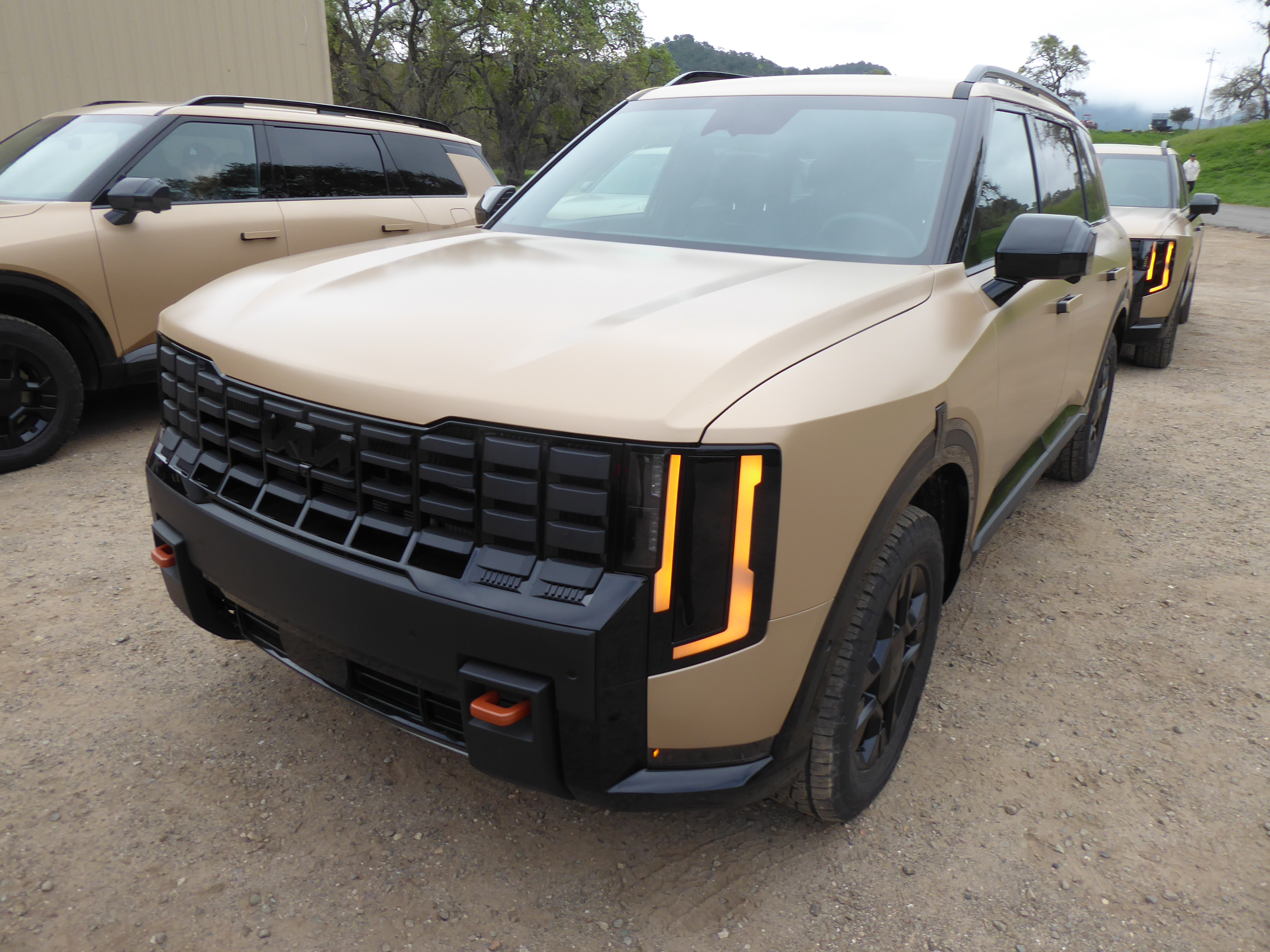
The Telluride in off-road X-Pro form. (Jim Motavalli photo)

The car we were given to drive up to the 7,000-acre Porter Family Ranch in southern San Luis Obispo County was the Turbo-Hybrid SX Prestige AWD version, starting at $56,590 (and $60,210 as equipped). The twin-electric-motor hybrid would seem to be the one to buy, because it’s not hugely more expensive than the gas car ($39,190 base versus $46,490), and it should pay for itself quickly in fuel savings because of its 35-mpg combined. The hybri offers 329 horsepower (20 percent more than the 2.5-liter turbo), and its range of up to 637 miles really trounces the standard model’s 418.  

On the hills around Santa Barbara, the Telluride really showed off great acceleration (6.3 seconds to 60), exceptional handling for such a comparatively large vehicle. It’s also very quiet in operation, and the massage seat for the driver didn’t hurt either. In the hybrid, all three rows can get heated seats. There wasn’t much to dislike.
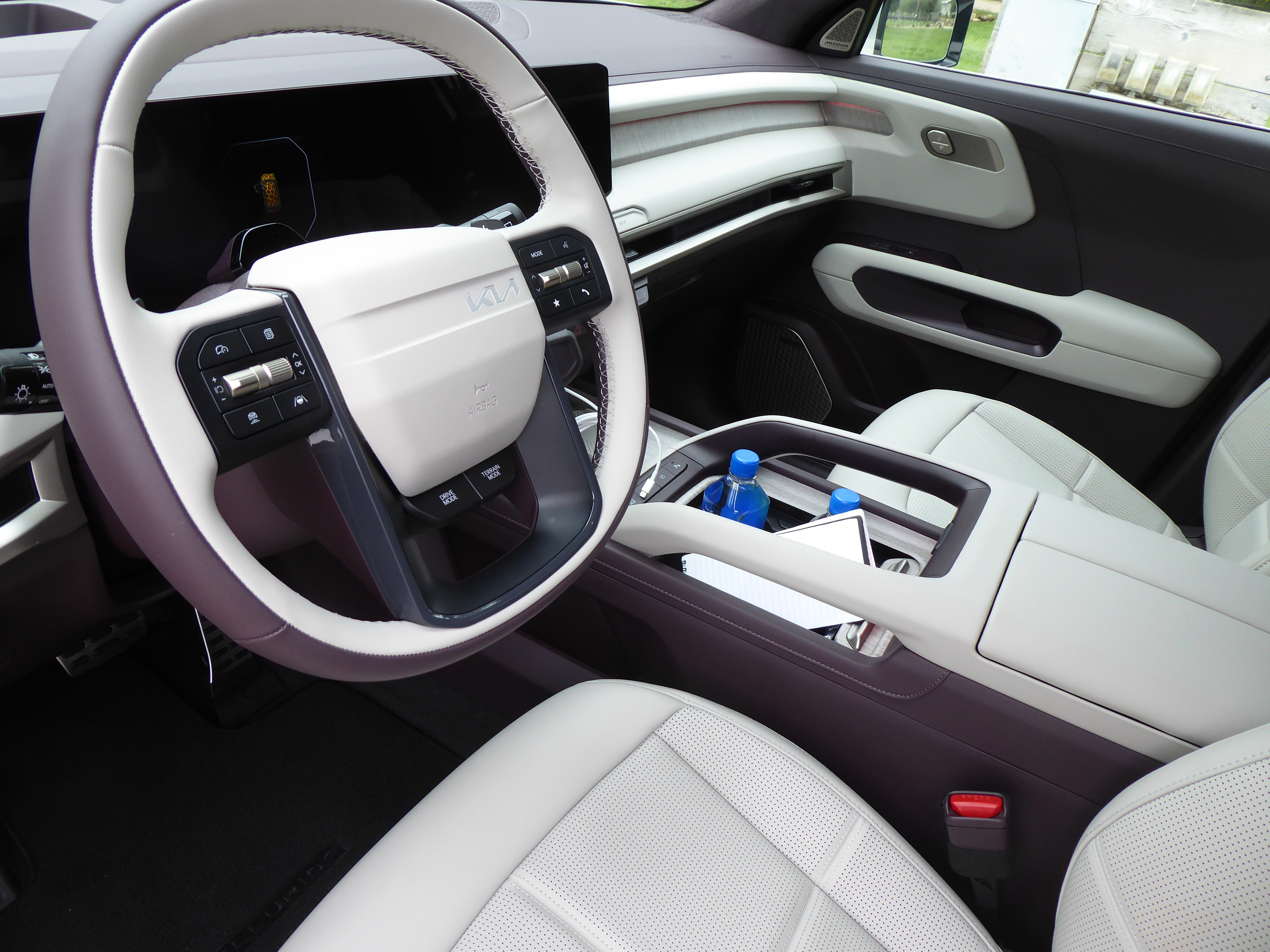
Inside the Telluride. (Jim Motavalli photo)

Later in the day, we took the rugged X-Pro model off road at the ranch. Though most owners will never ford streams or go nearly sideways (as we did) up hills, it’s nice to know it can be done. The car offers “mud mode,” which proved very useful, as did the forward-facing camera when it was impossible to see over the hood. Kia doesn’t break out X-Pro sales, but they’re probably significant. Even drivers who never go off the beaten path aspire to do so—or maybe they just like the image.

Living obstacles on the course were provided by herds of black cows, who are provided free range of the property. A California ranch is probably about as good as it gets for cows.

 Kia is likely to sell scads of these new Tellurides, and is already doing so, to buyers whose average age is 46. I’m not sure it’s actually hugely better than the Hyundai Palisade, but the rivalry is probably keeping both Korean brands sharp and focused.

Lucid Aims for Profits from “Radical Efficiency,” Out-Front Autonomy, and a Plethora of New Models

At a well-attended session for investors in lower Manhattan March 12, Lucid Motors did its best to paint a portrait of a company that—while it has not yet made money—is nonetheless on a trajectory to do so, with a range of compelling projects (including affordable ones), big autonomy plans, and a stringent “radical efficiency” ethos.

Lucid showed off Lunar, a robotaxi prototype that depends on Level 4, which the company says it will have in 2029. (Jim Motavalli photo)

Taoufig Boussaid, Lucid’s chief financial officer, said the company “is at the end of a cycle where we have been investing heavily, a period of cash burn. Now we’re in the cycle in which we’ll be harvesting the fruits of the investment.”

Erwin Raphael, senior vice president of global revenue at Lucid Motors, described the financial situation another way, saying Lucid, financed by Saudi Arabia’s Public Investment Fund to the tune of $9 billion so far, is “at the bottom of what we call the Trough of Disillusionment.”

Boussaid predicted the company would reach profitability, or what he called “positive free cash flow,” late in the decade. The elements that will make it happen include a new midsized model, the Cosmos, another to-be-revealed midsized model called Earth that shares a lot of parts, a third (unnamed) vehicle on the same platform, robotaxi deployment, new global markets added, and a high priority on reducing expenses. “We’re going after every dollar,” he said.

Lunar’s interior lacks pedals and a steering wheel. (Jim Motavalli photo)

Derek Jenkins, Lucid’s design and brand senior vice president, said the Cosmos is for “upscale nurturers,” and the presumably sportier Earth for “trendsetting achievers.”

Lucid cars have been fairly expensive (the Air starts at $72,400, and the Gravity SUV at $81,550). but the company will be competitive if it indeed brings the Cosmos (and then the Earth) in under $50,000.

The Gravity robotaxi is scheduled for Uber deployment by the end of the year. (Jim Motavalli photo)

The Cosmos was designed to cut costs to the bone, using a new drivetrain called Atlas that reduces total part content by 30 percent compared to previous models. It also has 40 percent greater power density, said Emad Diala, senior vice president of engineering and software autonomy. He really got into the weeds: The car will use steel stampings, aluminum casting and giga-casting in a secret sauce, and have 65 percent fewer joints than Gravity.

The Cosmos is also expected to get 4.5 miles out of a kilowatt-hour of electricity, and add 200 miles of range in 14 minutes. Zero to 60 will be achieved in 3.5 seconds. Lucid will produce Cosmos cars at its new under-construction plant in Saudi Arabia, and also at the home manufacturing base in Phoenix.

Interim CEO Marc Winterhoff said the Cosmos will have a lower bill of materials (BOM) than the coyly identified “Chinese competitor that everyone is talking about,” and will also beat out a “U.S. EV leader’s midsized CUV.” He promised “comparable cost [to those cars] with longer range [approximately 300 miles],” and said the forthcoming Earth will look very different from the Cosmos, despite being similar under the skin, and “will address different customer segments.”

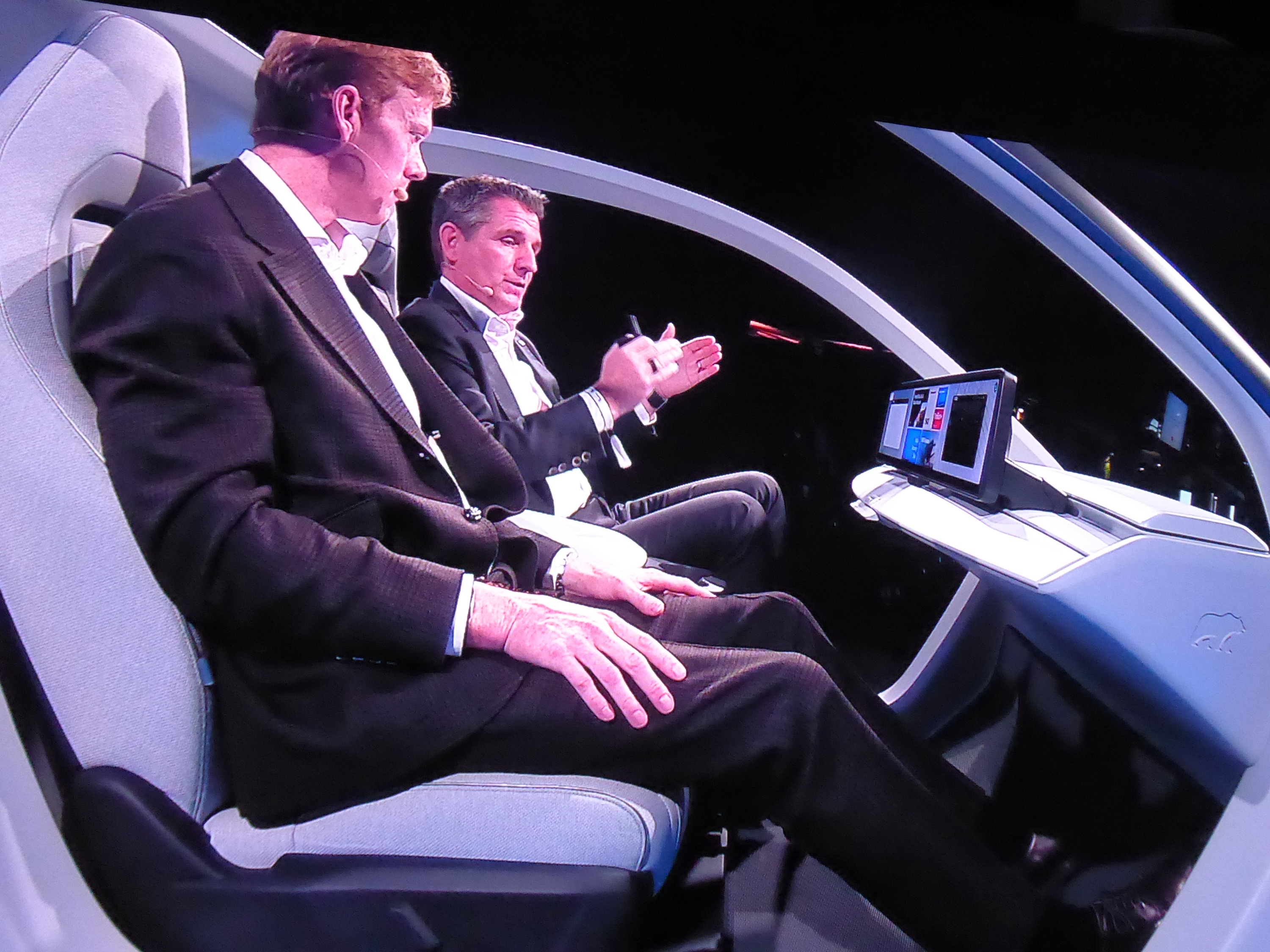
Uber’s Andrew MacDonald (left) in the Lunar with Marc Winterhoff, Lucid’s interim CEO. (Jim Motavalli photo)

Winterhoff showed off the robotaxi version of the Gravity, a partnership with Nuro and Uber, at CES in January. In Manhattan, Lucid brought in Uber President and Chief Operating Officer Andrew MacDonald to issue a progress report. Approximately 80 of the robotaxis have been delivered for Uber’s testing, and they should be taking paying customers by the end of 2026.

“Uber is the largest mobility platform in the world,” MacDonald said, “and with Lucid’s autonomous vehicles our trips will be much safer and help us realize true mobility as a service.” Lucid, he said, is “going about autonomy the right way, though there are still edge cases to be worked out.”

In New York, announced that it would be offering its DreamDrive Pro Level 2 plus autonomous software for $69 to $199 per month—another revenue source! Lucid also unveiled a smaller and more fanciful (no doors) robotaxi prototype. Lunar seats two abreast and lacks a steering wheel, pedals and other features associated with driver control. It sits on the Midsized platform, also, but any actual production version would be dependent of Lucid fully developing its Level 4 autonomy.

Speaking of that, Kai Stepper, vice president of autonomy and ADAS, showed a timetable that had Lucid developing point-to-point autonomy (L2++) this year, Level 3 in 2028 and Level 4 in 2029. Lucid has invested $500 million in autonomy, which it said is a bargain compared to the billions other companies have shelled out. It’s that radical efficiency they were talking about.

It was in that context that Lucid showed off the star of the event, Lunar, a prototype robotaxi that seats two and is designed for full autonomy, minus a steering wheel, pedals, or anything else you’d need to actually drive it old school. It’s not actually slated for production, but if Stepper’s timetable is accurate it could be viable in 2029. And it’s yet another Lucid built on the Midsized platform.

The Sun Shines on the Amelia Island Concours d’Elegance 2026

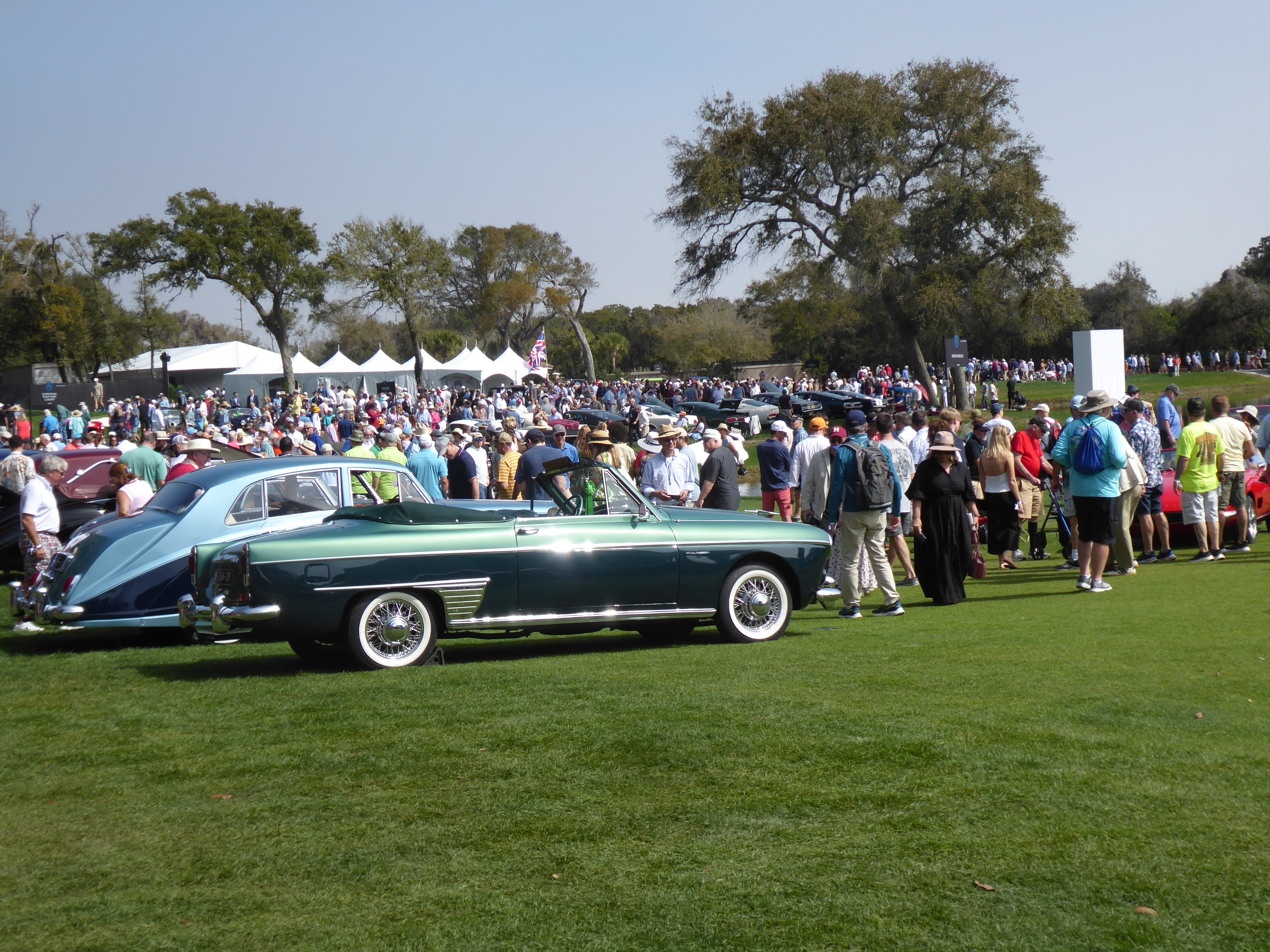
The weather can be iffy at the Amelia Island Concours d’Elegance in north Florida, but this year (the 31st)it was sunny—and hot. The sun reflected off all the shiny paint and chrome to make a feast for the eyes, and when the cars got started, ears, too.

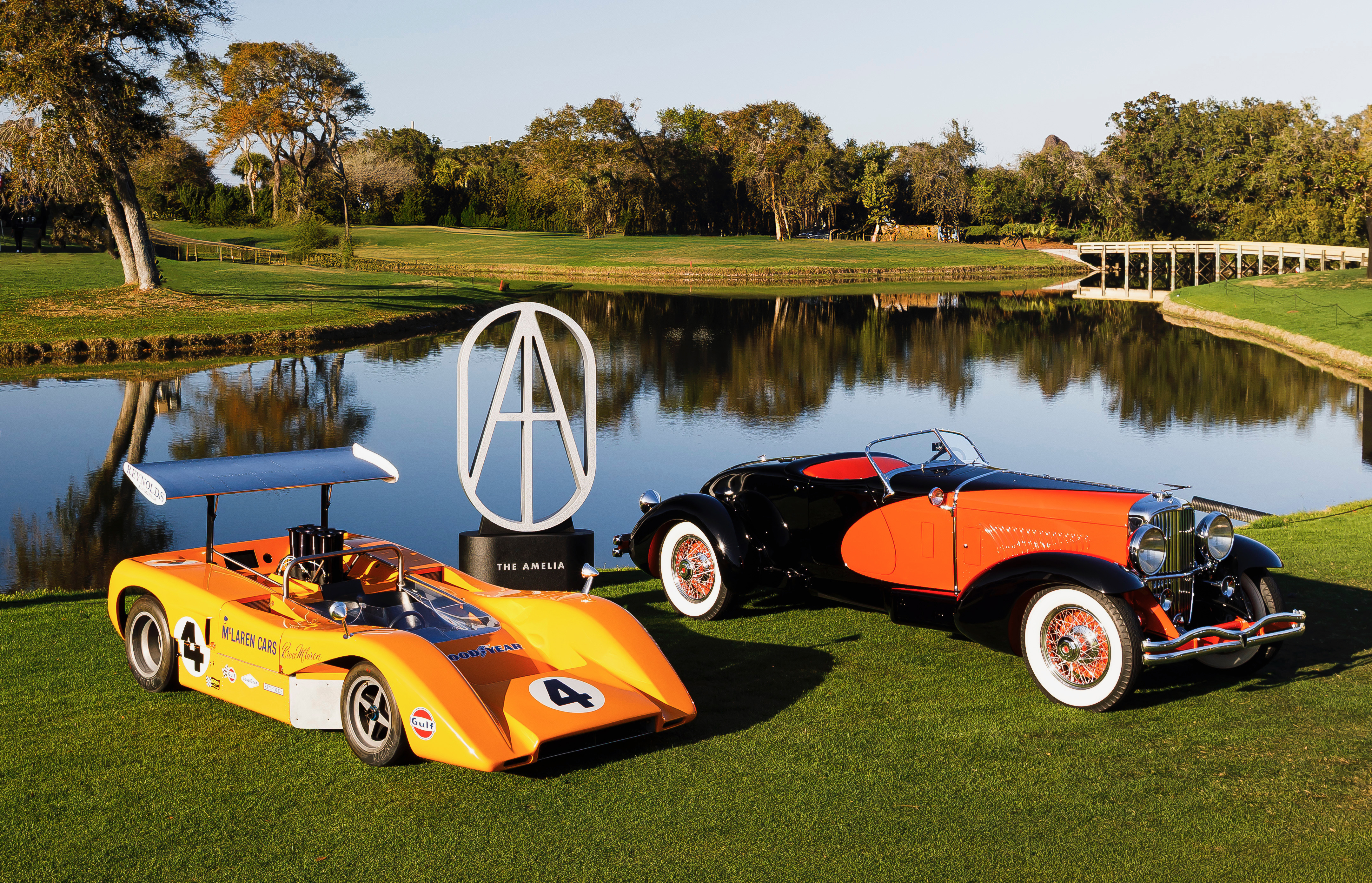
There were an estimated 250 collector cars on the field. Best in show on the concours side was a boldly orange-and-black 1931 Duesenberg Model J “Tapertail” Speedster by Weymann, and on the sport side it was a race-winning 1969 McLaren M8B.

One of the features this year was a collection of one-off cars assembled by Barn Find Hunter Tom Cotter (who’s own 289 Cobra was on the field in bare metal, awaiting paint). The assembled cars included a plethora of models that were either the only one left, the only one made, or one of a tiny handful, so let’s skip over the more commonplace entries.

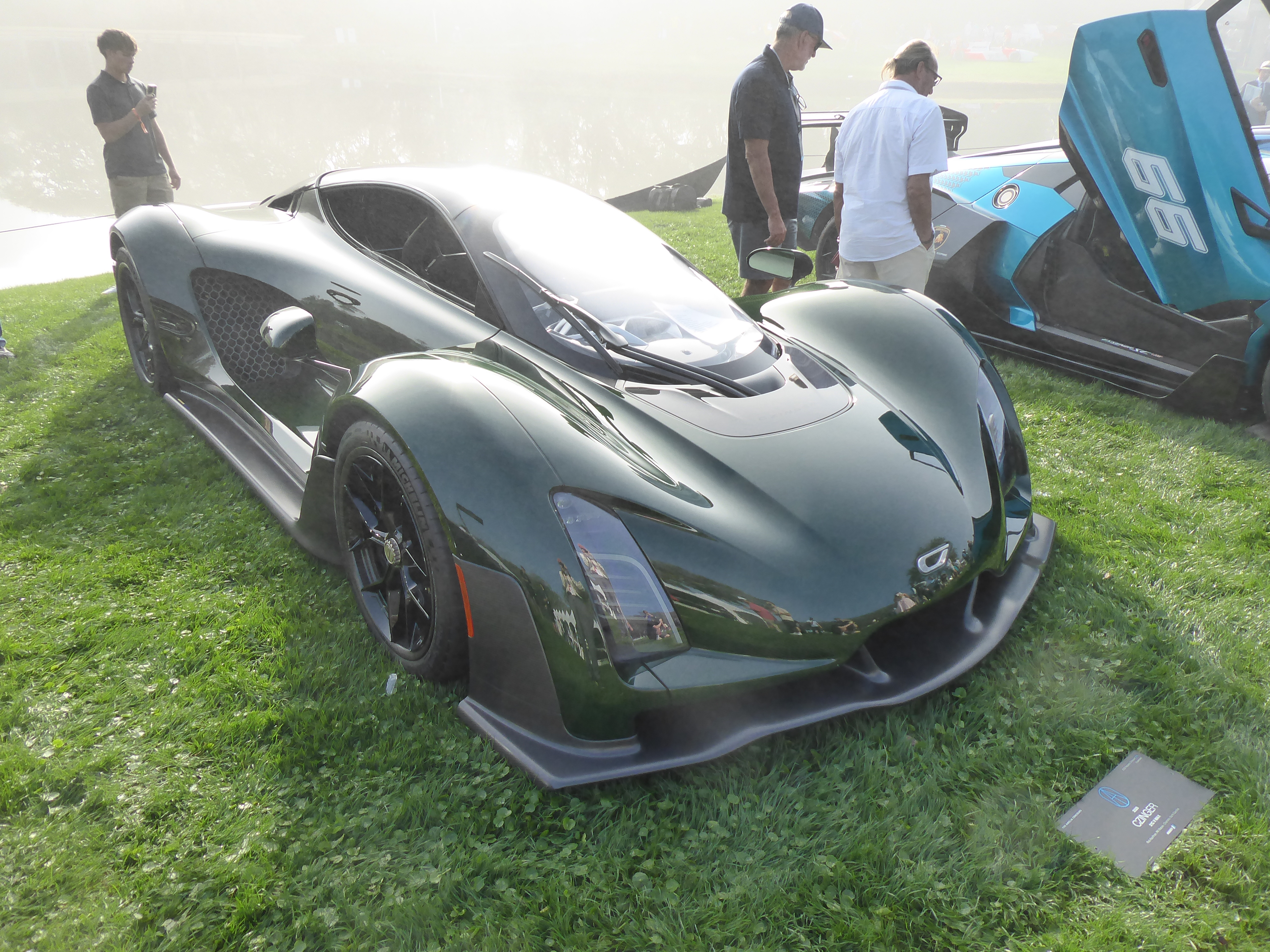
2025 Czinger 21C V MAX. Kevin Czinger started out making an electric car, the Coda, then graduated to revolutionizing manufacturing with 3D printing. And as an attention-getter, he also builds hypercars, such as this unusual tandem-seated, carbon-fiber-bodied space capsule with 1,250 horsepower from a hybrid drivetrain featuring a 2.88-liter twin-turbo V-8 and sequential-shifting seven-speed transmission. Just 80 are to be made, and sold for $2 million and up. Rev it to 11,000 rpm! The green carbon fiber was amazing to see.

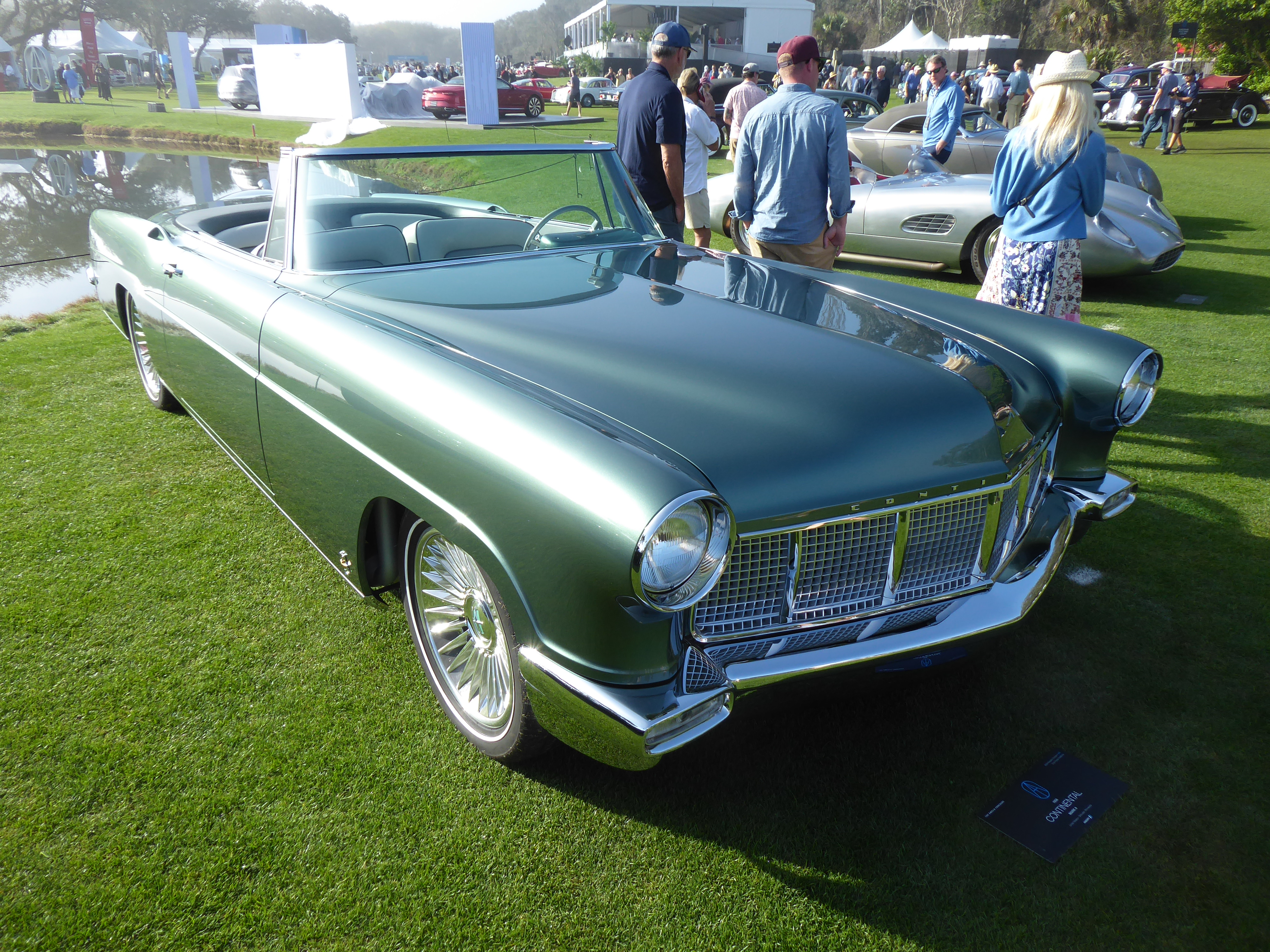
1956 Continental Mark II convertible by Chip Foose. If you didn’t know the history of the Mark II, this car would probably look totally normal. There never was a convertible, but creator Chip Foose made this one appear to be a factory original. Not having any provision for an actual top might be a problem for some, but let’s assume it’s for fair-weather fun.

Says Foose, “This Continental represents what I love most about automotive design, respecting heritage while exploring what’s possible. Every line, every surface and every component was reconsidered to create something that feels both familiar and completely new. With BluePrint’s LS-compatible crate engine under the hood, it also has the performance to match its presence.”

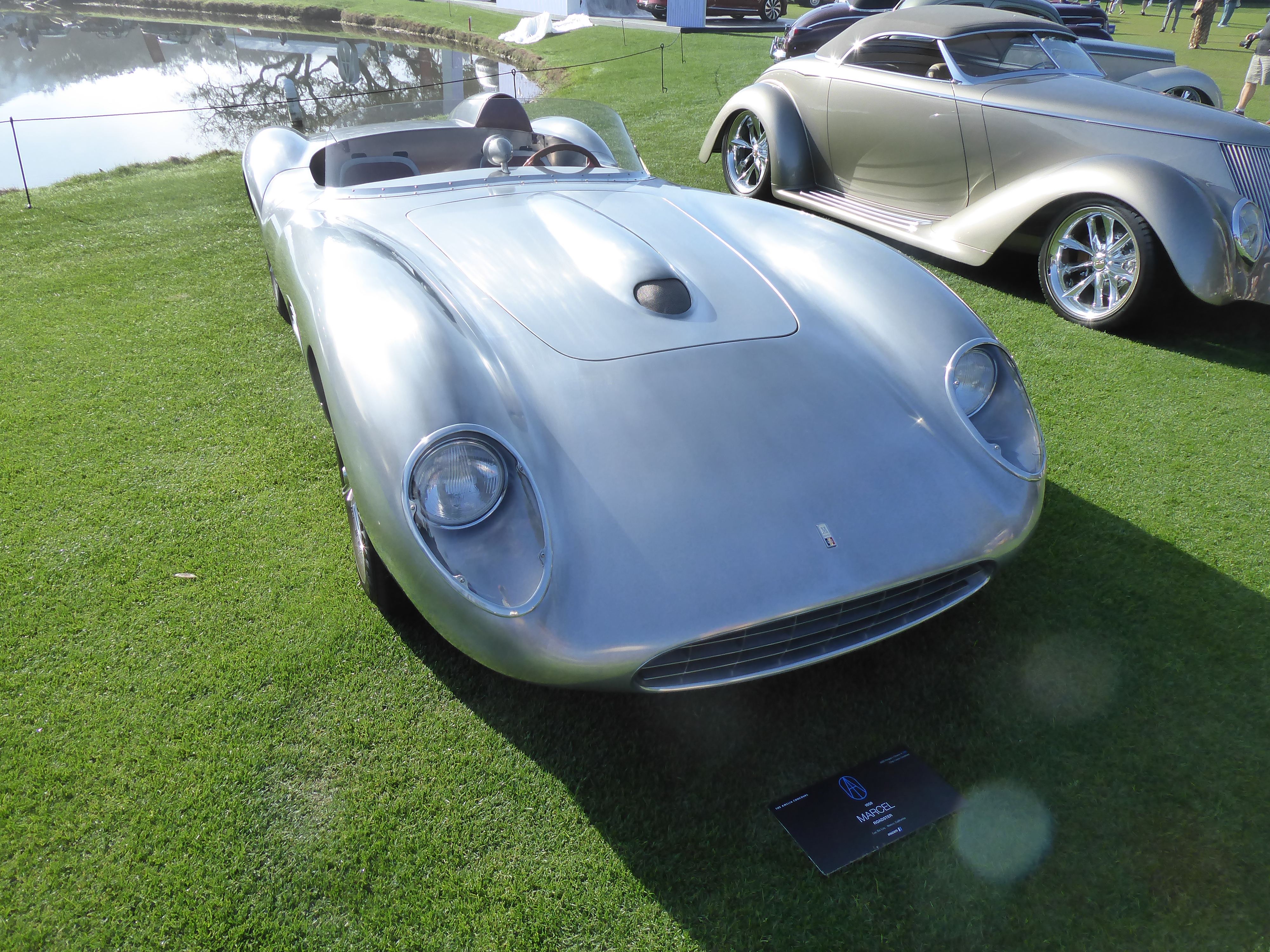
1959 Marcel Roadster. “A lot of one-offs here,” said a busy photographer. The car isn’t actually from 1959, though it looks the part. It was created by panel shaper Luc De Lay, son of Marcel De Lay of Marcel’s Custom Metal, with help from the ubiquitous Chip Foose. De Lay was inspired by late-50s Ferraris, Maseratis and Astons. Under the hood is a GM small-block LS3, mated to a Tremec six-speed manual. It should handle better than those legendary ‘50s cars, because it has modern four-wheel independent suspension, four-wheel discs, and cast-aluminum knock-off wheels. “It’s a driver,” De Lay says.

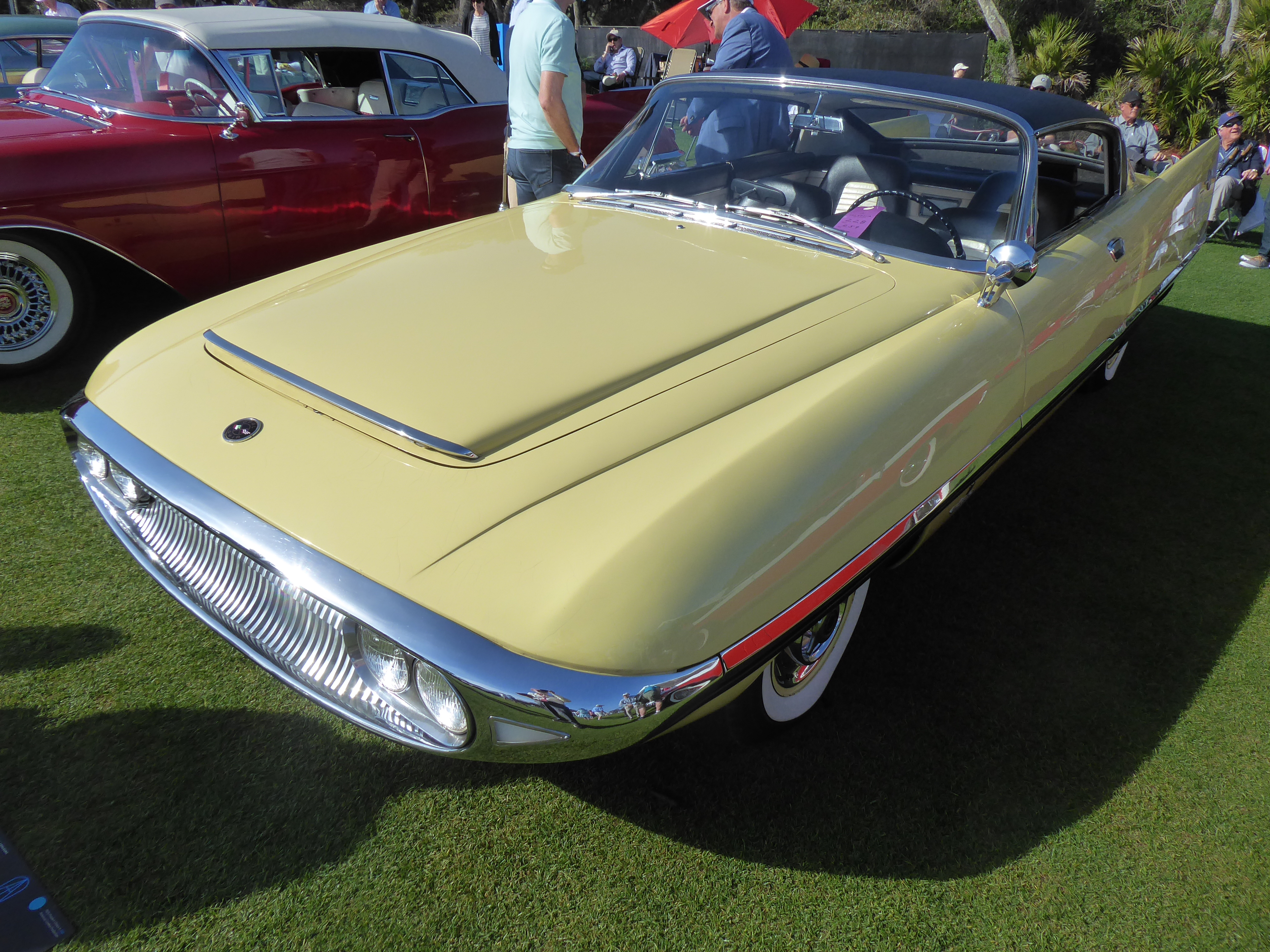
 1957 Chrysler Superdart 400 (above) and 1952 Ghia Styling Special. These are both American cars with Italian Ghia design, the former inspiring the Rat Pack’s Dual Ghia. Indeed, Dual Motors bought the Superdart and displayed it in 1958 under its own name. Of the pair, I prefer the cleaner-styled 1952 car.

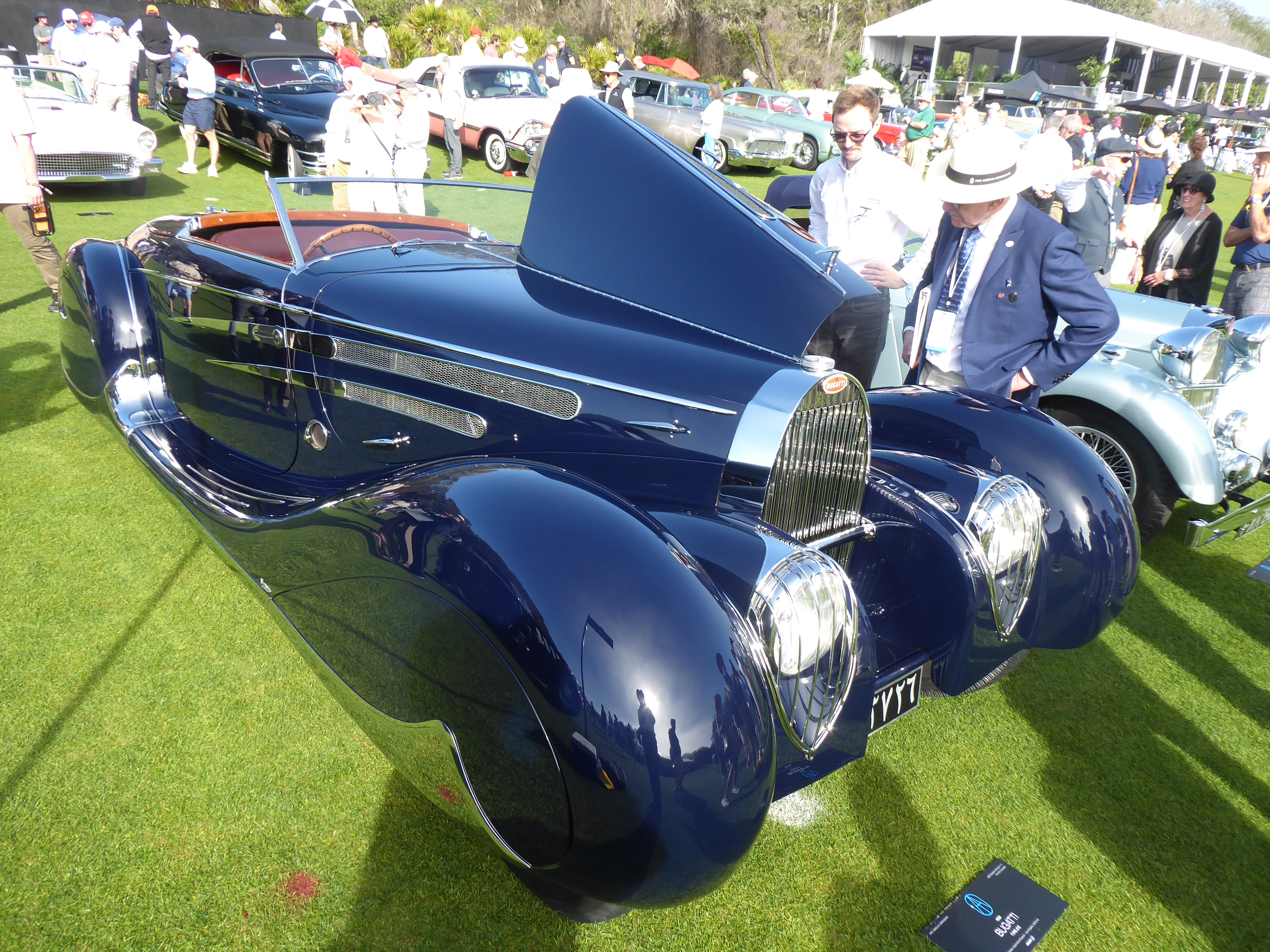
1939 Bugatti 57C. This was my nominee for best in show, with styling that borrows much from French coachbuilder Figoni and Falaschi (but is actually the work of fellow French firm Vanvooren). This car was a gift from France to the first Shah of Iran, Muhammed Reza Pahlavi upon his wedding, and kept in that country until 1959, when it sold, in derelict condition with an American V-8, for the remarkable sum of $275. It’s currently the property of the Petersen Museum in Los Angeles, and collections technician Casey Van Houten told me, “I’m just glad it made it here and is now safely on the field.”

The Bugatti was fully restored in the 1980s, and it’s holding up quite well. Among the car’s features are extreme Art Deco styling with four-wheel spats and lots of chrome plating, a supercharged 3.3-liter engine, a retractable windshield, and much more.

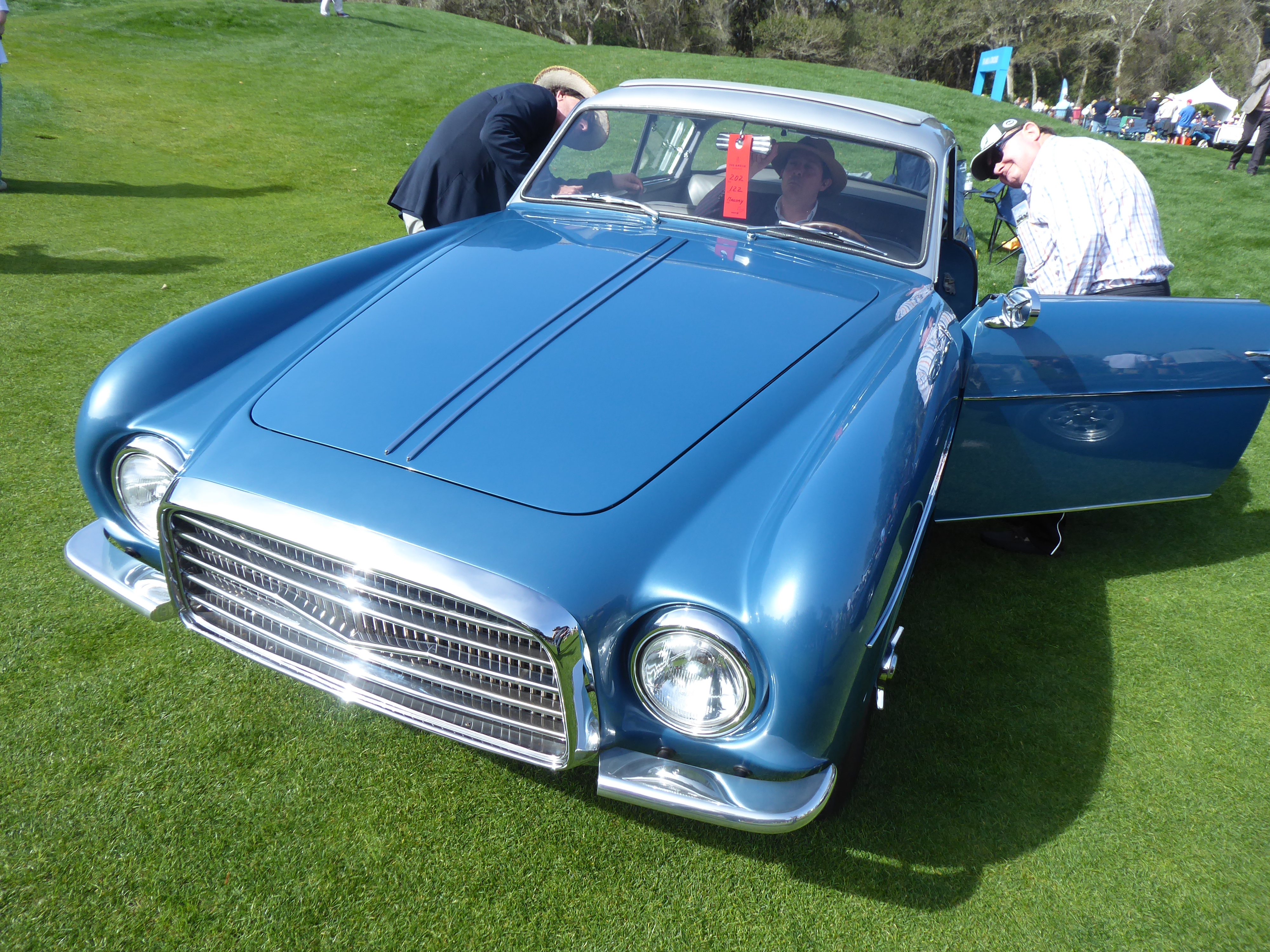
1957 Bill Frick Special GT Coupe (with sunroof). Under the skin of this Vignale design by Giovanni Michelotti (with early 50s Ferrari inspiration) is a “Studillac,” a Studebaker chassis with a contemporary Cadillac V-8. Frick built only two coupes and a cabriolet with this Ghia bodywork, and this is the only one sold to a customer—who specified the sunroof.

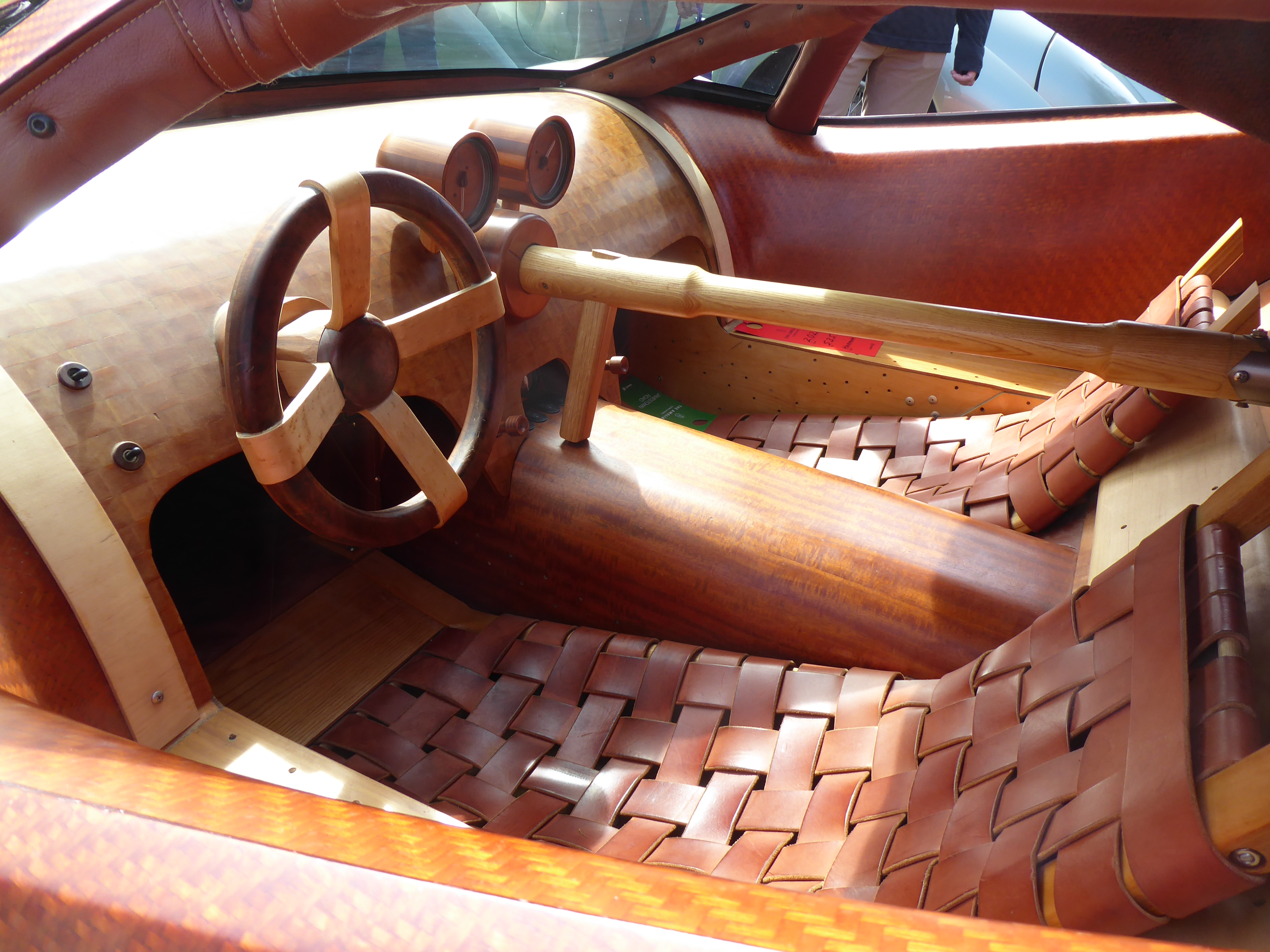
2008 Harmon Splinter. Never was so much effort expended on something so ghastly. The Splinter is, as the name implies, made of wood, including the wood veneer cloth body, the wheels, the instrument pods, the uncomfortable-looking seats. Joe Harmon was a 28-year-old graduate student at North Carolina State when he thought of building a wood supercar for his master’s thesis. “I wanted to show that wood isn’t an antiquated, low-technology material,” he said. Indeed, the worksmanship is first class throughout, but the whole car, well, termites would love it.

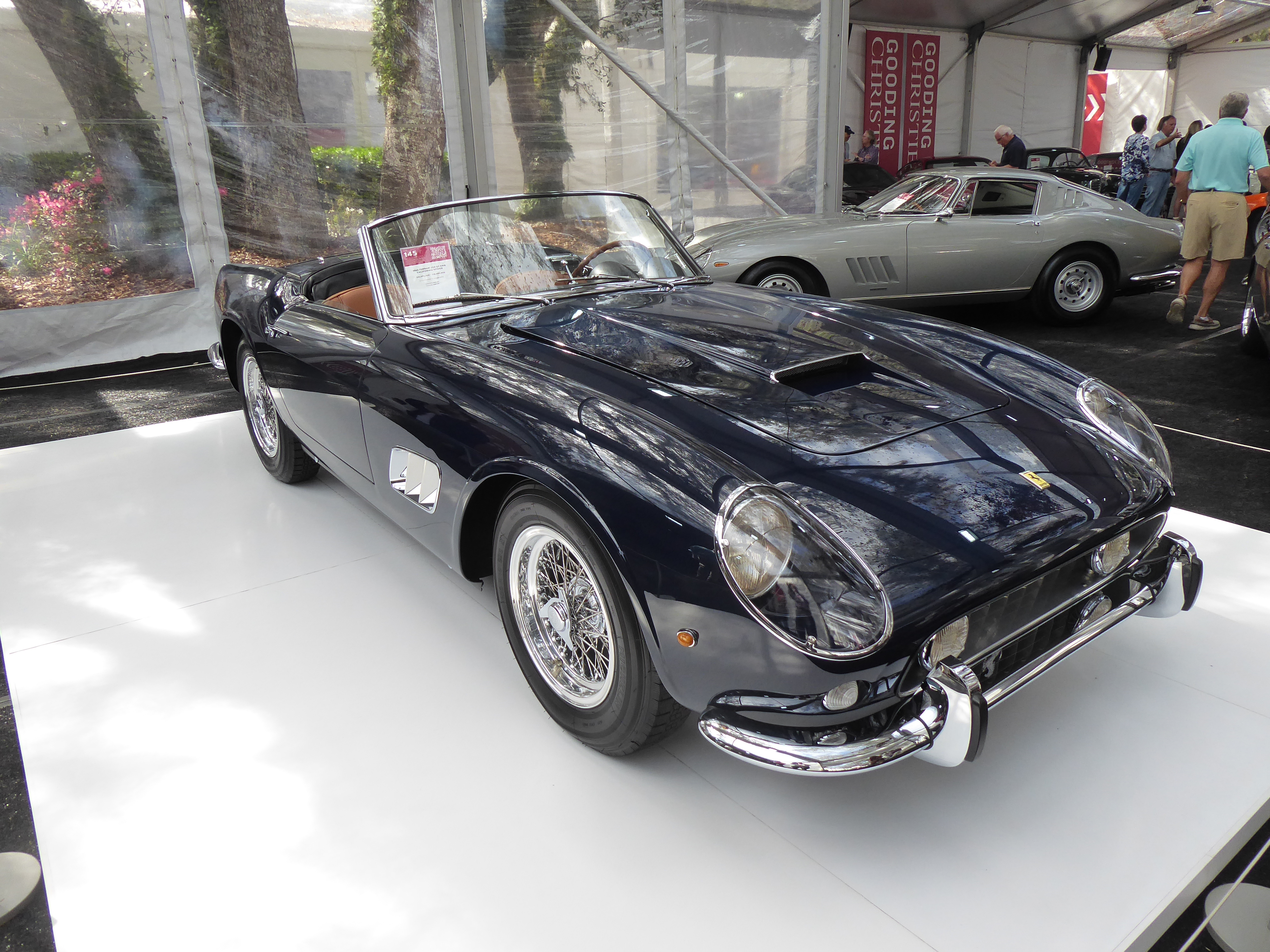
I looked over the inventories at both the Gooding Sotheby’s and Broad Arrow auctions. At the former, the star of the show, a 1960 Ferrari 250 GT SWB California Spyder, was estimated at $16 to $18 million, and actually sold for $16,505,000. Last year at Pebble Beach, a 1961 example of this model sold for a record-breaking $25,305,000. Are the higher-end Ferraris coming down in the world?

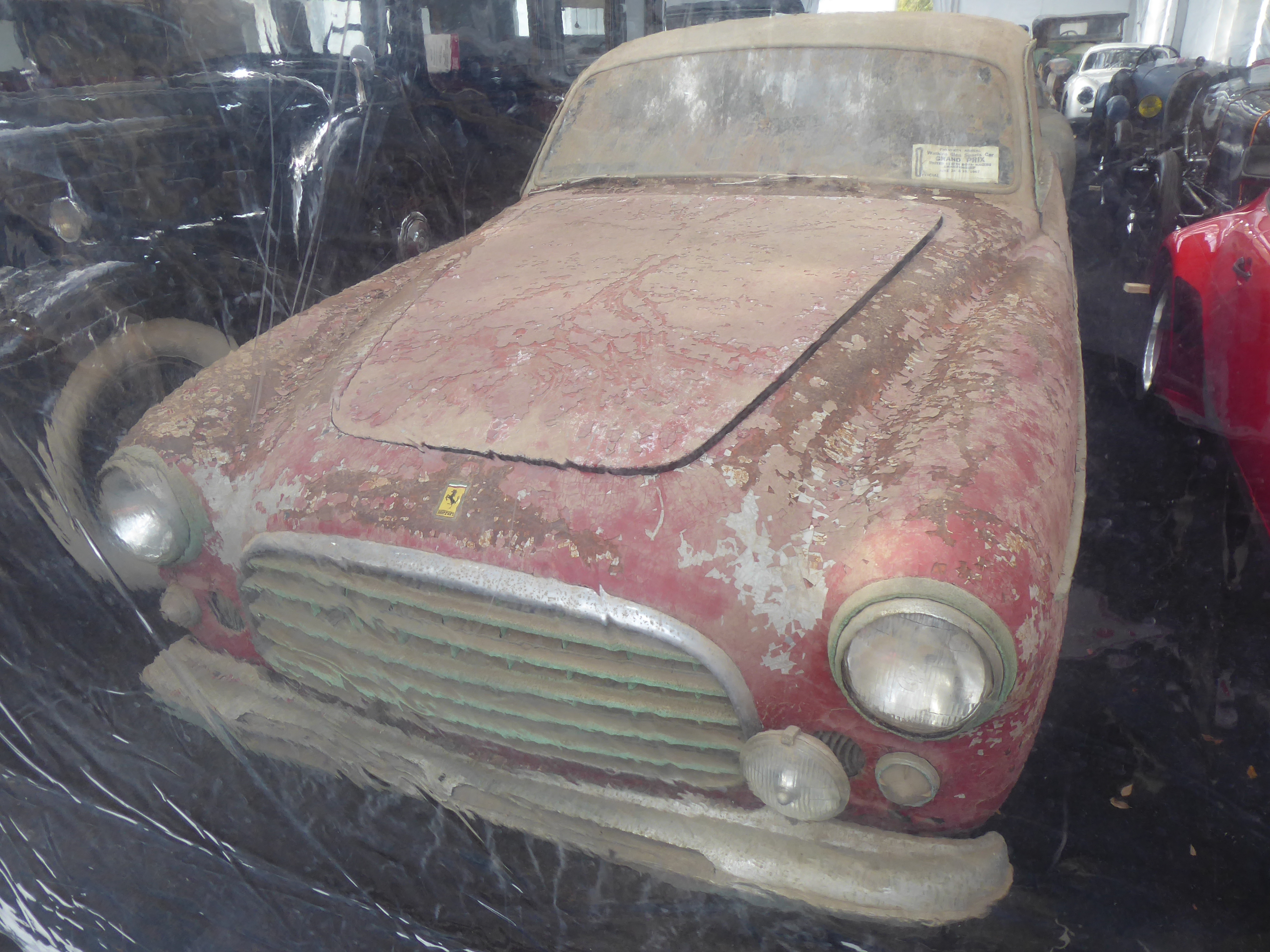
But I found myself looking for the barn-find 1951 Ferrari 342 America coupe long dormant in upstate New York. I finally found it in the just-sold, no-go purgatory tent, and took a photo through the plastic. It is the only such car bodied by Ghia, one of just seven of the model, and sported a sticker from the Watkins Glen Sports Car Grand Prix in 1967. Although this example needed just about everything, it certainly had patina in spades. It sold for $480,000, according to the guard on duty, which is a lot less than the $900,000 to $1.2 million estimate.

At Broad Arrow, the auction take was $107 million. A single-owner 2003 Ferrari Enzo brought $15,185,000 for the top sale, and a center-of-attention 1972 Lamborghini Miura P400 SV, in the same American hands for 50 years, made $6,605,000, far over it $3.5 to $4 million estimate.

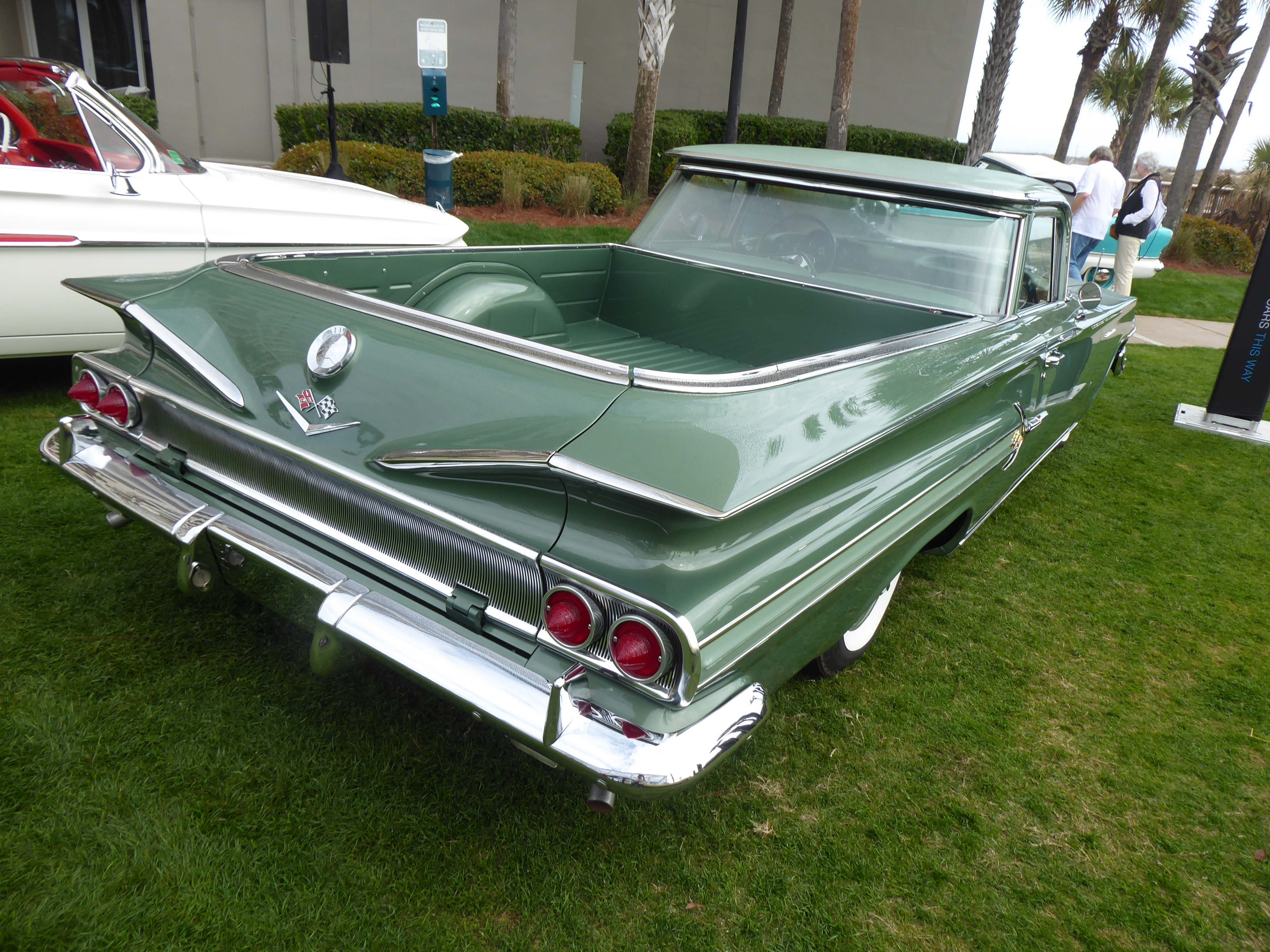
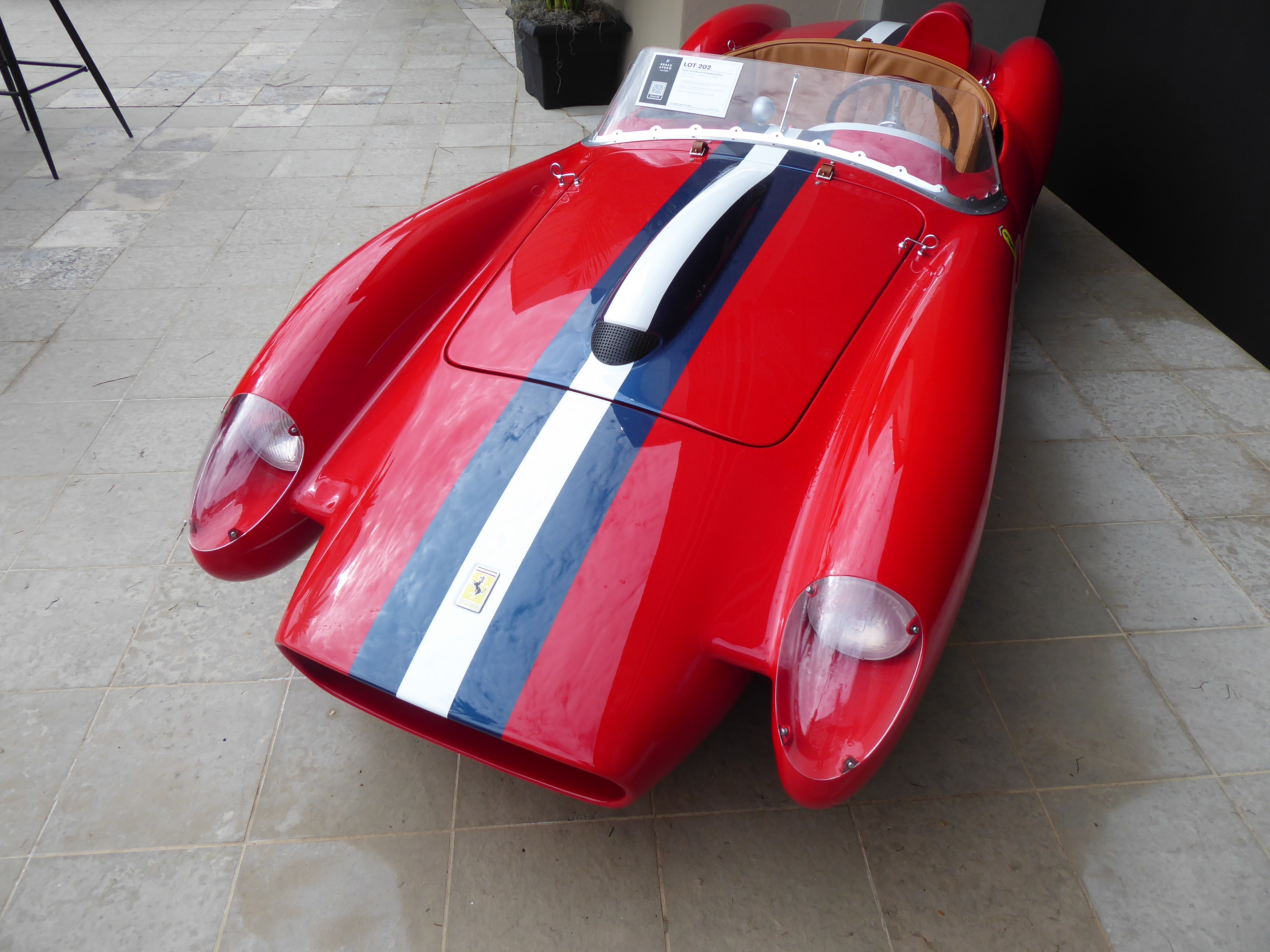
At the Broad Arrow preview, my attention was caught by a beautifully restored green 1960 Chevrolet El Camino, estimated at $90,000 to $140,000. “That thing’s older than we are,” a young(ish) couple said. And how about a tiny child-sized electric Ferrari Testarossa by Hedley Studios ($150,000 to $200,000 estimate)? The lucky kid would luxuriate in 50-mph capability, a leather interior and full instrumentation.

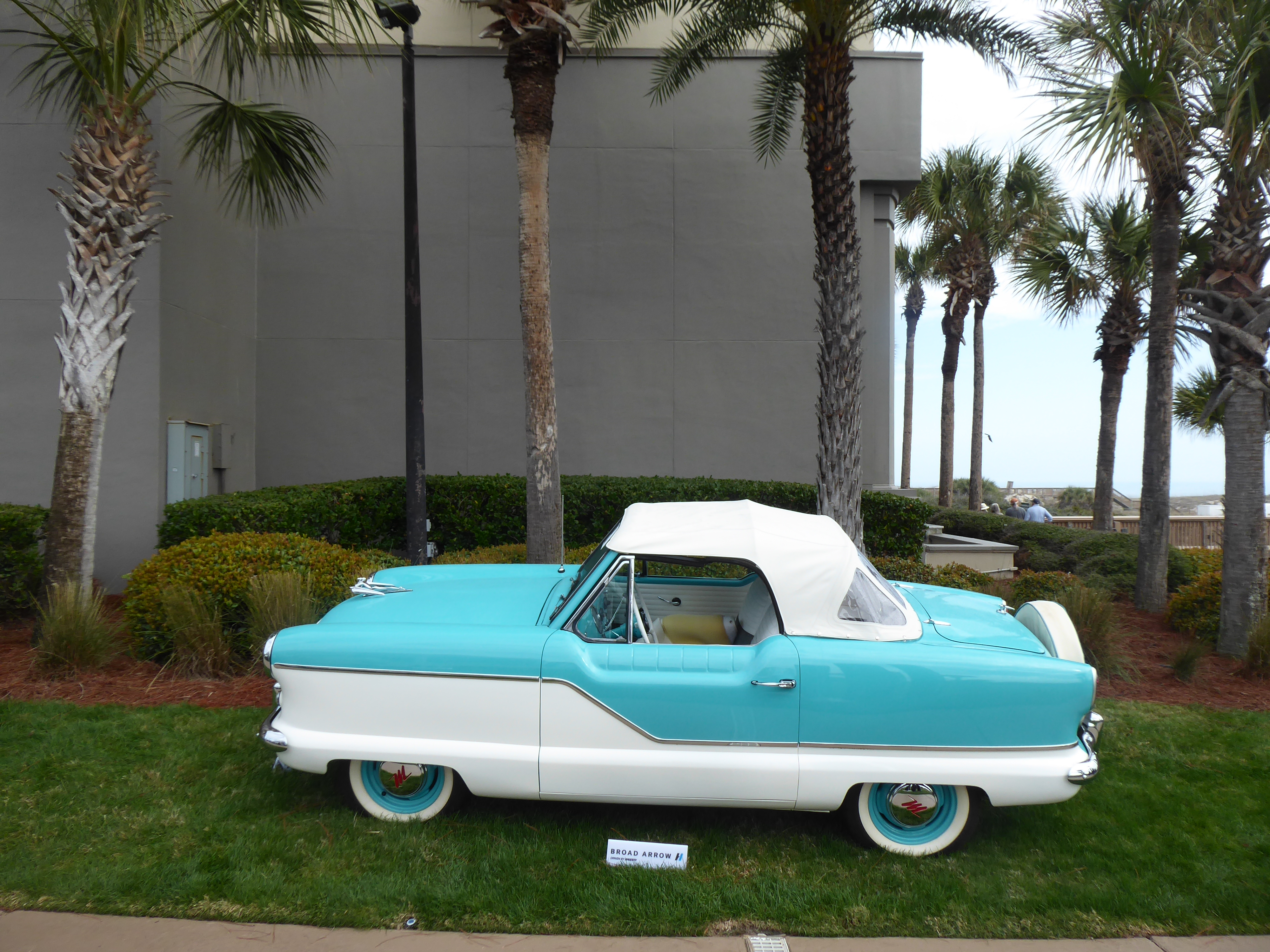
 And a 1960 Nash Metropolitan made a nice photo against the wall of the Ritz-Carlton, with evocative palm trees to complete the picture.