This batch of new cars is all foreign, German, Korean and Japanese. And they’re quite diverse, proving that in many ways the overseas auto manufacturers have adopted very well to American buying patterns. If we want big trucks and SUVs, they’ve got them—in reliable, well-built form. Sporty cars, too.
2024 Volkswagen Taos SEL 4MOTION. This is a small built-in-Mexico SUV based on the MQB platform. The SEL 4MOTION uses a 1.5-liter turbo four-cylinder engine coupled to a seven-speed DSG automatic. It produces a modest 158 horsepower with 184 pound-feet of torque. It’s no ball of fire on the road, but I don’t expect practical crossovers to be race cars. These powertrains are usually fairly fuel-efficient, and the VW offers 27 miles per gallon combined, with a decent 32 on the highway. It’s got good crash scores, and was $35,260 as driven.
Fuel efficiency and a fairly low price are the calling cards here. Other good points are that (unlike some other VWs) it retains knobs for many functions, and offers acceptable legroom in the second row. This is no luxury crossover, but it uses plastics that at least feel like they’ll wear well. VW’s challenge is getting the Taos noticed in a crowded field.
2024 Hyundai Elantra Hybrid Limited. In a just world, everybody would drive cars like this one. The Elantra is a tried-and-true model with stellar reliability and practicality, and in this clever hybrid format it yields 50 mpg combined—getting into Prius territory, if not quite there. And the bottom line for the tester was just $30,810. This is far lower than the average Americans pay for cars.
If you want to spin the tires, buy something else. The Elantra hybrid is powered by a 1.6-liter four coupled to a six-speed dual-clutch automatic. It’s got 139 horsepower, slightly less than the standard Elantra, but there’s much more torque at 195 pound-feet (compared to 132 in the base). You don’t really need the performance-oriented N Line Elantra, but it’s out there and a lively driver with a turbo that gives it 201 horsepower.
For the money, the Elantra hybrid is impressively outfitted with a Bose stereo, wireless charging, a power driver’s seat, and a suite of safety tech.
2024 Lexus IS 500 F Sport Performance. Maybe you don’t blink, but the $66,970 being asked for this relatively small car on a platform launched in 2013 made me blanche more than a little. But it’s all about the V-8. The five-liter engine (also in the LC 500 and RC F) produces a mighty 472 horsepower, coupled to an eight-speed automatic with rear-wheel drive. The performance you definitely get—the beast pinned me to the seat. It can reach 60 mph in 4.5 seconds.
In most respects, this is a pleasant sport luxury vehicle with nice fit and finish. It can potter around and get the groceries if you need such duty. It has a really good safety package, dual-zone climate and a Mark Levinson stereo. But you could lop $15,000 off the Lexus’ price and find some credible entries that would do just as well. They won’t have the V-8, though—this is the only one in the segment. Be prepared for visiting a lot of gas stations. Drivers pay for power, and this is a Japanese car with 20 mpg combined.
2024 Toyota Sequoia TRD Pro Hybrid. This is what I meant when I said that overseas automakers are catering to our needs. The three-row Sequoia, based on the Tundra, is not likely to find many buyers in its home market. As tested, it’s a $81,060 big-gun SUV powered by a twin-turbo V-6 with an electric motor/generator, coupled to a 10-speed automatic with sequential shift. Is it possible for a hybrid to get only 20 mpg combined? Yes, when it’s huge and based on the Toyota Tundra. It was a good highway vehicle, but murder in tight parking lots like those at Trader Joe’s.
This one had off-road suspension, and could probably conquer the outback while its cosseted passengers—all seven of them—sit in frigid air-conditioning. That’s what a Range Rover is also for. The Sequoia can also reach 60 mph in 5.6 seconds, which is a triumph of engineering over bulk. The second and third row have limited headroom, and the third row can be slid forward, but a flat load space isn’t part of the picture.
2024 Audi S7 Prestige. We’re high in the Audi range here, and the S7 as tested was over $100,000–$102,075 to be exact. But it’s what they’re talking about when they quote “German engineering.” Karl Benz would take off his hat on hearing about this car’s twin-turbo, supercharged V-6 engine, which produces 444 horsepower and 443 pound-feet of torque. In the early ‘70s, smog-strangled V-8s were being built with just 120 horsepower, and this one is a V-6. With sport suspension ensuring it stays planted, the S7 can reach 60 mph in 4.1 seconds. If you want more, there’s 591 horsepower in the RS7.
The S7’s V-6 is coupled to an eight-speed automatic transmission and Quattro all-wheel-drive. The interior is nicely fixed for leather and wood. I enjoyed the heated seats and wheel, the four-zone climate, and tried the shift paddles. I can’t say that the full performance possibility was explored—I’d need the Nürburgring—or at least Lime Rock—for that.
“It was either go big or go home,” Scout Motors President and CEO Scott Keogh said to me when I told him this was the largest media/influencer gathering I’d been to in recent memory. “We had to do it.”
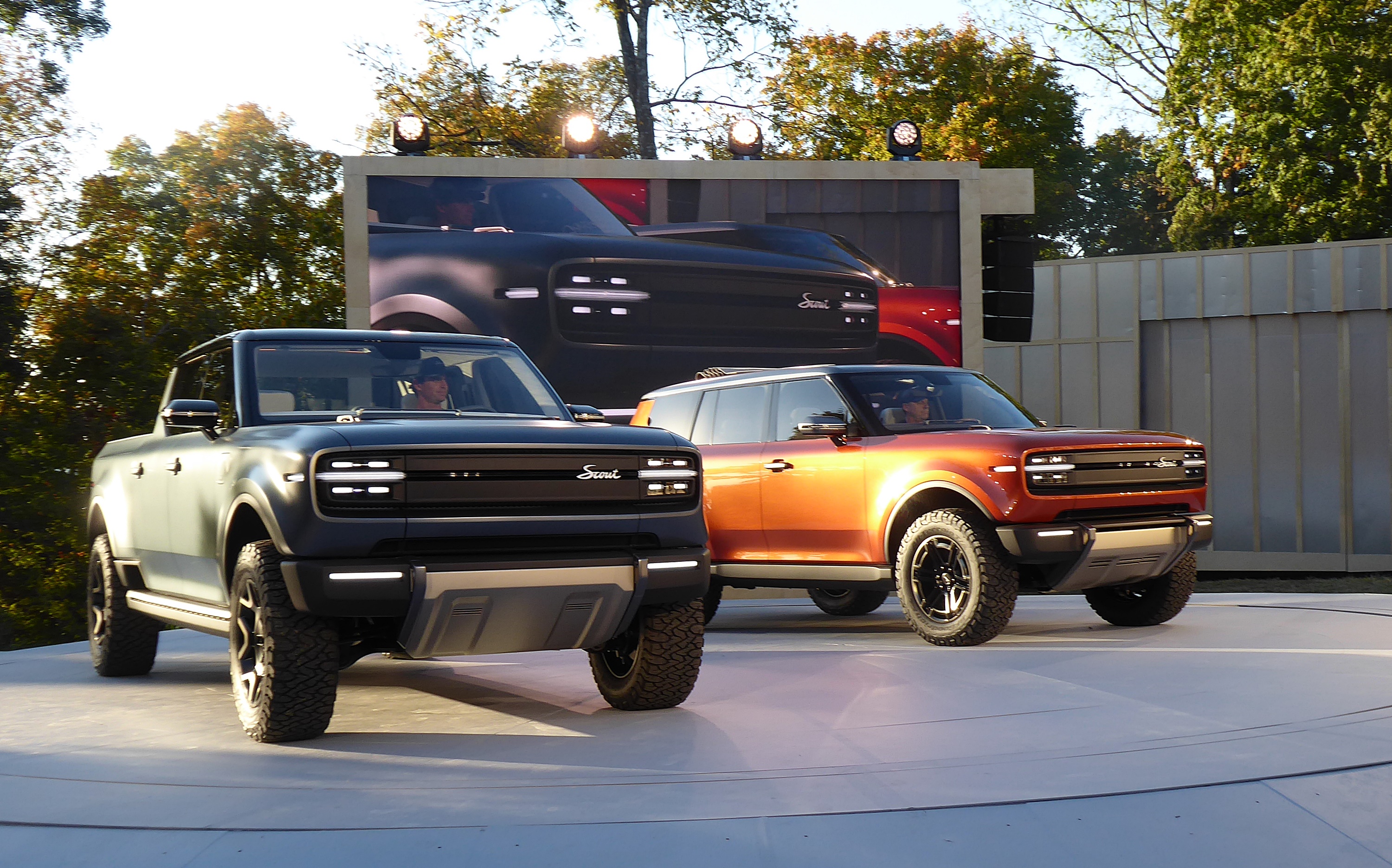
Scout Terra (left) and Traveler. (Jim Motavalli, all photos)
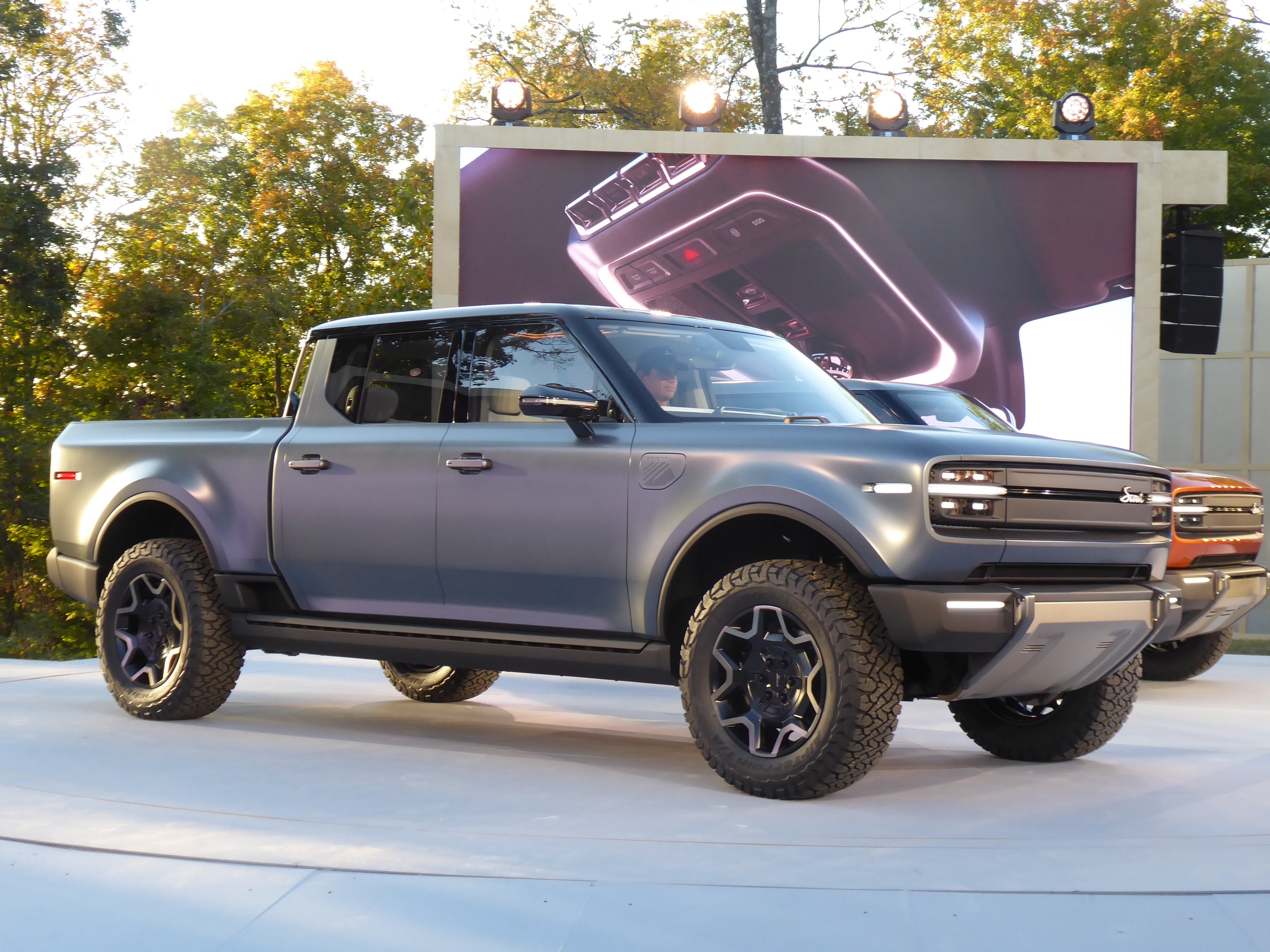
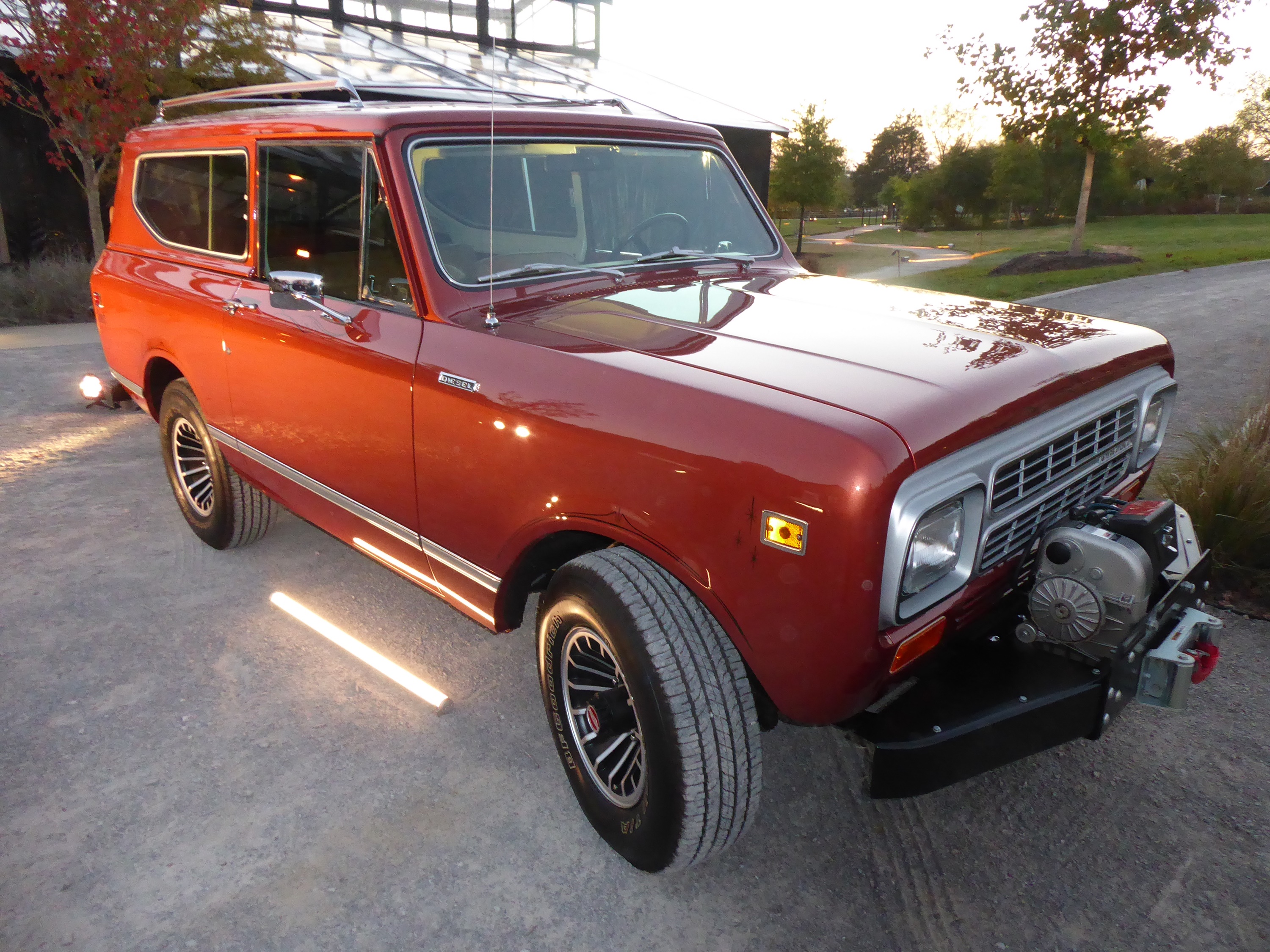
Minutes later, Keogh was up on the stand next to the new Scout electric four-door crew cab pickup (Terra, with a 5.5-foot bed) and SUV (Traveler, in tribute to the car’s origins in the International Scouts that ceased production in 1980). Both are standard with twin-motor all-wheel drive. The original Scouts were bare-bones off-roaders and work trucks, inexpensive to buy, prone to being worked hard and put away wet, and very rarely treated as garage queens. The steel bodies rusted, which is why, of the 500,000 made, only about half (a guess) are still alive, either running or rotting away behind a barn.
The new Scouts will be substantially different, though retaining some original DNA in their styling. They will be EVs with 1,000 pound-feet of torque and a zero to 60 time of 3.5 seconds. The range is up to 350 miles on just the battery pack, but a range extender (the Harvester option) is available to take that to 500 miles. Pricing starts under $60,000, but Scout is quick to add that it could be around $50,000 with the right federal and state incentives. The Scout will be built in an under-construction plant with 200,000-vehicle capacity in Blythewood, South Carolina (not the original’s Fort Wayne, Indiana, alas) and appear sometime in late 2027. Reservations are being taken on the website.
Scott Keogh introduces the Scout.
Some questions were left unanswered. There will be two battery packs, one for the range extender and the other for the standard model, Keogh told me, with different chemistries and sizes. But the sizes will be revealed down the road, he said. It’s quite likely they’re not finalized. The horsepower is also undivulged. The range extender will be mounted in the rear, and not compromise the front “frunk” space.
Scout Motors is a separate brand under the Volkswagen Group, and will have its own stand-alone sales and service network, but it’s emphasizing direct sales, with what Keogh said would be a 10-minute online purchase process, fixed and simplified no-haggle pricing, and a killer app. VW acquired the Scout name when its Traton truck division acquired Navistar, since renamed International Motors, for $3.7 billion in 2021. VW also inherited stillborn plans, developed over the years, to revive the Scout brand.
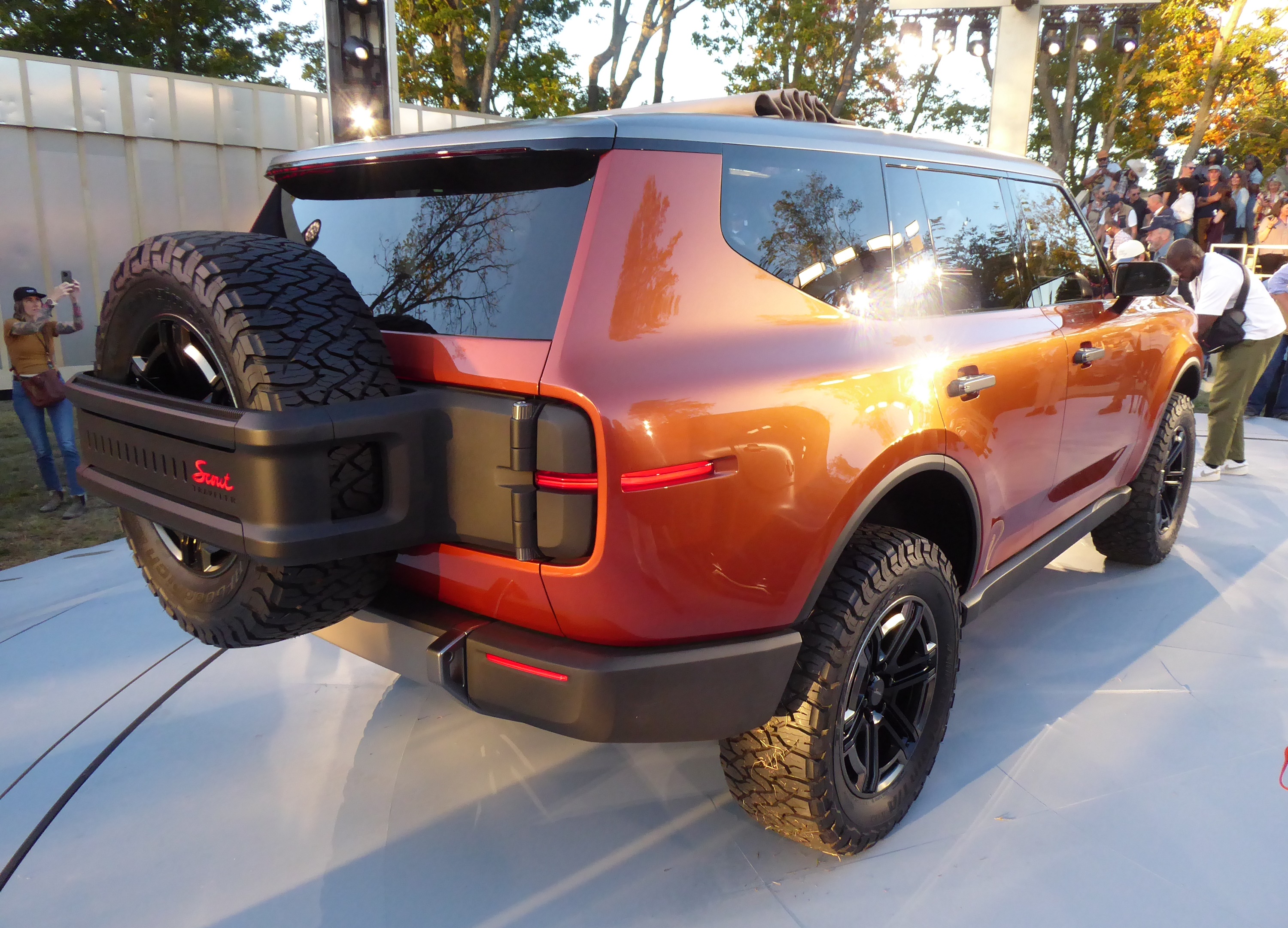
The Traveler retains cues to the original model.
“The original Scout was ahead of its time in inventing the American SUV market,” Keogh said. Of course, a little company called Jeep was also part of that, but this wasn’t the time to mention that. Blythewood will create 4,000 good-paying jobs, he said, and has the potential to “be profitable after its first calendar year of operations.” Parts and sub-assemblies will be sourced from Tier One suppliers within 200 miles of the plant’s location, he said.
According to Chief Design Officer Chris Benjamin, “A startup of a brand with such a rich and storied history is amazing.” He described the new body-on-frame SUV and pickup as “versatile multi-tools” that are “bold icons that will stand out in the marketplace.” First impressions are of a successful reimagining of Scout style in a decidedly more upscale manner, with Rivian (which has the same EV product line) as the most obvious competitor. The Scouts are not exactly cheap, but Rivians start around $10,000 more.
The old Scout logo is re-employed prominently, and on the pickup tailgate it even lights up. The SUV rocked a retro rollback “cabana” canvas sunroof. “The essence of the historic vehicles is preserved,” Benjamin said. “We’re picking up the character of the old Scout in a new and fresh way.”
Some features of the Scouts: buttons instead of on-screen controls for HVAC and infotainment volume, a stylish side step up on the pickup, a console that extends back into the second row of seats, a refrigerator/cool box, double wireless chargers, twin 110 outlets and a single 240, hemp wood accents as a sustainable touch, copious in-cabin storage. And there’s a bench seat option in both Terra and Traveler. Some of these things will be options, but this far ahead of launch that isn’t worked out yet.
The Scout Terra can tow up to 10,000 pounds and the Traveler 7,000. Both models have 2,000-pound payloads. They’ll come with Tesla’s NACS charging standard, and have 800-volt architecture, but not much was said about charging times. There wasn’t much about off-roading, either, though the one-foot ground clearance is high, three feet of water fording is possible, and the front skidplate protecting the undercarriage is part of the design. The tires will be up to 35 inches.
**
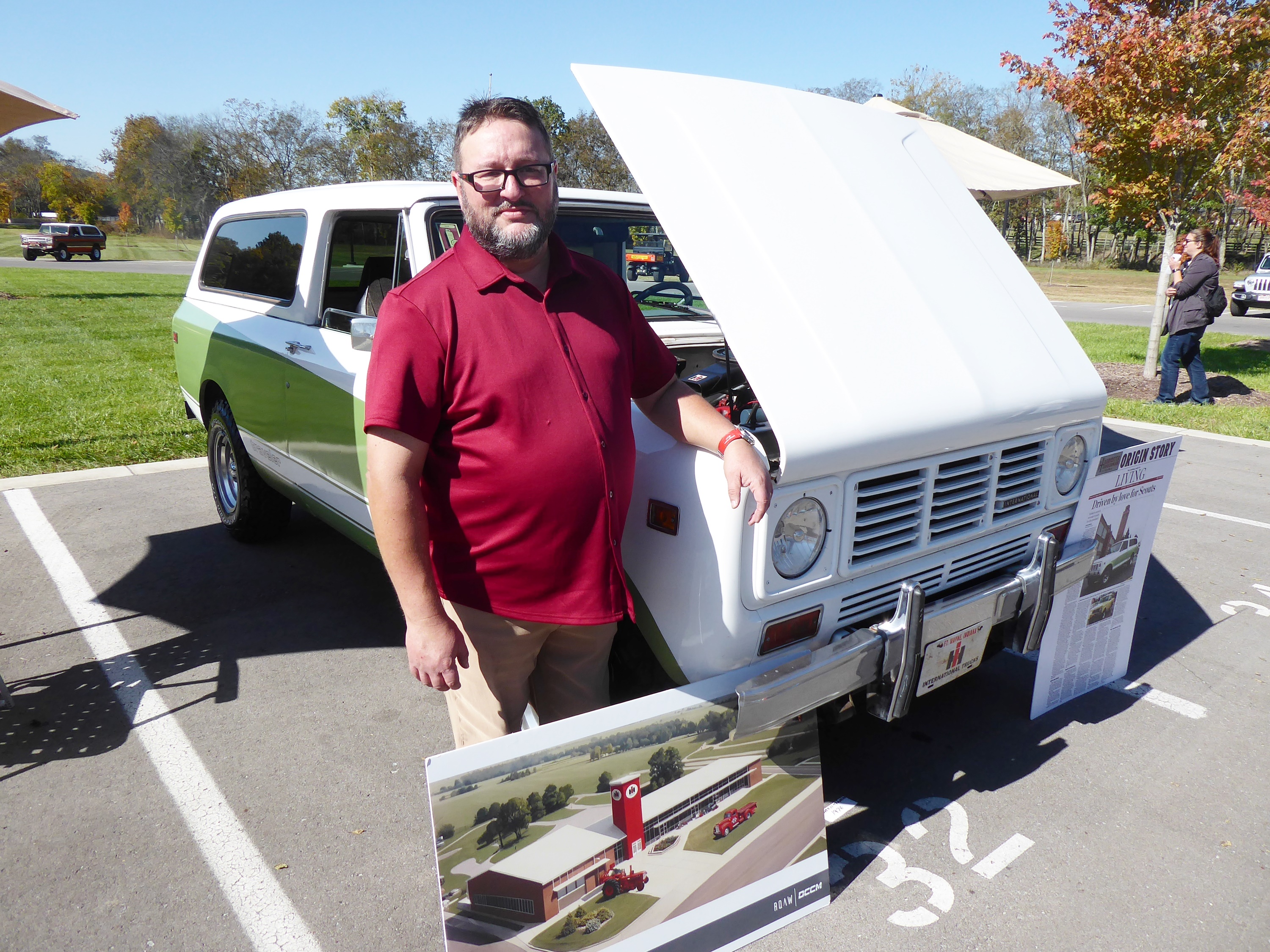
Ryan DuVall with his 1976 Scout.
Not far from where the Scouts were revealed on a hilltop at Southall farm-to-table resort in Franklin, Tennessee, a group from the Fort Wayne-based Harvester Homecoming (HH) had assembled 20 or more historic Scouts, including both the first (1961) and last ones (1980) built.
HH mastermind Ryan DuVall brought his green-and-white 1976 AWD Traveler (which could be ordered with a third seat). It was the Expedition/Suburban of its time, and DuVall’s example had what he called the “bulletproof” and sought-after 345-cubic-inch Scout V-8 engine. The Homecoming, held in Fort Wayne and first held in 2019, attracted more than 20,000 visitors in the peak year of 2021. Keough attended in 2022, while Scout Motors was being planned. HH is the largest Scout gathering in the world. The nonprofit inherited International Motors’ collection of historic vehicles, and a museum will be built to house them and related trucks in New Haven, Indiana.
DuVall takes issue with the idea that Scouts were especially prone to rust. “These vehicles were driven in winter, taken out in the worst conditions,” he said. “They were tough, rugged trucks, and they were used that way. They just saw more of the salted roads and the conditions that made them rust.”
DuVall is upbeat about the new Scout, though a bit bummed it’s not being built in Fort Wayne. But a pair of bricks from the old factory will be built into the new one.
Mitchell (left) and Michael Bolton with the last Scout built. Until now, of course.
Up the row, young Mitchell Bolton was standing by his grandfather Michael Bolton’s 1980 diesel Scout II, the last Scout built—as photos document. “My grandpa got it from the original owner, who used it for hunting and camping trips,” Mitchell said. “It was a little rough. The restoration was started in 2016 and finished in 2020.”
Reportedly the first Scout 80 built in 1961, very bare bones.
Michael Bolton (yes, he gets teased about the name) said that the Scout died because “the CEO at the time decided to go to war with the unions, which resulted in a six-month strike in 1979 and 1980. It led to engine shortages and other problems. There were also emissions issues with the EPA, and finally the decision was made to close down the Scout division.” Ironically, at exactly the same time, the British car industry was going through the same process, and it led to the end for MG, Triumph and other iconic brands.
The last Scout built in 1980 is a Scout II model.
The first Scout 80 was up the row, a blue 1961 pickup with built in benches in the bed. It had four-cylinder power and was just as plain as could be—but somehow also timeless. There was also a pair of cool top-down Scout ragtops from the mid-60s.
A sad day back in 1980. (Scout photo)
**
In a workshop devoted to the South Carolina site, Joern Petri, Scout’s vice president for the plant launch, said that 74 sites had been considered (including Indiana), then narrowed down to just three. He declined to name the other two. Scout says the 4,000 jobs will expand to 9,500 when the supplier base is added. Blythewood is close to suppliers (Bosch and Mahle among them), a rail link, a highway, and a port (though the latter won’t be in demand until the vehicles expand beyond the initial North American base).The
BMW and Volvo also have plants in South Carolina, though I’m sure both would say (as Scout does) that it being a right-to-work state has nothing to do with it. Scout says it will cooperate with a union if that’s what the workers want, though it seems to be bending over backwards to build a contented work force that won’t want to organize. “We’re focused on creating an excellent workplace,” Petri said.
South Carolina is handling the leveling of the multi-grade, 1,100-acre site, which is being built up in stages, for VW. The plant should be finished by late 2025, and not long after a car will come off the assembly line every 80 seconds.
It’s possible that the plant will be used for the production of other VW Group vehicles, and there might also be some contract manufacturing, Petri said.
Finally, at the Customer Experience Workshop, Cody Thacker, vice president of growth, said Scout’s approach answered the question, “If an OEM could start anew, what would it do?” The answer, apparently, is orient sales of highly functional EVs around an app, but build a robust service network so that 85 percent of buyers are within 200 miles of a wrench. The other 15 percent will be served by mobile operations.
It’s unclear what Scout will do in those states (such as mine, Connecticut) that don’t permit direct sales. The answer would seem to be using the bricks and mortar to service the cars (the majority of the square footage) and introduce buyers to them, but have the transactions online. There will be 100 service locations, and 1,300 service bays, by 2032. “There will be one transparent price, with no hidden fees,” Thacker said. “People see buying a car as slow and cumbersome, and we’re out to change that.” There will be a pickup-at-the-factory option, with a customer center there in South Carolina.
Thacker assured the media that the Scout will be a 50-state vehicle, and there remains quite a long time before the first one is sold—direct sales could be resolved by then. The company is maybe ahead of itself a little in announcing the car now—and putting up billboards in Nashville—but it does have to build awareness of a brand that’s been dormant for more than 40 years.
It’s tough out there. Automakers know they have to concentrate on SUVs, because that’s all people will buy (well, trucks too) but the competition is fierce. Hence an SUV has to be extra special to stand out from the crowd.
2025 Genesis GV80 Coupe
One that does exactly that is the 2025 Genesis GV80 Coupe AWD 3.5T Sport Prestige currently under test. The fit and finish of this car, with heated and cooled Nappa leather seats, was just impressive, and the tester was the electronically supercharged model that extracts 409 horsepower and 405 pound-feet of torque from 3.5 liters. The standard engine in this car is a 375-horsepower twin turbo.
And this is one of the few vehicles on the market that comes with advanced rear-occupant protection that can detect a baby’s breath in the second row. It’s big, though, and required a plus-size parking spot in New York City.
The styling is by necessity a bit awkward, given the challenge of turning a four-door boxy SUV into a coupe, but Genesis did their best with what they had. The GV80 Coupe is pricey, though, at $88,630 as tested. Fuel economy, as expected, isn’t great, 22 mpg on the highway, 18 in town.
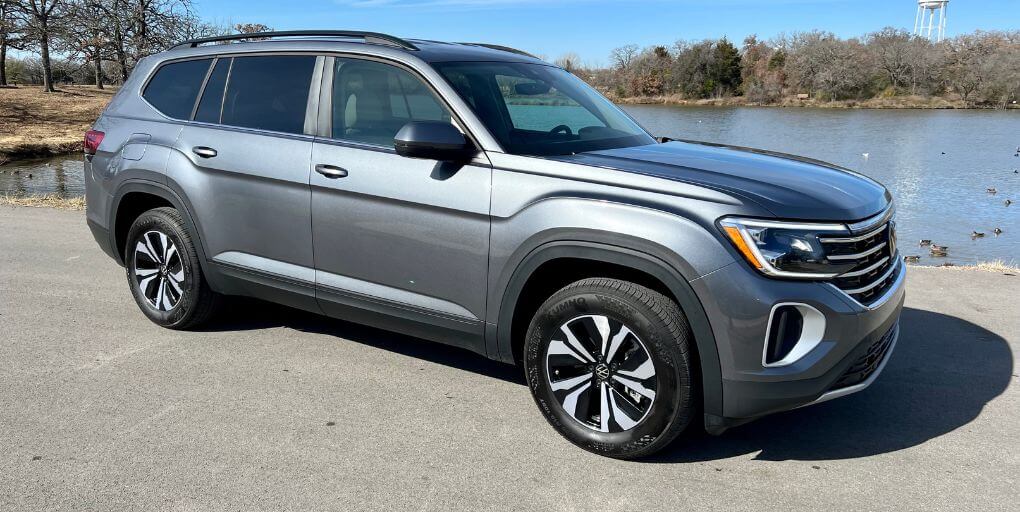
2024 Volkswagen Atlas 2.0T SE
This car was refreshed for 2024, receiving new front interior, new taillights and a revised interior. The V-6 option is out of the lineup. They’re all four-cylinder models now. But the turbo four produces 269 horsepower and 273 pound-feet of torque, and when coupled to an eight-speed automatic yields a 7.5-second zero to 60 time. It’s not the problem.
The interior is nice looking and airy, but as with the GTi recently driven it has a really challenging infotainment system that requires going through a lot of screens and menus to do just about everything. I really, really want a volume control knob. The touch-sensitive controls, when you get to them, aren’t very touch sensitive.
Fuel economy is pretty crummy, 22 mpg combined. In the end, this is not a standout family SUV, more’s the pity.
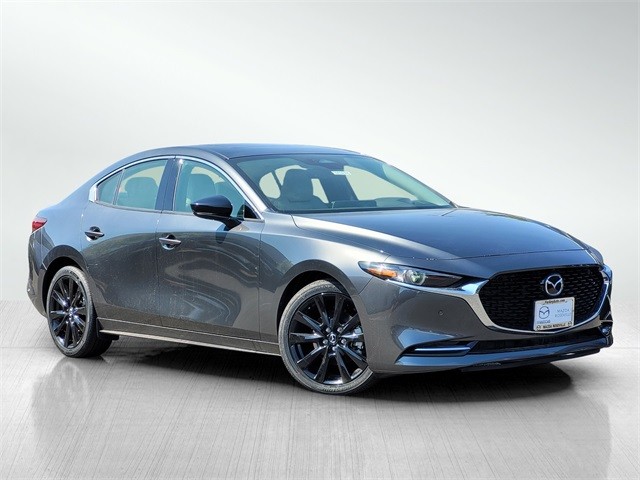
2024 Mazda Mazda3 Sedan Turbo Premium Plus
It was a relief to step into that endangered species, an actual sedan. The tester was at the top of the Mazda3 range, selling for $37,065 with the SKYACTIV 2.5-liter turbo engine and all-wheel drive. It’s a very competent little driver car, with 227 horsepower and 310 pound-feet of torque on offer. It can achieve an impressive 5.6-second zero to 60 run. BMW should be scared by cars like this one, but I doubt it gives Mazda much thought.
Sedans generally trump SUVs in fuel economy, and this one achieves 32 mpg on the highway (27 combined). It has Mazda’s generally quality high level—nothing fell off, and it probably won’t if you buy one.
If you really want to save money, start with the base model at $25,135. Changes on this car for 2025 include the base model in sedan or hatch form, and with any model above base there’s the capacity to talk to Alexa. Want Bose? Upgrade to Premium or Turbo Premium Plus, where it’s standard. Sounded good, too.
Also tested from Mazda was the 2025 Mazda CX-50 Turbo Meridian Edition, and it was a solid entry that was relaxing to drive on a long trip. For $42,670 (as tested) it wasn’t a bad buy. Under the hood is a 2.5-liter engine with twin turbos and 227 horsepower with 310 pound-feet of torque.
The Meridian as tested featured leather seats, auto-dimming headlights, a moonroof, dual-zone climate and a 12-speaker Bose setup. Not bad for the price. I bought a Miata instead, but so did every other auto journalist in the world.
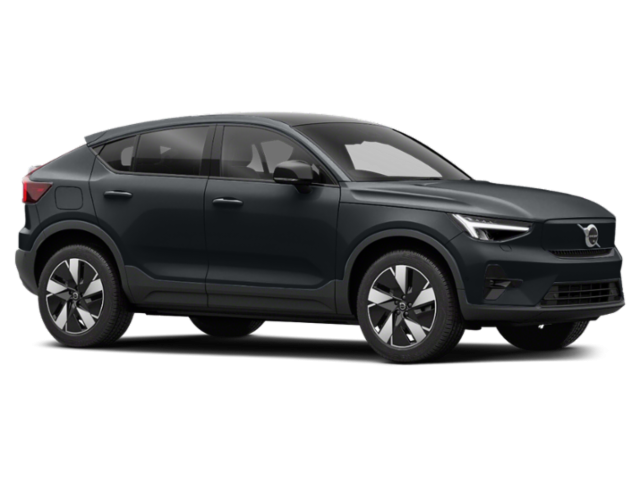
2024 Volvo C40 Recharge Single-Motor Ultimate
I find myself frequently recommending the single-motor of today’s electric cars, because they’re cheaper and have greater range. The price is important, because even the single motor starts at $54,895. It has rear-wheel drive, and even without the second motor can hit 60 mph in 6.6 seconds. But with the twin motor you get an eye-popping 402 horsepower, 4.4-second times, and more performance cred.
All of the single motors get a 79 kilowatt-hour (75 kWh usable) battery pack, and range that’s a decent 297 miles (less if you drive mostly on highways). Recharging can be achieved at a fast 480-volt station 10-80 percent in 28 minutes.
The Volvo and its Polestar near-relatives are very competent EVs (the Scandinavian modern interiors stand out) that would be more competitive at slightly lower price points. In other Volvo EV news, the company has teamed up with Starbucks to add 50 fast chargers at 15 locations along the 1,350-mile corridor between Denver and Seattle to “make EV charging as easy as getting coffee.” Since you can recharge there in 28 minutes, they have a point. “While their vehicles are recharging outside, drivers and their passengers can relax comfortably inside with their favorite Starbucks beverage,” Volvo says.
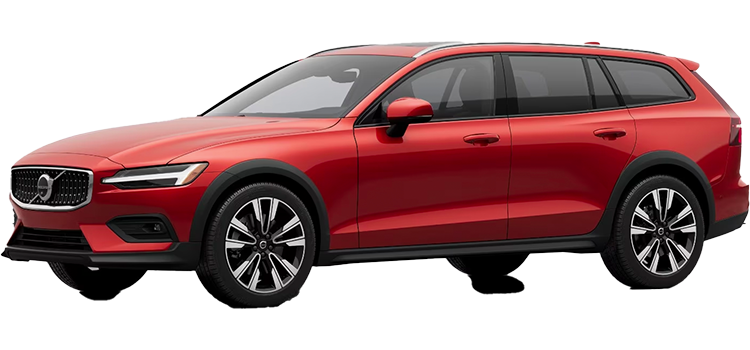
2024 Volvo V60 Cross Country B5 AWD Ultimate
Volvo is to be praised for keeping station wagons in the lineup. Audi has a wonderful S5 Avant model coming out, but Americans won’t be getting it. It’s our own fault—we’ve rejected the format pretty definitively. Not me, though. I’ve owned station wagons made by Plymouth, Mercedes, Volvo and more.
The V60 Cross Country is an upscale wagon, priced at $62,075 as tested. Power comes from a two-liter turbocharged and direct-injected four that manages to generate 247 horsepower and 258 pound-feet of torque.
The other version of the V60 is a Polestar-engineered plug-in hybrid with sticker shock at $72,445. Both of them are opulently appointed, but the Cross Country has some vague SUV styling cues and an unnecessary lifted ride height. Will the camouflage be enough to fool buyers who hate station wagons?
My neighbor has a V60 and loves it. He even named it “Lars.” I like that these wagons have definite family ties to the old 122S I owned for 20 years. Some of the Volvo SUVs, not so much.
It looked like we’d lose the wonderful Oldtone Festival, one of the few annual events centered on old-time music. There was no festival in 2020, limited events during COVID in 2021 and 2022, and 2023 went dark with some very regretful goodbyes. But the festival was back in full force this year, the eight annual from September 5-8, as a nonprofit Oldtone Arts Inc. event with sponsorship by the New York Foundation for the Arts. The festival in Hillsdale, New York is actually near the border with Connecticut and Massachusetts, so maybe those states could be supportive, too.
Talking Hearts on the Medicine Wagon stage. (Jim Motavalli photo)
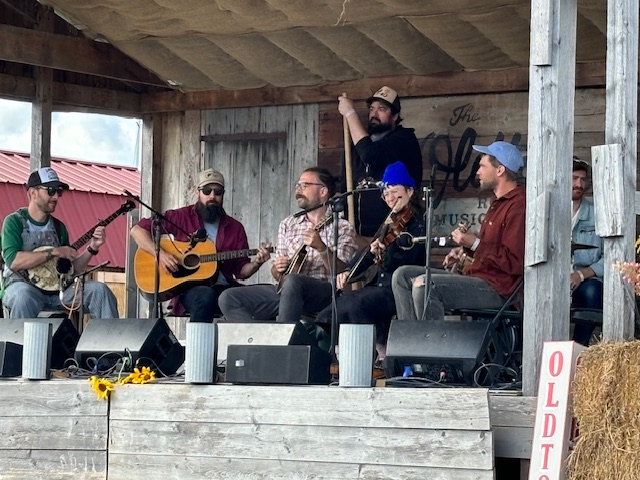
Other than kids walking around with buckets to solicit donations, the festival was otherwise unchanged from its very effective formula. It’s a compact event, with a small main stage, a dance tent, a workshop area and even what was referred to as a “medicine show wagon”—an old Chevy truck with a platform and a microphone, used for short between-act sets.
We arrived as Moonshine Holler was playing. This is a Massachusetts-based old-time trio. Vocalist and multi-instrumentalist Paula Bradley co-led the group with her late husband, Bill Dillof, for 20 years, but now it’s Paula with young musicians Rafe Wolman and/or Marco DePaolis. “I’m privileged to play with these guys,” Bradley said.
Moonshine Holler digs up the really old ones. (Jim Motavalli photo)
Paula’s a real historian of old-time music, as was Bill, and the group offered a program of both familiar old-timey tunes like “Devilish Mary” and obscurities from the likes of the Hackberry Ramblers and fiddler Clayton McMichen’s Wildcats (an offshoot of the Skillet Lickers). There was an incredible country interpretation of Adam and Eve in their garden. Apparently, they must have “shaken that thing.”
The Zach Bryson Band offered mainstream country, matching originals with Merle Haggard and Jimmie Rodgers. Later, he played solo.
The Downhill Strugglers continue the tradition of urban old-time pioneered by the New Lost City Ramblers. (Jim Motavalli photo)
The Downhill Strugglers continue in the tradition of the New Lost City Ramblers, Mike Seeger’s assemblage of New York-based old-time advocates in the 1950s and 1960s. The Strugglers, mainstays of the Jalopy Theater in Red Hook and the Brooklyn Folk Festival (coming up November 8-10), just released their new album on Jalopy’s record label. Old Juniper is a collection of songs that sound ancient but were in fact written by members of the band. Walker Shepherd’s “Valley by the Stream” sounds absolutely authentic, as does Eli Smith’s “Picking Dandelions.” I’ll bet fiddler Jackson Lynch wrote “I’m Getting Ready to Go,” but all the songs are just credited to the band.
The Strugglers switch off on instruments, but have fiddle, guitar, banjo and harmonica pretty well covered. Here they are on video. This version of “The Girl I Left Behind Me” contains verses I hadn’t heard before:
And here’s the Strugglers from their second set, playing “Valley by the Stream”:
Krissie and the Kranks were a great find at this year’s Oldtone. Krissie Nagy is a fine singer of jazz standards and the Great American Songbook, echoes of Billie Holiday and her disciple Madeleine Peyroux. Here they are with Hoagy Carmichael’s fine song, “Up a Lazy River”:
One of the best things about Oldtone is that its view of old-time music includes 1920s and 1930s jazz. Krissie’s band (see below) was also great, and featured a fiddle player named Charlie Burnham. This guy has worked with James “Blood” Ulmer, Living Color, Cassandra Wilson, Steven Bernstein, Henry Threadgill, Medeski, Martin and Wood, Norah Jones, Sasha Dobson, Rufus Wainwright, and on and on. What a fine player. Joel Savoy, who also played cajun music at Oldtone this year, produced the group’s one album in Louisiana.
In the same vein and with some of the same standards, playing in the dance tent, was New York-based Sweet Megg, who is steeped in country swing and counts Patsy Cline and Billie Holiday as influences. She had great stage presence, and another great band.
Sweet Megg also explored the old jazz tunes. (Jim Motavalli photo)
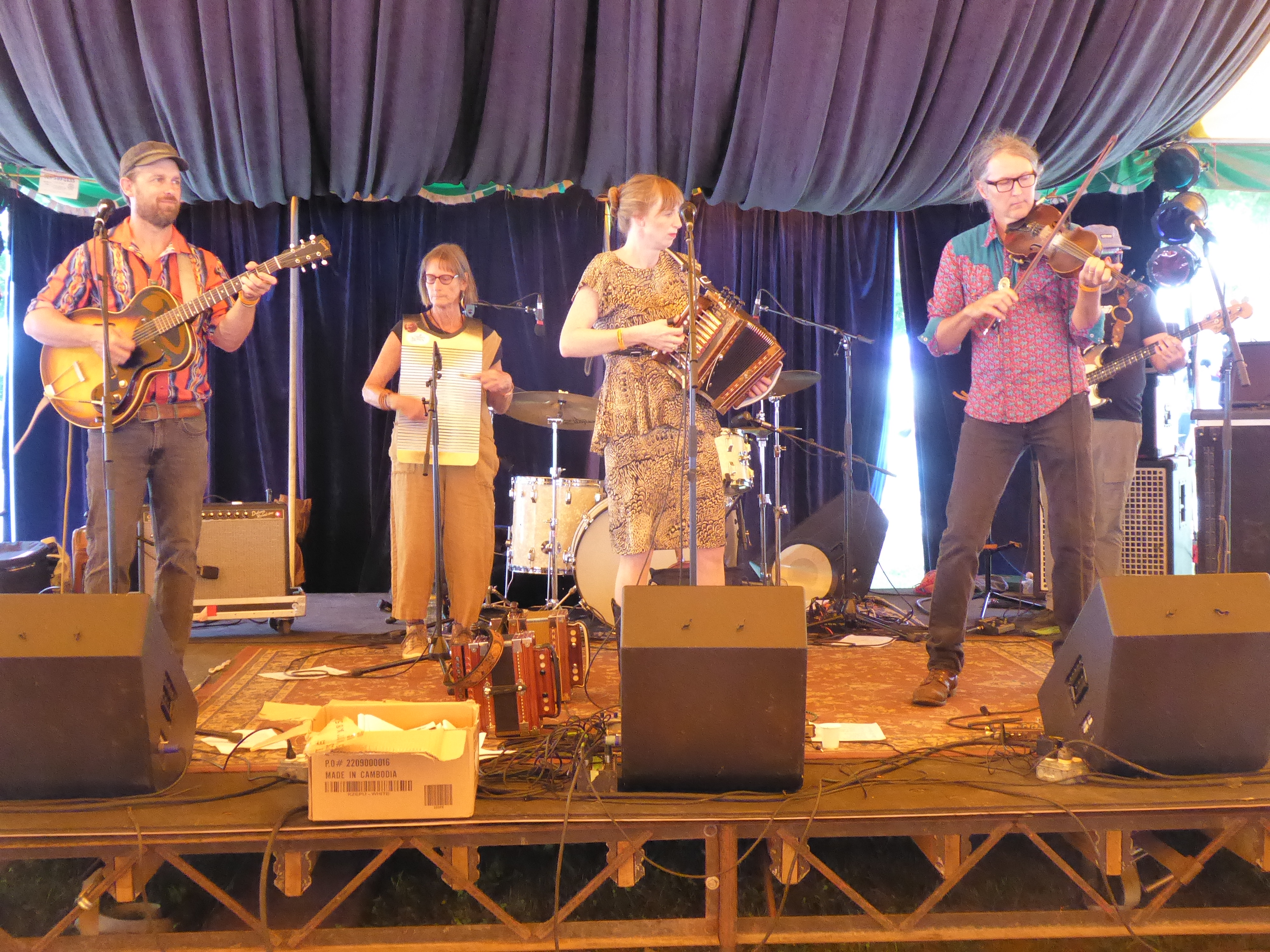
The Foghorn Stringband is Caleb Klauder (vocals, mandolin, fiddle), Reeb Willms (vocals, guitar), Nadine Landry (vocals, upright bass) and Stephen “Sammy” Lind (vocals, fiddle, banjo). They’ve been Oldtone regulars since the beginning, and I’ve also seen them at Red Wing in Virginia. They brought out that old story song “Willie Moore,” as well as “The Roving Gambler” and “Jack of Diamonds.” There were some fine originals, too, including one Wilms sang about a winding river. Wish I’d caught it on video!
The fully engaged Foghorn String Band. (Jim Motavalli photo)
At this point the heavens opened up and a hard rain started a-fallin’. Everyone headed either for their RVs, the dance tent or the shelter of their cars. The rain interrupted the program for a couple of hours and soaked the site, producing a lot of mud. But soon the action continued in the covered dance tent.
Most of the acts did get to play, including a really strong set by The Louisiana-based Deslondes. They’re a rock group in the best sense, with great songs and a revolving cast of singers. In fact, everyone but the pedal steel player had a vocal lead. They’ve been together 15 years, informally at first, and made four albums that are well worth investigating.
How could you not like the Chattanooga Dogs (above), a fine young bluegrass band? They were substituting for the Alum Ridge Boys and Ashlee, who were apparently ailing. They dug up a bunch of old Charlie Moore songs. The young group features Conner Vlietstra on guitar, vocals and fiddle, and Trevor Holder on banjo and voice. The latter has an uncanny ability to vocally echo the best 1940s bluegrass talent. “Hillbilly F-fever’s going ‘round,” they sang, and it indeed is.
Also in this vein was Danny Paisley and Southern Grass, mainstays of this music.
Probably the most valuable player for the weekend was locally based fiddle player Sophie Wellington, who appeared with numerous aggregations, including the Talking Hearts trio that sang from the medicine wagon. She’s a fine old-time musician who knows a lot of obscure tunes. She also appeared in her five-year-old Dumpster Debbie guise (that’s them below), leading a seven-piece band. That one was more like a rehearsal, with a lot of “what shall we play next?” comments. The audience would have benefited from a little context for the tunes.
Wellington was also heard during the Nadine Gospel Set segment. I wish I’d heard more of it, because I love old-time gospel music. Songs like Jesus is “Building a Mansion for Me.” And there she was again with the extravagantly bearded JP Harris, as fine an exponent of old-time and pre-1970 country music as exists in America today.
Harris had played with a full band late the previous night (too late for me, alas) but a little hoarse he was back on Sunday with an old-time trio. “I Wish I Were a Mole in the Ground,” “The Dying Cowboy,” “Been All ‘Round This World” were the songs he sang, but there were also fiddle tunes led by Wellington, such as “Belle of Lexington.” Harris said, “I owe all of my musical upbringing to the old-time scene.” He meant that he’s branched into more mainstream country—his most recent single is “Dark Thoughts”—but will never stop turning the clock back.
Here’s Harris on video doing a fine old song called “Mole in the Ground”:
The last act I saw was the Cajun Surprise. It was such a surprise I never did learn who they were, but the group—with accordion, guitar and two fiddles—sure sounded good.
“We’re proud to be part of a global organization, but our mission is to develop products that are appropriate for our region,” said Paul Thomas, president of Bosch in North America. The world’s largest auto supplier, based in Germany, has indeed developed tech tailored for U.S. car buyers, and displayed it at the Bosch Mobility Experience at the company’s proving grounds in Flat Rock outside Detroit. September 10. It was a behind-the-wheel demonstration, with much visceral impact.
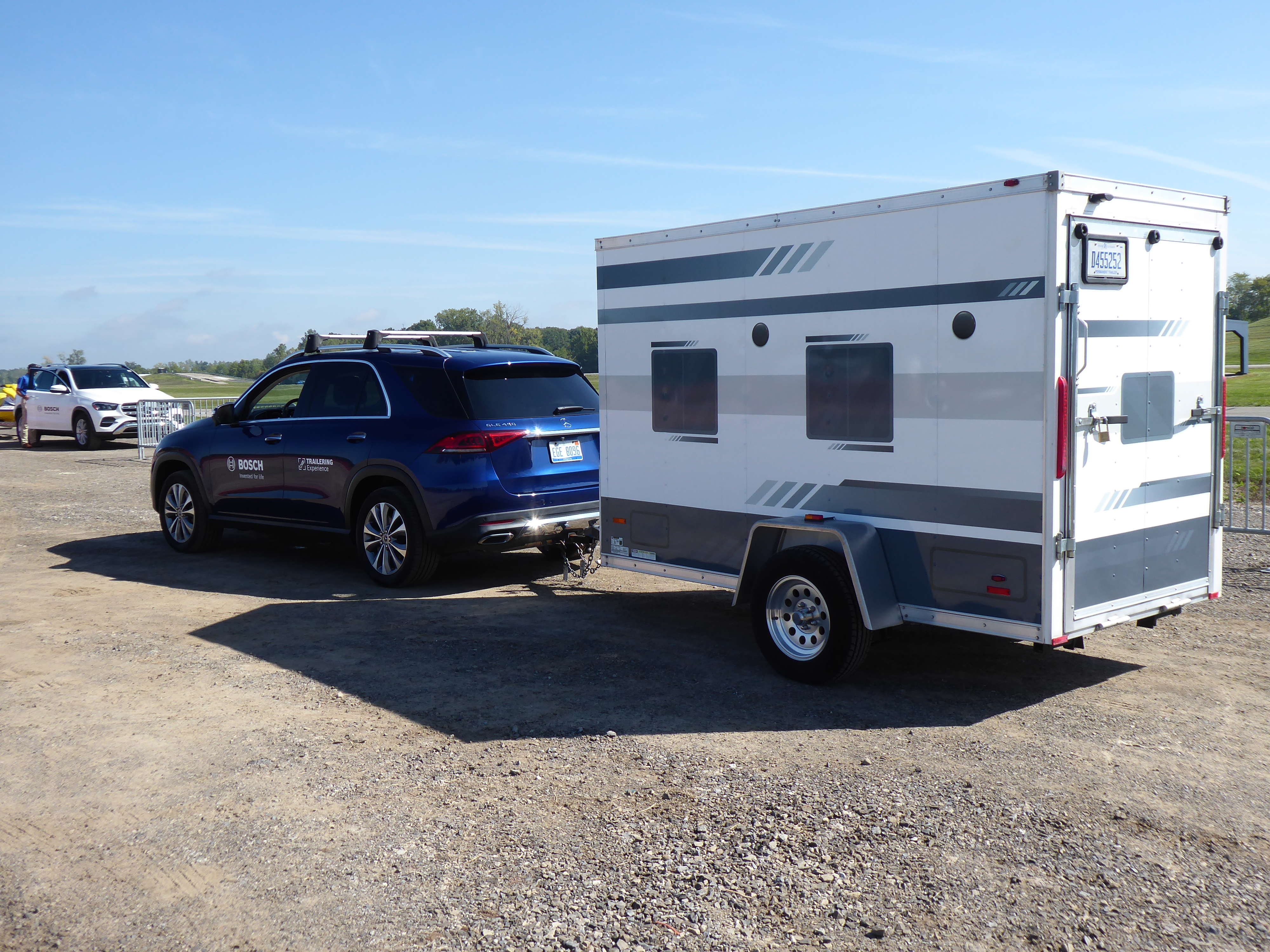
The driver can place the trailer precisely on the screen, then the tech takes over steering. (Bosch photo)
Perhaps most relevant to American buyers—who do like to tow—was the Anywhere parking trailer, which enables pinpoint location. On the HMI display, the driver moves a shaded box to the exact location desired (also setting the vehicle’s orientation), then pushes a button and the car takes over steering functions (though the driver still uses the accelerator). The tech can also be used to precisely align a truck with a trailer hitch, without using another person as a guide. This might frustrate dedicated haulers who’ve perfected their technique over decades of trial and error, but it’s a godsend to occasional towers. Anywhere is not on cars and trucks yet, but it’s coming soon.
You can park this rig…anywhere. (Jim Motavalli photo)
Bosch also demonstrated how its technology can be used to accurately keep a trailer (with a jet ski on board) moving straight when backed up, or aimed on a desired angle.
Bosch partnered with Linamar on e-axles that hold its electric motors front and rear. This one-off Ram truck demonstrated the technology. (Bosch photo)
Bosch is partnered with Canada-based Linamar on rigid electrified axles, which were demonstrated on a one-of-a-kind Ram 2500 Laramie electric truck. Bosch motors were integrated into both axles front and rear to deliver four-wheel drive, 11,200 pound-feet of torque and 750 kilowatts of peak power. They wouldn’t let us drive, but the truck certainly did a fine job around the steeply banked test track. Ram is obviously using its own solutions for electric trucks, but this one could be ready-made for other automakers.
Bosch has pioneered ABS braking for e-bikes, and this was the first time it was publicly shown in the U.S. The company is a major supplier to e-bike brands, providing motors and battery packs, displays and controllers. Bosch components have been seen on many European brands, and I’ve recently tested Bosch on-board in e-bikes made by the Dutch Gazelle and German Riese & Müller companies. In Flat Rock, Bosch had two e-bikes from R&M equipped with second-generation ABS, including a cargo-type designed to carry two kids forward of the driver that proved tricky to master.
Bosch on-board bikes included two from Riese & Muller. (Jim Motavalli photo)
The ABS pulled the bikes up quickly, but a Bosch spokeswoman said that the systems have been slow to acquire customers in the U.S., possibly because of the cost. “We take the long view,” she said. According to AAA, in the U.S. e-bikes have only eight percent of the bike market, but in Europe it’s more than 30 percent. E-bikes are good business because they account for more revenue per unit than standard bicycles. According to Circana, they were responsible for 63 percent of the growth in sales between 2019 and 2023.
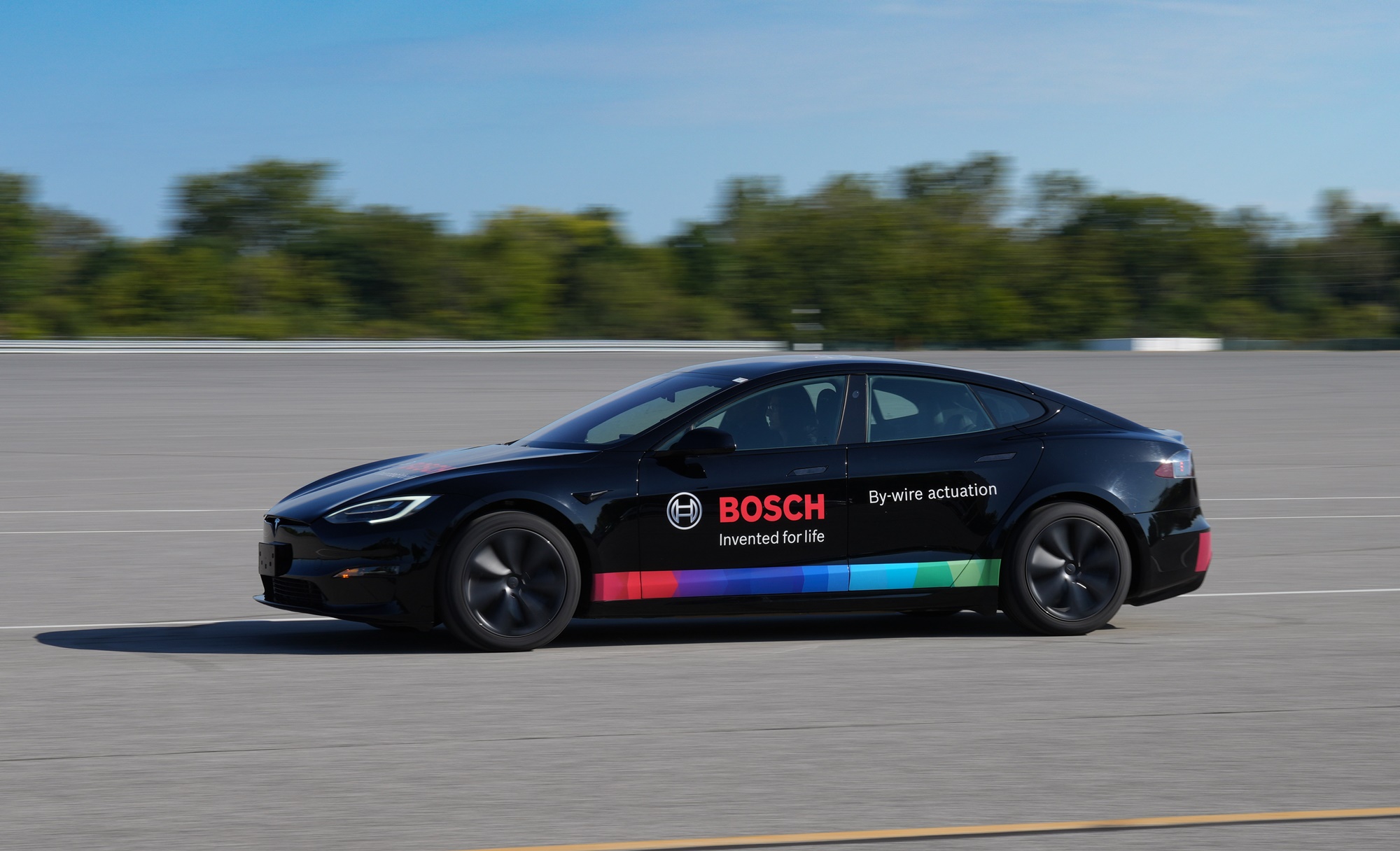
Testing brake-by-wire–with no physical connection from master cylinder to calipers. (Bosch photo)
In a Tesla Model S, we tested brake-by-wire technology with no physical connection from the pedal to the pads. At first, the fact that the pedal doesn’t have much “give” seemed like an obstacle but in practice it didn’t matter at all. The driver could sense the immediate response from foot pressure on the car’s braking. People who try it—including me—love it, and it will be incorporated into production vehicles for the 2026 model year.
A Lucid Air EV was the test vehicle for a test of steering by wire through a water obstacle. The vehicle management detects wet pavement and reduces braking distance—even for drivers with one hand clutching a cup of coffee. Without the assistance, we flew all over the place.
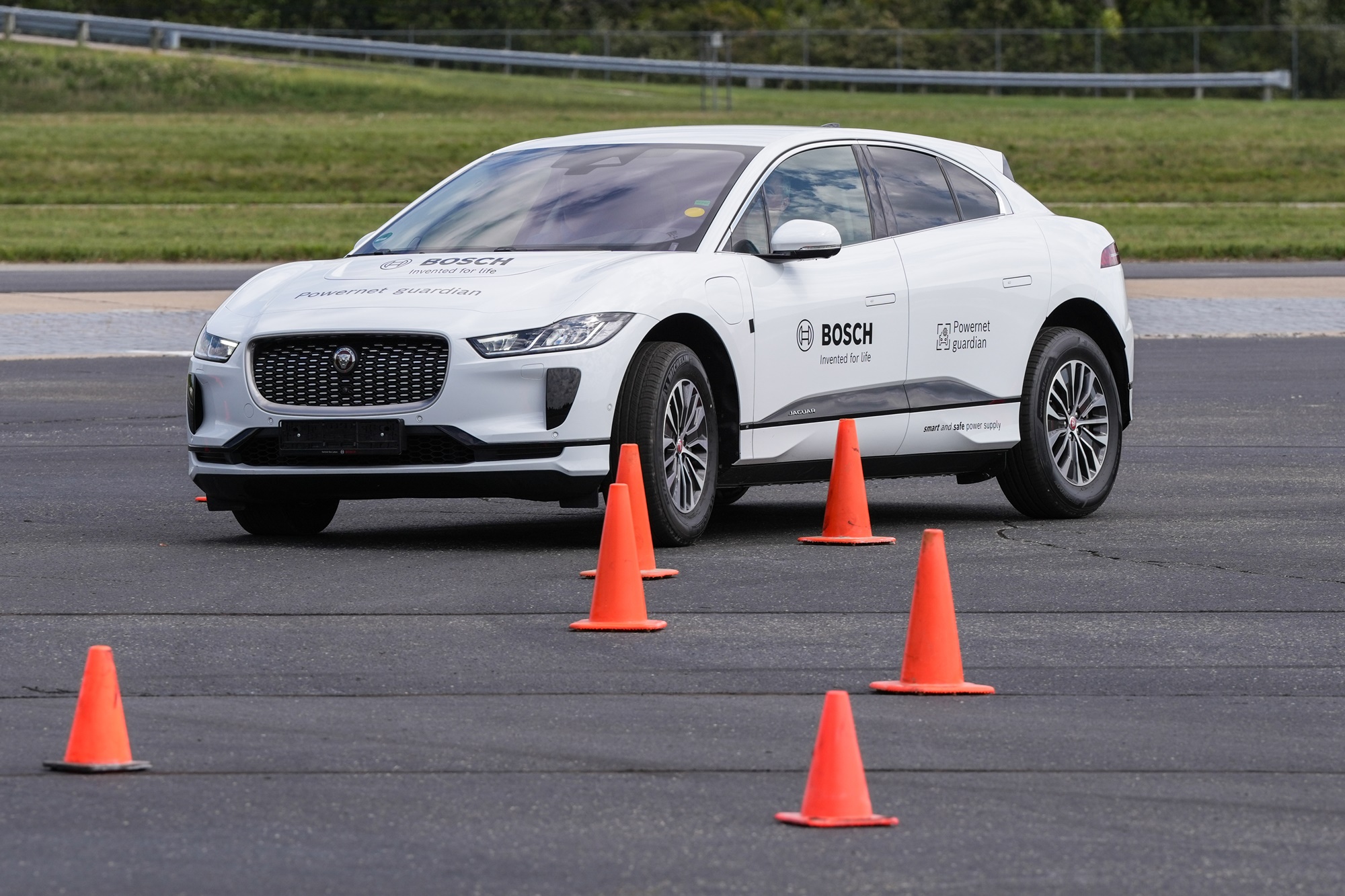
Powernet Guardian takes over if you lose steering assist. (Bosch photo)
The Powernet Guardian demonstration was certainly vivid. It’s a solution for an emergency I’ve actually experienced (in a Chevy Bolt EV)—the sudden loss of power-assisted steering. I drove down a narrow track and suddenly felt complete loss of steering control, sending cones flying. I would have had manual steering, but only with extreme effort. With Powernet engaged, I felt no loss of control, though the screen in front of me went blank. They gave me the blown fuse as a souvenir.
Bosch is moving heavily into the software-defined vehicle, and I talked to Eric Cesa, vice president of ETAS, a Bosch subsidiary that does software and cybersecurity solutions. “People expect their cars to offer the same level of usable technology as their homes,” he said. “They expect a seamless experience.” And because cars typically have a four- or five-year development cycle, their on-board technology can be out of date before the car is sold. That’s why over-the-air updates are so critical to cars going forward, he said. Tesla is now issuing as many as 200 such updates annually, and some automakers are using fewer development vehicles because their on-road performance an be simulated.
When most people rattle off the names of great blues guitarists, they name such British stalwarts as Jimmy Page, Eric Clapton and Jeff Beck. Of course, this does a total disservice to the African-American luminaries they all learned from, including Buddy Guy, T-Bone Walker, Albert Collins, B.B., Freddie and Albert King, Muddy Waters, and Howlin’ Wolf.
Sue Foley, tearing it up in Ridgefield. She’s a one-guitar woman. (Jim Motavalli photo)
And let’s not forget the women: Sister Rosetta Tharpe, Geeshie Wiley, Etta Baker, Elizabeth Cotten and Memphis Minnie included. But the discrimination against women in this field is still continuing. Proof is the show I saw August 20 at CHIRP in Ridgefield, Connecticut—the Sue Foley Trio.
How this woman remains below the radar is beyond me. I first heard her in approximately 1994, following the release of her first album, Young Girl Blues (1992). Amazingly enough, the same guitar that’s one the cover is the one she played in Ridgefield.
The Canada-born Foley is simply an astounding blues guitarist, a very accomplished songwriter, a fine singer (reminding me a bit of Bonnie Raitt, complete down to the red hair), and an amiable leader. In Ridgefield, she played one amazing song after the other, with solos that made the hair on my arms stand up. Here’s proof, a song called “Fool’s Gold.” For some reason, the vocals didn’t come through clearly. But the guitar sure does:
Again, I can only surmise that sexism is holding her back. If you offered a blindfold test with one of her solos and told people it was the vaunted Stevie Ray Vaughan, then the critics would sit up and listen. Or maybe it’s Foley’s refusal to compromise. The aforementioned Bonnie Raitt long ago crossed over, but she became a pop star and largely left unadulterated blues music behind. Eric Clapton claims to be a blues purist but his most popular music is laid-back pop.
Foley acknowledges the blues women on acoustic. (Jim Motavalli photo)
Foley’s most recent record is One Guitar Woman (A Tribute to The Female Pioneers of Guitar), covering artists like Memphis Minnie on her acoustic. In Ridgefield, she opened her show solo and played some songs from it, including Elizabeth Cotton’s “Oh Babe, It Ain’t No Lie” and Minnie’s “In My Girlish Days.” A highlight of that set was Foley’s own “Maybelle’s Guitar,” a tribute to that Carter Family stalwart and proof Foley listens to country, too.
Foley is 56, and much of that time has been spent on the road, playing blues all over the world. She’s built up a following—the park was crowded the night I saw her—but a wider public should be hers.
APQ takes a bow. Shah is at right, Ross second from right. Rudy Royston is a regular fill-in on drums. And Nakamura is an outstanding bass player. (Jim Motavalli photo)
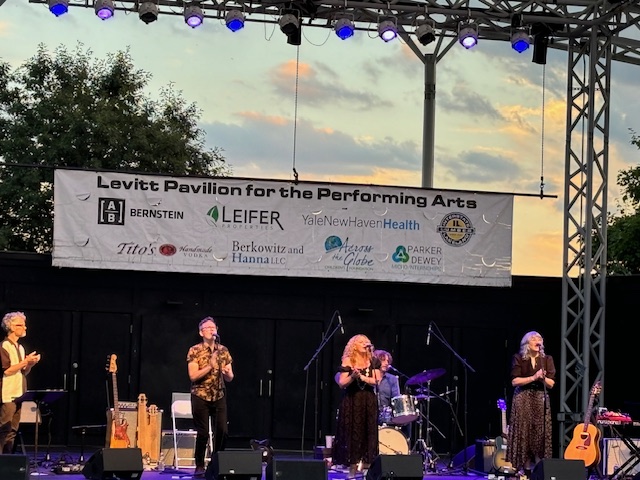
Also in local live shows, I saw the wonderful American Patchwork Quartet at the Levitt Pavilion in Westport, Connecticut. It’s fusion music at its best, combining Falguni Shah, a 11th generation Hindustani classical vocalist with the Americana and old-time folk of Clay Ross, founder of the Gullah group Ranky Tanky. The Japanese bassist is Yasushi Nakamura, and the drummer (on the record) is Ellis Marsalis protégé Clarence Penn, but in Westport it was acclaimed jazz player Rudy Royston.
Ross and Shah do a great job of explaining what they’re doing to folks just out for a good time. As they put it, “APQ is a deliberately designed homage to America’s past and a showcase of its dynamic present.” The cultures blend wonderfully well, particularly on their takedown of the ancient folk tune “The Devil’s Nine,” a/k/a “The Devil’s Nine Questions.” Mark how Shah colors the English tradition with her own roots music:
Amy Helm’s star has risen. (Jim Motavalli photo)
Also at Levitt was a reunion of the group Ollabelle, getting some recognition now as Amy Helm’s star rises. Check out her fine Silver City release. The eponymous Ollabelle album came out in 2004, when there weren’t all that many old-timey releases around. I guess they were ahead of their time, but I loved it and played it often on WPKN for their take on “How Long?” (acapella), “See Line Woman” (via Nina Simone), “John the Revelator” (via Son House), “Soul of a Man” (via Blind Willie Johnson), “Storms are on the Ocean” (Carter Family), and “Ain’t No More Cane on the Brazos” (every Village folkie, including Bob Dylan).
Olabelle are back! (Jim Motavalli photo)
Helm, the Australia-born Fiona McBain and keyboard player Glenn Paschka all have excellent voices, and they worked up quite a head of steam for a group that’s been dormant for a while. It was nice to hear they’re working on a new album, because the last one was in 2011. As we were walking out, McBain was giving “Brokedown Palace” by the Grateful Dead a workout.
The Saugatuck Rowing Club dates only to 1990, but it looks older. Its original proprietor was Dr. Howard Winkelvoss, and it’s where his famous twin sons learned to row under Coach James Mangan. It continues to produce champion rowers, including, may I boast, my cousin’s children.
Still, I hadn’t been there until August 4, my birthday, and the most recent concert in the First Folk Sunday series, produced by the team of Rozanne Gates and Suzanne Sheridan. The latter (below), possessed of a big, warm voice, is also a working singer-songwriter, and opened the show with a short and charming set of covers (Richard Farina, Joni Mitchell, Karla Bonoff) and originals—including a very personal song about her uncle Mike. “Daydreaming,” another original, was jazzy and enveloping.
Suzanne Sheridan. (Jim Motavalli photo)
They concluded, Gates adding vocals, on “90-Pound Housewife Driving in her SUV.” This amusing novelty song, co-written with Gates, managed a placement on a Car Talk CD, where it was much requested. I was the Magliozzi brothers’ blogger; well do I remember this one making a splash.
The series stays close to home. Lisa Bastoni may live (and teach art part-time) in Northampton, Massachusetts now, but she’s a native Westporter, and her mother and even some of her teachers were in the audience.
Lisa Bastoni and Sean Staples. (Jim Motavalli photo)
Bastoni is not well-known yet, but she should be. She’s a really exceptional singer-songwriter, strong on both sides of the hyphen. She was accompanied, on vocals and mandolin, by the fleet-fingered Sean Staples.
Rather than list some titles, which would be meaningless to you, I’m just going to cite some fine lyrics from Bastoni’s songs.
“Two orange peels in perfect spirals.”
“Stars dancing on the waves, in my neighbor’s brand-new pool.”
“Just because there’s a ladder doesn’t mean you have to climb.”
“How’d you ever learn to play the blues in this town.” (That one was about a high school crush who sang Robert Johnson songs at the local deli and delivered pizzas for the parlor next door. The high point of their relationship was when he asked her to accompany him on his rounds.)
“I don’t know your favorite color, but I’m going to guess it’s blue.”
“Let’s look at houses we can’t afford.”
“You’re as close to me as a coat in winter.”
“There’s nothing I can say you can’t see through.”
The afternoon concluded with Bastoni remarking that the hometown appearance “exceeded my expectations of what it would be like to appear here.”
The shows continue with Sheridan performing the music of Joni Mitchell (September 1) with Bob Cooper and Cat Lines; The Flying Fingers Jug Band (a hit last season, October 6); and a Woody Guthrie tribute with many performers (November 3).
The test cars keep on coming, presenting an amazing cross-section of what Americans are driving—or will soon be. The average price of a new car is creeping up, and was at a sobering $47,433 in July, says Cox Automotive. These vehicles, mostly SUVs and pickups, are being laden down with all the latest technology—which excites buyers these days more than engines do.
Electric vehicles had a bad first quarter in the U.S., but sales zoomed upward from there by 23 percent in the second. And in that period they were up 14 percent from the same quarter in 2023. Prices for EVs are coming down, which should help sales.
2024 Toyota Crown. You’re forgiven for missing the Crown the first time around, because Toyota was barely known then. This upmarket offering was sold in the U.S. from 1958 to 1972, when it was replaced by a car my mother bought the Corona Mark II. Meanwhile, in Japan and other markets the Crown went through 16 generations.
The crossover Crown we have today was launched in 2022, the first to be sold in the U.S. for 50 years. It certainly stands out in a parking lot, looking halfway between a sedan and an SUV. The effect is not unpleasant. And the hybrid vehicle is an amazingly smooth driver, with lots of creamy torque available.
As equipped the Crown is powered by a 2.4-liter turbocharged four, with permanent AWD and an impressive 340 net horsepower. Despite the power, it’s good for 32 miles per gallon on the highway and 29 in the city. It comes loaded with safety equipment, with no options necessary. The only real drawback to this lovely car is its price, $54,590 as equipped.
Most Crowns will have more modest bottom lines, coming as they do with a 236-horsepower drivetrain and even better fuel economy. That should be OK many buyers. The pricing starts at $42,575.
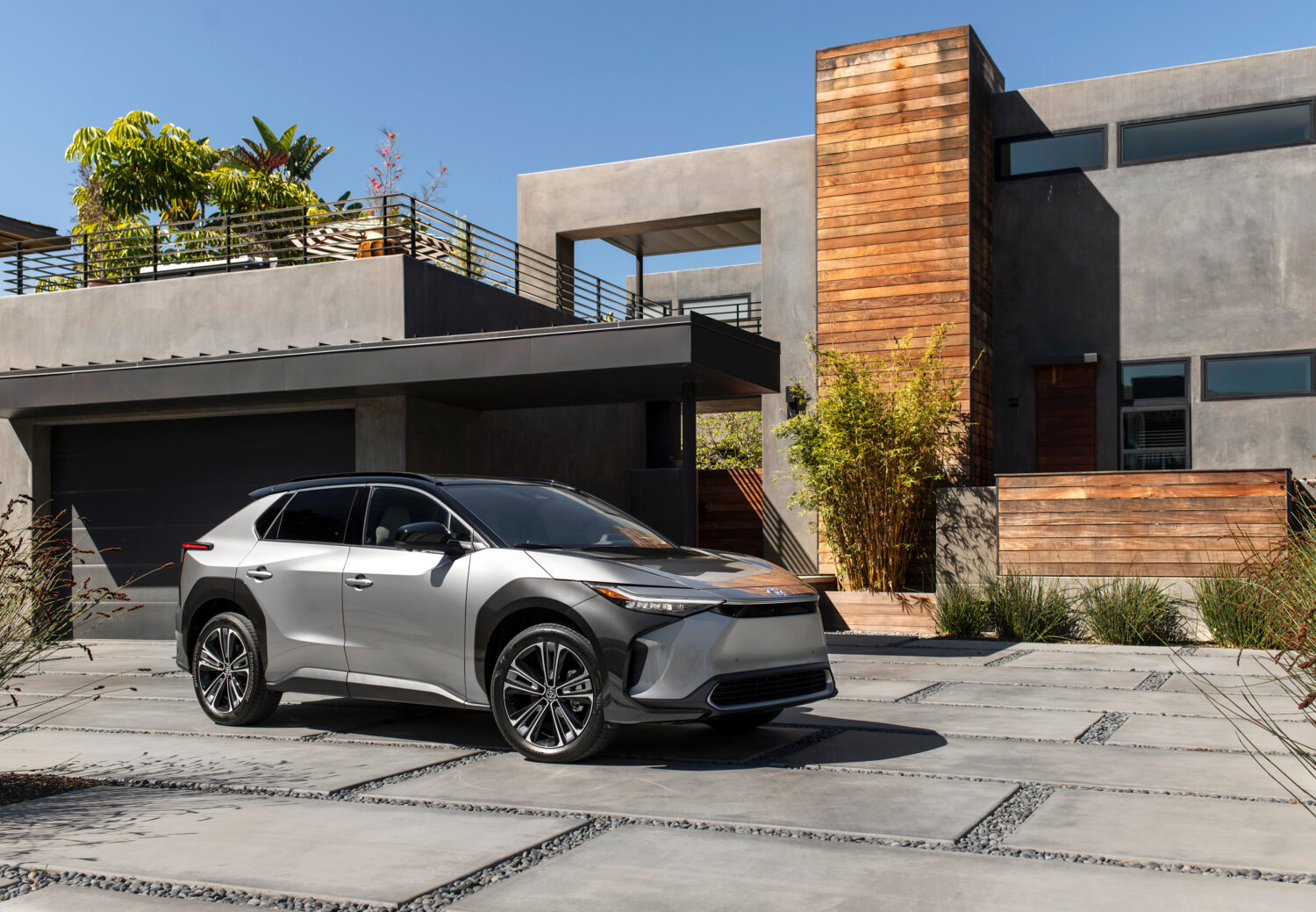
2024 Toyota bZ4X AWD Limited. Toyota is currently riding high on hybrid sales, but also weathering a testing scandal. The company has been very cautious about EVs, and the bZ4X is its first, co-developed with another latecomer, Subaru (which calls it Solterra).
Tested was the upmarket Limited trim with two motors of 80 kilowatts each and AWD. Total horsepower is a modest 214. The Limited adds such niceties as heated seats, a glass roof, adaptive cruise control and useful safety tech. It’s a competent EV—for a first effort—but it feels like Toyota’s attention is still elsewhere. The battery is a 65.5-kilowatt-hour unit in the dual-motor version, with an estimated range of around 228 miles. That’s not horrible these days, but 300 would be much more reassuring. The EV competition is strong.
2024 Hyundai Santa Fe Calligraphy 2.5T AWD. As noted, it’s difficult to stand out in the hyper-competitive crossover field, but the all-new Santa Fe manages it. Everything about this car feels crisply styled, fresh and innovative.
The Santa Fe is now larger, with more storage and passenger space, a third row of seats, and styling that stands out—something that’s hard to do within the boxy confines of the SUV cues. The rear view is particularly felicitous—you’ll know when you’re following one of these. The car is comfortable, with a well-laid-out, spacious interior. And it drives and handles well.
The Santa Fe is available as a hybrid, but the tester had the turbo 2.5-liter inline four with 277 horsepower and an eight-speed dual-clutch automatic. Bigger is thirstier, so the 23 mpg combined isn’t impressive. Definitely check out the hybrid, which starts at $36,950 and yields up to 36 mpg combined. As tested in loaded form the Santa Fe was $50,375.
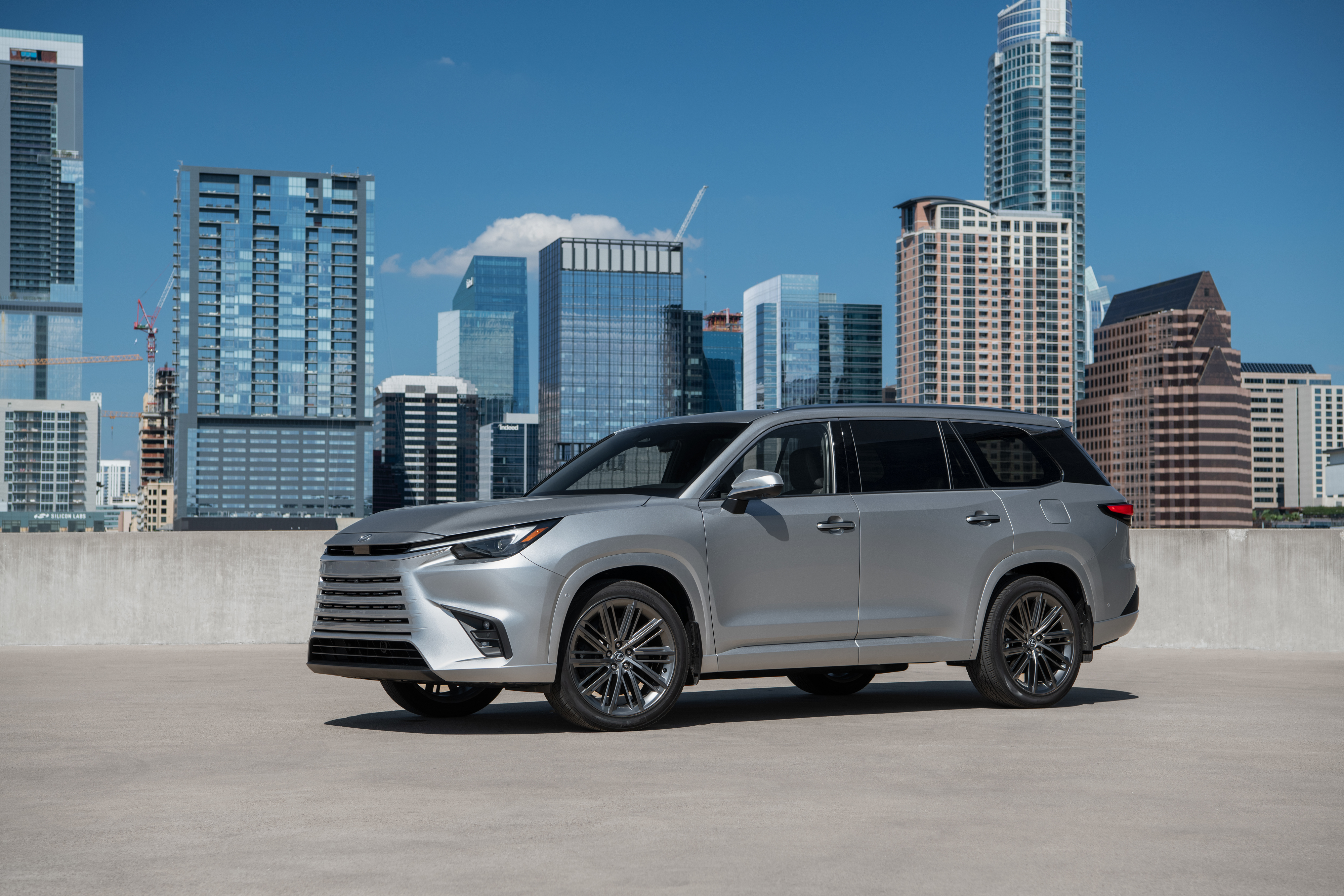
2024 Lexus TX 550h+ Luxury PHEV AWD. We’re starting to see more and more models with plug-in hybrid and hybrid options, and this three-row Lexus has both. In the as-tested PHEV form the Lexus has more than 30 miles of EV-only range. It’s also got a total of 404 horsepower on tap from its combination of 3.6-liter V-6 and two electric motors (for AWD), coupled to a continuously variable transmission (CVT).
The Lexus was big and impressive and drove quietly, with imperceptible transition from electric power to internal combustion. It has plenty of luxury touches. Going to the Luxury trim adds a whole lot of features, including lots of leather, a power folding third row, and a Mark Levinson stereo. But the bottom line in this form is a hefty $82,619. A less-expensive alternative is a modestly equipped TX 500h Hybrid (27 mpg city and 28 highway), which uses a 2.4-liter four and, again, two electric motors, for 366 horsepower.
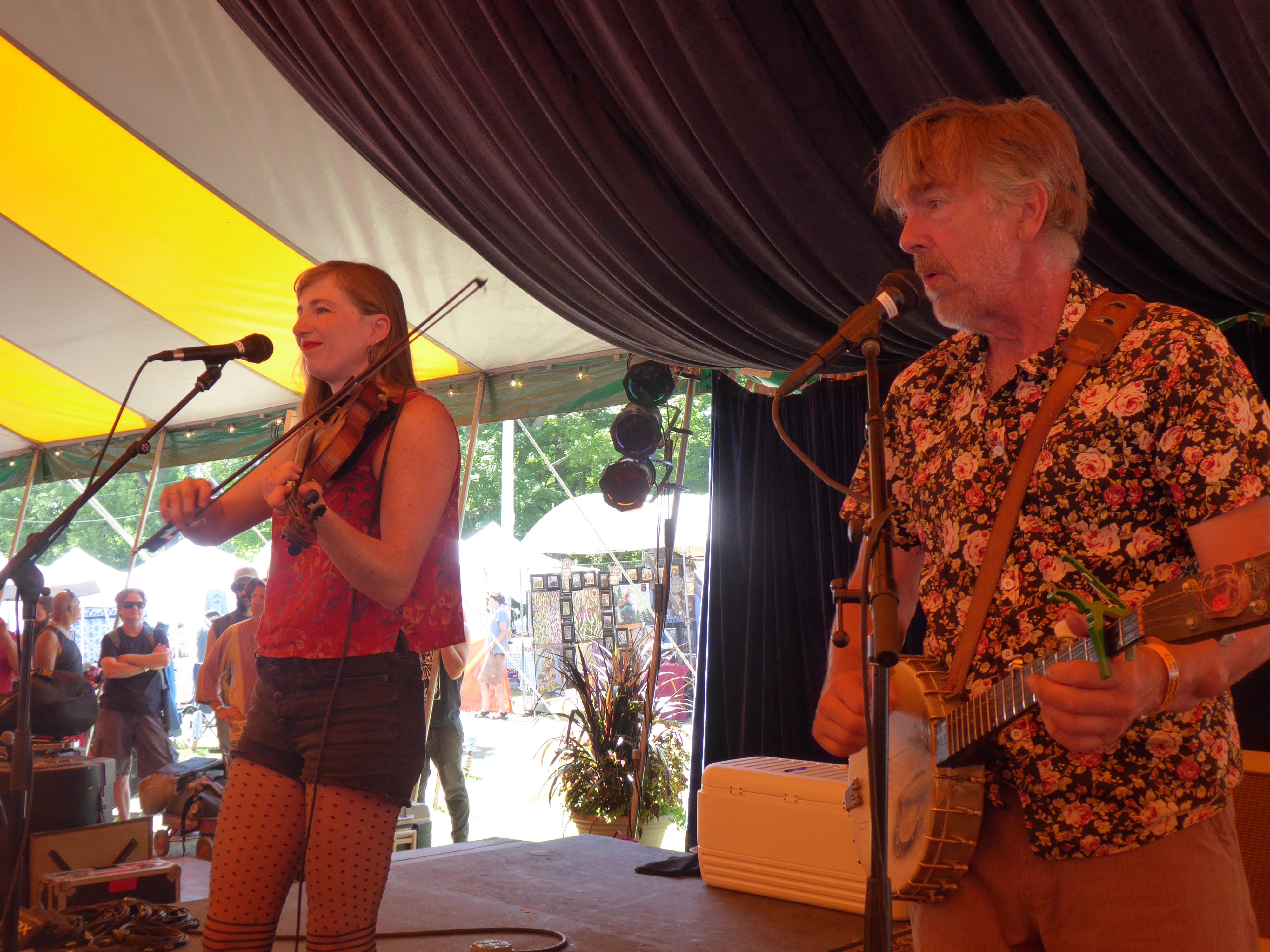
There’s a certain loyalty to the Finger Lakes Grassroots Festival, held annually for 32 years. If you go on consecutive years, as I have, you realize the performers tend to repeat. They’re friends of host Donna the Buffalo, part of the big herd.
The 2024 edition was blessed with excellent weather, as long as you stayed out of the sun. There was music over four days on five stages. You couldn’t see all 80 acts—the music went to 2 a.m. some nights, but you could see a lot. We made it Thursday night just in time to hear a local favorite, Rose and the Bros.
There must be something in the Ithaca-area water, because Donna and Rose have a similar—and unique—sound. Who else does accordion-driven roots rock/cajun boogie? Rose Newton is equally adept on accordion, fiddle and vocals, and Paul Martin, who’s also a farmer, writes some of the songs and plays guitar. The whole group is great. “Lazy Eyes” was a standout ballad, as was the new single, “Heaven Help Us.”
Rose also has a duo with Richie Stearns called Richie and Rosie, firmly in the old-time country camp. Richie is another very talented Ithaca-area songwriter and banjoist, as well as former member of Donna the Buffalo. Here they are taking on Dirk Powell’s “Waterbound”:
We’ve been just missing the tight rocking sound of Miss Tess and the Talkbacks at several venues, though we did hear her playing bass with some others.
Out front she’s amazing, a really talented songwriter with a grasp of retro tradition, a fine singer, and even a very solid guitarist—though she’s somewhat overshadowed by the hotshot Thomas Bryan Eaton. He’s one of the best Americana guitar slingers I’ve ever heard. Here’s Miss Tess essaying “Cry Cry Cry”:
And the title song of her most recent album, “The Moon is an Ashtray”:
We saw an interesting international band called Kajuneji on the infield stage. Members were from all over (with a homebase in Geneva, New York) and recalled a latter-day Earth, Wind and Fire. The lead singer had a nice set of pipes.
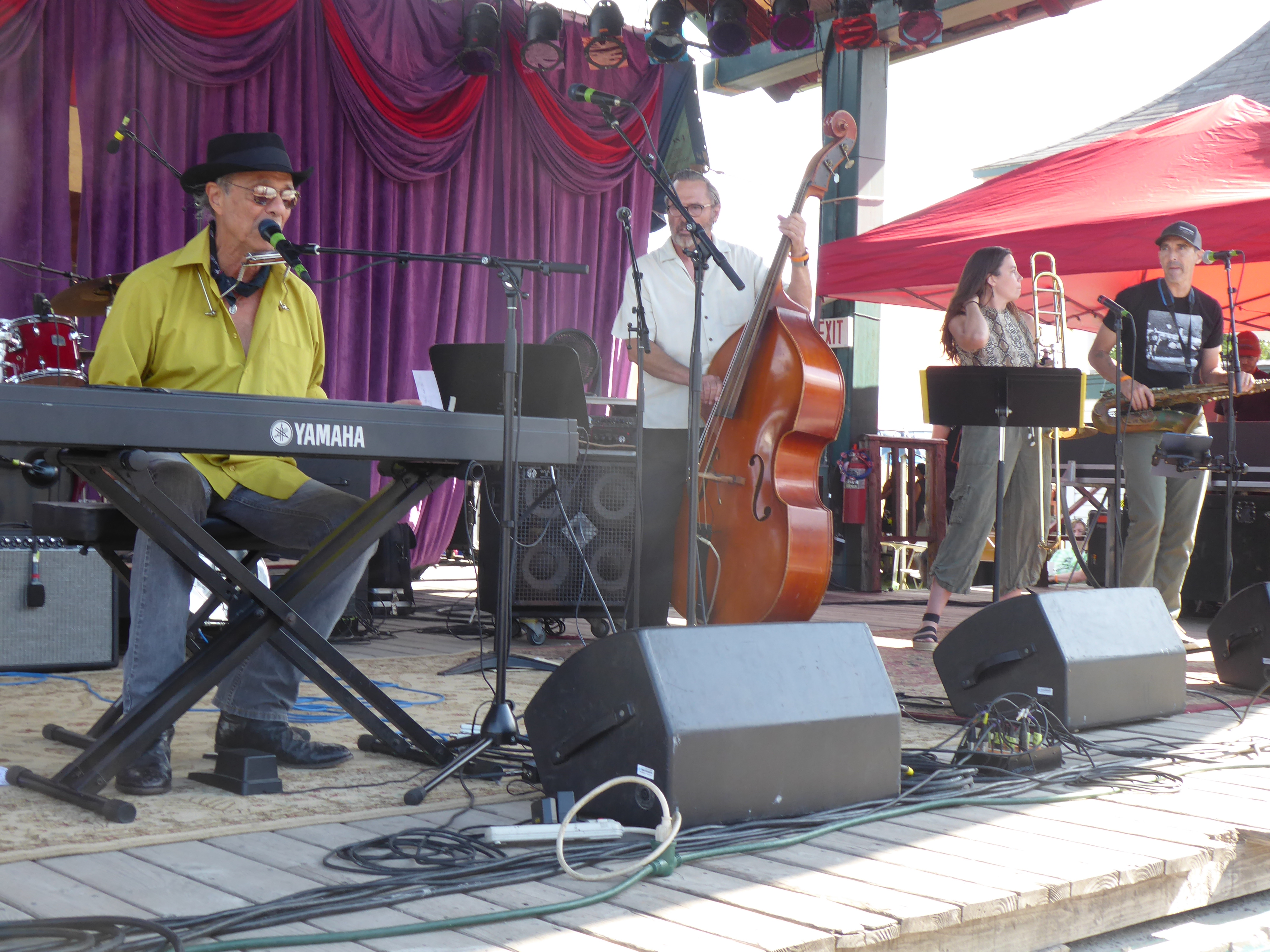
Johnny Nicholas is ex-Asleep at the Wheel and now runs a roadhouse in Texas, which is perfect for the bluesy piano/country swing he delivered. They had a horn section, too. A novelty song concerned a condemned prisoner who keeps ordering his last mile so he doesn’t have to die. “I want a barbecued brick of ice cream, and I ain’t goin’ until you get back with it.”
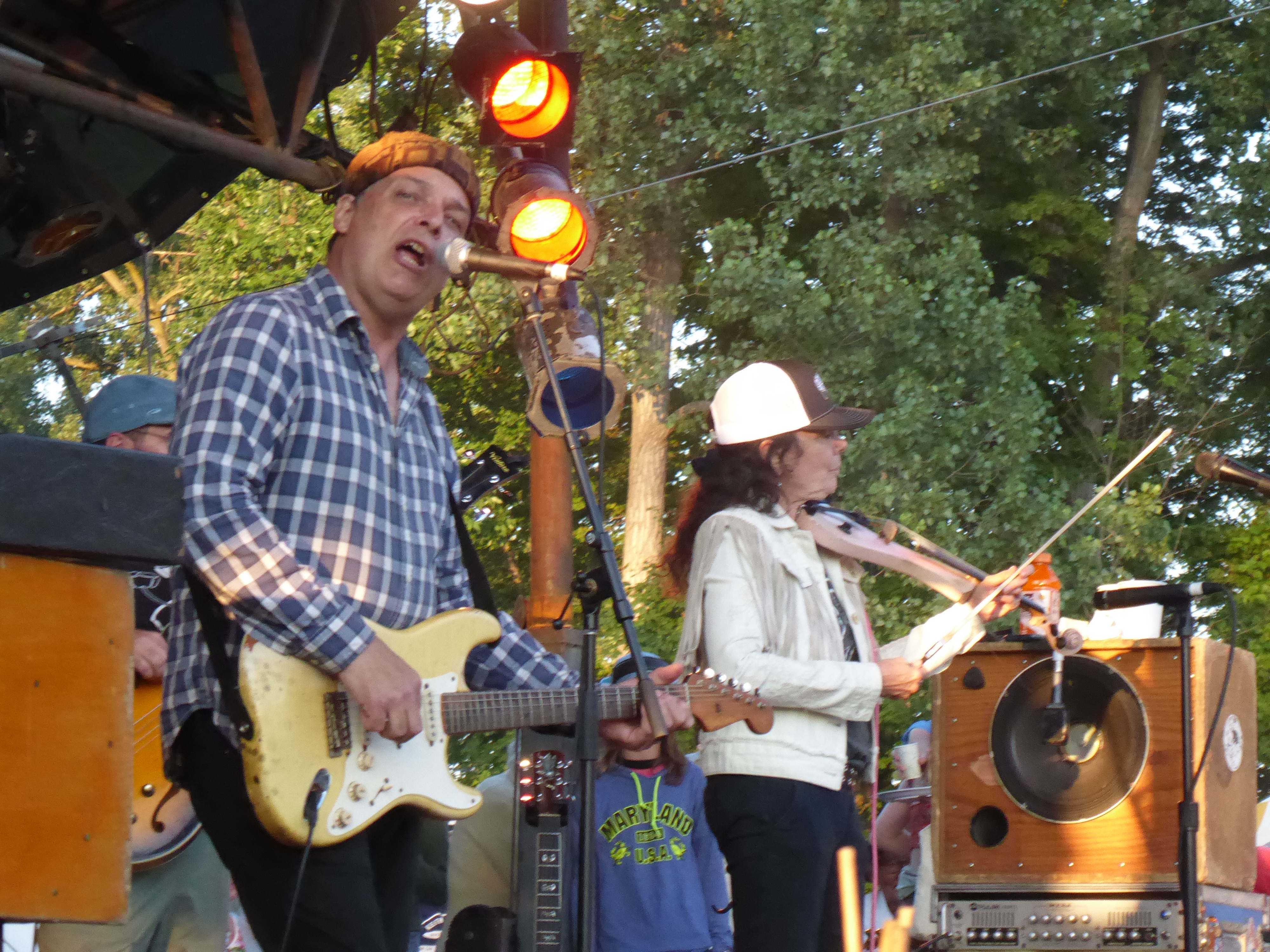
Keith Secola and the Wild Band of Indians had some overlap with Jeb and Friends, since both featured the amazing cellist Hank Roberts and Donna mainstay Jeb Puryear. Secola favors an easy Dead-adjacent boogie rock, with parallels to Canned Heats meets John Lee Hooker. He also pulled out his Native American flute. All of it went down easily.
Jeb and friends apparently get together only for their set at Grassroots, but they’ve been doing it for 15 years. Puryear calls it “unrehearsed music,” but it comes together awfully well. The Cabaret was so crowded I couldn’t even get close enough for a decent photo. The local Sim Redmond Band, with Sim and vocalist Jen Middaugh are a big part of it, and get features. Everything is enhanced by Roberts’ heavily improvisational electric cello, heard to good effect on numerous Bill Frisell albums. “We apologize for the smoke that comes off Hank’s cello,” Jeb said.
“Happy Birthday, Jesus” was heartfelt song from Jeb (seen above with Donna the Buffalo), but he also sang Willie Nelson’s “Bloody Mary Morning” and Middaugh had some fine songs, including one that seemed to be called “Watch it Fall.”
Our big discovery at this Grassroots Festival was a very young band from Potsdam, New York called Tiger Eye. The group has two really good female singers, and both are strong songwriters. They have a fiddle player along, but the keyboard and hand drummer—they were parents. Let’s hope this group gets wider recognition. They said Big Thief is a major influence, but they also did Townes Van Zandt (“Loretta”) and Joni Mitchell (“Big Yellow Taxi”).
Bobby Henrie and the Goners came from Rochester—as they do every year—for some rockabilly and Chuck Berry duckwalking.
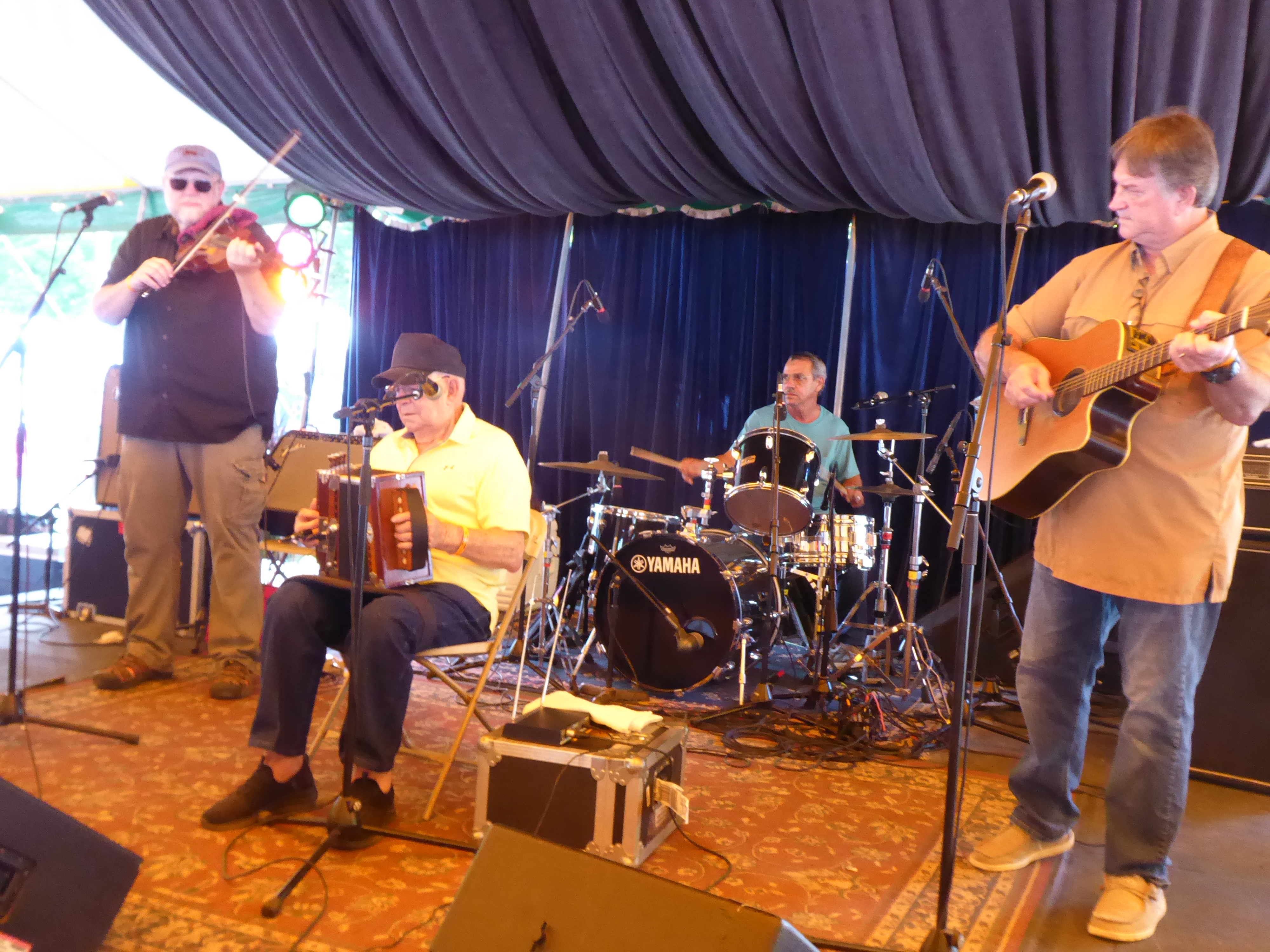
Another fine regular is Walter Mouton and the Scott Playboys, with the leader playing his accordion from a chair these days. The music, sung in French, was vibrant and demanded movement.
As Saturday night came on, it was time for Molly Tuttle and Golden Highway. The group performs standing in a line with all acoustic instruments. It’s proof that electricity isn’t necessary to generate ultra-high energy. This band is on fire.
Molly Tuttle has long been a jaw-dropping guitar player, but she’s assembled a band that’s equally adept, and they never slow down in the slightest—even on the ballads. At the end of the show, Tuttle announced a “costume change” and took off her wig—she’s had alopecia, which causes total hair loss, since she was two. By the way, “Playing with the Queen of Hearts,” which they did at a breakneck tempo, sounds for all of the world like a Mark Knopfler song. But the hit was by Juice Newton.
The group’s albums are fine, but you really need to catch Molly Tuttle and Golden Highway live to know what it is they do.
It was nearly dark by the time we saw part of Bombino’s set. Desert blues from Africa is one of my favorite genres, and certainly my favorite way to hear loud electric guitar these days. After seeing Mdou Moctar at the Green River Festival a bit ago, I’m totally sold on the whole field. Catch Tinariwen too, if you can.
It’s time again for a roundup of recent rides. My neighbors—those who haven’t been wised up already—probably suspect something shady is going on in my driveway, given all the comings and goings. But people up to no good drive a Volvo plug-in hybrid or a Toyota RAV4 Woodland edition? Here are some thoughts on the new test cars.
2024 Volvo XC60 Recharge eAWD Ultimate Dark. Station wagons used to be an affordable form of transportation, but as they’ve morphed into upscale SUVs they’ve also gone up in price. Volvo, once one of the world’s biggest station wagon purveyors, now sells safety-conscious off-roaders like this one for $74,690. For that, the owner gets a big, powerful plug-in hybrid that gets 28 mpg combined in gas mode, and 63 MPGe as a PHEV. The XC60 is all the wagon most owners will need, though the XC90 is also available. Combined, the two-liter turbocharged four and electric motor produce a whopping 455 horsepower and 523 pound-feet of torque. There is 32 miles of electric range. This was a top-of-the-range model, and it met every need. Not a performance car, exactly, but there’s no substitute for a lot of horsepower. The PHEV format is perfect for Volvos, which tend to be weighty because of all their safety equipment—and the test car had the full complement. Drive it mostly in electric mode and there’s very little weight penalty.
2024 Toyota RAV4 Hybrid Woodland Edition. For $37,470, the buyer of this special edition gets a very, very practical and well-equipped vehicle that can deliver 37 miles per gallon combined and transport the family and their dog, with room left over for the luggage. Really, it’s hard to see why families need to spend more and buy something bigger and more powerful. The engine is a 2.5-liter four, putting out 219 horsepower. That’s considered anemic these days, but why are we in such a hurry? The Woodland is a weather package that adds heated front seats and steering wheel, as well as rain-sensing wipers. It’s easy to live with one of these, and the hybrid version is the one to get. You’ll save $2,500 on fuel over five years, compared to the average new car.
2024 Genesis G90 AWD 3.5T E-Supercharger. This is one of the few vehicles, redesigned for 2023, that justifies a price point above $100,000. The bottom line on the test car was $101,400. The electric supercharged, twin-turbo 3.5-liter V-6 produces a hefty 409 horsepower, and is connected to an eight-speed automatic. To shave a bit off the price, you can opt for the 375-horsepower version without the supercharger. The car bristles with high-tech features, including rear-wheel steering to aid cornering, air suspension, and smart hands-free trunk with auto open. The audio system is from Bang & Olufsen. The car not only uses premium materials, it blends them in an overall presentation that far exceeds the competition. It’s quiet as a church in operation, too. As I’ve noted, most consumers don’t really need anything above the level of a Toyota Corolla or a Honda CR-V, but if your needs include wanting to feel like a million dollars, the Genesis G90 has you covered.
2024 Toyota Sienna Hybrid XSE AWD. The hybrid minivan has been a long time coming, with the Chrysler Pacifica Hybrid having the field to itself (at least in the U.S.; Japanese consumers have enjoyed a variety of choices.) The Toyota Sienna and Honda Odyssey are power pair in the minivan category. The 2.5-liter four and electric motor deliver a combined 245 horsepower in this upscale Sienna, which is a lot of van for $52,745. No one buys minivans for stoplight competitions, and this one accelerates in a leisurely watch-the-world-go-by fashion. It’s actually relaxing.
The Sienna is actually hybrid-only at this point. Honda’s Odyssey is going hybrid for 2025 with a system that delivers 204 horsepower and 247 pound-feet of torque. The horsepower figure is lower than the standard Odyssey, but the torque figures are about the same (262 pound-feet in that version).
Vans aren’t known for their fuel economy, but with Toyota’s celebrated hybrid drive this Sienna delivers 35 mpg combined (36 if you forget about the AWD you might not need). If you want to use your Sienna as a hauler (as in my brother’s antique book business), be advised that the second row isn’t removable. But dual power sliding doors make loading very easy.
2024 Acura TLX Type S. For 2024, the TLX lineup was revised with this performance variant at the top. Acura has concentrated more on luxury than sport, but this all-wheel-drive Type S boasts a turbocharged, 24-valve three-liter V-6 that produces 355 horsepower and 354 pound-feet of torque. That’s attached to a 10-speed automatic. Brembo does the front brakes, and the Type S adds an exclusive Sport+ driving mode. Torque vectoring can send 70 percent of the power to the rear axle, and all of it to the outside rear wheel. It was genuinely fun to drive, though Acura will have to lure consumers away from their BMWs and Audis. The price of the TLX starts at $45,000.
Genesis GV70 3.5T AWD Sport Prestige. The average price of cars sold to Americans keeps creeping up. In June it was $47,433, according to Cox Automotive. Given that, the $68,870 for this Genesis doesn’t seem so bad, but it’s still a considerable piece of change. It buys a compact luxury SUV that’s about as far from a 1963 Jeep Wagoneer as could be imagined. Luxury SUV was once an oxymoron. Under the hood of this one is a 3.5-liter twin turbo V-6 similar to that in the GV90, but it’s an option in the 70. The engine, coupled to an eight-speed automatic, produces 371 horsepower and 391 pound-feet of torque in this iteration. The Genesis sedan are more to my taste, but this type of SUV has its advantages, not least ease of entry and exit for some of our more senior citizens. As for off-roading, few will take advantage. It’s hard to imagine scratching and dirtying this pretty car.



























 Territorial Imperatives