Considering the Tariff Factor: New Cars in Review

The Trump tariffs have thrown the auto industry into a complete turmoil. The future pricing of the cars on this list will be determined by whether or not they’re made in the U.S. of A. And some automakers—Jaguar Land Rover, Audi—are temporarily suspending deliveries to America while they plan their next move. So if I say glowing things about the 2025 Audi SQ7 Prestige I tested, will you even be able to find one on the lots?

A case in point, my brother wanted a 2025 Kia Kona Hybrid with 49.9 mpg. This vehicle is offered here, starting at $26,000, or $33,550 for the Limited model he wanted. He found one at a local dealer, but then it turned out to be not available. He had to scramble around to find another one—they’re rare, for some reason—and managed to get the keys just days ahead of the 25 percent tariffs. He paid around $32,000 all in. He was, in fact, lucky. It’s built at the Ulsan facility in South Korea, not here.

So, the numbers here are, to put it mildly, in flux.

2025 Toyota Sequoia 1794 Hybrid. I prefer hybrids to be smaller, lighter and cheaper. The huge 1794 (above) starts at $82,330, and despite the “hybrid” badges it’s not fuel efficient. I mean it gets 22 mpg combined, for crying out loud. Yes, it’s a big, comfortable SUV with all the latest tech, and Toyota wrote the book on hybrid drive, but it’s also 6,179 pounds of vehicle. But you could do worse if you have eight people to move around. The price couldn’t go up much more, but luckily the Sequoia is built in America. Texas, to be specific.

2025 Toyota Crown Signia Limited. It dates me to remember the Crown as a luxury car for the JDM (Japanese domestic market). The new one (above) is still fairly well-appointed, with sedan styling that still gives off some SUV cues. Such attempts tend to come off as awkward, but OK. Prices start at $42,475, which is about what Americans typically spend on a car.

The good news here is that all Crowns are hybrids, beginning with a 236-horsepower powertrain, able to deliver 41 mpg combined. That’s pretty good for a car of its size. You can also gild the lily with the $56,125 Platinum trim, accessing 340 horsepower with reduced fuel economy. Don’t be in such a hurry! The Crown Signia is built at the Tsutsumi Plant in Aichi, Japan, and thus subject to tariffs that would threaten its competitiveness if they were fully passed on to consumers.
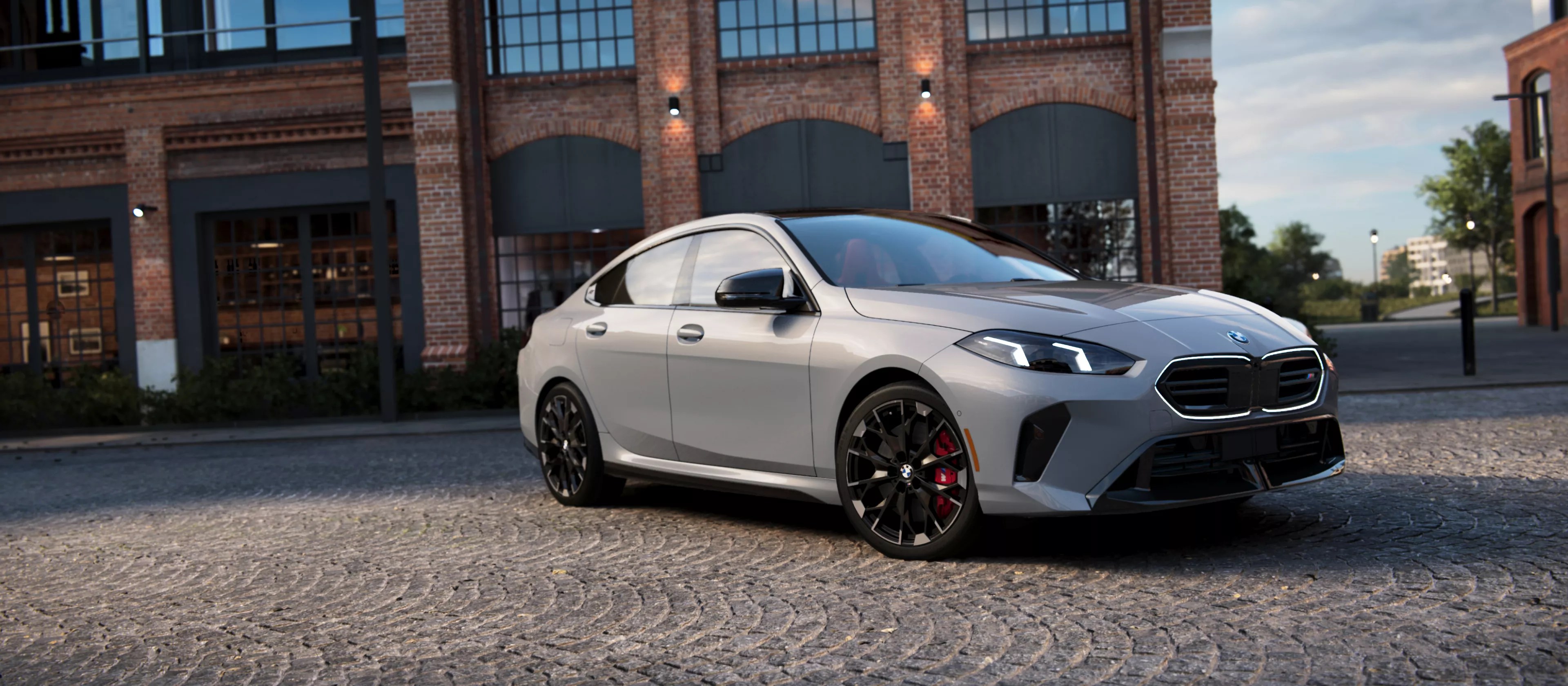
2025 BMW M235i xDrive Gran Coupe. Consider the BMW 2-Series as a way to escape the big-grille plague that I thought I’d be getting used to, but no such luck. This unassuming purple beast (above, though not purple) is a performance BMW with quite a bit of Mini Cooper DNA (same parents, after all). There’s no manual option, but the two-liter turbo four puts out 312 horsepower and 295 pound-feet of torque, shifting through a seven-speed dual-clutch automatic. The combination is good for a 4.7-second zero to 60 time. The interior feels classy, but the seats could use more padding, especially as this M delivers a relatively stiff ride. The M235i is a little car with a somewhat big price, starting at $50,675. There’s not much in common with the similarly named M240i coupe, but that one has a straight six-cylinder engine and more power—382 horsepower, with AWD available. The price is very close, $50,600, with xDrive adding $2,000. Production: a highly automated plant in Leipzig, the former East Germany.

2025 Mercedes-Benz S63 EV4. The European marques have fully embraced the plug-in hybrid (PHEV) format, and this example emphasizes performance. The challenge for Mercedes was to deliver zero to 60 in 3.2 seconds (and a 180-mph top speed) via a four-liter twin-turbo V-8 and e-motor, while also delivering fuel economy to justify that PHEV badge. The package delivers 791 horsepower and 1,055 pound-feet of torque.

The figures for cars like this are wild. It offers 49 mpg combined (46 in the city/53 on the highway) and an electric range of 16 miles (which could be higher). But if you run it only on gasoline, the result is only 18 mpg. Keep it charged up, is what I say. Driving range is quite good at 380 miles. The interior of the Mercedes is super-nice, with Benz’ really useful active bolsters to keep you in your seat. The price is an eye-watering $186,200, which is a shame because lots of posteriors would occupy that driver’s seat if they could afford it. Although Mercedes has an American plant, these cars are built in Germany, and thus the price (if passed on) could go up, up and away.

Is there room for more Benz cars in Alabama? The plant there is already producing the GLE, GLS, and GLE Coupé SUVs, and the Mercedes-Maybach GLS for international sales. EVs in Alabama are the EQS SUV, EQE SUV and Mercedes-Maybach EQ. The S63 EV4 is likely to be a low-volume model and will probably stay in Germany.

2025 Audi SQ7 Prestige and Q4 e-tron Prestige. I’m putting these two together because I’m curious what the German automaker will do with pricing for these fine driver’s offerings. Both are already expensive cars, and price is a big issue with EV customers—who think the electrics are too expensive even without the tariffs. Audi’s e-trons will now be a big jump from domestics like the Chevy Bolt and Equinox. The Prestige Q4 is $69,095, and my guess is that the automaker can’t really raise that too much without having them just sit on lots. The big, luxury-oriented SQ7 Prestige (above) is $98,195. Raising that heady amount by 25 percent would be prohibitive. That’s why a pause was necessary.

There definitely is U.S. production in Audi’s future. The company said in February it will expand production in North America, possibly in a joint venture with its Volkswagen Group siblings. According to Audi CEO Gernot Doellner, also a VW management board member, “We could go into existing Volkswagen Group plants or we could build up additional capacity. We are open to solutions and are evaluating the various options.”

2024 Toyota Corolla Cross Hybrid XSE and 2025 Toyota GR Corolla Premium. If you expect this car to look like a Corolla—i.e., a sedan—you haven’t been paying attention. This Corolla, made in the U.S. of A. (yeah!), has become an entry-level SUV, and a hybrid to boot. Pricing starts just below $30,000 (likely to stay there), and it can deliver 45 highway/38 city fuel economy via a two-liter four-cylinder engine and a trio of e-motors, for 196 horsepower. That makes it faster than the standard Corolla Cross, and definitely the one to buy. Don’t expect a performance car—it’s kind of like a Japanese appliance, but that pays off in terms of reliability and longevity.

I drove the GR Corolla (above) at Charlotte Motor Speedway in North Carolina last year, and here’s where you go for performance! These racy Corollas are kind of a labor of love for the company, which estimates it will sell less than 6,000 of them in the U.S. The all-wheel-drive GR hosts an innovative 1.6-liter turbo three-cylinder engine that punches above its weight and produces 300 horsepower (and 295 pound-feet of torque). Zero to 60 takes just 4.99 seconds. The model was introduced in 2022, but now includes an eight-speed paddle-shifted automatic as a $2,000 option. The GR also looks the business, with spoilers galore. Pricing is $38,860 for the Core entry model and tops off at $47,515 for Premium Plus. But the GR Corolla is built in Japan, in a dedicated facility within the Motomachi plant, and is this fully subject to the tariffs. Expect a price rise.

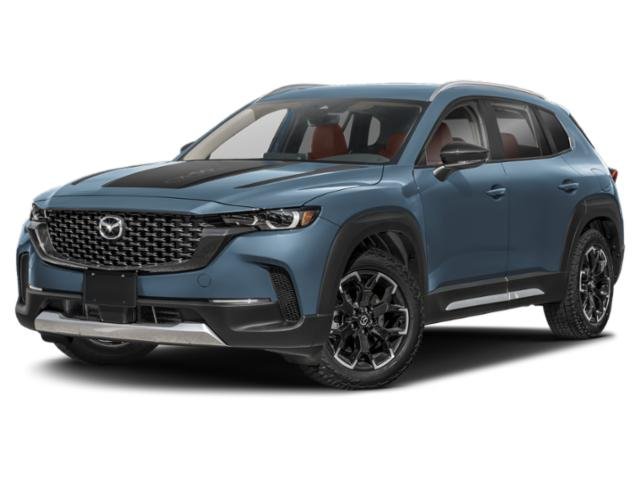
2025 Mazda CX-50 Hybrid Premium Plus and 2025 CX-50 Turbo Meridian Edition. Get the hybrid (above). It uses the same peppy drivetrain as the Toyota RAV4 Hybrid, with 219 horsepower from no less than three electric motors standard (for AWD) and a 2.5-liter four. This combination and a relatively light shell yields impressive 38 mpg combined fuel economy. You’ll want a regular CX-50 if you tow a lot, because it can handle 3,500 pounds (versus the hybrid’s 1,500). With the standard CX-50, you’re looking at 24 mpg in the city and 30 on the highway. The rating goes down to 23/29 (and the price goes up) if you opt for the 2.5 with twin-scroll supercharger. The hybrid, built in Huntsville, Alabama, starts at a reasonable $35,390. And the price is going to stay there, minus tariffs.
The Big Ears Trip

It was an ambitious road trip, 10 days from Connecticut’s home base with stopovers in Virginia, North Carolina, Kentucky and Pennsylvania. The idea was to bring a Radio Flyer cargo e-bike down to my daughter Maya in Louisville, after spending a blessed four days at Knoxville’s legendary Big Ears music festival—a celebration of everything eclectic.

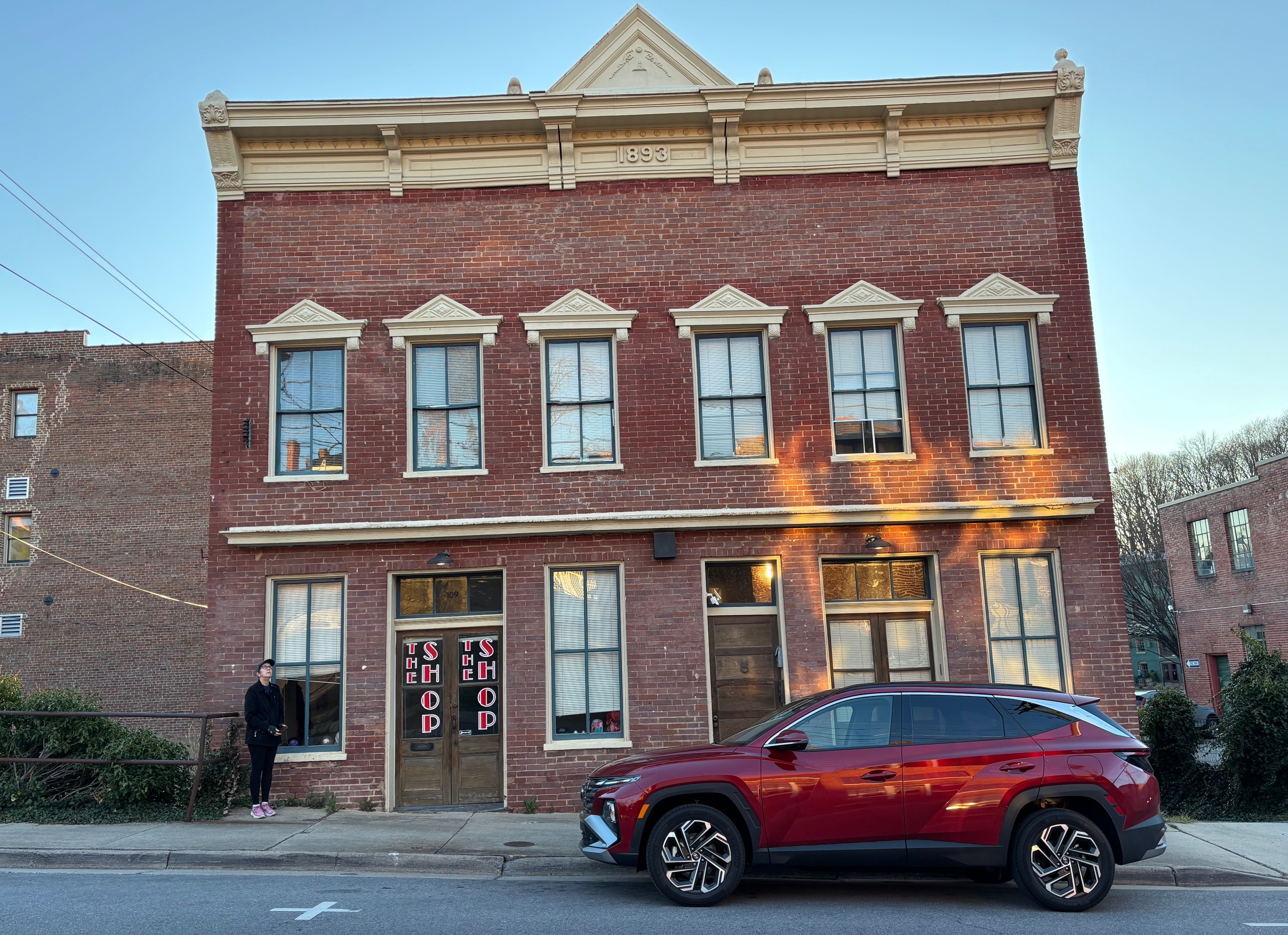
The Tucson at our Staunton, Virginia stop.

Our steed was a 2025 Hyundai Tucson Limited AWD, bottom-lining at $41,870 with the only extras being the Ultimate Red paint ($470) and carpeted floor mats ($210). It proved the perfect vehicle for the trip, because the Radio Flyer—which is extra long—just fit with the front wheel off. We put a $16 cover on it and hoped (prayed?) no one would steal it during a week on the road.

The Tucson came equipped with a 187-horsepower, 2.5-liter “Smartstream” four-cylinder engine that also delivers 178 pound-feet of torque through an eight-speed shift-by-wire auto. It was a smooth cruiser on the highway, but a bit lacking on passing power. The huge benefit, though, was the 30 mpg it offered on the long highway sections (26 combined). That’s pretty good for a compact SUV. Start/stop technology is helpful. Gas prices vary widely in the South, but we were able to access $2.75 a gallon at one point.

Hyundais come very well equipped, including with the most useful left and right cameras that display with the turn signals. The chromed shifter twists for drive and reverse, which took a bit of accommodation but is ultimately fine. The Tucson has excellent front legroom, and even with the seats extended it doesn’t cut into rear space too much. Heated/cooled seats and heated wheel are standard on this model.
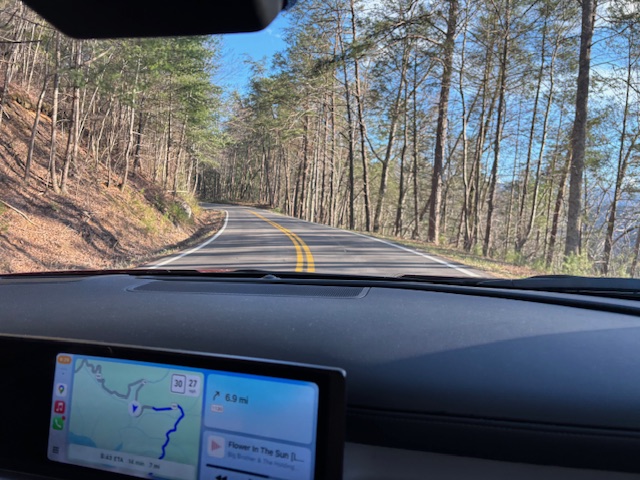
Three hour stretches behind the wheel were not all that fatiguing, making the whole crazy trip feasible. Our first stop, after an AirBNB overnight and Thai food in a downtown Staunton, Virginia Victorian mansion, was Tapoco, North Carolina, on the Tennessee border. Why there? It’s the home not only of the historic Tapoco Lodge, built in 1930 and renovated for modern times, and (right around the corner) the infamous “Tail of the Dragon,” an 11-mile stretch of winding mountain road that features 318 turns.

The hotel was built by the Tallassee Power Company with the original aim of providing a roof for workers at the Cheoah dams and other hydroelectric projects, and it later housed Alcoa workers. The City of Alcoa (what a name!) is up the road, and aluminum smelters tend to locate near cheap sources of power—it takes 10 kilowatts to produce a pound of aluminum. Now you know why Iceland, with its abundant hydro and geothermal, smelts a lot of the metal from bauxite ore.  

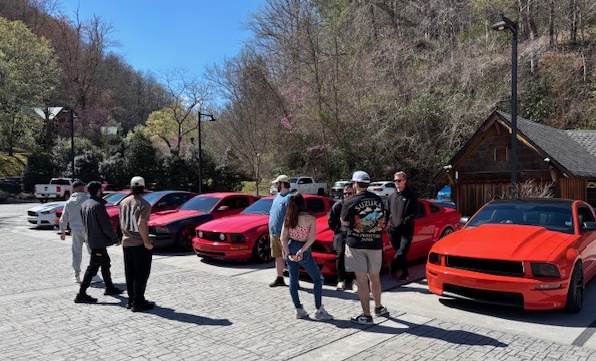
Today it’s a comfortable rustic lodge that offers hiking on multiple trails, white water rafting in season, yoga, and glasses of wine by the firepit. The parking lot was interesting. Despite the rural location, with the nearest town 15 miles away, a variety of Porsches nestled next to a veritable Ford dealership of Mustangs. And then there was every possible motorcycle variation.

The Mustang guys get ready for the Dragon.

The Mustang guys were braving the Dragon and socializing in conjunction with a meet in Dolly Parton’s Pigeon Forge (near as the crow flies, but long in mountain driving). One local owner said he does the Dragon once a week.

The Lodge: A river ran through it.

It is perhaps anticlimactic to white knuckle this legendary road in an SUV with a cargo bike sliding around, but it was fun anyway. Caution is not only warranted but necessary—there are sheer drop-offs, and lots of accidents. Check out the Dragon Death Map to sober up before heading down there.

A Lodge breakfast.

From Tapoco (with a stop in Robbinsville, which has a great thrift shop and a surprise Mexican food truck) it was on to Knoxville, about three and a half hours drive. The Big Ears festival (March 27-30 this year) is like no other. It seems simple enough—four days of music with no boundaries between jazz, folk, rock, world and experimental music of all kinds. But it’s exceedingly rare, especially done with the exquisite taste and broad knowledge that Ashley Capps (you may know him from the Bonnaroo extravaganza in nearby Manchester) brings to the table.

Tatiana Hargreaves (left) and Allison DeGroot.

So it was old-time folk with the Magic Tuber String Band and Hargreaves/DeGroot, plus jazz from Sun Ra’s Arkestra and Immanuel Wilkins, electronica from Immersion (featuring ex-Wire man Colin Newman and partner Malka Spigel), and the pioneer of German rock Michael Rother.

Immersion.

A somber note was on March 28, with one of the last performances ever by “freak folk” pioneer Michael Hurley, who died a few days later at home in Oregon. He didn’t look all that well at Big Ears, but he was in fine voice, performing a version of “Delia” I’d never heard him do. He was for 50 years “the purveyor of an eccentric genius and compassionate wit. He alone was Snock. There is no other.” He was 83.

A last image of Michael Hurley.

In four days, you see a lot of music, at venues scattered all over Knoxville’s very friendly and apparently prosperous downtown. While rents and home buying are sky high in town, it’s still possible to get four sides, corn bread and a draft beer for less than $20 at a barbecue joint on Gay Street.

 Robert Hurst, bassman with the Kris Davis Trio.

Then, the last formal stop was Louisville, Kentucky, home to my daughter Maya and husband Spencer. The Radio Flyer e-bike was still in the back, surviving a dozen lonely parking lots. I rode it up and down the street to make sure it still worked. These cargo bikes are versatile, transporting cargo and kids with a bunch of add-ons. Electric power makes them conquer hills easily. Radio Flyer, by the way, is the Chicago company that makes the little red wagons. Branching out makes sense!

After really tasty shrimp and grits at the in-laws it was back on the road for an epic drive. We stopped for lunch in very rural West Virginia, where poking out from a small roadside junkyard I saw a white Volvo 1800S. How did that get there? While we were at the local diner the proprietor got a call from a slick saleswoman. “She was calling from New York and just hung up on me when I said no!” An opinion about people from New York was cemented forever. 

The final overnight was in Chambersburg, Pennsylvania, home to fine thrift stores, one, New Life, run by the Mennonites. I found a beautiful “mid-century modern” 1959 Blaupunkt console radio/record player with a built-in bar on an earlier trip to Chambersburg. It had been used at an officer’s club in Germany. $75! I discovered later that German-market turntables rotate 12 percent slower on American 60-cycle current. But these old mono tube units are happy to run Bluetooth.

The whole trip took 10 days. We arrived home to a very needy cat. Everything worked out, including the Tucson, which delivered 30 mpg on the highway (and that was most of the driving). The experience left me willing to explore other long road journeys across this great country of ours.

Getting to Know Jenny Owen Youngs

It’s easy to slip into superlatives with the singer-songwriter Jenny Owen Youngs, who composes songs of insightful, sometimes dark, brilliance and clothes them in very accessible pop earworms.

“Fuck Was I” hit me on the head when I first heard it on a demo version of her Batten the Hatches album. This was just after she’d graduated from SUNY Purchase—where she’d recorded the album. She was then playing tiny coffeehouses (including one run by perceptive percussionist John Stuart in nearby Norwalk), but clearly destined for more. Given to wearing Girl Scout uniforms then, she was funny, quick, self-deprecating. And she appeared on my WPKN radio show and even went into the studio with me to record a version of “Drinking Song.”

Since then, Youngs’ music has been used on Weeds, Grey’s Anatomy, Nurse Jackie and BoJack Horseman, and she made four more fine albums. But maybe she’s best known for her podcast, Buffering the Vampire Slayer, running down, with Kristin Russo (her now former wife), every single episode (with Youngs’ accompanying original songs). She also did the X Files.  

Youngs’ latest album is Avalanche on Yep Rock, released near the end of 2023. I saw her play a lot of it solo at the newly reopened Iron Horse in Northampton, Massachusetts on February 20. She was characteristically hilarious, when she wasn’t singing, beautifully, her gorgeous songs. Here’s a new classic, “Knife Went In”:

Winter Wagons: Seasonal Rides for the Whole Family

By Jim Motavalli

It’s interesting that all of these tested cars are either commodious SUVs or station wagons. Every one is a good winter car, while the Porsche and Miata hibernates in the garage. And note how many of them are hybrids or EVs. The old paradigm is shifting.

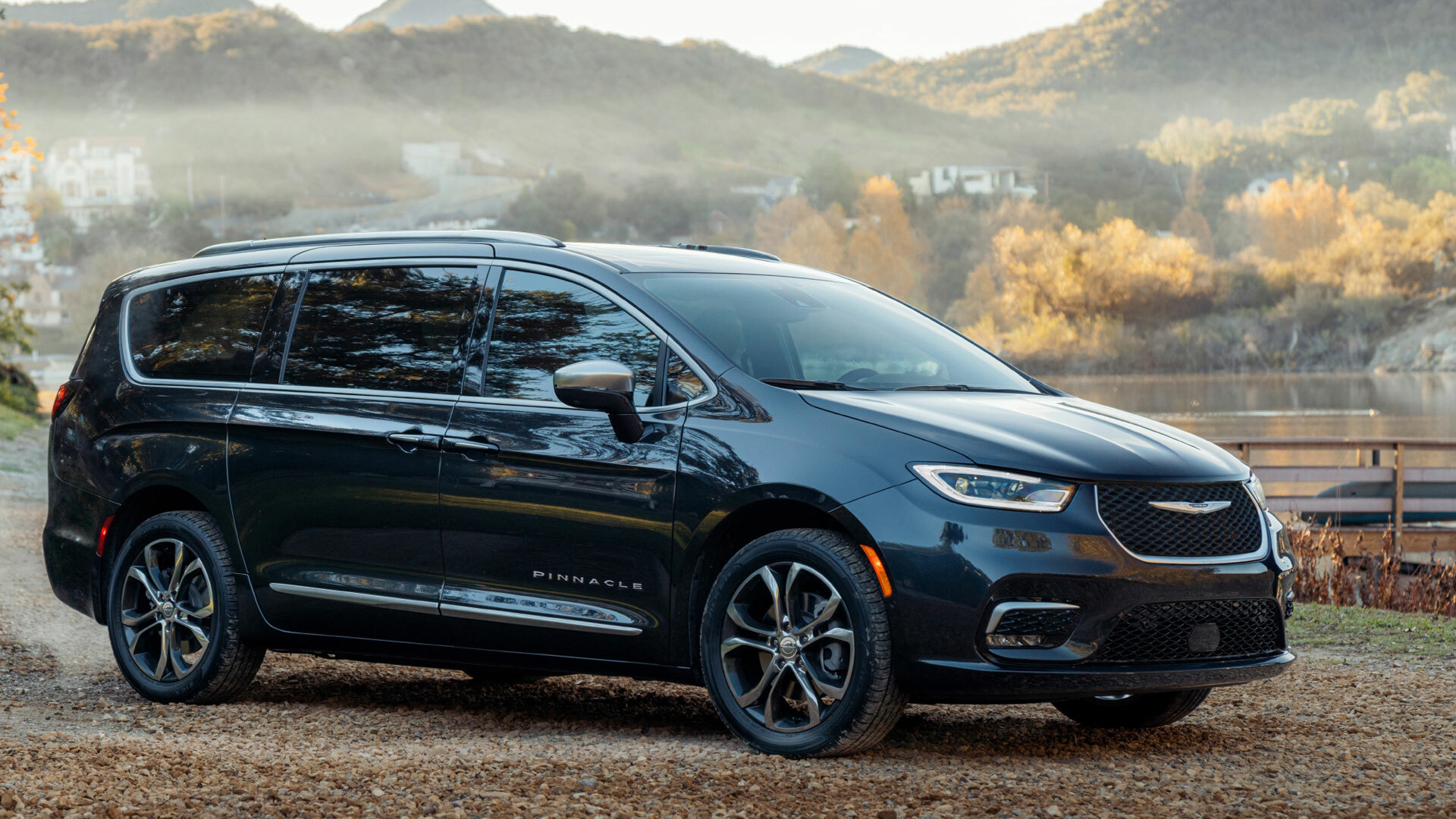
2024 Chrysler Pacifica Hybrid Pinnacle. I have a soft spot for this minivan (actually, for all minivans) and the Pacifica gets special kudos as the first hybrid of its kind. It’s no longer unique, because the very mainstream Toyota Sienna now only comes in a hybrid configuration, as does the Kia Carnival (see below). Unlike the Sienna and Carnival, however, the Pacifica plugs in, and gets 32 miles of EV travel before it has to revert to the gas engine.

The hybrid dispenses with the Stow ‘n Go third-row seats from the standard Pacifica, and that’s a loss. On the road under V-6 power, the Pacifica doesn’t feel all that refined, but then neither does the Toyota Prius. Entry and exit are easy, and the controls are familiar and easy to use. Legroom is good for six-footers.

The Pacifica is quiet under electric power, and rather noisy with the gas engine running. Overall, it’s a good choice if you want both a plug-in hybrid and three-row minivan convenience. The Pacifica came in at $61,685, which is hefty for a minivan. But it offers 30 mpg combined with just the gas engine, and a stellar 82 with the hybrid. It will take a while to pay back the premium price, but it’s still a good choice.

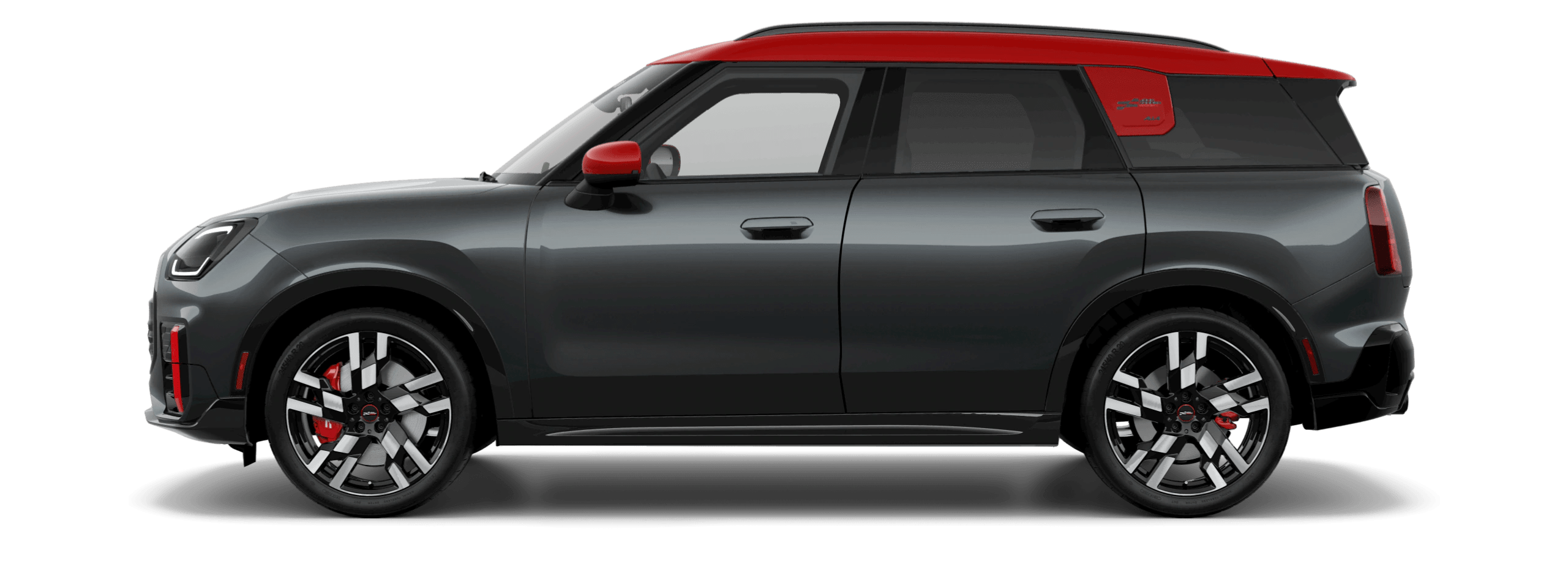
2025 Mini John Cooper Works (JCW) Countryman ALL4. The whole point of the Mini, when it was introduced in Great Britain circa 1959, was that it was cheap and cheerful. That year, you paid $1,340 for a 10-foot-long bare-bones automobile that, with an 848-cc engine, could deliver 40 mpg. Even with inflation, it was a car everyone could afford. Well, car prices have crept up and the new Countryman as tested was $51,995. That’s a big jump! To be fair, you can get into a new Mini quite a bit cheaper. The starting MSRP is $28,950.

That said, there’s a lot of car here. John Cooper was an early Mini tuner, and he’s done proud in this iteration. The JCW is on the platform of the BMW X1 M35i, and it offers all-wheel drive from a turbo four, an eight-speed double-clutch transmission. and 312 horsepower. Plus, it’s sort of a station wagon (another favorite format of mine) when they’re getting scarce. Driving the Mini is quite fun, even on the longer trip I undertook, and the interior is up to the Mini’s avant-garde standards—complete with center-mounted and colorfully lighted central display. The original Countryman offered woodie accents, and alas the retro touches don’t go quite that far in this incarnation.

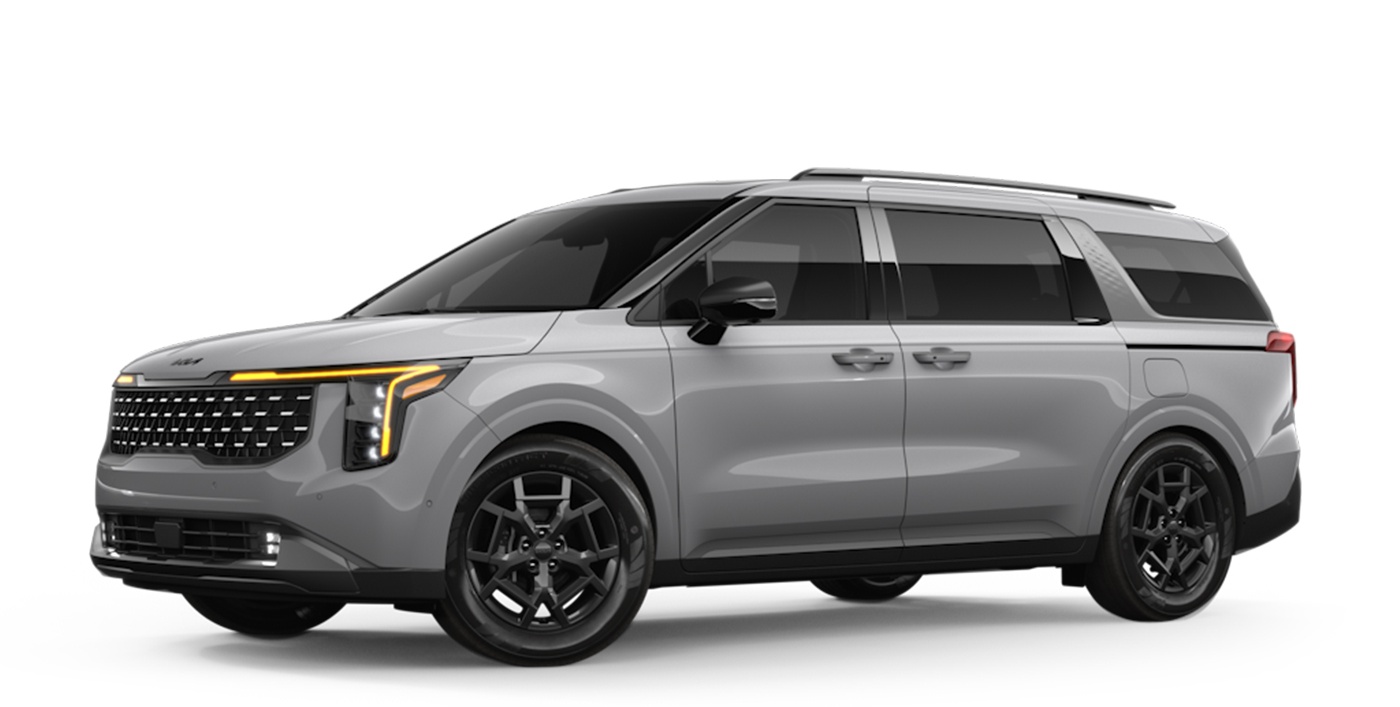
2025 Kia Carnival Hybrid SX Prestige. Kia has hopped into the hybrid minivan sweepstakes with a configuration that makes a lot of sense—a turbo 1.6-liter four, electric motor and six-speed automatic taking the place of the non-hybrid’s V-6 and eight-speed auto. There’s just the one motor, so no AWD version is offered—the Sienna has that.

Kia and Hyundai usually hit what they’re aiming at, and that’s definitely true here. It was a fine minivan to spend a week in, and it passed quite a few gas stations. The second-row reclines in a useful way, and kid-pleasing rear-seat electronics are offered. The Prestige version is at the top of the model lineup, and came in at $57,255. The price includes a truly comprehensive safety suite, as well as leather seats, Bose, a heated wheel and head-up display. Worth getting.

On-road performance was quite refined. The Carnival hybrid can deliver 242 horsepower, not far off the regular model. The choice of regenerative braking settings was appreciated.

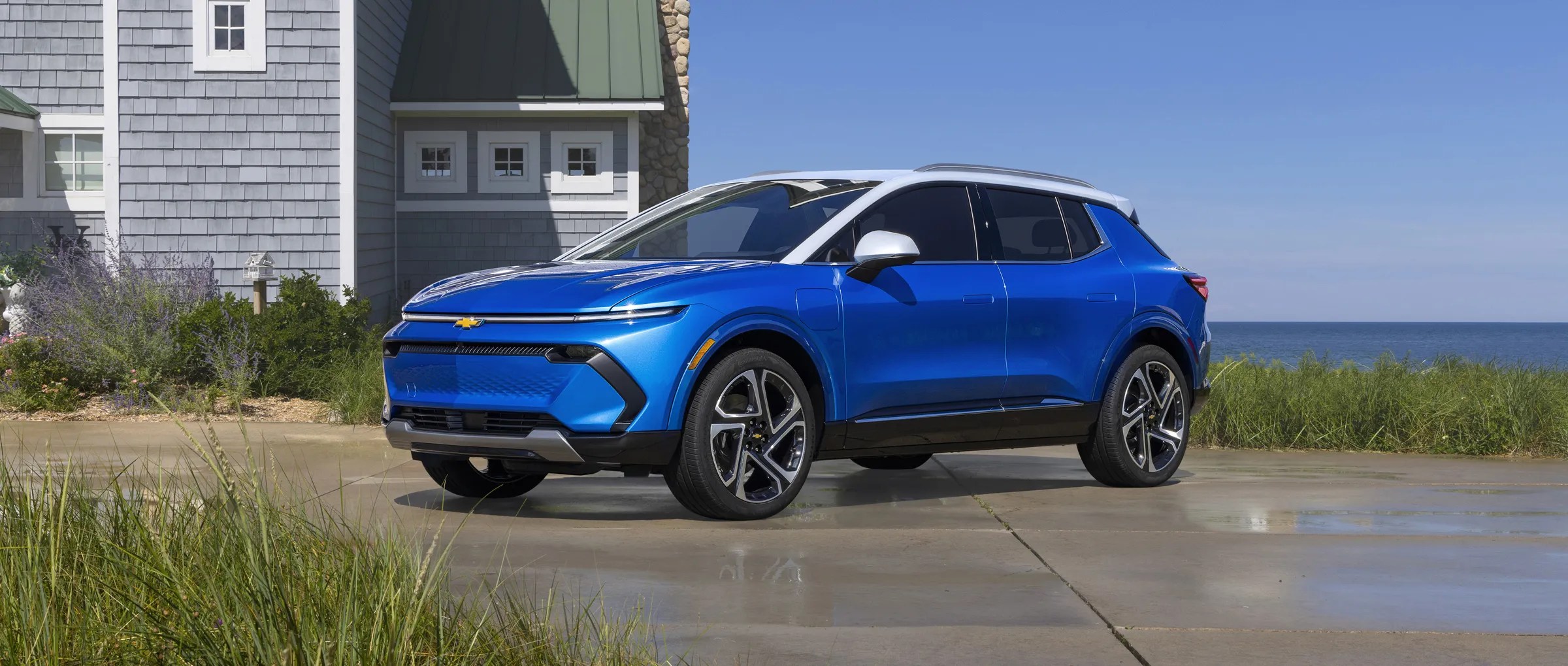
2025 Chevrolet Equinox EV LT. This electric Equinox seems right to me, not as a replacement for the soon-to-return Bolt, but as a companion to it in the EV lineup. GM has tended to electrify its larger models, including the Hummer and the Silverado, and the point eludes me. The Equinox is considerably cheaper (at $34,995 in tested form) than either of those, and considerably more fun to operate. It has a fresh and stylish design (without being overtly luxurious), and it’s exceptionally easy to pilot around town.

A local Chevy dealer told me he’s moving a good number of Equinoxes, but electric vehicles are still only about 10 percent of his sales. That needs to get better, but the narrative that EV transactions are plunging is way off—they’re just not rising as fast as they were.

The tester didn’t have a single option on it, but it had everything needed—even a bicycle alert as part of its safety package. The 17.7-inch screen was fine and clear, with a second 11-incher. The Equinox can fast charge at 150 kilowatts, and impressive 319-mile range. Frankly, I’d buy one—especially if it scores well in reliability testing.

2024 Range Rover P400 SE. These Range Rovers are as ubiquitous as white-tailed deer in the Connecticut suburbs, though don’t they at last bat an eye at a bottom line of $123,960? Admittedly, this tester had about $14,000 in options, and you could probably get by without glossy Sunset Gold paint ($8,450).

The issues I have with the Range Rover include a powerful thirst—just 20 mpg overall with the 395-horsepower turbocharged and supercharged three-liter six-cylinder engine—and odd ergonomics. The volume control on the dash isn’t even marked. The 400 SE didn’t feel particularly fast, and it’s far from agile, but with 406 pound-feet of torque it can definitely pull up stumps. The saving grace of this eternal British cruiser (with styling only tastefully updated since its debut in 1970) is that it’s a very comfortable, relatively quite and cosseting ride. Long trips won’t tire you out. You’ll arrive refreshed, at least until the fuel bills arrive.

Next up is a car I’ve been really dying to drive, a 2025 Cadillac Lyriq Sport AWD. And Volkswagen is promising me an electric ID.Buzz, the Microbus ancestor, another one I’ve eagerly anticipated.

Classic Car Season in Florida

Florida is becoming quite the vintage car state, what with three major concours events (all within the next few weeks), the Concours Club with its own private race track, and a trio of luxury Miami apartment towers involving name-brand automakers with storied histories—Bentley, Aston Martin and Porsche. All three come with built-in garages.

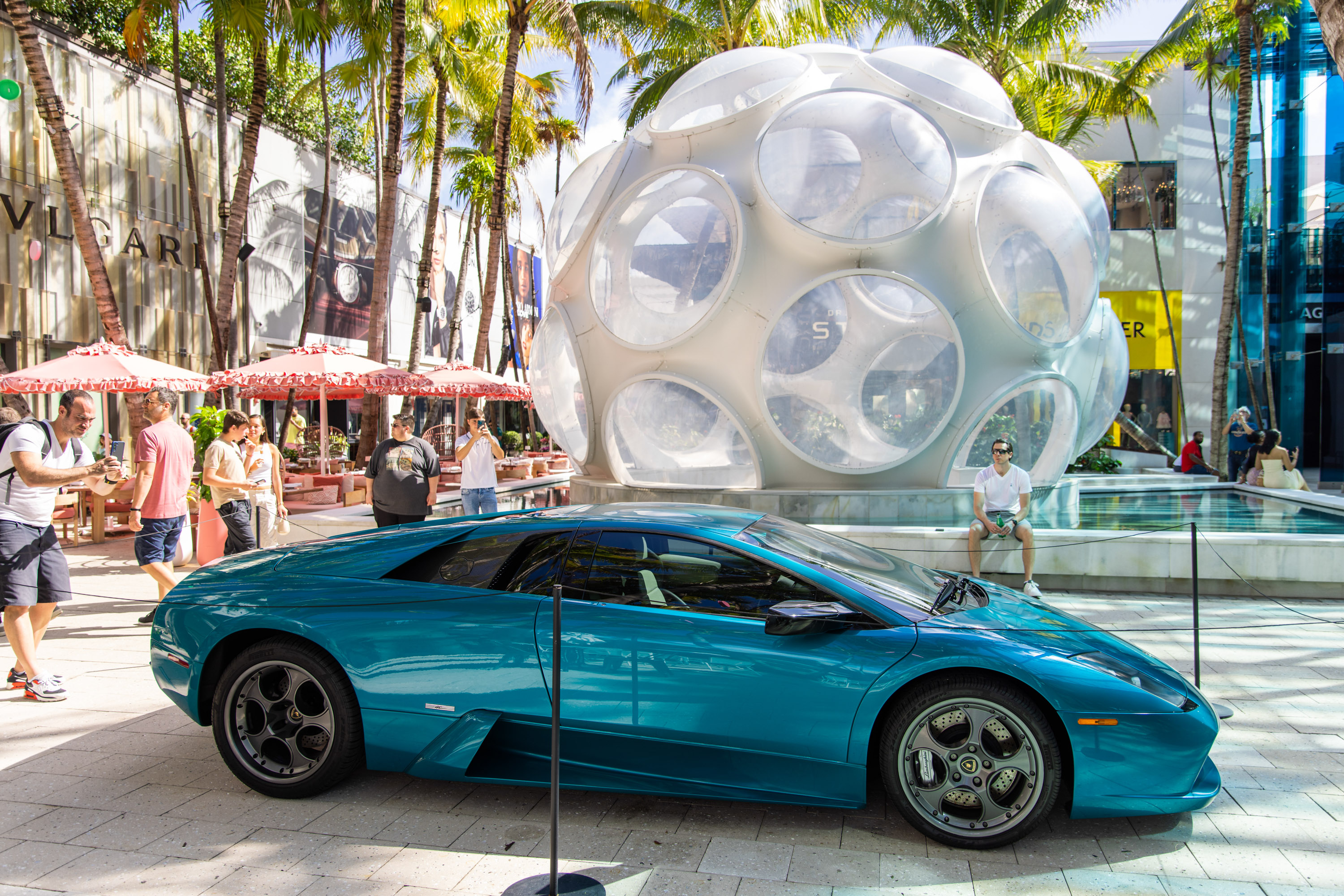
Of the concours events, first up is the eighth annual Miami Concours, which takes place Sunday, February 16 from 11 a.m. to 5 p.m. on the streets of the city’s famous Design District, with a full schedule of events throughout that weekend. Well over 100 cars will be arranged on the three streets (and six blocks) of the Concours, with another 100 being shown by local clubs, including the Porsche and Ferrari marques.

John Temerian is a co-founder of the Concours and also CEO of Curated, a high-end Miami dealership that specializes in low-production European cars from the 1970s through the early 2000s. “This year is very exciting,” he said. “We’re doing something unparalleled in the automotive world—bringing together the world’s fastest cars, including the McLaren F1, the RUF Yellowbird Porsche, the Bugatti Chiron Super Sport, the Jaguar XJ220, the Ferrari Daytona and the Lamborghini Countach.”

This year, via a new arrangement, car exhibitors, VIPs and paying guests will be able to come off the streets and relax at the Club at the Moore, in a landmark Design District building. The VIP ticket also includes reserved parking, a guided tour of Craig Robins’ art collection, and a private shopping experience. But the public is also invited free to walk the red carpet.

“We have a great relationship with the Design District,” said Brett David, a Concours partner who is also CEO of Prestige Imports Motor Group. “There are 10 restaurants on our campus, three of them Michelin-starred, and they sell out. There are elements of luxury, fashion, art, set against these iconic two- and three-story buildings. You become part of the show.” There’s no auction, but Temerian said one might be added in coming years.

Among the cars making their debut at the Miami Concours is the appropriate-for-south-Florida 2025 Overfinch Velocity Edition, based on the Range Rover. The car (above) offers carbon-fiber bodywork, special Helix wheels, Aurora seats with leather accents throughout the cabin, and an optional performance upgrade that boosts output of the 4.4-liter V-8 engine from 530 to 620 horsepower.

The second annual MODAMiami is March 1 and 2 at the city’s Biltmore Hotel (above), with some of the same local players as the Concours, but overseen by big player RM Sotheby’s, which holds its auction February 28. The auction house’s Florida base was Amelia Island until that event’s owner, classic insurer Hagerty, launched its own Broad Arrow sale. Last year, MODA and Amelia Island’s events were on the same day, but that logistical nightmare was avoided for 2025. The cars are arrayed on the hotel’s golf course, allowing viewers to get up close and personal.

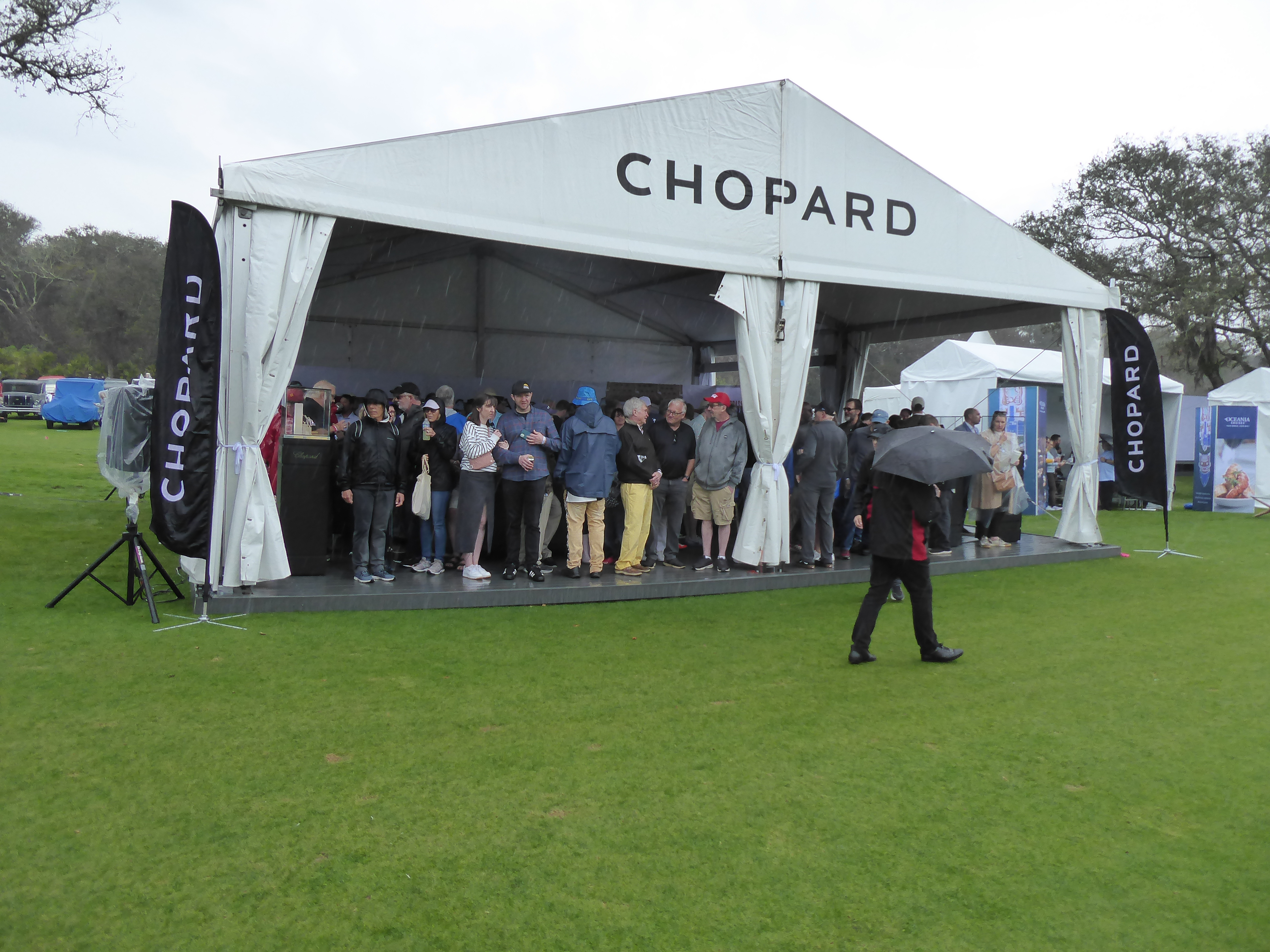
The Amelia Island Concours this year is March 6 to 9. “We’re excited for our 30th year,” said Matt Orendac, vice chairman of the Concours Group. “Bill Warner founded the event in 1996, and since then it’s been the racer’s concours.” See below for what happens when it rains.

The show field, featuring 160 cars, is being somewhat rearranged for 2025, and there is also a new event, Reverie on March 6 in the host Ritz-Carlton ballroom, which promises to pair cars with an open bar and gourmet food stations.

This year’s honoree is driver Helio Castroneves (above), four-time winner of the Indianapolis 500, three-time winner of the 24 hours of Daytona, and one-time winner of Dancing with the Stars. On a Zoom from Brazil, Castroneves said, “My dad got bitten by the car bug, and had a small race team here in Brazil. I didn’t want to be a team owner—I just wanted to drive the cars. My dad is my hero. His big lesson was always work harder than the next guy.”

Castroneves said he “learned more from my losses than from my wins. Because of your losses, you come back and do it again.”

There’s a road tour around the island on Friday morning, March 7, and the public is invited to see the cars parked for lunch in downtown Fernandina Beach. Hagerty will also provide rides in classics from its own collection. A seminar that afternoon, hosted by former NASCAR crew chief Ray Evernham, focuses on motor sports announcers.

The Broad Arrow auction is that night, and Ramsey Potts, senior car specialist, promises 167 cars, including a star 1959 Ferrari 250 GT Spider estimated at $10 to $14 million. A 1954 Jaguar D-Type works competition car, OKV 2, driven by Stirling Moss (the first Amelia honoree) to 196 mph at Le Mans is expected to garner $6.5 to $8.5 million. A Euro-spec 1987 Lamborghini Countach 5000 QV is a relative bargain at $626,000 to $675,000, and a ex-Jimmy Buffett 1981 Porsche 911SC is a modest $75,000 to $100,000.

Gooding, now owned by Christie’s, once again has its auction at the Omni Hotel. A 1955 Mercedes-Benz 300SL “Gullwing” is expected to bring $1.3 to $1.5 million, and (below) a rare and striking 1935 Avions Voisin C25 Aérodyne $2 to $2.5 million. Bonhams, a fixture near the airport, is absent this year.

The auction will be followed by a screening of Back on Track, a documentary series focused on actor turned racer Patrick Dempsey and his partner Patrick Long as they compete in the Porsche Endurance Challenge North America. The Saturday seminar, also hosted by Evernham, features the return of past driver-honorees, including David Hobbs (2009), Derek Bell (2007), Lyn St. James (2021), Chip Ganassi (2022) and Bobby Rahal (2011).

And then there’s the Sunday big concours, which this year features 50 years of the Porsche Turbo, Sebring Corvettes, pre-war classics, IROC racers and Ferrari coach-built cars.

All in all, it might be worth traveling to Florida and parking yourself there for a while, getting up from your beach chair only long enough to attend all three classic car events.

Ice, Snow and Slush: The Winter Drives

As winter sets in, features like heated seats, steering wheels and mirrors matter more, as well as traction and performance in snow. So, here’s a few reviews keeping the chilly scenes of winter—snow, ice, slush—in mind.

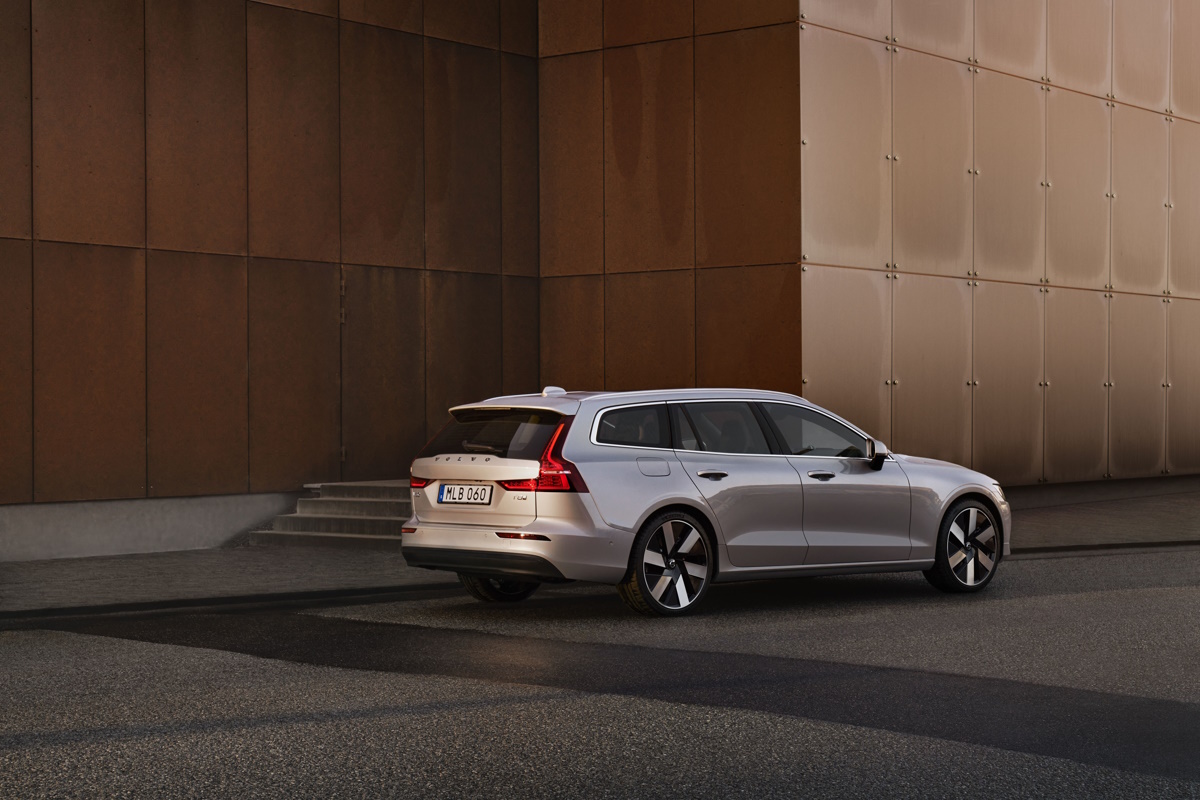
2025 Volvo V60 T8 E-AWD Polestar. I’ve never had a Swedish car that lacked a killer heater, and if you’ve ever been to northern Scandinavia, you know why. The name of this car is a bit confusing. Polestar is one of Geely’s electric brands, isn’t it? Yes, that’s true but before that it was a Swedish tuning shop, with racing experience, and it breathes on Volvos now as AMG does for Mercedes-Benz and M for BMWs.

The V60 is that increasing rarity—an actual station wagon, not an SUV. This version is a plug-in hybrid, with a 14.9-kilowatt-hour battery, up from 9.1. The electric motor has also been upgraded, and now produces 143 horsepower. The two-liter four is turbocharged and now produces 312 horsepower. The car is meaty, and can cruise 44 miles on battery power alone. It’s brilliant in the cold (even the rear seat is heated), with a fast-working heater and defroster, as well as excellent handling. Who needs an SUV?

As tested, this fine Volvo was $72,835, a high price that is a definite barrier for some buyers. Also tested was the 2025 Volvo S60 Recharge eAWD Ultimate Dark. And it’s another rarity, a sedan! The American fascination with SUVs in all their vivid reality still escapes me, so if you’re also resistant check out this one. Unfortunately, this is the last year for the compact S60 sport sedan. You’re much better off choosing the S60 as a plug-in hybrid, because its combination of turbo four and electric motor produces 455 horsepower, compared to the entry model’s 247. Most of what I said about the V60 applies, and the bottom line as tested was $62,545. The two models have an identical rating of 74 MPGe with the hybrid drive, and 31 mpg overall with just the gas engine. Not bad, considering all the safety equipment aboard.

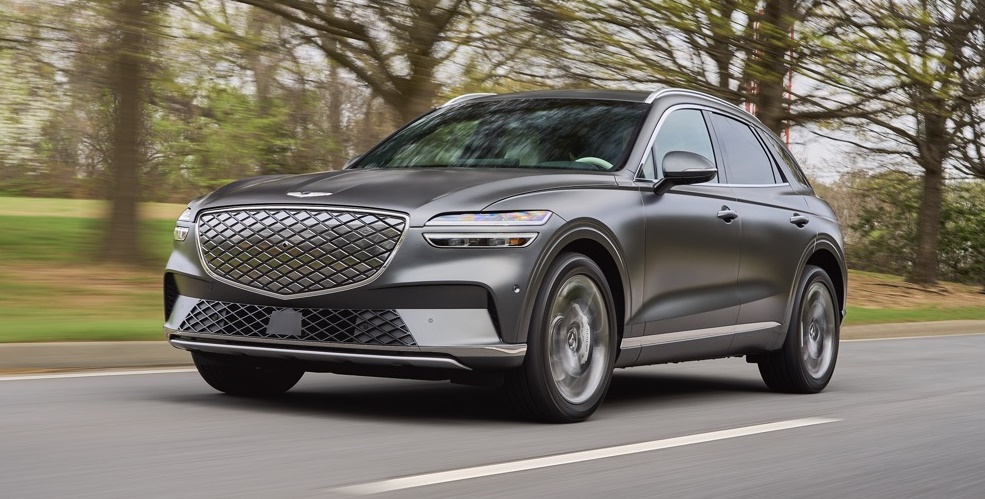
2025 Genesis GV70 3.5T AWD Sport Prestige. Genesis is currently both my favorite luxury brand, and it’s my top electric choice, too. The 70, 80 and 90 are available as SUVs and sedans, and the GV70 tested is one of the former. This was a splendid winter car, given a 10 out of 10 by Car and Driver, and it sports a peerless luxury interior with every possible amenity. The tester had two big packages, sport advanced and sport prestige, which added $6,400 and $3,200 to the price respectively, but both are worth considering as they include many safety features. It might have been a good idea to include all the safety stuff in the same package. The price as tested was a not-inconsiderable $69,900.

The Genesis comes with a 375-horsepower twin-turbo V-6, capable of sub-five-second zero to 60 times—but it’s also a family luxury SUV. Choose a lesser version of the GV70 and you get a worth-considering turbo 2.5-liter four.

2025 Toyota Sequoia 1794 Hybrid. This one got a real winter workout, all the way from Connecticut to Chambersburg, Pennsylvania. I would have trouble buying a vehicle that gets only 20 mpg combined (and 17.9 average on my trip), but with that said I can confirm that this is a very comfortable perch for a long seasonal drive. I was at the wheel about nine hours and emerged fully refreshed. The seats, seating position and legroom were all ideal, as was the JBL stereo. I was also able to haul a 47-inch-wide 1950s German console radio—complete with liquor cabinet—in the rear, seats folded. Unfortunately, the third row doesn’t fold flat, but it still provided a cavernous load area. The running boards that zip out when the car is unlocked are handy, because the vehicle has a high center of gravity.

The Sequoia SUV is big in every dimension, including price, $84,480. And that’s why, even with hybrid drive, it still uses plenty of gasoline—I had to fill up twice. The power comes from an I-FORCE MAX twin-turbo V-6 with electric motor/generator (437 horsepower combined), driving through a 10-speed auto with sequential shift. The Sequoia was actually better handling than anything this large deserves to be. I’m sure, with four-wheel drive and this configuration, its excellent for towing.

Also from Toyota was a 2024 Toyota Tacoma Trailhunter Double Cab. I didn’t get to spend too much time in this $64,944 truck, but I moved some things with it and realized that the Japanese now build better American trucks, in many cases, than actual Americans do. They tend to be more reliable and better built, and there aren’t many compromises. This Toyota, too, uses an I-FORCE MAX hybrid drivetrain, and again the results aren’t stellar—23 mpg overall.

2025 Mazda CX-50 Turbo Meridian Edition. As the owner of a Miata, I know how well Mazdas handle, even when they’re compact crossovers. The CX-50 ($42,670 as tested) is the only car on this list whose price doesn’t intimidate. I could actually buy one of these!

Mazda doesn’t have a handle on luxury the way in quite the same way Genesis does, but the buyer who opts for the Meridian CX-50 gets a 256-horsepower turbo four (the base non-turbo engine produces only 187 hp) and 3,500-pound towing. The package also includes the nice leather heated seats and a sunroof. For 2025, all CX-50s get the larger 10.3-inch infotainment screen and Amazon’s Alexa voice assistance is now included across the boards. “Alexa, which car should I buy? Hmmm, maybe a Mazda?

There’s a hybrid version of the CX-50, with a 176-horsepower 2.5-liter four, CVT transmission, all-wheel drive, and a stellar 39 mpg city and 37 highway. The new entry is the result of a collaboration with Toyota, and it shares the RAV-4’s powertrain. The hybrid starts at just $33,970, so it’s definitely worthy of consideration.

New Models Sometimes Blur the Lines Between Sedans and SUVs

Although it’s often stated that the auto industry leads the public by the nose via clever marketing campaigns, in fact consumers are in the driver’s seat—and their changing tastes led to the now near-total SUV dominance we’re now seeing. But the difference between a sedan and an SUV these days amounts to little other than a few body panels, as witness Toyota’s Prius and Corolla Cross hybrids.  

A small SUV is often more efficient and fuel-friendly than a big sedan. And that’s why it makes sense to figure out which current market entry really floats your boat—and then downscale from there. Small is still beautiful! Here are some new models, illustrating my various points:

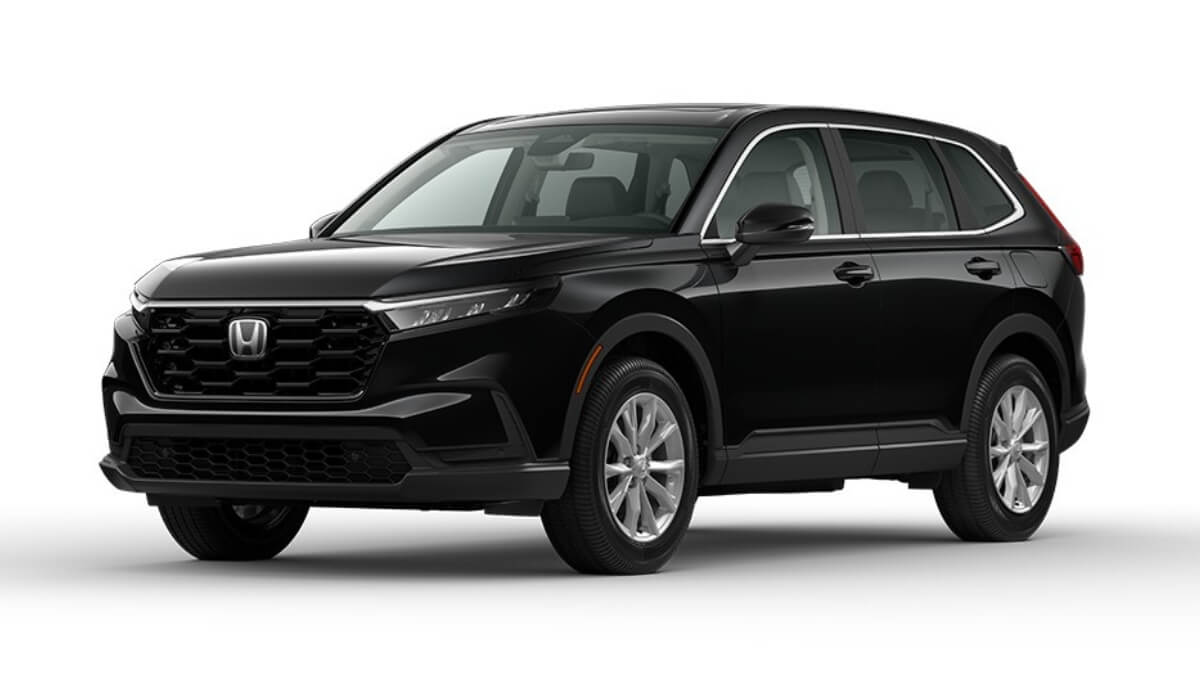
2025 Honda CR-V Hybrid AWD Sport Touring. Now here is an entirely reasonable automobile that represents an excellent choice for a small family that—in most cases—buys something larger. As a parent who raised two kids with nothing larger than a Honda Fit, I say it isn’t really necessary to buy an Expedition when the first kid arrives. Honda didn’t have an as-tested price for an example with $455 added for Urban Gray paint, but this hybrid Touring model starts at $42,450.

The CR-V is never going to be a white-knuckle sports car that you exploit at the limit. It’s a very, very useful appliance that delivers 37 mpg combined. And it’s probably the most reliable appliance you can buy. Yes, it’s a car for people who read Consumer Reports, but there’s nothing at all wrong with that. There’s really no reason not to chose the hybrid variants that are being offered on an increasing number of automotive product lines.

2024 Toyota Prius Limited. If you’ve been using the excuse that “the Prius is ugly” for buying a lesser vehicle, it’s time to rethink. The current fifth-generation Prius is downright pretty. It was first shown in 2022. The shape of the earlier versions were dictated by practicality and aerodynamics, so the styling win here has yields a slightly higher drag co-efficient and minor losses in cargo volume. But it was worth it!

The Hybrid Synergy Drive in this Prius offers 198 horsepower, and a two-liter inline four gas engine that’s also used in the recently tested (and quite nice) Corolla Cross hybrid crossover that’s also worth considering. In high-end Limited trim, the Prius yields 49 mpg combined, saving the owner $4,250 annually in fuel costs compared to the average new vehicle. For $37,999, the buyer gets a loaded Prius with features like AWD, a full safety suite, LED headlights, rain-sensing wipers and eight-speaker JBL infotainment. It’s hard to imagine a better buy, especially when the average car sells for $48,401.

2025 Genesis G80 AWD 3.5T Sport Prestige. The G80 slots in between the G70 and the G90, but it’s the top dog in some international markets. It’s certainly no compromise, coming as it does fully equipped with the top-of-the-line B&O stereo, AWD, a huge safety suite, heated and ventilated front seats, a smart auto-open trunk, and the 3.5-liter twin-turbo V-6 that makes 375 horsepower (versus the 300 horses of the 2.5-liter turbo alternative). The car shifts through an eight-speed automatic transmission.

Beyond these tangibles there’s the intangible just-feels-right about this car. It’s very comfortable, quiet and effortless on the road, and offers plenty of storage. The bottom line as-tested wasn’t offered, but the model starts at a not-cheap $78,250. Also check out the 2025 Genesis G80 Electrified, offered in just one “Luxury” trim. We recently drove one on a round-trip to Washington, DC with Michelin, and a good time was had by all except for some charging issues on the New Jersey Turnpike. The 94.5-kilowatt-hour battery gives the G80 Electrified just under 300 miles of range.

2025 Mazda CX-70 Turbo S Premium Plus. The CX-70 is a new mid-sized entry going after popular vehicles like the Jeep Grand Cherokee. It’s very similar to the CX-90, albeit with two rows (and five-passenger seating) instead of three rows and room for eight. You can get into a CX-70 for $41,900, but this top-range model is an eye-opening $57,405, in part because this is the hopped-up S version of the 3.3-liter inline-six engine seen in the CX-90. It produces 340 horsepower and 369 pound-feet of torque, coupled to an eight-speed automatic transmission. Mazdas tend to handle better than the average Japanese product, and that was the case with this fairly large automobile, which is also very tastefully appointed. But this is among the most crowded SUV segment, so it’s tough for Mazda to really stand out in it.

The zero to 60 time of 6.2 seconds is relatively sprightly, but any electric SUV would blow it away. Fuel economy of 25 combined/23 city/28 highway isn’t horrible but isn’t great, either. Also consider the CX-50 Hybrid Premium Plus, with a much better 38 mpg combined (39 in the city and 37 on the highway). The bottom line of $42,065 is also easier to swallow. And you can live with 219 horsepower.

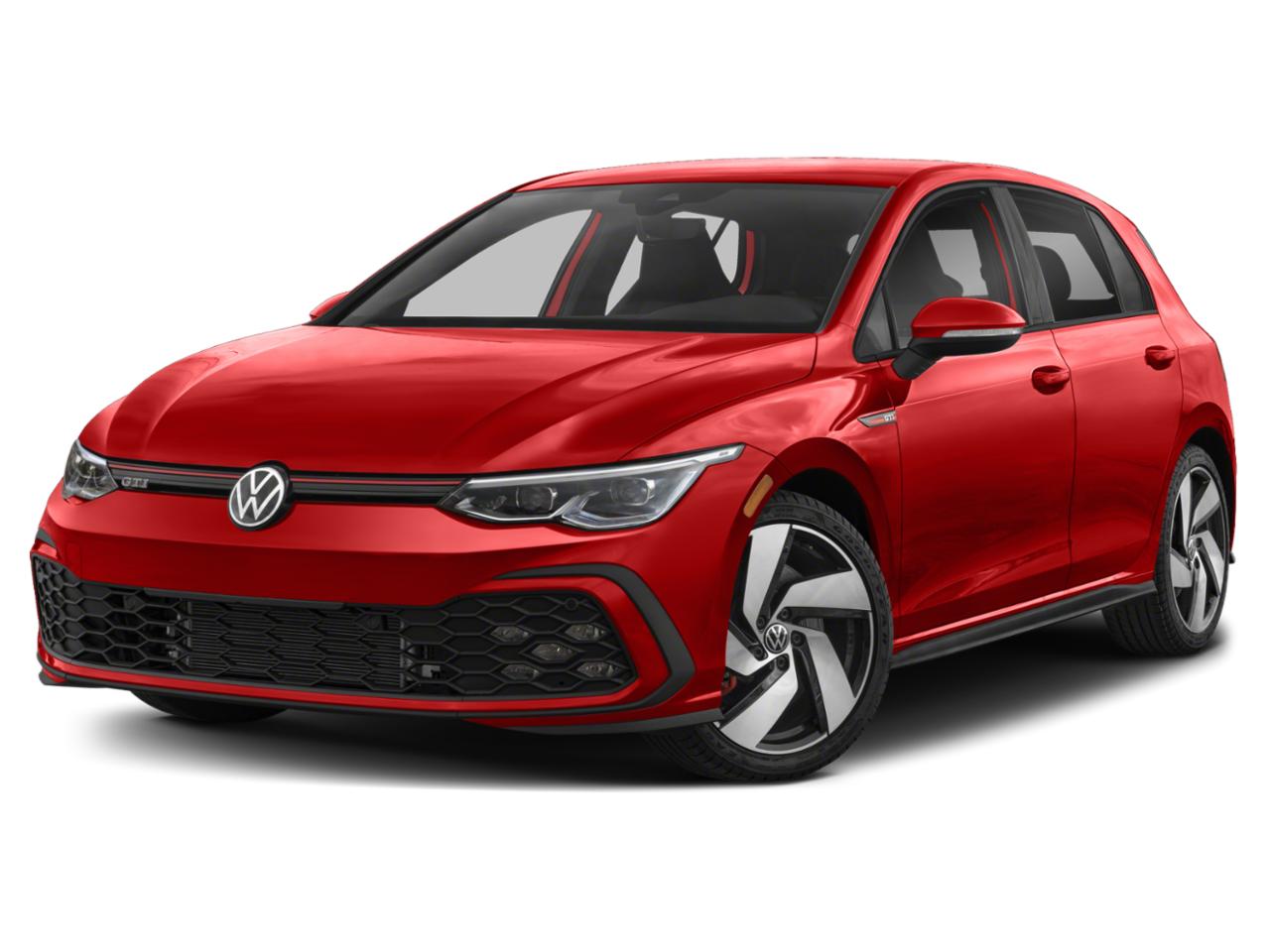
2024 Volkswagen Golf GTI 2.0T. The Simeone Museum in Philadelphia collaborated with Volkswagen of America on the current exhibit (through January 12). Highlights include the Woodstock Microbus, Herbie, Karmann Ghias, a 1949 Bug—and several GTIs.

The GTI was launched in 1976 with 1.6-liter inline four adapted from Audi. That power output doesn’t seem like a lot now, but it turned the lightweight Golf into a prototype hot hatch capable of more than 112 mph. Obviously, the GTI has gained some weight and power since then. There’s still an inline four, but now it’s a 16-valve turbo producing 241 horsepower and 273 pound-feet of torque. The 2024 GTI offers zero to 60 in as little as 5.5 seconds, and fuel economy of 27 mpg combined (24 city, 33 highway). It’s a fun car to drive, graced with a six-speed manual transmission (one of the last?), but suffers from controls that should be simple and knob-based, but are complex and on the screen.

2024 GMC Sierra EV Denali Edition 1. OK, it’s here, an all-electric Denali pickup with formidable specs—zero to 60 in four seconds! They call this a “light-duty” truck but it weighs 8,800 pounds. To move all that weight, GMC has equipped it with a huge 205-kilowatt-hour battery. That provides a stellar 440 miles of range. But the big battery is a major reason the Denali has a $99,495 price as-tested.

The crew-cab truck was luxurious inside, and quiet in operation, with a huge vertical screen. But this is one EV that just feels big, especially in parking lots. In terms of practicality, the truck with the cumbersome name did prove useful for some dump and Goodwill runs. The powered tailgate, which folds in half, is nice, but the dealer-installed soft roll-up tonneau was cumbersome to use, especially in the cold. And the load height is pretty high.

Is there a market for this kind of heroically sized EV? Probably, yes, since Rivian is moving them, and GM itself sold 14,039 Hummer EVs through October 2024. It’s not clear how many of those were pickups. Scout is also going after the EV pickup market, and we should see the Ram electric pickup soon. GM has a history of producing its “green” vehicles from its largest platforms, and in some cases that leads to a distinctly compromised product, such as the Silverado hybrid that went from 17 mpg to 19. But to its credit the company is now offering downsized and very credible vehicles such as the Chevy Bolt, Equinox and Blazer EVs.

Exploring Michelin World, From New York to DC Via EV

The premise was simple enough: My wife and I would drive a Genesis GV70 Electrified equipped with Michelin’s new CrossClimate2 all-season tires from New York City to Washington, D.C., stopping at Michelin-rated hotels and restaurants. Not a bad way to spend a weekend, right?

The Genesis GV70 Electrified was our steed for Michelin’s long-distance East Coast EV trip. (Genesis photo)

It proved to be quite an adventure December 6 to 8. The car, a big, luxurious and roomy SUV, arrived with approximately 170 miles of range. That was no problem for the first leg of the trip, 50 miles from Connecticut to the two-key Michelin Nine Orchard Hotel (a former bank, and quite opulent) in the Dimes Square neighborhood near Chinatown on the Lower East Side of Manhattan. When you’re driving an EV you notice other ones, and we couldn’t miss a CyberTruck ahead of us, and a Chevy Bolt too. We passed several rest areas, noting that the chargers there were often fully engaged.

A comfortable place to be. (Genesis photo)

The Delancey and Essex Municipal Garage was a 10-minute walk to the hotel, and it had EV charging. Luckily, one bay was free, and the cord reached. It was 240-volt Level Two, but that wasn’t a problem because we were leaving the car for the night. We loaded the EVConnect app and were charged in the morning, with a $5.05 bill, plus $50 for the parking.

Our room at 9 Orchard.

Dinner that night was at chef Dan Barber’s Family Meal at Blue Hill, with one Michelin star. This is the urban outpost of Blue Hill at Stone Barns, a farm-to-table enterprise in Tarrytown, New York. Many of the featured fresh vegetables come from the farm.

The second course at Family Meal at Blue Hill.

The four-course menu was set, without choices (except for allergies), but we were delighted with those selections. After a mushroom soup featuring apples, chestnuts and lovage, the second course may have been our favorite: a trio of yellowfin tuna, mackerel, and lobster dishes. The Barber wheat flatbread (made from grain grown especially for the restaurant) and the salad of brassicas with Morton lentils, sesame and sunflower impressed us as well. There were four wines, and an apple aperitif. We left in a not-your-average-Thanksgiving food coma. 

Breakfast at 9 Orchard.

After breakfast under the vaulted ceiling of the former bank lobby, we collected the car with 217 miles showing.

The vaulted ceiling at 9 Orchard. It’s a former bank.

It’s four hours to DC from New York, through New Jersey, Delaware and Maryland. We wanted to make it as far as we could, so stopped at the Chesapeake rest area in Maryland with only 50 miles of range left.

The Combined Charging System (CCS) chargers said Electric Vehicle Institute on them, and only one of four was occupied. At 47 kilowatts, it took about an hour to charge. We got coffee.

Our arrival into the wharf area of Washington, DC SW coincided with a boat parade on the Potomac, apparently a major attraction because it was vehicle gridlock and wall-to-wall people. It took 15 minutes to make a left turn. The self-parking garage had EV charging, one space remained, and the cord stretched. The charging, Level 2 (again, fine for overnight), was free, but the parking cost $60 for one night.

The Pendry Hotel at the Wharf, Washington, DC. (Pendry photo)

The Pendry hotel (with one Michelin key) in the popular Wharf shopping area along the river was hopping with life, but we had to move quickly to make our reservation at Rania, a highly inventive one-Michelin star Indian restaurant off Pennsylvania Avenue.

The travelers on the Mall in DC.

The walk, in the kind of chill that only the canyons of DC can generate, took us right through the historic Mall, with the Washington Monument on one side and the Capitol building on the other.

Delicacies at Rania.

Again, it was a four-course menu, with two choices for each course. We love Indian food and found Rania’s approach to be really creative. Our favorite flavors were there, but the dishes featured many nouvelle cuisine innovations (so the menu told us). We ordered so we could sample everything. Some of our favorites included: shiso leaf chaat with white pea ragda and sorrel chutney, lamb belly kebab with chickpea cheela and kashumber; and the red pepper makhani that accompanied Tandoori squab. My wife chose her favorite Kingfisher beer, and I opted for Sauvignon Blanc to wash things down.

The apple dessert with ice cream at Rania.

We made a quick stop in Alexandria, Virginia to meet a friend in the morning, and hit the highway with a full charge. Our thinking was to get to New Jersey for lunch and a quick charge before heading home to Connecticut. This is where the plans went awry.

EVgo chargers at the Molly Pitcher rest area in Cranbury, New Jersey, circa 2017. (EVgo photo)

At the Joyce Kilmer rest area on the Jersey Turnpike, the CCS fast chargers were out of order. PlugShare informed us, “The chargers at this location are being removed as part of EVgo ReNew, a comprehensive maintenance program in which we are working to replace, upgrade, or in some cases retire stations over the coming year to enhance charger availability and build range confidence. We apologize for any inconvenience.” This was devastating news.

At the James Fenimore Cooper service area in Mount Laurel Township, the off-line CCS chargers had a very forbidding wire fence around them. But there were a multitude of available Tesla chargers, and we had a Lectron adapter that supposedly would allow us to use them. Unfortunately, the Tesla app refused to acknowledge that there were Superchargers nearby, and the charge was a no-go. Scanning the PlugShare app revealed not only that the other CCSs on the Turnpike were disabled, but that a lot of people were seething about it. Tesla drivers had no problem at all.

Teslas use the North American Charging Standard (NACS) plugs. A Genesis spokeswoman told me, “Our EVs will come standard with a NACS port starting with the 2026 model year. They will also have available CCS adapters.”

But that’s then. Our only choice in December 2024 was to get off the highway. In an odd coincidence, the nearest charger was at an office park where my wife once worked. It was five miles away. The ChargePoint charger there had a Chevy Bolt connected, but there were two wands and we connected the other one and got a charge going. Alas, it was Level 2 with an 11-hour charge time, and since we only had 50 miles of range at that point it wasn’t really a solution.

EVgo charging at the Quaker Bridge Mall. It worked, but there were long lines to get hooked up.

The app revealed that the Quaker Bridge Mall 10 miles away supposedly had two free Electrify America (EA) CCS chargers. It had them, all right, but not free. There were four, one was out of order, and three cars (Hyundai Ioniq 5, VW ID.4, Mustang Mach E) were waiting for the three that were working. There were EVgo chargers, too, but also with long lines.

It was going to be a long night. We waited in our car, not wanting to lose our place, and 45 minutes later we got our chance at one of the EA stations. The charge was fast, at 197 kilowatts, and we were delivered 67 kilowatt-hours of electricity in about 35 minutes, yielding a 97 percent charge and more than 250 miles of range. The catch was the price—56 cents per kilowatt-hour, resulting in a bill of $40.06. Wow, that’s like paying at the gas station. But we really wanted to get back on the road, so it was worth it.

A spokesman for the New Jersey Turnpike Authority, who preferred not to give his name, explained that the service areas are run by Apple Green, which had a contract until last January with EVgo to provide CCS charging. “But Apple Green decided it wanted to put in its own Level Three chargers and infrastructure, and that’s in the process now. We’re trying to get those chargers up!” He said that other states have issues too, adding that he encountered “40 Teslas lined up” at available chargers on a drive up the New York State Thruway.

We arrived back home at around 8:30 p.m., more than two hours later than we’d anticipated. Both the car and those CrossClimate2 tires, designed for SUVs, did well. The tires are “engineered EV-ready,” and while their wet braking and snow traction merits didn’t get tested, their reported longevity is appreciated. Some low-rolling resistance tires that are original equipment on EVs haven’t performed well, especially in terms of lifespan and grip in the wet. Consumer Reports recently rated the CrossClimate2 first among all-season SUV tires and projected that the 18-inchers would last 95,000 miles at a cost of 26.7 cents per mile. The Michelins were very quiet in operation, as was the car itself.

The Genesis Electrified GV70 is a contender among larger EVs, though the $75,750 bottom line for the 2025 model tested was a bit daunting. A $4,800 prestige package (Nappa leather, suede headliner, heated second row, heated steering wheel, Lexicon stereo) added $6,800 of that.

Some 483 horsepower is on tap via twin 160-kilowatt motors. Big as it is, The GV70 can sprint to 60 mph in 3.8 seconds. That was great for passing trucks, and overall the EV handled very well for a big vehicle. The GV70’s battery holds 77.4-kilowatt-hours. A few more miles of range wouldn’t have made much of a difference in the problems we encountered in New Jersey.

There are a few EVs, such as the Lucid Air Grand Touring (512 miles of range) that could have made the whole trip without stopping, but most EVs are around 300 and would need to stop at least once. And that’s where the peril lies. The highway charging network has made great strides in the last few years but—unlike the menus at Michelin-starred restaurants—it’s not a glorious experience yet.

The Menu was Eclectic at the 16th Annual Brooklyn Folk Festival

The 16th Annual Brooklyn Folk Festival was one of this wonderful event’s widest ranging, retaining the core of its old-time roots but with very healthy dollops of international music as well. Groups from Mexico and India by way of Trinidad were new to me and thrilling.

And what a way to start on Friday afternoon. A young man named Royce Martin sat down at the piano and not only played some of the best ragtime I’ve ever heard but also his original compositions, which featured a form of word jazz seemingly of his own invention. “Make Believe” was “a song about confidence.”

Martin is from St. Louis, and worked as a pianist and lecturer at the Scott Joplin State Historic Site there. When he played master works like Joplin’s “Pineapple Rag” and Willie “The Lion” Smith’s “Echoes of Spring,” he channeled forms from his great-grandfather’s day. But he has the history, and also the will to take ragtime in new directions.

Samoa Wilson is a regular at Brooklyn; she’s a fine singer of vintage material, steeped in it through regular work with her uncle, Jim Kweskin of 1960s jugband fame. Wilson was at Brooklyn in a group with Sean Walsh, and delivered a fine version of Dylan’s “I’ll Be Your Baby Tonight.” Later she went on with the provocatively named duo Fatboy Wilson and Old Viejo Bones, with Ernesto Gomez.

Shiva Lakhan (above), out of Trinidad, was unexpected. The trio played West Indian and “Chutney” vocal music that, in their version at least, is heavily percussive. The percussionist played a big double-sided hand drum, much larger—and louder—than tablas. I heard echoes of African music. The singer accompanied himself on a Paul and Co. harmonium, and it was intoxicating. A third musician banged a metal ring against a tall, thin pole, producing a chiming drone. Chutney is evidently a fusion of Indian folk and Bollywood with Caribbean calypso and soca. It’s heard not only in Trinidad and Tobago, but in Guyana, Suriname, Jamaica and as far away as Fiji.

The New York-based Guachinangos (above) were also deep into a world fusion, playing Mexican son jarocho with Colombian cumbia and other Latin American rhythms. They were highly theatrical, in a good way, and featured a very dramatic up-front dancer, whose moves reminded me of flamenco. The requinto jarocho (small Mexican guitar) player was a genius. And that dancer was mesmerizing. Juan Carlos Marin (that guitar player) appeared to be in charge.

The Cactus Blossoms from Minneapolis played winsome original folk that recalled the Everly Brothers. Jack Torrey and Page Burkum are also brothers, and that explains the close harmonies—it’s genetic! Their next booking was, the following day, CBS Saturday Morning.

A regular in Brooklyn is Ken Schatz, a singer of lusty sea shanties. But it’s not just him. He leads groups of novice singers in Staten Island and at South Street Seaport, and at the folk festival several of his regulars got up to lead us in songs like “Lowlands” and “The Rolling Sea.” Schatz’ version of “The Golden Vanity” was the one with the sadder ending, but then there are many versions of this song. “The songs often have floating verses, which can be inserted as needed,” Schatz said. I requested the seemingly obscure “Cape Cod Girls” (Patrick Sky did a version) and a young teenager got up to sing it, knowing most of the words.

Isto, a/k/a Christopher White, certainly goes his own way as a performer. He performed quite credible versions of Great American Songbook classics (as seen in his book containing guitar fingerpicking versions of same), but also his own idiosyncratic and amusing songs, including “Hot Dog Daddy,” which was not sexual innuendo at all. “He eats burgers on the sly.” He has Halloween and Christmas albums, a family band and a Hawaiian band. “When I Die and My Body is Reanimated” was “for all the zombies in the audience.” Isto, a Wesleyan graduate who studied with Anthony Braxton there, has a smooth voice, but he bends it like a pretzel.

Nora Guthrie led a slide show about her dad, Woody, and the part I heard was about Mermaid Avenue, Woody’s illness, the icon’s pilgrimages to Washington Square Park, and Bob Dylan’s visit. Dylan knew all of Woody’s songs, and that’s what this great American songster wanted to hear in his later years. “He was like a jukebox for Woody,” Nora said. Woody Guthrie’s grandson, Cole Quest, is also a folk festival regular, and his City Pickers were a spirited asset this year, and “Way Down Yonder in a Minor Key” (lyrics, Woody Guthrie, music, Billy Bragg) was wonderful to hear.

Seeing the Guthries complemented my recent visit to the Bob Dylan and Woody Guthrie museums and archives, which are next to each other in Tulsa, Oklahoma. And definitely worth a visit.

There are lectures, film showings–and book signings at the Brooklyn Folk Festival. I encountered Terri Thal, who was autographing copies of her book Dave, Bob and Me. She was married to Dave Van Ronk and was Dylan’s first manager, recording the famous Gaslight Tape when he first came to town. I asked her about the much-underrated Patrick Sky, who was close to Van Ronk in the early days. “Patrick was one of my best friends,” she said. “He was hilarious all the time.”

Jan Bell (at right above) is a singer from Yorkshire originally who sings of her family’s coal-mining roots. Her deep Americana album is Dream of the Miner’s Child, with Alice Gerrard (at Brooklyn last year) featured. Bell also has performed and recorded with The Maybelles.

Suzy Thompson is a gifted fiddle player, favoring old time and cajun, and also the founder and brains behind the Berkley Old-Time Music Convention. The next one is in September 2025. Accompanied by husband Eric on guitar, Suzy also did a couple tunes (“Bride 1945” and “Ballad of Honest Sam”) by the much-missed folk troubadour Paul Siebel. She recorded a whole album of his songs. Siebel up and quit the music business in the early 1970s after only two Elektra albums, and only recently passed away in 2022. It’s unfortunate that only his “Louise” gets heard at all—Siebel had many great songs.

Los Texmaniacs, a conjunto Tex-Mex band created by Max Baca, a great guitar player (or was it a “bajo sexto”), in 1997. The group had an accordionist of equal crowd-pleasing skill. Proving that folk music is a big tent, the Pine Leaf Boys from Louisiana performed a rocking set of mostly zydeco music. Thompson’s cajun was quieter, but it’s all roots from the same tree.

David Amram (above) was amazing. At 93, he’s still playing (pocket flutes, electric piano, a Chinese instrument) and singing in top form. This omnivorous musician has deep roots in folk, jazz and classical music, and a bunch of stories to tell about working with the Beats in the 1950s. In Brooklyn he was with a fine ensemble that included Sonny Rollins veteran Jerome Harris on guitar. Maybe that’s why the group did Rollins’ “St. Thomas,” during which Amram played two flutes simultaneously. The beat collaboration gave us Pull My Daisy, a groundbreaking 1959 short film, and Amram wrote the music for the song, and did it in Brooklyn:

Nora Brown, now a beginning Yale student, never misses the Brooklyn Folk Festival and she offered her usual menu of curated banjo tunes with her lived-in, expressive voice. But there was also a Dylan tune, “I Was Young When I Left Home,” somehow left off his early albums and only recently surfaced as part of the world’s most comprehensive reissue program. Fiddle player Stephanie Coleman joined Brown late in the set, taking the tempo up.

Sunday was an exceptional day, starting off with a rubber-limbed and genial cowboy kids’ performer named Hopalong Andrew. Everyone was in full western regalia, and the kids each got their own Hopalong hats. “Strollin’” appeared to have been adopted from the Rawhide theme.

And then came Roochie Toochie and the Ragtime Shepherd Kings (above), an indescribable mélange of ancient music and vaudeville-level comedy. Their album was recorded on wax cylinders. Unfortunately, the group gets together rarely these days, only once or twice a year, but you’d never know it. There were puppets, props, and a whole lot more. “Tiger Rag,” a song about salami, a protest against the insipid “Yes, We Have no Bananas” (a ubiquitous hit in 1923). What happens when you open The Compleat Unabridged Book of Jazz and broccoli falls out?

Vainos Paisanos played early 20th century dance music, mostly from Europe, east and west. The group truly inhabited these old songs, recapturing them from scratchy 78s. Fiddle player Rachel Meirs, who lives in Louisville now, started out by answering a waitressing ad for the Jalopy Tavern in 2011, and said she’d never know the eclectic bunch of musicians playing with her if that hadn’t happened.

Peter Stampfel (above) has more than 60 years of history with the Holy Modal Rounders, and he’s still at it, leading a cacophonous ensemble in Brooklyn. He was in a fine mood.

The Downhill Strugglers (above), which includes the festival’s guiding light and emcee Eli Smith, was down to two members (Smith and Jackson Lynch) because the third fellow, Walker Shepherd, was off having his first child. No matter, they were rousing anyway, performing songs from their latest on Jalopy Records, Old Juniper. Intriguing to hear “Casey Jones” the way it was originally sung, before the likes of Burl Ives got a hold of it.

Michael Hurley (above, right) is of similar vintage to Peter Stampfel in and around New York, and their collaborations go back many years. Hurley, in his 80s, is enjoying a renaissance with many young admirers, including performers such as Cat Power, Lucinda Williams, Elizabeth Mitchell, Rose and the Bros, Big Thief’s Adrianne Lenker, and many more.

Hurley, playing an electric guitar (that initially buzzed, the same way it did the last time he played Brooklyn) built momentum as he went and was soon flying along. A tap dancer joined him. Several unfamiliar songs were played, including this one, “Tennessee Easy Chair”:

I’ve been following Martha Spencer (middle above) since her start in Virginia with her family’s Whitetop Mountain Band. The Whitetop Mountaineers is a duo she leads with Jackson Cunningham that has recorded four albums. In Brooklyn, wearing a spectacular hat and a green-and-white checked country dress, she had a band. Her new solo album, quite eclectic, is Out in La La Land. Spencer is a really great Appalachian singer and is also accomplished on fiddle, banjo, guitar and (she played it with Gilly’s Kitchen) bass. Oh, she dances, too. I don’t know the name of this, but it was a lot of fun:

I don’t know much about Kyle Morgan, who appeared with veteran New York chanteuse Tamar Korn, but he’s a find. I got only half of this song, but I loved it. He played some really tasty guitar, too:

New Car Reviews: The Imports Catering to American Tastes

This batch of new cars is all foreign, German, Korean and Japanese. And they’re quite diverse, proving that in many ways the overseas auto manufacturers have adopted very well to American buying patterns. If we want big trucks and SUVs, they’ve got them—in reliable, well-built form. Sporty cars, too.

2024 Volkswagen Taos SEL 4MOTION. This is a small built-in-Mexico SUV based on the MQB platform. The SEL 4MOTION uses a 1.5-liter turbo four-cylinder engine coupled to a seven-speed DSG automatic. It produces a modest 158 horsepower with 184 pound-feet of torque. It’s no ball of fire on the road, but I don’t expect practical crossovers to be race cars. These powertrains are usually fairly fuel-efficient, and the VW offers 27 miles per gallon combined, with a decent 32 on the highway. It’s got good crash scores, and was $35,260 as driven.

Fuel efficiency and a fairly low price are the calling cards here. Other good points are that (unlike some other VWs) it retains knobs for many functions, and offers acceptable legroom in the second row. This is no luxury crossover, but it uses plastics that at least feel like they’ll wear well. VW’s challenge is getting the Taos noticed in a crowded field.

2024 Hyundai Elantra Hybrid Limited. In a just world, everybody would drive cars like this one. The Elantra is a tried-and-true model with stellar reliability and practicality, and in this clever hybrid format it yields 50 mpg combined—getting into Prius territory, if not quite there. And the bottom line for the tester was just $30,810. This is far lower than the average Americans pay for cars.

If you want to spin the tires, buy something else. The Elantra hybrid is powered by a 1.6-liter four coupled to a six-speed dual-clutch automatic. It’s got 139 horsepower, slightly less than the standard Elantra, but there’s much more torque at 195 pound-feet (compared to 132 in the base). You don’t really need the performance-oriented N Line Elantra, but it’s out there and a lively driver with a turbo that gives it 201 horsepower.

For the money, the Elantra hybrid is impressively outfitted with a Bose stereo, wireless charging, a power driver’s seat, and a suite of safety tech.

2024 Lexus IS 500 F Sport Performance. Maybe you don’t blink, but the $66,970 being asked for this relatively small car on a platform launched in 2013 made me blanche more than a little. But it’s all about the V-8. The five-liter engine (also in the LC 500 and RC F) produces a mighty 472 horsepower, coupled to an eight-speed automatic with rear-wheel drive. The performance you definitely get—the beast pinned me to the seat. It can reach 60 mph in 4.5 seconds.

In most respects, this is a pleasant sport luxury vehicle with nice fit and finish. It can potter around and get the groceries if you need such duty. It has a really good safety package, dual-zone climate and a Mark Levinson stereo. But you could lop $15,000 off the Lexus’ price and find some credible entries that would do just as well. They won’t have the V-8, though—this is the only one in the segment. Be prepared for visiting a lot of gas stations. Drivers pay for power, and this is a Japanese car with 20 mpg combined.

2024 Toyota Sequoia TRD Pro Hybrid. This is what I meant when I said that overseas automakers are catering to our needs. The three-row Sequoia, based on the Tundra, is not likely to find many buyers in its home market. As tested, it’s a $81,060 big-gun SUV powered by a twin-turbo V-6 with an electric motor/generator, coupled to a 10-speed automatic with sequential shift. Is it possible for a hybrid to get only 20 mpg combined? Yes, when it’s huge and based on the Toyota Tundra. It was a good highway vehicle, but murder in tight parking lots like those at Trader Joe’s.

This one had off-road suspension, and could probably conquer the outback while its cosseted passengers—all seven of them—sit in frigid air-conditioning. That’s what a Range Rover is also for. The Sequoia can also reach 60 mph in 5.6 seconds, which is a triumph of engineering over bulk. The second and third row have limited headroom, and the third row can be slid forward, but a flat load space isn’t part of the picture.

2024 Audi S7 Prestige. We’re high in the Audi range here, and the S7 as tested was over $100,000–$102,075 to be exact. But it’s what they’re talking about when they quote “German engineering.” Karl Benz would take off his hat on hearing about this car’s twin-turbo, supercharged V-6 engine, which produces 444 horsepower and 443 pound-feet of torque. In the early ‘70s, smog-strangled V-8s were being built with just 120 horsepower, and this one is a V-6. With sport suspension ensuring it stays planted, the S7 can reach 60 mph in 4.1 seconds. If you want more, there’s 591 horsepower in the RS7.

The S7’s V-6 is coupled to an eight-speed automatic transmission and Quattro all-wheel-drive. The interior is nicely fixed for leather and wood. I enjoyed the heated seats and wheel, the four-zone climate, and tried the shift paddles. I can’t say that the full performance possibility was explored—I’d need the Nürburgring—or at least Lime Rock—for that.