I’m somewhat obsessed with how songs evolve. I was thinking of just that when listening to the latest album from the lovely Miss Tess, whose latest album with the Talkbacks is “The Love I Have for You.” She sings a Hank Williams tune called “The Alabama Waltz,” which is uncannily similar to the huge Pee Wee King/Redd Stewart hit “Tennessee Waltz” (recorded by Patti Page, Patsy Cline and many others).
Musical borrowing has gone on forever, of course. Bob Dylan cribbed freely from old Appalachian tunes and British ballads for tunes such as “Bob Dylan’s Dream,” “Percy’s Song” and “Paths of Victory,” among many others.
Miss Tess and the Talkbacks sing “Night Life” at Rockwood Music Hall March 20. (Jim Motavalli photo)
Williams’ mimicry was no coincidence. Miss Tess tells me, “Actually the ‘Alabama Waltz’ was written by Hank Williams to try and get a hit song, after the notable success of the ‘Tennessee Waltz.’ It was actually first recorded by Bill Monroe—and something of a hit from that recording I believe. There’s also a ‘Kentucky Waltz.’ There was a day when state waltzes were popular I guess!”
Definitely so. According to Colin Escott’s biography of Hank, the King of Country wrote and recorded the “Alabama Waltz,” to “stoke the ongoing craze for state waltzes.” Monroe—a tried and true Kentuckian—had earlier had his hit with “Kentucky Waltz,” but recognized Williams’ star power and also recorded “Alabama Waltz” in 1950. Williams may well have been at the session. Here’s Hank’s “Alabama Waltz.”
On the same album, Miss Tess does a slam-bang version of “Night Life,” a Willie Nelson tune whose chorus goes, “Oh, the night life/It ain’t no good life/But it’s my life.” I saw Miss Tess do a wonderful version of the song at a Rockwood Music Hall show in New York (with the incomparable Mike + Ruthy) last week.
That darned song reminds me heavily of another great classic, “Sporting Life,” as recorded by Brownie McGhee, Dave Van Ronk, Eric Clapton and tons more. The chorus of that one goes, “That old night life/That old sportin’ life’s/ Killing me.” Not identical, but to my mind closer than suing George Harrison for ripping of “She’s So Fine” for “My Sweet Lord.”
Judge for yourself. Here’s Willie Nelson doing “Night Life”:
Isn’t the “first album phenomenon” fascinating? How many fabulous artists do you know whose number one disc is also their greatest one? Two come to mind quickly, John Prine and Jackson Browne.
No, it’s not actually titled “Saturate Before Using.” Those were instructions for conditioning a burlap water bag.
I was reminded of the essential nature of the latter’s 1972 LP, commonly known as “Saturate Before Using,” when I heard a new tribute to this wonderful songwriter called “Looking Into You: A Tribute to Jackson Browne.”
I don’t think Browne was out of his teens when he wrote songs like “My Opening Farewell,” Jamaica Say You Will,” “Doctor, My Eyes” and “These Days.” The last one isn’t on the album (actually, it’s just “Jackson Browne”), but he’d already penned it. Before he could grow a proper mustache Browne had already a) had an affair with German chanteuse Nico, who may have been the first to record “These Days”; and b) given voice to some very adult emotions in songs that have sturdily endured for more than 40 years.
I’d say that was a good excuse for a tribute album, wouldn’t you? The album works as a whole, from Bonnie Raitt with David Lindley reggae-ifying “Everywhere I Go” to Lucinda Williams making “The Pretender” into a poignant ballad. These songs have good bones.
Don’t read that book about Laurel Canyon; it will sour you on all these LA dudes (especially, for me, J.D. Souther). But the music endures.
Browne got a bit didactic for me later on, but he never turned out a bad song. Long may he wave over Laurel Canyon or wherever he is now. Here’s Browne performing songs from “Satura…,” no, from “Jackson Browne”:
This post is borrowed with permission from Mother Nature Network, where I’ve been writing regularly about the environmental side of the car industry and other cool topics for the past six years:
It’s easy for me to relate to Andy Revkin’s twin passions — music and the environment — because I have the same pair. I satisfy the musical itch by doing a radio show and hosting live bands, and recently had Andy on playing songs from his new folk album, “A Very Fine Line.”
Andrew Revkin (right) with Pete Seeger and Steve Stanne (center) in Beacon, N.Y., in 2010. (Photo courtesy David Rothenberg)
Most likely you know Revkin’s work from the New York Times, where he served as an environmental and science news reporter from 1995 to 2009, and as a popular blogger (Dot Earth) from 2007 to now. He’s one of the great interpreters of often-difficult peer-reviewed science, and the blog has continued now that he’s left the Times for a position teaching at Pace University in Westchester County, New York.
I asked Revkin why he left the Times when the environment beat was hot and his timely stories on climate change were often making the front page. “Through the mid-2000s,” he said, “I became increasingly aware of the limits of what I could do in journalism, and I saw that ways of communicating outside of journalism were hugely expanding. So I looked ahead and asked myself if I wanted to spend the next 25 years writing valid articles about important issues, and I decided I didn’t.”
Andy Revkin (left) with his brother Jim in their younger days.
Revkin went in and talked about his plans with then-Executive Editor Bill Keller (who’s now leaving the Times himself), but kept it fairly vague. It’s lucky he did, because a day later the Times announced a generous buyout offer he wouldn’t have gotten had he already resigned.
The continuing mission of the Dot Earth blog, Revkin said, is, “How do we head into [the likely world population of] 9 billion people by mid-century with the fewest regrets.” Rather than focusing simply on goals — an 80 percent reduction in greenhouse gas emissions by 2050, for instance — he’s identified traits we’ll need to survive as a species.
“Resilience is a good trait; it’s overused but very real,” he said. “It means, for instance, not having a rigid approach to risk management. Flexibility is also a good trait, and so is transparency — maintaining the ability to clarify what is happening.” He sums up his approach as “Bend, stretch, reach, teach, reveal, reflect, rejoice, repeat.”
Revkin, author of “The Burning Season” (about Amazon activist Chico Mendes) and, for young readers, “The North Pole Was Here,” might have written the two books he talked about when he left the Times, but his plans were thrown into disarray by a life-changing event. In 2011, he had a potentially life-threatening “brain attack” stroke that among other things lost him the use of his right hand for weeks.
It led to a re-evaluation. Revkin promised himself he would:
Write a hard-hitting print article about stroke care.
Start working out.
Stop taking red-eye flights (to save his neck and carotid arteries).
Get serious about the guitar he’d been playing since he was 17 and start playing scales.
Well, much of that fell by the wayside, and he didn’t stick with the scales, but he did get more serious about music. “I’ve been writing and performing since the early 1990s, and played guitar since I was a teenager, but never got rigorous about recording,” Revkin said. “The stroke was a wake-up call. I wanted to put something on the public record.”
And that led to the album “A Very Fine Line,” recorded near his home in Beacon, N.Y. As you may know, Beacon was also the long-term home of Pete Seeger, and the two were friends. They played together now and then, and Seeger even helped him with lyrics for “Arlington,” a song about the growing space problem at our national cemetery. “I used some of the suggestions, not all of them,” Revkin said.
Other musician friends helping out on the album include singer/songwriter Dar Williams (another neighbor), mandolin virtuoso Mike Marshall and multi-instrumentalist Bruce Molsky, probably the best old-time interpreter around.
Andy Revkin performs a private concert at the Mother Nature Network office in Atlanta.
Revkin describes reporting and music as “a natural dual track, given that journalism and ballads have an intertwined history.” Indeed they do, and being a trained reporter also helps you in something most musicians are clueless about — record promotion. Revkin was recently in Atlanta for a climate change forum, and he didn’t waste the opportunity. He visited the offices of the site I write for, Mother Nature Network, and stopped by a local radio station and performed “Breakneck Ridge” (a song about the Hudson Highlands, “from Breakneck Ridge to the Bear Mountain Bridge.”)
The song (which I played on WPKN on Thursday afternoon) references “a billion years of time and toil” that are “etched in these old hills,” and Revkin told me he’d looked it up, to make sure that the “billion years” was accurate. Once a journalist, always a journalist. Here’s “Breakneck Ridge” on video:
“I’m not as optimistic as people think I am. I think we have a 50-50 chance of there being a human race in 100 years.” That was Pete Seeger, speaking to the Guardian newspaper in 2007.
Pete Seeger with the banjo he used to change the world. (Flickr/DoKwan)
It’s hard to think that there will be no more interviews, concerts, benefits and albums (he recorded more than 100) from the protean force known as Pete Seeger. Born in 1919, he was 94 when he died in Manhattan on Monday. It was only months after the death of his wife and close collaborator, Toshi.
Yes, folk music would be immeasurably different without him, and he was a prolific and deeply influential songwriter, but Seeger’s mission was primarily political. He wanted to change the world through music, and wielded his banjo in that cause.
“My job is to show folks there’s a lot of good music in this world, and if used right it may help to save the planet,” he said in 2009. Maybe he wasn’t the best performer of Spanish or African songs, but he made up for it in enthusiasm. His environmental work saving the Hudson River (he lived overlooking it in Beacon, New York) will prove perhaps his most enduring contribution.
Someone should write a book about the Seeger family. I tried, but my agent told me there was no money in it. Seeger’s half brother, Mike, was probably the foremost performer of and preserver of old-time country music, and his half-sister, Peggy, formed an enduring duo with husband Ewan McColl that was considerably influential on the British folk scene. His father, Charles Seeger, and his stepmother, Ruth Seeger, were both important musicologists.
Pete inspired a generation of protest singers, including Joan Baez and Phil Ochs. I always thought Steve Earle was most deserving of Seeger’s crown (not that he’d ever wear one), and in 2008 I tried to bring the two of them—both coming to New Haven, Connecticut for concerts—together for a joint interview.
Earle was eager, but Seeger, alas, wasn’t, conveying through his grandson, Tao-Rodriguez Seeger, that he thought everything worth saying had been said in his autobiography. Still, I asked Earle what Seeger meant to him. “Pete’s an example for everybody as a person, as an activist and as a musician,” he said. “I was lucky enough to record ‘Walking on Death Row’ for one of his Where Have All the Flowers Gone? anthologies.”
That’s the great thing about influential people. Even when they’re gone, they leave a whole lot of themselves behind.
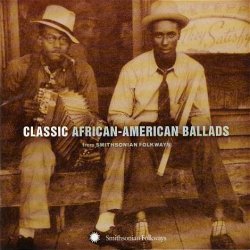
The album Classic African-American Ballads, from Smithsonian Folkways, contains a track entitled “Duncan and Brady” by the late Dave Van Ronk, whose story is told in the new film Inside Llewelyn Davis. I found a copy at a tag sale recently, and “Duncan and Brady” made an impression, along with a really creative version of the ancient tune “Froggie Went a Courting” (here known as “Mouse on the Hill.”)
Was the shooting in 1880 or 1890? And why is Dave Van Ronk on this album?
Quite at random, I heard the song twice that day, the second time when my iPod brought up the version on Judy Henske‘s High Flying Bird album. The coincidence got me thinking about the origins of the song.
Aside from the fact that Van Ronk wasn’t African-American, and the song may or not be of African-American origin, I was struck by the opening lines,
“Twinkle, twinkle, little star/’Long comes Brady in his ‘lectric car.”
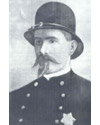
The reference to the electric car is in most of the versions I’ve heard of the song, including Bob Dylan’s. But it’s an anachronism in a song this old. The song commemorates an 1890 barroom brawl in St. Louis: James Brady was a cop with a reputation for bullying the local prostitutes–he wouldn’t let them dress in red. The bar in question was on the corner of Carondolet and North 11th Street, and it was lit up that night. Brady was shot in the melee, and several people were subsequently arrested. Harry Duncan, a black man, was hanged for the crime. Duncan’s appeal fingered bar owner Charles Starkes as the actual killer–some say Starkes confessed on his deathbed.
James Brady: He was just 30 when he died, and had been on the force four years.
Whether or not the song originated in the African-American community, it was certainly popular there–because of its anti-cop and implied racial message, minor riots broke out when it was performed in black bars in the city. Duncan’s appeal reached all the way to the Supreme Court, and his attorney Walter Moran Farmer, was the first African-American to be heard by that body. Duncan went to his reward in 1894.
An account from Old Hat Records differs in some details about all this: It claims that the incident happened in 1880, but that’s probably incorrect. It’s unlikely it would have taken 14 years to bring Duncan to his execution in those days, with or without the Supreme Court’s involvement.
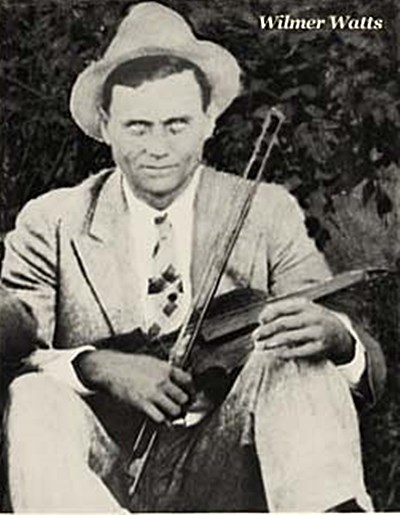
Huber Wilmer Watts was the first to record “Duncan and Brady,” and it’s his version (with the ‘lectric car reference) that was preserved by history.
Who killed Brady is beside the point here: More important is that Brady could not have come along is his electric car, because they hadn’t been invented at that time. This is the folk process at work. The first known recording of the song is by Wilmer Watts and his Lonely Eagles in 1929. That was nearly 40 years after the murderous incident in St. Louis–and long after electric cars had become fixtures of American life. Watts’ lyrics include the ‘lectric car reference; listen to it here:
The heyday of electric cars, in their first go-round, was 1900 to 1925, so it was perhaps easy for Wilmer Watts (or some other anonymous contributor) to imagine Brady tooling around in one. But there’s another good explanation: The famously rich Diamond Jim Brady, the murdered man’s namesake, got quite a bit of publicity for his electric car driving some years after the shooting, and it’s quite possible the two got confused.
But The Delta Blues‘ account, aside from claiming the 1880 date, is illuminating; it offers some original opening lyrics:
Duncan, Duncan was tending the bar
In walked Brady with a shining star
And Brady says, “Duncan you are under arrest!”
And Duncan shot a hole in Brady’s breast
Now we’re getting somewhere! I bet somewhere along the way someone misheard “shining star” as “electric (or ‘lectric) car,” and the rest, as they say, is history. Since Watts was the first guy to record the song, his version is what comes down to us today. Someone else can address the question of whether it really was Duncan who “shot a hole in Brady’s breast.”
Finally, here’s one of Leadbelly’s versions of the song, and he’s voting for the “shining star” thing–no ‘lectric car for him. My guess is that Leadbelly (a/k/a Huddie Ledbetter) heard the song through the oral tradition, maybe in prison, and the sources predate recordings:
I’ve been a DJ on listener-supported WPKN for 40 years. Time enough for my show to have a name, but I’m still working on it. I love doing live music, and sometimes it just totally comes together. One such night was October 29, when I hosted two bands, Five in the Chamber (a really tight Connecticut bluegrass group) and The Littlest Birds, a unique cello and banjo duo from California that’s more in the old-time vein.
This is a story told in video. The highlight of the evening, for me, was when the two bands played together at my urging. They both knew “Hot Corn, Cold Corn,” so here they are ripping it up–half an hour after they met for the first time!
And here’s “Five” on their own, doing “Love ‘Em and Leave ‘Em.” For some odd reason, this is the first time I videotaped a group I had on the air. Bless the iPhone 5S:
And finally, the Littlest Birds stayed over, and I persuaded them to do this rousing number–about roadkill–in my living room. If there’s a tradition of cello in old-time music, I sure don’t know it, but it works wonderfully. Check out Bruce Hornsby playing piano with Ricky Skaggs and talking about “the long tradition of piano in bluegrass.” Not!
There’s no reason that folk music should remain stagnant–like all living forms, it needs to change, mutate, grow and cross-breed. Bill Monroe heard jazz and created bluegrass as a result. Bob Wills heard jazz and created country swing.
Last Forever is (from left) Dick Connette, Sonya Cohen and producer/engineer Scott Lehrer. (DickConnette.com)
Both are perfectly valid today, but who says that “Uncle Pen” or “Take Me Back to Tulsa” have to be played the same exact way every time? That’s why I love folk that pushes the boundaries. Bethany Yarrow, daughter of Peter, made an excellent album, “Rock Island,” that really puts the folk standards through some changes, including touches of electronica. I loved it.
A more subtle approach is taken by Dick Connette and Sonya Cohen on the two “Last Forever” albums they made in 1997 and 2000. I first heard “Hide and Seek” on a Starbucks sampler record I bought for 50 cents at a garage sale, and I almost crashed the car–it was that startling.
Sylvia is the daughter of John Cohen, a member of the pioneering New Lost City Ramblers (and a niece of Pete Seeger). She certainly has the folk gene, but also a really strong, warm voice, which perfectly suits the material.
Connette is a composer, and he’s applied magic to old folk standards, giving them an almost mystical gloss that still respects the old-time tradition. The songs, from “Diamond Joe” to “Louis Collins” and “Indian War Whoop,” get new and enthralling, almost luminous arrangements.
Connette told me that some folk authorities were distinctly cool to this project, preferring folk to be preserved in amber. Well, the same critics rebuffed Bob Dylan, hated Coltrane, told Ornette Coleman to go back to Texas and Eric Dolphy to hang up his horn.
Listen to Last Forever. It will change your mind about the possibilities of folk music, and that’s a good thing. See for yourself; there are some Last Forever videos here.
There’s nothing I like better than a woman who can really make some noise, and without the benefit of artificial smoke or spandex. I got a double dose at the 2013 Rhythm and Roots Festival over the Labor Day weekend in Charleston, Rhode Island. It’s one of my favorite festivals, and I’d been away too long.
Yvette Landry with ace fiddle player Beau Thomas, who showed up later in the day playing with Roddie Romero. He was everywhere. (Jim Motavalli photo)
I minored in female vocalists at the College of Musical Knowledge, but I had never heard of Yvette Landry. I’m making up for that now. She opened up the Sunday festivities and, as the announcer said, the festival is all about cajun and crawfish, but Landry is a honky tonker.
In fact, she’s the whole package, a great singer, a great songwriter, and the leader of a band tighter than a drunk in a brewery. Of special note was fiddler Beau Thomas, who just locked into the groove and never let go. Landry, who is an educator and children’s book author, with two CDs out, is well worth checking out. She specializes in pungent done-me-wrong stories, and they really go down easily.
I needed a dose of Eilen Jewell, and she was on fire at Rhythm and Roots, even taking my request for Loretta Lynn’s “Fist City.” Starting out as a more conventional singer-songwriter, she met one of the rockingest bands in the known world, and now she’s a honky-tonker, too. Here she on my shaky video with “Rain Roll In,” a matter-of-fact way of looking at life (and especially it’s end):
I’m not the first guy to say this, but Jerry Miller, her guitarist, is simply one of the best in the world, able to distill 50 years of American roots tradition in a one-minute solo. He never over-plays. Eric Clapton needs to hear him–the effect will be similar to his first encounter with The Band. I totally enjoyed the workshop Miller (who has his own first album out) did later that night with two other splendid guitarists, Bill Kirchen and Albert Lee. Sure, they tried to outdo each other, but it was great, anyway, (And, no, he’s not the same Jerry Miller who was with Moby Grape.)
The Hot Tamale Brass Band were among the strolling minstrels at Rhythm and Roots. (Jim Motavalli photo)
Rhythm and Roots boasts cheap food, strolling minstrels (like the brass band above) and even a swimming hole. If Rhode Island isn’t on the other side of the world, put it on the calendar for next year.
It has been a summer of live music, just the way I like it. Let me tell you of some memorable shows.
After the Clearwater Festival, which I wrote about here, the American Roots Festival at Caramoor was upon me, and it brought together a number of acts I’d been meaning to hear, especially the Stray Birds, Doug and Telisha and Spuyten Duyvil.
The Duhks: They’re back, and smoking. (Jim Motavalli photo)
Remember you heard about the Stray Birds here first. The group of three sports three excellent players (especially Oliver Craven on guitars, mandolin, fiddle and voice) and a world-class songwriter in Maya de Vitry. Charles Muench is a great bassist and a strong singer also. Several Stray Birds songs could become standards of the Americana repertoire. With any justice, they will do exactly that. I heard the group do two sets, one of them free of all amplication under the stars in an absolutely gorgeous grove. They do covers too, and manage to avoid the clichés of the genre.
Doug and Telisha Williams (now going by The Wild Ponys) are a husband and wife team from Virginia. I love when partners in life can be partners in music, too, and both are strong singers and writers. “Things That Used to Shine,” from their new album of that name under the Wild Ponys name is a keeper. I’ve talked to them on WPKN, but this was the first time seeing them, but I’ll see them again.
I managed somehow to miss two sets by Spuyten Duyvil, named after a creek between Manhattan and the Bronx. The group is from New York, too. I heard just enough to know that Beth Kaufman is a really strong singer.
Caramoor is an ideal setting for live music; there is periodic Americana throughout the year. The Milk Carton Kids, worth hearing, are October 12.
Miss Tess tears it up at Green River. (Jim Motavalli photo)
After Caramoor it was a road trip up to the Green River Festival, a never-miss in Greenfield, Massachusetts. Green River showcases, among others, artists on the also-Massachusetts-based Signature Sounds label. You can’t go wrong with Signature Sounds: Among its artists are Chris Smither, Miss Tess, Eilen Jewell (plus her best-in-the-world guitarist, Jerry Miller, as a solo artist), Rani Arbo and Daisy Mayhem, Crooked Still (now absent the incomparable Aiofe O’Donovan, I hear), Josh Ritter, Erin McKeown, and more.
Mostly it was other people this year, though Miss Tess put on a lovely show. A highlight for me was a reunion of Canada’s The Duhks, who have come back stronger than ever with personnel intact as far as I can tell. At acoustic rave-ups driven by mad fiddle player Tania Elizabeth, there is no band better. And they have an exceptionally charismatic and groove-friendly singer in Jessee Havey. Don’t believe me? Watch this video:
Caravan of Thieves were incredible, too, and the Duhks’ peers on guitars and fiddles, albeit with a jazzier sound. The band’s highly original songs are inspired by the sublime gypsy music of Django Reinhardt and Stephane Grappelli. What other group that tears up the jam band circuit can claim that? And they’re from Bridgeport, Connecticut, right next to me. Fuzz (an incendiary guitarist) and Ben Dean (his equal on fiddle) have a I-can’t-believe-I-just-heard-that quality. Sometimes they trade off lines in a manner reminiscent of the best Indian music. Fuzz and Carrie, who sings, shakes things, and writes songs, are married. Did I mention a soft spot?
New to me at Green River was Poor Old Shine, newly signed to Signature Sounds. This is a very young band, with a lot of the energy of the Avett Brothers—and that’s a lot of energy. The Band are influences, and you can’t go wrong there. Soon after Green River the band played at the Bartlett Arboretum in Stamford, where the week before I’d seen the esteemed Red Molly. This is another fine music series in an incomparable setting.
Let’s not forget the Gathering of the Vibes, where I was a speaker on the Green Stage this year. I’m not huge on jam band music, but I love the event, because there is indeed inter-generational good, well, vibes. Here’s a look at that happy crowd:
The crowd at the Vibes’ Green Stage this year: Everyone gets along. (Jim Motavalli photo)
The aforementioned Bridgeport has a worthy Thursday night music series, with shoes held in a park named after the industrial city’s onetime socialist mayor, Jasper McLevy. An Americana show featuring Cricket Tell the Weather and Ada Pasternak was moved inside to the city’s Two Boots Pizzeria. I’d have preferred to see this new group outside, but can you play a mandolin full of rain?
Something of a local supergroup, Cricket features multi-instrumentalist Dan Tressler from String Fingers, fiddler Andrea Asprelli from Five in the Chamber, and guitarist Jason Borisoff from Atlantic Flyway (a duo with Asprelli). Two Boots was very noisy, but this group has incredible potential, with three strong writers. Tressler played his ass off on mandolin, but he’s also a superior fiddle player and an even better singer.
Tonight I’m heading over to see Caravan of Thieves again, free, at the Levitt Pavilion in Westport. Such is the life of an Americana freak getting his fix this summer.
Several people emailed me that Toshi-Aline Ohta Seeger had died at 91. She was Pete Seeger’s right hand for decades, his collaborator in writing songs, and his emphatic partner in progressive politics. In fact, Toshi embodied Seeger’s treasured internationalism, having been born in Munich to an American mother and Japanese father. The family moved to the U.S., and the pair met and married during the war in New York. Sue Leonard recounts Toshi’s early history from an interview. Pete Seeger married a Red Diaper baby:
As a young child, Toshi lived in Woodstock in a small, narrow house where her family grew vegetables and kept chickens. No one, Toshi said, ate the chickens, just their eggs, because they were pets (unless her Uncle Al visited and they cooked one for his dinner). Later they moved back to New York City. Her parents, being left-wing activists (her father was a Communist and her mother worked for the women’s movement) sent Toshi to The Little Red Schoolhouse then onto the High School of Music and Art where she played piano and was a member of the first graduating class.
For decades, they lived together in a small house in Beacon, New York overlooking their beloved Hudson. Toshi kept Pete going, and she made films—her 1966 “Afro-American Work Songs in a Texas Prison” is in the archives of the Library of Congress. Pete and Toshi co-founded the Clearwater Festival, and saw it through to glorious fruition. Toshi was the one who actually knew how to sail, and that helped the Clearwater get established.
In mid June, I spent a blessed day at the Clearwater Festival in Croton, New York, and reveled in a late set by the incomparable Mavis Staples. When I saw her being helped up the steps to the stage, I wasn’t sure she’d be able to perform, and indeed the first few songs were largely carried by other singers. But then Mavis opened her mouth and a glorious sound came out. She’s still got it, and how.
As I was watching, I felt one of the festival’s ubiquitous golf carts pulling up in front of me on a small hillock overlooking the stage, and there, right next to me, were Pete and Toshi Seeger, come to see the glory of Mavis Staples. I took the photo above with my phone.
What went through the minds of these two old campaigners watching Mavis Staples? Via the Staples Singers, their association goes back to the 1950s. Can you imagine the countless Mississippi Summer evenings, church basement sing-alongs, pass-the-hat political rallies, and union fundraisers they must have shared?












 Territorial Imperatives