Classic Car Season in Florida

Florida is becoming quite the vintage car state, what with three major concours events (all within the next few weeks), the Concours Club with its own private race track, and a trio of luxury Miami apartment towers involving name-brand automakers with storied histories—Bentley, Aston Martin and Porsche. All three come with built-in garages.

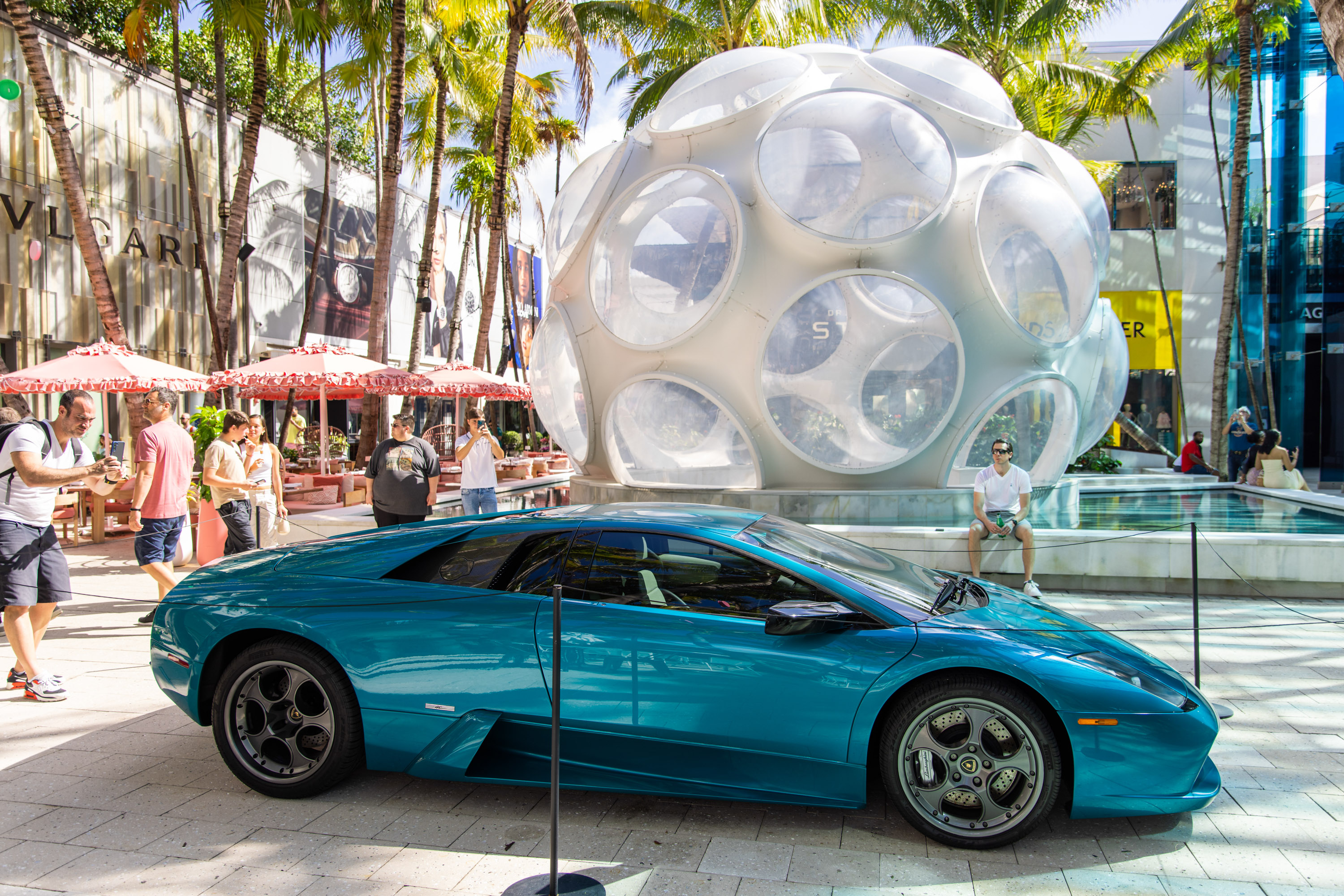
Of the concours events, first up is the eighth annual Miami Concours, which takes place Sunday, February 16 from 11 a.m. to 5 p.m. on the streets of the city’s famous Design District, with a full schedule of events throughout that weekend. Well over 100 cars will be arranged on the three streets (and six blocks) of the Concours, with another 100 being shown by local clubs, including the Porsche and Ferrari marques.

John Temerian is a co-founder of the Concours and also CEO of Curated, a high-end Miami dealership that specializes in low-production European cars from the 1970s through the early 2000s. “This year is very exciting,” he said. “We’re doing something unparalleled in the automotive world—bringing together the world’s fastest cars, including the McLaren F1, the RUF Yellowbird Porsche, the Bugatti Chiron Super Sport, the Jaguar XJ220, the Ferrari Daytona and the Lamborghini Countach.”

This year, via a new arrangement, car exhibitors, VIPs and paying guests will be able to come off the streets and relax at the Club at the Moore, in a landmark Design District building. The VIP ticket also includes reserved parking, a guided tour of Craig Robins’ art collection, and a private shopping experience. But the public is also invited free to walk the red carpet.

“We have a great relationship with the Design District,” said Brett David, a Concours partner who is also CEO of Prestige Imports Motor Group. “There are 10 restaurants on our campus, three of them Michelin-starred, and they sell out. There are elements of luxury, fashion, art, set against these iconic two- and three-story buildings. You become part of the show.” There’s no auction, but Temerian said one might be added in coming years.

Among the cars making their debut at the Miami Concours is the appropriate-for-south-Florida 2025 Overfinch Velocity Edition, based on the Range Rover. The car (above) offers carbon-fiber bodywork, special Helix wheels, Aurora seats with leather accents throughout the cabin, and an optional performance upgrade that boosts output of the 4.4-liter V-8 engine from 530 to 620 horsepower.

The second annual MODAMiami is March 1 and 2 at the city’s Biltmore Hotel (above), with some of the same local players as the Concours, but overseen by big player RM Sotheby’s, which holds its auction February 28. The auction house’s Florida base was Amelia Island until that event’s owner, classic insurer Hagerty, launched its own Broad Arrow sale. Last year, MODA and Amelia Island’s events were on the same day, but that logistical nightmare was avoided for 2025. The cars are arrayed on the hotel’s golf course, allowing viewers to get up close and personal.

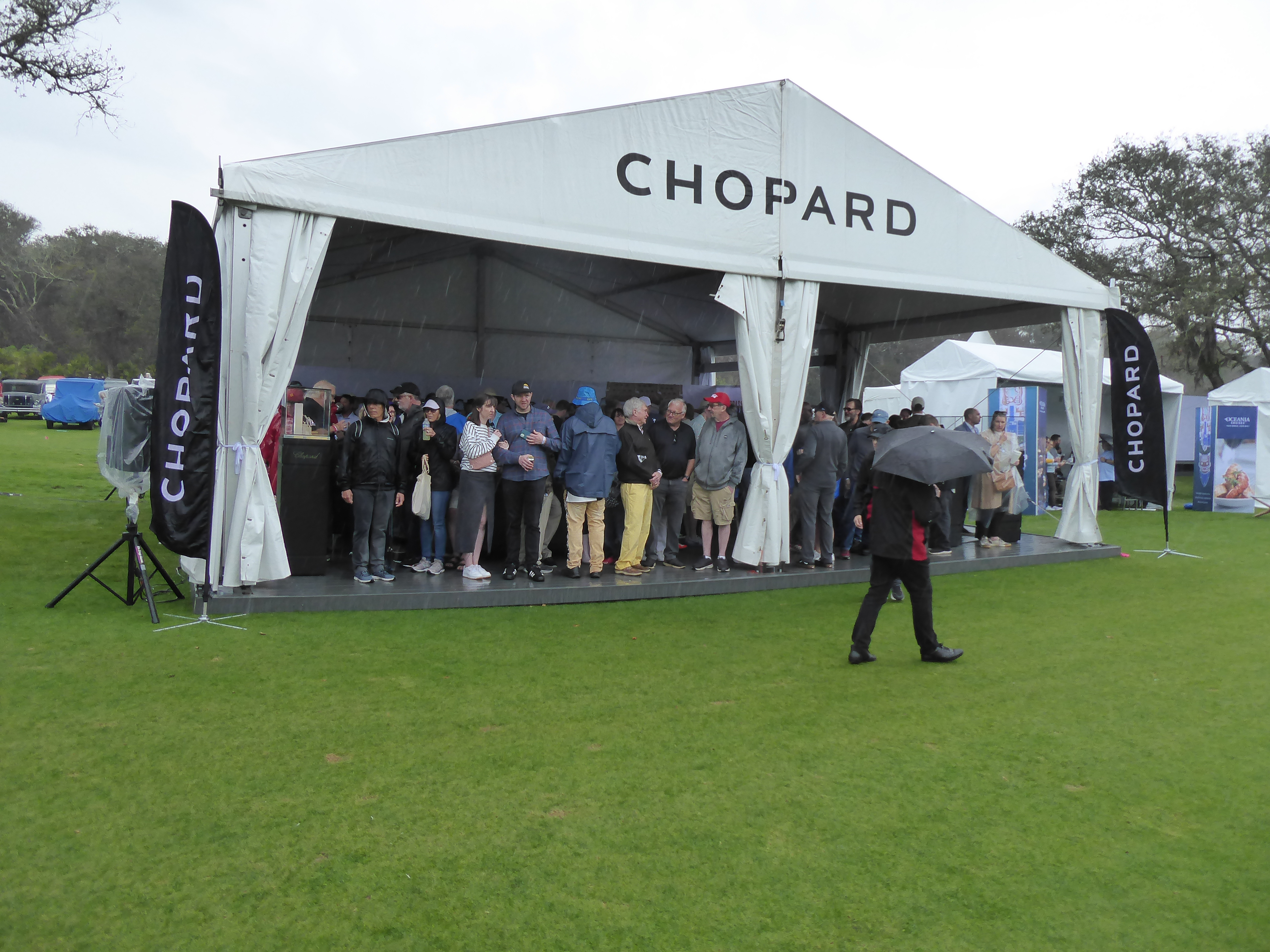
The Amelia Island Concours this year is March 6 to 9. “We’re excited for our 30th year,” said Matt Orendac, vice chairman of the Concours Group. “Bill Warner founded the event in 1996, and since then it’s been the racer’s concours.” See below for what happens when it rains.

The show field, featuring 160 cars, is being somewhat rearranged for 2025, and there is also a new event, Reverie on March 6 in the host Ritz-Carlton ballroom, which promises to pair cars with an open bar and gourmet food stations.

This year’s honoree is driver Helio Castroneves (above), four-time winner of the Indianapolis 500, three-time winner of the 24 hours of Daytona, and one-time winner of Dancing with the Stars. On a Zoom from Brazil, Castroneves said, “My dad got bitten by the car bug, and had a small race team here in Brazil. I didn’t want to be a team owner—I just wanted to drive the cars. My dad is my hero. His big lesson was always work harder than the next guy.”

Castroneves said he “learned more from my losses than from my wins. Because of your losses, you come back and do it again.”

There’s a road tour around the island on Friday morning, March 7, and the public is invited to see the cars parked for lunch in downtown Fernandina Beach. Hagerty will also provide rides in classics from its own collection. A seminar that afternoon, hosted by former NASCAR crew chief Ray Evernham, focuses on motor sports announcers.

The Broad Arrow auction is that night, and Ramsey Potts, senior car specialist, promises 167 cars, including a star 1959 Ferrari 250 GT Spider estimated at $10 to $14 million. A 1954 Jaguar D-Type works competition car, OKV 2, driven by Stirling Moss (the first Amelia honoree) to 196 mph at Le Mans is expected to garner $6.5 to $8.5 million. A Euro-spec 1987 Lamborghini Countach 5000 QV is a relative bargain at $626,000 to $675,000, and a ex-Jimmy Buffett 1981 Porsche 911SC is a modest $75,000 to $100,000.

Gooding, now owned by Christie’s, once again has its auction at the Omni Hotel. A 1955 Mercedes-Benz 300SL “Gullwing” is expected to bring $1.3 to $1.5 million, and (below) a rare and striking 1935 Avions Voisin C25 Aérodyne $2 to $2.5 million. Bonhams, a fixture near the airport, is absent this year.

The auction will be followed by a screening of Back on Track, a documentary series focused on actor turned racer Patrick Dempsey and his partner Patrick Long as they compete in the Porsche Endurance Challenge North America. The Saturday seminar, also hosted by Evernham, features the return of past driver-honorees, including David Hobbs (2009), Derek Bell (2007), Lyn St. James (2021), Chip Ganassi (2022) and Bobby Rahal (2011).

And then there’s the Sunday big concours, which this year features 50 years of the Porsche Turbo, Sebring Corvettes, pre-war classics, IROC racers and Ferrari coach-built cars.

All in all, it might be worth traveling to Florida and parking yourself there for a while, getting up from your beach chair only long enough to attend all three classic car events.

Ice, Snow and Slush: The Winter Drives

As winter sets in, features like heated seats, steering wheels and mirrors matter more, as well as traction and performance in snow. So, here’s a few reviews keeping the chilly scenes of winter—snow, ice, slush—in mind.

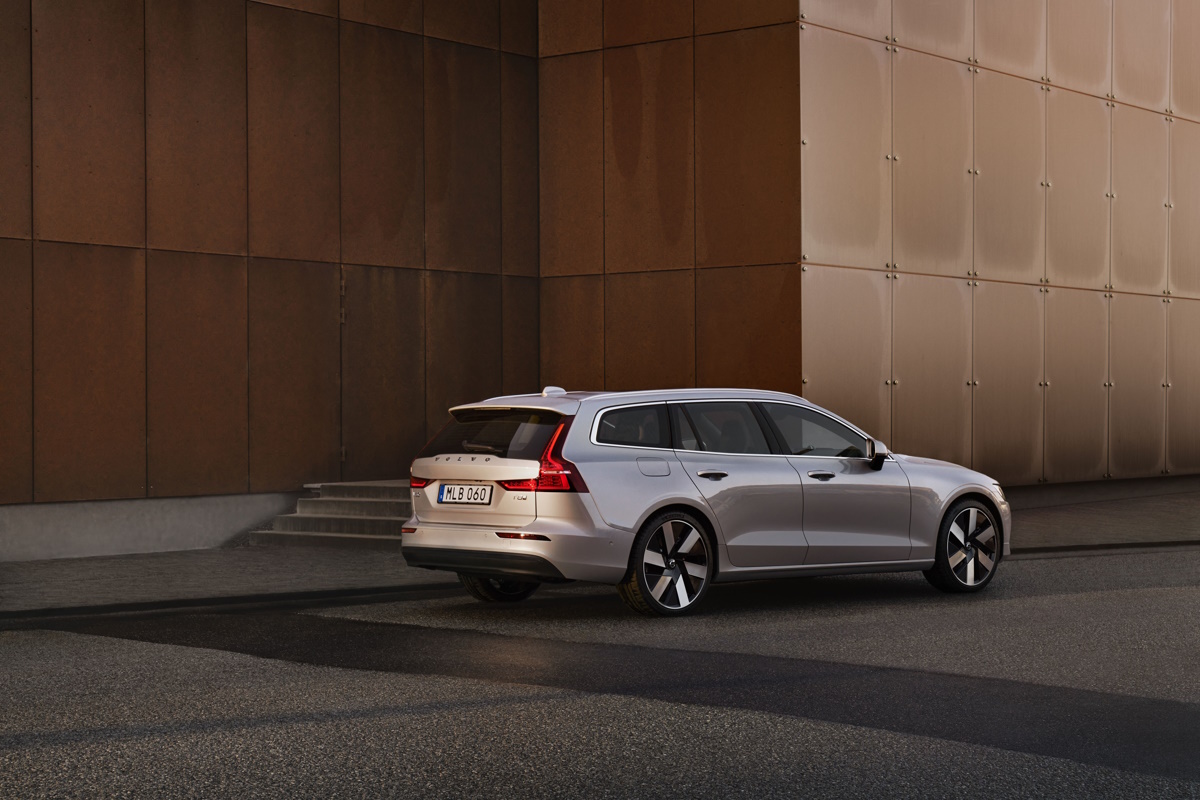
2025 Volvo V60 T8 E-AWD Polestar. I’ve never had a Swedish car that lacked a killer heater, and if you’ve ever been to northern Scandinavia, you know why. The name of this car is a bit confusing. Polestar is one of Geely’s electric brands, isn’t it? Yes, that’s true but before that it was a Swedish tuning shop, with racing experience, and it breathes on Volvos now as AMG does for Mercedes-Benz and M for BMWs.

The V60 is that increasing rarity—an actual station wagon, not an SUV. This version is a plug-in hybrid, with a 14.9-kilowatt-hour battery, up from 9.1. The electric motor has also been upgraded, and now produces 143 horsepower. The two-liter four is turbocharged and now produces 312 horsepower. The car is meaty, and can cruise 44 miles on battery power alone. It’s brilliant in the cold (even the rear seat is heated), with a fast-working heater and defroster, as well as excellent handling. Who needs an SUV?

As tested, this fine Volvo was $72,835, a high price that is a definite barrier for some buyers. Also tested was the 2025 Volvo S60 Recharge eAWD Ultimate Dark. And it’s another rarity, a sedan! The American fascination with SUVs in all their vivid reality still escapes me, so if you’re also resistant check out this one. Unfortunately, this is the last year for the compact S60 sport sedan. You’re much better off choosing the S60 as a plug-in hybrid, because its combination of turbo four and electric motor produces 455 horsepower, compared to the entry model’s 247. Most of what I said about the V60 applies, and the bottom line as tested was $62,545. The two models have an identical rating of 74 MPGe with the hybrid drive, and 31 mpg overall with just the gas engine. Not bad, considering all the safety equipment aboard.

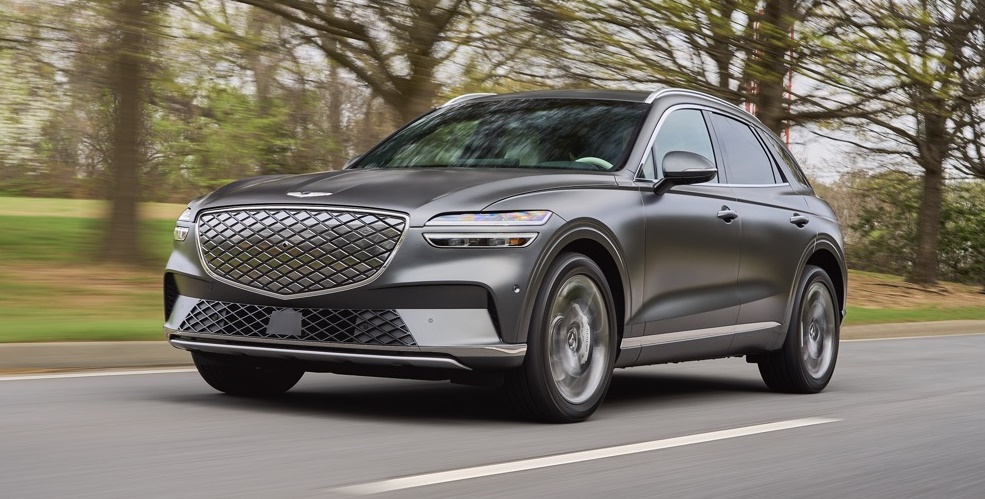
2025 Genesis GV70 3.5T AWD Sport Prestige. Genesis is currently both my favorite luxury brand, and it’s my top electric choice, too. The 70, 80 and 90 are available as SUVs and sedans, and the GV70 tested is one of the former. This was a splendid winter car, given a 10 out of 10 by Car and Driver, and it sports a peerless luxury interior with every possible amenity. The tester had two big packages, sport advanced and sport prestige, which added $6,400 and $3,200 to the price respectively, but both are worth considering as they include many safety features. It might have been a good idea to include all the safety stuff in the same package. The price as tested was a not-inconsiderable $69,900.

The Genesis comes with a 375-horsepower twin-turbo V-6, capable of sub-five-second zero to 60 times—but it’s also a family luxury SUV. Choose a lesser version of the GV70 and you get a worth-considering turbo 2.5-liter four.

2025 Toyota Sequoia 1794 Hybrid. This one got a real winter workout, all the way from Connecticut to Chambersburg, Pennsylvania. I would have trouble buying a vehicle that gets only 20 mpg combined (and 17.9 average on my trip), but with that said I can confirm that this is a very comfortable perch for a long seasonal drive. I was at the wheel about nine hours and emerged fully refreshed. The seats, seating position and legroom were all ideal, as was the JBL stereo. I was also able to haul a 47-inch-wide 1950s German console radio—complete with liquor cabinet—in the rear, seats folded. Unfortunately, the third row doesn’t fold flat, but it still provided a cavernous load area. The running boards that zip out when the car is unlocked are handy, because the vehicle has a high center of gravity.

The Sequoia SUV is big in every dimension, including price, $84,480. And that’s why, even with hybrid drive, it still uses plenty of gasoline—I had to fill up twice. The power comes from an I-FORCE MAX twin-turbo V-6 with electric motor/generator (437 horsepower combined), driving through a 10-speed auto with sequential shift. The Sequoia was actually better handling than anything this large deserves to be. I’m sure, with four-wheel drive and this configuration, its excellent for towing.

Also from Toyota was a 2024 Toyota Tacoma Trailhunter Double Cab. I didn’t get to spend too much time in this $64,944 truck, but I moved some things with it and realized that the Japanese now build better American trucks, in many cases, than actual Americans do. They tend to be more reliable and better built, and there aren’t many compromises. This Toyota, too, uses an I-FORCE MAX hybrid drivetrain, and again the results aren’t stellar—23 mpg overall.

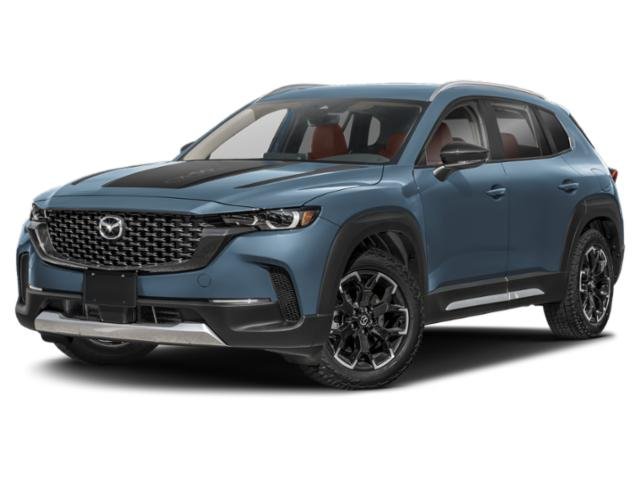
2025 Mazda CX-50 Turbo Meridian Edition. As the owner of a Miata, I know how well Mazdas handle, even when they’re compact crossovers. The CX-50 ($42,670 as tested) is the only car on this list whose price doesn’t intimidate. I could actually buy one of these!

Mazda doesn’t have a handle on luxury the way in quite the same way Genesis does, but the buyer who opts for the Meridian CX-50 gets a 256-horsepower turbo four (the base non-turbo engine produces only 187 hp) and 3,500-pound towing. The package also includes the nice leather heated seats and a sunroof. For 2025, all CX-50s get the larger 10.3-inch infotainment screen and Amazon’s Alexa voice assistance is now included across the boards. “Alexa, which car should I buy? Hmmm, maybe a Mazda?

There’s a hybrid version of the CX-50, with a 176-horsepower 2.5-liter four, CVT transmission, all-wheel drive, and a stellar 39 mpg city and 37 highway. The new entry is the result of a collaboration with Toyota, and it shares the RAV-4’s powertrain. The hybrid starts at just $33,970, so it’s definitely worthy of consideration.

New Models Sometimes Blur the Lines Between Sedans and SUVs

Although it’s often stated that the auto industry leads the public by the nose via clever marketing campaigns, in fact consumers are in the driver’s seat—and their changing tastes led to the now near-total SUV dominance we’re now seeing. But the difference between a sedan and an SUV these days amounts to little other than a few body panels, as witness Toyota’s Prius and Corolla Cross hybrids.  

A small SUV is often more efficient and fuel-friendly than a big sedan. And that’s why it makes sense to figure out which current market entry really floats your boat—and then downscale from there. Small is still beautiful! Here are some new models, illustrating my various points:

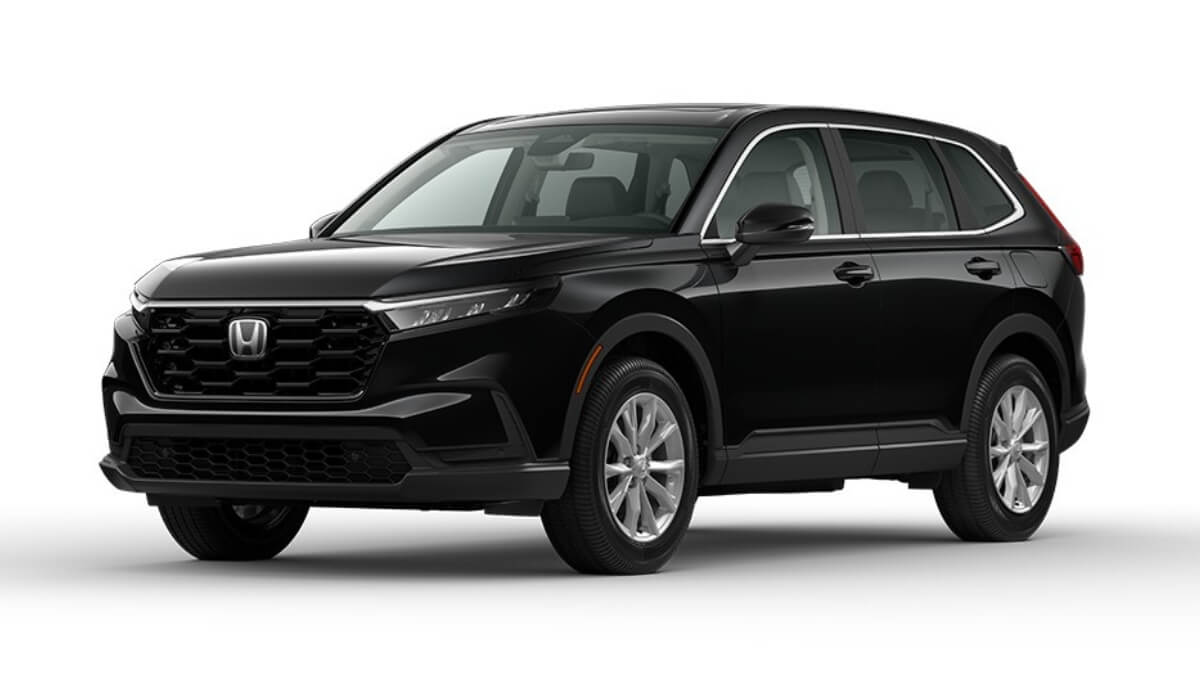
2025 Honda CR-V Hybrid AWD Sport Touring. Now here is an entirely reasonable automobile that represents an excellent choice for a small family that—in most cases—buys something larger. As a parent who raised two kids with nothing larger than a Honda Fit, I say it isn’t really necessary to buy an Expedition when the first kid arrives. Honda didn’t have an as-tested price for an example with $455 added for Urban Gray paint, but this hybrid Touring model starts at $42,450.

The CR-V is never going to be a white-knuckle sports car that you exploit at the limit. It’s a very, very useful appliance that delivers 37 mpg combined. And it’s probably the most reliable appliance you can buy. Yes, it’s a car for people who read Consumer Reports, but there’s nothing at all wrong with that. There’s really no reason not to chose the hybrid variants that are being offered on an increasing number of automotive product lines.

2024 Toyota Prius Limited. If you’ve been using the excuse that “the Prius is ugly” for buying a lesser vehicle, it’s time to rethink. The current fifth-generation Prius is downright pretty. It was first shown in 2022. The shape of the earlier versions were dictated by practicality and aerodynamics, so the styling win here has yields a slightly higher drag co-efficient and minor losses in cargo volume. But it was worth it!

The Hybrid Synergy Drive in this Prius offers 198 horsepower, and a two-liter inline four gas engine that’s also used in the recently tested (and quite nice) Corolla Cross hybrid crossover that’s also worth considering. In high-end Limited trim, the Prius yields 49 mpg combined, saving the owner $4,250 annually in fuel costs compared to the average new vehicle. For $37,999, the buyer gets a loaded Prius with features like AWD, a full safety suite, LED headlights, rain-sensing wipers and eight-speaker JBL infotainment. It’s hard to imagine a better buy, especially when the average car sells for $48,401.

2025 Genesis G80 AWD 3.5T Sport Prestige. The G80 slots in between the G70 and the G90, but it’s the top dog in some international markets. It’s certainly no compromise, coming as it does fully equipped with the top-of-the-line B&O stereo, AWD, a huge safety suite, heated and ventilated front seats, a smart auto-open trunk, and the 3.5-liter twin-turbo V-6 that makes 375 horsepower (versus the 300 horses of the 2.5-liter turbo alternative). The car shifts through an eight-speed automatic transmission.

Beyond these tangibles there’s the intangible just-feels-right about this car. It’s very comfortable, quiet and effortless on the road, and offers plenty of storage. The bottom line as-tested wasn’t offered, but the model starts at a not-cheap $78,250. Also check out the 2025 Genesis G80 Electrified, offered in just one “Luxury” trim. We recently drove one on a round-trip to Washington, DC with Michelin, and a good time was had by all except for some charging issues on the New Jersey Turnpike. The 94.5-kilowatt-hour battery gives the G80 Electrified just under 300 miles of range.

2025 Mazda CX-70 Turbo S Premium Plus. The CX-70 is a new mid-sized entry going after popular vehicles like the Jeep Grand Cherokee. It’s very similar to the CX-90, albeit with two rows (and five-passenger seating) instead of three rows and room for eight. You can get into a CX-70 for $41,900, but this top-range model is an eye-opening $57,405, in part because this is the hopped-up S version of the 3.3-liter inline-six engine seen in the CX-90. It produces 340 horsepower and 369 pound-feet of torque, coupled to an eight-speed automatic transmission. Mazdas tend to handle better than the average Japanese product, and that was the case with this fairly large automobile, which is also very tastefully appointed. But this is among the most crowded SUV segment, so it’s tough for Mazda to really stand out in it.

The zero to 60 time of 6.2 seconds is relatively sprightly, but any electric SUV would blow it away. Fuel economy of 25 combined/23 city/28 highway isn’t horrible but isn’t great, either. Also consider the CX-50 Hybrid Premium Plus, with a much better 38 mpg combined (39 in the city and 37 on the highway). The bottom line of $42,065 is also easier to swallow. And you can live with 219 horsepower.

2024 Volkswagen Golf GTI 2.0T. The Simeone Museum in Philadelphia collaborated with Volkswagen of America on the current exhibit (through January 12). Highlights include the Woodstock Microbus, Herbie, Karmann Ghias, a 1949 Bug—and several GTIs.

The GTI was launched in 1976 with 1.6-liter inline four adapted from Audi. That power output doesn’t seem like a lot now, but it turned the lightweight Golf into a prototype hot hatch capable of more than 112 mph. Obviously, the GTI has gained some weight and power since then. There’s still an inline four, but now it’s a 16-valve turbo producing 241 horsepower and 273 pound-feet of torque. The 2024 GTI offers zero to 60 in as little as 5.5 seconds, and fuel economy of 27 mpg combined (24 city, 33 highway). It’s a fun car to drive, graced with a six-speed manual transmission (one of the last?), but suffers from controls that should be simple and knob-based, but are complex and on the screen.

2024 GMC Sierra EV Denali Edition 1. OK, it’s here, an all-electric Denali pickup with formidable specs—zero to 60 in four seconds! They call this a “light-duty” truck but it weighs 8,800 pounds. To move all that weight, GMC has equipped it with a huge 205-kilowatt-hour battery. That provides a stellar 440 miles of range. But the big battery is a major reason the Denali has a $99,495 price as-tested.

The crew-cab truck was luxurious inside, and quiet in operation, with a huge vertical screen. But this is one EV that just feels big, especially in parking lots. In terms of practicality, the truck with the cumbersome name did prove useful for some dump and Goodwill runs. The powered tailgate, which folds in half, is nice, but the dealer-installed soft roll-up tonneau was cumbersome to use, especially in the cold. And the load height is pretty high.

Is there a market for this kind of heroically sized EV? Probably, yes, since Rivian is moving them, and GM itself sold 14,039 Hummer EVs through October 2024. It’s not clear how many of those were pickups. Scout is also going after the EV pickup market, and we should see the Ram electric pickup soon. GM has a history of producing its “green” vehicles from its largest platforms, and in some cases that leads to a distinctly compromised product, such as the Silverado hybrid that went from 17 mpg to 19. But to its credit the company is now offering downsized and very credible vehicles such as the Chevy Bolt, Equinox and Blazer EVs.

Exploring Michelin World, From New York to DC Via EV

The premise was simple enough: My wife and I would drive a Genesis GV70 Electrified equipped with Michelin’s new CrossClimate2 all-season tires from New York City to Washington, D.C., stopping at Michelin-rated hotels and restaurants. Not a bad way to spend a weekend, right?

The Genesis GV70 Electrified was our steed for Michelin’s long-distance East Coast EV trip. (Genesis photo)

It proved to be quite an adventure December 6 to 8. The car, a big, luxurious and roomy SUV, arrived with approximately 170 miles of range. That was no problem for the first leg of the trip, 50 miles from Connecticut to the two-key Michelin Nine Orchard Hotel (a former bank, and quite opulent) in the Dimes Square neighborhood near Chinatown on the Lower East Side of Manhattan. When you’re driving an EV you notice other ones, and we couldn’t miss a CyberTruck ahead of us, and a Chevy Bolt too. We passed several rest areas, noting that the chargers there were often fully engaged.

A comfortable place to be. (Genesis photo)

The Delancey and Essex Municipal Garage was a 10-minute walk to the hotel, and it had EV charging. Luckily, one bay was free, and the cord reached. It was 240-volt Level Two, but that wasn’t a problem because we were leaving the car for the night. We loaded the EVConnect app and were charged in the morning, with a $5.05 bill, plus $50 for the parking.

Our room at 9 Orchard.

Dinner that night was at chef Dan Barber’s Family Meal at Blue Hill, with one Michelin star. This is the urban outpost of Blue Hill at Stone Barns, a farm-to-table enterprise in Tarrytown, New York. Many of the featured fresh vegetables come from the farm.

The second course at Family Meal at Blue Hill.

The four-course menu was set, without choices (except for allergies), but we were delighted with those selections. After a mushroom soup featuring apples, chestnuts and lovage, the second course may have been our favorite: a trio of yellowfin tuna, mackerel, and lobster dishes. The Barber wheat flatbread (made from grain grown especially for the restaurant) and the salad of brassicas with Morton lentils, sesame and sunflower impressed us as well. There were four wines, and an apple aperitif. We left in a not-your-average-Thanksgiving food coma. 

Breakfast at 9 Orchard.

After breakfast under the vaulted ceiling of the former bank lobby, we collected the car with 217 miles showing.

The vaulted ceiling at 9 Orchard. It’s a former bank.

It’s four hours to DC from New York, through New Jersey, Delaware and Maryland. We wanted to make it as far as we could, so stopped at the Chesapeake rest area in Maryland with only 50 miles of range left.

The Combined Charging System (CCS) chargers said Electric Vehicle Institute on them, and only one of four was occupied. At 47 kilowatts, it took about an hour to charge. We got coffee.

Our arrival into the wharf area of Washington, DC SW coincided with a boat parade on the Potomac, apparently a major attraction because it was vehicle gridlock and wall-to-wall people. It took 15 minutes to make a left turn. The self-parking garage had EV charging, one space remained, and the cord stretched. The charging, Level 2 (again, fine for overnight), was free, but the parking cost $60 for one night.

The Pendry Hotel at the Wharf, Washington, DC. (Pendry photo)

The Pendry hotel (with one Michelin key) in the popular Wharf shopping area along the river was hopping with life, but we had to move quickly to make our reservation at Rania, a highly inventive one-Michelin star Indian restaurant off Pennsylvania Avenue.

The travelers on the Mall in DC.

The walk, in the kind of chill that only the canyons of DC can generate, took us right through the historic Mall, with the Washington Monument on one side and the Capitol building on the other.

Delicacies at Rania.

Again, it was a four-course menu, with two choices for each course. We love Indian food and found Rania’s approach to be really creative. Our favorite flavors were there, but the dishes featured many nouvelle cuisine innovations (so the menu told us). We ordered so we could sample everything. Some of our favorites included: shiso leaf chaat with white pea ragda and sorrel chutney, lamb belly kebab with chickpea cheela and kashumber; and the red pepper makhani that accompanied Tandoori squab. My wife chose her favorite Kingfisher beer, and I opted for Sauvignon Blanc to wash things down.

The apple dessert with ice cream at Rania.

We made a quick stop in Alexandria, Virginia to meet a friend in the morning, and hit the highway with a full charge. Our thinking was to get to New Jersey for lunch and a quick charge before heading home to Connecticut. This is where the plans went awry.

EVgo chargers at the Molly Pitcher rest area in Cranbury, New Jersey, circa 2017. (EVgo photo)

At the Joyce Kilmer rest area on the Jersey Turnpike, the CCS fast chargers were out of order. PlugShare informed us, “The chargers at this location are being removed as part of EVgo ReNew, a comprehensive maintenance program in which we are working to replace, upgrade, or in some cases retire stations over the coming year to enhance charger availability and build range confidence. We apologize for any inconvenience.” This was devastating news.

At the James Fenimore Cooper service area in Mount Laurel Township, the off-line CCS chargers had a very forbidding wire fence around them. But there were a multitude of available Tesla chargers, and we had a Lectron adapter that supposedly would allow us to use them. Unfortunately, the Tesla app refused to acknowledge that there were Superchargers nearby, and the charge was a no-go. Scanning the PlugShare app revealed not only that the other CCSs on the Turnpike were disabled, but that a lot of people were seething about it. Tesla drivers had no problem at all.

Teslas use the North American Charging Standard (NACS) plugs. A Genesis spokeswoman told me, “Our EVs will come standard with a NACS port starting with the 2026 model year. They will also have available CCS adapters.”

But that’s then. Our only choice in December 2024 was to get off the highway. In an odd coincidence, the nearest charger was at an office park where my wife once worked. It was five miles away. The ChargePoint charger there had a Chevy Bolt connected, but there were two wands and we connected the other one and got a charge going. Alas, it was Level 2 with an 11-hour charge time, and since we only had 50 miles of range at that point it wasn’t really a solution.

EVgo charging at the Quaker Bridge Mall. It worked, but there were long lines to get hooked up.

The app revealed that the Quaker Bridge Mall 10 miles away supposedly had two free Electrify America (EA) CCS chargers. It had them, all right, but not free. There were four, one was out of order, and three cars (Hyundai Ioniq 5, VW ID.4, Mustang Mach E) were waiting for the three that were working. There were EVgo chargers, too, but also with long lines.

It was going to be a long night. We waited in our car, not wanting to lose our place, and 45 minutes later we got our chance at one of the EA stations. The charge was fast, at 197 kilowatts, and we were delivered 67 kilowatt-hours of electricity in about 35 minutes, yielding a 97 percent charge and more than 250 miles of range. The catch was the price—56 cents per kilowatt-hour, resulting in a bill of $40.06. Wow, that’s like paying at the gas station. But we really wanted to get back on the road, so it was worth it.

A spokesman for the New Jersey Turnpike Authority, who preferred not to give his name, explained that the service areas are run by Apple Green, which had a contract until last January with EVgo to provide CCS charging. “But Apple Green decided it wanted to put in its own Level Three chargers and infrastructure, and that’s in the process now. We’re trying to get those chargers up!” He said that other states have issues too, adding that he encountered “40 Teslas lined up” at available chargers on a drive up the New York State Thruway.

We arrived back home at around 8:30 p.m., more than two hours later than we’d anticipated. Both the car and those CrossClimate2 tires, designed for SUVs, did well. The tires are “engineered EV-ready,” and while their wet braking and snow traction merits didn’t get tested, their reported longevity is appreciated. Some low-rolling resistance tires that are original equipment on EVs haven’t performed well, especially in terms of lifespan and grip in the wet. Consumer Reports recently rated the CrossClimate2 first among all-season SUV tires and projected that the 18-inchers would last 95,000 miles at a cost of 26.7 cents per mile. The Michelins were very quiet in operation, as was the car itself.

The Genesis Electrified GV70 is a contender among larger EVs, though the $75,750 bottom line for the 2025 model tested was a bit daunting. A $4,800 prestige package (Nappa leather, suede headliner, heated second row, heated steering wheel, Lexicon stereo) added $6,800 of that.

Some 483 horsepower is on tap via twin 160-kilowatt motors. Big as it is, The GV70 can sprint to 60 mph in 3.8 seconds. That was great for passing trucks, and overall the EV handled very well for a big vehicle. The GV70’s battery holds 77.4-kilowatt-hours. A few more miles of range wouldn’t have made much of a difference in the problems we encountered in New Jersey.

There are a few EVs, such as the Lucid Air Grand Touring (512 miles of range) that could have made the whole trip without stopping, but most EVs are around 300 and would need to stop at least once. And that’s where the peril lies. The highway charging network has made great strides in the last few years but—unlike the menus at Michelin-starred restaurants—it’s not a glorious experience yet.

The Menu was Eclectic at the 16th Annual Brooklyn Folk Festival

The 16th Annual Brooklyn Folk Festival was one of this wonderful event’s widest ranging, retaining the core of its old-time roots but with very healthy dollops of international music as well. Groups from Mexico and India by way of Trinidad were new to me and thrilling.

And what a way to start on Friday afternoon. A young man named Royce Martin sat down at the piano and not only played some of the best ragtime I’ve ever heard but also his original compositions, which featured a form of word jazz seemingly of his own invention. “Make Believe” was “a song about confidence.”

Martin is from St. Louis, and worked as a pianist and lecturer at the Scott Joplin State Historic Site there. When he played master works like Joplin’s “Pineapple Rag” and Willie “The Lion” Smith’s “Echoes of Spring,” he channeled forms from his great-grandfather’s day. But he has the history, and also the will to take ragtime in new directions.

Samoa Wilson is a regular at Brooklyn; she’s a fine singer of vintage material, steeped in it through regular work with her uncle, Jim Kweskin of 1960s jugband fame. Wilson was at Brooklyn in a group with Sean Walsh, and delivered a fine version of Dylan’s “I’ll Be Your Baby Tonight.” Later she went on with the provocatively named duo Fatboy Wilson and Old Viejo Bones, with Ernesto Gomez.

Shiva Lakhan (above), out of Trinidad, was unexpected. The trio played West Indian and “Chutney” vocal music that, in their version at least, is heavily percussive. The percussionist played a big double-sided hand drum, much larger—and louder—than tablas. I heard echoes of African music. The singer accompanied himself on a Paul and Co. harmonium, and it was intoxicating. A third musician banged a metal ring against a tall, thin pole, producing a chiming drone. Chutney is evidently a fusion of Indian folk and Bollywood with Caribbean calypso and soca. It’s heard not only in Trinidad and Tobago, but in Guyana, Suriname, Jamaica and as far away as Fiji.

The New York-based Guachinangos (above) were also deep into a world fusion, playing Mexican son jarocho with Colombian cumbia and other Latin American rhythms. They were highly theatrical, in a good way, and featured a very dramatic up-front dancer, whose moves reminded me of flamenco. The requinto jarocho (small Mexican guitar) player was a genius. And that dancer was mesmerizing. Juan Carlos Marin (that guitar player) appeared to be in charge.

The Cactus Blossoms from Minneapolis played winsome original folk that recalled the Everly Brothers. Jack Torrey and Page Burkum are also brothers, and that explains the close harmonies—it’s genetic! Their next booking was, the following day, CBS Saturday Morning.

A regular in Brooklyn is Ken Schatz, a singer of lusty sea shanties. But it’s not just him. He leads groups of novice singers in Staten Island and at South Street Seaport, and at the folk festival several of his regulars got up to lead us in songs like “Lowlands” and “The Rolling Sea.” Schatz’ version of “The Golden Vanity” was the one with the sadder ending, but then there are many versions of this song. “The songs often have floating verses, which can be inserted as needed,” Schatz said. I requested the seemingly obscure “Cape Cod Girls” (Patrick Sky did a version) and a young teenager got up to sing it, knowing most of the words.

Isto, a/k/a Christopher White, certainly goes his own way as a performer. He performed quite credible versions of Great American Songbook classics (as seen in his book containing guitar fingerpicking versions of same), but also his own idiosyncratic and amusing songs, including “Hot Dog Daddy,” which was not sexual innuendo at all. “He eats burgers on the sly.” He has Halloween and Christmas albums, a family band and a Hawaiian band. “When I Die and My Body is Reanimated” was “for all the zombies in the audience.” Isto, a Wesleyan graduate who studied with Anthony Braxton there, has a smooth voice, but he bends it like a pretzel.

Nora Guthrie led a slide show about her dad, Woody, and the part I heard was about Mermaid Avenue, Woody’s illness, the icon’s pilgrimages to Washington Square Park, and Bob Dylan’s visit. Dylan knew all of Woody’s songs, and that’s what this great American songster wanted to hear in his later years. “He was like a jukebox for Woody,” Nora said. Woody Guthrie’s grandson, Cole Quest, is also a folk festival regular, and his City Pickers were a spirited asset this year, and “Way Down Yonder in a Minor Key” (lyrics, Woody Guthrie, music, Billy Bragg) was wonderful to hear.

Seeing the Guthries complemented my recent visit to the Bob Dylan and Woody Guthrie museums and archives, which are next to each other in Tulsa, Oklahoma. And definitely worth a visit.

There are lectures, film showings–and book signings at the Brooklyn Folk Festival. I encountered Terri Thal, who was autographing copies of her book Dave, Bob and Me. She was married to Dave Van Ronk and was Dylan’s first manager, recording the famous Gaslight Tape when he first came to town. I asked her about the much-underrated Patrick Sky, who was close to Van Ronk in the early days. “Patrick was one of my best friends,” she said. “He was hilarious all the time.”

Jan Bell (at right above) is a singer from Yorkshire originally who sings of her family’s coal-mining roots. Her deep Americana album is Dream of the Miner’s Child, with Alice Gerrard (at Brooklyn last year) featured. Bell also has performed and recorded with The Maybelles.
Suzy Thompson is a gifted fiddle player, favoring old time and cajun, and also the founder and brains behind the Berkley Old-Time Music Convention. The next one is in September 2025. Accompanied by husband Eric on guitar, Suzy also did a couple tunes (“Bride 1945” and “Ballad of Honest Sam”) by the much-missed folk troubadour Paul Siebel. She recorded a whole album of his songs. Siebel up and quit the music business in the early 1970s after only two Elektra albums, and only recently passed away in 2022. It’s unfortunate that only his “Louise” gets heard at all—Siebel had many great songs.

Los Texmaniacs, a conjunto Tex-Mex band created by Max Baca, a great guitar player (or was it a “bajo sexto”), in 1997. The group had an accordionist of equal crowd-pleasing skill. Proving that folk music is a big tent, the Pine Leaf Boys from Louisiana performed a rocking set of mostly zydeco music. Thompson’s cajun was quieter, but it’s all roots from the same tree.

David Amram (above) was amazing. At 93, he’s still playing (pocket flutes, electric piano, a Chinese instrument) and singing in top form. This omnivorous musician has deep roots in folk, jazz and classical music, and a bunch of stories to tell about working with the Beats in the 1950s. In Brooklyn he was with a fine ensemble that included Sonny Rollins veteran Jerome Harris on guitar. Maybe that’s why the group did Rollins’ “St. Thomas,” during which Amram played two flutes simultaneously. The beat collaboration gave us Pull My Daisy, a groundbreaking 1959 short film, and Amram wrote the music for the song, and did it in Brooklyn:

Nora Brown, now a beginning Yale student, never misses the Brooklyn Folk Festival and she offered her usual menu of curated banjo tunes with her lived-in, expressive voice. But there was also a Dylan tune, “I Was Young When I Left Home,” somehow left off his early albums and only recently surfaced as part of the world’s most comprehensive reissue program. Fiddle player Stephanie Coleman joined Brown late in the set, taking the tempo up.

Sunday was an exceptional day, starting off with a rubber-limbed and genial cowboy kids’ performer named Hopalong Andrew. Everyone was in full western regalia, and the kids each got their own Hopalong hats. “Strollin’” appeared to have been adopted from the Rawhide theme.

And then came Roochie Toochie and the Ragtime Shepherd Kings (above), an indescribable mélange of ancient music and vaudeville-level comedy. Their album was recorded on wax cylinders. Unfortunately, the group gets together rarely these days, only once or twice a year, but you’d never know it. There were puppets, props, and a whole lot more. “Tiger Rag,” a song about salami, a protest against the insipid “Yes, We Have no Bananas” (a ubiquitous hit in 1923). What happens when you open The Compleat Unabridged Book of Jazz and broccoli falls out?

Vainos Paisanos played early 20th century dance music, mostly from Europe, east and west. The group truly inhabited these old songs, recapturing them from scratchy 78s. Fiddle player Rachel Meirs, who lives in Louisville now, started out by answering a waitressing ad for the Jalopy Tavern in 2011, and said she’d never know the eclectic bunch of musicians playing with her if that hadn’t happened.

Peter Stampfel (above) has more than 60 years of history with the Holy Modal Rounders, and he’s still at it, leading a cacophonous ensemble in Brooklyn. He was in a fine mood.

The Downhill Strugglers (above), which includes the festival’s guiding light and emcee Eli Smith, was down to two members (Smith and Jackson Lynch) because the third fellow, Walker Shepherd, was off having his first child. No matter, they were rousing anyway, performing songs from their latest on Jalopy Records, Old Juniper. Intriguing to hear “Casey Jones” the way it was originally sung, before the likes of Burl Ives got a hold of it.

Michael Hurley (above, right) is of similar vintage to Peter Stampfel in and around New York, and their collaborations go back many years. Hurley, in his 80s, is enjoying a renaissance with many young admirers, including performers such as Cat Power, Lucinda Williams, Elizabeth Mitchell, Rose and the Bros, Big Thief’s Adrianne Lenker, and many more.

Hurley, playing an electric guitar (that initially buzzed, the same way it did the last time he played Brooklyn) built momentum as he went and was soon flying along. A tap dancer joined him. Several unfamiliar songs were played, including this one, “Tennessee Easy Chair”:

I’ve been following Martha Spencer (middle above) since her start in Virginia with her family’s Whitetop Mountain Band. The Whitetop Mountaineers is a duo she leads with Jackson Cunningham that has recorded four albums. In Brooklyn, wearing a spectacular hat and a green-and-white checked country dress, she had a band. Her new solo album, quite eclectic, is Out in La La Land. Spencer is a really great Appalachian singer and is also accomplished on fiddle, banjo, guitar and (she played it with Gilly’s Kitchen) bass. Oh, she dances, too. I don’t know the name of this, but it was a lot of fun:

I don’t know much about Kyle Morgan, who appeared with veteran New York chanteuse Tamar Korn, but he’s a find. I got only half of this song, but I loved it. He played some really tasty guitar, too:

New Car Reviews: The Imports Catering to American Tastes

This batch of new cars is all foreign, German, Korean and Japanese. And they’re quite diverse, proving that in many ways the overseas auto manufacturers have adopted very well to American buying patterns. If we want big trucks and SUVs, they’ve got them—in reliable, well-built form. Sporty cars, too.

2024 Volkswagen Taos SEL 4MOTION. This is a small built-in-Mexico SUV based on the MQB platform. The SEL 4MOTION uses a 1.5-liter turbo four-cylinder engine coupled to a seven-speed DSG automatic. It produces a modest 158 horsepower with 184 pound-feet of torque. It’s no ball of fire on the road, but I don’t expect practical crossovers to be race cars. These powertrains are usually fairly fuel-efficient, and the VW offers 27 miles per gallon combined, with a decent 32 on the highway. It’s got good crash scores, and was $35,260 as driven.

Fuel efficiency and a fairly low price are the calling cards here. Other good points are that (unlike some other VWs) it retains knobs for many functions, and offers acceptable legroom in the second row. This is no luxury crossover, but it uses plastics that at least feel like they’ll wear well. VW’s challenge is getting the Taos noticed in a crowded field.

2024 Hyundai Elantra Hybrid Limited. In a just world, everybody would drive cars like this one. The Elantra is a tried-and-true model with stellar reliability and practicality, and in this clever hybrid format it yields 50 mpg combined—getting into Prius territory, if not quite there. And the bottom line for the tester was just $30,810. This is far lower than the average Americans pay for cars.

If you want to spin the tires, buy something else. The Elantra hybrid is powered by a 1.6-liter four coupled to a six-speed dual-clutch automatic. It’s got 139 horsepower, slightly less than the standard Elantra, but there’s much more torque at 195 pound-feet (compared to 132 in the base). You don’t really need the performance-oriented N Line Elantra, but it’s out there and a lively driver with a turbo that gives it 201 horsepower.

For the money, the Elantra hybrid is impressively outfitted with a Bose stereo, wireless charging, a power driver’s seat, and a suite of safety tech.

2024 Lexus IS 500 F Sport Performance. Maybe you don’t blink, but the $66,970 being asked for this relatively small car on a platform launched in 2013 made me blanche more than a little. But it’s all about the V-8. The five-liter engine (also in the LC 500 and RC F) produces a mighty 472 horsepower, coupled to an eight-speed automatic with rear-wheel drive. The performance you definitely get—the beast pinned me to the seat. It can reach 60 mph in 4.5 seconds.

In most respects, this is a pleasant sport luxury vehicle with nice fit and finish. It can potter around and get the groceries if you need such duty. It has a really good safety package, dual-zone climate and a Mark Levinson stereo. But you could lop $15,000 off the Lexus’ price and find some credible entries that would do just as well. They won’t have the V-8, though—this is the only one in the segment. Be prepared for visiting a lot of gas stations. Drivers pay for power, and this is a Japanese car with 20 mpg combined.

2024 Toyota Sequoia TRD Pro Hybrid. This is what I meant when I said that overseas automakers are catering to our needs. The three-row Sequoia, based on the Tundra, is not likely to find many buyers in its home market. As tested, it’s a $81,060 big-gun SUV powered by a twin-turbo V-6 with an electric motor/generator, coupled to a 10-speed automatic with sequential shift. Is it possible for a hybrid to get only 20 mpg combined? Yes, when it’s huge and based on the Toyota Tundra. It was a good highway vehicle, but murder in tight parking lots like those at Trader Joe’s.

This one had off-road suspension, and could probably conquer the outback while its cosseted passengers—all seven of them—sit in frigid air-conditioning. That’s what a Range Rover is also for. The Sequoia can also reach 60 mph in 5.6 seconds, which is a triumph of engineering over bulk. The second and third row have limited headroom, and the third row can be slid forward, but a flat load space isn’t part of the picture.

2024 Audi S7 Prestige. We’re high in the Audi range here, and the S7 as tested was over $100,000–$102,075 to be exact. But it’s what they’re talking about when they quote “German engineering.” Karl Benz would take off his hat on hearing about this car’s twin-turbo, supercharged V-6 engine, which produces 444 horsepower and 443 pound-feet of torque. In the early ‘70s, smog-strangled V-8s were being built with just 120 horsepower, and this one is a V-6. With sport suspension ensuring it stays planted, the S7 can reach 60 mph in 4.1 seconds. If you want more, there’s 591 horsepower in the RS7.

The S7’s V-6 is coupled to an eight-speed automatic transmission and Quattro all-wheel-drive. The interior is nicely fixed for leather and wood. I enjoyed the heated seats and wheel, the four-zone climate, and tried the shift paddles. I can’t say that the full performance possibility was explored—I’d need the Nürburgring—or at least Lime Rock—for that.

The Electric Scout SUV and Pickup, Out Ahead of the Troops

“It was either go big or go home,” Scout Motors President and CEO Scott Keogh said to me when I told him this was the largest media/influencer gathering I’d been to in recent memory. “We had to do it.”

Scout Terra (left) and Traveler. (Jim Motavalli, all photos)

Minutes later, Keogh was up on the stand next to the new Scout electric four-door crew cab pickup (Terra, with a 5.5-foot bed) and SUV (Traveler, in tribute to the car’s origins in the International Scouts that ceased production in 1980). Both are standard with twin-motor all-wheel drive. The original Scouts were bare-bones off-roaders and work trucks, inexpensive to buy, prone to being worked hard and put away wet, and very rarely treated as garage queens. The steel bodies rusted, which is why, of the 500,000 made, only about half (a guess) are still alive, either running or rotting away behind a barn.

The new Scouts will be substantially different, though retaining some original DNA in their styling. They will be EVs with 1,000 pound-feet of torque and a zero to 60 time of 3.5 seconds. The range is up to 350 miles on just the battery pack, but a range extender (the Harvester option) is available to take that to 500 miles. Pricing starts under $60,000, but Scout is quick to add that it could be around $50,000 with the right federal and state incentives. The Scout will be built in an under-construction plant with 200,000-vehicle capacity in Blythewood, South Carolina (not the original’s Fort Wayne, Indiana, alas) and appear sometime in late 2027. Reservations are being taken on the website.

Scott Keogh introduces the Scout.

Some questions were left unanswered. There will be two battery packs, one for the range extender and the other for the standard model, Keogh told me, with different chemistries and sizes. But the sizes will be revealed down the road, he said. It’s quite likely they’re not finalized. The horsepower is also undivulged. The range extender will be mounted in the rear, and not compromise the front “frunk” space.
Scout Motors is a separate brand under the Volkswagen Group, and will have its own stand-alone sales and service network, but it’s emphasizing direct sales, with what Keogh said would be a 10-minute online purchase process, fixed and simplified no-haggle pricing, and a killer app. VW acquired the Scout name when its Traton truck division acquired Navistar, since renamed International Motors, for $3.7 billion in 2021. VW also inherited stillborn plans, developed over the years, to revive the Scout brand.

The Traveler retains cues to the original model.

“The original Scout was ahead of its time in inventing the American SUV market,” Keogh said. Of course, a little company called Jeep was also part of that, but this wasn’t the time to mention that. Blythewood will create 4,000 good-paying jobs, he said, and has the potential to “be profitable after its first calendar year of operations.” Parts and sub-assemblies will be sourced from Tier One suppliers within 200 miles of the plant’s location, he said.

According to Chief Design Officer Chris Benjamin, “A startup of a brand with such a rich and storied history is amazing.” He described the new body-on-frame SUV and pickup as “versatile multi-tools” that are “bold icons that will stand out in the marketplace.” First impressions are of a successful reimagining of Scout style in a decidedly more upscale manner, with Rivian (which has the same EV product line) as the most obvious competitor. The Scouts are not exactly cheap, but Rivians start around $10,000 more.

The old Scout logo is re-employed prominently, and on the pickup tailgate it even lights up. The SUV rocked a retro rollback “cabana” canvas sunroof. “The essence of the historic vehicles is preserved,” Benjamin said. “We’re picking up the character of the old Scout in a new and fresh way.”

Some features of the Scouts: buttons instead of on-screen controls for HVAC and infotainment volume, a stylish side step up on the pickup, a console that extends back into the second row of seats, a refrigerator/cool box, double wireless chargers, twin 110 outlets and a single 240, hemp wood accents as a sustainable touch, copious in-cabin storage. And there’s a bench seat option in both Terra and Traveler. Some of these things will be options, but this far ahead of launch that isn’t worked out yet.

The Scout Terra can tow up to 10,000 pounds and the Traveler 7,000. Both models have 2,000-pound payloads. They’ll come with Tesla’s NACS charging standard, and have 800-volt architecture, but not much was said about charging times. There wasn’t much about off-roading, either, though the one-foot ground clearance is high, three feet of water fording is possible, and the front skidplate protecting the undercarriage is part of the design. The tires will be up to 35 inches.

**

Ryan DuVall with his 1976 Scout.

Not far from where the Scouts were revealed on a hilltop at Southall farm-to-table resort in Franklin, Tennessee, a group from the Fort Wayne-based Harvester Homecoming (HH) had assembled 20 or more historic Scouts, including both the first (1961) and last ones (1980) built.

HH mastermind Ryan DuVall brought his green-and-white 1976 AWD Traveler (which could be ordered with a third seat). It was the Expedition/Suburban of its time, and DuVall’s example had what he called the “bulletproof” and sought-after 345-cubic-inch Scout V-8 engine. The Homecoming, held in Fort Wayne and first held in 2019, attracted more than 20,000 visitors in the peak year of 2021. Keough attended in 2022, while Scout Motors was being planned. HH is the largest Scout gathering in the world. The nonprofit inherited International Motors’ collection of historic vehicles, and a museum will be built to house them and related trucks in New Haven, Indiana.

DuVall takes issue with the idea that Scouts were especially prone to rust. “These vehicles were driven in winter, taken out in the worst conditions,” he said. “They were tough, rugged trucks, and they were used that way. They just saw more of the salted roads and the conditions that made them rust.”

DuVall is upbeat about the new Scout, though a bit bummed it’s not being built in Fort Wayne. But a pair of bricks from the old factory will be built into the new one.

Mitchell (left) and Michael Bolton with the last Scout built. Until now, of course.

Up the row, young Mitchell Bolton was standing by his grandfather Michael Bolton’s 1980 diesel Scout II, the last Scout built—as photos document. “My grandpa got it from the original owner, who used it for hunting and camping trips,” Mitchell said. “It was a little rough. The restoration was started in 2016 and finished in 2020.”

Reportedly the first Scout 80 built in 1961, very bare bones.

Michael Bolton (yes, he gets teased about the name) said that the Scout died because “the CEO at the time decided to go to war with the unions, which resulted in a six-month strike in 1979 and 1980. It led to engine shortages and other problems. There were also emissions issues with the EPA, and finally the decision was made to close down the Scout division.” Ironically, at exactly the same time, the British car industry was going through the same process, and it led to the end for MG, Triumph and other iconic brands.

The last Scout built in 1980 is a Scout II model.

The first Scout 80 was up the row, a blue 1961 pickup with built in benches in the bed. It had four-cylinder power and was just as plain as could be—but somehow also timeless. There was also a pair of cool top-down Scout ragtops from the mid-60s.

A sad day back in 1980. (Scout photo)

**

In a workshop devoted to the South Carolina site, Joern Petri, Scout’s vice president for the plant launch, said that 74 sites had been considered (including Indiana), then narrowed down to just three. He declined to name the other two. Scout says the 4,000 jobs will expand to 9,500 when the supplier base is added. Blythewood is close to suppliers (Bosch and Mahle among them), a rail link, a highway, and a port (though the latter won’t be in demand until the vehicles expand beyond the initial North American base).The

BMW and Volvo also have plants in South Carolina, though I’m sure both would say (as Scout does) that it being a right-to-work state has nothing to do with it. Scout says it will cooperate with a union if that’s what the workers want, though it seems to be bending over backwards to build a contented work force that won’t want to organize. “We’re focused on creating an excellent workplace,” Petri said.

South Carolina is handling the leveling of the multi-grade, 1,100-acre site, which is being built up in stages, for VW. The plant should be finished by late 2025, and not long after a car will come off the assembly line every 80 seconds.

It’s possible that the plant will be used for the production of other VW Group vehicles, and there might also be some contract manufacturing, Petri said.

Finally, at the Customer Experience Workshop, Cody Thacker, vice president of growth, said Scout’s approach answered the question, “If an OEM could start anew, what would it do?” The answer, apparently, is orient sales of highly functional EVs around an app, but build a robust service network so that 85 percent of buyers are within 200 miles of a wrench. The other 15 percent will be served by mobile operations.

It’s unclear what Scout will do in those states (such as mine, Connecticut) that don’t permit direct sales. The answer would seem to be using the bricks and mortar to service the cars (the majority of the square footage) and introduce buyers to them, but have the transactions online. There will be 100 service locations, and 1,300 service bays, by 2032. “There will be one transparent price, with no hidden fees,” Thacker said. “People see buying a car as slow and cumbersome, and we’re out to change that.” There will be a pickup-at-the-factory option, with a customer center there in South Carolina.

Thacker assured the media that the Scout will be a 50-state vehicle, and there remains quite a long time before the first one is sold—direct sales could be resolved by then. The company is maybe ahead of itself a little in announcing the car now—and putting up billboards in Nashville—but it does have to build awareness of a brand that’s been dormant for more than 40 years.  

Driving the New SUVs–And More. The Competition is Fierce.

It’s tough out there. Automakers know they have to concentrate on SUVs, because that’s all people will buy (well, trucks too) but the competition is fierce. Hence an SUV has to be extra special to stand out from the crowd.

2025 Genesis GV80 Coupe

One that does exactly that is the 2025 Genesis GV80 Coupe AWD 3.5T Sport Prestige currently under test. The fit and finish of this car, with heated and cooled Nappa leather seats, was just impressive, and the tester was the electronically supercharged model that extracts 409 horsepower and 405 pound-feet of torque from 3.5 liters. The standard engine in this car is a 375-horsepower twin turbo.

And this is one of the few vehicles on the market that comes with advanced rear-occupant protection that can detect a baby’s breath in the second row. It’s big, though, and required a plus-size parking spot in New York City.

The styling is by necessity a bit awkward, given the challenge of turning a four-door boxy SUV into a coupe, but Genesis did their best with what they had. The GV80 Coupe is pricey, though, at $88,630 as tested. Fuel economy, as expected, isn’t great, 22 mpg on the highway, 18 in town.

2024 Volkswagen Atlas 2.0T SE

This car was refreshed for 2024, receiving new front interior, new taillights and a revised interior. The V-6 option is out of the lineup. They’re all four-cylinder models now. But the turbo four produces 269 horsepower and 273 pound-feet of torque, and when coupled to an eight-speed automatic yields a 7.5-second zero to 60 time. It’s not the problem.

The interior is nice looking and airy, but as with the GTi recently driven it has a really challenging infotainment system that requires going through a lot of screens and menus to do just about everything. I really, really want a volume control knob. The touch-sensitive controls, when you get to them, aren’t very touch sensitive.

Fuel economy is pretty crummy, 22 mpg combined. In the end, this is not a standout family SUV, more’s the pity.

2024 Mazda Mazda3 Sedan Turbo Premium Plus

It was a relief to step into that endangered species, an actual sedan. The tester was at the top of the Mazda3 range, selling for $37,065 with the SKYACTIV 2.5-liter turbo engine and all-wheel drive. It’s a very competent little driver car, with 227 horsepower and 310 pound-feet of torque on offer. It can achieve an impressive 5.6-second zero to 60 run. BMW should be scared by cars like this one, but I doubt it gives Mazda much thought.

Sedans generally trump SUVs in fuel economy, and this one achieves 32 mpg on the highway (27 combined). It has Mazda’s generally quality high level—nothing fell off, and it probably won’t if you buy one.

If you really want to save money, start with the base model at $25,135. Changes on this car for 2025 include the base model in sedan or hatch form, and with any model above base there’s the capacity to talk to Alexa. Want Bose? Upgrade to Premium or Turbo Premium Plus, where it’s standard. Sounded good, too.

Also tested from Mazda was the 2025 Mazda CX-50 Turbo Meridian Edition, and it was a solid entry that was relaxing to drive on a long trip. For $42,670 (as tested) it wasn’t a bad buy. Under the hood is a 2.5-liter engine with twin turbos and 227 horsepower with 310 pound-feet of torque.

The Meridian as tested featured leather seats, auto-dimming headlights, a moonroof, dual-zone climate and a 12-speaker Bose setup. Not bad for the price. I bought a Miata instead, but so did every other auto journalist in the world.

2024 Volvo C40 Recharge Single-Motor Ultimate

I find myself frequently recommending the single-motor of today’s electric cars, because they’re cheaper and have greater range. The price is important, because even the single motor starts at $54,895. It has rear-wheel drive, and even without the second motor can hit 60 mph in 6.6 seconds. But with the twin motor you get an eye-popping 402 horsepower, 4.4-second times, and more performance cred.

All of the single motors get a 79 kilowatt-hour (75 kWh usable) battery pack, and range that’s a decent 297 miles (less if you drive mostly on highways). Recharging can be achieved at a fast 480-volt station 10-80 percent in 28 minutes.

The Volvo and its Polestar near-relatives are very competent EVs (the Scandinavian modern interiors stand out) that would be more competitive at slightly lower price points. In other Volvo EV news, the company has teamed up with Starbucks to add 50 fast chargers at 15 locations along the 1,350-mile corridor between Denver and Seattle to “make EV charging as easy as getting coffee.” Since you can recharge there in 28 minutes, they have a point. “While their vehicles are recharging outside, drivers and their passengers can relax comfortably inside with their favorite Starbucks beverage,” Volvo says.

2024 Volvo V60 Cross Country B5 AWD Ultimate

Volvo is to be praised for keeping station wagons in the lineup. Audi has a wonderful S5 Avant model coming out, but Americans won’t be getting it. It’s our own fault—we’ve rejected the format pretty definitively. Not me, though. I’ve owned station wagons made by Plymouth, Mercedes, Volvo and more.

The V60 Cross Country is an upscale wagon, priced at $62,075 as tested. Power comes from a two-liter turbocharged and direct-injected four that manages to generate 247 horsepower and 258 pound-feet of torque.

The other version of the V60 is a Polestar-engineered plug-in hybrid with sticker shock at $72,445. Both of them are opulently appointed, but the Cross Country has some vague SUV styling cues and an unnecessary lifted ride height. Will the camouflage be enough to fool buyers who hate station wagons?

My neighbor has a V60 and loves it. He even named it “Lars.” I like that these wagons have definite family ties to the old 122S I owned for 20 years. Some of the Volvo SUVs, not so much.

Oldtone was Back for 2024, and Better Than Ever

It looked like we’d lose the wonderful Oldtone Festival, one of the few annual events centered on old-time music. There was no festival in 2020, limited events during COVID in 2021 and 2022, and 2023 went dark with some very regretful goodbyes. But the festival was back in full force this year, the eight annual from September 5-8, as a nonprofit Oldtone Arts Inc. event with sponsorship by the New York Foundation for the Arts. The festival in Hillsdale, New York is actually near the border with Connecticut and Massachusetts, so maybe those states could be supportive, too.  

Talking Hearts on the Medicine Wagon stage. (Jim Motavalli photo)

Other than kids walking around with buckets to solicit donations, the festival was otherwise unchanged from its very effective formula. It’s a compact event, with a small main stage, a dance tent, a workshop area and even what was referred to as a “medicine show wagon”—an old Chevy truck with a platform and a microphone, used for short between-act sets.

We arrived as Moonshine Holler was playing. This is a Massachusetts-based old-time trio. Vocalist and multi-instrumentalist Paula Bradley co-led the group with her late husband, Bill Dillof, for 20 years, but now it’s Paula with young musicians Rafe Wolman and/or Marco DePaolis. “I’m privileged to play with these guys,” Bradley said.

Moonshine Holler digs up the really old ones. (Jim Motavalli photo)

Paula’s a real historian of old-time music, as was Bill, and the group offered a program of both familiar old-timey tunes like “Devilish Mary” and obscurities from the likes of the Hackberry Ramblers and fiddler Clayton McMichen’s Wildcats (an offshoot of the Skillet Lickers). There was an incredible country interpretation of Adam and Eve in their garden. Apparently, they must have “shaken that thing.”

The Zach Bryson Band offered mainstream country, matching originals with Merle Haggard and Jimmie Rodgers. Later, he played solo.

The Downhill Strugglers continue the tradition of urban old-time pioneered by the New Lost City Ramblers. (Jim Motavalli photo)

The Downhill Strugglers continue in the tradition of the New Lost City Ramblers, Mike Seeger’s assemblage of New York-based old-time advocates in the 1950s and 1960s. The Strugglers, mainstays of the Jalopy Theater in Red Hook and the Brooklyn Folk Festival (coming up November 8-10), just released their new album on Jalopy’s record label. Old Juniper is a collection of songs that sound ancient but were in fact written by members of the band. Walker Shepherd’s “Valley by the Stream” sounds absolutely authentic, as does Eli Smith’s “Picking Dandelions.” I’ll bet fiddler Jackson Lynch wrote “I’m Getting Ready to Go,” but all the songs are just credited to the band.

The Strugglers switch off on instruments, but have fiddle, guitar, banjo and harmonica pretty well covered. Here they are on video. This version of “The Girl I Left Behind Me” contains verses I hadn’t heard before:

And here’s the Strugglers from their second set, playing “Valley by the Stream”:

Krissie and the Kranks were a great find at this year’s Oldtone. Krissie Nagy is a fine singer of jazz standards and the Great American Songbook, echoes of Billie Holiday and her disciple Madeleine Peyroux. Here they are with Hoagy Carmichael’s fine song, “Up a Lazy River”:

One of the best things about Oldtone is that its view of old-time music includes 1920s and 1930s jazz. Krissie’s band (see below) was also great, and featured a fiddle player named Charlie Burnham. This guy has worked with James “Blood” Ulmer, Living Color, Cassandra Wilson, Steven Bernstein, Henry Threadgill, Medeski, Martin and Wood, Norah Jones, Sasha Dobson, Rufus Wainwright, and on and on. What a fine player. Joel Savoy, who also played cajun music at Oldtone this year, produced the group’s one album in Louisiana.

In the same vein and with some of the same standards, playing in the dance tent, was New York-based Sweet Megg, who is steeped in country swing and counts Patsy Cline and Billie Holiday as influences. She had great stage presence, and another great band.

Sweet Megg also explored the old jazz tunes. (Jim Motavalli photo)

The Foghorn Stringband is Caleb Klauder (vocals, mandolin, fiddle), Reeb Willms (vocals, guitar), Nadine Landry (vocals, upright bass) and Stephen “Sammy” Lind (vocals, fiddle, banjo). They’ve been Oldtone regulars since the beginning, and I’ve also seen them at Red Wing in Virginia. They brought out that old story song “Willie Moore,” as well as “The Roving Gambler” and “Jack of Diamonds.” There were some fine originals, too, including one Wilms sang about a winding river. Wish I’d caught it on video!

The fully engaged Foghorn String Band. (Jim Motavalli photo)

At this point the heavens opened up and a hard rain started a-fallin’. Everyone headed either for their RVs, the dance tent or the shelter of their cars. The rain interrupted the program for a couple of hours and soaked the site, producing a lot of mud. But soon the action continued in the covered dance tent.

Most of the acts did get to play, including a really strong set by The Louisiana-based Deslondes. They’re a rock group in the best sense, with great songs and a revolving cast of singers. In fact, everyone but the pedal steel player had a vocal lead. They’ve been together 15 years, informally at first, and made four albums that are well worth investigating.

How could you not like the Chattanooga Dogs (above), a fine young bluegrass band? They were substituting for the Alum Ridge Boys and Ashlee, who were apparently ailing. They dug up a bunch of old Charlie Moore songs. The young group features Conner Vlietstra on guitar, vocals and fiddle, and Trevor Holder on banjo and voice. The latter has an uncanny ability to vocally echo the best 1940s bluegrass talent. “Hillbilly F-fever’s going ‘round,” they sang, and it indeed is.

Also in this vein was Danny Paisley and Southern Grass, mainstays of this music.

Probably the most valuable player for the weekend was locally based fiddle player Sophie Wellington, who appeared with numerous aggregations, including the Talking Hearts trio that sang from the medicine wagon. She’s a fine old-time musician who knows a lot of obscure tunes. She also appeared in her five-year-old Dumpster Debbie guise (that’s them below), leading a seven-piece band. That one was more like a rehearsal, with a lot of “what shall we play next?” comments. The audience would have benefited from a little context for the tunes.

Wellington was also heard during the Nadine Gospel Set segment. I wish I’d heard more of it, because I love old-time gospel music. Songs like Jesus is “Building a Mansion for Me.” And there she was again with the extravagantly bearded JP Harris, as fine an exponent of old-time and pre-1970 country music as exists in America today.

Harris had played with a full band late the previous night (too late for me, alas) but a little hoarse he was back on Sunday with an old-time trio. “I Wish I Were a Mole in the Ground,” “The Dying Cowboy,” “Been All ‘Round This World” were the songs he sang, but there were also fiddle tunes led by Wellington, such as “Belle of Lexington.” Harris said, “I owe all of my musical upbringing to the old-time scene.” He meant that he’s branched into more mainstream country—his most recent single is “Dark Thoughts”—but will never stop turning the clock back.

Here’s Harris on video doing a fine old song called “Mole in the Ground”:

 The last act I saw was the Cajun Surprise. It was such a surprise I never did learn who they were, but the group—with accordion, guitar and two fiddles—sure sounded good.

Bosch’s Better Tech Ideas for Future Mobility

“We’re proud to be part of a global organization, but our mission is to develop products that are appropriate for our region,” said Paul Thomas, president of Bosch in North America. The world’s largest auto supplier, based in Germany, has indeed developed tech tailored for U.S. car buyers, and displayed it at the Bosch Mobility Experience at the company’s proving grounds in Flat Rock outside Detroit. September 10. It was a behind-the-wheel demonstration, with much visceral impact.

The driver can place the trailer precisely on the screen, then the tech takes over steering. (Bosch photo)

Perhaps most relevant to American buyers—who do like to tow—was the Anywhere parking trailer, which enables pinpoint location. On the HMI display, the driver moves a shaded box to the exact location desired (also setting the vehicle’s orientation), then pushes a button and the car takes over steering functions (though the driver still uses the accelerator). The tech can also be used to precisely align a truck with a trailer hitch, without using another person as a guide. This might frustrate dedicated haulers who’ve perfected their technique over decades of trial and error, but it’s a godsend to occasional towers. Anywhere is not on cars and trucks yet, but it’s coming soon.

You can park this rig…anywhere. (Jim Motavalli photo)

Bosch also demonstrated how its technology can be used to accurately keep a trailer (with a jet ski on board) moving straight when backed up, or aimed on a desired angle.

Bosch partnered with Linamar on e-axles that hold its electric motors front and rear. This one-off Ram truck demonstrated the technology. (Bosch photo)

Bosch is partnered with Canada-based Linamar on rigid electrified axles, which were demonstrated on a one-of-a-kind Ram 2500 Laramie electric truck. Bosch motors were integrated into both axles front and rear to deliver four-wheel drive, 11,200 pound-feet of torque and 750 kilowatts of peak power. They wouldn’t let us drive, but the truck certainly did a fine job around the steeply banked test track. Ram is obviously using its own solutions for electric trucks, but this one could be ready-made for other automakers.

Bosch has pioneered ABS braking for e-bikes, and this was the first time it was publicly shown in the U.S. The company is a major supplier to e-bike brands, providing motors and battery packs, displays and controllers. Bosch components have been seen on many European brands, and I’ve recently tested Bosch on-board in e-bikes made by the Dutch Gazelle and German Riese & Müller companies. In Flat Rock, Bosch had two e-bikes from R&M equipped with second-generation ABS, including a cargo-type designed to carry two kids forward of the driver that proved tricky to master.

Bosch on-board bikes included two from Riese & Muller. (Jim Motavalli photo)

The ABS pulled the bikes up quickly, but a Bosch spokeswoman said that the systems have been slow to acquire customers in the U.S., possibly because of the cost. “We take the long view,” she said. According to AAA, in the U.S. e-bikes have only eight percent of the bike market, but in Europe it’s more than 30 percent. E-bikes are good business because they account for more revenue per unit than standard bicycles. According to Circana, they were responsible for 63 percent of the growth in sales between 2019 and 2023.

Testing brake-by-wire–with no physical connection from master cylinder to calipers. (Bosch photo)

In a Tesla Model S, we tested brake-by-wire technology with no physical connection from the pedal to the pads. At first, the fact that the pedal doesn’t have much “give” seemed like an obstacle but in practice it didn’t matter at all. The driver could sense the immediate response from foot pressure on the car’s braking. People who try it—including me—love it, and it will be incorporated into production vehicles for the 2026 model year.

A Lucid Air EV was the test vehicle for a test of steering by wire through a water obstacle. The vehicle management detects wet pavement and reduces braking distance—even for drivers with one hand clutching a cup of coffee. Without the assistance, we flew all over the place.

Powernet Guardian takes over if you lose steering assist. (Bosch photo)

The Powernet Guardian demonstration was certainly vivid. It’s a solution for an emergency I’ve actually experienced (in a Chevy Bolt EV)—the sudden loss of power-assisted steering. I drove down a narrow track and suddenly felt complete loss of steering control, sending cones flying. I would have had manual steering, but only with extreme effort. With Powernet engaged, I felt no loss of control, though the screen in front of me went blank. They gave me the blown fuse as a souvenir.

Bosch is moving heavily into the software-defined vehicle, and I talked to Eric Cesa, vice president of ETAS, a Bosch subsidiary that does software and cybersecurity solutions. “People expect their cars to offer the same level of usable technology as their homes,” he said. “They expect a seamless experience.” And because cars typically have a four- or five-year development cycle, their on-board technology can be out of date before the car is sold. That’s why over-the-air updates are so critical to cars going forward, he said. Tesla is now issuing as many as 200 such updates annually, and some automakers are using fewer development vehicles because their on-road performance an be simulated.