
Alison Bechdel, Spent: A Comic Novel (Mariner Books)
This review is the first in a series being written to be read aloud on the Book Corner of my WPKN-FM radio show. Tune in at 89.5 FM or via the app on the website.
From 1980 to approximately 1994, I ran the Fairfield County Advocate, part of a Connecticut-Massachusetts chain that included the Valley edition for Northampton and Springfield. The Valley was the only edition hip enough to run “Dykes to Watch Out For,” the lesbian-themed comic strip written by Alison Bechdel. The Advocates also ran “Life in Hell,” written and drawn by a pre-fame Matt Groening of Simpsons fame. But that’s another story. I would seek out the Valley edition just to ready “Dykes” because it was so well done.
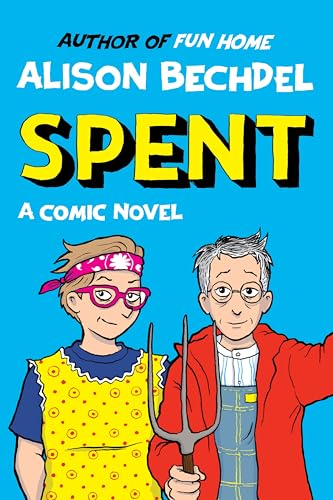
Bechdel probably made a pittance from “Dykes,” as Groening likely did from “Hell,” but they both hit it big, in the former’s case with Fun Home, a graphic memoir about her closeted father that became a bestselling book and then a successful play.
Spent is Bechdel’s fourth memoir (not including a “Dykes” compilation) and. as always, it’s autobiographical. But Bechdel’s moved beyond the nuclear clan to fictionalize her marriage and her friends in and around Burlington, Vermont. If Spent is accurate, Burlington is one of the crunchiest, most politically aware communities in America—rivaling Berkeley, California.
Bechdel’s circle, almost all women except for one skirt-wearing male, are entirely vegan, passionate about every cause, and dedicated to farming the land sustainably. Does Bechdel really run a pygmy goat rescue sanctuary? Probably not, and her work was not made into a TV show starring Aubrey Plaza and Benedict Cumberbach, nor does she likely have commune-dwelling friends named Lois, Stuart, Ginger and Sparrow. But my guess is that reality is pretty close to all of this.
The Spent version of Alison, while being driven nuts by Trump’s first term, is constantly trying to do the right thing ethically, while also keeping her wife and goats in the style to which they’ve become accustomed. Does this mean hooking up with rapacious corporate studios and publishers in bed with big capitalism? Is it OK that the TV show of her life is legally able to take wild liberties—such as her character giving up the vegan life and eating a Big Mac?
Alison’s editor says things to her like “I’d like to see you on at least five platforms, including TikTok, posting a couple times a week. Cat videos are great, but you’re already trending well with introverts. You should post about the goats.”
Meanwhile, Alison’s friends are trying to sell non-binary menstrual kits, Free Palestine, assemble hygiene kits to send to Ukraine, splash paint on a polar bear display at the natural history museum, and keep on working for Planned Parenthood in a post-Roe dystopia. And, front and center, embracing polyamory and non-gender identification at several generational layers.
The folks of this comfortable, woke enclave seem a bit in a self-satisfied bubble as they serve up the barbecued seitan with kombucha and attend talks with titles like “shifting age demographics and implications for civic power.” Did I mention there are a lot of cats?
The brilliant thing about Alison Bechdel, and especially her work on Spent, is how she can embrace non-mainstream characters and situations and turn them into popular entertainment. With brilliant artwork and always clever dialogue, she manages to treat serious business and potentially alienating lifestyles in a very entertaining, mainstream way.
The Alison in the book wants to create an anti-capitalist TV show that—in the mode of the British group Gang of Four, perhaps—wraps the bitter pills in a sweet candy wrapping. And that’s exactly what she also did in her real-life latest work, Spent. By the way, the book’s TV show based on Fun Home gets canceled after its third season.
The obvious corollary to all this is Ben & Jerry selling their enlightened ice cream company to Unilever for $326 million, then, with all that money safely banked, grousing about the London-based corporation not being enthusiastic about making big political statements. Maybe Ben and Jerry should write a graphic novel.

 Territorial Imperatives