
The weather can be iffy at the Amelia Island Concours d’Elegance in north Florida, but this year (the 31st)it was sunny—and hot. The sun reflected off all the shiny paint and chrome to make a feast for the eyes, and when the cars got started, ears, too.
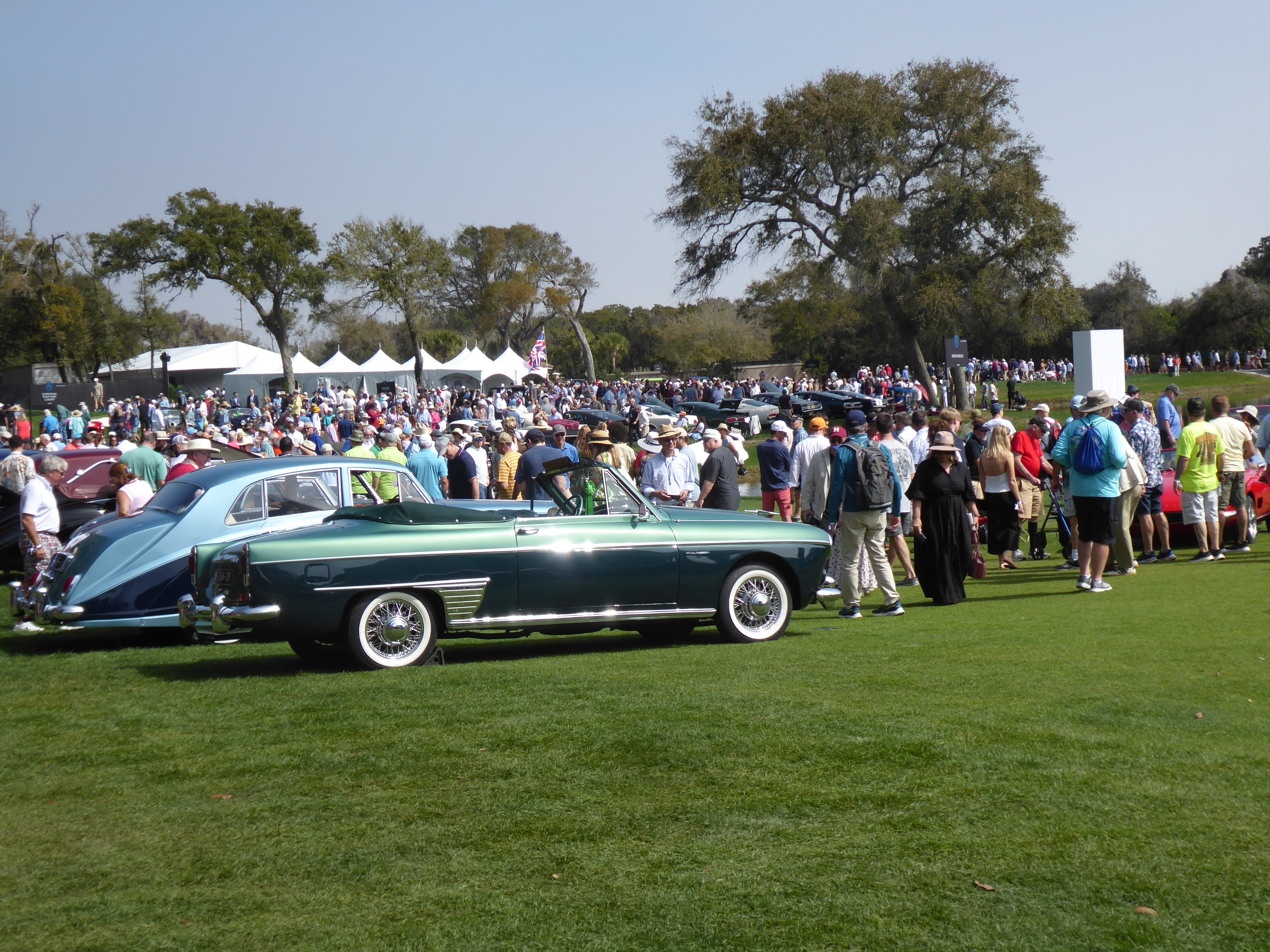
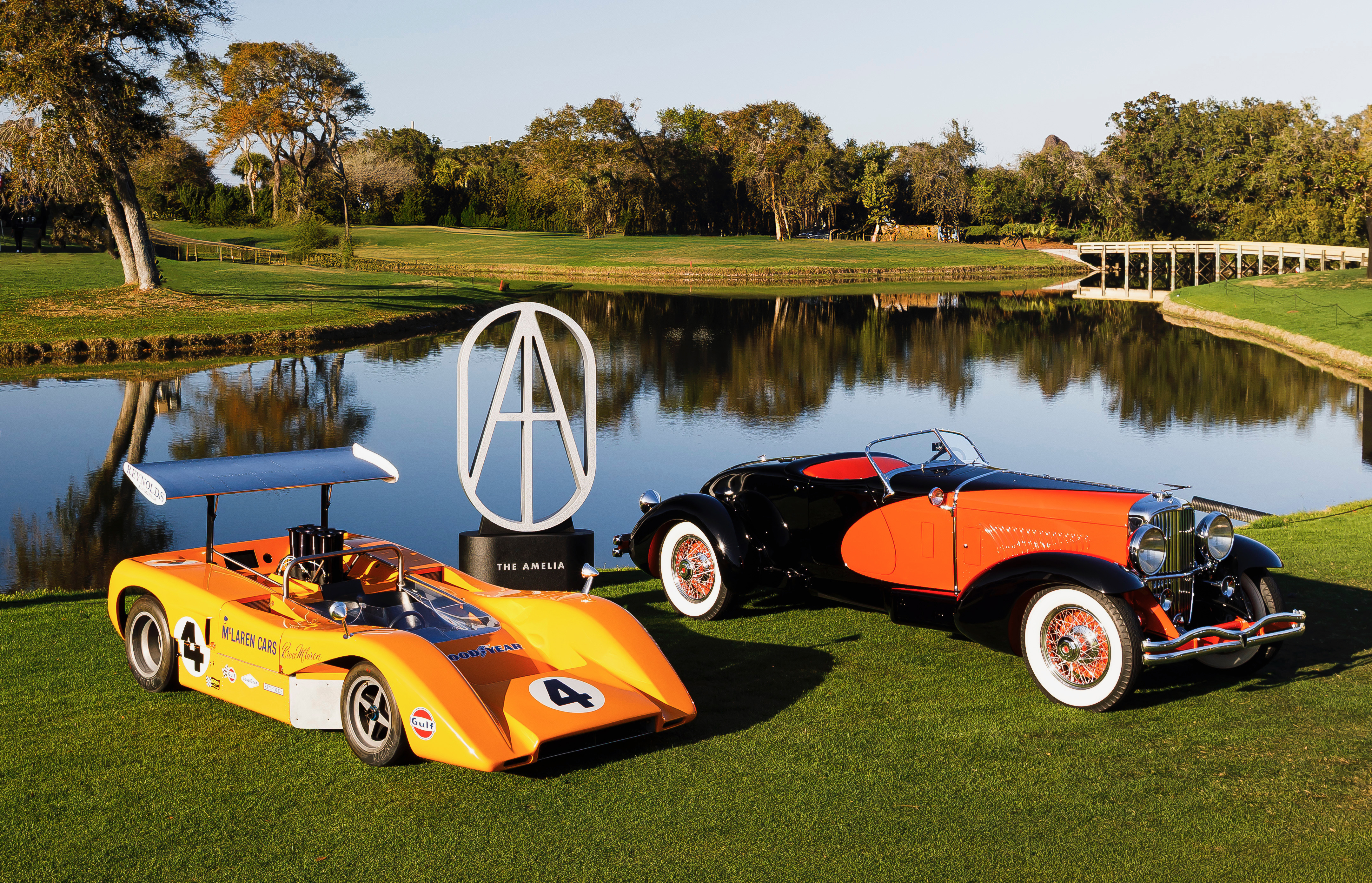
There were an estimated 250 collector cars on the field. Best in show on the concours side was a boldly orange-and-black 1931 Duesenberg Model J “Tapertail” Speedster by Weymann, and on the sport side it was a race-winning 1969 McLaren M8B.
One of the features this year was a collection of one-off cars assembled by Barn Find Hunter Tom Cotter (who’s own 289 Cobra was on the field in bare metal, awaiting paint). The assembled cars included a plethora of models that were either the only one left, the only one made, or one of a tiny handful, so let’s skip over the more commonplace entries.
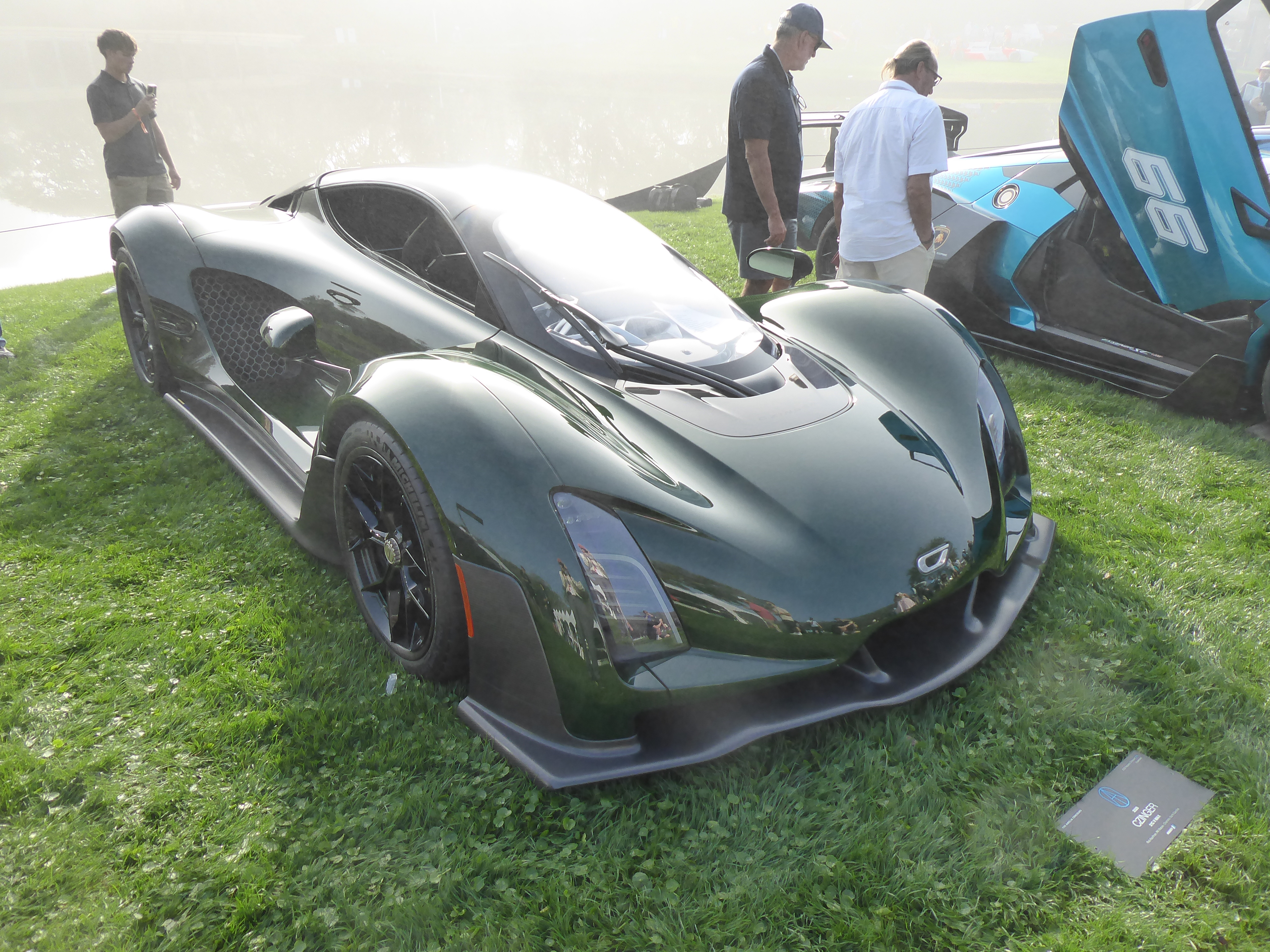
2025 Czinger 21C V MAX. Kevin Czinger started out making an electric car, the Coda, then graduated to revolutionizing manufacturing with 3D printing. And as an attention-getter, he also builds hypercars, such as this unusual tandem-seated, carbon-fiber-bodied space capsule with 1,250 horsepower from a hybrid drivetrain featuring a 2.88-liter twin-turbo V-8 and sequential-shifting seven-speed transmission. Just 80 are to be made, and sold for $2 million and up. Rev it to 11,000 rpm! The green carbon fiber was amazing to see.
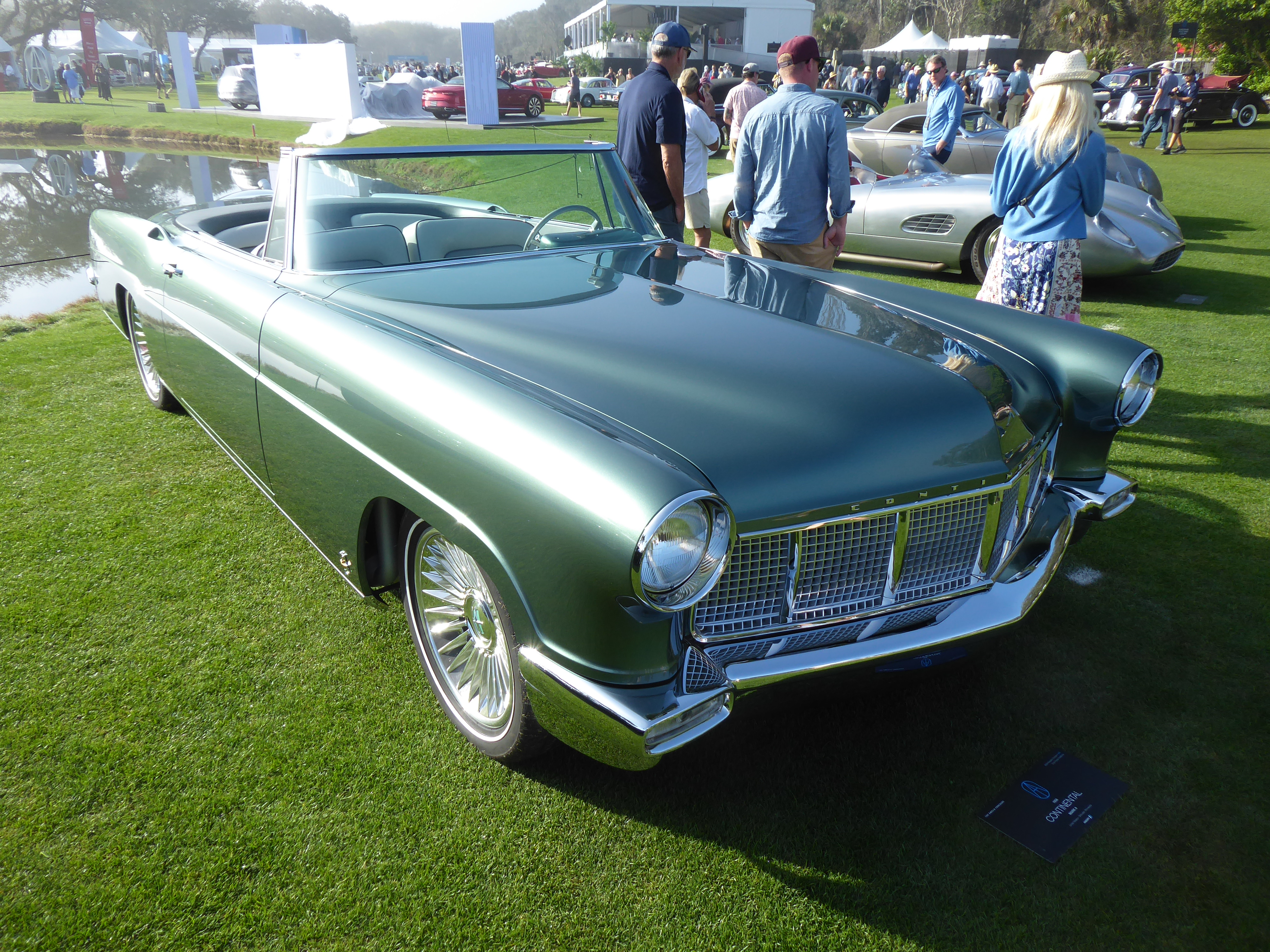
1956 Continental Mark II convertible by Chip Foose. If you didn’t know the history of the Mark II, this car would probably look totally normal. There never was a convertible, but creator Chip Foose made this one appear to be a factory original. Not having any provision for an actual top might be a problem for some, but let’s assume it’s for fair-weather fun.
Says Foose, “This Continental represents what I love most about automotive design, respecting heritage while exploring what’s possible. Every line, every surface and every component was reconsidered to create something that feels both familiar and completely new. With BluePrint’s LS-compatible crate engine under the hood, it also has the performance to match its presence.”
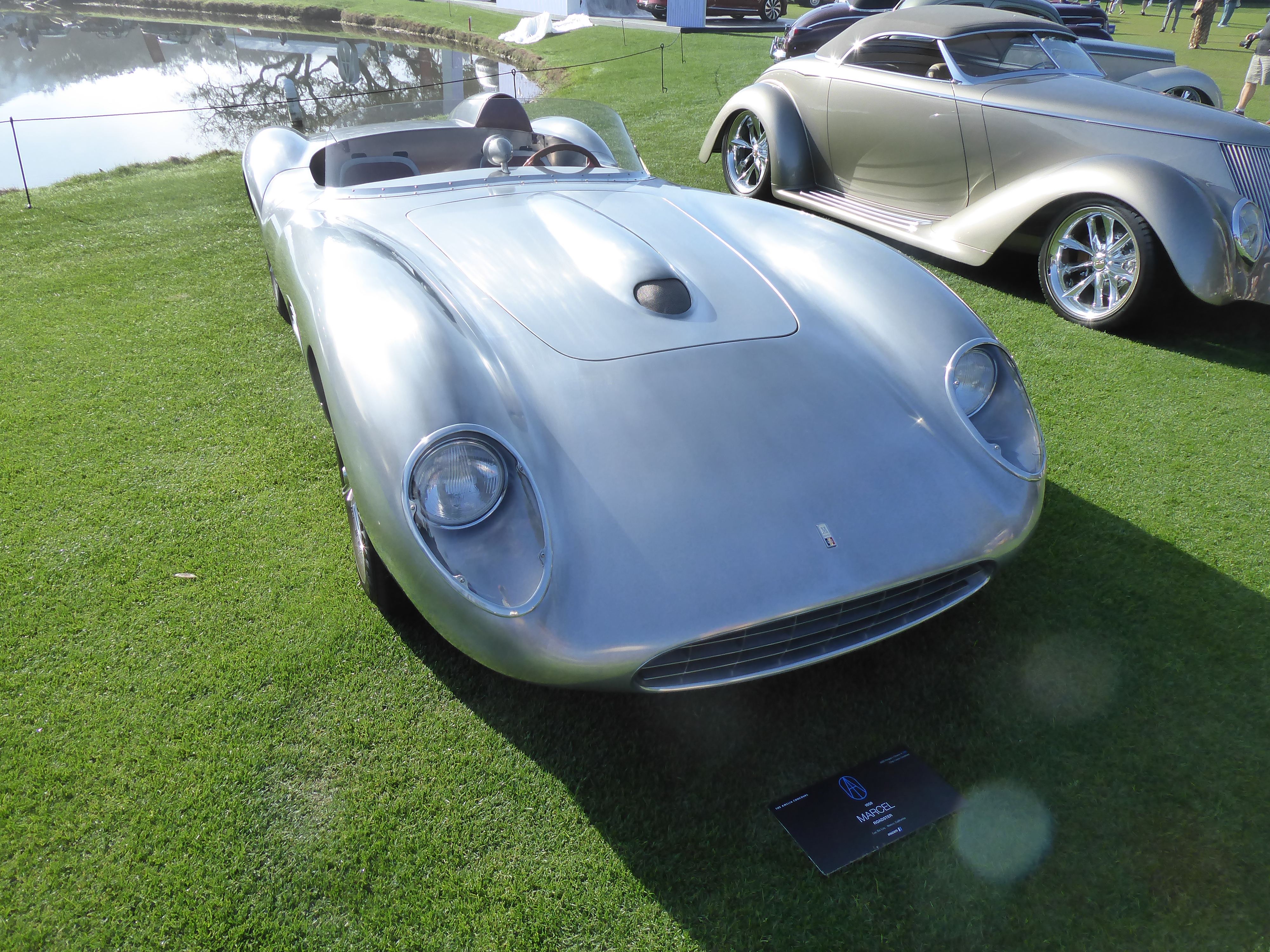
1959 Marcel Roadster. “A lot of one-offs here,” said a busy photographer. The car isn’t actually from 1959, though it looks the part. It was created by panel shaper Luc De Lay, son of Marcel De Lay of Marcel’s Custom Metal, with help from the ubiquitous Chip Foose. De Lay was inspired by late-50s Ferraris, Maseratis and Astons. Under the hood is a GM small-block LS3, mated to a Tremec six-speed manual. It should handle better than those legendary ‘50s cars, because it has modern four-wheel independent suspension, four-wheel discs, and cast-aluminum knock-off wheels. “It’s a driver,” De Lay says.
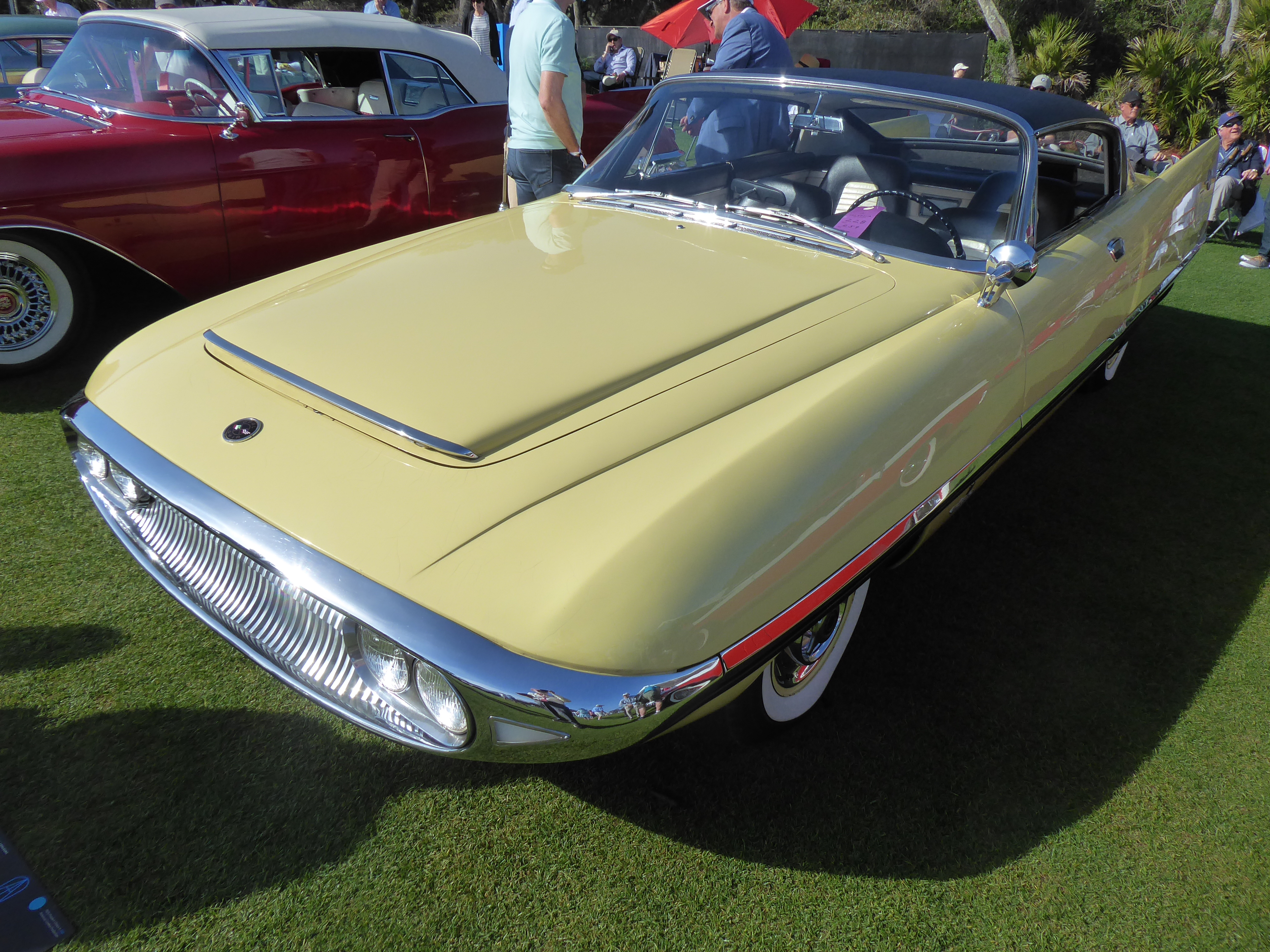
1957 Chrysler Superdart 400 (above) and 1952 Ghia Styling Special. These are both American cars with Italian Ghia design, the former inspiring the Rat Pack’s Dual Ghia. Indeed, Dual Motors bought the Superdart and displayed it in 1958 under its own name. Of the pair, I prefer the cleaner-styled 1952 car.
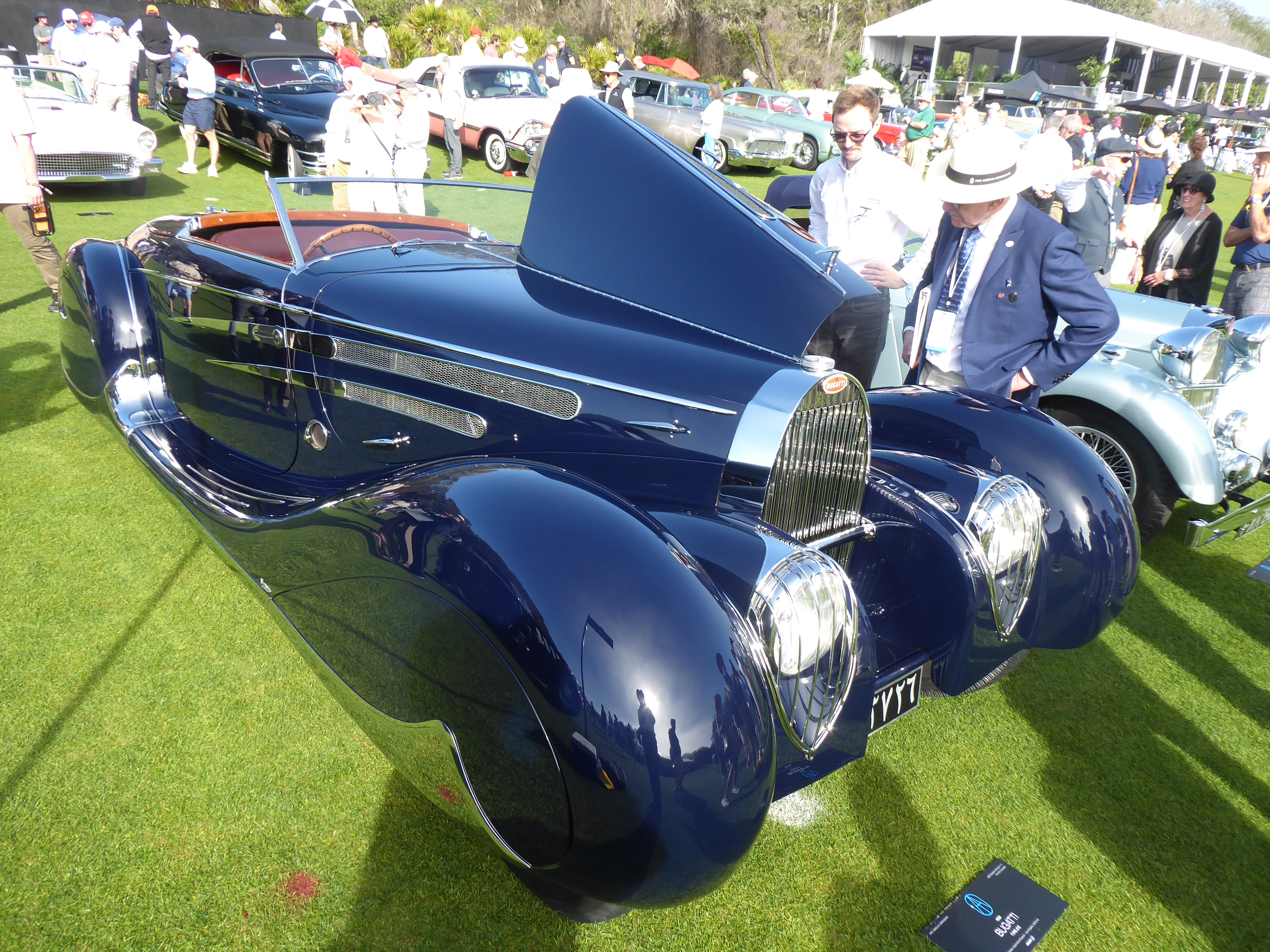
1939 Bugatti 57C. This was my nominee for best in show, with styling that borrows much from French coachbuilder Figoni and Falaschi (but is actually the work of fellow French firm Vanvooren). This car was a gift from France to the first Shah of Iran, Muhammed Reza Pahlavi upon his wedding, and kept in that country until 1959, when it sold, in derelict condition with an American V-8, for the remarkable sum of $275. It’s currently the property of the Petersen Museum in Los Angeles, and collections technician Casey Van Houten told me, “I’m just glad it made it here and is now safely on the field.”
The Bugatti was fully restored in the 1980s, and it’s holding up quite well. Among the car’s features are extreme Art Deco styling with four-wheel spats and lots of chrome plating, a supercharged 3.3-liter engine, a retractable windshield, and much more.
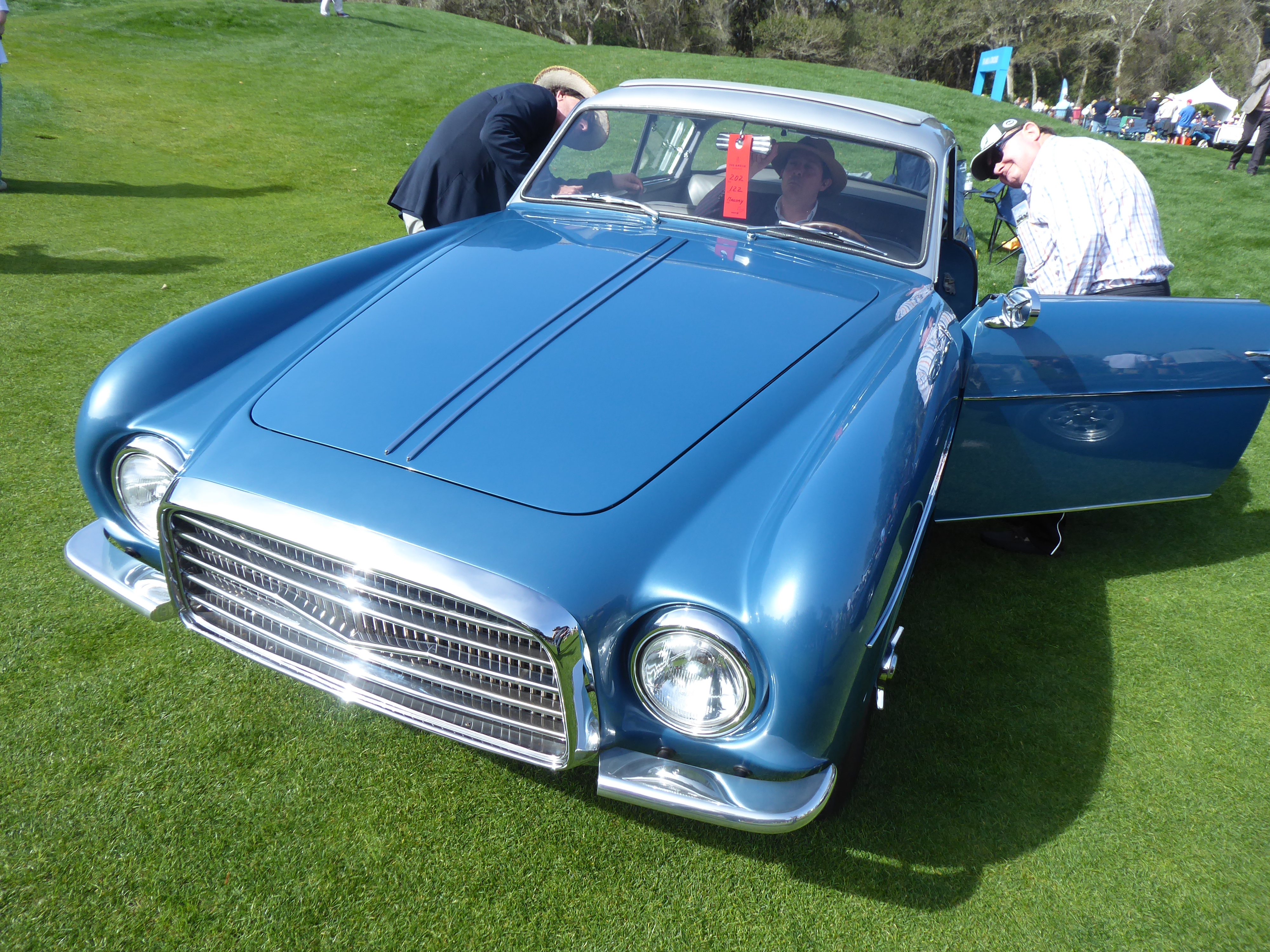
1957 Bill Frick Special GT Coupe (with sunroof). Under the skin of this Vignale design by Giovanni Michelotti (with early 50s Ferrari inspiration) is a “Studillac,” a Studebaker chassis with a contemporary Cadillac V-8. Frick built only two coupes and a cabriolet with this Ghia bodywork, and this is the only one sold to a customer—who specified the sunroof.
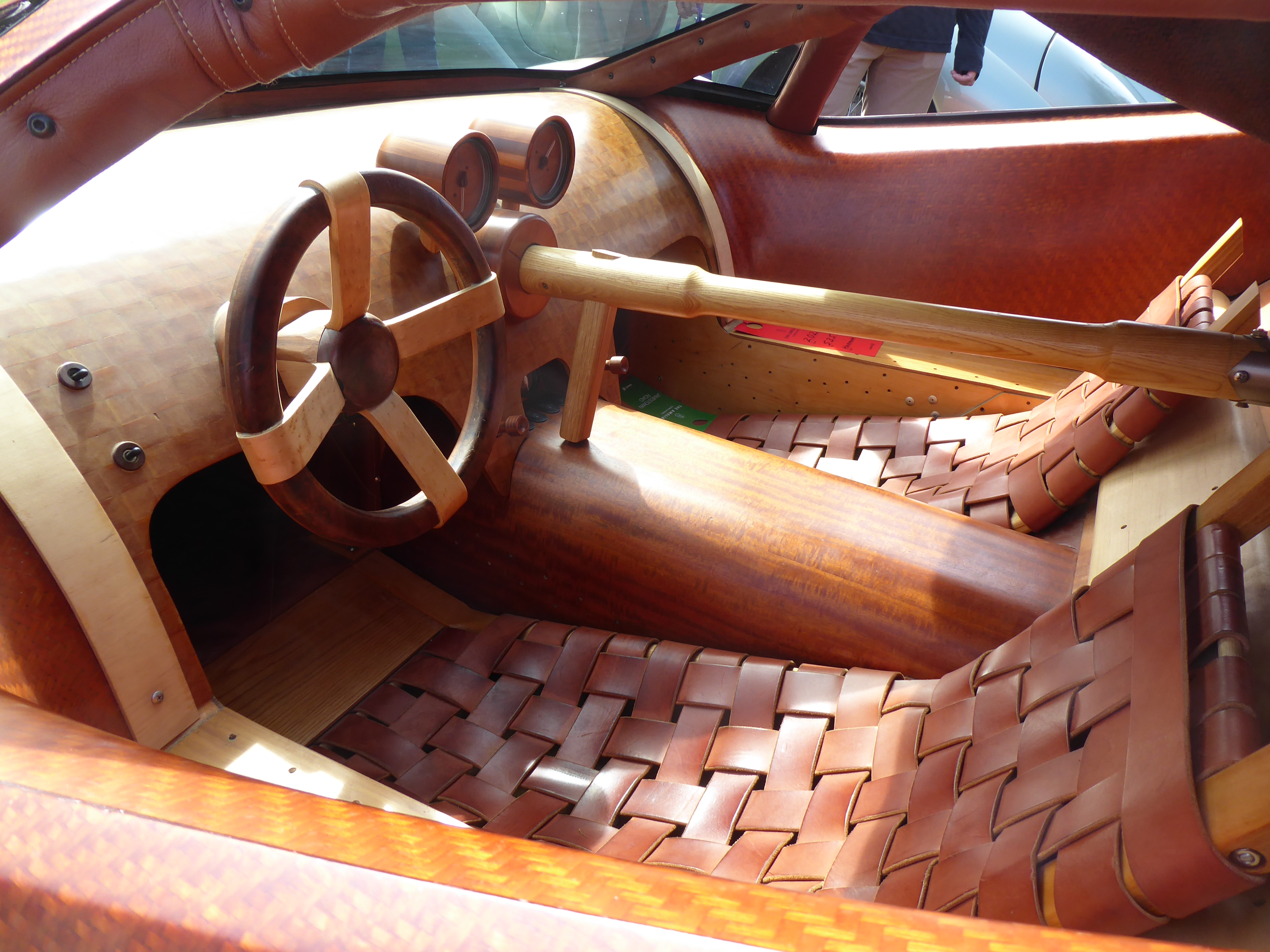
2008 Harmon Splinter. Never was so much effort expended on something so ghastly. The Splinter is, as the name implies, made of wood, including the wood veneer cloth body, the wheels, the instrument pods, the uncomfortable-looking seats. Joe Harmon was a 28-year-old graduate student at North Carolina State when he thought of building a wood supercar for his master’s thesis. “I wanted to show that wood isn’t an antiquated, low-technology material,” he said. Indeed, the worksmanship is first class throughout, but the whole car, well, termites would love it.
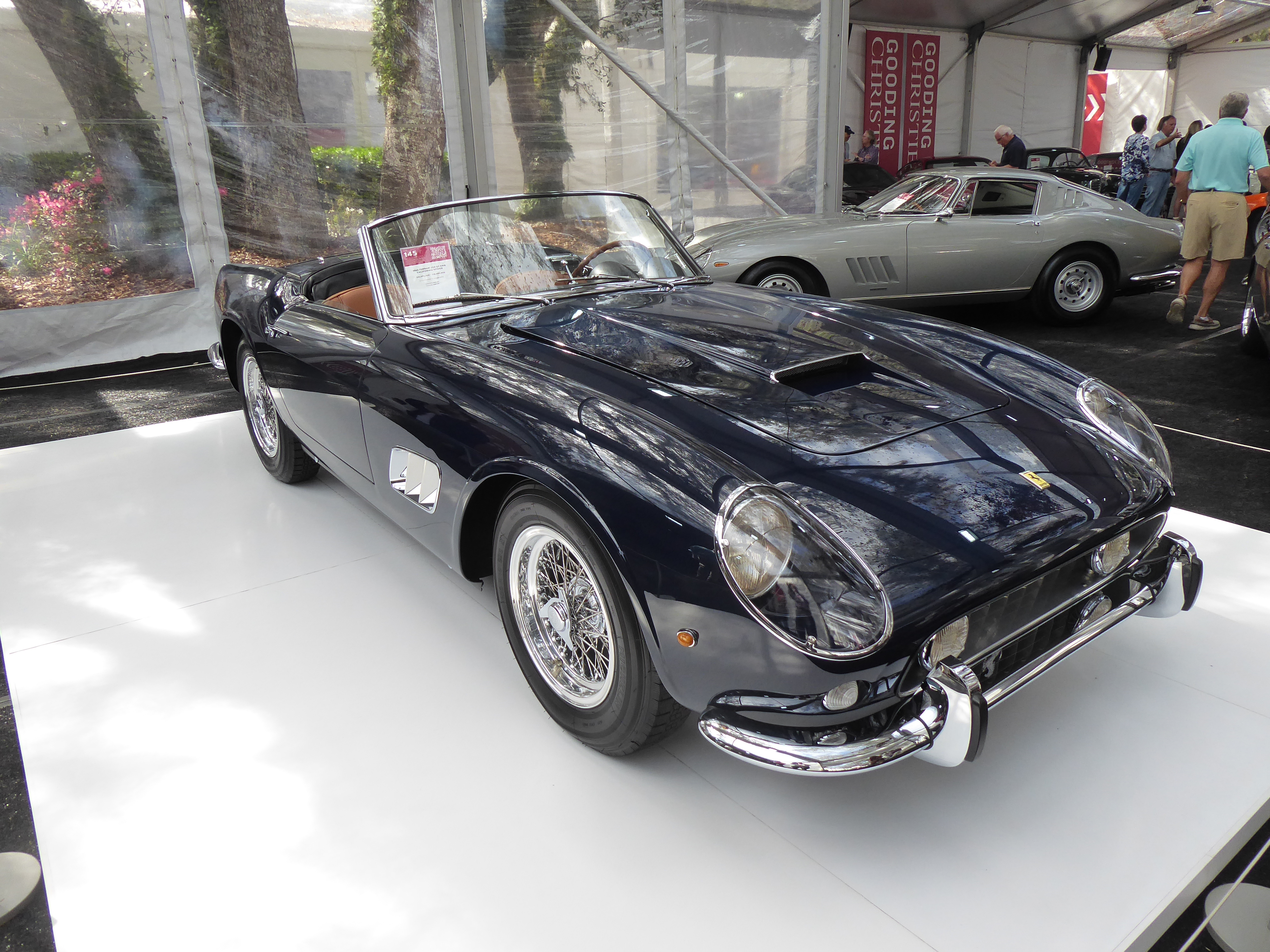
I looked over the inventories at both the Gooding Sotheby’s and Broad Arrow auctions. At the former, the star of the show, a 1960 Ferrari 250 GT SWB California Spyder, was estimated at $16 to $18 million, and actually sold for $16,505,000. Last year at Pebble Beach, a 1961 example of this model sold for a record-breaking $25,305,000. Are the higher-end Ferraris coming down in the world?
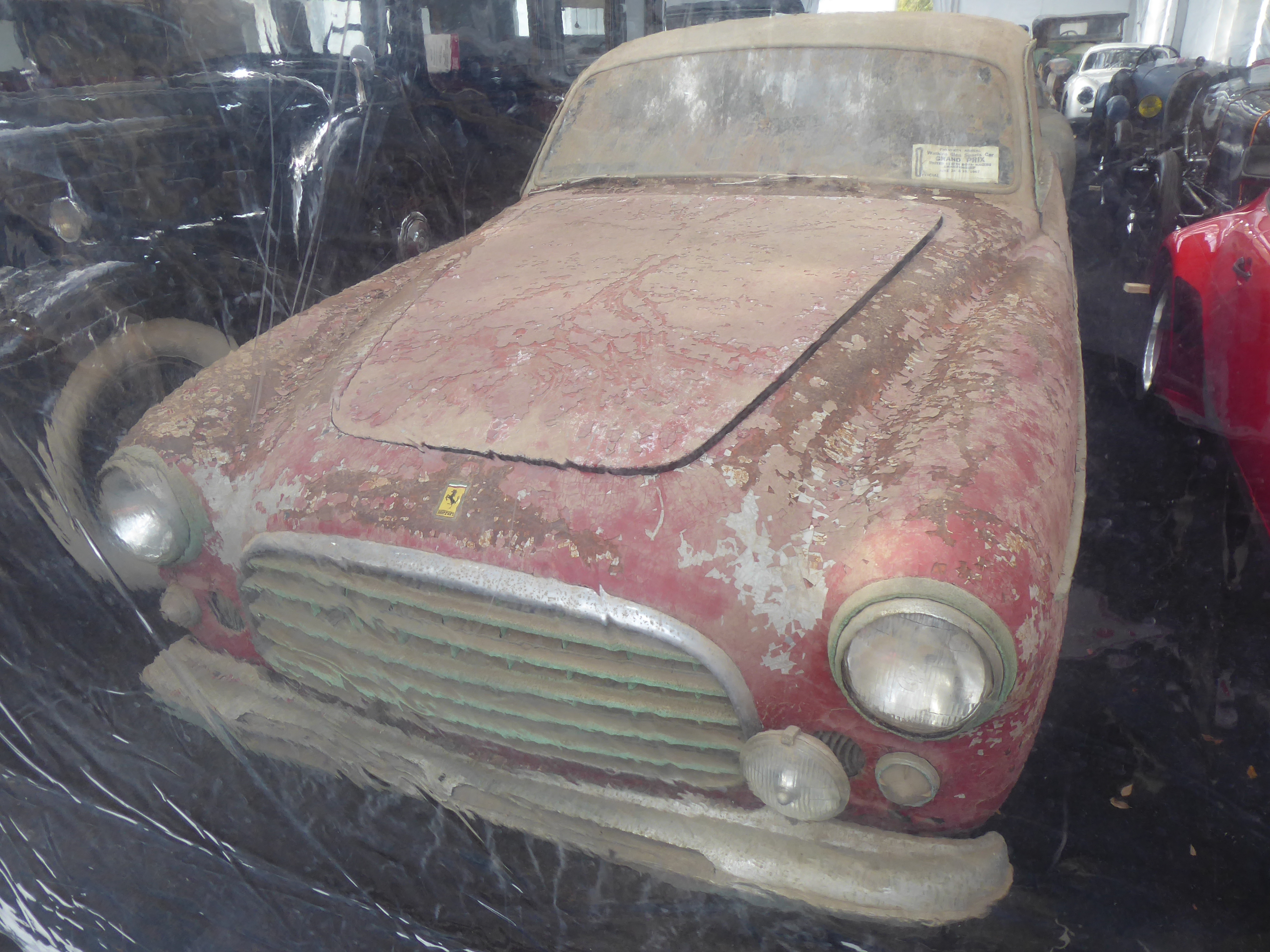
But I found myself looking for the barn-find 1951 Ferrari 342 America coupe long dormant in upstate New York. I finally found it in the just-sold, no-go purgatory tent, and took a photo through the plastic. It is the only such car bodied by Ghia, one of just seven of the model, and sported a sticker from the Watkins Glen Sports Car Grand Prix in 1967. Although this example needed just about everything, it certainly had patina in spades. It sold for $480,000, according to the guard on duty, which is a lot less than the $900,000 to $1.2 million estimate.
At Broad Arrow, the auction take was $107 million. A single-owner 2003 Ferrari Enzo brought $15,185,000 for the top sale, and a center-of-attention 1972 Lamborghini Miura P400 SV, in the same American hands for 50 years, made $6,605,000, far over it $3.5 to $4 million estimate.
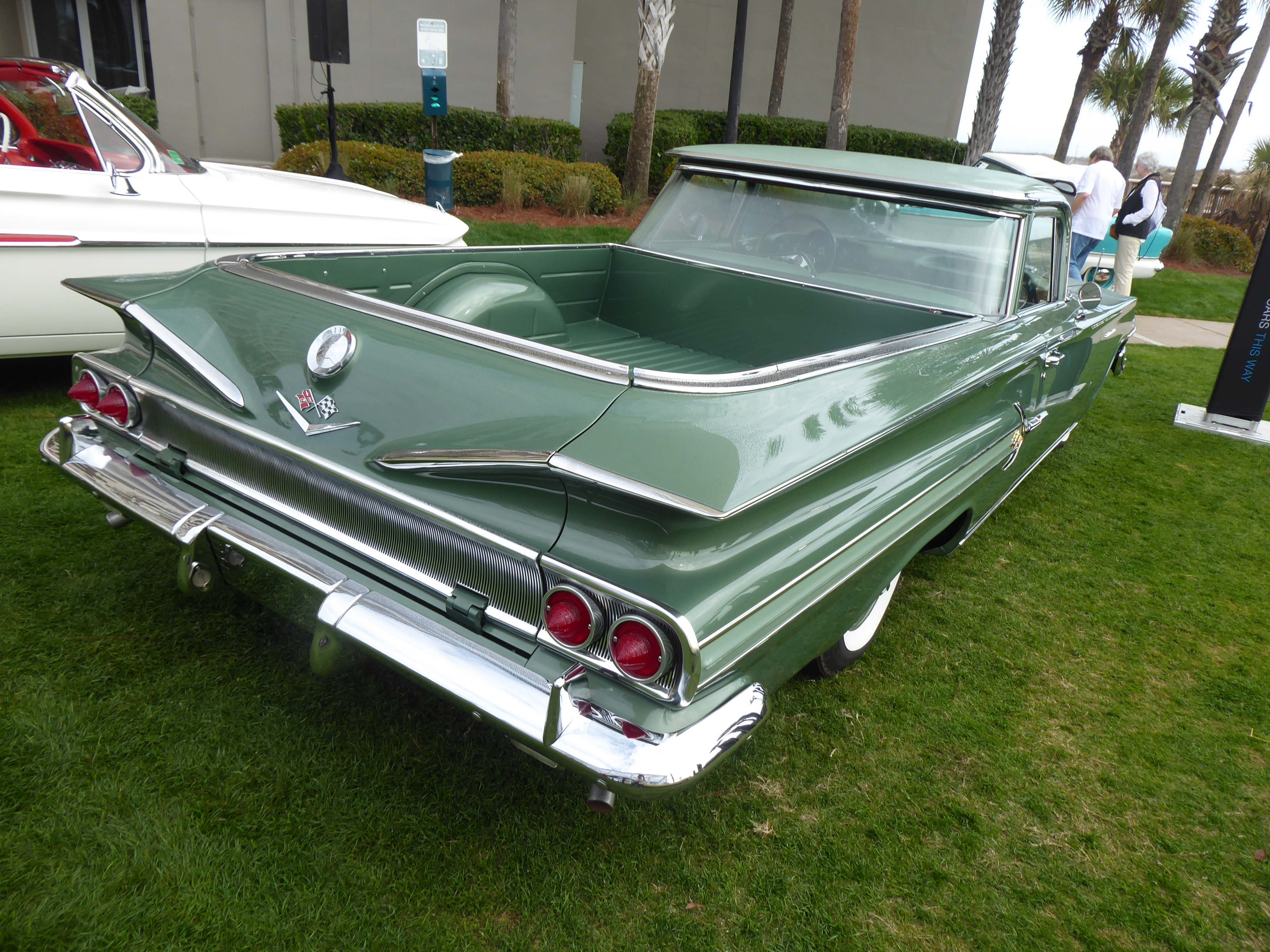
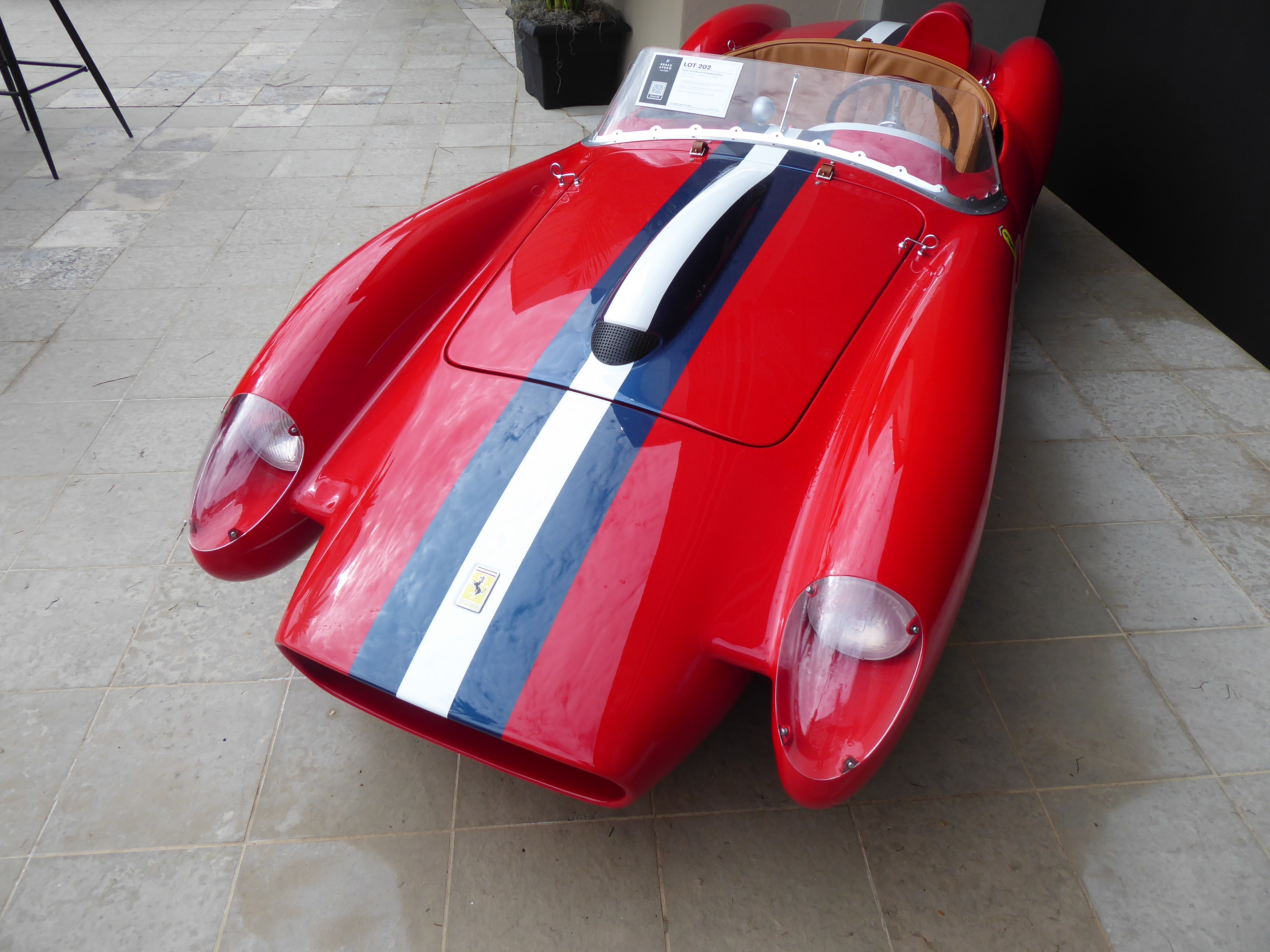
At the Broad Arrow preview, my attention was caught by a beautifully restored green 1960 Chevrolet El Camino, estimated at $90,000 to $140,000. “That thing’s older than we are,” a young(ish) couple said. And how about a tiny child-sized electric Ferrari Testarossa by Hedley Studios ($150,000 to $200,000 estimate)? The lucky kid would luxuriate in 50-mph capability, a leather interior and full instrumentation.
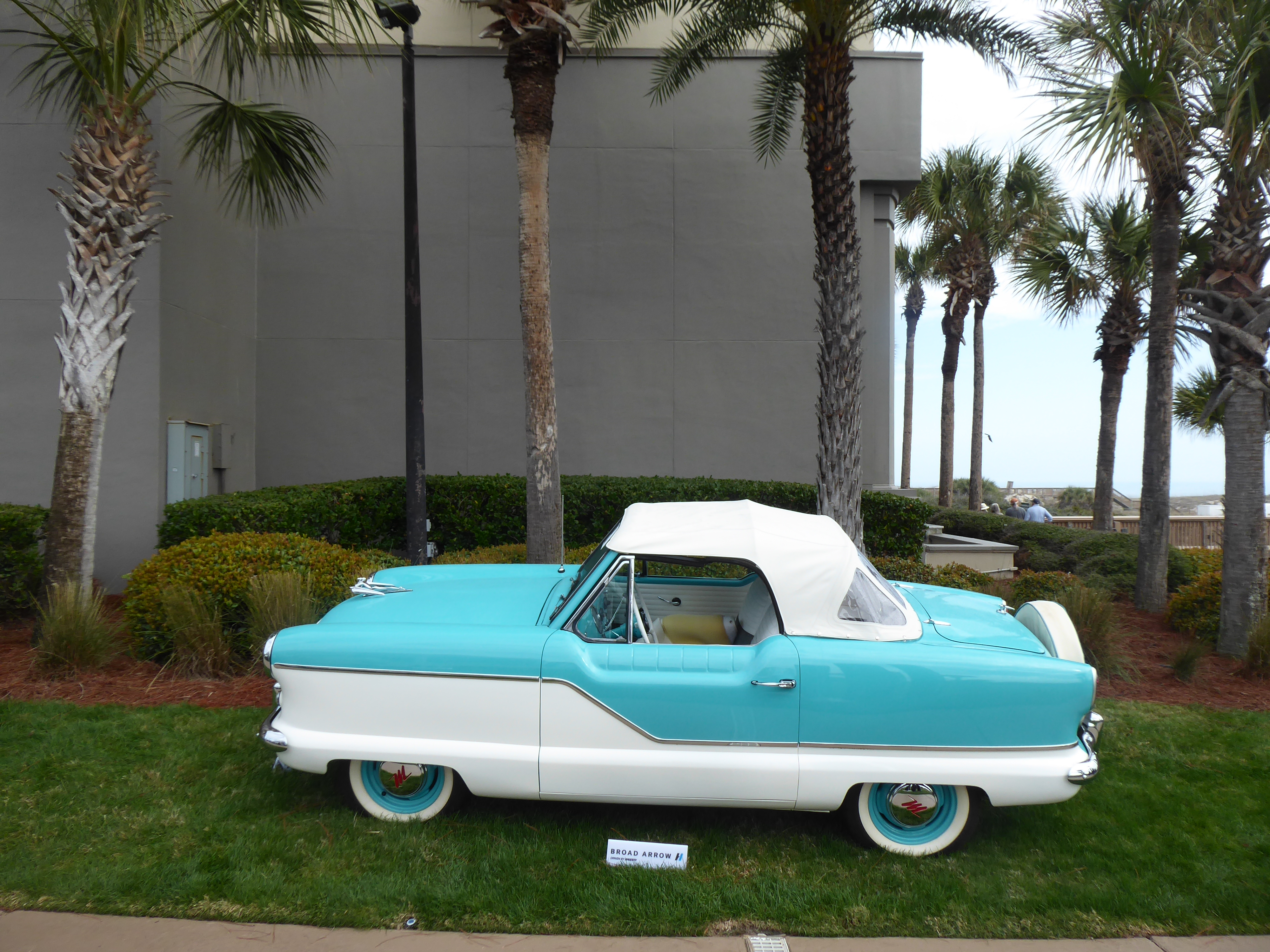
And a 1960 Nash Metropolitan made a nice photo against the wall of the Ritz-Carlton, with evocative palm trees to complete the picture.
 Territorial Imperatives