Exploring Michelin World, From New York to DC Via EV

The premise was simple enough: My wife and I would drive a Genesis GV70 Electrified equipped with Michelin’s new CrossClimate2 all-season tires from New York City to Washington, D.C., stopping at Michelin-rated hotels and restaurants. Not a bad way to spend a weekend, right?
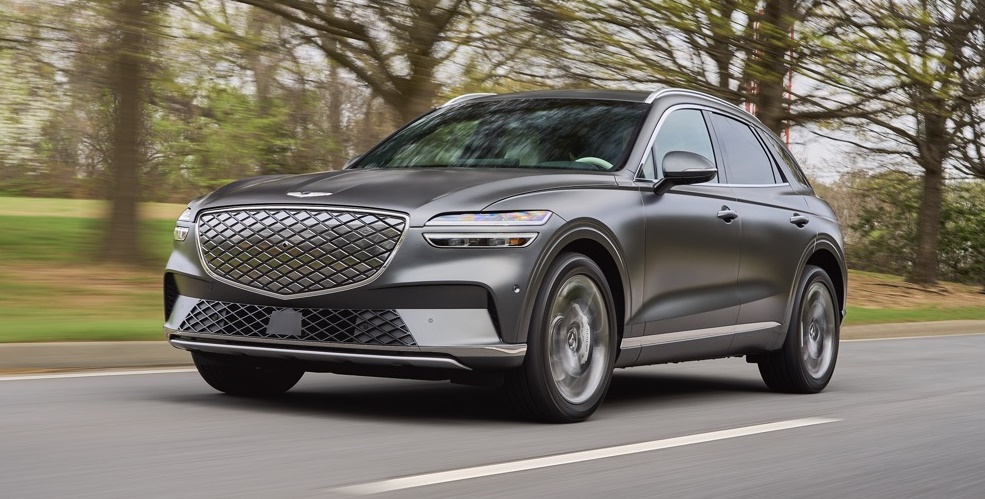
The Genesis GV70 Electrified was our steed for Michelin’s long-distance East Coast EV trip. (Genesis photo)

It proved to be quite an adventure December 6 to 8. The car, a big, luxurious and roomy SUV, arrived with approximately 170 miles of range. That was no problem for the first leg of the trip, 50 miles from Connecticut to the two-key Michelin Nine Orchard Hotel (a former bank, and quite opulent) in the Dimes Square neighborhood near Chinatown on the Lower East Side of Manhattan. When you’re driving an EV you notice other ones, and we couldn’t miss a CyberTruck ahead of us, and a Chevy Bolt too. We passed several rest areas, noting that the chargers there were often fully engaged.

A comfortable place to be. (Genesis photo)

The Delancey and Essex Municipal Garage was a 10-minute walk to the hotel, and it had EV charging. Luckily, one bay was free, and the cord reached. It was 240-volt Level Two, but that wasn’t a problem because we were leaving the car for the night. We loaded the EVConnect app and were charged in the morning, with a $5.05 bill, plus $50 for the parking.

Our room at 9 Orchard.

Dinner that night was at chef Dan Barber’s Family Meal at Blue Hill, with one Michelin star. This is the urban outpost of Blue Hill at Stone Barns, a farm-to-table enterprise in Tarrytown, New York. Many of the featured fresh vegetables come from the farm.

The second course at Family Meal at Blue Hill.

The four-course menu was set, without choices (except for allergies), but we were delighted with those selections. After a mushroom soup featuring apples, chestnuts and lovage, the second course may have been our favorite: a trio of yellowfin tuna, mackerel, and lobster dishes. The Barber wheat flatbread (made from grain grown especially for the restaurant) and the salad of brassicas with Morton lentils, sesame and sunflower impressed us as well. There were four wines, and an apple aperitif. We left in a not-your-average-Thanksgiving food coma. 

Breakfast at 9 Orchard.

After breakfast under the vaulted ceiling of the former bank lobby, we collected the car with 217 miles showing.

The vaulted ceiling at 9 Orchard. It’s a former bank.

It’s four hours to DC from New York, through New Jersey, Delaware and Maryland. We wanted to make it as far as we could, so stopped at the Chesapeake rest area in Maryland with only 50 miles of range left.

The Combined Charging System (CCS) chargers said Electric Vehicle Institute on them, and only one of four was occupied. At 47 kilowatts, it took about an hour to charge. We got coffee.

Our arrival into the wharf area of Washington, DC SW coincided with a boat parade on the Potomac, apparently a major attraction because it was vehicle gridlock and wall-to-wall people. It took 15 minutes to make a left turn. The self-parking garage had EV charging, one space remained, and the cord stretched. The charging, Level 2 (again, fine for overnight), was free, but the parking cost $60 for one night.

The Pendry Hotel at the Wharf, Washington, DC. (Pendry photo)

The Pendry hotel (with one Michelin key) in the popular Wharf shopping area along the river was hopping with life, but we had to move quickly to make our reservation at Rania, a highly inventive one-Michelin star Indian restaurant off Pennsylvania Avenue.

The travelers on the Mall in DC.

The walk, in the kind of chill that only the canyons of DC can generate, took us right through the historic Mall, with the Washington Monument on one side and the Capitol building on the other.
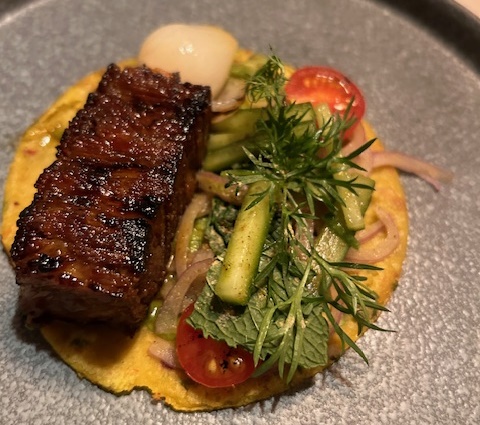
Delicacies at Rania.

Again, it was a four-course menu, with two choices for each course. We love Indian food and found Rania’s approach to be really creative. Our favorite flavors were there, but the dishes featured many nouvelle cuisine innovations (so the menu told us). We ordered so we could sample everything. Some of our favorites included: shiso leaf chaat with white pea ragda and sorrel chutney, lamb belly kebab with chickpea cheela and kashumber; and the red pepper makhani that accompanied Tandoori squab. My wife chose her favorite Kingfisher beer, and I opted for Sauvignon Blanc to wash things down.

The apple dessert with ice cream at Rania.

We made a quick stop in Alexandria, Virginia to meet a friend in the morning, and hit the highway with a full charge. Our thinking was to get to New Jersey for lunch and a quick charge before heading home to Connecticut. This is where the plans went awry.
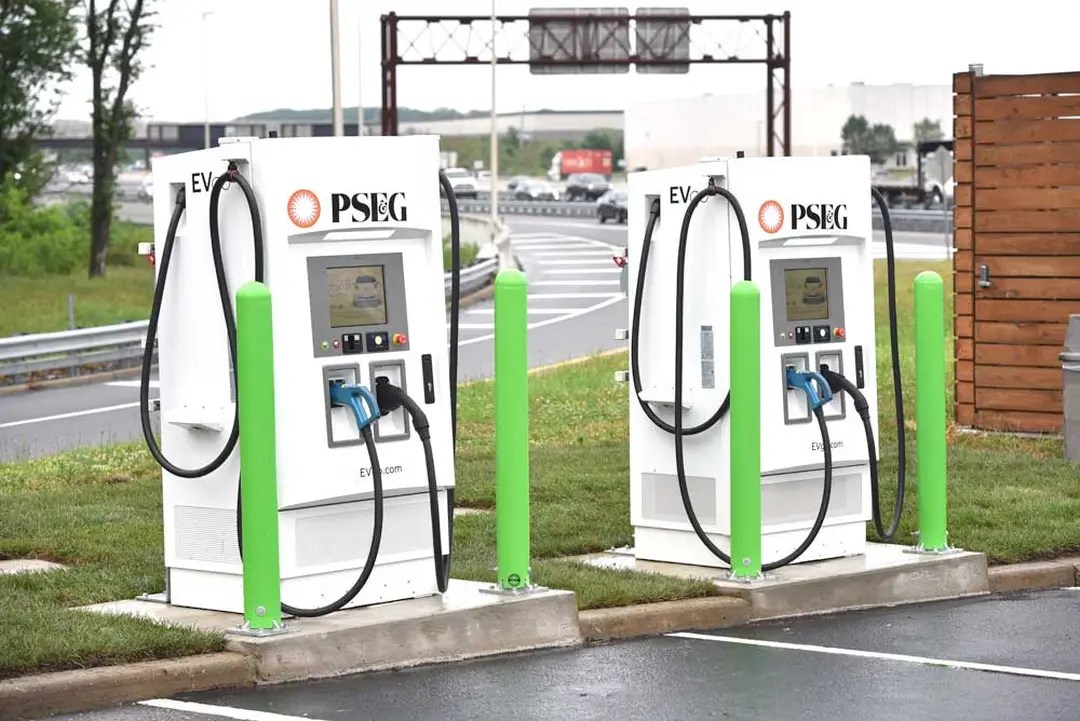
EVgo chargers at the Molly Pitcher rest area in Cranbury, New Jersey, circa 2017. (EVgo photo)

At the Joyce Kilmer rest area on the Jersey Turnpike, the CCS fast chargers were out of order. PlugShare informed us, “The chargers at this location are being removed as part of EVgo ReNew, a comprehensive maintenance program in which we are working to replace, upgrade, or in some cases retire stations over the coming year to enhance charger availability and build range confidence. We apologize for any inconvenience.” This was devastating news.

At the James Fenimore Cooper service area in Mount Laurel Township, the off-line CCS chargers had a very forbidding wire fence around them. But there were a multitude of available Tesla chargers, and we had a Lectron adapter that supposedly would allow us to use them. Unfortunately, the Tesla app refused to acknowledge that there were Superchargers nearby, and the charge was a no-go. Scanning the PlugShare app revealed not only that the other CCSs on the Turnpike were disabled, but that a lot of people were seething about it. Tesla drivers had no problem at all.

Teslas use the North American Charging Standard (NACS) plugs. A Genesis spokeswoman told me, “Our EVs will come standard with a NACS port starting with the 2026 model year. They will also have available CCS adapters.”

But that’s then. Our only choice in December 2024 was to get off the highway. In an odd coincidence, the nearest charger was at an office park where my wife once worked. It was five miles away. The ChargePoint charger there had a Chevy Bolt connected, but there were two wands and we connected the other one and got a charge going. Alas, it was Level 2 with an 11-hour charge time, and since we only had 50 miles of range at that point it wasn’t really a solution.
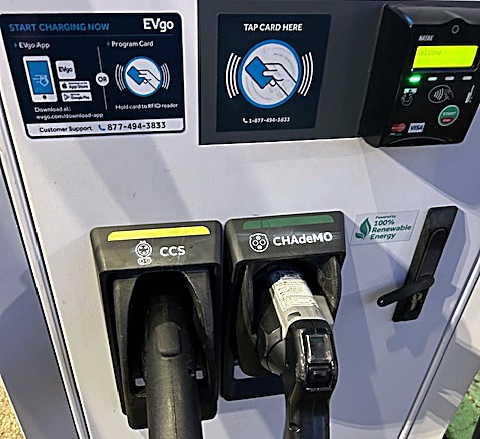
EVgo charging at the Quaker Bridge Mall. It worked, but there were long lines to get hooked up.

The app revealed that the Quaker Bridge Mall 10 miles away supposedly had two free Electrify America (EA) CCS chargers. It had them, all right, but not free. There were four, one was out of order, and three cars (Hyundai Ioniq 5, VW ID.4, Mustang Mach E) were waiting for the three that were working. There were EVgo chargers, too, but also with long lines.

It was going to be a long night. We waited in our car, not wanting to lose our place, and 45 minutes later we got our chance at one of the EA stations. The charge was fast, at 197 kilowatts, and we were delivered 67 kilowatt-hours of electricity in about 35 minutes, yielding a 97 percent charge and more than 250 miles of range. The catch was the price—56 cents per kilowatt-hour, resulting in a bill of $40.06. Wow, that’s like paying at the gas station. But we really wanted to get back on the road, so it was worth it.

A spokesman for the New Jersey Turnpike Authority, who preferred not to give his name, explained that the service areas are run by Apple Green, which had a contract until last January with EVgo to provide CCS charging. “But Apple Green decided it wanted to put in its own Level Three chargers and infrastructure, and that’s in the process now. We’re trying to get those chargers up!” He said that other states have issues too, adding that he encountered “40 Teslas lined up” at available chargers on a drive up the New York State Thruway.

We arrived back home at around 8:30 p.m., more than two hours later than we’d anticipated. Both the car and those CrossClimate2 tires, designed for SUVs, did well. The tires are “engineered EV-ready,” and while their wet braking and snow traction merits didn’t get tested, their reported longevity is appreciated. Some low-rolling resistance tires that are original equipment on EVs haven’t performed well, especially in terms of lifespan and grip in the wet. Consumer Reports recently rated the CrossClimate2 first among all-season SUV tires and projected that the 18-inchers would last 95,000 miles at a cost of 26.7 cents per mile. The Michelins were very quiet in operation, as was the car itself.

The Genesis Electrified GV70 is a contender among larger EVs, though the $75,750 bottom line for the 2025 model tested was a bit daunting. A $4,800 prestige package (Nappa leather, suede headliner, heated second row, heated steering wheel, Lexicon stereo) added $6,800 of that.

Some 483 horsepower is on tap via twin 160-kilowatt motors. Big as it is, The GV70 can sprint to 60 mph in 3.8 seconds. That was great for passing trucks, and overall the EV handled very well for a big vehicle. The GV70’s battery holds 77.4-kilowatt-hours. A few more miles of range wouldn’t have made much of a difference in the problems we encountered in New Jersey.

There are a few EVs, such as the Lucid Air Grand Touring (512 miles of range) that could have made the whole trip without stopping, but most EVs are around 300 and would need to stop at least once. And that’s where the peril lies. The highway charging network has made great strides in the last few years but—unlike the menus at Michelin-starred restaurants—it’s not a glorious experience yet.
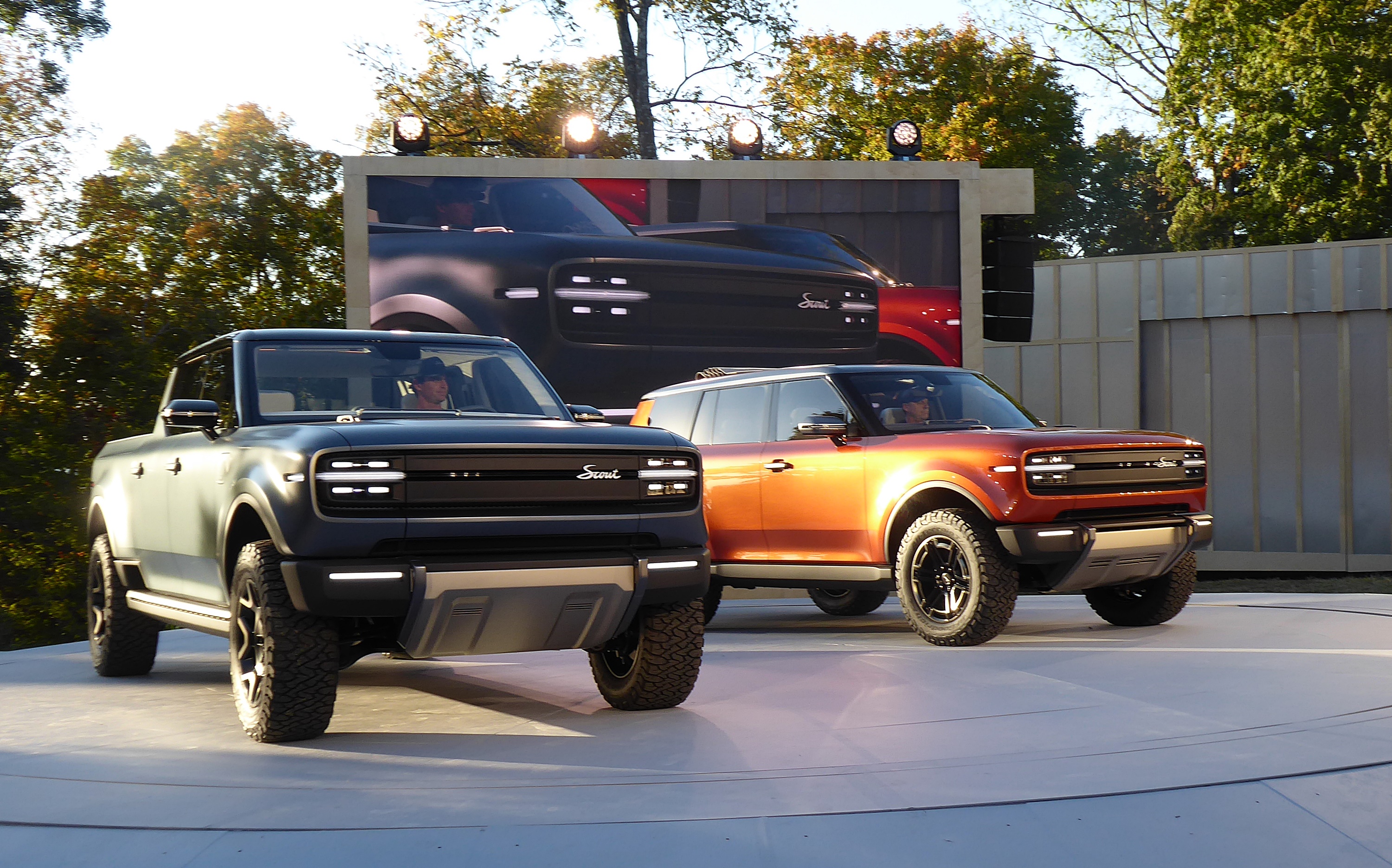
The Electric Scout SUV and Pickup, Out Ahead of the Troops

“It was either go big or go home,” Scout Motors President and CEO Scott Keogh said to me when I told him this was the largest media/influencer gathering I’d been to in recent memory. “We had to do it.”

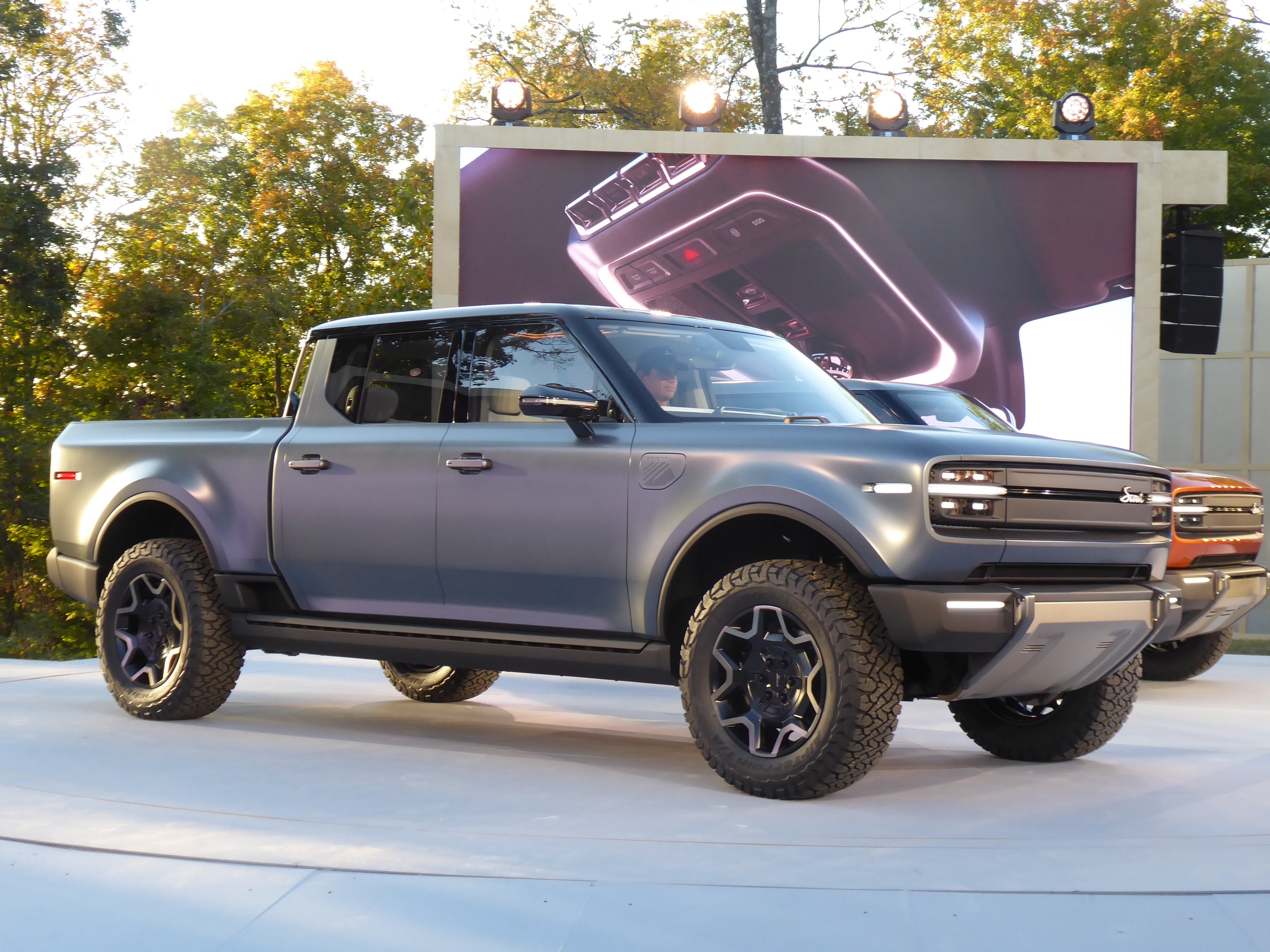
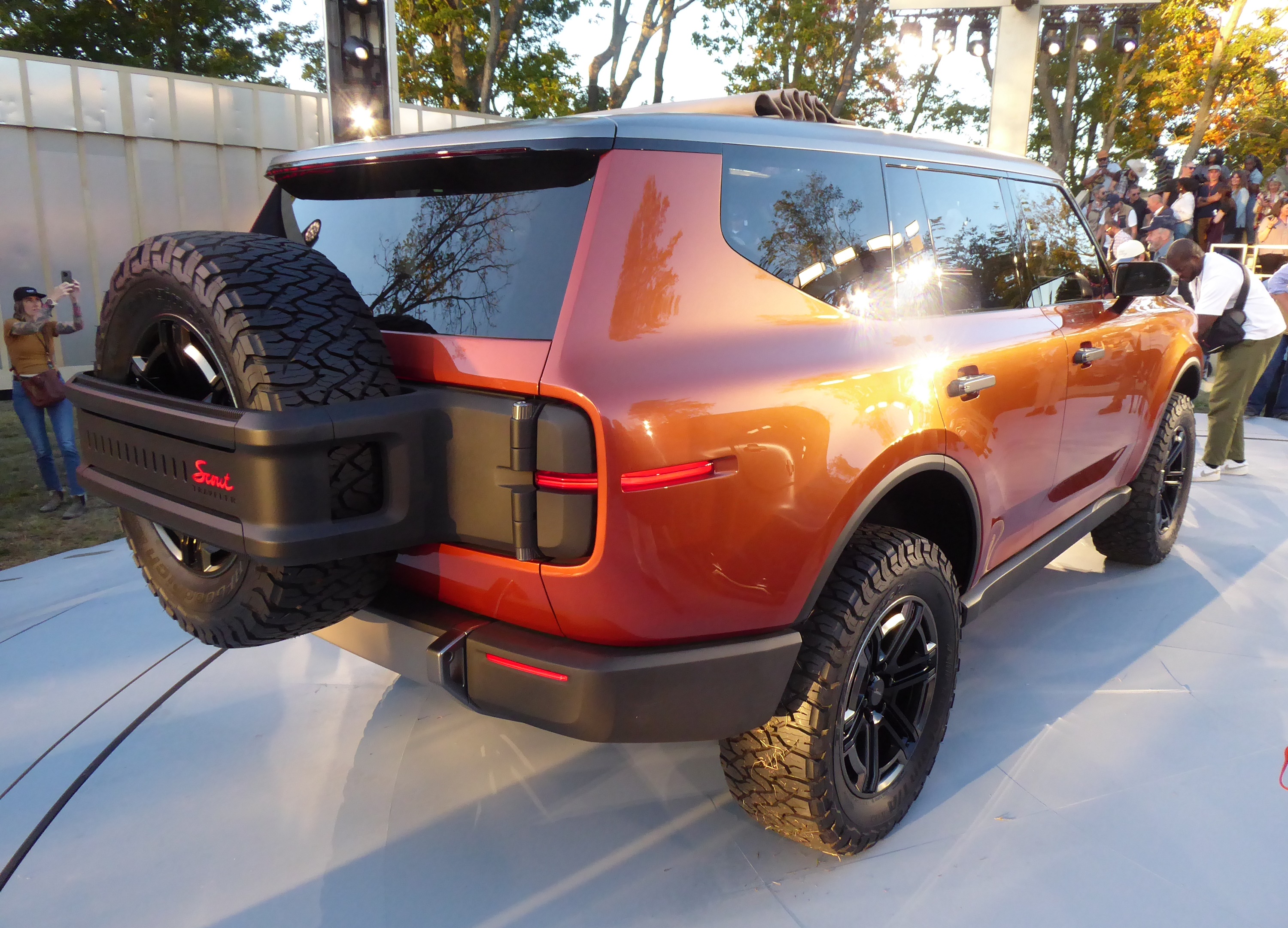
Scout Terra (left) and Traveler. (Jim Motavalli, all photos)

Minutes later, Keogh was up on the stand next to the new Scout electric four-door crew cab pickup (Terra, with a 5.5-foot bed) and SUV (Traveler, in tribute to the car’s origins in the International Scouts that ceased production in 1980). Both are standard with twin-motor all-wheel drive. The original Scouts were bare-bones off-roaders and work trucks, inexpensive to buy, prone to being worked hard and put away wet, and very rarely treated as garage queens. The steel bodies rusted, which is why, of the 500,000 made, only about half (a guess) are still alive, either running or rotting away behind a barn.

The new Scouts will be substantially different, though retaining some original DNA in their styling. They will be EVs with 1,000 pound-feet of torque and a zero to 60 time of 3.5 seconds. The range is up to 350 miles on just the battery pack, but a range extender (the Harvester option) is available to take that to 500 miles. Pricing starts under $60,000, but Scout is quick to add that it could be around $50,000 with the right federal and state incentives. The Scout will be built in an under-construction plant with 200,000-vehicle capacity in Blythewood, South Carolina (not the original’s Fort Wayne, Indiana, alas) and appear sometime in late 2027. Reservations are being taken on the website.

Scott Keogh introduces the Scout.

Some questions were left unanswered. There will be two battery packs, one for the range extender and the other for the standard model, Keogh told me, with different chemistries and sizes. But the sizes will be revealed down the road, he said. It’s quite likely they’re not finalized. The horsepower is also undivulged. The range extender will be mounted in the rear, and not compromise the front “frunk” space.

Scout Motors is a separate brand under the Volkswagen Group, and will have its own stand-alone sales and service network, but it’s emphasizing direct sales, with what Keogh said would be a 10-minute online purchase process, fixed and simplified no-haggle pricing, and a killer app. VW acquired the Scout name when its Traton truck division acquired Navistar, since renamed International Motors, for $3.7 billion in 2021. VW also inherited stillborn plans, developed over the years, to revive the Scout brand.

The Traveler retains cues to the original model.

“The original Scout was ahead of its time in inventing the American SUV market,” Keogh said. Of course, a little company called Jeep was also part of that, but this wasn’t the time to mention that. Blythewood will create 4,000 good-paying jobs, he said, and has the potential to “be profitable after its first calendar year of operations.” Parts and sub-assemblies will be sourced from Tier One suppliers within 200 miles of the plant’s location, he said.

According to Chief Design Officer Chris Benjamin, “A startup of a brand with such a rich and storied history is amazing.” He described the new body-on-frame SUV and pickup as “versatile multi-tools” that are “bold icons that will stand out in the marketplace.” First impressions are of a successful reimagining of Scout style in a decidedly more upscale manner, with Rivian (which has the same EV product line) as the most obvious competitor. The Scouts are not exactly cheap, but Rivians start around $10,000 more.

The old Scout logo is re-employed prominently, and on the pickup tailgate it even lights up. The SUV rocked a retro rollback “cabana” canvas sunroof. “The essence of the historic vehicles is preserved,” Benjamin said. “We’re picking up the character of the old Scout in a new and fresh way.”

Some features of the Scouts: buttons instead of on-screen controls for HVAC and infotainment volume, a stylish side step up on the pickup, a console that extends back into the second row of seats, a refrigerator/cool box, double wireless chargers, twin 110 outlets and a single 240, hemp wood accents as a sustainable touch, copious in-cabin storage. And there’s a bench seat option in both Terra and Traveler. Some of these things will be options, but this far ahead of launch that isn’t worked out yet.

The Scout Terra can tow up to 10,000 pounds and the Traveler 7,000. Both models have 2,000-pound payloads. They’ll come with Tesla’s NACS charging standard, and have 800-volt architecture, but not much was said about charging times. There wasn’t much about off-roading, either, though the one-foot ground clearance is high, three feet of water fording is possible, and the front skidplate protecting the undercarriage is part of the design. The tires will be up to 35 inches.

**

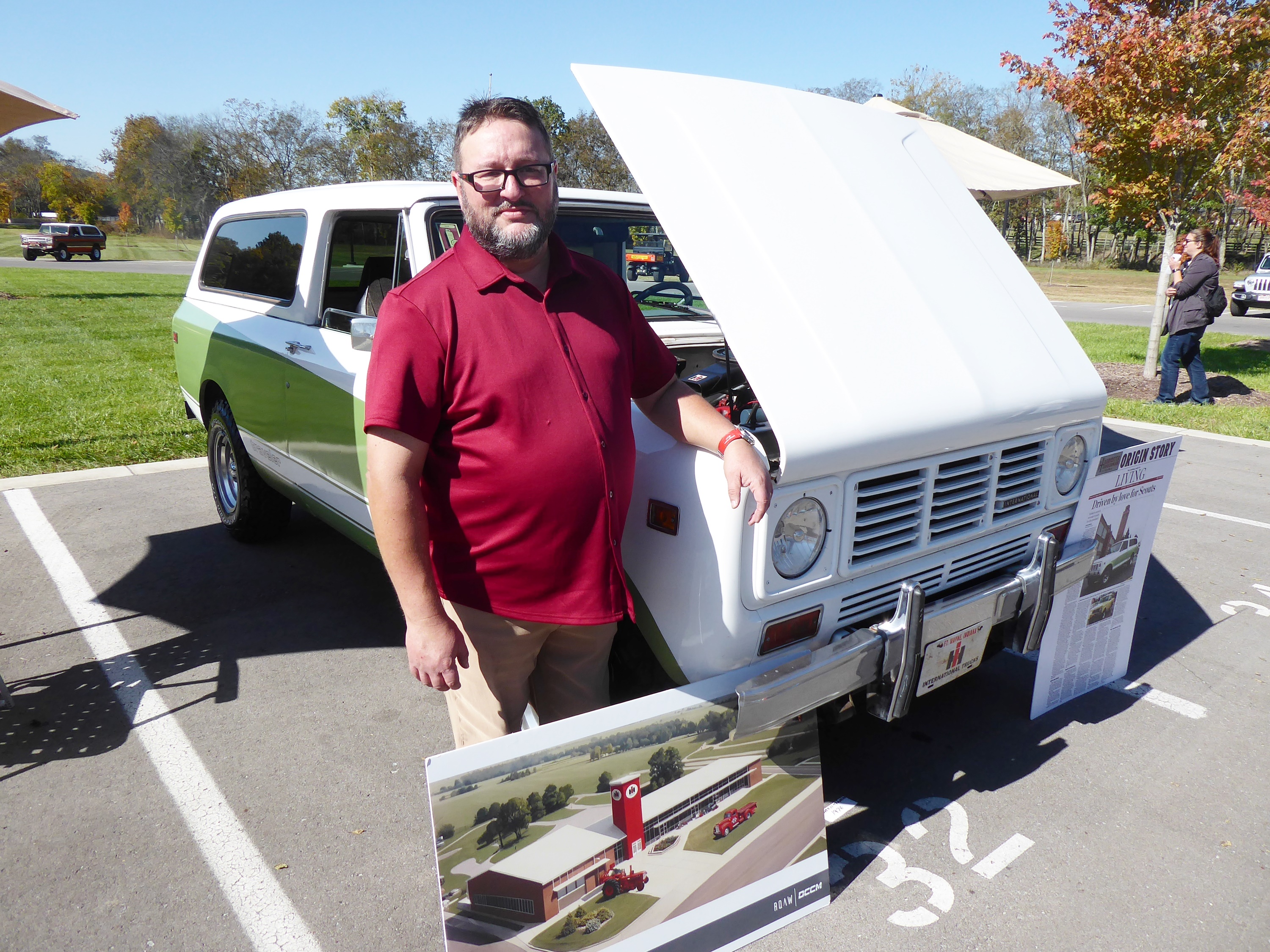
Ryan DuVall with his 1976 Scout.

Not far from where the Scouts were revealed on a hilltop at Southall farm-to-table resort in Franklin, Tennessee, a group from the Fort Wayne-based Harvester Homecoming (HH) had assembled 20 or more historic Scouts, including both the first (1961) and last ones (1980) built.

HH mastermind Ryan DuVall brought his green-and-white 1976 AWD Traveler (which could be ordered with a third seat). It was the Expedition/Suburban of its time, and DuVall’s example had what he called the “bulletproof” and sought-after 345-cubic-inch Scout V-8 engine. The Homecoming, held in Fort Wayne and first held in 2019, attracted more than 20,000 visitors in the peak year of 2021. Keough attended in 2022, while Scout Motors was being planned. HH is the largest Scout gathering in the world. The nonprofit inherited International Motors’ collection of historic vehicles, and a museum will be built to house them and related trucks in New Haven, Indiana.

DuVall takes issue with the idea that Scouts were especially prone to rust. “These vehicles were driven in winter, taken out in the worst conditions,” he said. “They were tough, rugged trucks, and they were used that way. They just saw more of the salted roads and the conditions that made them rust.”

DuVall is upbeat about the new Scout, though a bit bummed it’s not being built in Fort Wayne. But a pair of bricks from the old factory will be built into the new one.

Mitchell (left) and Michael Bolton with the last Scout built. Until now, of course.

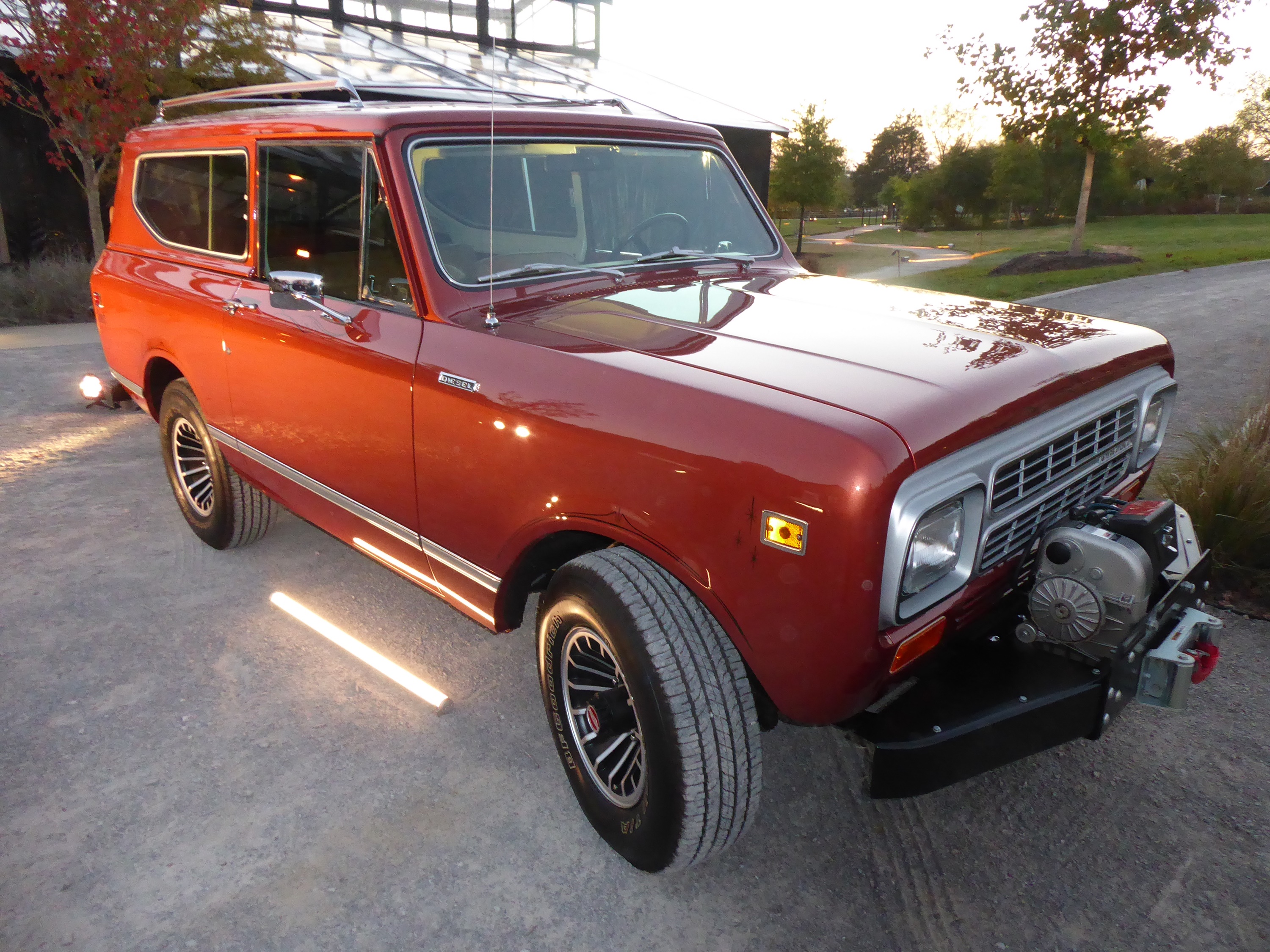
Up the row, young Mitchell Bolton was standing by his grandfather Michael Bolton’s 1980 diesel Scout II, the last Scout built—as photos document. “My grandpa got it from the original owner, who used it for hunting and camping trips,” Mitchell said. “It was a little rough. The restoration was started in 2016 and finished in 2020.”

Reportedly the first Scout 80 built in 1961, very bare bones.

Michael Bolton (yes, he gets teased about the name) said that the Scout died because “the CEO at the time decided to go to war with the unions, which resulted in a six-month strike in 1979 and 1980. It led to engine shortages and other problems. There were also emissions issues with the EPA, and finally the decision was made to close down the Scout division.” Ironically, at exactly the same time, the British car industry was going through the same process, and it led to the end for MG, Triumph and other iconic brands.

The last Scout built in 1980 is a Scout II model.

The first Scout 80 was up the row, a blue 1961 pickup with built in benches in the bed. It had four-cylinder power and was just as plain as could be—but somehow also timeless. There was also a pair of cool top-down Scout ragtops from the mid-60s.

A sad day back in 1980. (Scout photo)

**

In a workshop devoted to the South Carolina site, Joern Petri, Scout’s vice president for the plant launch, said that 74 sites had been considered (including Indiana), then narrowed down to just three. He declined to name the other two. Scout says the 4,000 jobs will expand to 9,500 when the supplier base is added. Blythewood is close to suppliers (Bosch and Mahle among them), a rail link, a highway, and a port (though the latter won’t be in demand until the vehicles expand beyond the initial North American base).The

BMW and Volvo also have plants in South Carolina, though I’m sure both would say (as Scout does) that it being a right-to-work state has nothing to do with it. Scout says it will cooperate with a union if that’s what the workers want, though it seems to be bending over backwards to build a contented work force that won’t want to organize. “We’re focused on creating an excellent workplace,” Petri said.

South Carolina is handling the leveling of the multi-grade, 1,100-acre site, which is being built up in stages, for VW. The plant should be finished by late 2025, and not long after a car will come off the assembly line every 80 seconds.

It’s possible that the plant will be used for the production of other VW Group vehicles, and there might also be some contract manufacturing, Petri said.

Finally, at the Customer Experience Workshop, Cody Thacker, vice president of growth, said Scout’s approach answered the question, “If an OEM could start anew, what would it do?” The answer, apparently, is orient sales of highly functional EVs around an app, but build a robust service network so that 85 percent of buyers are within 200 miles of a wrench. The other 15 percent will be served by mobile operations.

It’s unclear what Scout will do in those states (such as mine, Connecticut) that don’t permit direct sales. The answer would seem to be using the bricks and mortar to service the cars (the majority of the square footage) and introduce buyers to them, but have the transactions online. There will be 100 service locations, and 1,300 service bays, by 2032. “There will be one transparent price, with no hidden fees,” Thacker said. “People see buying a car as slow and cumbersome, and we’re out to change that.” There will be a pickup-at-the-factory option, with a customer center there in South Carolina.

Thacker assured the media that the Scout will be a 50-state vehicle, and there remains quite a long time before the first one is sold—direct sales could be resolved by then. The company is maybe ahead of itself a little in announcing the car now—and putting up billboards in Nashville—but it does have to build awareness of a brand that’s been dormant for more than 40 years.