New Models Enter the Car Market at a Pivot Point

We are at a pivot point in the auto industry, with both the electric and self-driving revolutions somewhat stalled, and Trump tariffs making it difficult for consumers to know what they should do. There’s a brief window when it’s still possible to get the $7,500 federal income tax credit when buying a made-in-U.S.A. EV, but it’s going away September 30. In the meantime, automakers are still churning out new EV models—I’m at a Subaru EV rollout as I write this

So, let’s delve into what’s new in my garage, electric or otherwise.
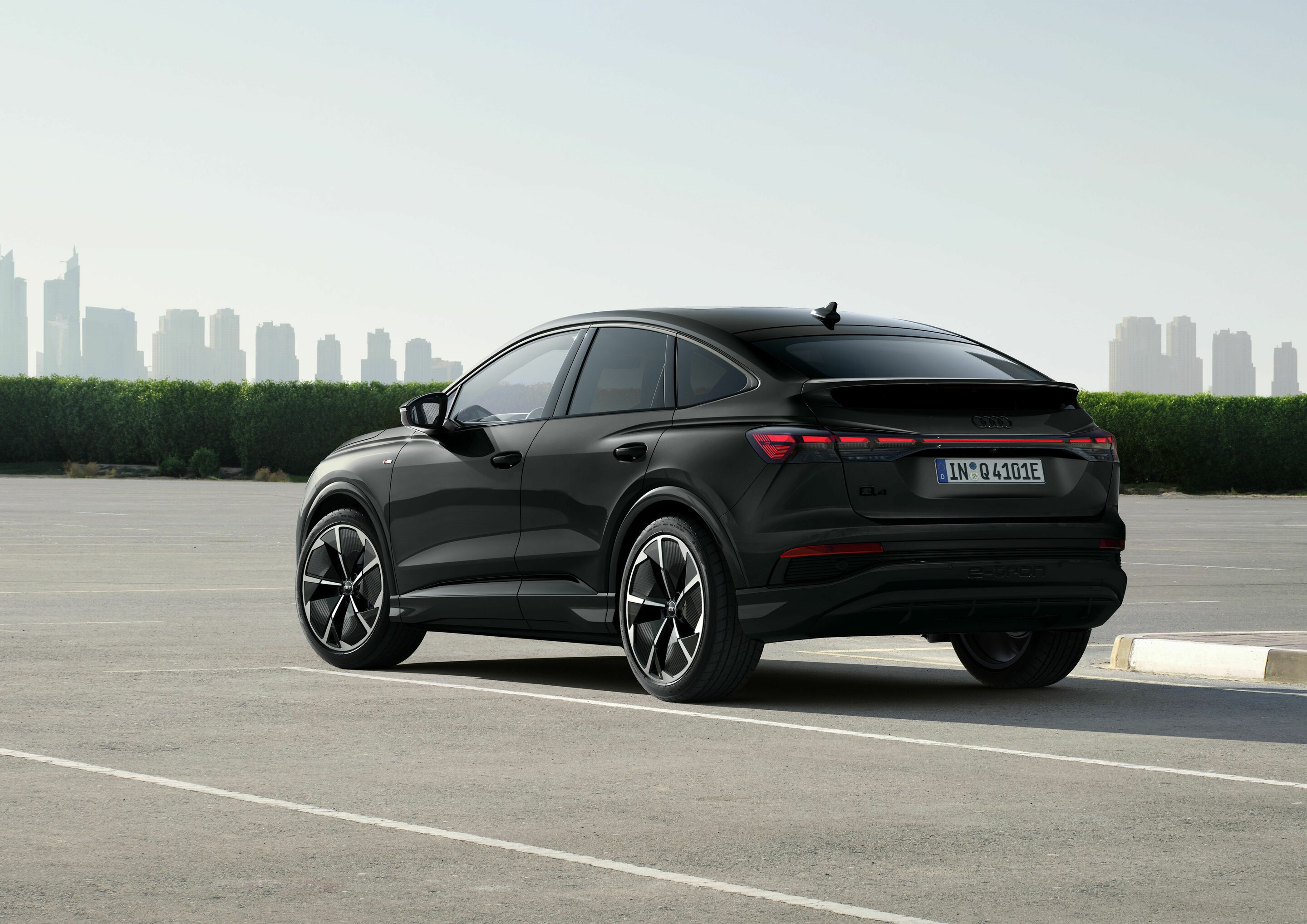
2025 Audi Q4 e-tron Prestige and 2025 Audi SQ6 e-tron Prestige. Audi’s electrics didn’t do well in the second quarter of 2025, and the Q4 e-tron was down 48.7 percent year over year, from 2,430 in 2024 to 1,247 in 2025. But it sure sold better than the A6 e-tron, with just 179 sold.

The Q4 in this guise is a compact electric SUV with 335 horsepower from its electric motor and up to 332 miles of range. The starting price in this Prestige edition of $63,095. It’s fairly pricey, and even the cheapest Q4 is over $51,000. I suspect it’s price that’s holding this model back, because it’s a quite decent small EV otherwise, with quality materials (leather and wood are standard) and a nice driving experience. There is 26 cubic feet behind the rear seats, and 54 feet with those seats down.

The SQ6 e-tron is built on the same platform as the Q6 e-tron (3,716 sold in the second quarter) but with a dual-motor set-up that offers as much as 510 horsepower. While the car was great fun to drive (with 3.8 seconds to 60), the added pep sacrifices range—up to 46 miles. The Prestige is $80,595. The range is 275 miles, not exceptional, but it is somewhat mitigated by fast 270-kilowatt charging.

2025 Lexus LX 700h Overtrail. Lexus is on a roll among the Japanese luxury brands, especially compared to Nissan’s Infiniti. But the LX 700h isn’t set up to float my boat. It’s a hybrid from the leader in that technology, but fuel economy in this big boat isn’t the goal. It has a combined EPA rating of only 20 mph, which is just marginally better than its non-hybrid counterpart. Hybrid tech belongs in light, aerodynamic cars—it’s kind of wasted in this luxurious 6,283-pound seven-passenger SUV.

It’s impossible to hate cars like this, because they’re so cosseting to drive. But they don’t pass a lot of gas stations. The car as tested was $118,010, which buys a powerful 457 horsepower from a 3.4-liter twin-turbo V-6 coupled to a 10-speed automatic. It can tow 8,000 pounds.

Every possible luxury feature was present, all of them standard, from leather-trimmed seating to heated steering wheel, a cool box and an auto door closer. It’s kind of the equivalent of an off-road 1959 Cadillac. Which does have its appeal.
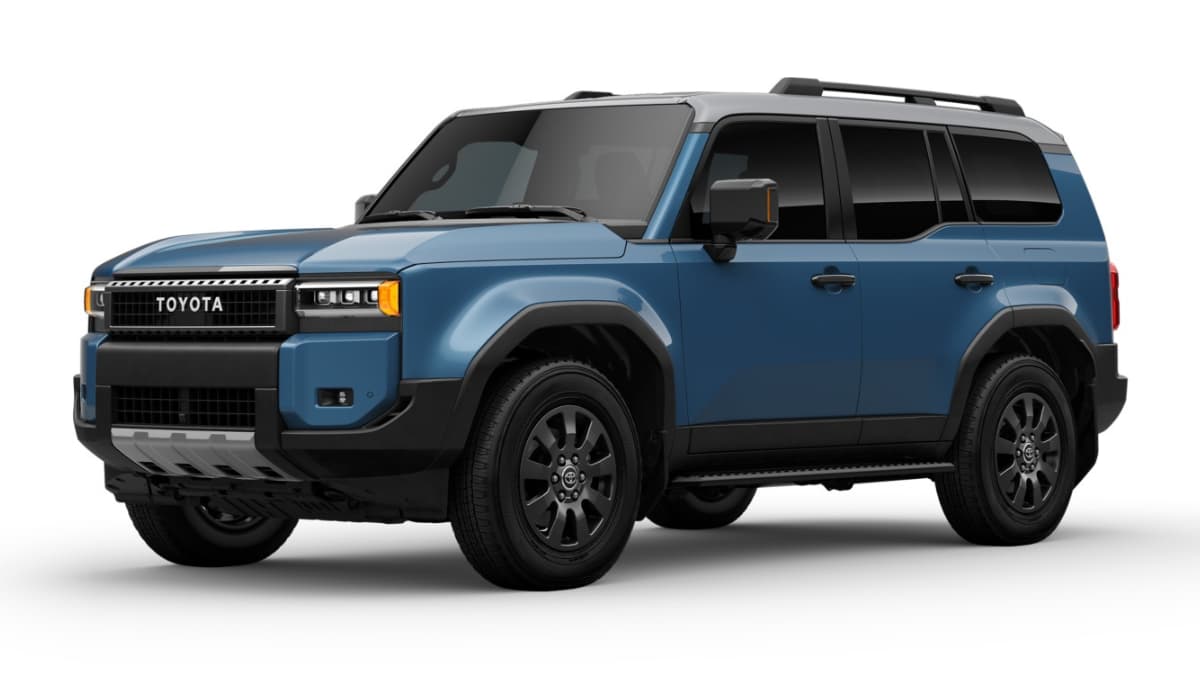
2025 Toyota Land Cruiser and 2025 Toyota 4Runner TRD Sport. More Toyotas. The company covers every possible American niche, even those that must be mystifying in the home market.

The Land Cruiser starts at $58,195, and Toyota is to be commended to making it a hybrid instead of a gas-guzzling V-8. The turbo 2.4-liter four gets two electric motors, which combine to make an impressive 326 horsepower. The setup is shared with the popular Tacoma truck. The two motors yield all-wheel drive, and the car has an eight-speed automatic.

Again, this is a hybrid that’s far from a fuel champ, making 23 mpg combined. If you like rugged 4WD vehicles then the Land Cruiser has always been a sensible choice, and it bristles with trail gear. But if you really don’t go off-road much you shuld consider something more oriented to pavement.

The Tacoma is also parent to the sixth-generation 2025 4Runner TRD Sport I tested in Wind Chill Pearl. It has a similar 2.4-liter turbo engine, but makes 278 horsepower with 317 pound-feet of torque. An eight-speed automatic is attached. With this combination, fuel economy is even worse than the Land Cruiser, at 21 mpg combined.

As tested, the 4Runner TRD Sport was $49,725 (barely up from its $49,250 MSRP). The only option was premium paint. The 4Runner has been generally reliable.

2025 Volkswagen Atlas SEL Premium R-Line. The Atlas as tested (and built in Mexico) was $55,325. This is the highest trim, and it comes with all-wheel drive. The powertrain in all versions is a 269-horsepower in-line four with an eight-speed automatic. The 7.3-second zero to 60 time is not impressive. The three-row Atlas offers very good cargo space, though, and it feels well-built. But despite the four-cylinder engine, fuel economy is nothing to write home about, coming in at 20 mpg I the city and 27 on the highway, and with the AWD that everyone seems to want it drops to 19 city and 24 highway.  At this price, any number of other automakers’ models are competitive.

2025 Hyundai Tucson Limited AWD. The Tucson is Hyundai’s bestseller, and it’s offered with a 2.5-liter direct-injected four-cylinder engine with 187 horsepower and 178 pound-feet of torque, coupled to an eight-speed automatic.

Go hybrid and the 1.6-liter turbo gas engine produces 178 horsepower and 195 pound-feet, but the hybrid system takes it up to 231 total horsepower. The hybrid has a 47.7-kilowatt electric motor and a 1.49-kilowatt-hour battery, with a six-speed transmission. And then there’s a plug-in hybrid variant, with a more powerful 72-kilowatt motor, 268 horsepower and 258 pound-feet. The hybrid battery is 13.8 kilowatt-hours.

All this choice is very welcome, and it’s what smart automakers do, along with frequent upgrades. The current generation of Tucson was introduced in 2024. Prices start at $28,075.
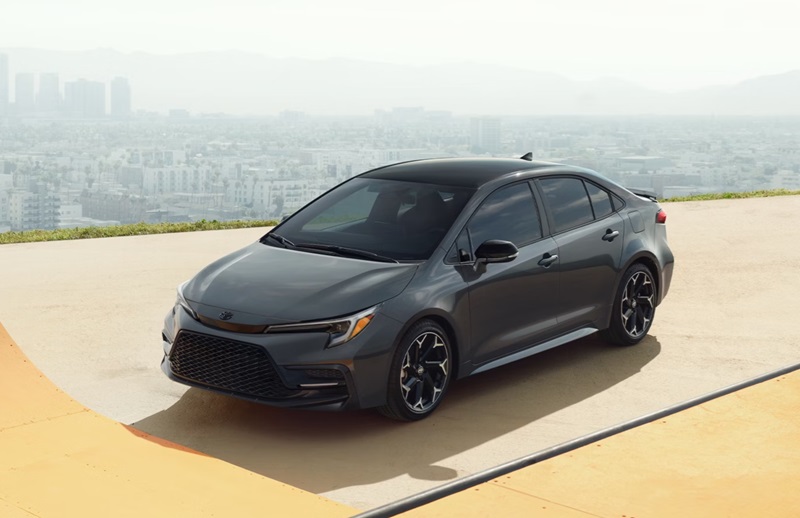
2025 Toyota Corolla FX. This is the gold standard of Toyotas for me, as my first job was preparing Corollas for sale at a Toyota dealer. The outlet’s big brand was Dodge, but today it’s an all-Toyota enterprise. That’s progress! As tested, it was $29,289, a very reasonable price for an automobile in 2025. It’s a hot hatch, with 169 horsepower and stellar 31.39 mpg fuel economy. The two-liter four offered plenty of passing power. I was actually quite taken with the latest incarnation of the Corolla, and would gladly have kept this one over in the Motavalli garage.
The Big Ears Trip

It was an ambitious road trip, 10 days from Connecticut’s home base with stopovers in Virginia, North Carolina, Kentucky and Pennsylvania. The idea was to bring a Radio Flyer cargo e-bike down to my daughter Maya in Louisville, after spending a blessed four days at Knoxville’s legendary Big Ears music festival—a celebration of everything eclectic.

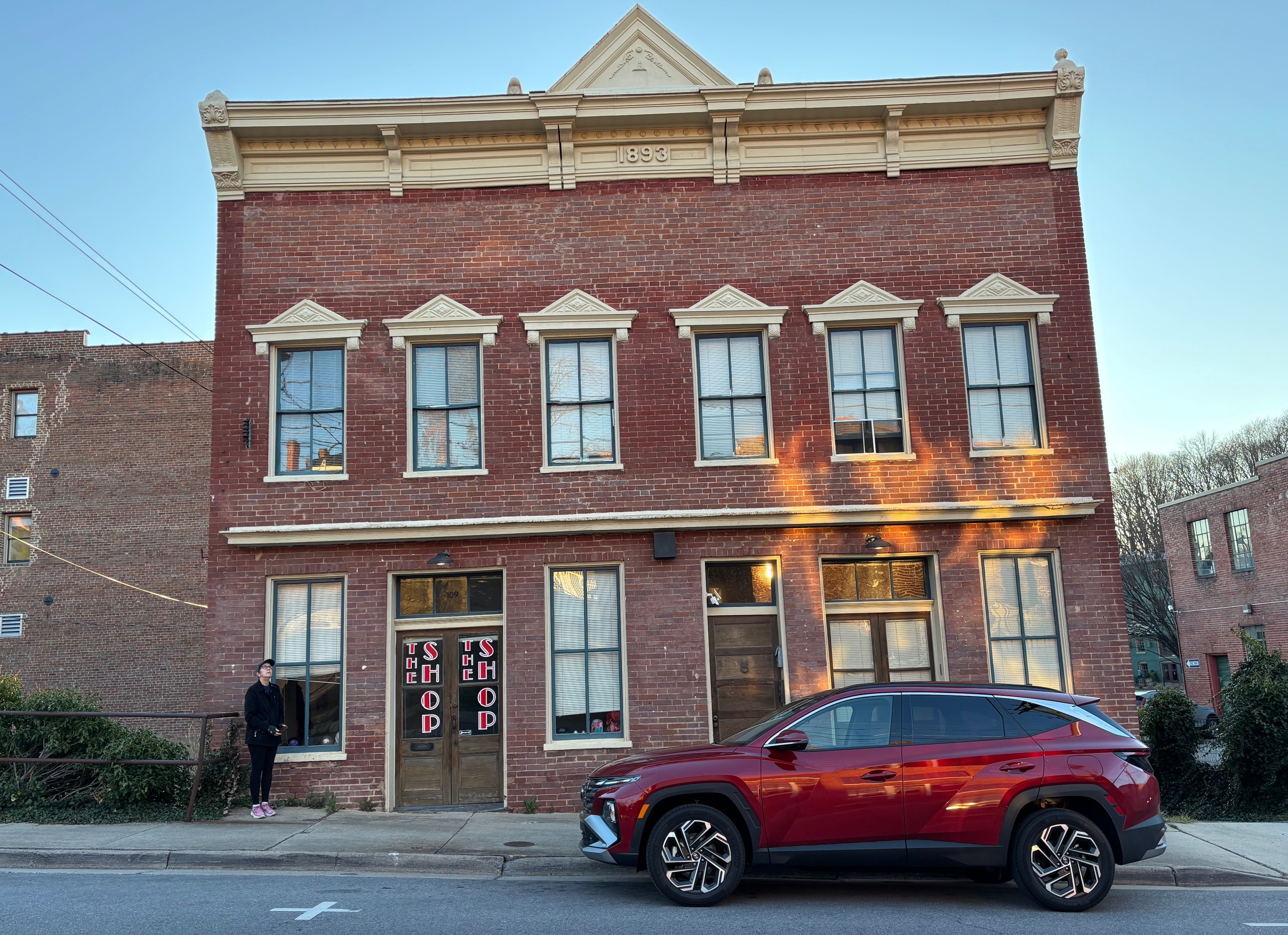
The Tucson at our Staunton, Virginia stop.

Our steed was a 2025 Hyundai Tucson Limited AWD, bottom-lining at $41,870 with the only extras being the Ultimate Red paint ($470) and carpeted floor mats ($210). It proved the perfect vehicle for the trip, because the Radio Flyer—which is extra long—just fit with the front wheel off. We put a $16 cover on it and hoped (prayed?) no one would steal it during a week on the road.

The Tucson came equipped with a 187-horsepower, 2.5-liter “Smartstream” four-cylinder engine that also delivers 178 pound-feet of torque through an eight-speed shift-by-wire auto. It was a smooth cruiser on the highway, but a bit lacking on passing power. The huge benefit, though, was the 30 mpg it offered on the long highway sections (26 combined). That’s pretty good for a compact SUV. Start/stop technology is helpful. Gas prices vary widely in the South, but we were able to access $2.75 a gallon at one point.

Hyundais come very well equipped, including with the most useful left and right cameras that display with the turn signals. The chromed shifter twists for drive and reverse, which took a bit of accommodation but is ultimately fine. The Tucson has excellent front legroom, and even with the seats extended it doesn’t cut into rear space too much. Heated/cooled seats and heated wheel are standard on this model.

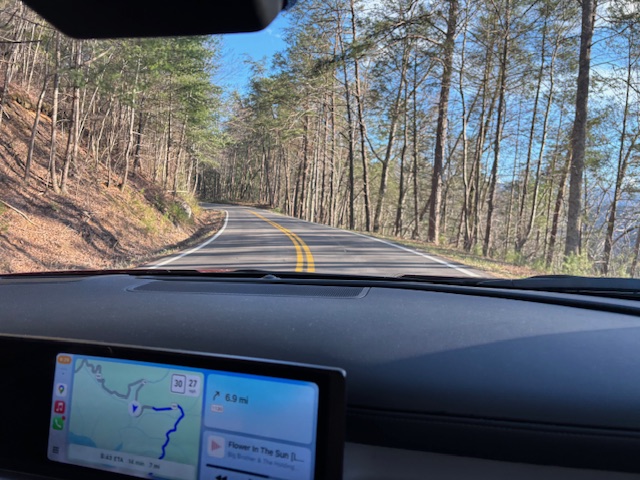
Three hour stretches behind the wheel were not all that fatiguing, making the whole crazy trip feasible. Our first stop, after an AirBNB overnight and Thai food in a downtown Staunton, Virginia Victorian mansion, was Tapoco, North Carolina, on the Tennessee border. Why there? It’s the home not only of the historic Tapoco Lodge, built in 1930 and renovated for modern times, and (right around the corner) the infamous “Tail of the Dragon,” an 11-mile stretch of winding mountain road that features 318 turns.

The hotel was built by the Tallassee Power Company with the original aim of providing a roof for workers at the Cheoah dams and other hydroelectric projects, and it later housed Alcoa workers. The City of Alcoa (what a name!) is up the road, and aluminum smelters tend to locate near cheap sources of power—it takes 10 kilowatts to produce a pound of aluminum. Now you know why Iceland, with its abundant hydro and geothermal, smelts a lot of the metal from bauxite ore.  

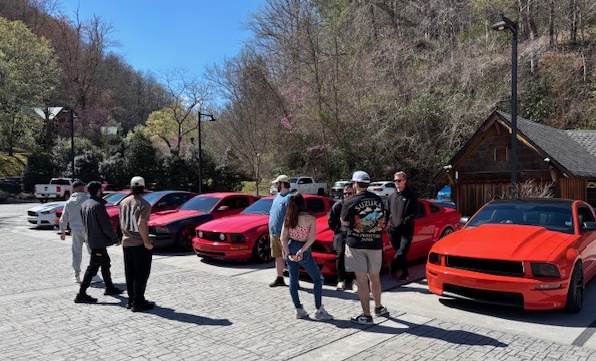
Today it’s a comfortable rustic lodge that offers hiking on multiple trails, white water rafting in season, yoga, and glasses of wine by the firepit. The parking lot was interesting. Despite the rural location, with the nearest town 15 miles away, a variety of Porsches nestled next to a veritable Ford dealership of Mustangs. And then there was every possible motorcycle variation.

The Mustang guys get ready for the Dragon.

The Mustang guys were braving the Dragon and socializing in conjunction with a meet in Dolly Parton’s Pigeon Forge (near as the crow flies, but long in mountain driving). One local owner said he does the Dragon once a week.

The Lodge: A river ran through it.

It is perhaps anticlimactic to white knuckle this legendary road in an SUV with a cargo bike sliding around, but it was fun anyway. Caution is not only warranted but necessary—there are sheer drop-offs, and lots of accidents. Check out the Dragon Death Map to sober up before heading down there.

A Lodge breakfast.

From Tapoco (with a stop in Robbinsville, which has a great thrift shop and a surprise Mexican food truck) it was on to Knoxville, about three and a half hours drive. The Big Ears festival (March 27-30 this year) is like no other. It seems simple enough—four days of music with no boundaries between jazz, folk, rock, world and experimental music of all kinds. But it’s exceedingly rare, especially done with the exquisite taste and broad knowledge that Ashley Capps (you may know him from the Bonnaroo extravaganza in nearby Manchester) brings to the table.

Tatiana Hargreaves (left) and Allison DeGroot.

So it was old-time folk with the Magic Tuber String Band and Hargreaves/DeGroot, plus jazz from Sun Ra’s Arkestra and Immanuel Wilkins, electronica from Immersion (featuring ex-Wire man Colin Newman and partner Malka Spigel), and the pioneer of German rock Michael Rother.

Immersion.

A somber note was on March 28, with one of the last performances ever by “freak folk” pioneer Michael Hurley, who died a few days later at home in Oregon. He didn’t look all that well at Big Ears, but he was in fine voice, performing a version of “Delia” I’d never heard him do. He was for 50 years “the purveyor of an eccentric genius and compassionate wit. He alone was Snock. There is no other.” He was 83.

A last image of Michael Hurley.

In four days, you see a lot of music, at venues scattered all over Knoxville’s very friendly and apparently prosperous downtown. While rents and home buying are sky high in town, it’s still possible to get four sides, corn bread and a draft beer for less than $20 at a barbecue joint on Gay Street.

 Robert Hurst, bassman with the Kris Davis Trio.

Then, the last formal stop was Louisville, Kentucky, home to my daughter Maya and husband Spencer. The Radio Flyer e-bike was still in the back, surviving a dozen lonely parking lots. I rode it up and down the street to make sure it still worked. These cargo bikes are versatile, transporting cargo and kids with a bunch of add-ons. Electric power makes them conquer hills easily. Radio Flyer, by the way, is the Chicago company that makes the little red wagons. Branching out makes sense!

After really tasty shrimp and grits at the in-laws it was back on the road for an epic drive. We stopped for lunch in very rural West Virginia, where poking out from a small roadside junkyard I saw a white Volvo 1800S. How did that get there? While we were at the local diner the proprietor got a call from a slick saleswoman. “She was calling from New York and just hung up on me when I said no!” An opinion about people from New York was cemented forever. 

The final overnight was in Chambersburg, Pennsylvania, home to fine thrift stores, one, New Life, run by the Mennonites. I found a beautiful “mid-century modern” 1959 Blaupunkt console radio/record player with a built-in bar on an earlier trip to Chambersburg. It had been used at an officer’s club in Germany. $75! I discovered later that German-market turntables rotate 12 percent slower on American 60-cycle current. But these old mono tube units are happy to run Bluetooth.

The whole trip took 10 days. We arrived home to a very needy cat. Everything worked out, including the Tucson, which delivered 30 mpg on the highway (and that was most of the driving). The experience left me willing to explore other long road journeys across this great country of ours.