
By Jim Motavalli
It’s interesting that all of these tested cars are either commodious SUVs or station wagons. Every one is a good winter car, while the Porsche and Miata hibernates in the garage. And note how many of them are hybrids or EVs. The old paradigm is shifting.
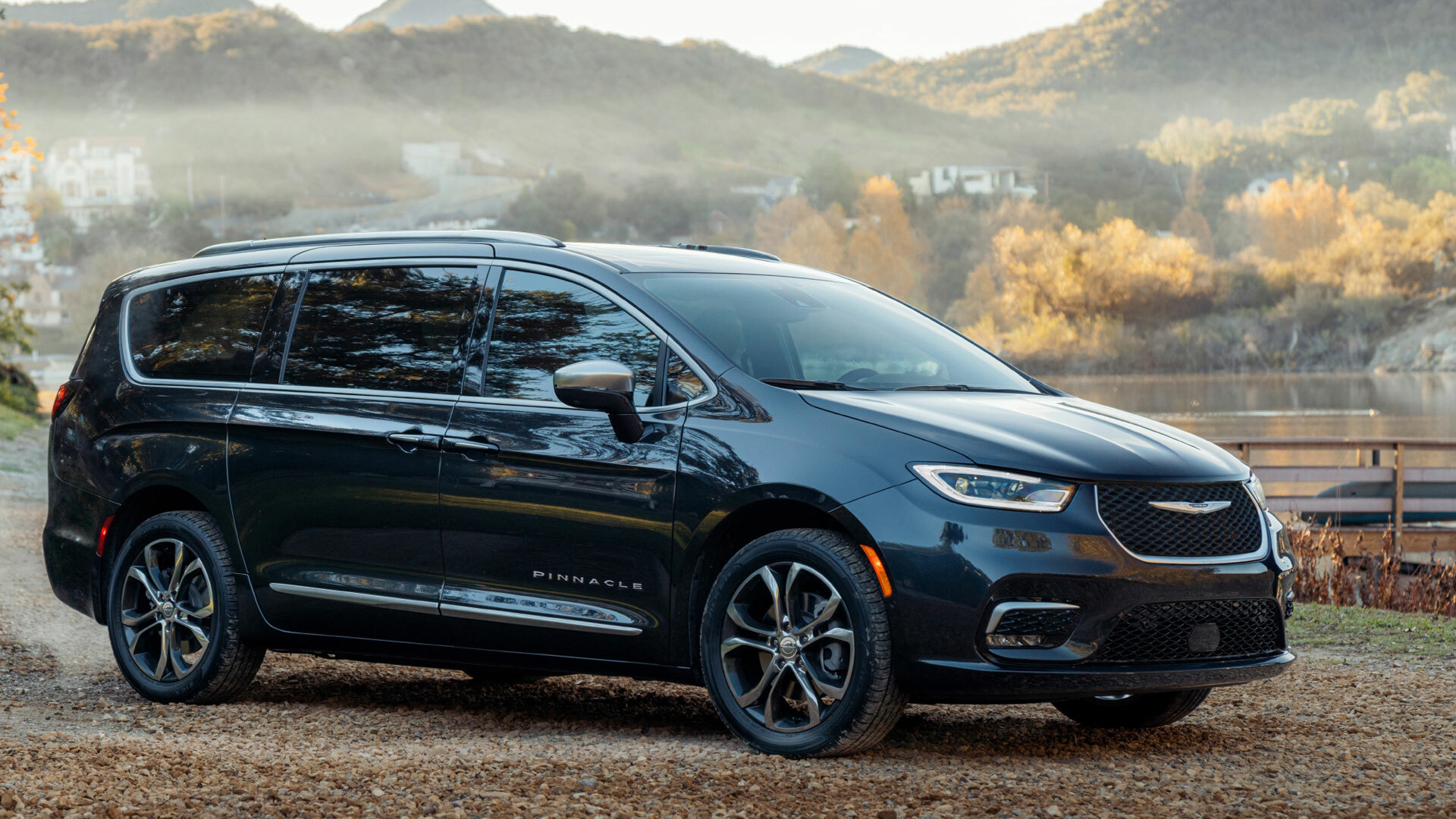
2024 Chrysler Pacifica Hybrid Pinnacle. I have a soft spot for this minivan (actually, for all minivans) and the Pacifica gets special kudos as the first hybrid of its kind. It’s no longer unique, because the very mainstream Toyota Sienna now only comes in a hybrid configuration, as does the Kia Carnival (see below). Unlike the Sienna and Carnival, however, the Pacifica plugs in, and gets 32 miles of EV travel before it has to revert to the gas engine.
The hybrid dispenses with the Stow ‘n Go third-row seats from the standard Pacifica, and that’s a loss. On the road under V-6 power, the Pacifica doesn’t feel all that refined, but then neither does the Toyota Prius. Entry and exit are easy, and the controls are familiar and easy to use. Legroom is good for six-footers.
The Pacifica is quiet under electric power, and rather noisy with the gas engine running. Overall, it’s a good choice if you want both a plug-in hybrid and three-row minivan convenience. The Pacifica came in at $61,685, which is hefty for a minivan. But it offers 30 mpg combined with just the gas engine, and a stellar 82 with the hybrid. It will take a while to pay back the premium price, but it’s still a good choice.
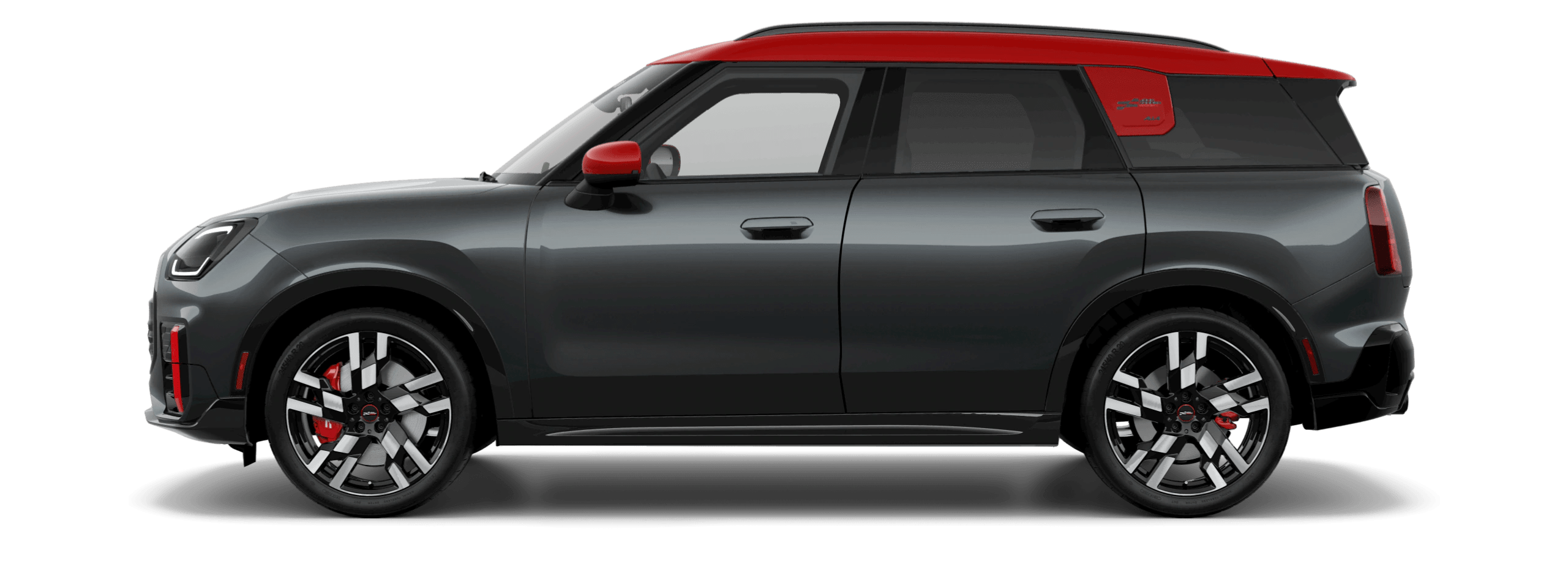
2025 Mini John Cooper Works (JCW) Countryman ALL4. The whole point of the Mini, when it was introduced in Great Britain circa 1959, was that it was cheap and cheerful. That year, you paid $1,340 for a 10-foot-long bare-bones automobile that, with an 848-cc engine, could deliver 40 mpg. Even with inflation, it was a car everyone could afford. Well, car prices have crept up and the new Countryman as tested was $51,995. That’s a big jump! To be fair, you can get into a new Mini quite a bit cheaper. The starting MSRP is $28,950.
That said, there’s a lot of car here. John Cooper was an early Mini tuner, and he’s done proud in this iteration. The JCW is on the platform of the BMW X1 M35i, and it offers all-wheel drive from a turbo four, an eight-speed double-clutch transmission. and 312 horsepower. Plus, it’s sort of a station wagon (another favorite format of mine) when they’re getting scarce. Driving the Mini is quite fun, even on the longer trip I undertook, and the interior is up to the Mini’s avant-garde standards—complete with center-mounted and colorfully lighted central display. The original Countryman offered woodie accents, and alas the retro touches don’t go quite that far in this incarnation.
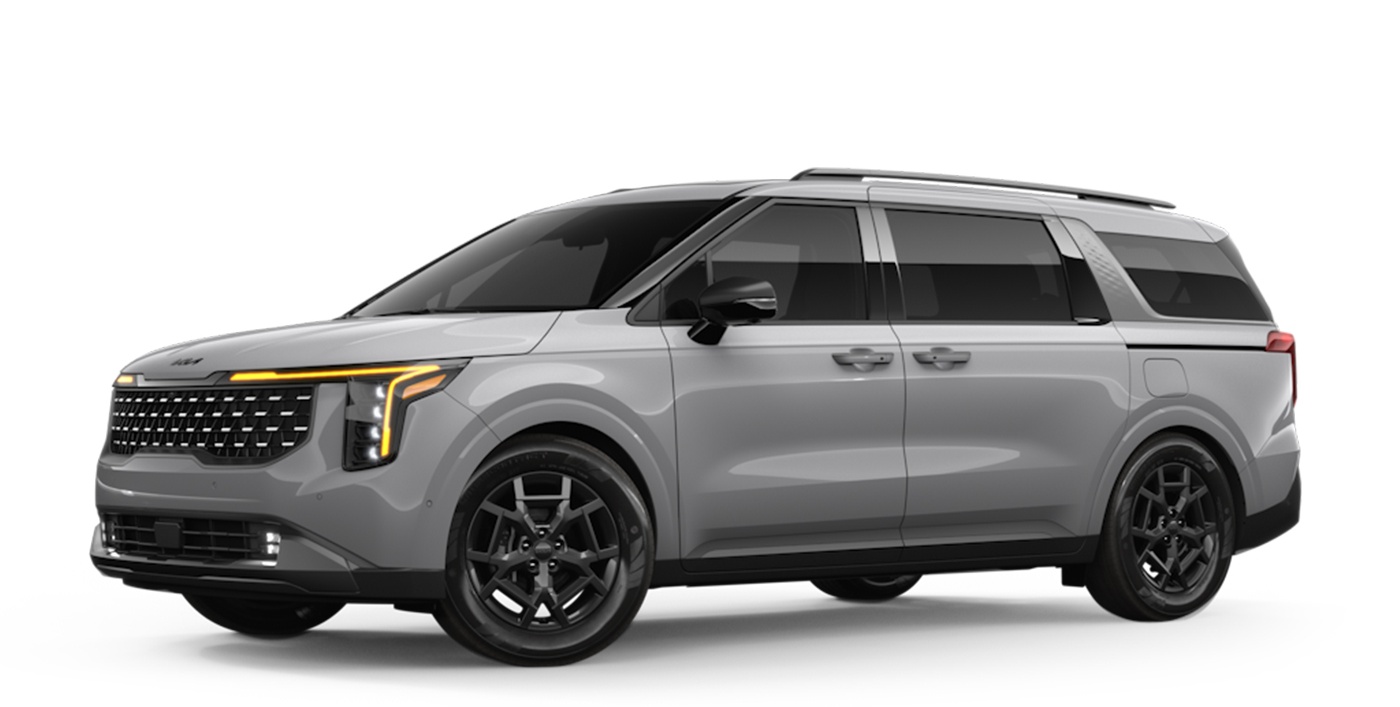
2025 Kia Carnival Hybrid SX Prestige. Kia has hopped into the hybrid minivan sweepstakes with a configuration that makes a lot of sense—a turbo 1.6-liter four, electric motor and six-speed automatic taking the place of the non-hybrid’s V-6 and eight-speed auto. There’s just the one motor, so no AWD version is offered—the Sienna has that.
Kia and Hyundai usually hit what they’re aiming at, and that’s definitely true here. It was a fine minivan to spend a week in, and it passed quite a few gas stations. The second-row reclines in a useful way, and kid-pleasing rear-seat electronics are offered. The Prestige version is at the top of the model lineup, and came in at $57,255. The price includes a truly comprehensive safety suite, as well as leather seats, Bose, a heated wheel and head-up display. Worth getting.
On-road performance was quite refined. The Carnival hybrid can deliver 242 horsepower, not far off the regular model. The choice of regenerative braking settings was appreciated.
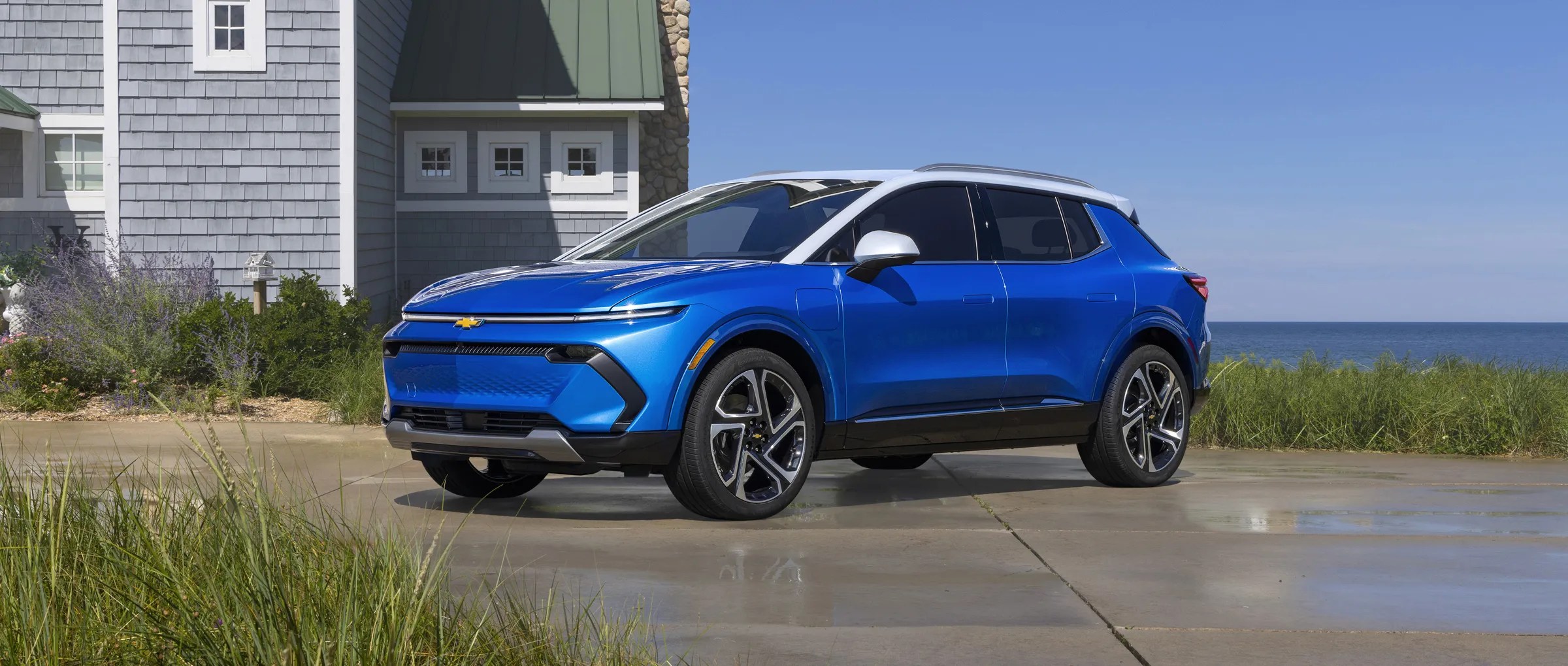
2025 Chevrolet Equinox EV LT. This electric Equinox seems right to me, not as a replacement for the soon-to-return Bolt, but as a companion to it in the EV lineup. GM has tended to electrify its larger models, including the Hummer and the Silverado, and the point eludes me. The Equinox is considerably cheaper (at $34,995 in tested form) than either of those, and considerably more fun to operate. It has a fresh and stylish design (without being overtly luxurious), and it’s exceptionally easy to pilot around town.
A local Chevy dealer told me he’s moving a good number of Equinoxes, but electric vehicles are still only about 10 percent of his sales. That needs to get better, but the narrative that EV transactions are plunging is way off—they’re just not rising as fast as they were.
The tester didn’t have a single option on it, but it had everything needed—even a bicycle alert as part of its safety package. The 17.7-inch screen was fine and clear, with a second 11-incher. The Equinox can fast charge at 150 kilowatts, and impressive 319-mile range. Frankly, I’d buy one—especially if it scores well in reliability testing.

2024 Range Rover P400 SE. These Range Rovers are as ubiquitous as white-tailed deer in the Connecticut suburbs, though don’t they at last bat an eye at a bottom line of $123,960? Admittedly, this tester had about $14,000 in options, and you could probably get by without glossy Sunset Gold paint ($8,450).
The issues I have with the Range Rover include a powerful thirst—just 20 mpg overall with the 395-horsepower turbocharged and supercharged three-liter six-cylinder engine—and odd ergonomics. The volume control on the dash isn’t even marked. The 400 SE didn’t feel particularly fast, and it’s far from agile, but with 406 pound-feet of torque it can definitely pull up stumps. The saving grace of this eternal British cruiser (with styling only tastefully updated since its debut in 1970) is that it’s a very comfortable, relatively quite and cosseting ride. Long trips won’t tire you out. You’ll arrive refreshed, at least until the fuel bills arrive.
Next up is a car I’ve been really dying to drive, a 2025 Cadillac Lyriq Sport AWD. And Volkswagen is promising me an electric ID.Buzz, the Microbus ancestor, another one I’ve eagerly anticipated.
 Territorial Imperatives