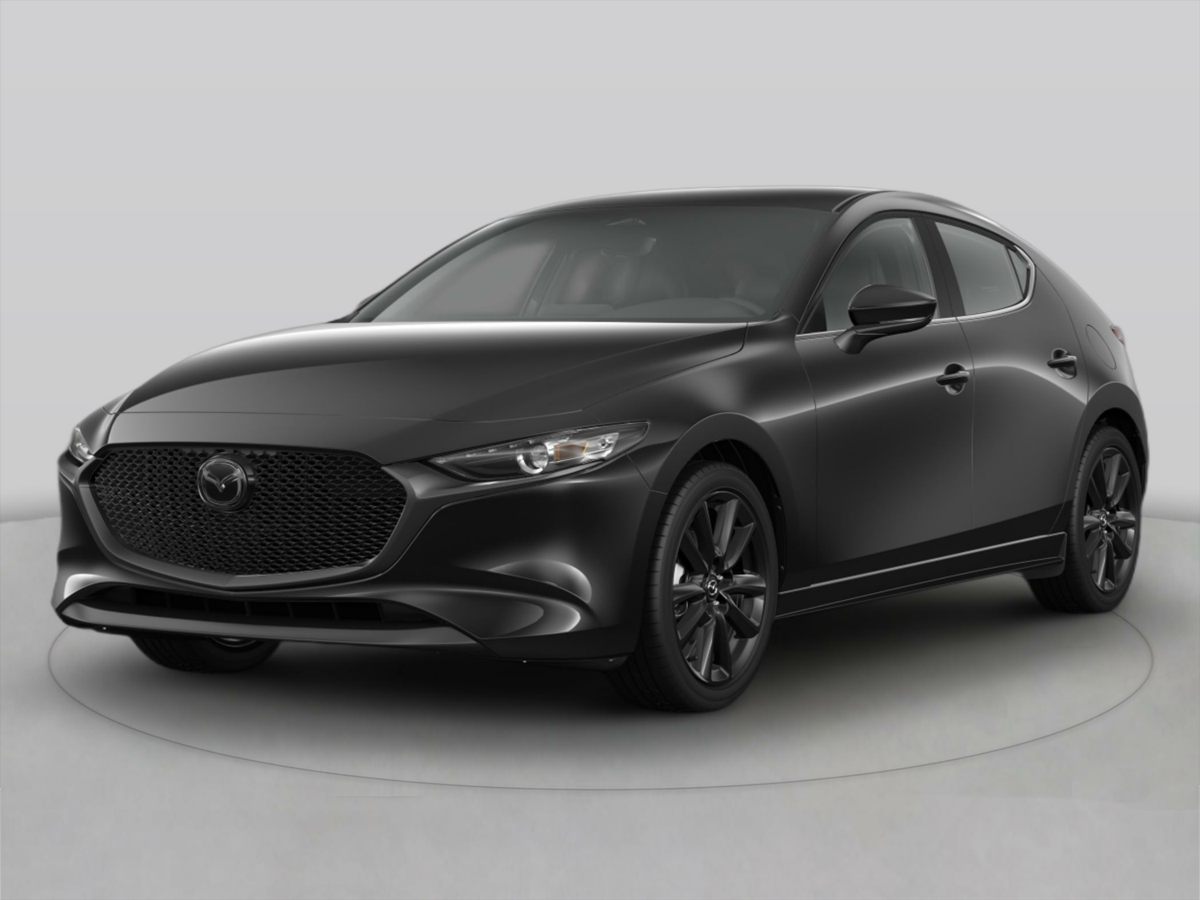
I wish there were more cars available like the simple and straightforward 2025 Mazda3 2.5S Carbon Edition AWD I tested this week. For a bottom line of $31,095 it’s possible to buy a relatively sporty all-wheel drive sedan that does just about everything you want a car to do.
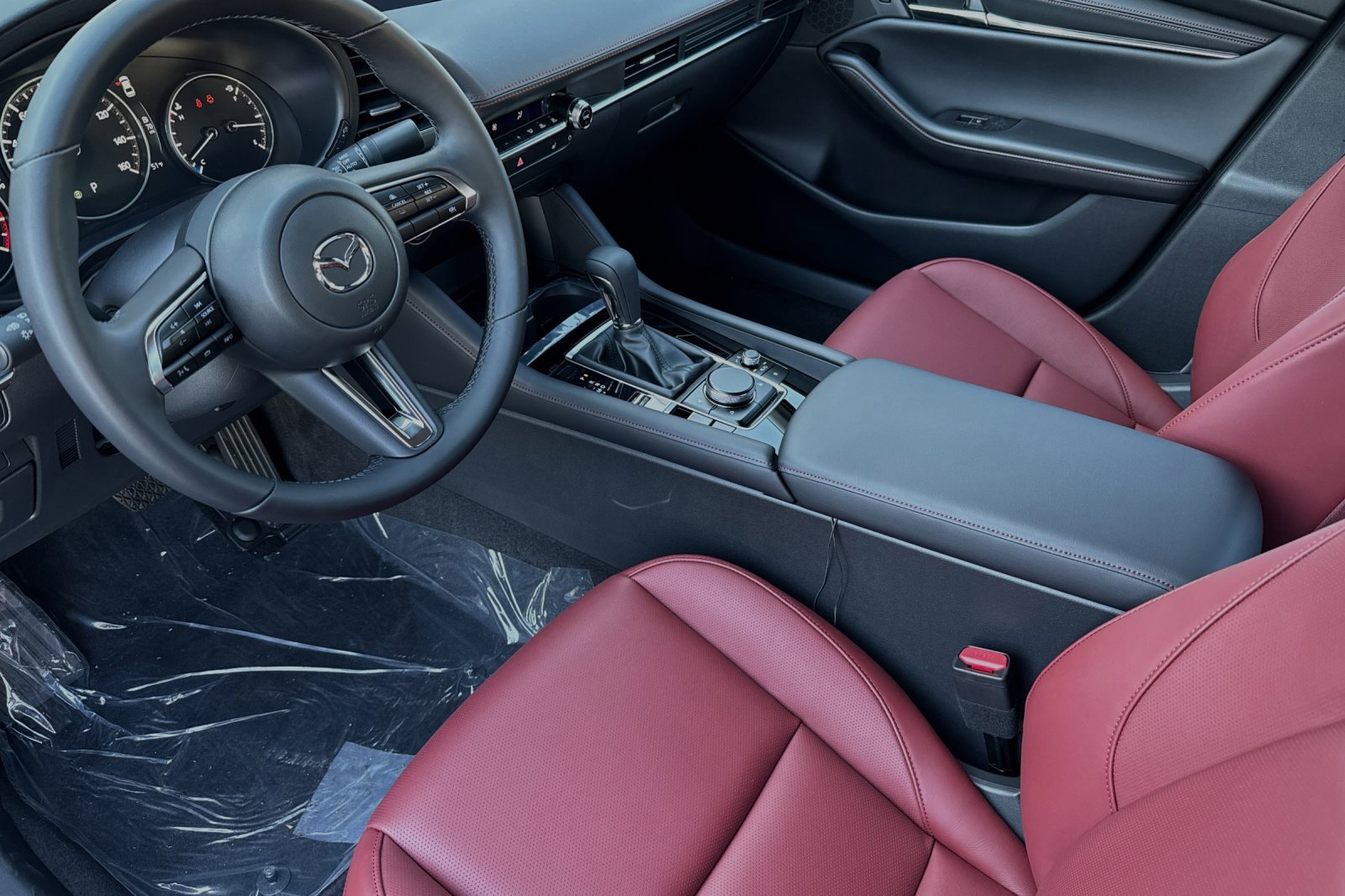
At first, I was taken aback by the Mazda having a conventional gauge set complemented by a smallish center-mounted 8.8-inch non-touchscreen display. Navigating GPS, Apple CarPlay and other functions was via a rotating dial on the console. It seemed annoying, but was actually easy to use. If you owned it, getting around would soon be second nature.
The mid-pack Carbon Edition comes with AWD and a 191-horsepower (and 186 pound-feet) Skyactiv 2.5-liter four-cylinder engine. Buyers can opt for the Carbon Turbo trim, which sells for $33,595 and ups the ante to 250 horsepower. That might be a good upgrade, because with the standard engine the car is adequate but not terribly exciting to drive. But the standard’s 30 mpg combined (35 mpg on the highway) is nice.
The interior of the Carbon featured very comfortable red leather seats (standard) and features high-quality materials, redolent of a more expensive vehicle. As Car and Driver put it, “The Mazda 3 is a mainstream compact sedan that punches above its weight. It can almost pass for a premium-class compact, as its top trim levels boast elegantly furnished interiors lined with materials that exude a sense of luxury that rivals like the Hyundai Elantra and Honda Civic just cannot equal.”
Everything about this Mazda3 was just uncomplicated and convenient. It’s actually a car I’d consider buying, and I never say that. It was easy to park, had good road manners and plenty of storage as well as legroom, looked reasonable enough, and was economical in use and likely to be reliable. There’s a hatchback available that gives it more of a crossover look, but the view to the rear isn’t great. In my opinion, the sedan is the one to have.
Please note that the Mazda3 is assembled at a plant in Salamanca, Mexico and has only 10 percent U.S. or Canadian content. Fifteen percent is via Japan. So, this lovely vehicle is a tariff target, but of course it’s complicated. The tariff would be 25 percent, but under Trump’s revised guidelines from March if the car meets specific U.S.-Mexico-Canada agreement requirements that’s likely to go down to 15 percent. Anyway, the pricing is subject to change.
The auto industry is heading through hairpin turns with no brakes, as the Trump auto tariffs seemingly change daily. We are now told that imports from England, which were in the worst possible position in terms of U.S. production, are now in the catbird seat because of a U.S.-U.K. trade deal. Now the first 100,000 imports per year (meaning, almost all of them from Great Britain) will have only a 10 percent tariff). Meanwhile, Chinese tariffs are paused for 90 days, but cars still face 25 percent duty. By the time you read this it could all be different. It makes it difficult, indeed, for automakers who just want stability. But the new cars keep coming out, and I keep reviewing them.
Lexus NX 350 F Sport AWD and Lexus UX 300h AWD. Lexus’ NX family includes two cars with gas engines, one hybrid drivetrain, and one plug-in hybrid. This relatively small crossover tested in sporty 350 F Sport guise (above) had the optional 2.4-liter turbocharged inline four-cylinder engine with 275 horsepower and 317 pound-feet of torque, connected to an eight-speed automatic. F Sport includes a more performance-oriented suspension tune, a 14-inch touchscreen and upgraded climate control, but you still have to pay extra for a big sunroof, heating in the rear seats, and the top-grade audio. The car was quite nice without an enormous wow factor, and the 28 miles per gallon on the highway was appreciated. Premium fuel is a “recommendation.”
The UX 300h AWD subcompact luxury crossover is more my speed, as it’s powered by the state-of-the-art Prius drivetrain, the Atkinson-Cycle two-liter four with two or three electric motors (the latter, as in the tester, if you want AWD). For 2025, there’s an extra 15 horsepower. With two motors expect 43 mpg combined, and with three a very minor loss at 42 mpg. Zero to 60 is less than eight seconds. The starting price: just under $40,000.
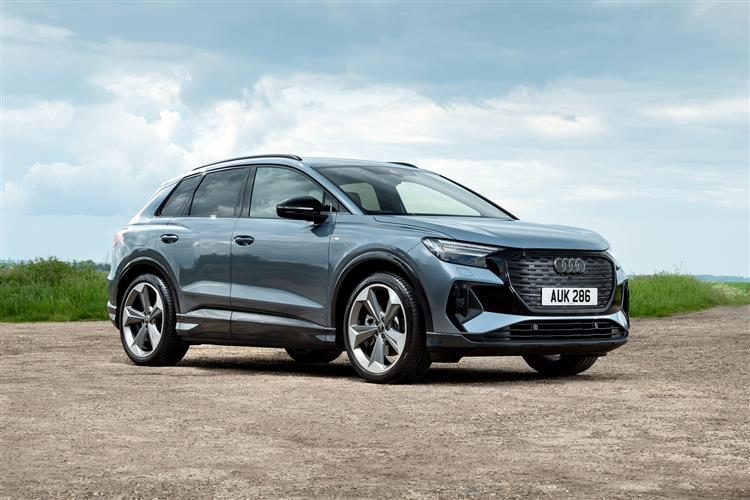
Audi Q4 e-tron Prestige. The Prestige (above) is near the top of the Q4’s model line, starting around $63,000. That buys a powerful electric crossover with 335 horsepower and a so-so range of 258 miles. These days, 300 miles is a safer number. As is often the case, this e-tron emphasizes performance over range, and it can reach 60 in five seconds. The car is quiet, and its cabin very tastefully appointed with quality materials. A more aggressively styled Sportback version is available.
Genesis GV60 Performance AWD. The trio of Hyundai, Kia and Genesis have been acing the EV market, and Genesis’ GV60 is a compelling SUV choice up against cars like the Audi Q4 above. Genesis offers the luxury approach to electric motoring, and up to 295 miles of range, as well as 483 horsepower (from Boost Mode) in this Performance trim. The cabin is utterly stylish, with twin 12-inch screens and a science fiction shifter that’s hugely cool and also very functional. But it’s a $71,000 car. Lesser trims might work just as well for your needs, though no versions are cheap—prices start at $53,800 for the Standard model (with a single motor and 225 horsepower).
Hyundai Elantra N and Santa Fe XRT 2.5T AWD. Sport sedans have been an endangered species, but they’re starting to come back. Hyundai’s Elantra N (above) has much to recommend it, including looking the business with its blackout trim, rear wing, diffuser, and contrasting color stripes. The N Line is a different car. The N is the real deal, with 286 horsepower, a stiff suspension and either a six-speed manual or an optional automatic. Other cars in this class include the Honda Civic Type R and the Toyota GR Corolla. There’s even a turbo Mazda 3 out there.
The current version of the Santa Fe is one of the most sharply styled SUVs on the market, and the performance matches the looks. You might want to investigate the hybrid version, but the tester had the2.5-liter turbo four, producing 277 horsepower and getting it to 60 mph, through an eight-speed dual-clutch transmission, in just over six seconds.
The redesign puts the Santa Fe into the third-row category, and both legroom and cargo area have grown. The interior refresh was done quite well, with a modernist designer feel. Both the second and third row fold flat. With all three rows engaged, the Santa Fe has 14.6 cubic feet of storage out back. The tested XRT AWD version isn’t the best for fuel economy—19 in the city and 26 on the highway. In just rear-wheel drive form it can get 29 on the highway. The XRT starts at $42,425, mid-pack in a lineup that starts with the SE at $35,775.
For a price in the same ballpark, you can buy the hybrid version of the Santa Fe, which uses a turbo 1.6-liter four and an e-motor to produce 232 horsepower. I’d get that one, because the fuel economy goes to 36 mpg city and 35 mpg highway without much of a performance sacrifice. The SEL version starts at $39,275.
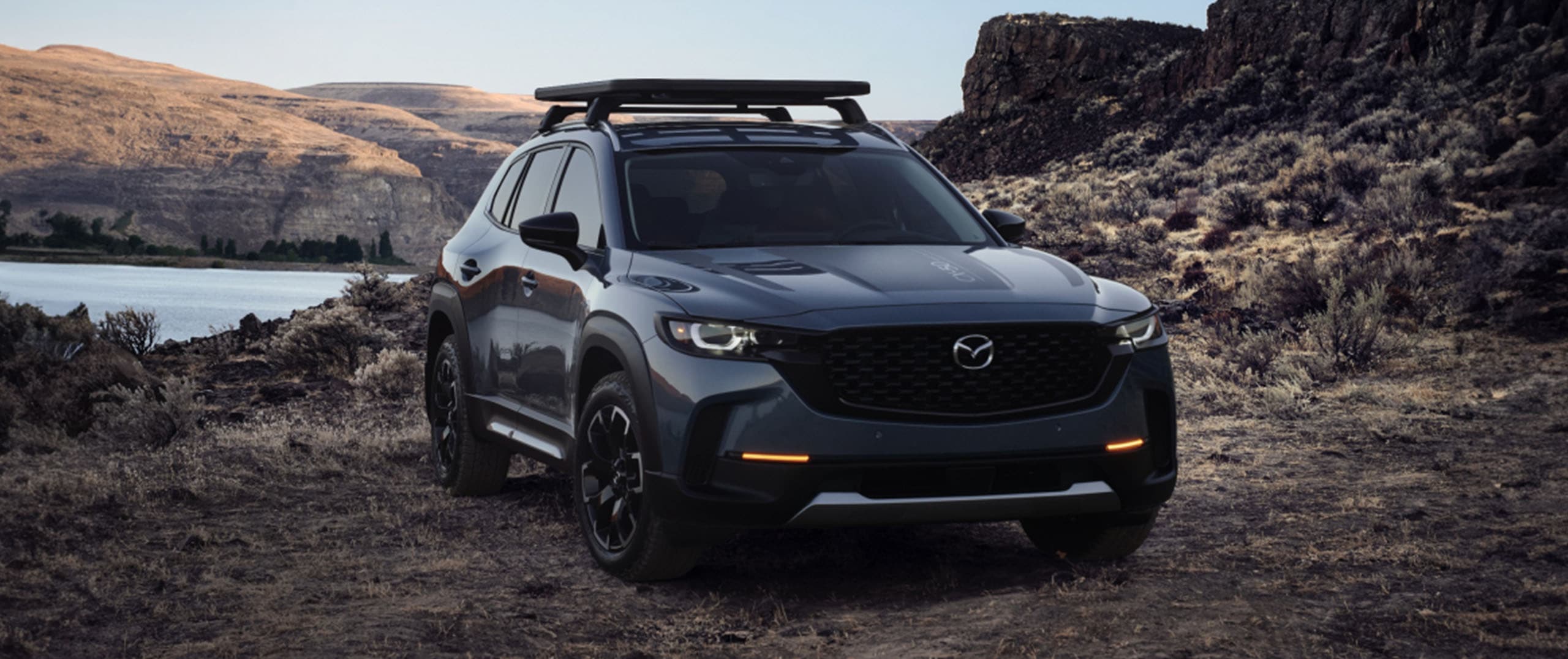
Mazda CX-50 Turbo Meridian Edition. As tested, $42,070, the CX-50 was a well-equipped and nice-handling crossover that in Meridian trim (above) comes with a sunroof and heated leather seats. All CX-50s are AWD. The base four puts out 187 horsepower, but that jumps to 256 in the turbo four that’s standard in the Meridian. This version also includes upgraded towing to 3,500 pounds. The tested car was impressively equipped for the money, and the only optional extra was $450 for gray metallic paint.
Mazda builds a hybrid version of the CX-50, using a powertrain that’s also in the Toyota RAV4. The 2.5-liter four uses three e-motors, producing a combined 219 horsepower. If you can live with 7.5 seconds to 60, it’s the better option, with 38 mpg combined and not much sacrifice in terms of drivability. Pricing starts at $35,840.
Volvo S60 Recharge eAWD Ultimate Dark and Volvo XC60 T8 AWD Polestar Engineered. The plug-in hybrid drivetrain is proving very popular with consumers—who are still cautious about going full electric. In the S60 Recharge, Volvo offers a comfortable sedan with a two-liter four-cylinder engine, an electric motor and a relatively big 18.8-kilowatt-hour battery that together generates 455 horsepower and 523 pound-feet of torque. The big battery enables 41 miles of travel on just electric power. That leads to a combined hybrid mode fuel economy of 31 mpg. And at least until Congress repeals the $7,500 federal income tax credit for EVs (which it seems intent on doing), this one is eligible.
Consumers won’t be dissatisfied with this very comfortable, safe, nicely appointed sedan, which in T8 form can reach 60 mph in an impressive 4.3 seconds. The big issue is the price, since the base Core version of the S60 Recharge is $53,295. And the T8 Ultra Black top trim is just shy of $60,000.
The XC60 T8 AWD Polestar Engineered (above) starts at a whopping $76,545. If you must have an SUV, this is a good plug-in hybrid alternative, with 35 miles of electric range. The XC60 and 90 carry a lot of safety tech and are relatively heavy cars, and this one perhaps needs its 455 horsepower to give good performance. This one won’t get the federal rebate, even if it’s available, but it could qualify for local incentives.
I had some stuff to move, and for that the 2024 Toyota Tacoma Trailhunter Double Cab came in handy. Trucks like this are proof that the Japanese can build work vehicles that give the impression they were born in Texas. I’ve never owned a truck, but I love to borrow them.
It’s tough out there. Automakers know they have to concentrate on SUVs, because that’s all people will buy (well, trucks too) but the competition is fierce. Hence an SUV has to be extra special to stand out from the crowd.
2025 Genesis GV80 Coupe
One that does exactly that is the 2025 Genesis GV80 Coupe AWD 3.5T Sport Prestige currently under test. The fit and finish of this car, with heated and cooled Nappa leather seats, was just impressive, and the tester was the electronically supercharged model that extracts 409 horsepower and 405 pound-feet of torque from 3.5 liters. The standard engine in this car is a 375-horsepower twin turbo.
And this is one of the few vehicles on the market that comes with advanced rear-occupant protection that can detect a baby’s breath in the second row. It’s big, though, and required a plus-size parking spot in New York City.
The styling is by necessity a bit awkward, given the challenge of turning a four-door boxy SUV into a coupe, but Genesis did their best with what they had. The GV80 Coupe is pricey, though, at $88,630 as tested. Fuel economy, as expected, isn’t great, 22 mpg on the highway, 18 in town.
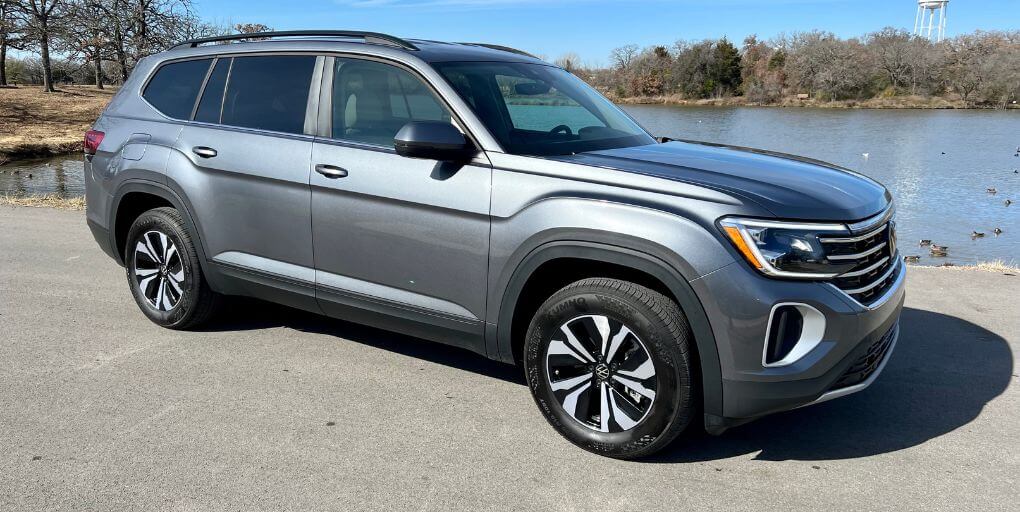
2024 Volkswagen Atlas 2.0T SE
This car was refreshed for 2024, receiving new front interior, new taillights and a revised interior. The V-6 option is out of the lineup. They’re all four-cylinder models now. But the turbo four produces 269 horsepower and 273 pound-feet of torque, and when coupled to an eight-speed automatic yields a 7.5-second zero to 60 time. It’s not the problem.
The interior is nice looking and airy, but as with the GTi recently driven it has a really challenging infotainment system that requires going through a lot of screens and menus to do just about everything. I really, really want a volume control knob. The touch-sensitive controls, when you get to them, aren’t very touch sensitive.
Fuel economy is pretty crummy, 22 mpg combined. In the end, this is not a standout family SUV, more’s the pity.
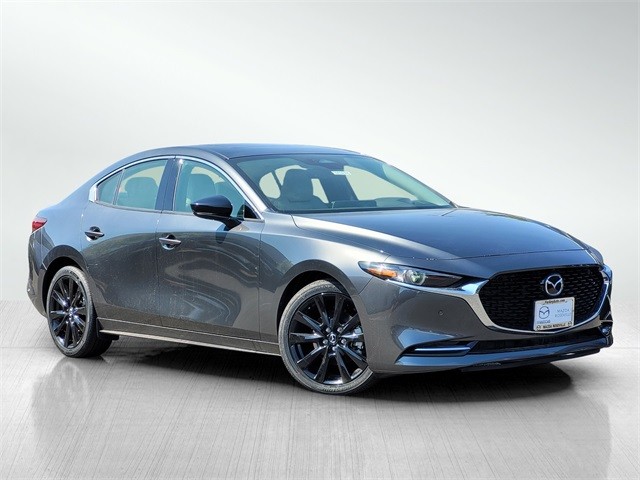
2024 Mazda Mazda3 Sedan Turbo Premium Plus
It was a relief to step into that endangered species, an actual sedan. The tester was at the top of the Mazda3 range, selling for $37,065 with the SKYACTIV 2.5-liter turbo engine and all-wheel drive. It’s a very competent little driver car, with 227 horsepower and 310 pound-feet of torque on offer. It can achieve an impressive 5.6-second zero to 60 run. BMW should be scared by cars like this one, but I doubt it gives Mazda much thought.
Sedans generally trump SUVs in fuel economy, and this one achieves 32 mpg on the highway (27 combined). It has Mazda’s generally quality high level—nothing fell off, and it probably won’t if you buy one.
If you really want to save money, start with the base model at $25,135. Changes on this car for 2025 include the base model in sedan or hatch form, and with any model above base there’s the capacity to talk to Alexa. Want Bose? Upgrade to Premium or Turbo Premium Plus, where it’s standard. Sounded good, too.
Also tested from Mazda was the 2025 Mazda CX-50 Turbo Meridian Edition, and it was a solid entry that was relaxing to drive on a long trip. For $42,670 (as tested) it wasn’t a bad buy. Under the hood is a 2.5-liter engine with twin turbos and 227 horsepower with 310 pound-feet of torque.
The Meridian as tested featured leather seats, auto-dimming headlights, a moonroof, dual-zone climate and a 12-speaker Bose setup. Not bad for the price. I bought a Miata instead, but so did every other auto journalist in the world.
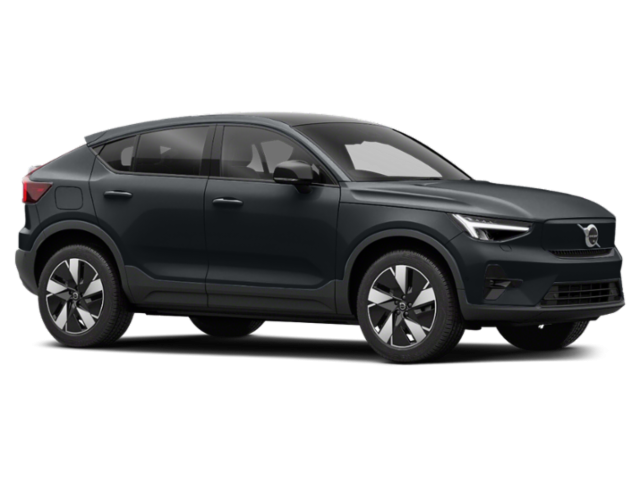
2024 Volvo C40 Recharge Single-Motor Ultimate
I find myself frequently recommending the single-motor of today’s electric cars, because they’re cheaper and have greater range. The price is important, because even the single motor starts at $54,895. It has rear-wheel drive, and even without the second motor can hit 60 mph in 6.6 seconds. But with the twin motor you get an eye-popping 402 horsepower, 4.4-second times, and more performance cred.
All of the single motors get a 79 kilowatt-hour (75 kWh usable) battery pack, and range that’s a decent 297 miles (less if you drive mostly on highways). Recharging can be achieved at a fast 480-volt station 10-80 percent in 28 minutes.
The Volvo and its Polestar near-relatives are very competent EVs (the Scandinavian modern interiors stand out) that would be more competitive at slightly lower price points. In other Volvo EV news, the company has teamed up with Starbucks to add 50 fast chargers at 15 locations along the 1,350-mile corridor between Denver and Seattle to “make EV charging as easy as getting coffee.” Since you can recharge there in 28 minutes, they have a point. “While their vehicles are recharging outside, drivers and their passengers can relax comfortably inside with their favorite Starbucks beverage,” Volvo says.
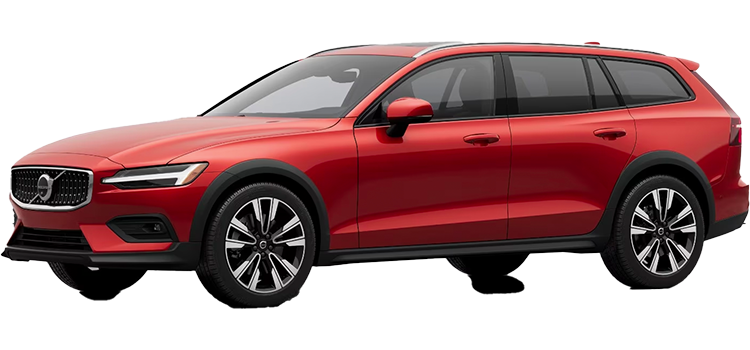
2024 Volvo V60 Cross Country B5 AWD Ultimate
Volvo is to be praised for keeping station wagons in the lineup. Audi has a wonderful S5 Avant model coming out, but Americans won’t be getting it. It’s our own fault—we’ve rejected the format pretty definitively. Not me, though. I’ve owned station wagons made by Plymouth, Mercedes, Volvo and more.
The V60 Cross Country is an upscale wagon, priced at $62,075 as tested. Power comes from a two-liter turbocharged and direct-injected four that manages to generate 247 horsepower and 258 pound-feet of torque.
The other version of the V60 is a Polestar-engineered plug-in hybrid with sticker shock at $72,445. Both of them are opulently appointed, but the Cross Country has some vague SUV styling cues and an unnecessary lifted ride height. Will the camouflage be enough to fool buyers who hate station wagons?
My neighbor has a V60 and loves it. He even named it “Lars.” I like that these wagons have definite family ties to the old 122S I owned for 20 years. Some of the Volvo SUVs, not so much.







 Territorial Imperatives