
The Trump tariffs have thrown the auto industry into a complete turmoil. The future pricing of the cars on this list will be determined by whether or not they’re made in the U.S. of A. And some automakers—Jaguar Land Rover, Audi—are temporarily suspending deliveries to America while they plan their next move. So if I say glowing things about the 2025 Audi SQ7 Prestige I tested, will you even be able to find one on the lots?
A case in point, my brother wanted a 2025 Kia Kona Hybrid with 49.9 mpg. This vehicle is offered here, starting at $26,000, or $33,550 for the Limited model he wanted. He found one at a local dealer, but then it turned out to be not available. He had to scramble around to find another one—they’re rare, for some reason—and managed to get the keys just days ahead of the 25 percent tariffs. He paid around $32,000 all in. He was, in fact, lucky. It’s built at the Ulsan facility in South Korea, not here.
So, the numbers here are, to put it mildly, in flux.
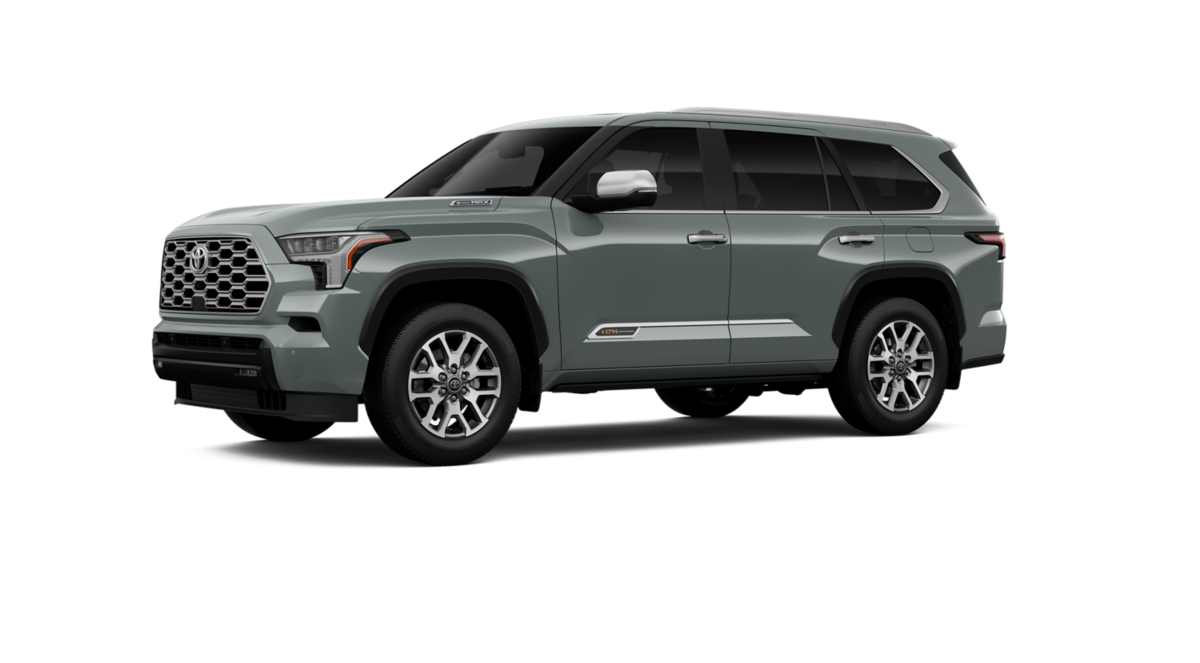
2025 Toyota Sequoia 1794 Hybrid. I prefer hybrids to be smaller, lighter and cheaper. The huge 1794 (above) starts at $82,330, and despite the “hybrid” badges it’s not fuel efficient. I mean it gets 22 mpg combined, for crying out loud. Yes, it’s a big, comfortable SUV with all the latest tech, and Toyota wrote the book on hybrid drive, but it’s also 6,179 pounds of vehicle. But you could do worse if you have eight people to move around. The price couldn’t go up much more, but luckily the Sequoia is built in America. Texas, to be specific.

2025 Toyota Crown Signia Limited. It dates me to remember the Crown as a luxury car for the JDM (Japanese domestic market). The new one (above) is still fairly well-appointed, with sedan styling that still gives off some SUV cues. Such attempts tend to come off as awkward, but OK. Prices start at $42,475, which is about what Americans typically spend on a car.
The good news here is that all Crowns are hybrids, beginning with a 236-horsepower powertrain, able to deliver 41 mpg combined. That’s pretty good for a car of its size. You can also gild the lily with the $56,125 Platinum trim, accessing 340 horsepower with reduced fuel economy. Don’t be in such a hurry! The Crown Signia is built at the Tsutsumi Plant in Aichi, Japan, and thus subject to tariffs that would threaten its competitiveness if they were fully passed on to consumers.
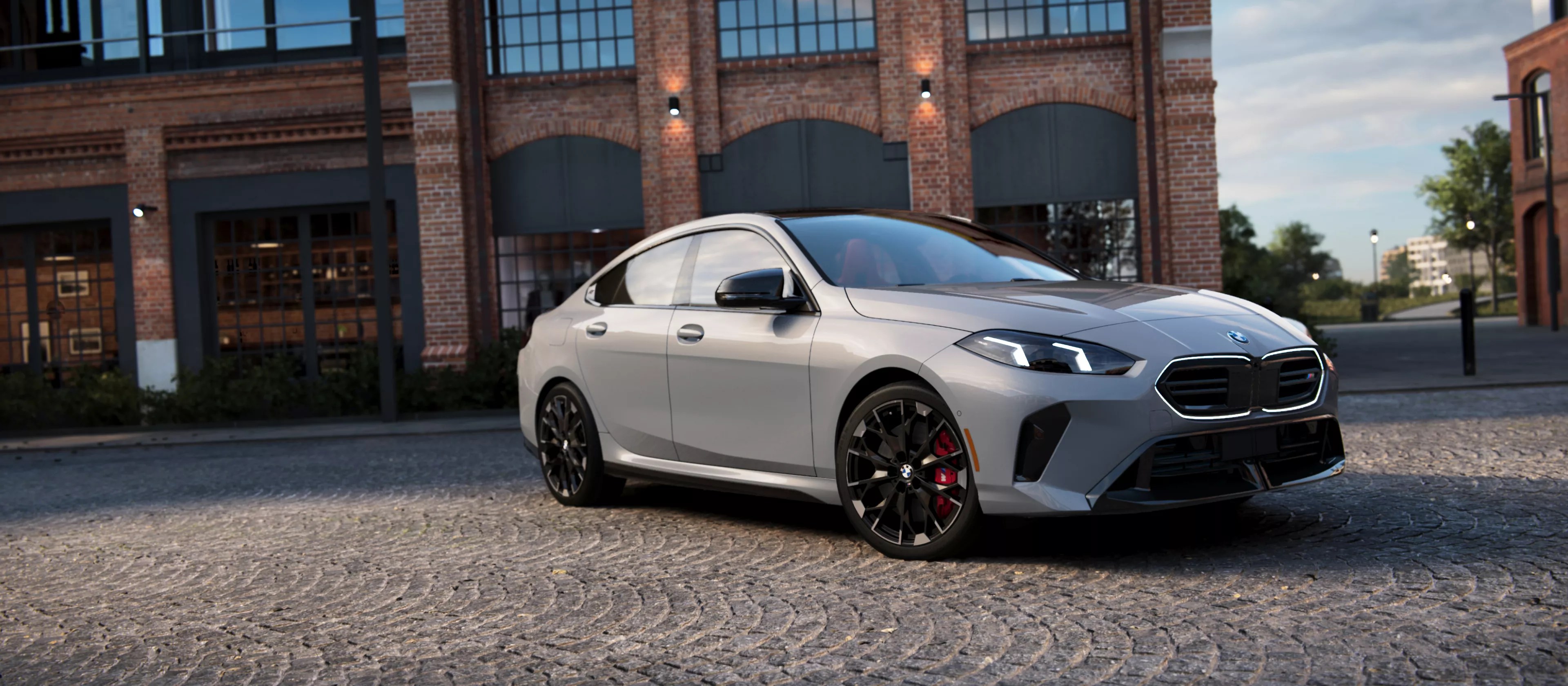
2025 BMW M235i xDrive Gran Coupe. Consider the BMW 2-Series as a way to escape the big-grille plague that I thought I’d be getting used to, but no such luck. This unassuming purple beast (above, though not purple) is a performance BMW with quite a bit of Mini Cooper DNA (same parents, after all). There’s no manual option, but the two-liter turbo four puts out 312 horsepower and 295 pound-feet of torque, shifting through a seven-speed dual-clutch automatic. The combination is good for a 4.7-second zero to 60 time. The interior feels classy, but the seats could use more padding, especially as this M delivers a relatively stiff ride. The M235i is a little car with a somewhat big price, starting at $50,675. There’s not much in common with the similarly named M240i coupe, but that one has a straight six-cylinder engine and more power—382 horsepower, with AWD available. The price is very close, $50,600, with xDrive adding $2,000. Production: a highly automated plant in Leipzig, the former East Germany.

2025 Mercedes-Benz S63 EV4. The European marques have fully embraced the plug-in hybrid (PHEV) format, and this example emphasizes performance. The challenge for Mercedes was to deliver zero to 60 in 3.2 seconds (and a 180-mph top speed) via a four-liter twin-turbo V-8 and e-motor, while also delivering fuel economy to justify that PHEV badge. The package delivers 791 horsepower and 1,055 pound-feet of torque.
The figures for cars like this are wild. It offers 49 mpg combined (46 in the city/53 on the highway) and an electric range of 16 miles (which could be higher). But if you run it only on gasoline, the result is only 18 mpg. Keep it charged up, is what I say. Driving range is quite good at 380 miles. The interior of the Mercedes is super-nice, with Benz’ really useful active bolsters to keep you in your seat. The price is an eye-watering $186,200, which is a shame because lots of posteriors would occupy that driver’s seat if they could afford it. Although Mercedes has an American plant, these cars are built in Germany, and thus the price (if passed on) could go up, up and away.
Is there room for more Benz cars in Alabama? The plant there is already producing the GLE, GLS, and GLE Coupé SUVs, and the Mercedes-Maybach GLS for international sales. EVs in Alabama are the EQS SUV, EQE SUV and Mercedes-Maybach EQ. The S63 EV4 is likely to be a low-volume model and will probably stay in Germany.

2025 Audi SQ7 Prestige and Q4 e-tron Prestige. I’m putting these two together because I’m curious what the German automaker will do with pricing for these fine driver’s offerings. Both are already expensive cars, and price is a big issue with EV customers—who think the electrics are too expensive even without the tariffs. Audi’s e-trons will now be a big jump from domestics like the Chevy Bolt and Equinox. The Prestige Q4 is $69,095, and my guess is that the automaker can’t really raise that too much without having them just sit on lots. The big, luxury-oriented SQ7 Prestige (above) is $98,195. Raising that heady amount by 25 percent would be prohibitive. That’s why a pause was necessary.
There definitely is U.S. production in Audi’s future. The company said in February it will expand production in North America, possibly in a joint venture with its Volkswagen Group siblings. According to Audi CEO Gernot Doellner, also a VW management board member, “We could go into existing Volkswagen Group plants or we could build up additional capacity. We are open to solutions and are evaluating the various options.”

2024 Toyota Corolla Cross Hybrid XSE and 2025 Toyota GR Corolla Premium. If you expect this car to look like a Corolla—i.e., a sedan—you haven’t been paying attention. This Corolla, made in the U.S. of A. (yeah!), has become an entry-level SUV, and a hybrid to boot. Pricing starts just below $30,000 (likely to stay there), and it can deliver 45 highway/38 city fuel economy via a two-liter four-cylinder engine and a trio of e-motors, for 196 horsepower. That makes it faster than the standard Corolla Cross, and definitely the one to buy. Don’t expect a performance car—it’s kind of like a Japanese appliance, but that pays off in terms of reliability and longevity.
I drove the GR Corolla (above) at Charlotte Motor Speedway in North Carolina last year, and here’s where you go for performance! These racy Corollas are kind of a labor of love for the company, which estimates it will sell less than 6,000 of them in the U.S. The all-wheel-drive GR hosts an innovative 1.6-liter turbo three-cylinder engine that punches above its weight and produces 300 horsepower (and 295 pound-feet of torque). Zero to 60 takes just 4.99 seconds. The model was introduced in 2022, but now includes an eight-speed paddle-shifted automatic as a $2,000 option. The GR also looks the business, with spoilers galore. Pricing is $38,860 for the Core entry model and tops off at $47,515 for Premium Plus. But the GR Corolla is built in Japan, in a dedicated facility within the Motomachi plant, and is this fully subject to the tariffs. Expect a price rise.

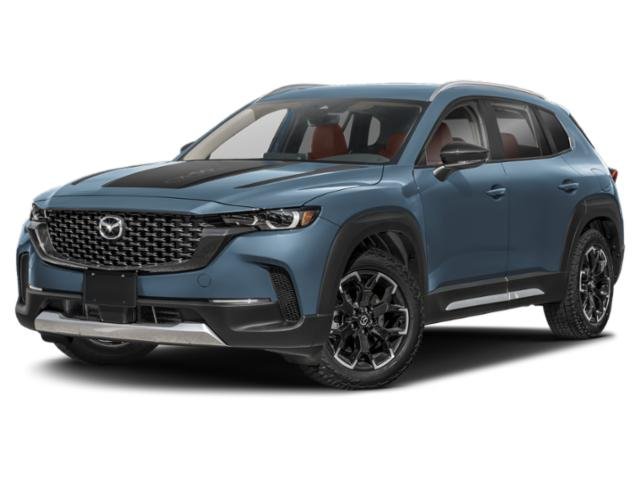
2025 Mazda CX-50 Hybrid Premium Plus and 2025 CX-50 Turbo Meridian Edition. Get the hybrid (above). It uses the same peppy drivetrain as the Toyota RAV4 Hybrid, with 219 horsepower from no less than three electric motors standard (for AWD) and a 2.5-liter four. This combination and a relatively light shell yields impressive 38 mpg combined fuel economy. You’ll want a regular CX-50 if you tow a lot, because it can handle 3,500 pounds (versus the hybrid’s 1,500). With the standard CX-50, you’re looking at 24 mpg in the city and 30 on the highway. The rating goes down to 23/29 (and the price goes up) if you opt for the 2.5 with twin-scroll supercharger. The hybrid, built in Huntsville, Alabama, starts at a reasonable $35,390. And the price is going to stay there, minus tariffs.


 Territorial Imperatives