First Drive: Lucid’s Gravity EV is an SUV with Better Ideas

The Gravity three-row SUV, based on the platform of the company’s awe-inspiring Air (but with all new part numbers!) is Lucid’s best hope to become a serious competitor to Tesla and the majors in the fast-paced world of EVs. Tariff watchers: It’s made in America (Arizona) but with 15 percent of its parts from Mexico (and a few, including the cupholders, from Canada!)

Yes it looks a little like a minivan, but don’t use that word! (Jim Motavalli all photos)

Lucid could become a port in the storm for customers fleeing Tesla because of Elon Musk’s antics, and an executive told me they are seeing a lot of defectors from that brand. Certainly, Lucid builds cars that meet the expectations of Tesla buyers, and in many cases exceed them. Lucid’s biggest challenge is price. The Gravity tested was as loaded as possible (with seven special-equipment packages) and the bottom line after a $94,900 MSRP was $127,150.

It’s fair to say that the Trump administration is no help with EVs. Trump campaigned to eliminate the $7,500 federal tax credit, and U.S. Senator John Barrasso (R-Wyoming), along with 14 other GOP senators, introduced bills earlier this year to make that a reality, and even add a $1,000 tax on EVs as a substitute for the taxes on gasoline other motorists pay. Foreign-built EVs will face a 25 percent tariff. And Lucid will have a challenge selling its EVs in Canada, where there’s now a 25 percent tariff both ways. Some parts travel across the Canadian or Mexican borders several times as they become finished assemblies.
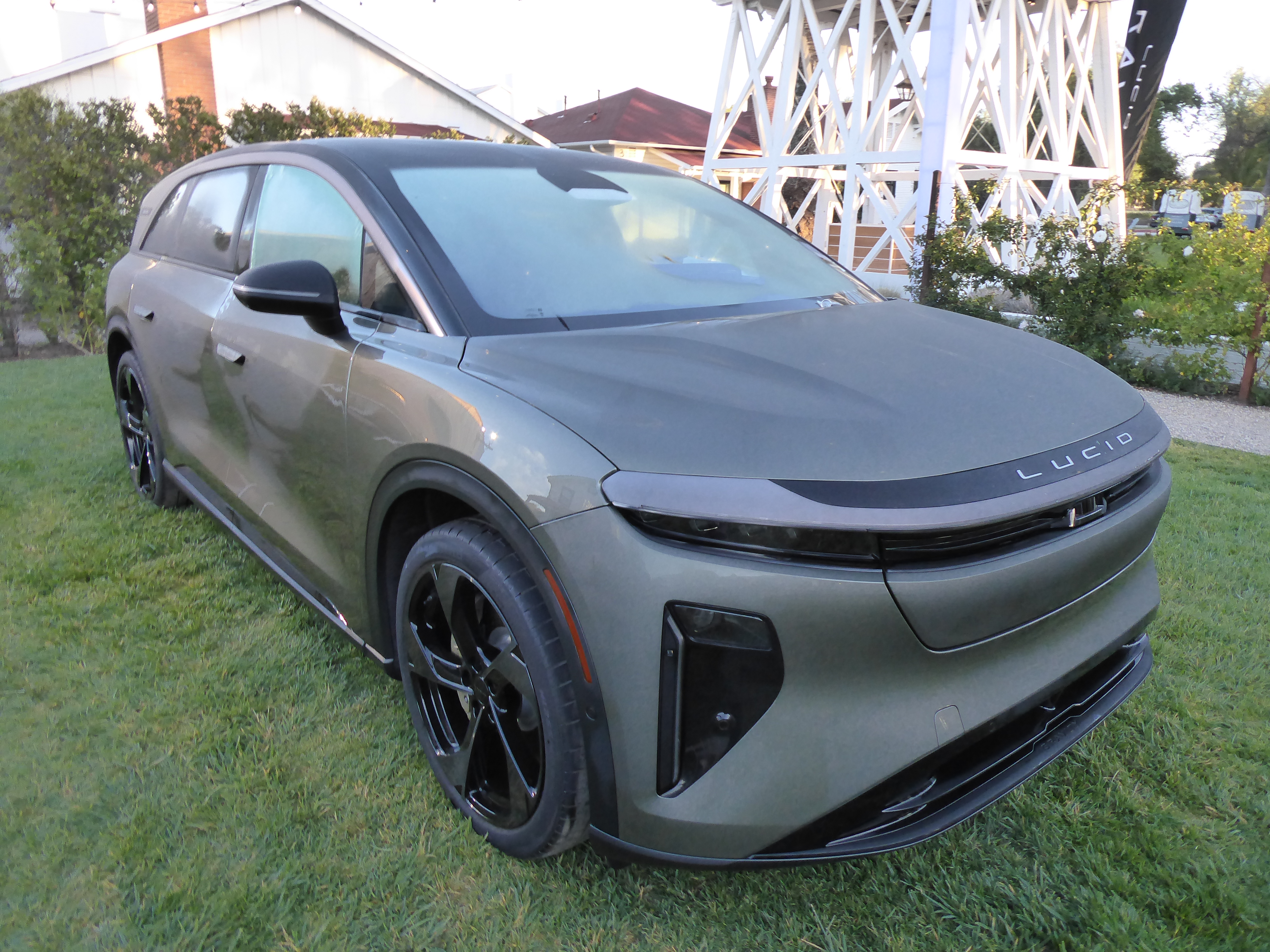
The three-row Gravity loses only a little range to the two-row (437 vs. 450 miles).

All this is happening as automakers build better and better EVs. Lucid started with the Air sedan, conceived at a time before total American SUV dominance. It’s making up for lost time with the Gravity, which David Lickfold, senior director of chassis and vehicle dynamics engineering, called a “seven-seat supercar” and Derek Jenkins, senior vice president of design and brand, called “tech forward and human centric.” The Gravity offers comfortable accommodations in all three rows, with better interior space (120 cubic feet for the two-row, 111 for the three) than the Mercedes EQS and BMW X7.
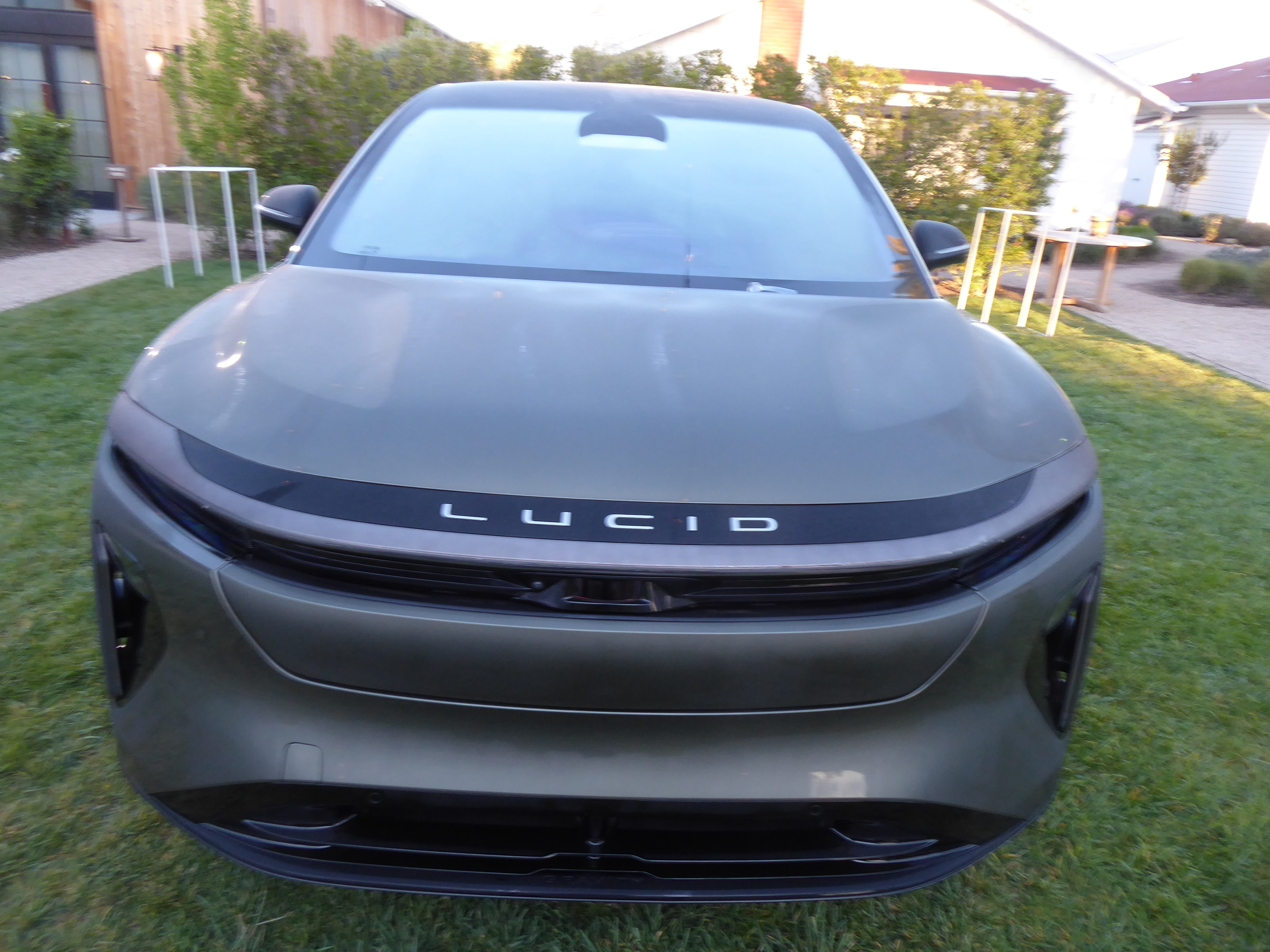
There’s a family resemblance to the Air sedan.

Range is 450 miles in the two-row version (437 in three-row) from a 123-kilowatt-hour battery pack (which sounds big but is smaller than the competition). It sits in a modified chassis with air suspension (standard on all Gravitys) and, available as part of a Dynamic Handling pack, three degrees of rear-wheel steering. The Gravity is quite efficient, able to deliver 3.6 miles of travel for each kilowatt-hour of battery. That compares to 2.82 miles for the Rivian R1S, 2.9 for the Mercedes EQS and 2.15 for the Cadillac Escalade IQ, said Eric Bach, a senior vice president for product and chief engineer.
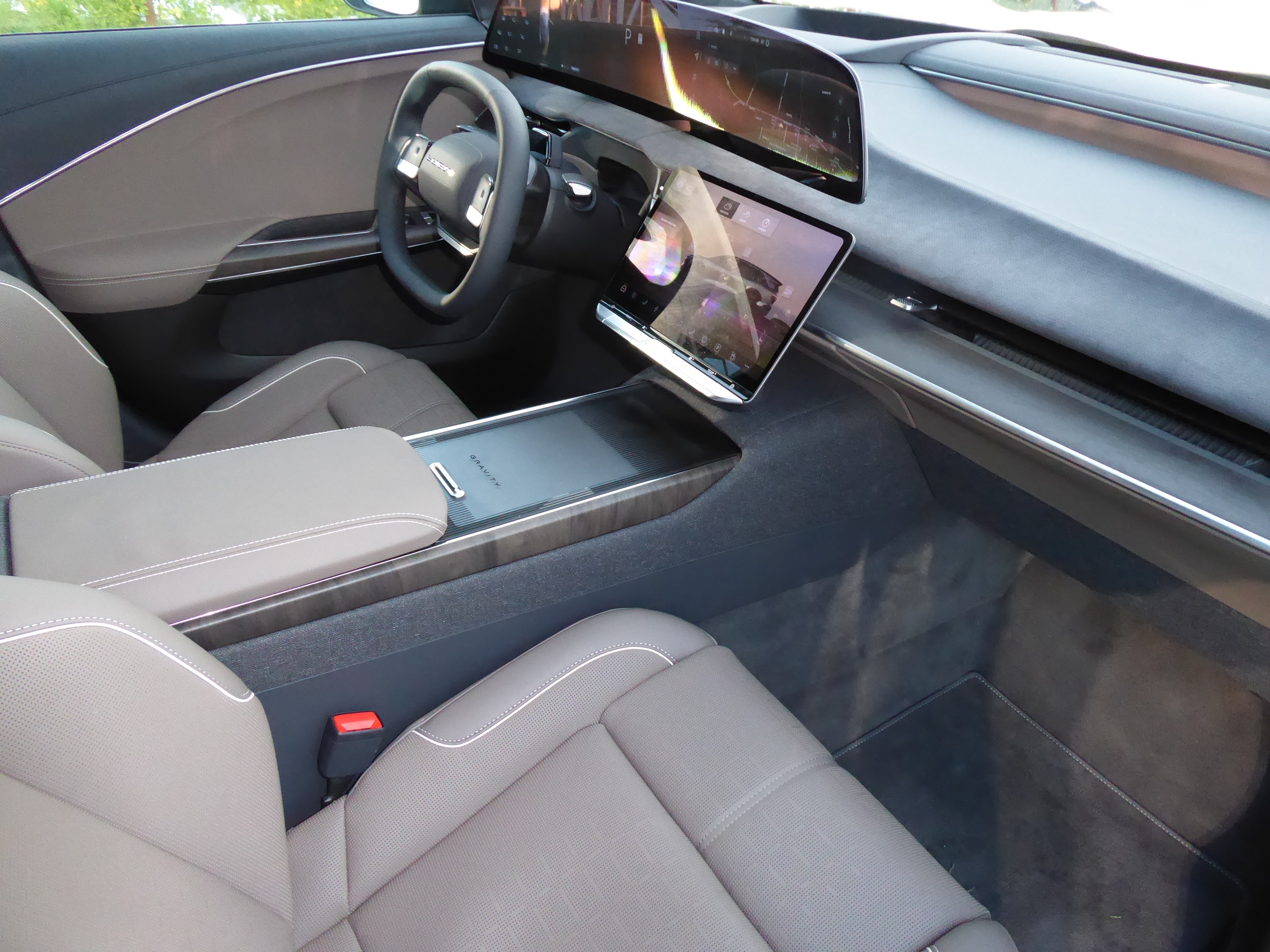
The interior uses reclaimed wood and carpets made from fishing net waste.

The Lucid can charge at 400 kilowatts with its 1,000-volt architecture, and add 200 miles in less than 11 seconds.  It has a built-in NACS port so can charge at Tesla Supercharger stations.

The Gravity will reach 60 mph in 3.4 seconds, and access 828 horsepower and 909 pound-feet of torque in the highest Sprint mode. In Smooth and Swift modes, it’s 650 horsepower.

The commodious trunk is complemented by a “frunk” up front.

On the road, the modes proved their worth. Smooth offered a cushioning ride and a quiet cabin a la the Audi Q8. Swift is chasing the Porsche Cayenne and optimizes steering, braking and suspension without increasing power, and Sprint—shadowing the highest setting of the DBX 707 from Aston Martin, with which Lucid has a partnership—is best for short bursts of big power. The Gravity can be left in Sprint mode, but that will cut into range.

The Gravity drives more like a supercar than an SUV. The roads around home base in Los Olivos, California (near Santa Barbara) are not conducive to speeding but passing was effortless and stretches of open road and no traffic allowed thrilling acceleration. The Gravity is fairly big, but corners with only very slight body lean in Sprint mode.
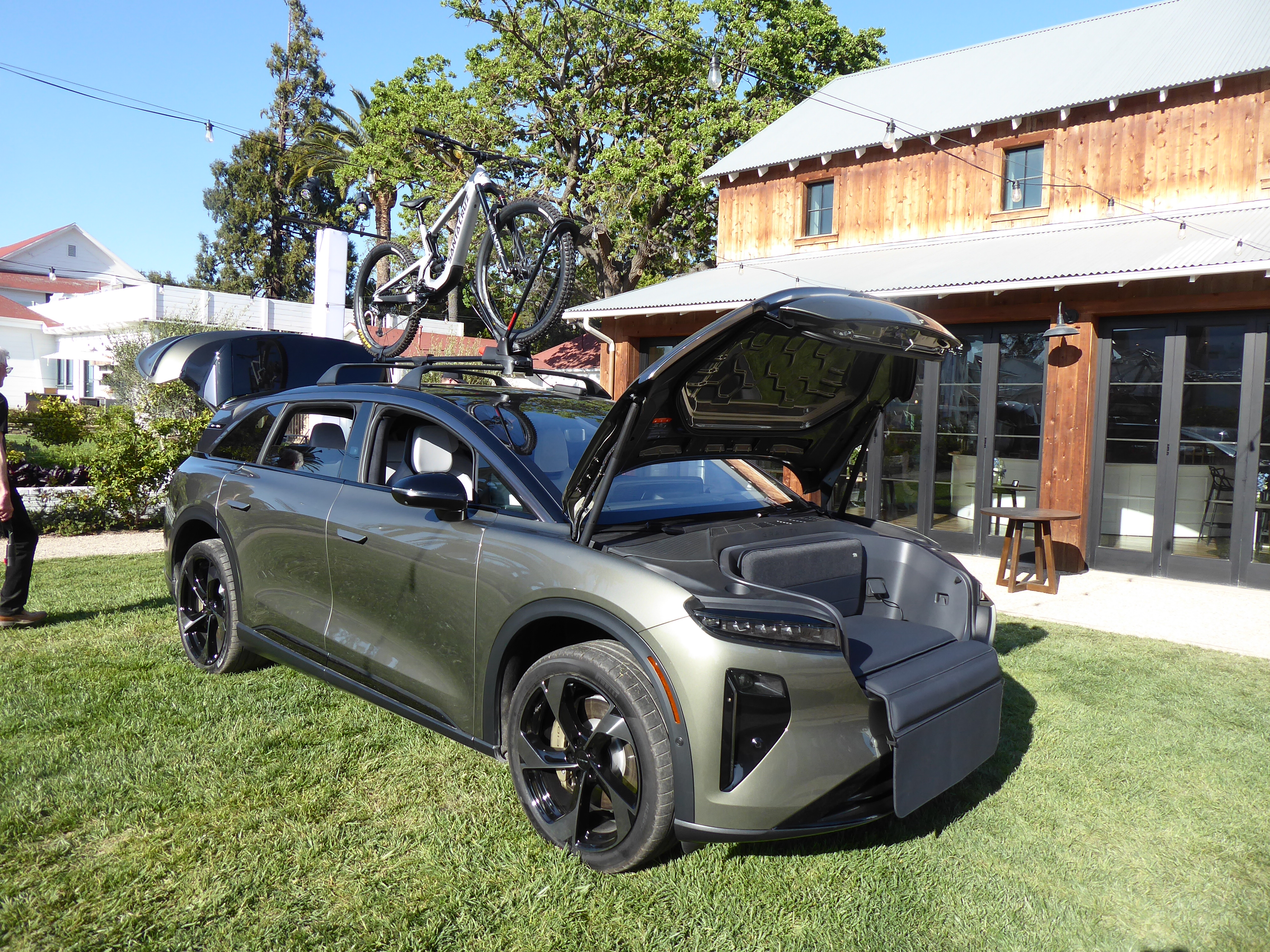
Off-road use and the outdoor life are encouraged.

The trip included a visit to an off-road course, where we had great fun turning off the traction control and doing some controlled drifts on loose dirt. The car enables full traction, partial traction and traction totally off, which is where the entertainment comes in. But on the road, it is highly recommended to leave the traction on.

Our Gravity was in Aurora Green with a Tahoe leather interior (a $4,200 option). Inside, the midcentury modern space is in good taste, with a slightly subdued ambiance. The dark reclaimed wood is muted and doesn’t pop out as actually being timber. Other sustainable touches include carpets fashioned from fishing-net waste and textiles that started out as recycled water bottles.

The picnic tables are useful, and evoke British luxury of a bygone era.

The heated and ventilated seats were comfortable on a longer-than-intended drive—we got lost. A very nice touch is the folding “convenience tables” in the second row, usually seen only in high-end British cars (Jaguar, Rolls, Bentley) of a certain vintage. This is where the Grey Poupon goes; they’re also called “picnic tables.”

The controls are fairly intuitive, and the physical volume control and HVAC are appreciated, though opening the glovebox should be pulling on a latch, not pushing a virtual button on one of the two screens (a curved 34-inch OLED touchscreen that’s part of the “Clearview Cockpit,” meaning you can see the dash display; and a second 12.6-inch unit in the center console). There’s a “Hey, Lucid” voice assistant. Jean-Philippe Gauthier, Lucid’s interim digital VP, called the Gravity a “software-defined vehicle,” with a host of features and updates that can be downloaded after purchase. Our tester lacked Apple CarPlay, but it’s getting the tech.
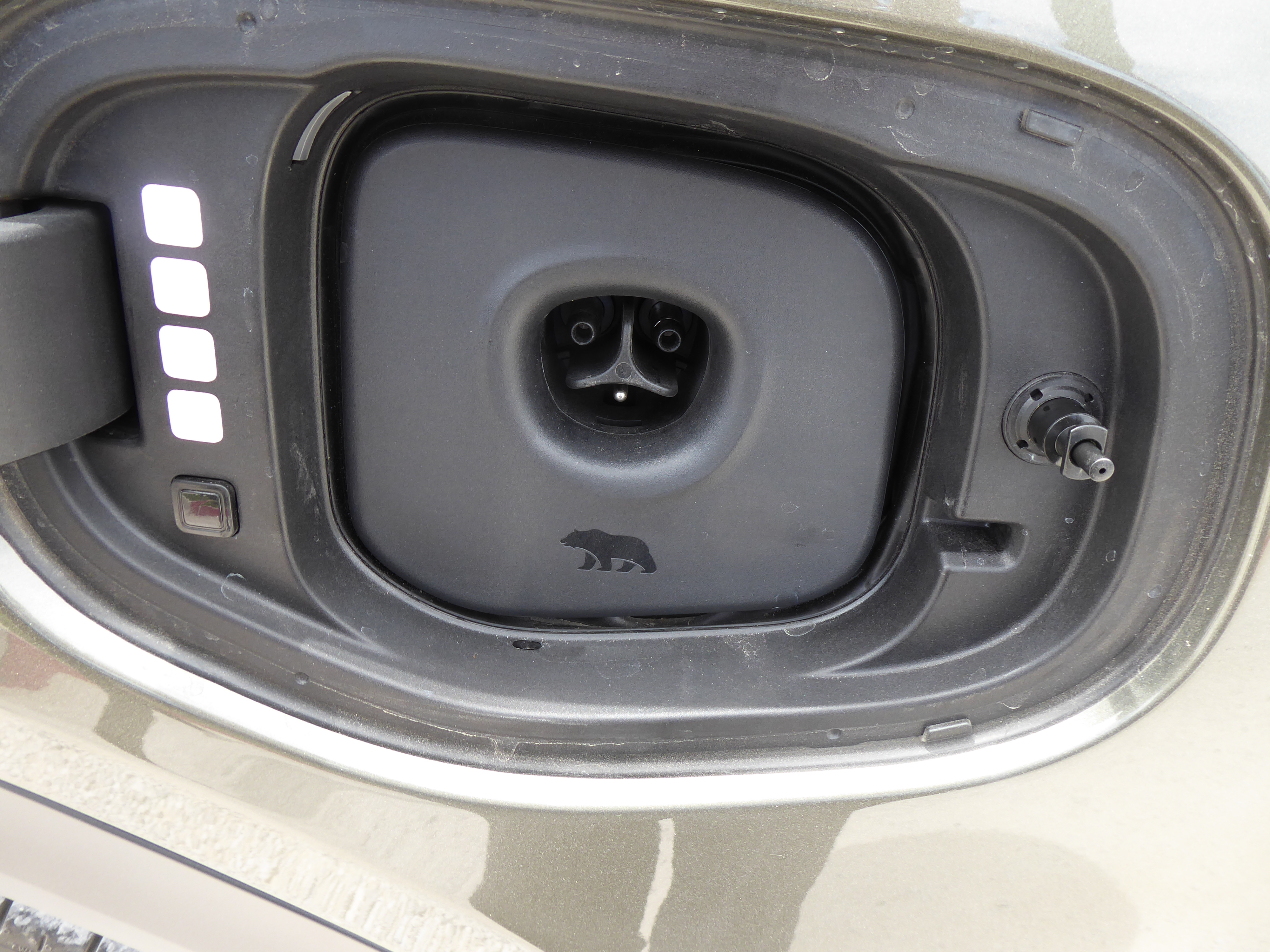
A NACS charging port enables the use of Tesla Superchargers. The bear symbol evokes California.

An interesting note is that the car is set up for eventual Level Three autonomy with the optional DreamDrive ADAS system, which includes a sensor suite, LiDAR, 12 external cameras and two external. On our test car, it was an included $6,750 option. You’d have to really be thinking ahead to order that. Lucid doesn’t do everything in-house: the brakes were co-developed with Brembo, the power steering Bosch, and the rear steering via ZF.

An innovation I like on the Gravity is so-called e-fuses, which do away with the physical stand-by that’s been with us since cars were new. No more putting a 20-amp fuse in a five-amp slot! Gauthier also said that e-fuses enable the shutting down of systems while they’re not in use, extending range.

On the drive we experienced some minor glitches with the built-in GPS and with hearing incoming phone calls, but these were pre-production prototypes.

The rear view will become familiar to owners of slower cars.

The Lucid Gravity is available for orders and deliveries are beginning now. Initially, only the higher $94,900 twin-motor Grand Touring trim is available. The $79,900 Lucid Gravity Touring will begin deliveries later this year.

Up next from Lucid is an as-yet unnamed midsized platform, on which three lower-priced variants are going to be built. Lickford told me that pricing will be around $50,000, and that availability will be mid-2026. Not much more is known, but an affordable Lucid would really help the company’s sales volume.

The Gravity is very likely to raise Lucid’s profile in the U.S., in Europe where it’s establishing a dealer network, and even in Saudi Arabia, where a factory is going up in a complex that also includes a Hyundai plant and CEER, the Saudi national car company. The Saudi Public Investment Fund (PIF) is Lucid’s principal backer. The Ayar Third Investment Company, an affiliate of the PIF, provided $1.5 billion to build the Gravity. Total investment in Lucid is $10 billion.

According to Reuters, Saudi Arabia has built an EV metals plant, and has a goal of producing 500,000 EVs per year by 2030. But as of last December, the country’s only auto plant (opened in 2023) had produced only 800 vehicles assembled from kits. Lucid will have to train a local workforce to get its Saudi plant up to full production. But a Middle East market is assured.
Exploring Michelin World, From New York to DC Via EV

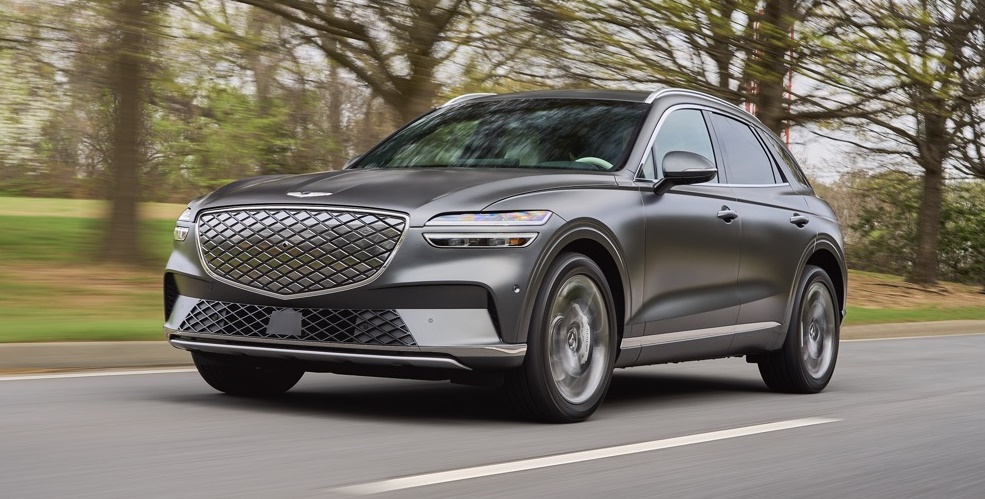
The premise was simple enough: My wife and I would drive a Genesis GV70 Electrified equipped with Michelin’s new CrossClimate2 all-season tires from New York City to Washington, D.C., stopping at Michelin-rated hotels and restaurants. Not a bad way to spend a weekend, right?

The Genesis GV70 Electrified was our steed for Michelin’s long-distance East Coast EV trip. (Genesis photo)

It proved to be quite an adventure December 6 to 8. The car, a big, luxurious and roomy SUV, arrived with approximately 170 miles of range. That was no problem for the first leg of the trip, 50 miles from Connecticut to the two-key Michelin Nine Orchard Hotel (a former bank, and quite opulent) in the Dimes Square neighborhood near Chinatown on the Lower East Side of Manhattan. When you’re driving an EV you notice other ones, and we couldn’t miss a CyberTruck ahead of us, and a Chevy Bolt too. We passed several rest areas, noting that the chargers there were often fully engaged.

A comfortable place to be. (Genesis photo)

The Delancey and Essex Municipal Garage was a 10-minute walk to the hotel, and it had EV charging. Luckily, one bay was free, and the cord reached. It was 240-volt Level Two, but that wasn’t a problem because we were leaving the car for the night. We loaded the EVConnect app and were charged in the morning, with a $5.05 bill, plus $50 for the parking.

Our room at 9 Orchard.

Dinner that night was at chef Dan Barber’s Family Meal at Blue Hill, with one Michelin star. This is the urban outpost of Blue Hill at Stone Barns, a farm-to-table enterprise in Tarrytown, New York. Many of the featured fresh vegetables come from the farm.

The second course at Family Meal at Blue Hill.

The four-course menu was set, without choices (except for allergies), but we were delighted with those selections. After a mushroom soup featuring apples, chestnuts and lovage, the second course may have been our favorite: a trio of yellowfin tuna, mackerel, and lobster dishes. The Barber wheat flatbread (made from grain grown especially for the restaurant) and the salad of brassicas with Morton lentils, sesame and sunflower impressed us as well. There were four wines, and an apple aperitif. We left in a not-your-average-Thanksgiving food coma. 

Breakfast at 9 Orchard.

After breakfast under the vaulted ceiling of the former bank lobby, we collected the car with 217 miles showing.

The vaulted ceiling at 9 Orchard. It’s a former bank.

It’s four hours to DC from New York, through New Jersey, Delaware and Maryland. We wanted to make it as far as we could, so stopped at the Chesapeake rest area in Maryland with only 50 miles of range left.

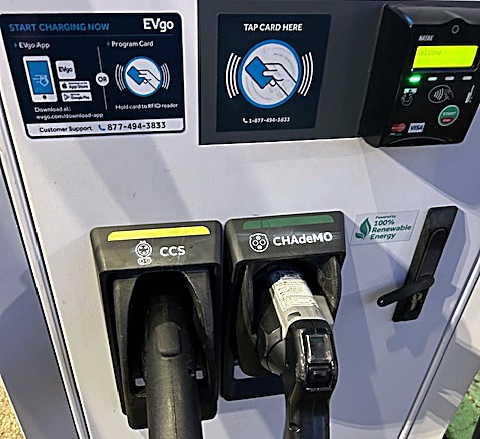
The Combined Charging System (CCS) chargers said Electric Vehicle Institute on them, and only one of four was occupied. At 47 kilowatts, it took about an hour to charge. We got coffee.

Our arrival into the wharf area of Washington, DC SW coincided with a boat parade on the Potomac, apparently a major attraction because it was vehicle gridlock and wall-to-wall people. It took 15 minutes to make a left turn. The self-parking garage had EV charging, one space remained, and the cord stretched. The charging, Level 2 (again, fine for overnight), was free, but the parking cost $60 for one night.

The Pendry Hotel at the Wharf, Washington, DC. (Pendry photo)

The Pendry hotel (with one Michelin key) in the popular Wharf shopping area along the river was hopping with life, but we had to move quickly to make our reservation at Rania, a highly inventive one-Michelin star Indian restaurant off Pennsylvania Avenue.

The travelers on the Mall in DC.

The walk, in the kind of chill that only the canyons of DC can generate, took us right through the historic Mall, with the Washington Monument on one side and the Capitol building on the other.

Delicacies at Rania.

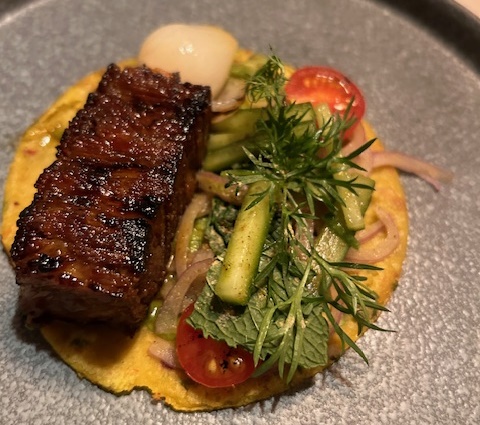
Again, it was a four-course menu, with two choices for each course. We love Indian food and found Rania’s approach to be really creative. Our favorite flavors were there, but the dishes featured many nouvelle cuisine innovations (so the menu told us). We ordered so we could sample everything. Some of our favorites included: shiso leaf chaat with white pea ragda and sorrel chutney, lamb belly kebab with chickpea cheela and kashumber; and the red pepper makhani that accompanied Tandoori squab. My wife chose her favorite Kingfisher beer, and I opted for Sauvignon Blanc to wash things down.

The apple dessert with ice cream at Rania.

We made a quick stop in Alexandria, Virginia to meet a friend in the morning, and hit the highway with a full charge. Our thinking was to get to New Jersey for lunch and a quick charge before heading home to Connecticut. This is where the plans went awry.

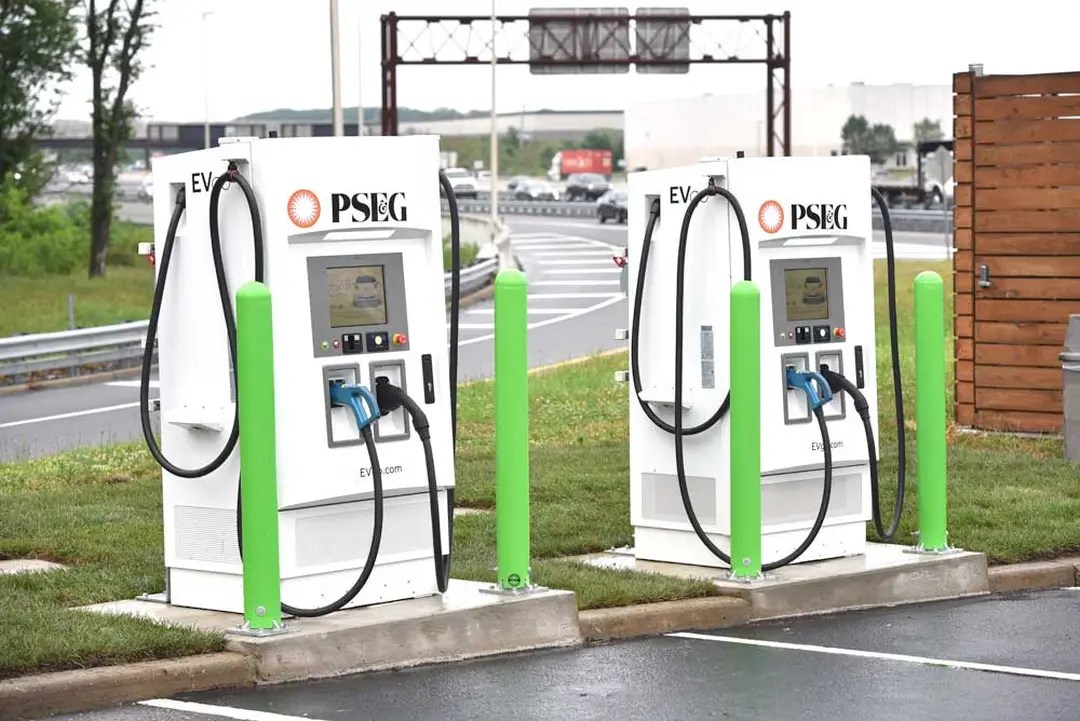
EVgo chargers at the Molly Pitcher rest area in Cranbury, New Jersey, circa 2017. (EVgo photo)

At the Joyce Kilmer rest area on the Jersey Turnpike, the CCS fast chargers were out of order. PlugShare informed us, “The chargers at this location are being removed as part of EVgo ReNew, a comprehensive maintenance program in which we are working to replace, upgrade, or in some cases retire stations over the coming year to enhance charger availability and build range confidence. We apologize for any inconvenience.” This was devastating news.

At the James Fenimore Cooper service area in Mount Laurel Township, the off-line CCS chargers had a very forbidding wire fence around them. But there were a multitude of available Tesla chargers, and we had a Lectron adapter that supposedly would allow us to use them. Unfortunately, the Tesla app refused to acknowledge that there were Superchargers nearby, and the charge was a no-go. Scanning the PlugShare app revealed not only that the other CCSs on the Turnpike were disabled, but that a lot of people were seething about it. Tesla drivers had no problem at all.

Teslas use the North American Charging Standard (NACS) plugs. A Genesis spokeswoman told me, “Our EVs will come standard with a NACS port starting with the 2026 model year. They will also have available CCS adapters.”

But that’s then. Our only choice in December 2024 was to get off the highway. In an odd coincidence, the nearest charger was at an office park where my wife once worked. It was five miles away. The ChargePoint charger there had a Chevy Bolt connected, but there were two wands and we connected the other one and got a charge going. Alas, it was Level 2 with an 11-hour charge time, and since we only had 50 miles of range at that point it wasn’t really a solution.

EVgo charging at the Quaker Bridge Mall. It worked, but there were long lines to get hooked up.

The app revealed that the Quaker Bridge Mall 10 miles away supposedly had two free Electrify America (EA) CCS chargers. It had them, all right, but not free. There were four, one was out of order, and three cars (Hyundai Ioniq 5, VW ID.4, Mustang Mach E) were waiting for the three that were working. There were EVgo chargers, too, but also with long lines.

It was going to be a long night. We waited in our car, not wanting to lose our place, and 45 minutes later we got our chance at one of the EA stations. The charge was fast, at 197 kilowatts, and we were delivered 67 kilowatt-hours of electricity in about 35 minutes, yielding a 97 percent charge and more than 250 miles of range. The catch was the price—56 cents per kilowatt-hour, resulting in a bill of $40.06. Wow, that’s like paying at the gas station. But we really wanted to get back on the road, so it was worth it.

A spokesman for the New Jersey Turnpike Authority, who preferred not to give his name, explained that the service areas are run by Apple Green, which had a contract until last January with EVgo to provide CCS charging. “But Apple Green decided it wanted to put in its own Level Three chargers and infrastructure, and that’s in the process now. We’re trying to get those chargers up!” He said that other states have issues too, adding that he encountered “40 Teslas lined up” at available chargers on a drive up the New York State Thruway.

We arrived back home at around 8:30 p.m., more than two hours later than we’d anticipated. Both the car and those CrossClimate2 tires, designed for SUVs, did well. The tires are “engineered EV-ready,” and while their wet braking and snow traction merits didn’t get tested, their reported longevity is appreciated. Some low-rolling resistance tires that are original equipment on EVs haven’t performed well, especially in terms of lifespan and grip in the wet. Consumer Reports recently rated the CrossClimate2 first among all-season SUV tires and projected that the 18-inchers would last 95,000 miles at a cost of 26.7 cents per mile. The Michelins were very quiet in operation, as was the car itself.

The Genesis Electrified GV70 is a contender among larger EVs, though the $75,750 bottom line for the 2025 model tested was a bit daunting. A $4,800 prestige package (Nappa leather, suede headliner, heated second row, heated steering wheel, Lexicon stereo) added $6,800 of that.

Some 483 horsepower is on tap via twin 160-kilowatt motors. Big as it is, The GV70 can sprint to 60 mph in 3.8 seconds. That was great for passing trucks, and overall the EV handled very well for a big vehicle. The GV70’s battery holds 77.4-kilowatt-hours. A few more miles of range wouldn’t have made much of a difference in the problems we encountered in New Jersey.

There are a few EVs, such as the Lucid Air Grand Touring (512 miles of range) that could have made the whole trip without stopping, but most EVs are around 300 and would need to stop at least once. And that’s where the peril lies. The highway charging network has made great strides in the last few years but—unlike the menus at Michelin-starred restaurants—it’s not a glorious experience yet.