
I told a friend I was going to hear some ragtime, and he said, “What, banjos and straw hats? Why would you want to listen to that corny stuff?” I tried to explain that ragtime is in at the foundation of jazz, and you need to understand the musical roots. But I wasn’t getting through.
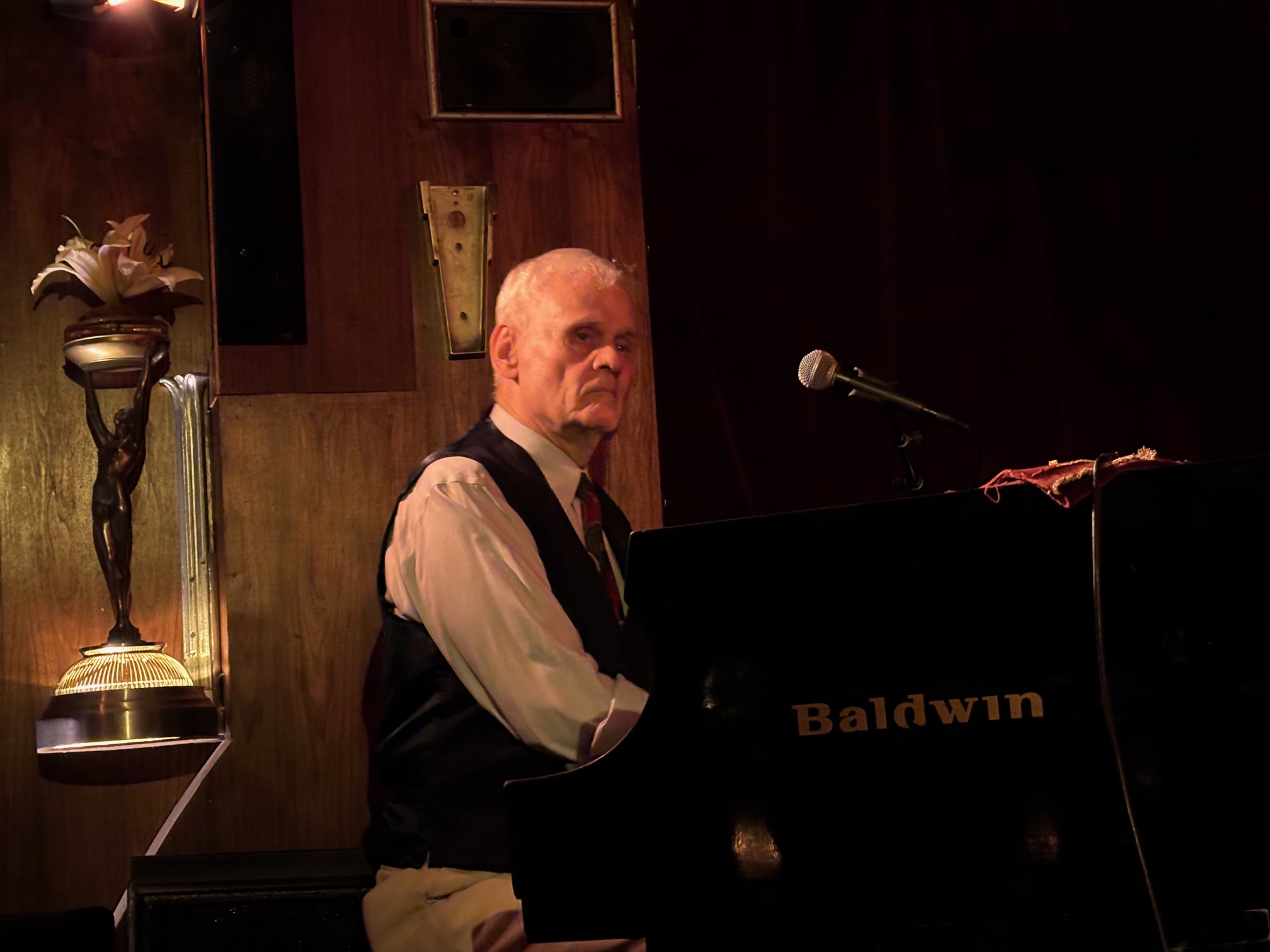
Terry Waldo and the Gotham City Band play ragtime and nothing but, and they’ve made it work in New York with regular gigs at Zinc Bar (where I saw them August 7, part of an ongoing first Wednesday gig) and quite frequently at Arthur’s Tavern, both downtown. It’s possible for the music to sound remote when heard on a scratchy recording from 1915, but live it’s an absolute delight.
Waldo, a protégé of the great Eubie Blake, is an historian as well as a ragtime pianist. He is the author of This is Ragtime, the definitive treatment, most recently republished in a 2009 Jazz at Lincoln Center Library Edition. In addition to making 70 albums of ragtime and traditional jazz, he hosted an NPR show that is now available in podcast form on Waldo’s website.
At Zinc, the band was Jim Fryer on trombone, Daniel Glass on drums, Dan Pearson on clarinet and alto sax, and Konstantin Gevondyan on trumpet. All of them are master ragtime players, and both Pearson and Govindan (as well as Waldo) did some singing. They work together a lot, and finished each other’s sentences.
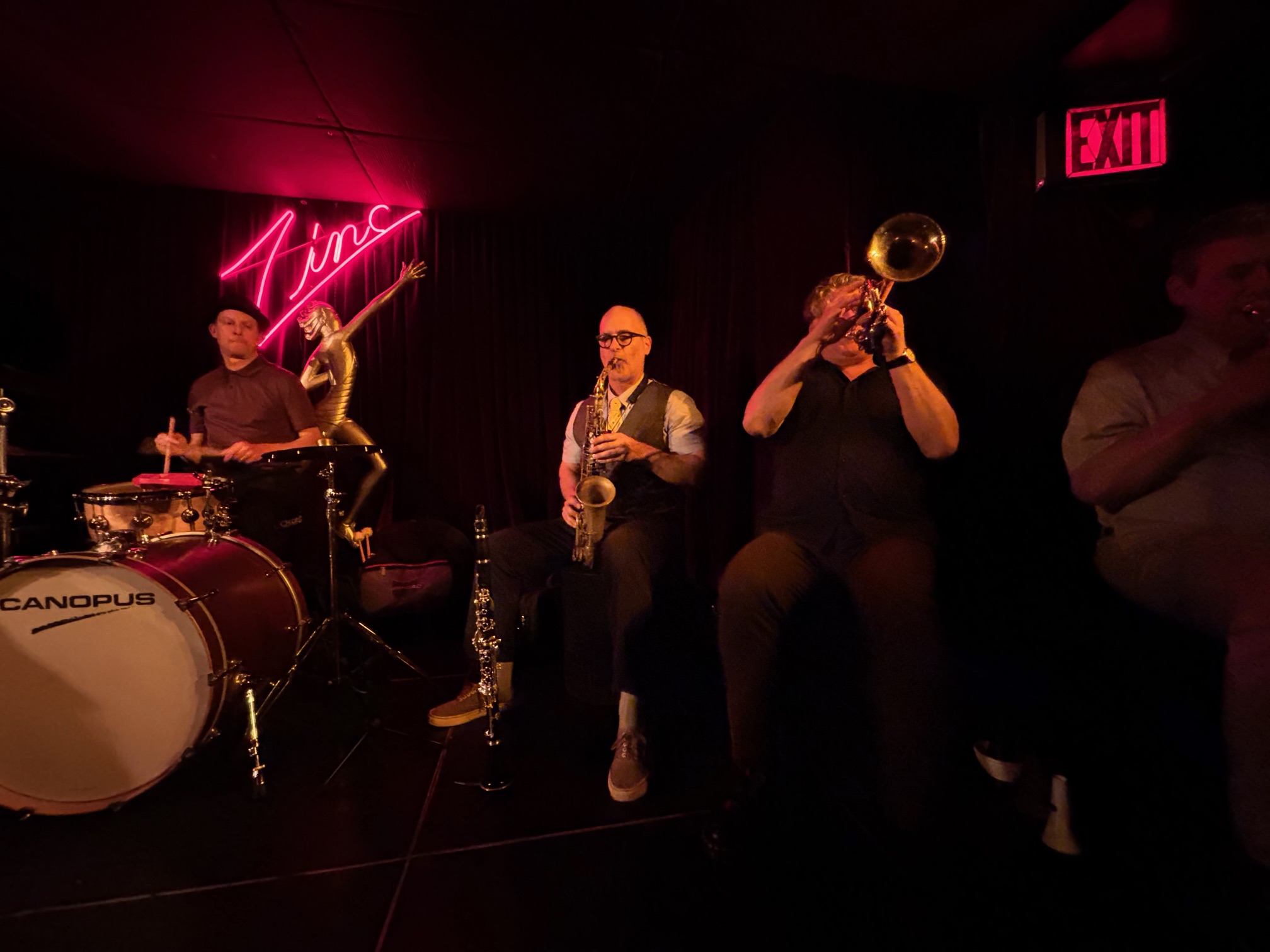
I asked for—and got—an opening of “Maple Leaf Rag.” A cliched choice, I know, but I wanted to hear it. It opened with Terry solo, and he played it with a lot of flourishes that I don’t always hear in renditions of this classic Scott Joplin tune. Then the band kicked in, expanding the palette. I didn’t realize, until Terry told me, that Joplin taught banjo and that early versions of his rags were often heard that way. But no banjo on stage, and no bass either. Acoustic basses were tough to record with early sound equipment, so sometimes a tuba replaced it.
Ragtime, at least the way these guys perform it, has plenty of hot solos, but the other horns feel free to chime in as support. “Oh By Jingo” is from 1919 (Albert Von Tilzer and Lew Brown, featured in the show Linger Longer Letty, and was a big Tin Pan Alley hit. David Bowie was inspired by it, and Hugh Laurie did a version. Waldo sang the novelty song with some vigor. Here, on video, is a Jelly Roll Morton song they did, called “Froggy Moore Rag”:
Next was W.C. Handy’s “Memphis Blues” from 1910, with Fryer singing. It has a great line about the trombone player moaning like “a sinner on Revival Day.” Fryer recalls the great Jack Teagarden, but the latter was bluesier.
Gevondyan was wonderful, chasing Louis Armstrong on trumpet and masterfully employing his cup mute. He sang “Sugar Blues” from 1919 (Clarence Williams/Lucy Fletcher) and didn’t sound anything like Louis, but still very nice. Glass should be cited, too, for his mastery of the snare.
Pearson sounded more in-period on his clarinet, but he was vastly entertaining on his more modern alto, too.
“Let’s Pray Against Somebody” is a Waldo original targeting religious hypocrisy, and reminiscent of the Fugs’ “Kill for Peace.” Or maybe Mark Twain’s “War Prayer,” which also points out the flip side of our heartfelt entreaties: “Help us to tear their soldiers to bloody shreds with our shells; help us to cover their smiling fields with the pale forms of their patriot dead.”
And so it went, through Jelly Roll Morton’s “Why?,” Kid Ory’s “Ory’s Creole Trombone,” a headlong “Shake it and Break It” via Kid Oliver, “My Melancholy Baby,” and more. They dredged up a crazy old song called “Minnie the Mermaid,” written by Bud DeSylvia in 1923. It wasn’t all that bad, containing the line, “Down among the corals, I lost my morals.”
It was a great night out in New York City. Don’t judge a whole genre until you hear it live, I say.
 Territorial Imperatives
Very nice!!!!!!!!!!!!!!!!