Six New Cars Show That Hybrids Rule

I’m firmly convinced that, despite rollbacks on the federal level and sluggish sales at the dealerships, the car industry is going electric, and I mean globally. In the first half of 2025, plug ins were between nine and 11.8 percent of U.S. new vehicle sales, depending on criteria. It’s a start, and those numbers are much higher in Europe and China (where they’re half of all new sales), and freakishly high in countries like Iceland and especially Norway (way over 90 percent of sales).

The timeline is going to be longer than initially believed, but the changeover is inevitable—dictated both by superior technology and climate imperatives. In the meantime, we are still seeing plenty of old-school internal-combustion cars and trucks hit the market, and here’s a sampling of vehicles I’ve recently sampled.
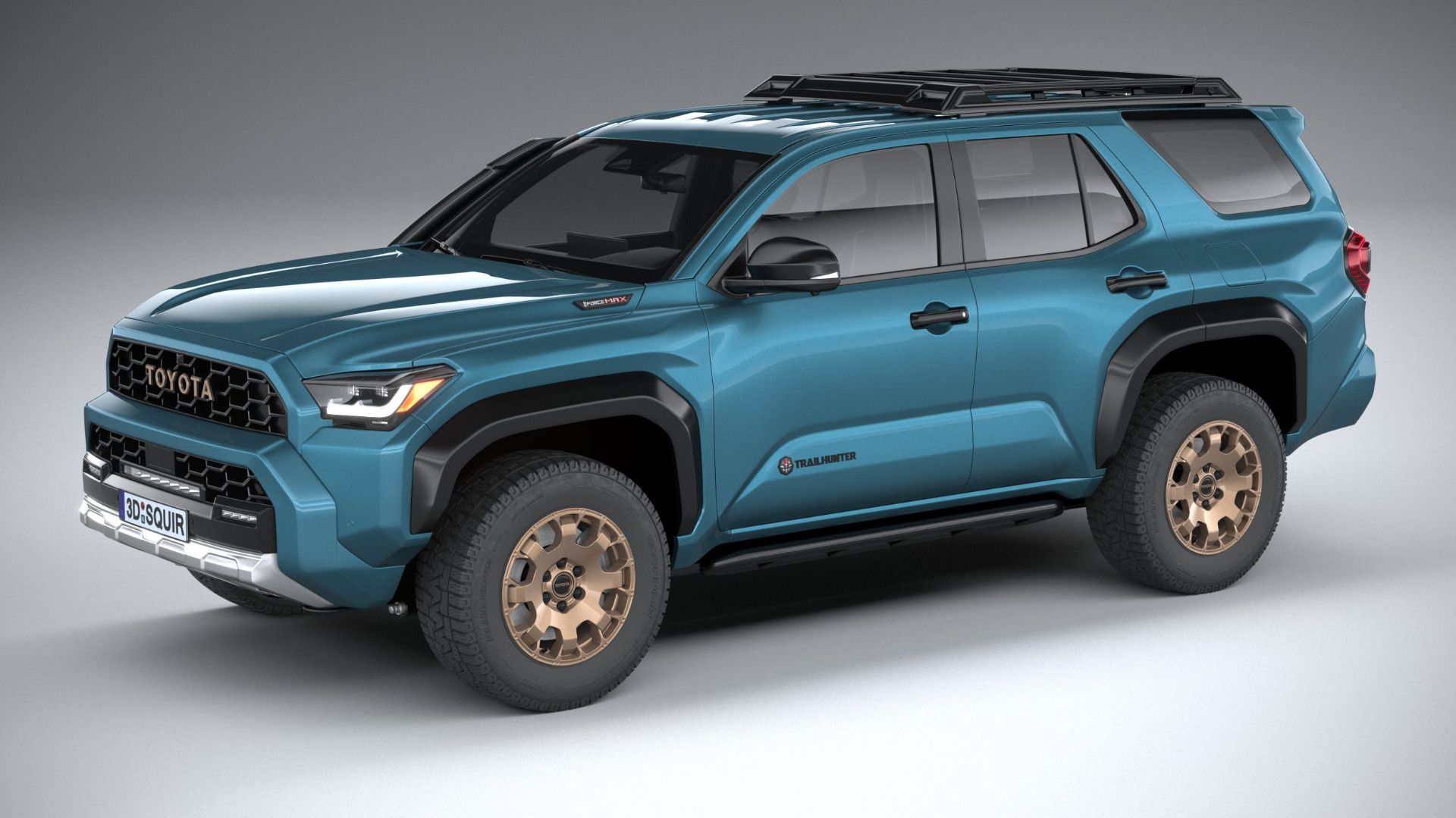
2025 Toyota 4Runner TrailHunter. Wow, going off road can get costly. My test 4Runner TrailHunter came in at $69,578 with such niceties as a digital key and a tow ball added to the $66,900 base price. And here’s the issue in a nutshell, via Car and Driver, “The 4Runner is tall and ungainly. It is inefficient in packaging and fuel economy, not quick, and expensive for its size. Toyota can’t build enough of them.”

I’ve driven both 2025 and 2026 versions of this vehicle, and it’s not the best ride around town. It’s bouncy and relatively rough riding, and you have to climb into it. The snorkel (excuse me, the High Mount Air Intake) might look cool, but c’mon—who’s fording streams? The bright side of this version of the 4Runner is the 2.4-liter turbo four-cylinder hybrid engine that gets a heavy, non-aerodynamic vehicle to 23 mpg city/24 highway. Still terrible, though, considering that Toyota also makes the Prius that gets up to 57 mpg in 2026 guise. The automaker has gussied up this off-roader with a comfortable interior, heated seats and wheel, but you’ll still be roughing it, whether you go off road or not. The same things that make it good on mountain treks are what makes it difficult on pavement—body on frame construction (expect squeaks down the road) a live rear axle, huge knobby tires on 18-inch wheels.

2025 Toyota Grand Highlander Hybrid Max Platinum. This Highlander (another ultra-popular platform from Toyota) is available with two entirely different hybrid engines, a base 245-horsepower unit and a 362-horsepower Hybrid Max in the Platinum trim you probably don’t need. In LE and XLE you get the base engine, but especially in XLE it’s very well equipped (heated front seats, 12.3-inch touchscreen, power tailgate, wireless charging pad)—and gets 36 mpg combined. With the big engine as tested you get a 5.6-second zero to 60 time (instead of 7.8 seconds) but, really, is that important to your daily life or self-esteem? The thing was snappy, but not exactly a sports car. More relevant is the fuel economy loss with Hybrid Max—from 36/32 to 26/27. The non-hybrid Grand Highlander actually did better in some tests, at 29 combined. Plus, the Platinum ($60,270) is hugely more expensive than the XLE ($46,875). I hope all this is convincing.

2025 Audi S5 Coupe Prestige. Prestige is definitely the word here, and you pay for it, in this case a bottom line of $73,345. That buys a very, very capable and sophisticated car, powered by a three-liter 362-horsepower turbocharged V-6 engine with a seven-speed dual-clutch automatic and quattro AWD.

This is more car than I actually need or could possibly justify buying, but that’s not to say I didn’t love my week in it. What’s not to like? It’s attractive, fast, comfortable and (amazingly enough after all the SUVs) a grand touring car! That means it’s set up for long hauls and smooths out the highway for you. At 60 mph and above it’s an effortless drive. The standard Sportback rear gives lots of luggage space under the hatch.

The central 14.5-inch infotainment screen is visually appealing. The Prestige line gets you the quite nice upgraded digital gauge cluster, a head-up display, a 360-degree camera, and also confusing and unnecessary on-screen climate controls. Philistine that I am I get excited when I see a Bang & Olufsen audio system, and I think I actually can tell they sound better than, say, a boombox from Walmart.
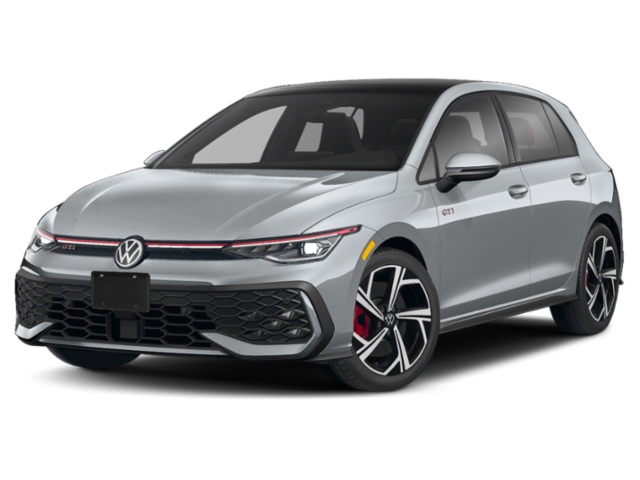
2025 Volkswagen Golf GTI 2.0T SE. The big news about the “pocket rocket” GTI is that VW has gotten rid of the manual transmission option, perhaps an inevitability as manuals are even disappearing at Porsche and Ferrari. Honestly, half the fun of owning these cars is shifting them, but VW is bowing the sheer inability of the driving public to drive stick.

This version is an update of the GTI, not a major model change. In place of the manual is a seven-speed dual-clutch automatic, with an “S” mode for faster shifts. You’re stirring a two-liter, four-cylinder turbo engine with 241 horsepower and 273 pound-feet of torque, held over from previous model years. Fuel economy at 27 mpg combined could be better, but a 5.6-second zero to 60 time is impressive. There are some new colors and badges and new 19-inch wheels. The GTI is still fun to drive but, for me, not quite as much fun. Prices range from $33 to $42,000. The SE tested is $38,645.
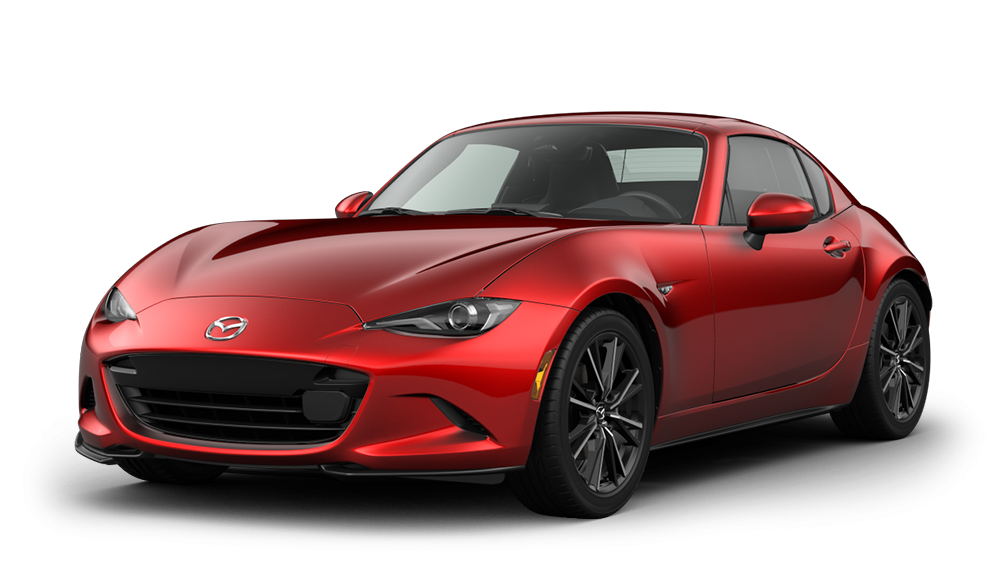
2025 Mazda MX-5 Miata RF Grand Touring. As a Miata owner myself, I (and many of my auto journalist colleagues) don’t have to be sold on the model’s virtues. It is, still, the only real choice for a fun to drive, inexpensive, easy to maintain two-seat convertible. But it’s gotten more sophisticated. Mine’s a 1999, and even that one has far more creature comforts than the NA first seen in 1989.

The RF has a power retractable top, that works very well in practice. That’s a Miata tradition. The early ones have a top that you just throw back, compared to the complicated, leaky Cub Scout tents seen on the British sports cars the Miata blew out of the water.

The Miata still starts around $30,000, and the engine in all Miata is still a modest four-cylinder than in two-liter four here produces 181 horsepower. Yes, you can still go manual with a six-speed box. These new ones are even more responsive and good handling than my ’99, thanks to very direct steering.

The well-appointed RF Grand Touring is near the top of the line, and costs $38,785. Fuel economy at 29 combined isn’t bad, but requiring premium gas is a negative. The Miata may not be the best car for 60-mile commutes—it’s a bit small for that—but as a weekend car it’s peerless. It’s too bad more people don’t think so. Mazda sold just 8,103 Miatas in the U.S. in 2024, a minor downward trend from 2023.

2025 Toyota Crown Nightshade Edition. I’d like to think that cars like the long-Japan-only Crown can find a place in the American market. Toyota loves hybrids, makes great ones, and in this case stuffs its 2.5-liter driveline (236 combined horsepower) into a well-equipped sedan that retails, in this case, for $48,765. Leave the options list alone—the test car had a $165 “side puddle lamp” you probably don’t need.

In some ways the Crown is like an entry-level Lexus, which may have you scratching your head about the need for it, but under either badge it’s a nice car. The eCVT transmission takes a little getting used to, but it’s a factor in the 41 mpg combined (42 city/41 highway) fuel economy.

I liked the 11-speaker JBL sound system, the leather-trimmed heated seats (front and rear), the matte black 21-inch wheels, and the panoramic glass roof. Really, it’s a good example of the state-of-the-art sedan in 2025. The trick is getting the public to care about sedans again.
The New EVs are Great, but we Need More Long-Range, Affordable Choices

It’s wonderful to be receiving more and more EVs as test cars, so let’s start with looking at a few of those that ended up being parked in my driveway. But EVs are still only about 10 percent of the U.S. market, so we’ll go on the internal-combustion pathways in the upcoming Part Two of this Territorial Imperatives posting.

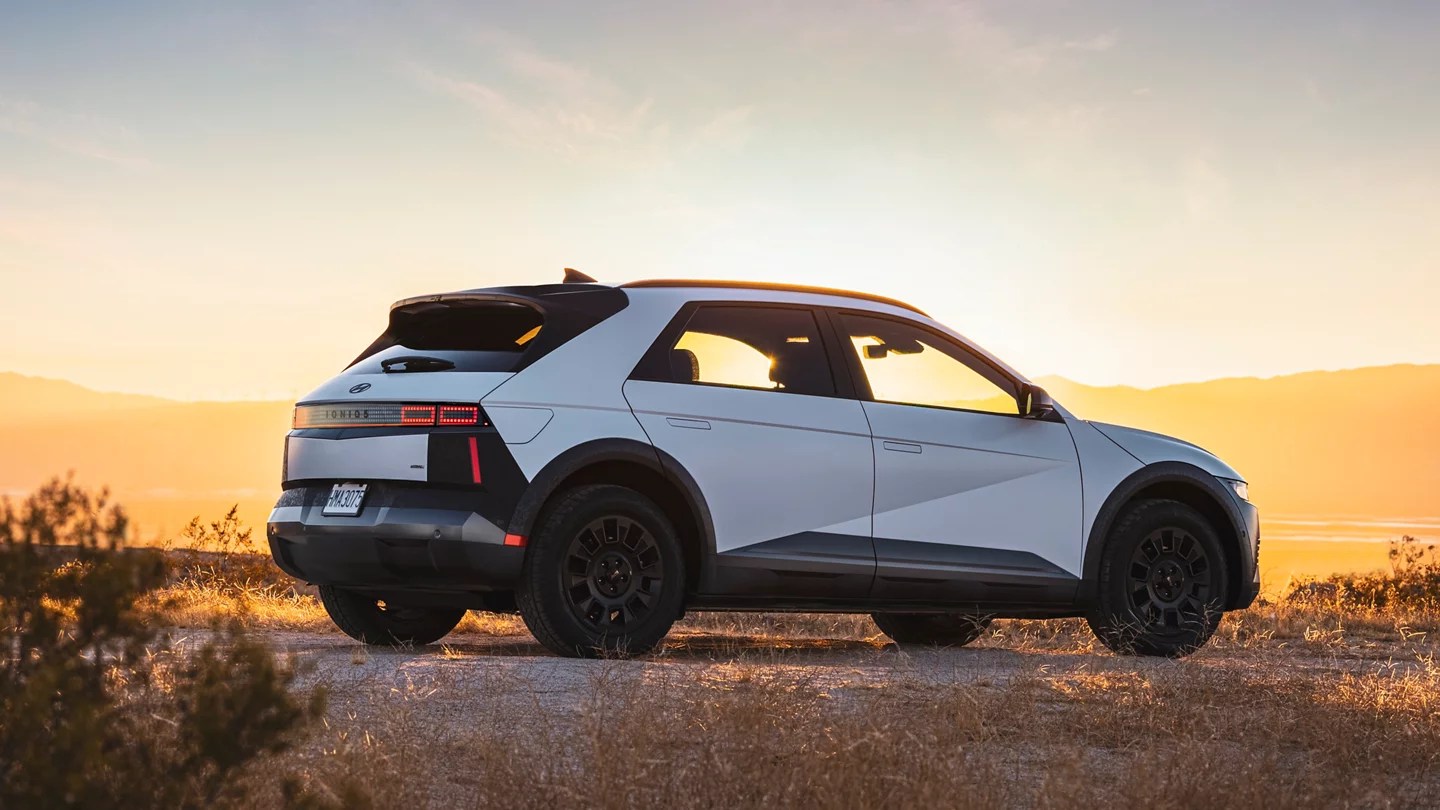
2025 Hyundai IONIQ 5 XRT. Americans eat a lot of junk food, make a bunch of bad financial decisions, go down conspiracy rabbit holes…and really, really like to think they will be heading off-road. That means even EVs have to at least put on a good show in that department, despite the fact that most of the cars never leave pavement.

The 5 is a truly great entry, and now well-established as one of the more popular non-Tesla EVs. In this trim it has a whopping 320 horsepower and AWD from two motors. The off-road is manifest in a slightly higher ground clearance and 18-inch all-terrain tires. The interior and the bumpers are ruggedized. The driver can choose from snow, mud or sand modes. All of this starts at $56,965. If you really go off the road, you may want to pay that hefty price, but for most of us there are better and cheaper iterations of this car, including with one motor. This version’s range is slightly down to 259 miles, compared to the more on-pavement SEL AWD with 266.

The more affordable 2025 5s start at $35,000 for the SE Standard Range model, increase to $37,500 for the SE RWD and continue with the SEL RWD at $39,800. Let me be clear, this is an excellent selection for actually selling EVs in America right now. Hyundai sold 19,092 Ioniq 5s in the U.S. in the first half of 2025. And it’s working. The Ioniq 5 is one of the five non-Tesla EV bestsellers in the U.S. right now.

The top seller is one of my favorites, the Chevy Equinox EV, which is affordable and long-range. More than 50,000 have been sold this year so far. Next is the Ford F-150 Lightning at 33,510, followed by the Ioniq 5, (another good one) the Mustang Mach-E with 21,785 sold, and the Chevy Blazer at 12,736.

2025 Volkswagen ID.Buzz Pro S Plus. $66,040. That was the price as-equipped for this long-awaited electric minivan. VW could have had a home run with the ID.Buzz if it a) released it about four years earlier (the design was done); and b) offered it with two rows and a much more modest price. Instead, the model was long-delayed and offered stateside as a three-row only. The thinking is plain—Americans do like three-row SUVs—but if there’s one thing this vehicle isn’t, it’s an SUV. Unlike most of our citizenry, I love minivans, and I really liked this car. But I found myself apologizing for it being both too big and too expensive. Ah well. VW can make it right by bringing over some of the models it already offers in Europe.

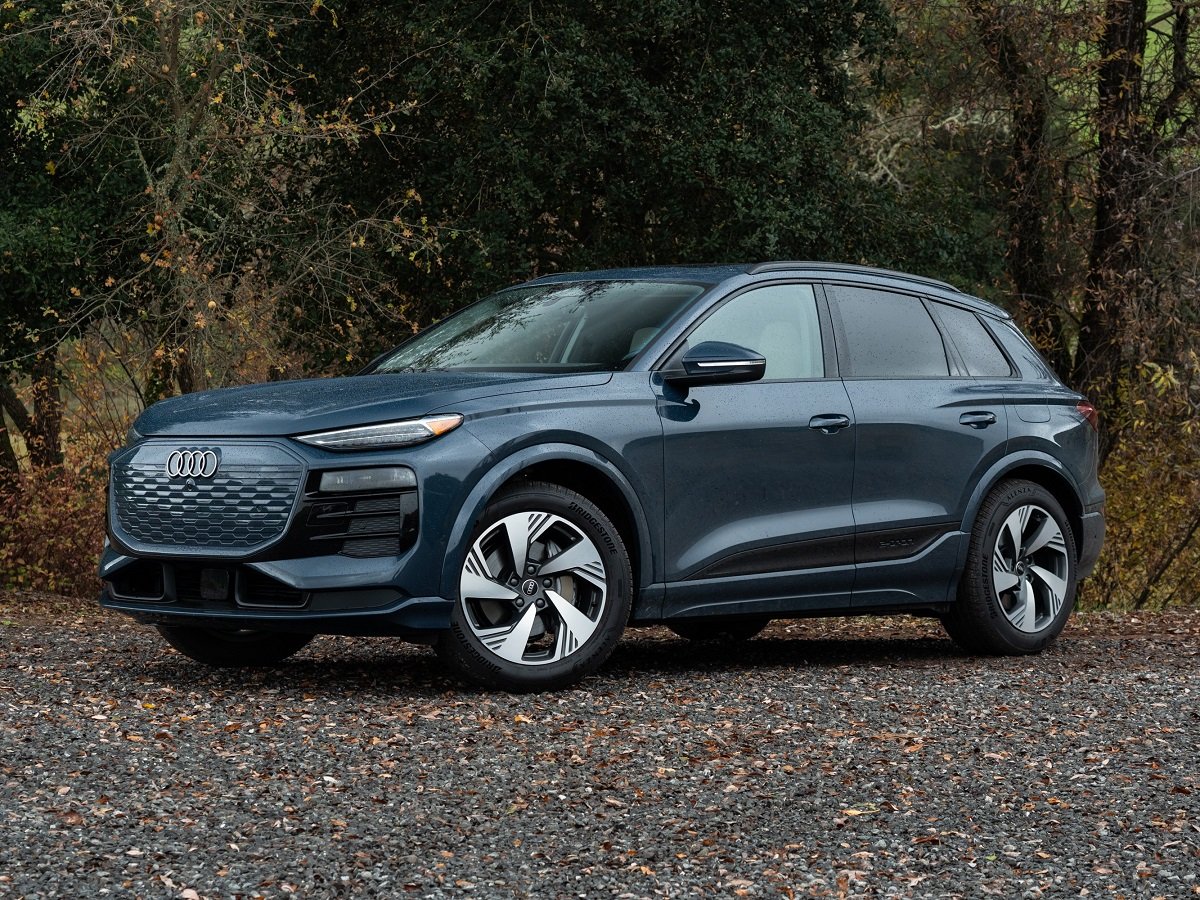
2025 Audi Q6 e-tron Prestige. The Q6 I drove in the northern California wine country is a fast and stylish electric EV, offering 322 horsepower and a 6.3-second zero to 60 time in just the base single-motor rear-drive form. Even that one is pricey at $63,800. If you want the Q6 e-tron quattro, the price goes up (not a huge amount) to $65,800. You get 456 peak horsepower, and zero to 60 in 4.9 seconds. Again, there’s a range penalty. The base version offers a best-ever from Audi of 321 miles, and the quattro runs out of juice after 307. Audi has the luxury EV base covered. It would be great if the company developed a capable EV they could sell in the low $40s. Right now, the cheapest Audi EV is the Q4 e-tron, starting at $49,800 and going up from there.

2025 Volvo EX30 Twin Motor Performance AWD Ultra and EX40 Twin Motor Ultra. Volvo and Polestar (both owned by Chinese automaker Geely) are all-in when it comes to EVs, and the cars tend to share platforms if not styling. Volvo’s EVs are stylish in a Scandinavian modern way, and also a bit pricey. The Ultra tested here has a 422-horsepower, 400-pound-foot dual motor setup, and it’s quite sprightly at 3.4 seconds to 60. There are a ton of nice features, including built-in Google infotainment, a killer Harmon Kardon infotainment system, sustainable materials used throughout (including flax and recycled plastics), and a very capable automated parking system. The range is up to 253 miles, and it can fast charge in 26.5 minutes. You can tow 2,000 pounds.

I could definitely live, every day, with this Volvo, but I don’t need that kind of acceleration or that much weight, and I want the maximum available range. The Twin Motor Performance starts at $46,195, despite plans for a cheaper single-motor version that was dropped for the American market. That EX30 would have been in the mid-$30s, and I’d have definitely considered buying one. Ah well.

The New Kia Telluride is Designed and Built in America, for Americans

Considering it has been around since 2019 (as a 2020) model, the Kia Telluride did remarkably well in 2024, selling 115,504 units in the U.S. Sure, Kia is a Korean brand, but the Telluride was conceived and designed for the U.S. market, and is built in Georgia, so it’s fitting that the second-generation model was styled in California, where Kia has its American design center. 

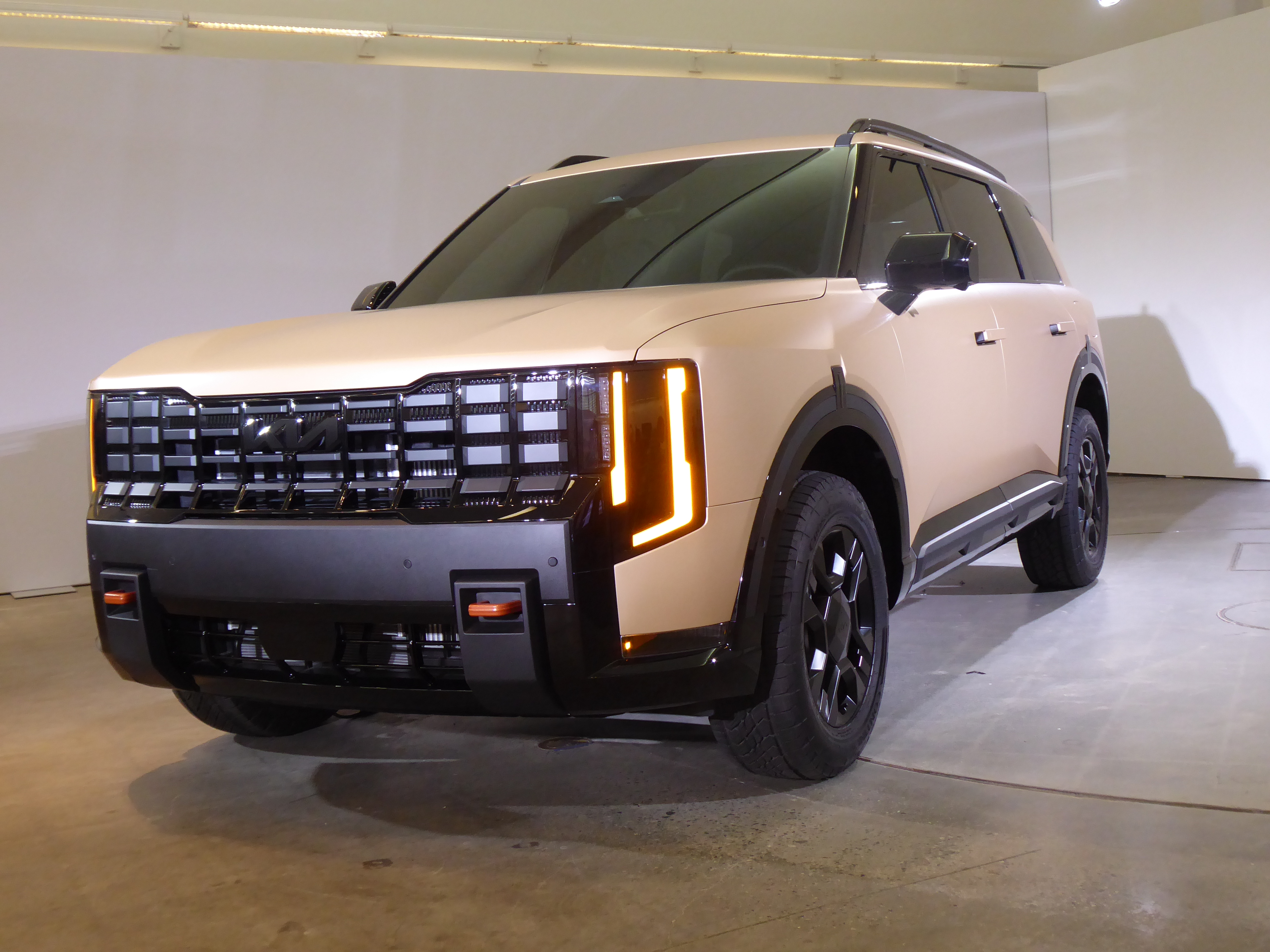
The Telluride has been a bestseller, and it’s betting big on the update. (Jim Motavalli photo)

On October 28, Kia brought journalists to the Irvine, California center for a closeup look at the evolution of the new model. “The first Telluride had the right combination of elements to turn it into a very in-demand SUV,” said Sean Yoon, president and CEO of Kia North America. Details of the powertrain, price and other rather important details won’t be divulged until the Los Angeles Auto Show November 20.

When automakers sell huge numbers of a boxy SUV, they don’t want to mess with the formula all that much. “How do you follow up on a vehicle that meant so much to so many people,” said Tom Kearns, senior chief designer and head of the center. “It was daunting.” The box is still there, but the new Telluride has some design elements you’ll notice.

The Telluride has a big presence. Note new design element on the top of the wheel wells! (Jim Motavalli photo)

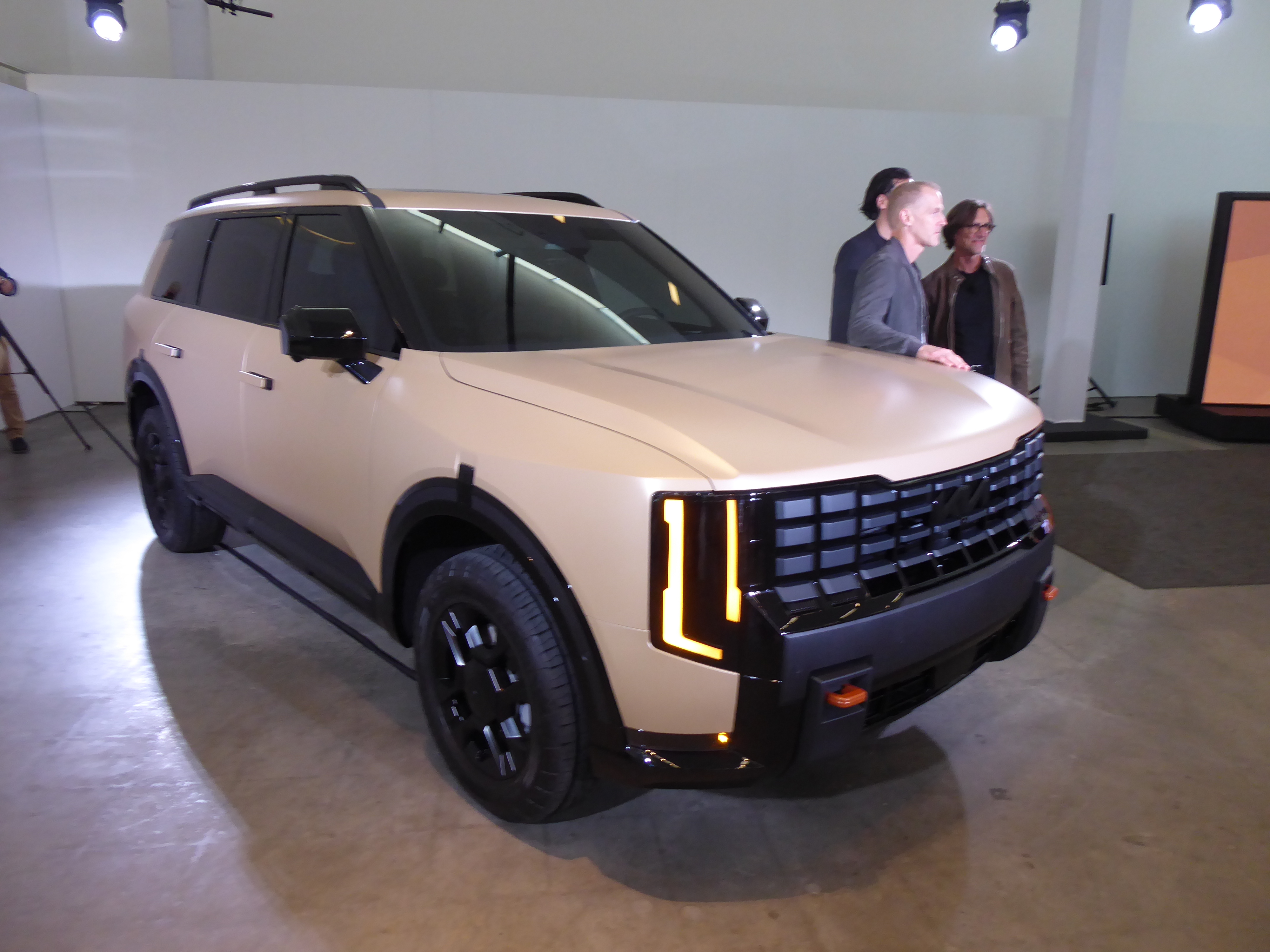
Kearns said one of the key elements was to “do something that makes you nervous.” Maybe on the Telluride that’s the bold, black, high-gloss grille with raised squares where you’d expect the headlights to be (they’re actually almost hidden at the sides), or the notches on top of each wheelarch that are intended to look like an attachment point (they’re not). And then there’s the wavy, non-wrap-around taillights with body color between the two elements. Flush door handles offer some aerodynamic benefit, but a lot of companies are doing those now.

Tom Kearns says a design inspiration was to “do something that makes you nervous.” (Jim Motavalli photo)

Kia showed the Telluride in top-of-the-line X-Pro form, with an aggressive off-road theme. There are four prominent tow hooks. The new Telluride is bigger, two inches so in length, and three in the wheelbase, with the aim of delivering a roomier three-row interior. The rear two rows seemed comfortable enough, with adequate head and legroom, though that was an impression from a static sit.

“The challenge was we had a very popular product we wanted to improve,” said Kurt Kahl, a chief designer on the Telluride. “We had a formula, but felt there were improvements to be made. And the result was a modern design that, particularly on the X-Pro, keeps the rugged attributes that our customers have loved.” He said California won the competition to deliver the new Telluride design, but Kia design studios around the world contributed to it. A guide, he said, was Kia’s “Opposites United” design philosophy,

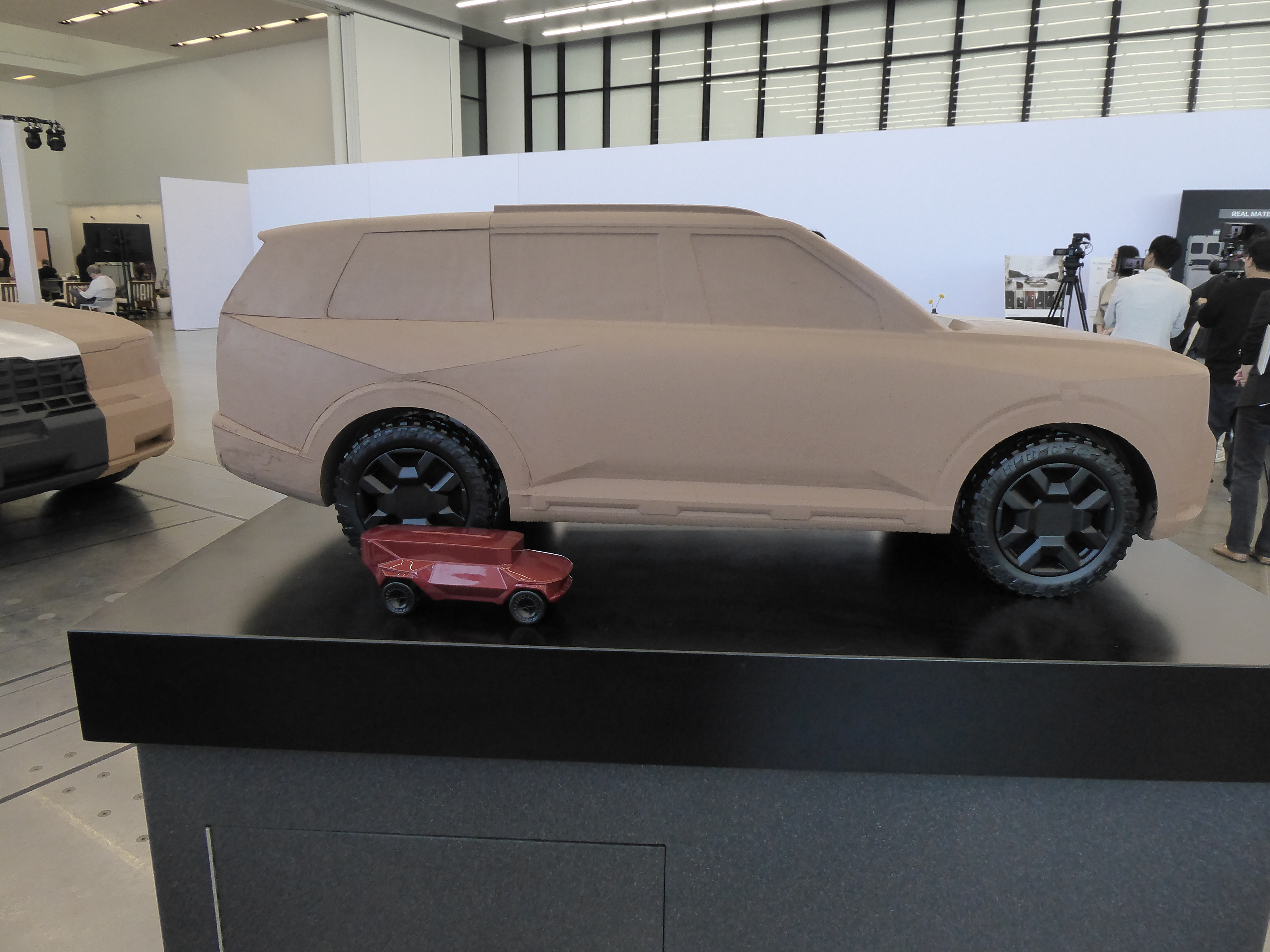
The Telluride as a clay model in the design center. (Jim Motavalli photo)

Kia is betting big on the new Telluride. James Bell, head of communications for Kia North America, said the original model’s sales “grew every year since the launch,” unusual as cars age. And, he added, Kia is increasing capacity at its Georgia plant to meet the demand that it’s sure will be there.

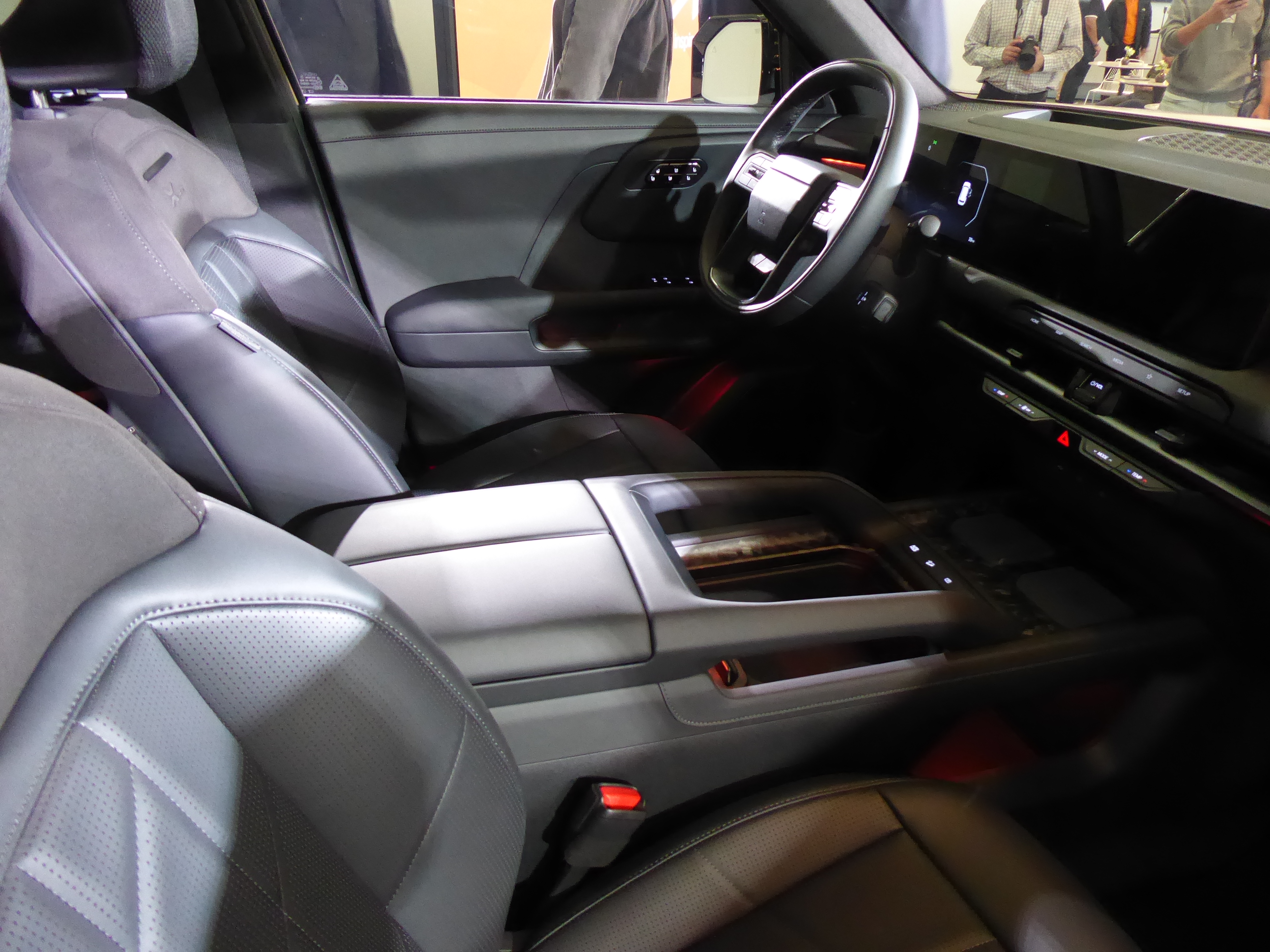
Inside the Telluride. (Jim Motavalli photo)

In the room with the new Telluride were some small-scale models and full-sized clays that showed the design evolving. And a reveal of color combinations that include Deep Navy with Tuscan Umber, Blackberry and Sand Beige, and Deep Khaki with Saddle Brown. Or you can just black everything out.

A Telluride test car, with a camouflage design showing past design sketches. (Jim Motavalli photo)

Also on display was a camouflaged test car that, on closer examination, bore a design created from older Kia design sketches. And there was also an electric PV5 that looked to have been inspired by the Tesla Cybertruck. This PV5 was a SEMA exhibit in camper form, but Kia is actually selling a PV5 in Europe as a passenger and cargo van. According to spokesman Jim Hope, Kia is contemplating possible PV5 sales in the U.S.