Six New Cars Show That Hybrids Rule

I’m firmly convinced that, despite rollbacks on the federal level and sluggish sales at the dealerships, the car industry is going electric, and I mean globally. In the first half of 2025, plug ins were between nine and 11.8 percent of U.S. new vehicle sales, depending on criteria. It’s a start, and those numbers are much higher in Europe and China (where they’re half of all new sales), and freakishly high in countries like Iceland and especially Norway (way over 90 percent of sales).

The timeline is going to be longer than initially believed, but the changeover is inevitable—dictated both by superior technology and climate imperatives. In the meantime, we are still seeing plenty of old-school internal-combustion cars and trucks hit the market, and here’s a sampling of vehicles I’ve recently sampled.
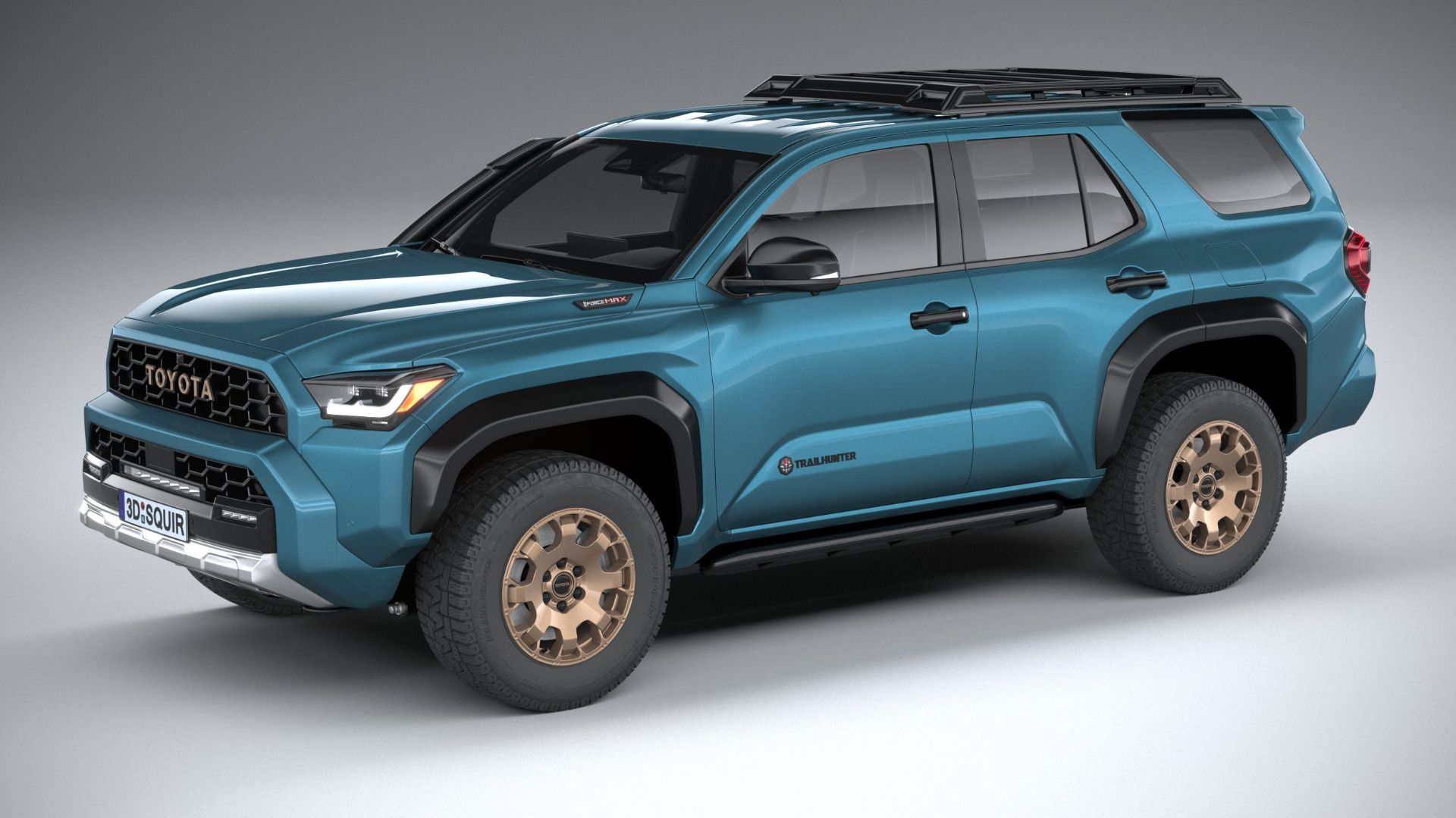
2025 Toyota 4Runner TrailHunter. Wow, going off road can get costly. My test 4Runner TrailHunter came in at $69,578 with such niceties as a digital key and a tow ball added to the $66,900 base price. And here’s the issue in a nutshell, via Car and Driver, “The 4Runner is tall and ungainly. It is inefficient in packaging and fuel economy, not quick, and expensive for its size. Toyota can’t build enough of them.”

I’ve driven both 2025 and 2026 versions of this vehicle, and it’s not the best ride around town. It’s bouncy and relatively rough riding, and you have to climb into it. The snorkel (excuse me, the High Mount Air Intake) might look cool, but c’mon—who’s fording streams? The bright side of this version of the 4Runner is the 2.4-liter turbo four-cylinder hybrid engine that gets a heavy, non-aerodynamic vehicle to 23 mpg city/24 highway. Still terrible, though, considering that Toyota also makes the Prius that gets up to 57 mpg in 2026 guise. The automaker has gussied up this off-roader with a comfortable interior, heated seats and wheel, but you’ll still be roughing it, whether you go off road or not. The same things that make it good on mountain treks are what makes it difficult on pavement—body on frame construction (expect squeaks down the road) a live rear axle, huge knobby tires on 18-inch wheels.

2025 Toyota Grand Highlander Hybrid Max Platinum. This Highlander (another ultra-popular platform from Toyota) is available with two entirely different hybrid engines, a base 245-horsepower unit and a 362-horsepower Hybrid Max in the Platinum trim you probably don’t need. In LE and XLE you get the base engine, but especially in XLE it’s very well equipped (heated front seats, 12.3-inch touchscreen, power tailgate, wireless charging pad)—and gets 36 mpg combined. With the big engine as tested you get a 5.6-second zero to 60 time (instead of 7.8 seconds) but, really, is that important to your daily life or self-esteem? The thing was snappy, but not exactly a sports car. More relevant is the fuel economy loss with Hybrid Max—from 36/32 to 26/27. The non-hybrid Grand Highlander actually did better in some tests, at 29 combined. Plus, the Platinum ($60,270) is hugely more expensive than the XLE ($46,875). I hope all this is convincing.

2025 Audi S5 Coupe Prestige. Prestige is definitely the word here, and you pay for it, in this case a bottom line of $73,345. That buys a very, very capable and sophisticated car, powered by a three-liter 362-horsepower turbocharged V-6 engine with a seven-speed dual-clutch automatic and quattro AWD.

This is more car than I actually need or could possibly justify buying, but that’s not to say I didn’t love my week in it. What’s not to like? It’s attractive, fast, comfortable and (amazingly enough after all the SUVs) a grand touring car! That means it’s set up for long hauls and smooths out the highway for you. At 60 mph and above it’s an effortless drive. The standard Sportback rear gives lots of luggage space under the hatch.

The central 14.5-inch infotainment screen is visually appealing. The Prestige line gets you the quite nice upgraded digital gauge cluster, a head-up display, a 360-degree camera, and also confusing and unnecessary on-screen climate controls. Philistine that I am I get excited when I see a Bang & Olufsen audio system, and I think I actually can tell they sound better than, say, a boombox from Walmart.
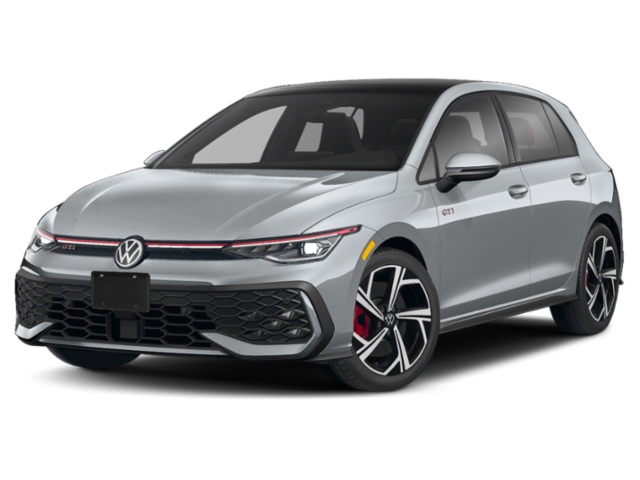
2025 Volkswagen Golf GTI 2.0T SE. The big news about the “pocket rocket” GTI is that VW has gotten rid of the manual transmission option, perhaps an inevitability as manuals are even disappearing at Porsche and Ferrari. Honestly, half the fun of owning these cars is shifting them, but VW is bowing the sheer inability of the driving public to drive stick.

This version is an update of the GTI, not a major model change. In place of the manual is a seven-speed dual-clutch automatic, with an “S” mode for faster shifts. You’re stirring a two-liter, four-cylinder turbo engine with 241 horsepower and 273 pound-feet of torque, held over from previous model years. Fuel economy at 27 mpg combined could be better, but a 5.6-second zero to 60 time is impressive. There are some new colors and badges and new 19-inch wheels. The GTI is still fun to drive but, for me, not quite as much fun. Prices range from $33 to $42,000. The SE tested is $38,645.
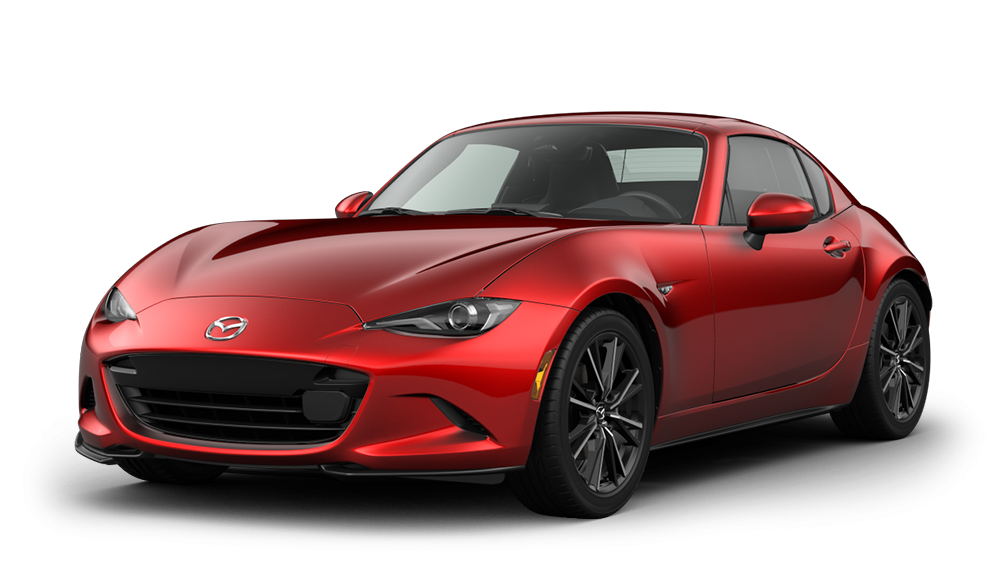
2025 Mazda MX-5 Miata RF Grand Touring. As a Miata owner myself, I (and many of my auto journalist colleagues) don’t have to be sold on the model’s virtues. It is, still, the only real choice for a fun to drive, inexpensive, easy to maintain two-seat convertible. But it’s gotten more sophisticated. Mine’s a 1999, and even that one has far more creature comforts than the NA first seen in 1989.

The RF has a power retractable top, that works very well in practice. That’s a Miata tradition. The early ones have a top that you just throw back, compared to the complicated, leaky Cub Scout tents seen on the British sports cars the Miata blew out of the water.

The Miata still starts around $30,000, and the engine in all Miata is still a modest four-cylinder than in two-liter four here produces 181 horsepower. Yes, you can still go manual with a six-speed box. These new ones are even more responsive and good handling than my ’99, thanks to very direct steering.

The well-appointed RF Grand Touring is near the top of the line, and costs $38,785. Fuel economy at 29 combined isn’t bad, but requiring premium gas is a negative. The Miata may not be the best car for 60-mile commutes—it’s a bit small for that—but as a weekend car it’s peerless. It’s too bad more people don’t think so. Mazda sold just 8,103 Miatas in the U.S. in 2024, a minor downward trend from 2023.

2025 Toyota Crown Nightshade Edition. I’d like to think that cars like the long-Japan-only Crown can find a place in the American market. Toyota loves hybrids, makes great ones, and in this case stuffs its 2.5-liter driveline (236 combined horsepower) into a well-equipped sedan that retails, in this case, for $48,765. Leave the options list alone—the test car had a $165 “side puddle lamp” you probably don’t need.

In some ways the Crown is like an entry-level Lexus, which may have you scratching your head about the need for it, but under either badge it’s a nice car. The eCVT transmission takes a little getting used to, but it’s a factor in the 41 mpg combined (42 city/41 highway) fuel economy.

I liked the 11-speaker JBL sound system, the leather-trimmed heated seats (front and rear), the matte black 21-inch wheels, and the panoramic glass roof. Really, it’s a good example of the state-of-the-art sedan in 2025. The trick is getting the public to care about sedans again.

In These Tariff Times, the New Models Reviewed

The auto industry is heading through hairpin turns with no brakes, as the Trump auto tariffs seemingly change daily. We are now told that imports from England, which were in the worst possible position in terms of U.S. production, are now in the catbird seat because of a U.S.-U.K. trade deal. Now the first 100,000 imports per year (meaning, almost all of them from Great Britain) will have only a 10 percent tariff). Meanwhile, Chinese tariffs are paused for 90 days, but cars still face 25 percent duty. By the time you read this it could all be different. It makes it difficult, indeed, for automakers who just want stability. But the new cars keep coming out, and I keep reviewing them.

Lexus NX 350 F Sport AWD and Lexus UX 300h AWD. Lexus’ NX family includes two cars with gas engines, one hybrid drivetrain, and one plug-in hybrid. This relatively small crossover tested in sporty 350 F Sport guise (above) had the optional 2.4-liter turbocharged inline four-cylinder engine with 275 horsepower and 317 pound-feet of torque, connected to an eight-speed automatic. F Sport includes a more performance-oriented suspension tune, a 14-inch touchscreen and upgraded climate control, but you still have to pay extra for a big sunroof, heating in the rear seats, and the top-grade audio. The car was quite nice without an enormous wow factor, and the 28 miles per gallon on the highway was appreciated. Premium fuel is a “recommendation.”

The UX 300h AWD subcompact luxury crossover is more my speed, as it’s powered by the state-of-the-art Prius drivetrain, the Atkinson-Cycle two-liter four with two or three electric motors (the latter, as in the tester, if you want AWD). For 2025, there’s an extra 15 horsepower. With two motors expect 43 mpg combined, and with three a very minor loss at 42 mpg. Zero to 60 is less than eight seconds. The starting price: just under $40,000.

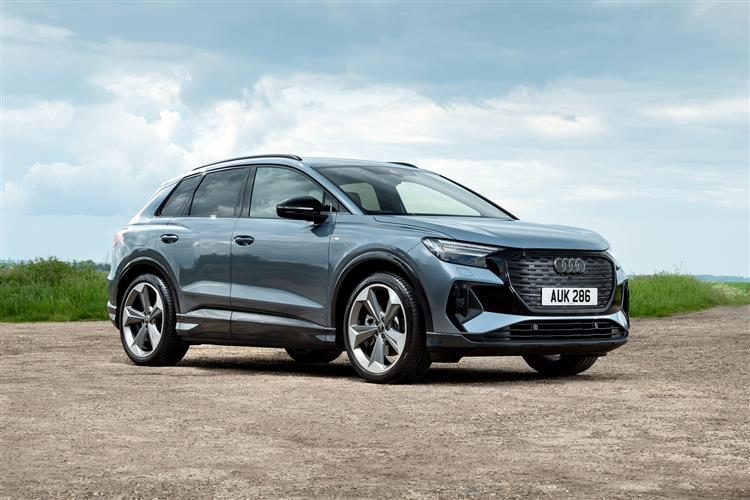
Audi Q4 e-tron Prestige. The Prestige (above) is near the top of the Q4’s model line, starting around $63,000. That buys a powerful electric crossover with 335 horsepower and a so-so range of 258 miles. These days, 300 miles is a safer number. As is often the case, this e-tron emphasizes performance over range, and it can reach 60 in five seconds. The car is quiet, and its cabin very tastefully appointed with quality materials. A more aggressively styled Sportback version is available.

Genesis GV60 Performance AWD. The trio of Hyundai, Kia and Genesis have been acing the EV market, and Genesis’ GV60 is a compelling SUV choice up against cars like the Audi Q4 above. Genesis offers the luxury approach to electric motoring, and up to 295 miles of range, as well as 483 horsepower (from Boost Mode) in this Performance trim. The cabin is utterly stylish, with twin 12-inch screens and a science fiction shifter that’s hugely cool and also very functional. But it’s a $71,000 car. Lesser trims might work just as well for your needs, though no versions are cheap—prices start at $53,800 for the Standard model (with a single motor and 225 horsepower).

Hyundai Elantra N and Santa Fe XRT 2.5T AWD. Sport sedans have been an endangered species, but they’re starting to come back. Hyundai’s Elantra N (above) has much to recommend it, including looking the business with its blackout trim, rear wing, diffuser, and contrasting color stripes. The N Line is a different car. The N is the real deal, with 286 horsepower, a stiff suspension and either a six-speed manual or an optional automatic. Other cars in this class include the Honda Civic Type R and the Toyota GR Corolla. There’s even a turbo Mazda 3 out there.

The current version of the Santa Fe is one of the most sharply styled SUVs on the market, and the performance matches the looks. You might want to investigate the hybrid version, but the tester had the2.5-liter turbo four, producing 277 horsepower and getting it to 60 mph, through an eight-speed dual-clutch transmission, in just over six seconds.  

The redesign puts the Santa Fe into the third-row category, and both legroom and cargo area have grown. The interior refresh was done quite well, with a modernist designer feel. Both the second and third row fold flat. With all three rows engaged, the Santa Fe has 14.6 cubic feet of storage out back. The tested XRT AWD version isn’t the best for fuel economy—19 in the city and 26 on the highway. In just rear-wheel drive form it can get 29 on the highway. The XRT starts at $42,425, mid-pack in a lineup that starts with the SE at $35,775.

For a price in the same ballpark, you can buy the hybrid version of the Santa Fe, which uses a turbo 1.6-liter four and an e-motor to produce 232 horsepower. I’d get that one, because the fuel economy goes to 36 mpg city and 35 mpg highway without much of a performance sacrifice. The SEL version starts at $39,275.

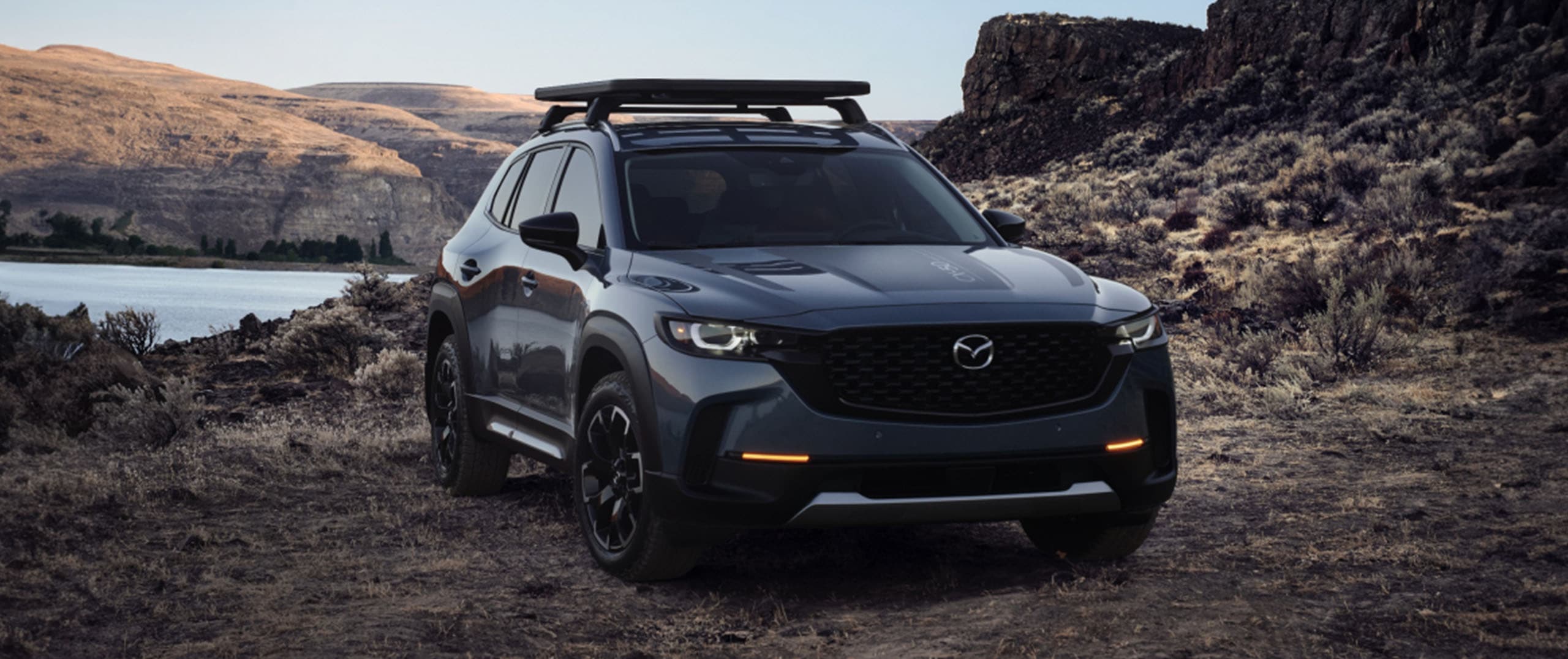
Mazda CX-50 Turbo Meridian Edition. As tested, $42,070, the CX-50 was a well-equipped and nice-handling crossover that in Meridian trim (above) comes with a sunroof and heated leather seats. All CX-50s are AWD. The base four puts out 187 horsepower, but that jumps to 256 in the turbo four that’s standard in the Meridian. This version also includes upgraded towing to 3,500 pounds. The tested car was impressively equipped for the money, and the only optional extra was $450 for gray metallic paint.

Mazda builds a hybrid version of the CX-50, using a powertrain that’s also in the Toyota RAV4. The 2.5-liter four uses three e-motors, producing a combined 219 horsepower. If you can live with 7.5 seconds to 60, it’s the better option, with 38 mpg combined and not much sacrifice in terms of drivability. Pricing starts at $35,840.

Volvo S60 Recharge eAWD Ultimate Dark and Volvo XC60 T8 AWD Polestar Engineered. The plug-in hybrid drivetrain is proving very popular with consumers—who are still cautious about going full electric. In the S60 Recharge, Volvo offers a comfortable sedan with a two-liter four-cylinder engine, an electric motor and a relatively big 18.8-kilowatt-hour battery that together generates 455 horsepower and 523 pound-feet of torque. The big battery enables 41 miles of travel on just electric power. That leads to a combined hybrid mode fuel economy of 31 mpg. And at least until Congress repeals the $7,500 federal income tax credit for EVs (which it seems intent on doing), this one is eligible.

Consumers won’t be dissatisfied with this very comfortable, safe, nicely appointed sedan, which in T8 form can reach 60 mph in an impressive 4.3 seconds. The big issue is the price, since the base Core version of the S60 Recharge is $53,295. And the T8 Ultra Black top trim is just shy of $60,000.

The XC60 T8 AWD Polestar Engineered (above) starts at a whopping $76,545. If you must have an SUV, this is a good plug-in hybrid alternative, with 35 miles of electric range. The XC60 and 90 carry a lot of safety tech and are relatively heavy cars, and this one perhaps needs its 455 horsepower to give good performance. This one won’t get the federal rebate, even if it’s available, but it could qualify for local incentives.

I had some stuff to move, and for that the 2024 Toyota Tacoma Trailhunter Double Cab came in handy. Trucks like this are proof that the Japanese can build work vehicles that give the impression they were born in Texas. I’ve never owned a truck, but I love to borrow them.

Considering the Tariff Factor: New Cars in Review

The Trump tariffs have thrown the auto industry into a complete turmoil. The future pricing of the cars on this list will be determined by whether or not they’re made in the U.S. of A. And some automakers—Jaguar Land Rover, Audi—are temporarily suspending deliveries to America while they plan their next move. So if I say glowing things about the 2025 Audi SQ7 Prestige I tested, will you even be able to find one on the lots?

A case in point, my brother wanted a 2025 Kia Kona Hybrid with 49.9 mpg. This vehicle is offered here, starting at $26,000, or $33,550 for the Limited model he wanted. He found one at a local dealer, but then it turned out to be not available. He had to scramble around to find another one—they’re rare, for some reason—and managed to get the keys just days ahead of the 25 percent tariffs. He paid around $32,000 all in. He was, in fact, lucky. It’s built at the Ulsan facility in South Korea, not here.

So, the numbers here are, to put it mildly, in flux.

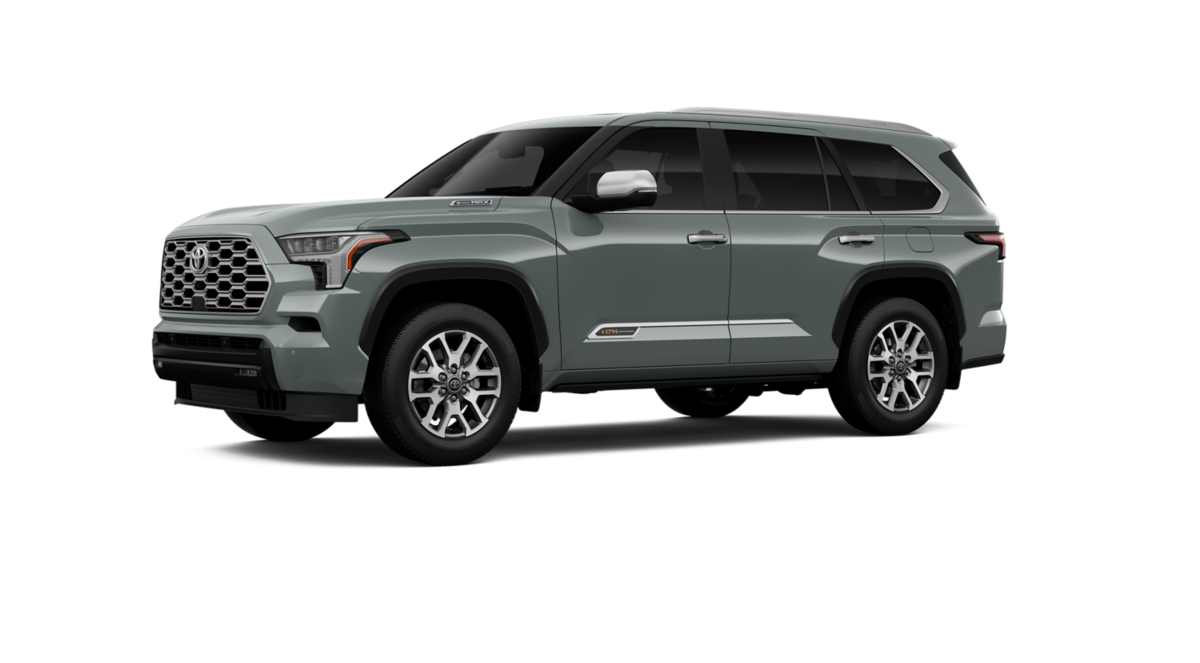
2025 Toyota Sequoia 1794 Hybrid. I prefer hybrids to be smaller, lighter and cheaper. The huge 1794 (above) starts at $82,330, and despite the “hybrid” badges it’s not fuel efficient. I mean it gets 22 mpg combined, for crying out loud. Yes, it’s a big, comfortable SUV with all the latest tech, and Toyota wrote the book on hybrid drive, but it’s also 6,179 pounds of vehicle. But you could do worse if you have eight people to move around. The price couldn’t go up much more, but luckily the Sequoia is built in America. Texas, to be specific.

2025 Toyota Crown Signia Limited. It dates me to remember the Crown as a luxury car for the JDM (Japanese domestic market). The new one (above) is still fairly well-appointed, with sedan styling that still gives off some SUV cues. Such attempts tend to come off as awkward, but OK. Prices start at $42,475, which is about what Americans typically spend on a car.

The good news here is that all Crowns are hybrids, beginning with a 236-horsepower powertrain, able to deliver 41 mpg combined. That’s pretty good for a car of its size. You can also gild the lily with the $56,125 Platinum trim, accessing 340 horsepower with reduced fuel economy. Don’t be in such a hurry! The Crown Signia is built at the Tsutsumi Plant in Aichi, Japan, and thus subject to tariffs that would threaten its competitiveness if they were fully passed on to consumers.

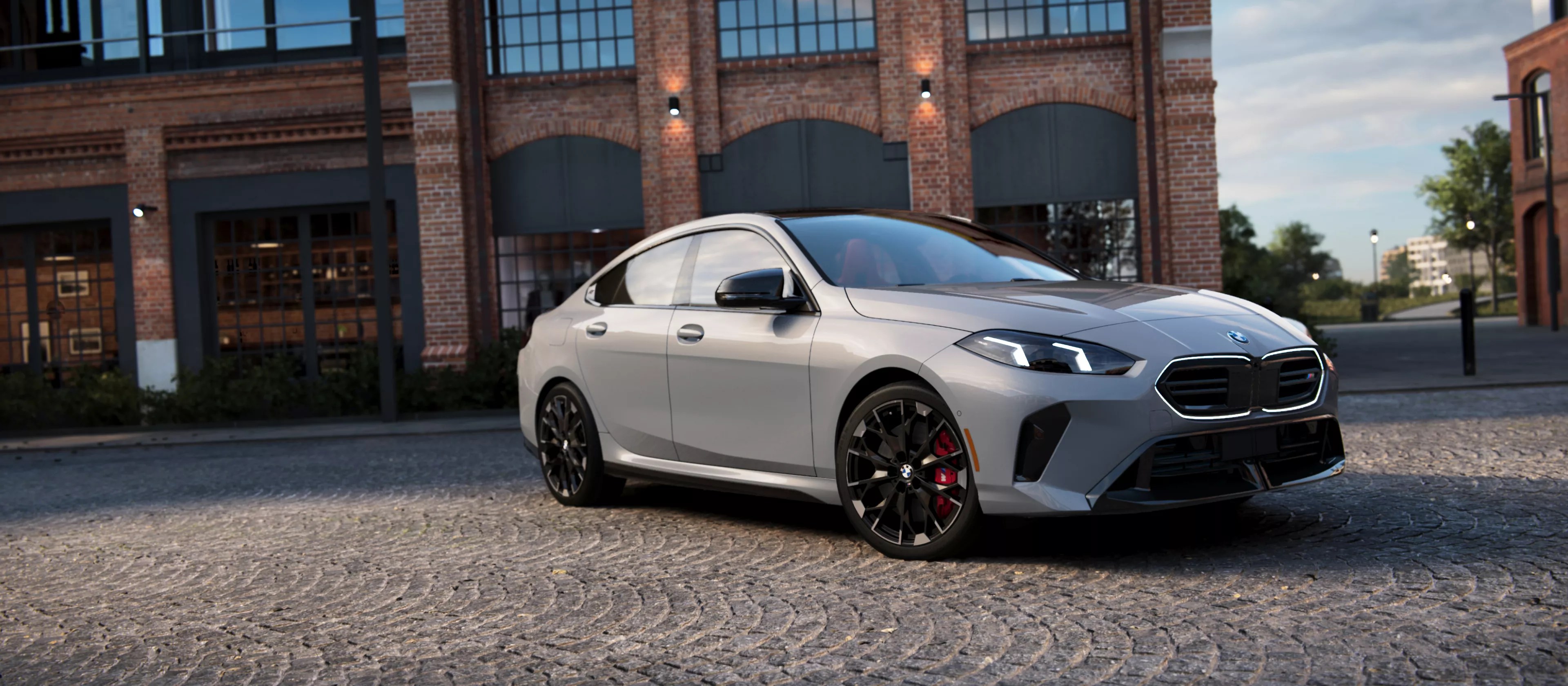
2025 BMW M235i xDrive Gran Coupe. Consider the BMW 2-Series as a way to escape the big-grille plague that I thought I’d be getting used to, but no such luck. This unassuming purple beast (above, though not purple) is a performance BMW with quite a bit of Mini Cooper DNA (same parents, after all). There’s no manual option, but the two-liter turbo four puts out 312 horsepower and 295 pound-feet of torque, shifting through a seven-speed dual-clutch automatic. The combination is good for a 4.7-second zero to 60 time. The interior feels classy, but the seats could use more padding, especially as this M delivers a relatively stiff ride. The M235i is a little car with a somewhat big price, starting at $50,675. There’s not much in common with the similarly named M240i coupe, but that one has a straight six-cylinder engine and more power—382 horsepower, with AWD available. The price is very close, $50,600, with xDrive adding $2,000. Production: a highly automated plant in Leipzig, the former East Germany.

2025 Mercedes-Benz S63 EV4. The European marques have fully embraced the plug-in hybrid (PHEV) format, and this example emphasizes performance. The challenge for Mercedes was to deliver zero to 60 in 3.2 seconds (and a 180-mph top speed) via a four-liter twin-turbo V-8 and e-motor, while also delivering fuel economy to justify that PHEV badge. The package delivers 791 horsepower and 1,055 pound-feet of torque.

The figures for cars like this are wild. It offers 49 mpg combined (46 in the city/53 on the highway) and an electric range of 16 miles (which could be higher). But if you run it only on gasoline, the result is only 18 mpg. Keep it charged up, is what I say. Driving range is quite good at 380 miles. The interior of the Mercedes is super-nice, with Benz’ really useful active bolsters to keep you in your seat. The price is an eye-watering $186,200, which is a shame because lots of posteriors would occupy that driver’s seat if they could afford it. Although Mercedes has an American plant, these cars are built in Germany, and thus the price (if passed on) could go up, up and away.

Is there room for more Benz cars in Alabama? The plant there is already producing the GLE, GLS, and GLE Coupé SUVs, and the Mercedes-Maybach GLS for international sales. EVs in Alabama are the EQS SUV, EQE SUV and Mercedes-Maybach EQ. The S63 EV4 is likely to be a low-volume model and will probably stay in Germany.

2025 Audi SQ7 Prestige and Q4 e-tron Prestige. I’m putting these two together because I’m curious what the German automaker will do with pricing for these fine driver’s offerings. Both are already expensive cars, and price is a big issue with EV customers—who think the electrics are too expensive even without the tariffs. Audi’s e-trons will now be a big jump from domestics like the Chevy Bolt and Equinox. The Prestige Q4 is $69,095, and my guess is that the automaker can’t really raise that too much without having them just sit on lots. The big, luxury-oriented SQ7 Prestige (above) is $98,195. Raising that heady amount by 25 percent would be prohibitive. That’s why a pause was necessary.

There definitely is U.S. production in Audi’s future. The company said in February it will expand production in North America, possibly in a joint venture with its Volkswagen Group siblings. According to Audi CEO Gernot Doellner, also a VW management board member, “We could go into existing Volkswagen Group plants or we could build up additional capacity. We are open to solutions and are evaluating the various options.”

2024 Toyota Corolla Cross Hybrid XSE and 2025 Toyota GR Corolla Premium. If you expect this car to look like a Corolla—i.e., a sedan—you haven’t been paying attention. This Corolla, made in the U.S. of A. (yeah!), has become an entry-level SUV, and a hybrid to boot. Pricing starts just below $30,000 (likely to stay there), and it can deliver 45 highway/38 city fuel economy via a two-liter four-cylinder engine and a trio of e-motors, for 196 horsepower. That makes it faster than the standard Corolla Cross, and definitely the one to buy. Don’t expect a performance car—it’s kind of like a Japanese appliance, but that pays off in terms of reliability and longevity.

I drove the GR Corolla (above) at Charlotte Motor Speedway in North Carolina last year, and here’s where you go for performance! These racy Corollas are kind of a labor of love for the company, which estimates it will sell less than 6,000 of them in the U.S. The all-wheel-drive GR hosts an innovative 1.6-liter turbo three-cylinder engine that punches above its weight and produces 300 horsepower (and 295 pound-feet of torque). Zero to 60 takes just 4.99 seconds. The model was introduced in 2022, but now includes an eight-speed paddle-shifted automatic as a $2,000 option. The GR also looks the business, with spoilers galore. Pricing is $38,860 for the Core entry model and tops off at $47,515 for Premium Plus. But the GR Corolla is built in Japan, in a dedicated facility within the Motomachi plant, and is this fully subject to the tariffs. Expect a price rise.

2025 Mazda CX-50 Hybrid Premium Plus and 2025 CX-50 Turbo Meridian Edition. Get the hybrid (above). It uses the same peppy drivetrain as the Toyota RAV4 Hybrid, with 219 horsepower from no less than three electric motors standard (for AWD) and a 2.5-liter four. This combination and a relatively light shell yields impressive 38 mpg combined fuel economy. You’ll want a regular CX-50 if you tow a lot, because it can handle 3,500 pounds (versus the hybrid’s 1,500). With the standard CX-50, you’re looking at 24 mpg in the city and 30 on the highway. The rating goes down to 23/29 (and the price goes up) if you opt for the 2.5 with twin-scroll supercharger. The hybrid, built in Huntsville, Alabama, starts at a reasonable $35,390. And the price is going to stay there, minus tariffs.