Miles Runs the Voodoo Down

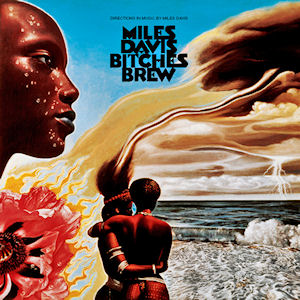
My shuffling iPod brought up “Miles Runs the Voodoo Down,” from the remastered and expanded version of Bitches Brew. Man, did that sound good, and so fresh it could have been recorded yesterday instead of 1969. Bennie Maupin’s bass clarinet starts weaving a spell, and then Miles comes in with an authoritative single-note blast that could be no one else.It’s alive, sinuous, swinging and profoundly funky–James Brown and Sly Stone were clearly on Miles’ turntable.

No trumpet player used space as effectively as this in 1969, though plenty have emulated that style since. “Miles Runs the Voodoo Down” is not only one of the great titles in jazz, but also a real turning point in the history of the music. It’s pretty much where jazz-rock starts. This disc sets the stage for Chick Corea to rock out and for John McLaughlin to create the Mahavishnu Orchestra, which wowed me in high school (at my high school, in fact).

bitches brew

In 1969, this album sounded like something from another planet. It still sounds new.

This album helped break Miles Davis through to rock audiences, and it was no surprise that he started appearing at the Filmores and at rock festivals around this time. “Miles Runs the Voodoo Down” shows his affinity for Jim Hendrix. What an album they could have made together”

On this track my friend Harvey Brooks plays electric bass (he told me Miles wanted him to repeat the same pattern over and over again, with Dave Holland on there, too. Bennie’s on bass clarinet, and Wayne Shorter on soprano. Chick is on electric piano in the right channel, Joe Zawinul in the left. John McLaughlin plays guitar, still new to the group after jumping right in with the seminal In a Silent Way. Three drummers: Jack DeJohnette (right channel), percussionist Juma Santos and Don Alias (left channel). Try “Miles Runs the Voodoo Down” here:

Sandy Stewart and Bill Charlap: It’s a Family Affair

I had a lovely conversation with Sandy Stewart last night on my WPKN radio show. I’ve been a host at the listener-supported Bridgeport, Connecticut station for 40 years, which is incredible to think about. I started as a college senior.

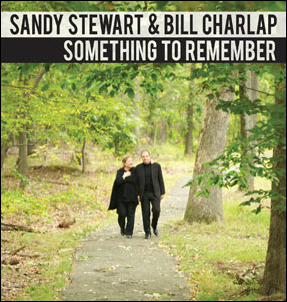
Charlap and Stewart (2)Sandy is both peerless pianist Bill Charlap’s mother and his singing partner on three albums, the most recent of them being the great duets record Something to Remember. Music was in the family—Broadway composers gathered at their Manhattan apartment, because one of Stewart’s husbands was Morris “Moose” Charlap, who wrote the music for Peter Pan.

“Moose was always composing around the house, and Bill was drawn to piano at three years old,” Stewart told me. “He never treated the piano as a toy, he just automatically put his finger down, one key at a time. Moose and I looked at each other and said, “Something may happen here.”

It did. Bill became one of the most sought-after pianists in the jazz world, and his brother, Tom, became a bass player. And Sandy began singing with Bill, initially on a 1993 family album with Tom also on bass. They’ve made two others since, but you really want Something to Remember in your collection.

The repertoire is, needless to say, the Great American Songbook. “We’re very excited because we get to do what we always do, which is performing the songs we both love,” Stewart said. “I’m just very fortunate to have the best accompanist in the whole world.”

I asked Stewart what was in the air that made that music, composed mostly in New York from the 1920s to the 1940s, so indelible. “We’re very fortunate it did happen, because all these great songs are easily transposed to jazz,” Stewart said. “We have it forever. Younger musicians like my son are carrying the torch for this great music.”

As a singer, Stewart’s influences are Ella Fitzgerald (you can hear that), Peggy Lee (that, too), Lena Horne, Judy Garland and Sarah Vaughan. Her style is a unique distillation and, like she said, there’s that perfect accompanist. I’ve always admired Charlap’s ability to fit into a huge variety of jazz projects, from intimate duets like this to the hardest-swinging bop and post-bop. He’s aces, and if you want an embarrassment of riches, check out Double Portrait, his album with his piano-playing wife Renee Rosnes (also a major player).

Charlap leads a six-night Jazz in July series at the 92nd Street Y in Manhattan, and Sandy Stewart will be part of that next summer. If they’re playing anywhere else around, I’ll let you know.

After “Hallelulah,” Room for Another Standard

I’ve been reading Alan Light’s The Holy and the Broken: Leonard Cohen, Jeff Buckley and the Unlikely Ascent of “Hallelulah.” It’s good on how Cohen’s brilliant song, initially an unnoticed album cut (and not even released in the U.S. initially) gradually became a standard. Now its heard at weddings and bar mitzvahs by people who think of it as “The Shrek song.”

It’s still quite common for people to think that Jeff Buckley wrote “Hallelulah.” Thank the unlikely collaboration of Shrek, American Idol, the Velvet Underground’s John Cale, Rufus Wainwright and various European song contests.

Estil C. Ball and his wife, Orna, who frequently sang with him.

Estil C. Ball and his wife, Orna, who frequently sang with him.

These days even Leonard Cohen is getting a bit bored with “Hallelulah.” Why don’t we give it a rest? I have another candidate, from an even more obscure source. The song is a gospel number called “Trials, Troubles, Tribulations,” and it was written and recorded by Estil C. Ball in 1959, then recorded in a haunting version by Geoff and Maria Muldaur on their Pottery Pie album. Here’s that version:

“Trials, Troubles, Tribulations” is, like “Hallelulah,” based on Bible stories. Ball’s source is the Book of Revelations. The song starts with a promise of God’s wrath on Judgement Day:

Trials, troubles, tribulations
Such has never been before
When the angels pour upon us
Their vials of wrath forevermore.

The Beast with horns will come upon you
One with seven, one with ten.
Men will cry unto the mountains,
They’ll pray to die, but cannot win.

But it’s ultimately redemptive. The chorus goes:

When the fire comes down from heaven
And the blood shall fill the sea
I’ll be carried home by Jesus
And forever with him be.

Trust me, it’s a haunting song, especially with the slide guitar on the Muldaur version. Here’s the original, which was collected by Alan Lomax and featured on his White Spirituals album:

OK, maybe the song isn’t quite as uplifting as “Hallelulah,” but Light makes plain that many listeners don’t really hear the lyrics to that song, anyway. It’s also true that “Hallelulah” is an elastic piece, done with as many as seven verses and as few as three. It’s easy to leave out the “naughty bits” about the narrator remembering when he “moved in you” and the parts about rooftop bathing (also Biblical) and getting tied to a kitchen chair.

“Trials, Troubles, Tribulations” hasn’t achieved wide currency, but lots of traditional music fans love it. Maria Muldaur re-recorded it in a live version (with backup singers). I’m partial to a version by the Whitetop Mountaineers, which you can hear live (with Wayne Henderson) here.

Other versions are by Andrew Bird, Joe Manning (on the excellent tribute album to Estil C. Ball, Face a Frowning World) and by Jerry Douglas with Peter Rowan.

It’s a song that will, as they say, put the fear of God into you. But it’s uplifting, too. And a darned good song!

Nathan Bowles: A Bottle, a Buckeye

American culture has gotten awfully homogenous lately—even radio doesn’t have much regional variation. But don’t despair that folk traditions will die out in a tidal wave of Bruno Mars and Ke$ha. As long as people like Nathan Earl Bowles are around, we’re going to be A-OK.

nathan earl bowles

Nathan Earl Bowles can’t let go of Appalachian fingerstyle banjo playing. (Soft Abuse photo)

Bowles is a solo banjo player from southwestern Virginia who’s also in a band called the Black Twig Pickers. I’ve been immersed in his album A Bottle, a Buckeye. It’s an instrumental album, his tunes and traditional songs, showcasing his fingerstyle and clawhammer playing. And it’s steeped in the tradition. I’m hearing welcome strands of such giants as Mike Seeger and Dock Boggs in his music. Here is his “Ship in the Clouds”:

The Black Twig Pickers play for square dances in Virginia, and you couldn’t find a more bedrock anchor of Appalachian culture. According to this video from the Pickers, some of the couples dancing to their music have been coming to the same venue for decades:

Bowles teaches at Virginia Tech, and for some reason that made me think of Sam Beam, whose roots music career was launched while teaching film and cinematography at the University of Miami. But Iron & Wine wasn’t an influence on Bowles. He told me in an email:

I heard Iron & Wine’s first album years and years ago and enjoyed it, but don’t feel any particular affinity with him or his music. I think we’re doing pretty different things. Any “rootsy” activity of mine stems out from my activity, practice, and immersion in local Appalachian stringband culture through my other band the Black Twig Pickers. The solo banjo record is a refraction of what I’ve learned there and in the other improvised music I engage with…. and the tradition of solo fingerstyle guitar music, which grabbed me years ago and never really let go.

Bowles plays a five-string open-back banjo built by his neighbor. A Bottle, A Buckeye is front porch music, or at least it used to be when people still sat on their porches. It’s definitely beautiful, evocative and channeled from a very real place. Bowles isn’t afraid to get dissonant, though–he’s also in a band called Pelt, whose “Empty Bell Ringing in the Sky” is described as “sound rings [that] wash over the listener in hypnotically drenching waves.” It’s ominous and a bit scary–light years away from Appalachian banjo. Check out A Bottle, A Buckeye here. And here’s one more song, “Come Back, Boys, Let’s Feed the Horses”:

Learning to Love Joni

British novelist Zadie Smith, in the New Yorker, says her initial reaction to Joni Mitchell was one of strong dislike–she didn’t like white girl singers with piping voices.

Joni just has to hit you the right way. It can take years for that to happen!

Joni just has to hit you the right way. It can take years for that to happen!

But that changed.

I didn’t come to love Joni Mitchell by knowing anything more about her, or understanding what an open-tuned guitar is, or even by sitting down and forcing myself to listen and re-listen to her songs. I hated Joni Mitchell–and then I loved her.

Now don’t that beat all? Same artist, different reaction. I bet that’s happened to you, too. I know it’s happened to me. The first time I heard Frank Sinatra, I couldn’t imagine what anyone saw in the old crooner. It was my parents’ music. They actually saw Frank in concert at Cornell, I believe. Once this really hip-looking guy came into my record store (circa 1973) and asked for one of Sinatra’s albums with Count Basie. I was shocked he’d want such a moldy artifact.

Needless to say, I now consider Frank Sinatra a vocal god, and my appreciation has grown to include just about the entire Great American Songbook. Sinatra himself never seemed to change his tastes much. Like Mitch Miller, he hated rock and roll, calling it:

…the most brutal, ugly, degenerate, vicious form of expression it has been my displeasure to hear– I refer to rock ‘n’ roll. It fosters almost totally negative and destructive reactions in young people. It smells phony and false. It is sung, played and written, for the most part, by cretinous goons, and its almost imbecilic reiterations and sly, lewd– in fact, plain dirty– lyrics make it the martial music of every side-burned delinquent on the face of the earth. This rancid-smelling aphrodisiac I deplore.

Cute, but a bit strong, methinks. Frankly, and I do mean frankly, I can love Sinatra’s music without necessarily loving the guy himself. But back to the original point: Our musical tastes evolve, and sometimes we don’t know exactly why.

I’m not sure why or Sinatra’s sound finally penetrated my consciousness, but there was probably an evolution. The first jazz I liked was wild stuff along the lines of Pharoah Sanders and late-period John Coltrane–maybe because it had rock and roll energy. But if you listen to enough post-bop you’ll eventually want to hear the source material, and that will send you down a winding path that leads not only to Frank Sinatra, but also to his major influence, Bing Crosby, and to Louis Armstrong, King Oliver, Jelly Roll Morton and everything else.

There was an epiphany. I heard Frank Sinatra with new ears, and I’m really glad I did. And good for you, Zadie, Joni Mitchell is worthy of your attention–not just Blue but the later, difficult stuff, too.

The King of Country Music

It’s hard to have any respect for Mitch Miller. Even without the bouncing ball, the guy was a malevolent presence as head of A&R at Columbia Records after 1950. He hated both jazz and rock and roll, referring to the latter as “musical baby food” and a symbol of the “worship of mediocrity.”

Mitch Miller in his hey day. He hated both jazz and rock, passed on Elvis and Buddy Holly.

Mitch Miller in his hey day. He hated both jazz and rock, passed on Elvis and Buddy Holly.

Miller passed on both Elvis and Buddy Holly. He wouldn’t have been the guy to sign Miles Davis, Bob Dylan, Bruce Springsteen or Janis Joplin to the label. His own taste, despite a background as a classical oboist, was for inane (but frequently bestselling) novelty numbers. He made both Tony Bennett and Frank Sinatra record junk, and earned the ever-lasting enmity of both. After their unhappy association had ended, Miller saw Sinatra on the street in Vegas and extended his hand. Sinatra reportedly replied: “Fuck you, just keep walking.”

But here’s an odd thing. In Tony Bennett’s new book Life is a Gift, he recounts some experiences with Miller around the 1951 recording of his hit version of Hank Williams'”Cold, Cold Heart.”

“Mitch really didn’t like jazz,” Bennett writes. “He didn’t care for Duke or Count Basie, and when I came to the label, I was a jazz singer.” The pair had a tense relationship, so Bennett was disinclined when Miller brought in “Cold, Cold Heart.”

“If I have to tie you to a tree, you’re going to do it,” Miller reportedly said, emphasizing that this hick country song had beautiful lyrics. Bennett recorded it, of course, and it reached number one. (Miller had a lot of hits by consistently underestimating the taste of the American people.)

But here’s the kicker: Bennett writes that after “Cold, Cold Heart” hit big “Hank’s songs caught on everywhere.” Williams was even said to play Bennett’s version for friends–why not, he made a mint from it. So are we to believe that the successful career of this sublime pioneer of country music is owed to a New York-based hack with no real interest in the genre? Could well be.

Time Changes Everything

The new book Pete Seeger: In His Own Words offers many strong opinions, but one of the strongest is his reaction to seeing Bob Dylan at the Newport Folk Festival in 1965. This is the infamous debut of Dylan’s electric band, which had Seeger tearing out his hair over the inability to hear the poet’s lyrics. Seeger allegedly said, “Get that distortion out of his voice … It’s terrible. If I had an axe, I’d chop the microphone cable right now.”

Image

Seeger has since back-pedaled on some of this, but in a note from ’65, included in the book, he calls Dylan’s set “some of the most destructive music this side of Hell.”

We all say things we regret. Another great man, Sam Charters, who discovered or rediscovered many of the leading lights of the music, was also a fine writer. But his period writings record his visceral dislike for the early stirrings of Chicago-style electric blues. He obviously changed his mind, because he later produced a series for Vanguard called Chicago: The Blues Today!, featuring Junior Wells and Otis Spann. When I interviewed him, he seemed to look back on his earlier revulsion with some amusement.

Downbeat Magazine heaped negativity on the head of players now known to be groundbreaking, including Ornette Coleman, John Coltrane and Eric Dolphy. The magazine didn’t give Coltrane any coverage at all from 1962 to his death in 1967, and it hated Dolphy and Coleman. Today, the same pages recognize the genius of these musicians.

Let’s celebrate our right to change, grow and see things more clearly.

Why Territorial Imperatives?

The title refers to the instinct in animals (including us) to defend a particular piece of turf. As you know, we’re often willing to die for our convictions. Maybe I’m not quite as drastic as that about music, but I feel strongly about it. And so a music blog called Territorial Imperatives that will stake a claim on some challenging opinions.

These guys aren't likely to agree to disagree.

These guys aren’t likely to agree to disagree.

I write this stuff because someone has to say it. If you want to read what I get paid to write, here I am at the New York Times, Car Talk, Mother Nature Network, Autoweek, Txchnologist, Success, the Advocate papers and PlugInCars.com. I was the editor of E/The Environmental Magazine for 12 years, and also edited some of the New Mass Media papers.

I got my start writing about music (Paste, Option, Blueswire, New Country Music), and so here I go again, right back at the beginning. The other thing you need to know about me is that I host a radio show, with frequent live music, on listener-supported WPKN-FM in Connecticut. WPKN is, along with New Jersey’s WFMU, one of the last bastions of free-form radio. No playlist, what a concept! The station pushes out 10,000 watts, but it also streams online, so click here to listen in.

What you’ll see here are short, punchy posts about music–jazz, blues, folk, Americana, singer-songwriters, some world stuff. I like all kinds of things, from John Coltrane and Archie Shepp to The Carter Family, Mike Seeger and Gid Tanner and the Skillet Lickers. Sure, you’ve heard Nick Drake, but what about David Francey? Might the best rock album ever made be Trout Mask Replica by Captain Beefheart and the Magic Band? But I tend to write about either very new or very old music.

I’m a critic–some of it will be tough. I’m like an animal with a piece of meat or, of course, demonstrating territorial imperative. Let me know what you think.