Jazz is Where You Find It: Music Close to Home

Jazz is where you find it. I was recently strolling down the main street of Columbia, Missouri and encountered a storefront called We Always Swing, with frequent live music (12 concerts a year), discussions and film series.

I live an hour from New York City, the jazz capitol of the world, but I don’t always want to take the time—and spend the money—to hit the nightspots there. But I can keep entertained right here in Connecticut. Here’s two shows I went to lately.

Marcus Goldhaber

Marcus Goldhaber in Milford. The Sinatra mantle was worn lightly. (Jim Motavalli photo)

Marcus Goldhaber is a New York-based jazz singer who’s also a prolific songwriter who’s made four strong albums. In New York he often performs with a guitarist and a guest singer (including one of my favorites, Melissa Stylianou).

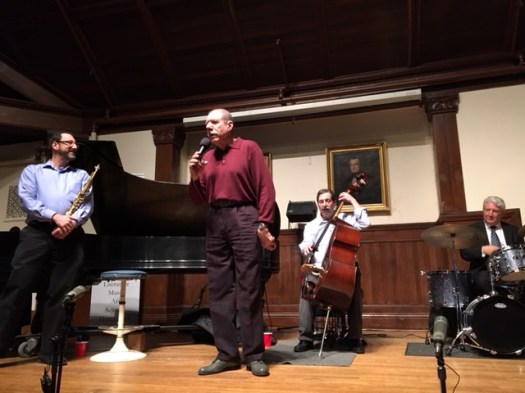
But I was pleasantly surprised to see him coming to Connecticut in a Sinatra tribute show sponsored by the Milford Arts Council in their cozy cabaret-style performance space—which just happens to be the former railroad station. Through some miracle of soundproofing or train schedules, we didn’t get interrupted all that much.

The Sinatra mantle was lightly worn; Ol’ Blue Eyes sang every standard in the book, and just about all male jazz singers are influenced by him. It was a night of the Great American Songbook with a tight trio, and the audience loved it. To duplicate it, check out his standard-laden first album, The Moment After (2006); to hear Goldhaber the songwriter, it’s A Lovely Way to Spend an Evening (2014).

Brubecks Play Brubeck (in the Brubeck Room)

More recently, I was back at the Wilton Library—in the Brubeck Room—to hear actual Brubecks. It was three of Dave’s sons, Chris, Dan and Darius, playing their dad’s music with a ringer (British saxophonist Dave O’Higgins).

The Brubecks

The Brubecks in Wilton. From left: Darius, Dave O’Higgins, Chris and Dan. (Jim Motavalli photo)

I interviewed Dave Brubeck many years ago when I was a reporter at the Wilton Bulletin. He was a laid-back Californian, a very gracious host, and a fine raconteur. At the time I was more into fiery stuff like Eric Dolphy and John Coltrane, but these days I’m also getting a lot of pleasure out of west coast players like Brubeck, Chet Baker, Stan Getz and Gerry Mulligan.

In Wilton, Darius—at the piano—was the raconteur, and he tells stories well (including one about Dan’s band being up for a Juno). The band played mostly older Brubeck compositions, including one Darius said was his first song ever, “Weep No More,” written in 1942 when he was overseas and missing his new wife. Here it is on video:


All four musicians played well. Darius channels the old man, but he also has a fair amount of Bill Evans in there, too. Dan cut loose on the last song, the inevitable “Take Five” (actually written by Dave’s alter ego, alto player Paul Desmond). O’Higgins shone on ballads.

I was especially taken with Chris Brubeck’s bass playing. I felt a sense of dismay when I saw him plug in an electric bass, but like Jaco Pastorius (there’s some overlap) he does something hugely original with it. His playing is very bright and busy, and it swings mightily. Chris also plays trombone, and on Louis Armstrong’s “Black and Blue” he took it out for a duo with Darius, nodding to Louis’ old sparring partner, Jack Teagarten.

This was the first night of the Brubecks Play Brubeck tour. The band is playing Dizzy’s at Lincoln Center in the aforementioned New York City March 30 and 31. It’s also doing a bunch of dates in the UK. That’s a tradition; here’s a review of the same band playing in London in 2014. Catch them if you can.

Jazz at the Libraries

Last weekend was a jazz festival for me, at two different libraries. Both were fine shows.

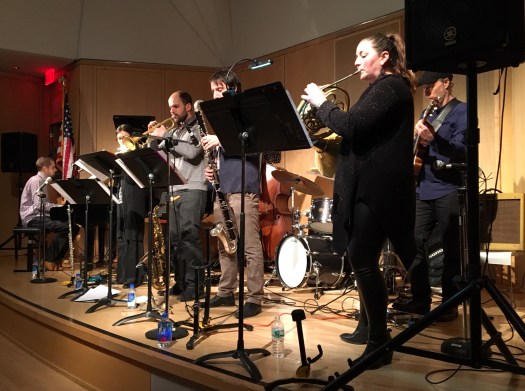
Jamie Baum and her Septet+ played the Wilton Library’s Brubeck Room (Dave was a Wiltonian) on February 27. Flautist Jamie lives in New York now, but she’s a Fairfield, Connecticut native, and expressed pleasure being back in the county of her birth.

jamie baum

Jamie Baum’s Septet+ on stage in Wilton. (Jim Motavalli photo)

Actually, describing Baum as a flautist doesn’t do her justice, though she’s great on the instrument. What I find fascinating with her is the palette she uses as a writer and arranger. The music she played in Wilton is soon to be recorded for an album called “Bridges”—maybe some kind of answer to Donald Trump’s wall.

Baum is a cultural ambassador, and her new music is informed by a fascination with Asian music, and recent visits to Nepal—including the Kathmandu Jazz Festival. She’s also inspired by the singing of Pakistan’s late, qawwali singer Nusrat Fateh Ali Khan.

Baum, a 2014 Guggenheim recipient, was commissioned by New York’s Rubin Museum of Himalayan Arts to write “Honoring Nepal: The Shiva Suite,” which she played in Wilton. Like all the music she played, it was complex, changeable, challenging—and lots of fun, too. You never knew where she was going next.

I loved a piece called “Ucross Me,” inspired by a visit to the Ucross Foundation in Wyoming. It started with long through-composed introduction that almost had Phillip Glass overtones, briefly became a conventional jazz taut piece, moved into exchanges between trumpet player Amir Elsaffar and guitarist Brad Shepik (a standout player that night) and closed with a long and hugely impressive guitar solo that accessed late period Miles and rock music, too.

Here’s the band playing “Lament”:

So much writing for larger bands doesn’t take full advantage of multiple voices, but Baum’s music is endlessly inventive, and it made this seven-piece sing. Outstanding soloists were Shepik on guitar, Sam Sadigursky on alto and bass clarinet, and Elsaffar on trumpet, but all rose to the challenge of this tricky music.

Just one day later, I was at the lovely old (turn of the century) Pequot Library in Fairfield, catching the WPKN Jazz All-Stars. WPKN is a radio station I’ve been proud to call home for 43 years, and this was a benefit organized by the drummer and jazz DJ Rick Petrone.

The first set was nice and polite. Joining Petrone were pianist David Childs, saxophonist Chris Stelluti, and veteran drummer Joe Corsello, who was in the house band at Michael’s Pub and has recorded with Sonny Rollins, Marian McPartland, Benny Goodman, Steve Marcus, Ralph Lalama, Mike Moore, Sal Salvadore, Gene Bertoncini and Mike Mainari. He tours with Rollins.

WPKN All-Stars

Giacomo Gates on stage at the Pequot with jazz rabbi Greg Wall admiring at left. (Jim Motavalli photo)

Stelluti has a nice tone on tenor that reminded me of Zoot Sims or Stan Getz, but he didn’t play all that forcefully or improvise all that much at the Pequot. The energy level picked up a lot in the second set when he was joined on the bandstand by Greg Wall, a Westport, Connecticut rabbi when he’s not blowing a really exciting soprano sax. The Jazz Rabbi can be regularly heard turning up the heat at a club called 323 Westport, when he’s not presiding at Bar Mitzvahs.

And then Giacomo Gates came out. I love this guy, a standout male jazz vocalist who really commands the stage. Watching him direct the band with body language was a treat. I don’t think they’d played together much, if at all, but everyone spoke jazz so it didn’t matter.

Betty Carter did a lot with Gigi Gryce/John Hendricks’ “Social Call,” but Gates swung it madly. There were also tunes from Thelonious Monk and Babs Gonzalez. Nobody wanted the show to stop, but eventually it did. And a full house enjoyed a nice afternoon of jazz and benefited their favorite radio station in the process. Let’s hope the Jazz All-Stars turn it into a regular happening.

Girl Howdy is in the House (Concert)

I’m really getting into this house concert thing. What’s not to like? The event I went to this Sunday in New Haven, Connecticut event was convenient to get to, comfortable (I was in the front row), inexpensive, and featured one of my favorite bands in a relaxed setting.

girl howdy

Girl Howdy (only pedal steel player Karen Sarkisian is out of the frame).

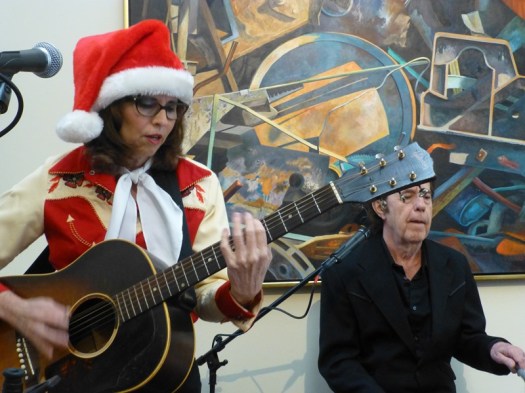
Girl Howdy is a female led honky-tonk band from Massachusetts, led by two strong songwriter vocalists, Betsy-Dawn Williams and my old friend Paula Bradley.

Both have multiple affiliations. Williams is in rockabilly band Lil Bee Dee and the Doo-Rites, plus zydeco band Slippery Sneakers; Bradley plays with her husband in old-time duo Moonshine Holler, leads juke-joint band The Twangbusters, and gigs with old-time god Bruce Molsky. When they can, they play as Girl Howdy, a band that goes back more than 10 years.

girl howdy betsy-dawn williams

Betsey-Dawn Williams with minimalist drummer Jeff Potter.

The repertoire is original, plus the best of Webb Pierce, Hank Williams, Kitty Wells, Connie Francis, Porter Wagoner, Loretta Lynn, the Davis Sisters (who contributed a tongue-twisting Christmas song) and many more.

girl howdy paula bradley

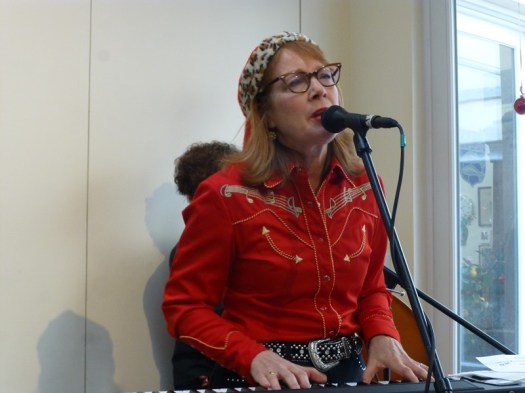
Stomping on the keys: multi-threat vocalist Paula Bradley.

Special mention should be given to the minimalist drumming of Jeff Potter (one drum, two brushes), the bass playing of Lilian Fraker, and the totally in-the-groove pedal steel of Karen Sarkisian. The latter is in my dream country band forever.

Here’s Girl Howdy on video performing “Honky-Tonk Merry-go-Round”:

Harvey Brooks and Bob Dylan’s Highway 61: It Was 50 Years Ago (Almost) Today

My friend, the great bass player Harvey Brooks (formerly of Connecticut, now in Israel), sent me this about his historic appearance at the Highway 61 recording session in 1965. He sent it in time for the anniversary, but I’m a bit tardy here. Read on, it’s totally absorbing:

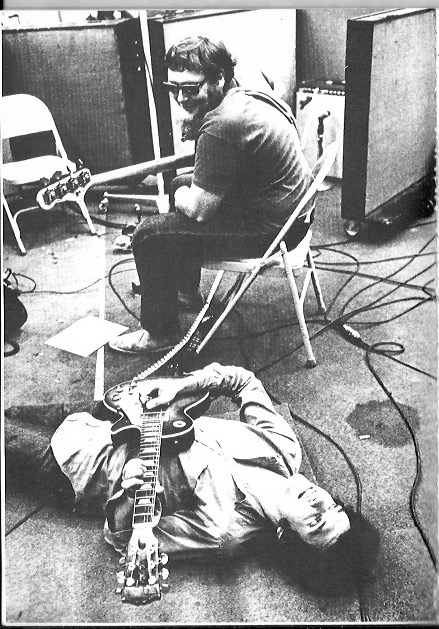
harvey brooks and mike bloomfield

Harvey Brooks and Mike Bloomfield share a moment at the Dylan session, 1965. (Photo courtesy Harvey Brooks)

It was July 28, 1965. I was playing a gig at the Sniffin Court Inn on East 36th Street in Manhattan. During a break, I went next door to eat at the Burger Heaven, when I got a phone call from Al Kooper.

I’m playing on this album with Bob Dylan and they need a bass player – are you doing anything?

That phone call would change my life.

The next day — 50 years ago today — I drove from Queens to Manhattan. After parking my car in a lot on 54th Street, I was soon in an elevator on the way to play for Bob Dylan’s Highway 61 Revisited album at Columbia Studio A at 777 Seventh Avenue. I opened the door to the control room, took a deep breath and entered.

The first person I saw was Albert Grossman, Dylan’s manager. Grossman had long gray hair tied in a ponytail and wore round, tinted wire-rimmed glasses. I thought he looked like Benjamin Franklin. A thin, frizzy-haired guy dressed in jeans and boots was standing in the front of the mixing console listening to a playback of “Like a Rolling Stone.” I assumed it was Bob Dylan, though I didn’t know him or what he looked like at the time.

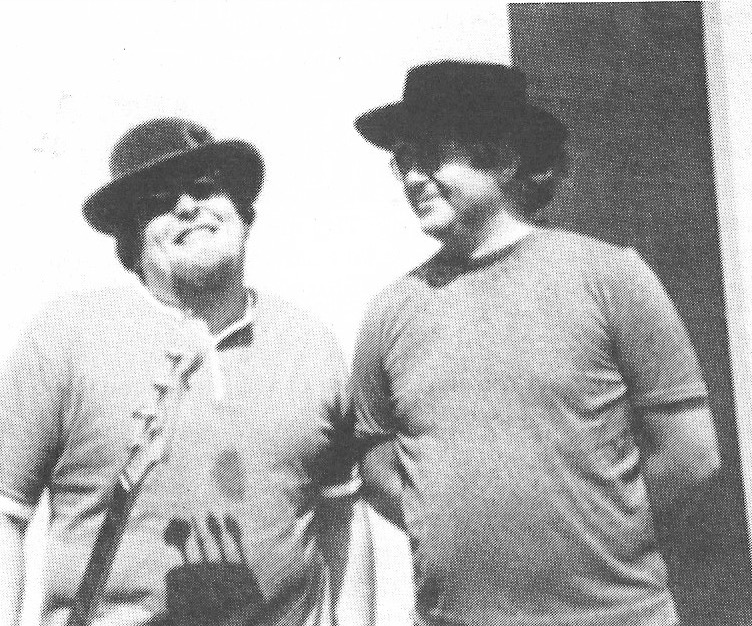
Harbvey Brooks and Albert Grossman

Harvey Brooks (left) with Dylan’s manager at the time, Albert Goldman.

When the music stopped, Grossman asked, who’re you? I told him who, what and why. Dylan quietly muttered “Hi” and went back to listening. Al Kooper then came in to make the official introduction. It was all very cryptic and brief.

I walked into the studio, opened up my case, took out my Fender bass and started to tune. My instrument was strung with La Bella flat wounds, which I still use. I plugged in the Ampeg B-15 amplifier which was provided by the studio. It sounded warm and percussive. The B-15 was my gig amp as well. Now I use Hartke amplifiers exclusively.

Though I was only 21-years-old, I had already played many club gigs with a range of different performers. I had worked with varying styles and felt I could adapt to about anything on the fly. For that reason, I was comfortable in the studio and was ready for anything Dylan could throw my way.

Suddenly, the studio door burst open and in stormed Michael Bloomfield, a moving ball of pure energy. He wore penny loafers, jeans, a white shirt with rolled-up sleeves and had a Fender Telecaster hanging over his shoulder. Bloomfield’s hair was as electric as his smile. It was the

first time I had met or even heard of him.

The other players on the session were Bobby Gregg on drums, Paul Griffin and Frank Owens on piano and Al, who on the “Like a Rolling Stone” recording session two weeks earlier, had nailed his position on organ

At the first session, Joe Macho Jr. had played bass. He had been replaced by Russ Savakus who Dylan didn’t like either. Dylan wanted someone new for the rest of the sessions. Kooper recommended me to Dylan. What Dylan needed was to be comfortable with his bass player. Kooper knew I had a good feel and adapted quickly to any situation.

For Dylan, it was not enough to be a skilled studio musician. He wanted musicians who could adapt quickly to his style. In talking to Bob, I admitted that I hadn’t heard any of his music before the session, but was really impressed by “Like a Rolling Stone,” which I first heard when I walked into the studio.

“Well, these are a little different,” Bob responded. I assumed he meant from his past work, but Bob was bit vague. He gave me a kind of crooked smile and then lit up a cigarette.

Tom Wilson, who had produced Like a Rolling Stone a couple of weeks earlier, also was replaced for unknown reasons. The new producer was Bob Johnston, a Columbia staff producer from Nashville who was already producing Patti Page when he got the Dylan assignment. Johnston had a “documentary” approach to producing that allowed him to capture fleeting moments in the studio. He was frustrated by the technical bureaucracy at the Columbia studio and ordered several tape machines brought into the control room so he could keep one running at all times in order to capture anything Dylan might want to keep. That tactic worked quite well for an artist like Dylan. Though the first session for Highway 61 Revisited had been only about two weeks earlier, a lot had happened in the interim. Like a Rolling Stone, recorded at the first session, had been released and caught on like fire.

Only four days earlier, Dylan had been booed by the crowd when he had gone electric at the Newport Folk Festival. It was a pivotal time in his career. He was beginning the transition from being a “pure” folk artist to a rock and roll performer.

Now we were at the second session, my first, uncertain of what was on Dylan’s mind. In a few minutes, he came out of the control room and started to sing the first of three songs we would work on that day. Johnston had setup three-sided baffles, leaving the side that faced the band open so we could see him.

Dylan sang the first song, Tombstone Blues, a few times. There were no chord charts for anyone. It was all done by ear. As a habit, I made a few quick chord charts for myself as I listened to him perform the song. Everyone focused on Dylan, watching for every nuance. Then, the band went for it.

As we began recording, Dylan was still working on the lyrics. He was constantly editing as we were recording. I thought that was a really amazing way that he worked. His guitar or piano part was the guiding element through each song. Every musician in that room was glued to him. We would play until Dylan felt something was right. His poker face never revealed what he was thinking.

It might have taken a couple of takes for everyone to lock in. There were mistakes, of course, but they didn’t matter to Dylan. If the feel was there and the performance was successful, that’s all that mattered. In real life, that’s the way it is. If the overall performance happens, there is always something there. Bob would go into the control room and listen. Bob Johnston may have been the producer keeping the tape rolling, but it was all Dylan deciding what felt right and what didn’t.

Michael Bloomfield’s fiery guitar parts accented Dylan’s phrasing. He was a very explosive guitar player and didn’t settle back into things. He was aggressive and a little bit in front of it. My goal is finding a part that makes the groove happen. Dylan set the feel and direction with his rhythm and my bass parts reflected what I got from him.

Most of my early playing experience had been in R&B bands that performed Wilson Pickett and Jackie Wilson, or tunes by the Beatles and the Rolling Stones. Playing with Dylan created a totally new category. I call it “jump in and go for it.”

Next, we recorded It Takes a Lot to Laugh and Positively 4th Street the same way. Masters for the three songs were successfully recorded on July 29. Tombstone Blues and It Takes a Lot to Laugh were included on the final Highway 61 Revisited album, but Positively 4th Street was issued as a single-only release.

At the close of the session that first night, Dylan attempted to record Desolation Row, accompanied only by Al on electric guitar and me on bass. There was no drummer, as Bobby Gregg had already gone home. This electric version was eventually released in 2005, on The Bootleg Series Vol. 7 album.

Our producer had a love of and even a bias toward Nashville musicians. It became an underlying topic during the entire session about how good they were. He kept talking about how cool

Nashville is. With his comments, I felt it was disparaging to us. I felt Johnston thought of us as New York bumpkins in a way.

This Nashville bias played into Desolation Row. I thought the version without drums that I did with Al that night was slower and definitely more soulful. We really liked it. Clearly, Johnston thought otherwise. On August 2, five more takes were done on Desolation Row. However, the version of the song ultimately used on the album was recorded at an overdub session on August 4.

This time, Johnston’s personal friend, Nashville guitarist Charlie McCoy, who was visiting New York City at the time, was invited to contribute an improvised acoustic guitar part. Russ Savakus played upright bass. We were gone by the time the final take was recorded.

When I left the studio after the final session, I didn’t have a sense of whether or not we had created a hit record. I did know, however, that all the songs felt good. They felt solid. I now understand that’s why Highway 61 Revisited was a successful record. Bob got it. In all the takes he chose, he made sure he got what he wanted from each song. It’s an amazing talent that really knows what they want.

Swing du Jour Rocks the Pizza House

By some strange quirk of fate, I’d never before been to the jazz haven that is Pizzeria Lauretano in Bethel, Connecticut, though it isn’t that far from where I live.

swing du jour

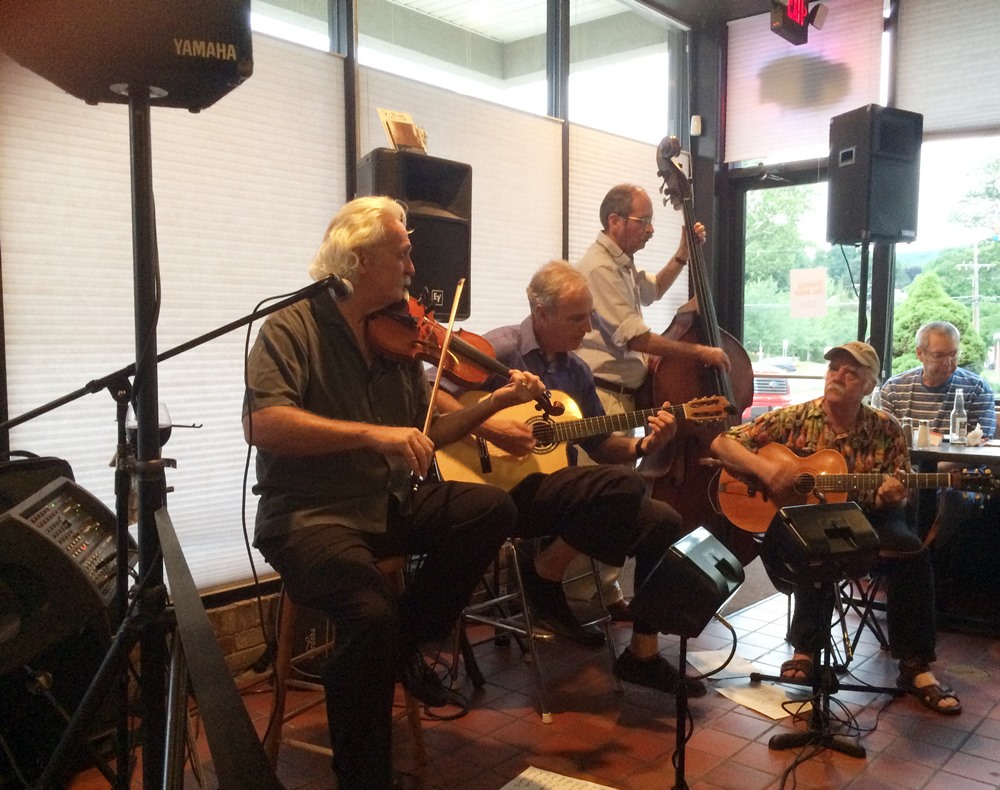
Swing du Jour at Pizza Lauretano: appearances are too infrequent. (Jim Motavalli photo)

But the bill on July 26 proved irresistible. Swing du Jour is Southern New England’s premiere gypsy swing band. Guitarist Larry Urbon, a neighbor of mine, is a keen student of “jazz manouche,” the style favored by the late Django Reinhardt. With ace standards singer Noreen Mola, he is half of Cafe Musette (see them regularly at Luc’s in Ridgefield, Connecticut). Fiddle player Howie Bujese is conversant in many different forms but is especially fluent in the swing of the late Stephane Grappelli. Guitarist Norman Plankey, in the rhythm chair, is also a bluegrass adept and has played in an old-time duo (with Bujese) on my WPKN radio show.

They get together all too infrequently. I almost didn’t make it to Bethel, and arrived after the first set, but it was well worth the drive on rural roads, skirting pastures and mini-mansions. For players who don’t gig often, their chemistry was amazing. The fast call-and-response between Bujese and Urbon was telepathic, reminiscent of what I’ve heard classical Indian players do.

pizza lauretano

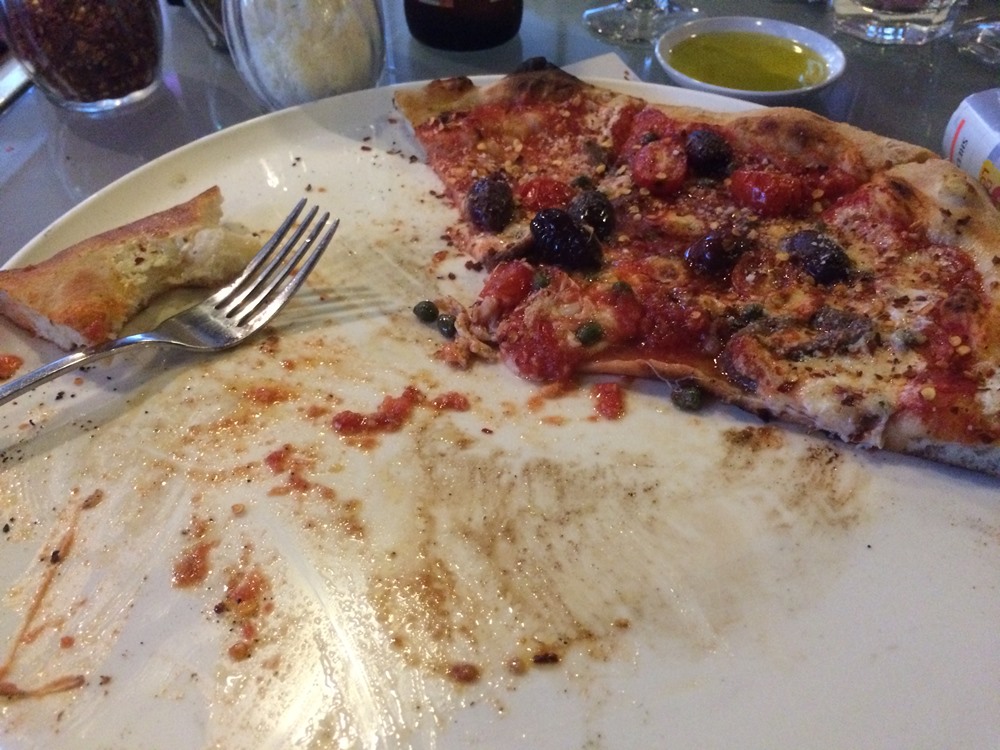
This was a puttanesca pie. The beer is good, too. (Jim Motavalli photo)

They played Django’s most famous composition, “Nuages,” plus “Moto Swing,” “Caravan” (lacking only the drum solo that Frank Zappa mentions in “America Drinks and Goes Home”) and even “More.” And don’t forget “Daphne,” another Django tune I was fortunate enough to get on videotape:

There wasn’t always jazz at Pizza Lauretano. “It started very organically,’” said publicist Judith Joiner. “At first, it was 3 to 5 p.m. on Sunday. It was an occasional concert, and it was free. Then we started having music every Sunday. We gradually added a cover charge. Now, you have to call ahead for reservations every week.”

You especially need reservations for Swing du Jour’s occasional visit, but there’s plenty more where that comes from. Upcoming shows in September include Ray Blue/Warren Byrd Quartet (Sept. 13), Marvin Stamm Quartet (Sept. 20) and swinging chanteuse Nicole Pasternak and her quintet (Sept. 27).

The Green River Festival Shines With Diversity

The Green River Festival in Massachusetts, run by Signature Sounds and the low-key Jim Olsen, remains a cornucopia of amazing music from all over the world, with no boundaries. It’s not a “folk festival”—it’s a celebration of planetary music.

tune-yards

Tune-Yards are influenced by Fela and other African music, but they make something wholly original. (Jim Motavalli photo)

I attended Saturday and Sunday of the 2015 event, and it was unmercifully hot—as usual for summer festivals. But Green River is a very well-run show, so there was shade available (including for anything you wanted to see at the Parlor Room Stage), plentiful opportunities to refill your water bottle or to buy cold drinks at non-gouging prices.

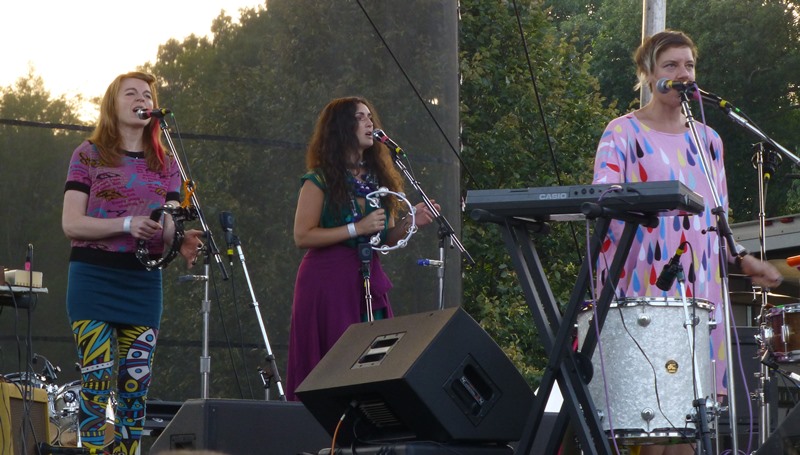
Signature Sounds artists appear, of course, but don’t dominate the proceedings. The very best thing I saw this year was Tune-Yards, led by the miraculous Merrill Garbus. I’d heard Tune-Yards on record, of course, and played them a lot on WPKN-FM, but the live act was something else entirely. In person, the African influence isn’t subtle, it’s right up front, in the pair of swaying backup singers and in the drumming that undergirds everything. Garbus has said, “I spent time in Africa . . . I grew an obsession with African music, before I was in Africa and afterward.” And she’s also said that if it’s African, and it sounds like she stole it, well, she did steal it. Here’s Tune-Yards on video:

OK, fine, she stole some stuff from Fela Ransome-Kuti, but so what? Fela’s music was hardly purely African—it was spiced with an amalgam of American soul and jazz (following a trip here). And Dylan stole everything, and turned people on to some fine roots music in the process. Tune-Yards isn’t about cloning, it’s about making something new and highly inventive from vibrant roots. I liked it. I also liked how she wasn’t the star of the show; those backup singers should be called up-front singers.

Imagine this bill: Arc Iris (in video above) opening for Tune-Yards. That would shine. In fact, they both played on July 11, just on different stages. Arc Iris is a new band headed by Jocie Adams, formerly of the entirely different Low Anthem. A support player in that group—she didn’t sing lead, just backup—in Arc Iris Adams is fully up front, in costumes, yet.

Arc Iris

Arc Iris puts Jocie Adams (a support player in Low Anthem) up front. (Jim Motavalli photo)

Greenfield, Massachusetts is a bucolic jeans-and-flannels kind of place, so Adams in a cape, sparkly tights and (the next day) a plastic-looking body suit was a shock to the system. But the music—otherworldly, like the house band in the Star Wars cantina—fit the clothes. The pieces stopped and started, made great stylistic leaps and took hairpin turns. Americana, it wasn’t. Jazz influences are apparent on the record, but Bjork and Kate Bush also look in. Don’t bother characterizing it—Bill Monroe said there’s good music and bad music, and I’d say this is good.

Red Baraat

Red Baraat: jazz meets rock and Indian music with high energy. (Jim Motavalli photo)

Red Baraat were another revelation, like Tune-Yards far more powerful in person than on their fine records. Take a jazz horn section and impose it over Indian percussion and vocal pyrotechnics, then add some hip-hop energy. Spicy!

Valerie June

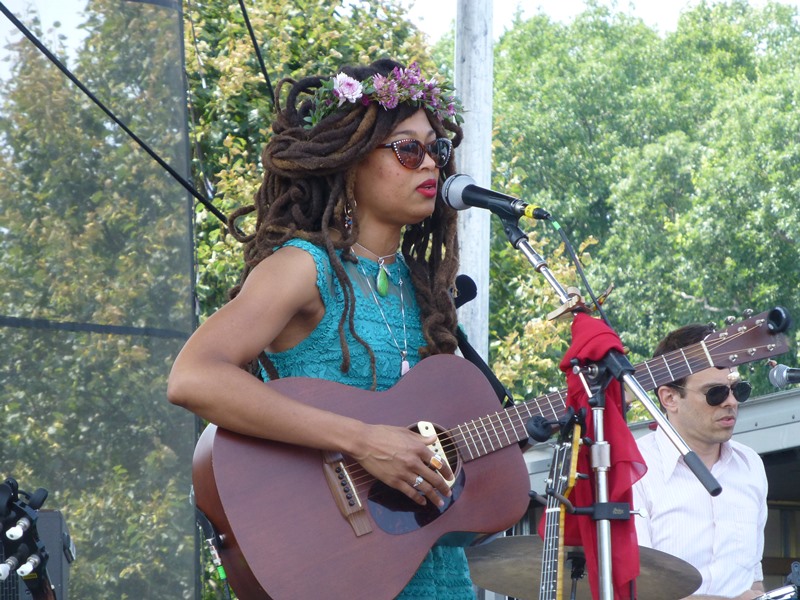
Valerie June does the blues, but for the 21st century. (Jim Motavalli photo)

I’ve extolled the manifold virtues of Valerie June before, having seen her at Mass MOCA’s Fresh Grass, but she was even better at Green River.

Here’s Valerie June on video:

Not all her music is strictly blues, but it’s all bluesy, maybe what Robert Johnson would be doing now if he hadn’t been so rudely murdered.

Steve Earle

Steve Earle, a reliable vote for Bernie Sanders, was in fine form at Green River. (Jim Motavalli photo)

Steve Earle, with the latest incarnation of the Dukes (featuring an on-fire couple, shades of Julie and Buddy Miller, called The Remingtons) was reliably strong. Yes, he’s voting for Bernie Sanders. Like Valerie June he’s been fixated on the blues lately, but the music he played from the new album merely used that genre as an influence. No matter what he does, though, country comes through loud and clear.

Straybirds

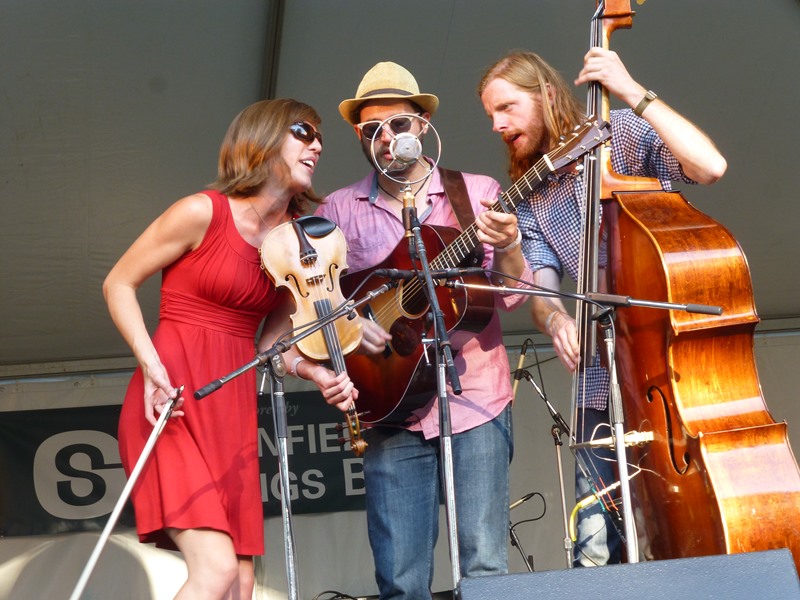
The Stray Birds: close harmonies around one microphone. (Jim Motavalli photo)

Other acts I really liked included the really young bluegrass band Twisted Pine (they met at Berklee), given points for performing a 500-year-old (they said) Childe ballad; J Mascis, heard here unplugged (but very loud, still) as on his latest album; The Stray Birds (what’s not to like about instrumental virtuousity, incredible harmony singing, and Maya de Vitry’s incredible songs?); Sean Rowe, an original solo act; and The Revelers—a Cajun supergroup. I missed Milk Carton Kids and Preservation Hall, alas. Here’s the Stray Birds on video with a duet song called “Never for Nothing”:

Sean Rowe

Sean Rowe: baritone and beard. (Jim Motavalli photo)

Groups that didn’t send me soaring included Punch Brothers, Langhorne Slim and Suitcase Junket. It’s all about the songs, no matter how much of a celebrity you are (Chris Thile could end up hosting Prairie Home Companion) and these folks didn’t have ‘em.

Aliens at Green River

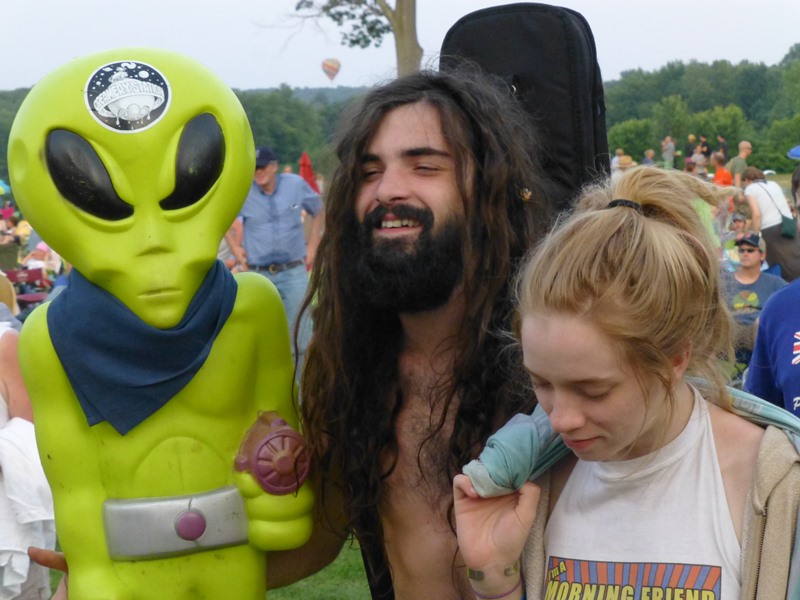
The audience gets into the spirit of the event. Aliens were welcome. (Jim Motavalli photo)

The New Tradition at Clearwater 2015

Musical tradition is alive and well at the Clearwater Festival, the second without founders Pete or Toshi Seeger. That’s good, but what’s even better is that the tradition isn’t stagnant, it’s growing and evolving, just as it’s already done.

dom flemons

Dom Flemons with Brian Farrow: Respecting the tradition, but broadening it. (Jim Motavalli photo)

I’m no fan of folk purists, who blanch at the sight of an electric guitar or a plug-in keyboard. For years, the only electric bass at some festivals I attended was employed by the zydeco musicians because, well, zydeco doesn’t work without electricity. Clearwater today has an open-ears booking policy, and that’s why you see younger people among the many tie-died, ponytailed greybeards who show up, even on soggy weekends like this one was.

green tent

Environmental action at Clearwater. (Jim Motavalli photo)

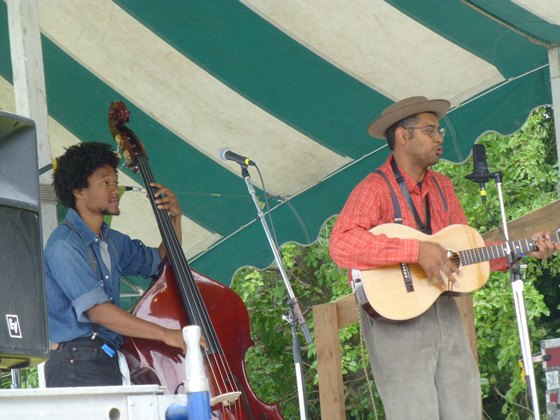
Dom Flemons, late of the Carolina Chocolate Drops, is known for unearthing the hidden history of the black string bands, but on his latest album he’s branching out stylistically into R&B, country (a Roy Acuff song!) and more, as well as original songs like the celebration of east Nashville cuisine that is “Hot Chicken.” Flemons brought a trio to Clearwater’s Hudson Stage on Saturday, with Brian Farrow on bass and fiddle, and Dante Pope on drums.

shoe car

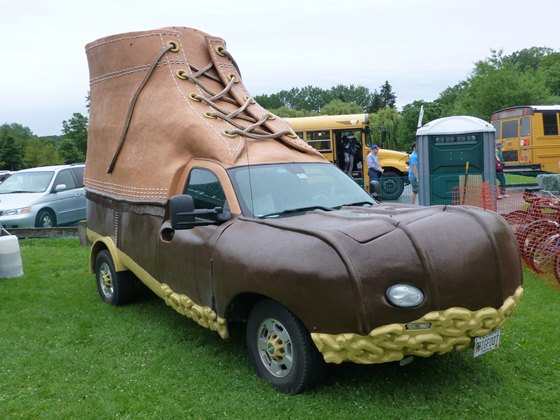
Expect the unexpected at Clearwater. (Jim Motavalli photo)

Dom’s booming, theatrical voice has brought a lot of old 78s to life–who knew that “Polly Put the Kettle On” was a cool song with English roots? But these days he’s after bigger game.

guy davis

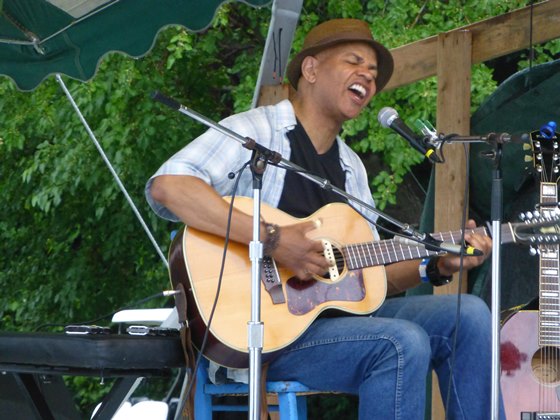
Guy Davis in full song. His originals are future mainstays of the tradition. (Jim Motavalli photo)

You could say much the same for Guy Davis, whose big, rich baritone, paired with fluent guitar and a wailing harp, provide him all the tools he needs to recreate bluesmen like Robert Johnson (who he once played onstage). But Davis, who had to fight off rainstorms as Flemons did, is similarly painting with a broader palette these days. The original “Kokomo Kidd” is about white bootleggers using black bagmen during Prohibition, but it moves on to document political payoffs in the present day.

sam amidon

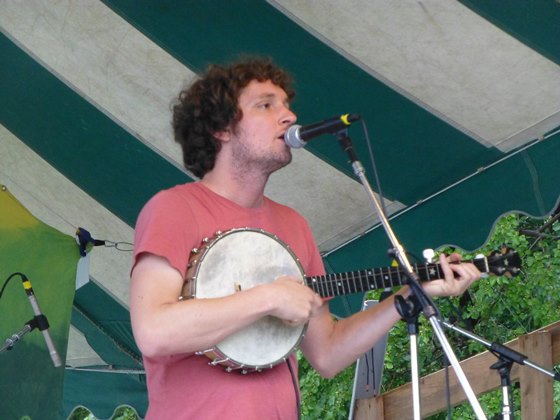
Sam Amidon: Don’t let the banjo fool you–he’s an avant gardist. (Jim Motavalli photo)

Sam Amidon has no limits as a musician, and boy does he tell funny (and surreal) stories. He’s steeped in the tradition—as the son of traveling folk musicians, he haunted these same grounds as a kid—and became a prodigy fiddle champion, but what he’s doing these days is a unique blend of public domain songs and modern electronica, as in a “Walking Boss” with a steady funk rhythm from the brilliant keyboard man Thomas Bartlett, a childhood friend. Banjo and beats made an unlikely but happy marriage. Check out Amidon’s latest album, recorded with jazz guitarist Bill Frisell in (somehow appropriate for bedrock American songs) Iceland.

Amidon is evolving into a showman. During a keyboard interlude he jumped off the stage and gave us 24 pushups, and a solo showcase for fiddle featured squawkings that the late Ornette Coleman would probably reject as too out there. The set included a song Amidon said he’d “heard on country radio a few days ago,” but he made it his own. Anything could happen, and did.

david crosby

David Crosby: It’s still 1972. (Jim Motavalli photo)

The same could not be said of a set by CS&N’s David Crosby. Looking healthy and in fine voice as a solo musician, Crosby nonetheless stuck to a set that—at least in the part I heard—never ventured past the early ‘70s. He must perform “Guinnivere,” “Déjà Vu” and “Cowboy Movie” in his sleep. He also revisited old love with a passable version of Joni Mitchell’s “For Free” (never mind that he’s been slagging her off in the press lately).

Crosby lives in the past; Neil Young celebrates today, and that explains their relative popularity.

joseph arthur

Joseph Arthur: The guitar didn’t make him a folkie. (Jim Motavalli photo)

Joseph Arthur was also solo, but just standing there with a guitar didn’t make him a folkie. Arthur is always adventurous with found sounds on his album, and at Clearwater he looked sleepy and disheveled but nonetheless turned in a fine set with colors from effects pedals and sampling. “The Ballad of Boogie Christ” sure got them listening. And the Talking Heads’ “Naïve Melody” was a good cover choice, especially since I’d also heard it covered by Shawn Colvin in the car on the way up.

mike + ruthy

Mike and Ruthy getting funky. (Jim Motavalli photo)

And two thumbs up for Mike + Ruthy. They’re Clearwater royalty, having performed in the Mammals with Pete’s grandson, Tao Rodriguez Seeger. And Ruthy is, of course, the daughter of stage mainstay Jay Ungar and folk singer Lyn Hardy. But their set was anything but traditional. The highlight of the new album Bright as You Can is Mike’s song “Rock On Little Jane,” and the performance at Clearwater retained the soulful horn section that appears on the album. And Ruthy really belted that song out, with the video proof right here:

Later, both Mike and Ruthy were in the rocking backing band of ex-B-52 Kate Pierson. Is that the way Tom Paxton would have done it? Actually, Paxton rocked it up now and then, too. Catch more like-minded music at Mike + Ruthy’s Ashokan, New York Summer Hoot in August.

los lobos

Los Lobos: A taste for classic rock. (Jim Motavalli photo)

I’ve always wanted to see Shelby Lynne, but she phoned in sick. A reshuffled Los Lobos was just great, showing an unexpected talent for playing not only their own songs but some well-chosen classic rock—“Rattlesnake Shake” by Peter Green-era Fleetwood Mac, “40,000 Headmen” by Traffic and “Bertha” by the Grateful Dead. Did they end with “La Bamba”? You bet, but it worked.

thomas wesley stern

Thomas Wesley Stern: close harmonies and fine originals. (Jim Motavalli photo)

Folk festivals are also great places to make unexpected discoveries, and mine at Clearwater was a young band from south Jersey called Thomas Wesley Stern. They played not any of the festival’s five stages but in some kind of natural foods tent. I loved their version of “Cumberland Gap,” which they correctly pointed out dates to the Civil War. It’s a pretty big band, with twin fiddles and not one but three strong singers who excel at close harmonies.

The self-released Never Leaving is a strong debut album. I was worried when I saw it was all originals—weak material is the bane of a lot of new bands—but I should have had more faith. The album is strong from first note to last.

angelique kidjo

Angelique Kidjo borne aloft on highlife guitar. (Jim Motavalli photo)

African singer Angelique Kidjo (she’s from Benin) was also a great Clearwater addition. An internationalist who’s covered a lot of stylistic ground as a solo artist, her tree-trunk-strong voice anchors everything. At Clearwater she gave us a rootsy show, with highlife guitar and plentiful percussion keeping her rocking.

I actually didn’t hear anything bad in a full day of listening, and that’s high praise. Neko Case was in good spirits and that classic country voice of hers pierced the clouds. If I could offer her a brief bit of advice, though, it would be to spice things up a bit. She performed only original songs in the same mid-tempo, and some of them didn’t stick in the mind. It was good to see a favorite singer, Kelly Hogan, backing her up.

Neko Case

Neko Case: That voice cuts through the fog. (Jim Motavalli photo)

Kate Pierson, also singing well, could use some stronger material, too. The Chapin Sisters harmonized exuberantly, and I loved the Everly Brothers songs—but maybe a few deeper tracks than just the big Top 40 hits? I’m sure there was great stuff I missed, and not mentioning it here probably just means I didn’t see it.

But this a strong day of festival music, thanks to an adventurous booking policy. I didn’t camp, but I’m a happy camper, anyway.

Old-Time Rules at the Traveling Man Bluegrass Festival

It’s all a blur to some people, but there are some pretty significant differences between what’s called “old-time” country music and bluegrass. Listen up students, because as you may well know the countrified Bill Monroe listened to popular music and jazz (one and the same thing in the ‘40s) and melded them into something entirely new. Bent one way, the fusion produced the country swing of Bob Wills and the Texas Playboys. Twisted another, bluegrass was the result.

Old-time, which made the mainstream with groups like the Carter Family, never went away, of course, and thrives today—even in places like New York, where the Jalopy Theater in Red Hook, Brooklyn is a haven.

Dubl Handi

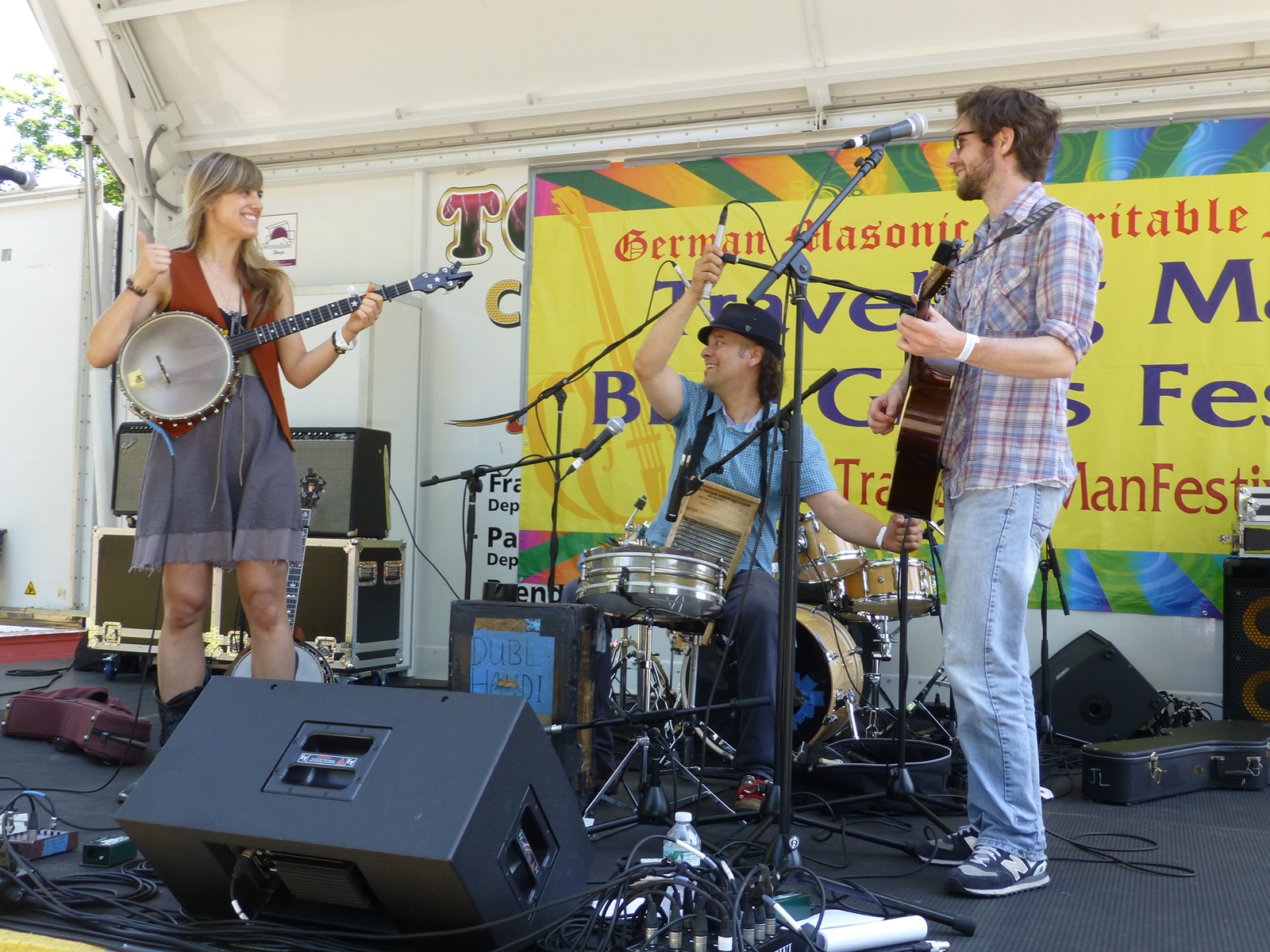
Two thirds of Dubl Handi (Hilary Hawke and Brian Geltner) at Traveling Man. The beer tent was next door. (Jim Motavalli photo)

The Traveling Man Bluegrass Festival, in Tappan, New York June 15, did indeed include some bluegrass—the Jersey Corn Pickers and Buddy Merriam and Back Roads certainly qualified. But it also featured my old friends Cricket Tell the Weather, for whom bluegrass is just one arrow in the quiver—and new favorites Dubl Handi, who are old-time to the core.

Dubl Handi on stage, making it clear they love to play together. (Jim Motavalli photo)

Dubl Handi on stage, making it clear they love to play together. (Jim Motavalli photo)

Brooklyn-based Dubl Handi is Hilary Hawke on banjo and lead vocals, Jon Ladeau on guitar and Brian Geltner on washboard, suitcase and about half a drum kit. Hawke is out front, and she’s a hugely talented banjo player (steeped in Dock Boggs, Earl Scruggs and Mike Seeger, as well as young turks like Bela Fleck, Tony Trischka and Noam Pikelny).

Here’s Dubl Handi playing “Lost John”:


Hawke is also a great, expressive singer, with her craft honed in acts like the M Shanghai String Band (saw ‘em in Yonkers once), The Me-Oh My-Ohs, and many more. One of my beefs with bluegrass sometimes is that the vocalists seem to be tonelessly ripping through the vocals (even on real weepies!) to get to the hot, many-note solos. Old-time playing serves the song. Geltner, whose background is in all kinds of music, including rock, has figured out how to play drums—rare in this music—without overwhelming the soloists.

Here’s the band again with “Ida Red”:


“Hilary and I started out just friends,” Geltner told me. “She would just accompany herself. Then we started to get together to play at farmer’s markets and places like that. It sounded so good we decided to record it. That was 2011 or 2012, and we came out with our first album, Up Like the Clouds.”

Once more, with “Walking in My Sleep”:

The new one, Morning in a New Machine, came out June 10. It’s hard to pick a favorite. Both are exuberant celebrations of everything that’s great about old-time music—where the feel matters more than how many notes you play.

You were wondering about that name? “It comes from the Columbus Washboard Company’s Dubl Handi washboard from the 1800s,” Hawke told me. “It might be nice to mention also that we were named the number one bluegrass band of the year by the Village Voice last November.”

Of course, they’re not a bluegrass band, but as I said these distinctions are all a big blur to people anyway. I wish I could recommend some Dubl Handi gigs but Hawke has her summer booked playing banjo in a production of “Oklahoma” at Bard College’s Fisher Center for the Performing Arts. Click here for details.

This was the fourth annual Traveling Man Bluegrass Festival, and the very reasonably priced event was a benefit for such worthy causes as the Shriners Hospital Transportation Fund, the Association for Metro Area Autistic Children and the CJ Foundation for SIDS Counseling. The German Masonic Park is a really great venue, an old-fashioned music “grove” with permanent beer halls for the Oktoberfests and grills to make the kielbasa for the polka parties. The audience sits in the shade at picnic tables.

cricket tell the weather

Cricket Tell the Weather, with Andrea Asprelli up front. (Jim Motavalli photo)

It was also a treat to reconnect with Cricket Tell the Weather as a quartet in their new incarnation, with fiddler/vocalist Andrea Asprelli clearly in charge and up front. Doug Goldstein is on banjo, Jeff Picker on guitar and Sam Weber on bass. Asprelli’s writing a ton of new songs, including this one, “If I Had My Way,” which is a smart adaptation of the old standard done by Blind Willie Johnson, the Reverend Gary Davis and others. The folk process at work!

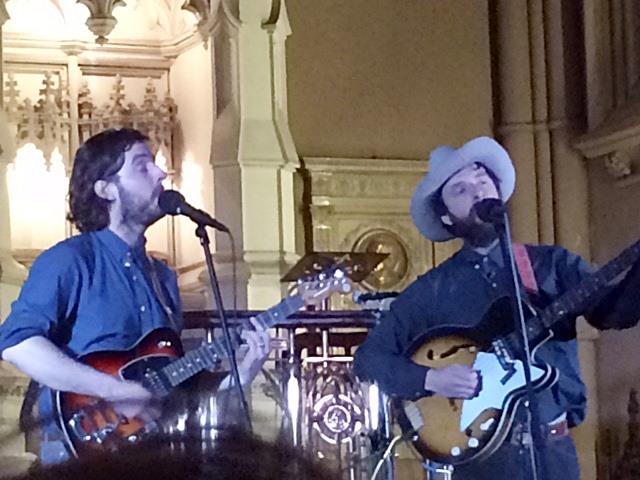
Horse-Eyed Men: Like a Rhinestone Cowboy

I had a singular encounter with the band of brothers known as Horse-Eyed Men at the Brooklyn Folk Festival, and since then I’ve had them on my WPKN-FM radio show.

horse-eyed men

Dylan and Noah Harley are the Horse-Eyed Men.

They have the energy of the Avett Brothers, but with songs that are far more slyly subversive. A case in point is this one, “Come on Cowboy,” which isn’t about the usual macho man bar encounter.

The Horse-Eyed Men – Come on Cowboy from Horatio Baltz on Vimeo.

The Horse-Eyed Men are Dylan and Noah Harley, originally from Providence, Rhode Island. Dylan wrote “Come on Cowboy,” and here describes how he conjured it into being:

I wrote Cowboy on my birthday, July 5 in the summer of ’13. It might have been that fresh mountain air, the burly road crews of Vermont or the pop country radio pumping the airwaves full of hetero-normative schlock, but somewhere between Rutland and Brattleboro, the atmosphere thickened into a song.

Most of the words were written in my shorts by the pool, picturing my Caballero: one part mystery, two parts musk, a deep voice and thick eyebrows. Who doesn’t want to be swept off their feet by a supreme gentleman crooner? What’s more macho than two men in love? What percentage of Brad Paisley’s fan base isn’t “just a guy”? Come on Nashville. Come on America. Come on Cowboy.

horse-eyed men

The Horse-Eyed Men at the Brooklyn Folk Festival recently. (Jim Motavalli photo)

Michael Hurley: Ancient but Modern

Michael Hurley made a big impression on me—a “folkie” who somehow transcended the genre, who’d listened to everything and somehow absorbed into a unique style (the way Bob Dylan did). He might have been one of “Woody’s children,” but—unlike someone like Ramblin’ Jack Elliot—he danced to his own muse.

armchair boogie

As good as it gets, but all Hurleys as worth the money.

Armchair Boogie (1971) was the second album Hurley made and the first I heard, probably within a couple years of its release. I was just starting out as a novice radio guy at WPKN-FM and a DJ, Ed Michaelson, played “Sweedeedee.” It was about a relationship, and it was about New York in a very real way, and it alternated spoken word passages with beautifully descriptive verses and chorus that got stuck in your head. Mississippi John Hurt was in there somewhere, happily co-existing with Cajun music, old-time jazz and country, and lots more, but it was all blissfully absorbed into Hurley’s unique kaleidoscopic world.

hi-fi snock uptown

The third album and the second on the Youngblood’s Raccoon label via a clearly clueless Warner Brothers.

Apparently, Hurley used to go up to the roof of his Village apartment, from where you could sometimes see people flying kites in Washington Square, and he could tell by the way his little woman (who gave him a lot of trouble sometimes) washed the clothes that her cooking “must be fine.”

michael hurley and jim motavalli

The author (right) with Michael Hurley in Brooklyn. (Dave Schwartz photo)

Hurley painted his own cartoony album covers (to this day), often starring his alter egos Boon and Jocko, and he created a whole world populated by werewolves, jungle pigs and working-class guys who fought with their girlfriends who liked to unwind down at the local tap room. A sometime associate of Peter Stampfel and the Holy Modal Rounders, he created a stone classic with them (not to mention Jeffrey Frederick and the Clamtones) called “Have Moicy” that came out on Rounder in 1976.

have moicy

Hurley meets the Rounders halfway, and both win.

After two albums on Raccoon (a boutique label brought to you via The Youngbloods) and his Rounder period, Hurley’s albums began appearing on small labels, and became increasingly hard to find but the quality didn’t waver. He never made a bad album, or wrote a bad song.

All this is prologue to my finally interviewing Michael Hurley on WPKN and then seeing him perform in the flesh the next week at the wonderful Brooklyn Folk Festival at St. Ann’s Church in Brooklyn Heights. How did I miss this great old-time music celebration, now in its seventh year? The Friday night lineup included one Jackson Lynch, who looked like Justin Timberlake but sounded like Dock Boggs, a brother duo called The Horse-Eyed Men who outdid The Avett Brothers in simpatico sibling rivalry (and had great complementary voices and songs), and Jerron “Blindboy” Paxton, who was truly great, and could fit right into the Carolina Chocolate Drops to replace Dom Flemons.

And then there was Michael Hurley. His electric guitar cord was shorting out, but at 74 he was otherwise intact and in fine voice. He did “Sweedeedee” and “Portland Water,” told a few stories, charmed the audience, and then was gone too soon.

A few days earlier I’d interviewed him on WPKN. I was uncharacteristically nervous. I never get nervous. Put Taylor Swift or Ed Sheeran in front of me and I’d be totally cool. Hurley thinks about stuff before he answers, so you get a bit of dead air. But he’s got the driest sense of humor. I told him I’d see him in Brooklyn and he asked me what color shirt I’d be wearing, so we’d recognize each other. “Mine will be blue,” he said.

He said he was never a member of the Holy Modal Rounders. He confirmed that he lives near Astoria, Oregon, and if you can figure out the lyrics to Jolie Holland’s “Route 30” you might know exactly where. He got animated when I mentioned Cat Power’s cover of “Sweedeedee,” but contrary to rumors she is not his daughter. Hurley is getting covered quite a bit these days, and his cult is growing. In Brooklyn, he merch was swarmed by 25-year-olds.

I got my best response when I asked Hurley about his influences. He reeled off a long list, and they were exactly the people you’d expect them to be, if you’re a long-term fan like me. Here’s a few he mentioned: Duke Ellington, Oscar Peterson, Art Tatum, Red Garland, Hank Williams, Lefty Frizzell, Moon Mullican, Lee Dorsey, Fats Domino, Allen Toussaint. Also polkas and Cajun music.

Listen to “Sweedeedee” here: